Chart your course
How to Learn Practical Boat Repair Skills

Quick answer
The short version
You learn practical boat repair the way any hands-on trade is learned: in order, starting small. Begin with low-risk, reversible tasks (checking battery terminals, changing an oil filter, greasing a winch) using the owner's manual for your exact make and model rather than a generic video. Once you can name every part of a system and predict how it behaves when it's working correctly, practice on real faults alongside someone more experienced who checks your work before you call the job finished. Keep a written log of what you did and why. Stop and call a qualified technician for anything involving gas, mains-voltage wiring, or the boat's structure. Those systems punish guesswork, and a professional's judgment is part of learning them safely.
Every capable boat owner started out unable to tell a seacock from a stopcock. What separates someone who becomes genuinely useful with tools from someone who creates new problems is sequence: small jobs before big ones, documentation before disassembly, and supervision before solo work. This progression matters more on a boat than in a garage. A mistake below the waterline or inside a fuel system can put the boat and the people aboard at risk, and the cost of getting it wrong is rarely limited to money. The good news is that the ladder is learnable and mostly free. It starts with jobs you already have permission to do, the ones that came with the boat, and it grows only as fast as your evidence of competence grows. Here is that ladder, plus the honest line where a beginner should stop and bring in a professional.
Where Do You Start Learning Boat Repair?
Start with tasks that are reversible. If you get one wrong, you can undo it without damaging anything or leaving the boat less safe than when you began. Servicing a winch is a good first project: you strip it down on a table, clean and re-grease each part, compare what you find with the manufacturer's exploded diagram, and put it back together before any load goes back through the line. The guide to servicing sailboat winches walks through that sequence step by step. Re-bedding a loose deck fitting, swapping worn hose clamps, and freeing a stiff hinge or shackle belong in the same category. None of them can strand you if you stop halfway, and each one teaches you how fasteners and moving parts behave on your actual boat rather than in a stranger's video.
Buy tools as jobs demand them instead of all at once. A kit sized to your boat's fastener sizes and hose diameters does more for a beginner than a mechanic's full chest bought on day one; the beginner tool-kit guide covers what actually earns locker space aboard. Pair every reversible job with a plain inspection pass first: open the panel, look, touch, smell, and only then decide whether anything needs doing. Most of what a new owner finds this way needs nothing more than cleaning or a turn of a screwdriver, and these small jobs are where you first learn to tell "needs attention" apart from "needs a professional."

Learn the System Before You Touch It
Every system on the boat came with documentation, and reading it before you touch a fastener saves you from working against a design you don't understand. Find the maker, model number, and manual for the specific unit installed, not a generic model from the same product line, and keep a copy where you can reach it without a signal. Manufacturers write these manuals expecting an owner to maintain the equipment, and the maintenance intervals, torque values, and wiring diagrams inside them are more reliable than memory or a forum thread.
Then watch the system while it's working normally, before anything fails. Trace the actual hoses, wires, and fasteners against the manual's diagram, and note the sound a pump makes, the reading a gauge shows, and where warm becomes too warm. An engine is the clearest example: checking belts, coolant, and oil level before every outing, matched against the specific numbers in your engine's own manual rather than a general rule of thumb, is the routine the sailboat engine checks guide builds around. That baseline is what lets you recognize a real fault later instead of guessing at one, because you'll know what normal sounds and looks like on this exact boat.

Practice With Someone Who Can Check Your Work
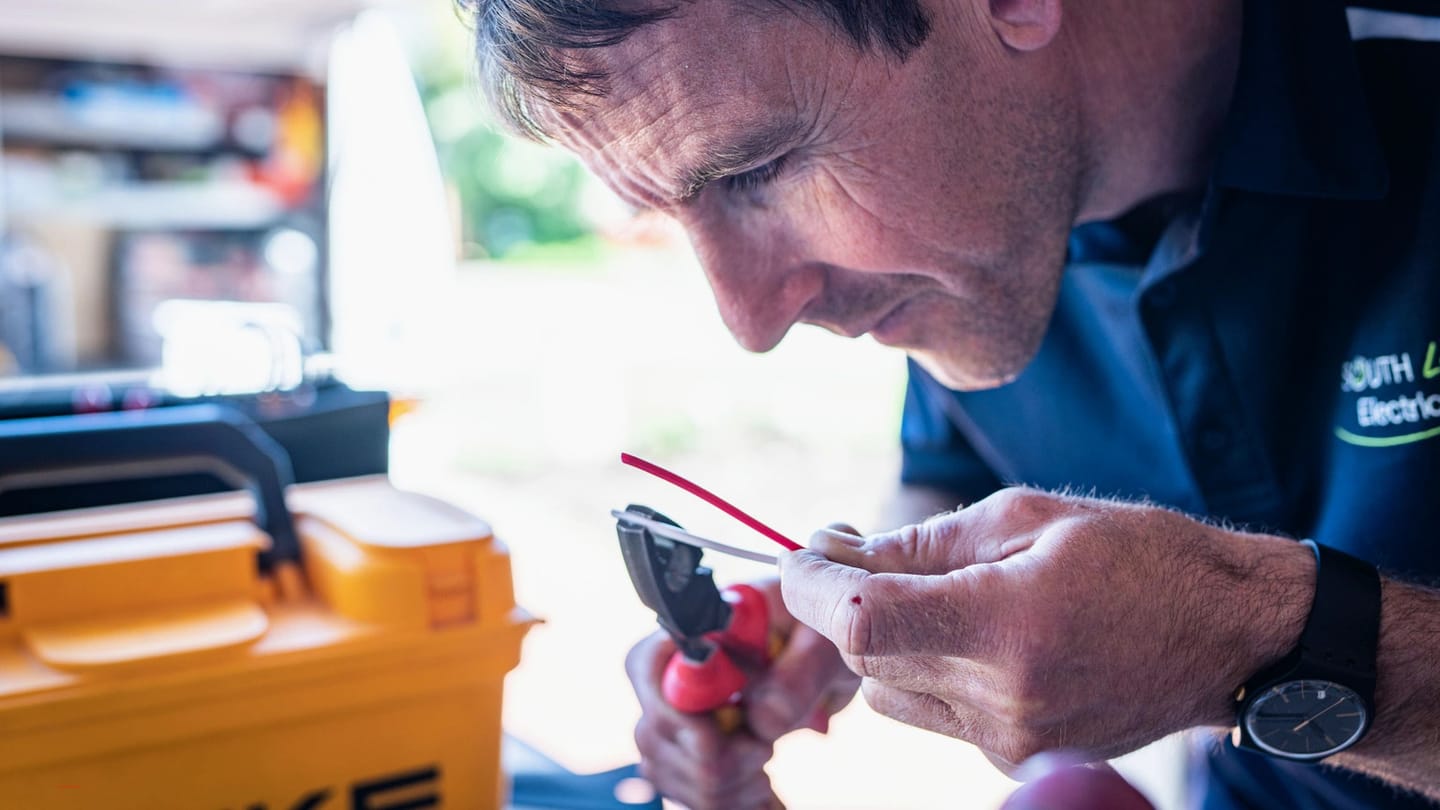
Reading and observing only gets you so far. At some point you need to cut, crimp, bond, or bed something yourself, and the safest way to cross that line is alongside someone who has done the job many times and will look at the result before you call it done. That might be a marina neighbor, a yard mechanic willing to let you help on a paid job, or a more experienced sailing friend. Ask them to check two things: whether you used the correct method, and whether the test afterward actually proves the fix worked. A stripped and crimped wire that pulls loose under light tension has not been fixed, whatever it looks like once it's taped up.
Keep a written record of the work: what the symptom was, what you found, what you changed, and how you tested it. A simple notebook or spreadsheet entry per job is enough, and it does two things memory can't. It shows the next person aboard, including future you, exactly what was done, and over a season it becomes a personal log you can check against a seasonal maintenance checklist so nothing gets serviced twice or missed entirely. A log with three honest "didn't work" entries is more useful than one that only records successes, because it shows how the fault was actually run down.
The Repair That Teaches You to Slow Down
Here's a common way overconfidence catches up with a new repairer. Say the stuffing box that seals the propeller shaft starts dripping a little more than usual. It's tempting to treat it like a leaky tap: give the packing nut another quarter turn, watch the drip slow, and call the job done. Do that a few times over a season, though, and you're not fixing the leak, you're compressing packing that's already worn past its useful life. Keep tightening instead of replacing it, and the nut eventually scores the propeller shaft itself, turning a five-minute packing swap into a haul-out and a machine-shop bill. That's the pattern behind most learner mistakes: a shortcut that looks like it worked, because the symptom went quiet, while the actual cause kept getting worse underneath.
The fix is a habit: any time a repair only manages a symptom (tightening something instead of finding out why it's loose or worn), write down what you did and set a date to check it again instead of waiting for it to fail. Jobs that involve real risk to a system's integrity, such as rigging under load, anything at height, or a fitting below the waterline, are also where working alongside someone experienced pays off most. A second, more experienced pair of eyes catches the difference between a job that's actually finished and one that has just gone quiet for now.

When Should You Call a Professional Instead?
Line up a qualified technician early, while you still have time to change the plan, any time a job touches gas, mains-voltage wiring, or the boat's structure. Propane systems are explosive if a fitting is even slightly wrong and hard to fault-find safely without training, which is why marine safety guidance points owners toward a certified LPG installer for anything beyond a simple leak test with soapy water. The same logic applies to shore-power wiring and any DC circuit you're not confident diagnosing: an ABYC-certified marine electrician has been tested against the standards that keep a wiring fault from becoming a fire, and a fuse swapped in at the wrong rating can let a wire overheat well before the circuit trips.
Structural work deserves the same restraint. Keel bolts, chainplates, and hull-to-deck joints carry loads that stay invisible until they fail, and current marine safety standards call for an appropriately qualified person to inspect a boat's structure inside and out after something like an unintentional grounding, not a confident owner with a torque wrench and a guess. None of this puts repair out of reach. It means the skill you're building is judgment as much as technique: knowing which jobs are yours to learn on, and which ones you hand to someone whose training you can actually verify.

Building real repair skill takes longer than watching a video, but it's a skill you'll actually trust the next time something goes wrong offshore. Start this week with one reversible job on your own boat: service a winch, check the engine against its manual, or walk the bilge with a simple checklist and see what you notice that you'd have missed a month ago. SailStarter's lessons won't make you a certified marine technician, and they don't try to. What they do is build the underlying seamanship and systems knowledge that makes the rest of this ladder make sense, from reading a diagram correctly to knowing which questions to ask the professional you eventually call in. If that sounds useful, the lessons are there whenever you're ready to start.
Try it from the lesson
Can you spot the next move?
The engine is idling, the boat is safely secured and the propeller area is clear. What should you confirm before departure?
Why you can trust this guide
. We build each guide from public seamanship and safety sources, then teach the universal principle before any local difference.