Chart your course
Sailboat Windlass Operation and Troubleshooting
Quick answer
The short version
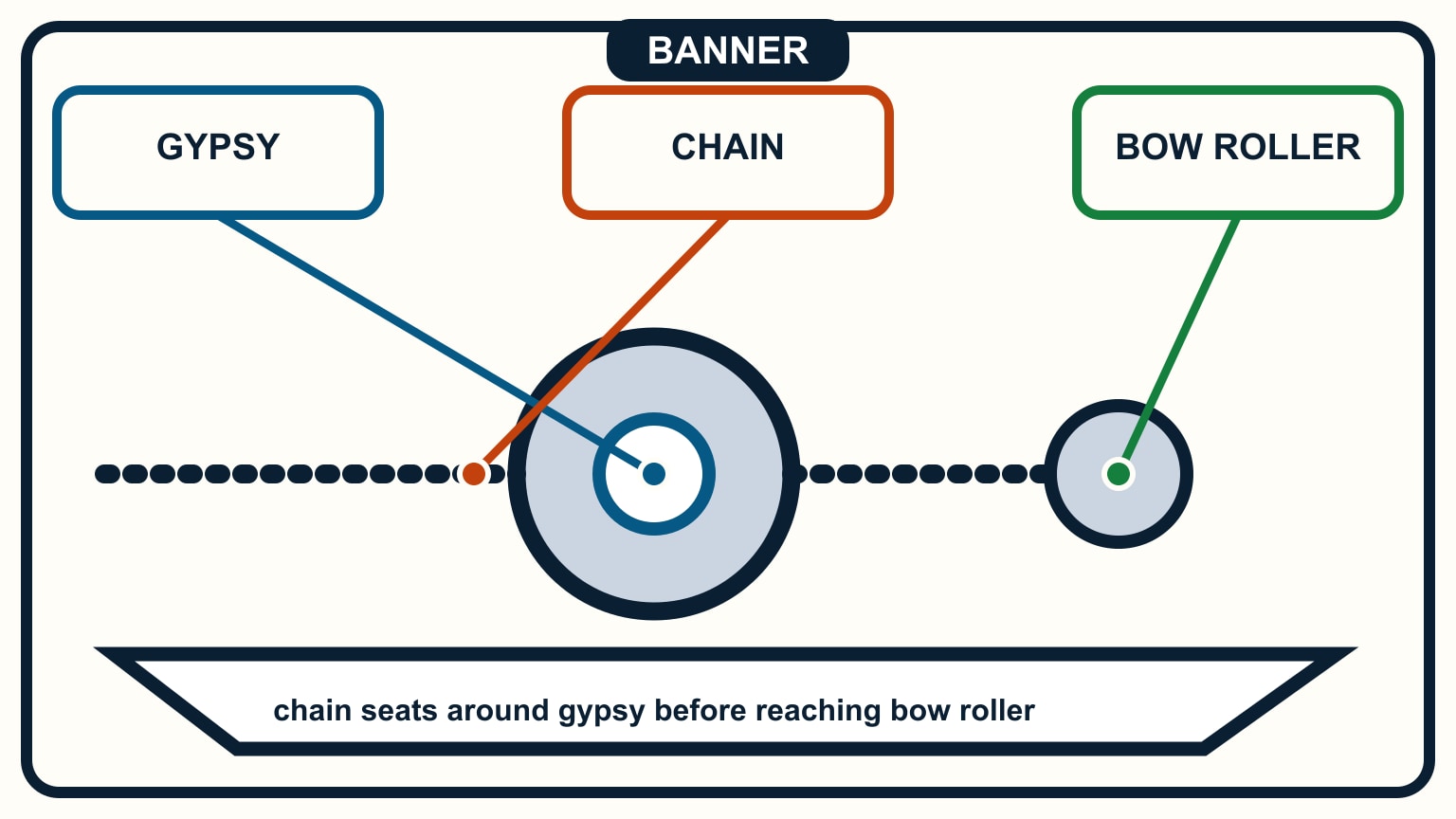
A windlass should recover slack rode while the boat moves toward the anchor; it should not haul the boat through wind and waves. Before use, identify the breaker, controls, clutch, gypsy, chain stopper, manual backup, and the strong point that carries anchoring load. Brief clear hand signals, run the engine only as the installed manual directs, and keep hands and feet away from the gypsy, chain, and locker opening. Use short controlled runs. Stop for a bad lead, climbing chain, unusual noise, heat, slow operation, or a jam. Isolate power before touching the mechanism, then secure the recovered anchor independently for sea.
Windlasses differ. Horizontal and vertical layouts, powered deployment, controlled free fall, combination gypsies, and manual release procedures are not interchangeable. Keep the model's manual aboard and read it before the first recovery. How to weigh anchor explains the wider manoeuvre; this guide focuses on what the machine should and should not do.
Brief the bow before recovery starts
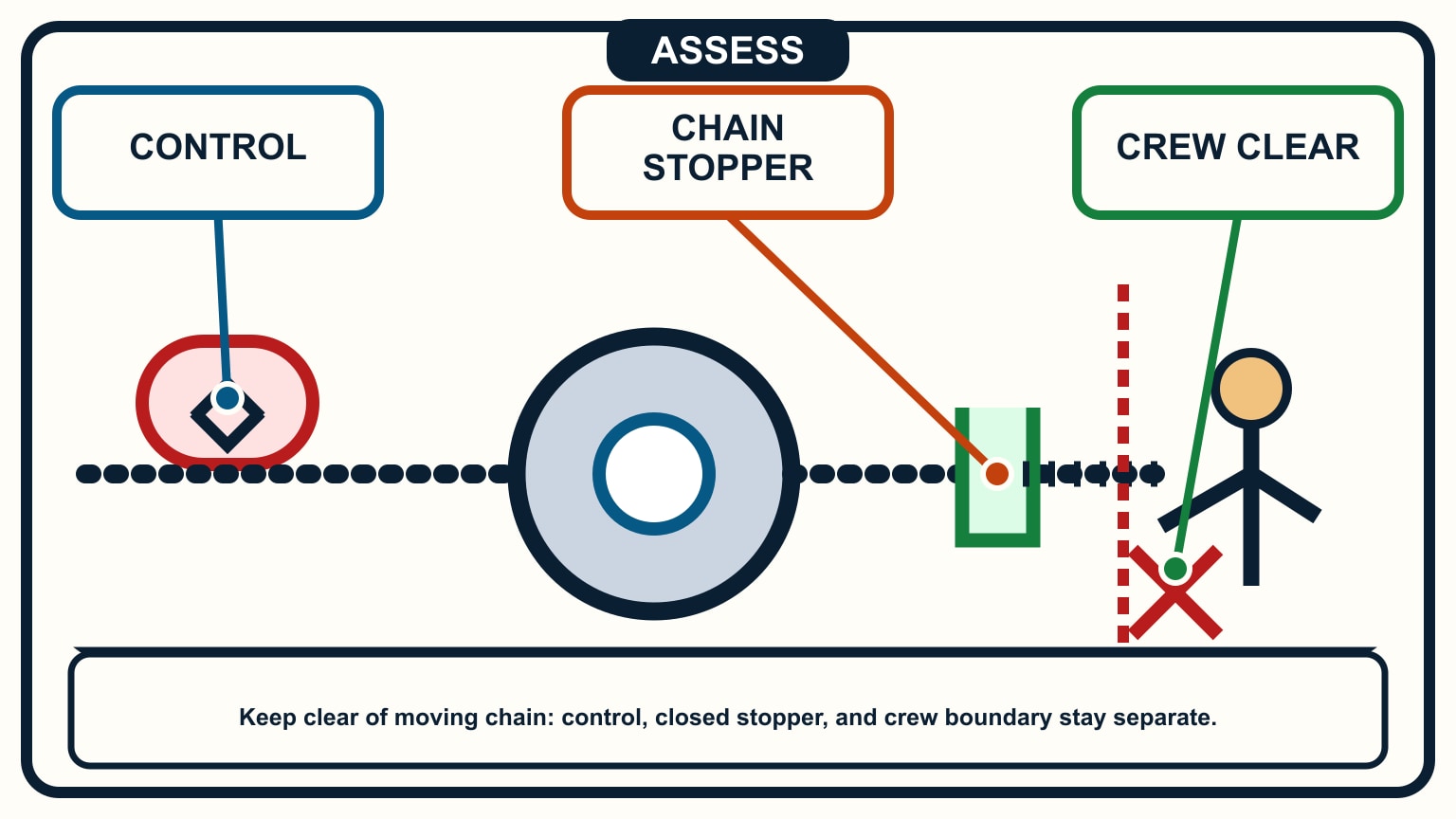
Check the foredeck while the anchor is still holding. The rode should have a clear route from water to roller, gypsy, and locker. Remove covers and loose gear. Confirm the chain stopper or snubber can be released under the boat's approved procedure and that the anchor can be secured again if recovery stops.
Turn on the correct isolator or breaker. Check available battery power and follow the manual on engine operation; windlasses draw substantial current. Make sure the control is dry, responds correctly, and cannot be pressed accidentally by gear or a foot. Test only briefly while the anchor load remains secured elsewhere.
Agree signals for chain direction, stop, anchor short stay, and anchor clear. The bow person can see the rode angle; the helm can move the boat. Both need the authority to stop. Shouting over the engine is a weak control, so use large gestures or the boat's established communication method.
Define the danger area. Nobody stands in a bight, over the chain locker, or in line with a loaded rope. Fingers never guide chain onto a moving gypsy. If the rode needs help to fall into the locker, the control stops before the crew works near it.
Let the boat remove the horizontal load
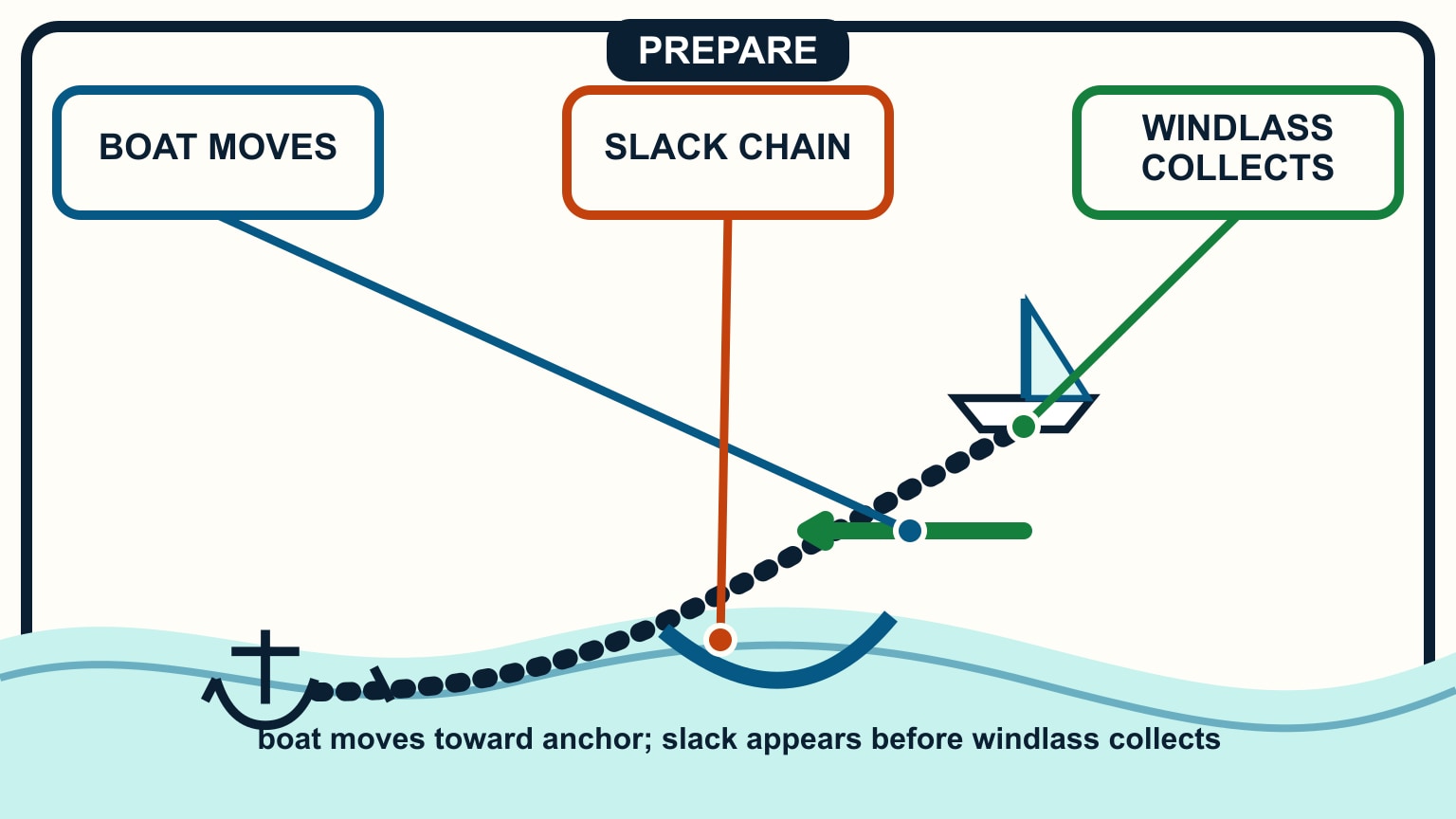
The helm motors gently toward the anchor while the bow crew indicates where the rode leads. The windlass takes in slack as it appears. If the chain points hard ahead, the boat has not yet reached it. Holding the up control against that load asks the windlass to pull the vessel, increasing strain on the motor, gearbox, mounting, and electrical system.
Use short runs and pauses. This gives the chain time to fall into the locker, lets the operator hear changes, and prevents continuous loading from hiding a developing jam. Watch the rode enter the gypsy in line. A side lead can make chain climb or rope slip.
As the chain becomes nearly vertical, call short stay. The anchor may still be buried. Secure the rode as the boat's system requires and use the boat's controlled movement to break the anchor free rather than applying more windlass force. Once it releases, the vessel begins drifting; the helm needs propulsion and room immediately.
Wash mud from chain as it comes aboard if the boat has a safe method. Pause before a pile reaches the underside of the windlass. A crew member can level the chain only with power isolated and the rode safely held.
Read the chain at the gypsy and hawse
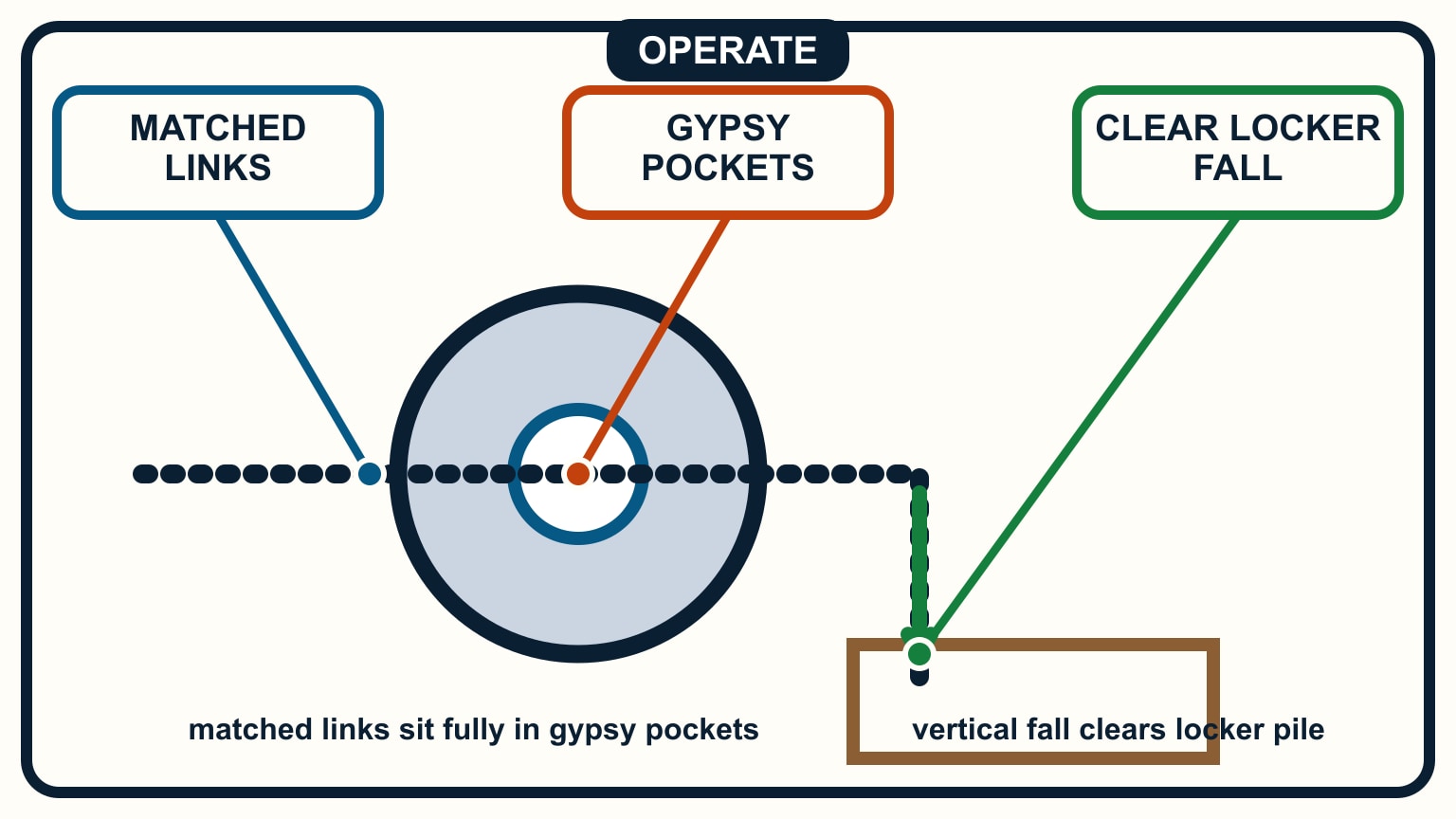
A gypsy grips calibrated chain or specified rope. Each link should seat and leave cleanly. Chain that jumps, rides high, or makes a repeating knock may be mismatched, worn, twisted, or approaching at the wrong angle. Stop before it skips under load. Check the exact chain and gypsy specification rather than judging by nominal diameter alone.
Watch the exit as closely as the entry. Chain can bunch at the deck pipe or form a pyramid in a shallow locker. Rope can arrive wet and stiff, while a rope-to-chain splice may hesitate at the transition. Do not kick the pile or pull the rode beside a moving gypsy. Stop, transfer the load to an independent strong point, isolate the windlass, and clear the locker safely.
An unusual electrical smell, hot motor area, slowing speed, breaker trip, or clicking solenoid can signal overload or an electrical fault. Repeatedly resetting a breaker does not clear the cause. A low battery, corroded connection, damaged control circuit, stalled motor, or mechanical bind needs the diagnostic procedure in the manual.
Keep seawater and mud from remaining in the locker. Lewmar's service guidance calls for checking locker drainage, electrical connections, rode splice, and the high-wear gypsy, along with regular fresh-water washing.
Stop and isolate before clearing a fault
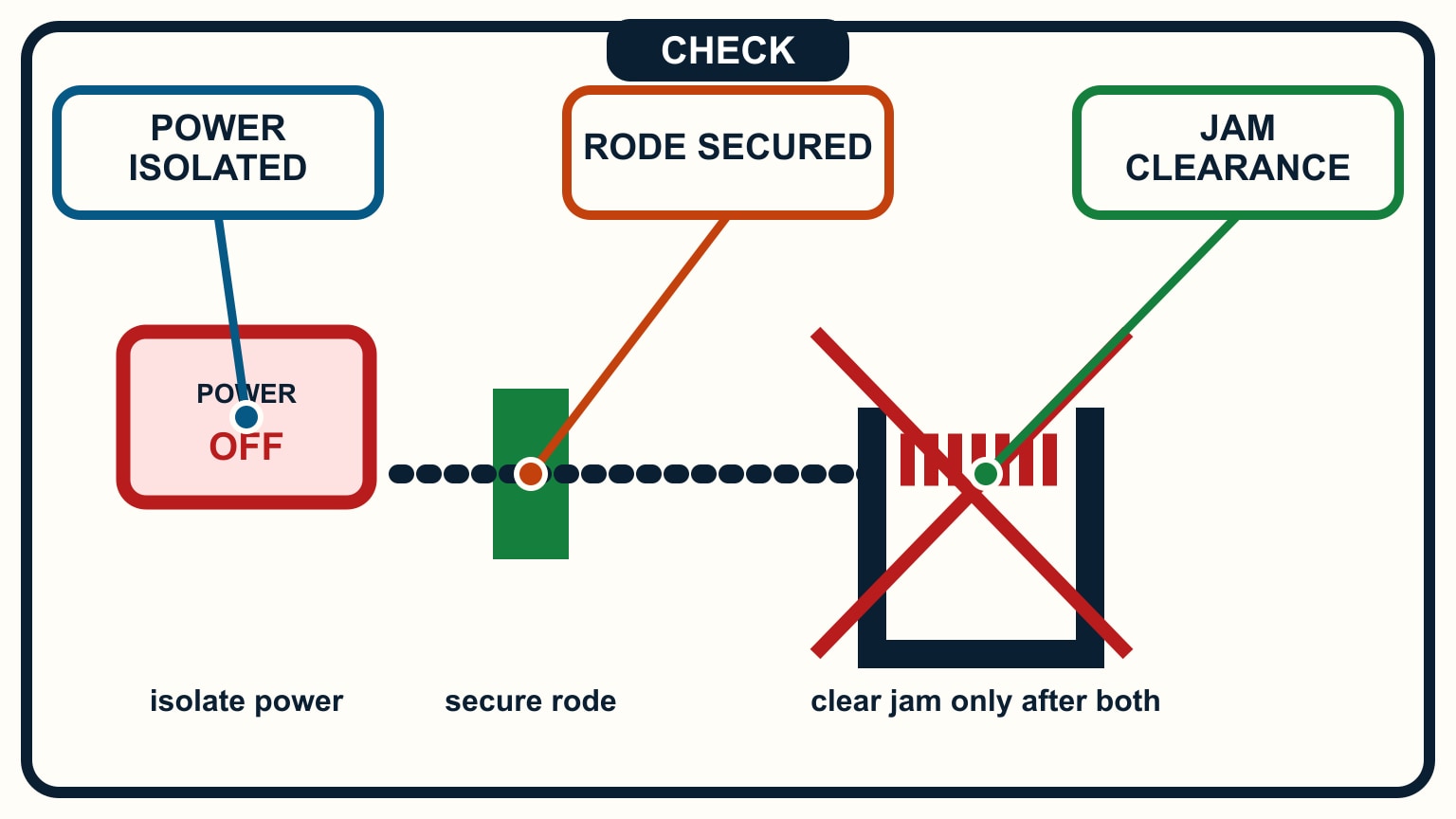
Take your finger off the control at the first abnormal sign. Tell the helm, secure the rode independently, and switch off the breaker or isolator. Confirm the machine cannot start from another station or wireless control. Only then inspect the lead, gypsy, clutch, deck pipe, locker, and visible wiring.
For a chain pile, create room in the locker without placing a person beneath loaded chain. For a twisted link or splice at the gypsy, remove load and follow the manual rather than levering against the teeth. If the anchor is fouled, the windlass is not the tool for tearing it free. Secure the rode and work the boat around the anchor using a planned method.
If the motor does not run, check the sequence the maker provides: power supply, breaker, battery condition, controls, connections, solenoid, and motor. If the motor runs but the gypsy does not, clutch engagement and mechanical drive become relevant. Do not dismantle a loaded unit or bridge terminals to “test” it on deck.
Record what happened: load, sound, chain position, control used, breaker state, and whether the fault was repeatable unloaded. That evidence is far more useful to a technician than “the windlass stopped.”
Secure the anchor for sea
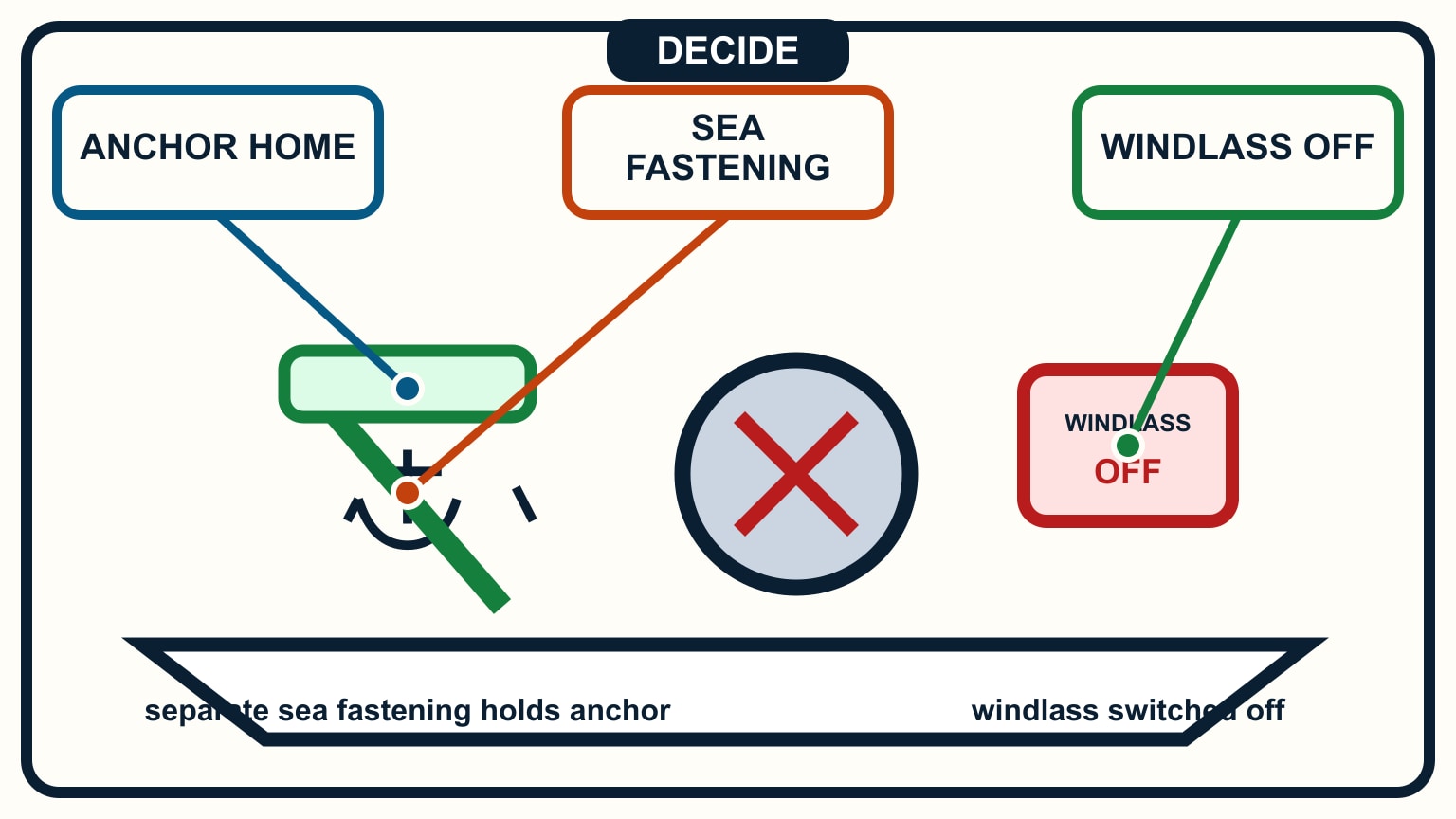
Once the anchor reaches the roller, stop before the shank slams into the bow fitting. Bring it home under control, orient it correctly, and secure it with the boat's independent sea-fastening arrangement. The windlass alone should not hold the anchor against waves and vibration. Fit the chain stopper, pin, lashing, or other approved restraint and verify the flukes cannot strike the hull.
Switch off the control circuit, replace covers, and stow the remote. Wash salt and mud from the chain and windlass as the manual directs. Check that the locker drains and that wet rope is not packed into an unventilated tangle. Refit the snubber or release line so the next deployment does not begin with a knot of loose gear.
After a fault, do not declare success because the anchor came aboard. Test the windlass unloaded in both permitted directions, inspect the relevant chain section, and repair the cause before relying on it again. Arrange service for overheating, recurring trips, damaged teeth, clutch slip, corrosion, or uncertain electrical work.
Include the manual backup in the next crew safety briefing. A crew that has never fitted the handle or located the isolator does not yet have a backup plan.
SailStarter can help you understand anchoring roles and the communication loop between bow and helm. Pair that foundation with the exact windlass manual. During recovery, keep asking one simple question: is the boat creating slack for the machine to collect? If the answer is no, stop the control and move the boat. If the equipment changes sound, speed, temperature, or lead, secure the rode and diagnose it without hands near stored energy.
Include the manual recovery method in the departure briefing. Find the handle, clutch tool, breaker, and any access needed to clear the locker while the boat is secure at the dock. Confirm that the crew can secure the recovered anchor independently of the windlass and that the bitter end can be released in an emergency without putting a person into a loaded chain path.
After an ordinary recovery, inspect the locker drain and rinse salt away as the maker directs. Look for the small signs that precede failure: new metal dust, an intermittent breaker trip, a slower motor note, chain that rides high on the gypsy, water retained in the locker, or a splice that hesitates at the transition. Log the symptom and arrange service before it becomes an exposed-bow troubleshooting job. Never substitute a larger breaker or improvised tool for the manufacturer's diagnosis.
Try it from the lesson
Can you spot the next move?
Your crew starts hauling the rode in hand over hand while the engine idles in neutral. What's wrong with that?
Why you can trust this guide
. We build each guide from public seamanship and safety sources, then teach the universal principle before any local difference.