Chart your course
How to Steer a Sailboat: Tiller & Wheel Basics
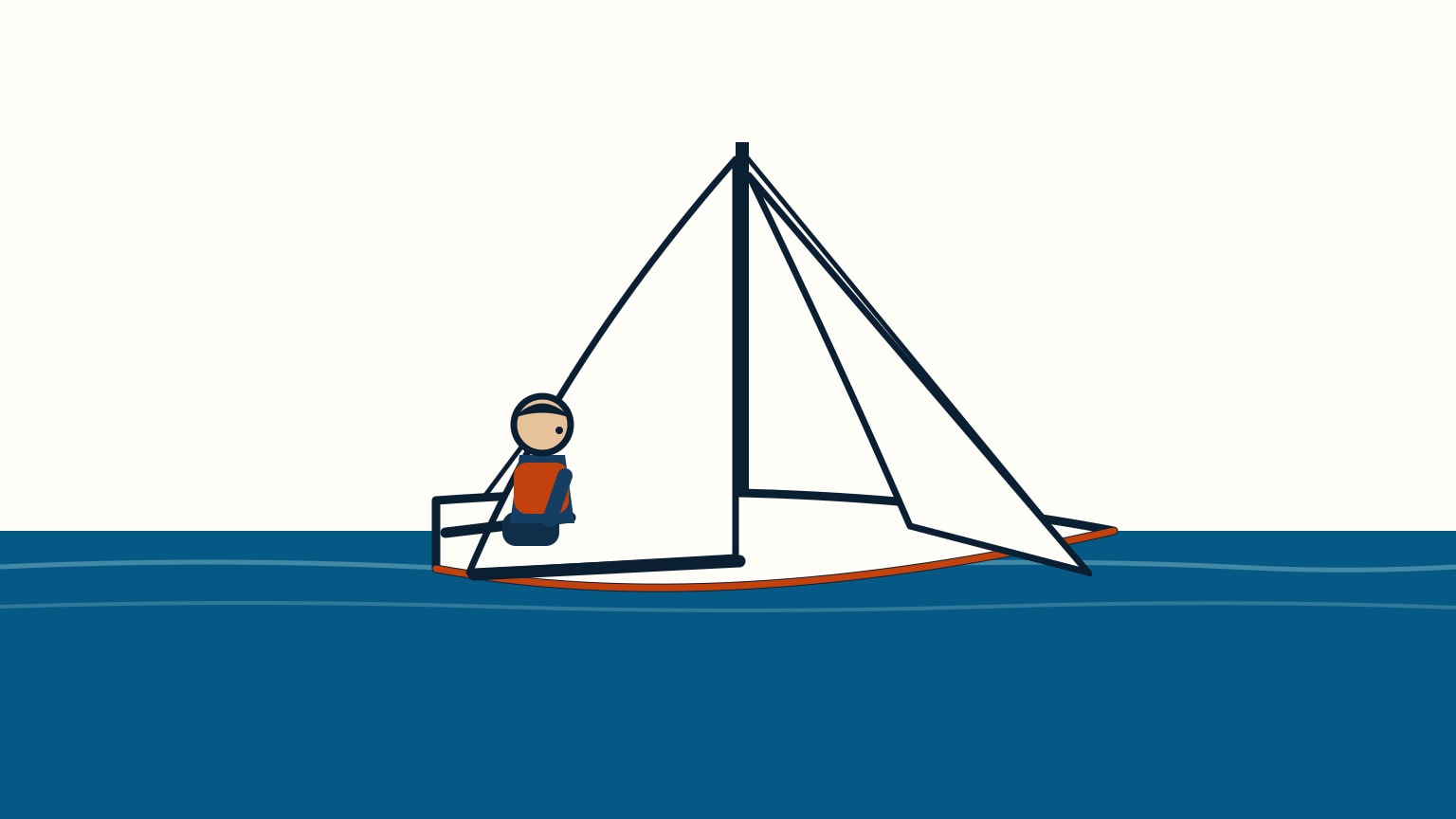
Quick answer
The short version
To steer a sailboat, first make sure it's moving: a rudder only works when water is flowing past its blade, so a stopped boat won't turn no matter how hard you push the helm. With a tiller, push it away from the direction you want the bow to go: the rudder blade swings the opposite way, the stern follows it, and the bow ends up turning where you wanted. With a wheel, there's no reversal: turn it the same way you'd turn a car's wheel, toward the side you want the bow to go. Once you're turning, pick a fixed point ahead (a landmark or a cloud) and make small corrections instead of big, late ones, easing the helm back as the bow settles.
The first time you take the helm, steering can feel like the opposite of what your instincts tell you, especially if you're used to a car. A sailboat's tiller turns the bow away from the side you push it, a wheel turns the bow the way you'd expect, and neither one does anything useful until the boat is moving through the water. None of that is obvious on day one, and all of it becomes automatic with a bit of practice.
This guide walks through what makes a rudder work at all, how tiller and wheel steering differ, and the habit that turns shaky, zig-zagging corrections into a smooth, confident course, aiming for a fixed point instead of chasing the compass needle.
Get the Boat Moving Before You Try to Turn
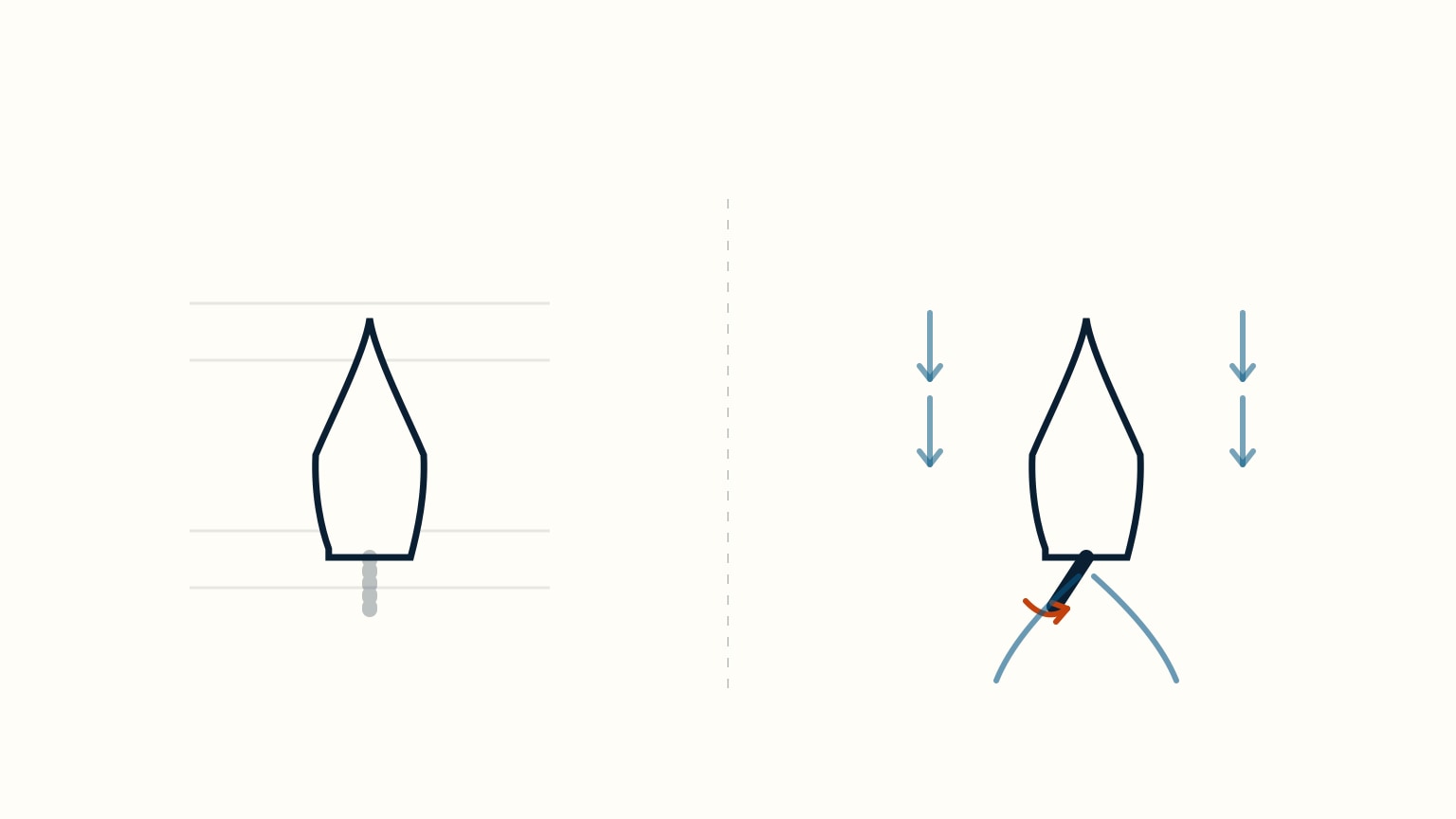
Before you touch the helm, the boat needs to be moving. A rudder steers by deflecting the water flowing past its blade: the flow strikes one face with more pressure than the other, and that pressure difference is what pushes the boat around. Stop the boat dead in the water, or let it slow to a crawl, and there's no flow left to deflect: the rudder has nothing to push against, no matter which way you turn the wheel or tiller.
Sailors call the minimum speed a boat needs to answer its helm steerage way, and it isn't a fixed number: a boat needs more speed to stay controllable in rough water than in smooth. The practical takeaway is simple: if the helm suddenly feels dead, don't fight it by cranking harder. Get the boat moving again, and steering returns as soon as water is flowing past the blade.
Push the Tiller Away From the Turn
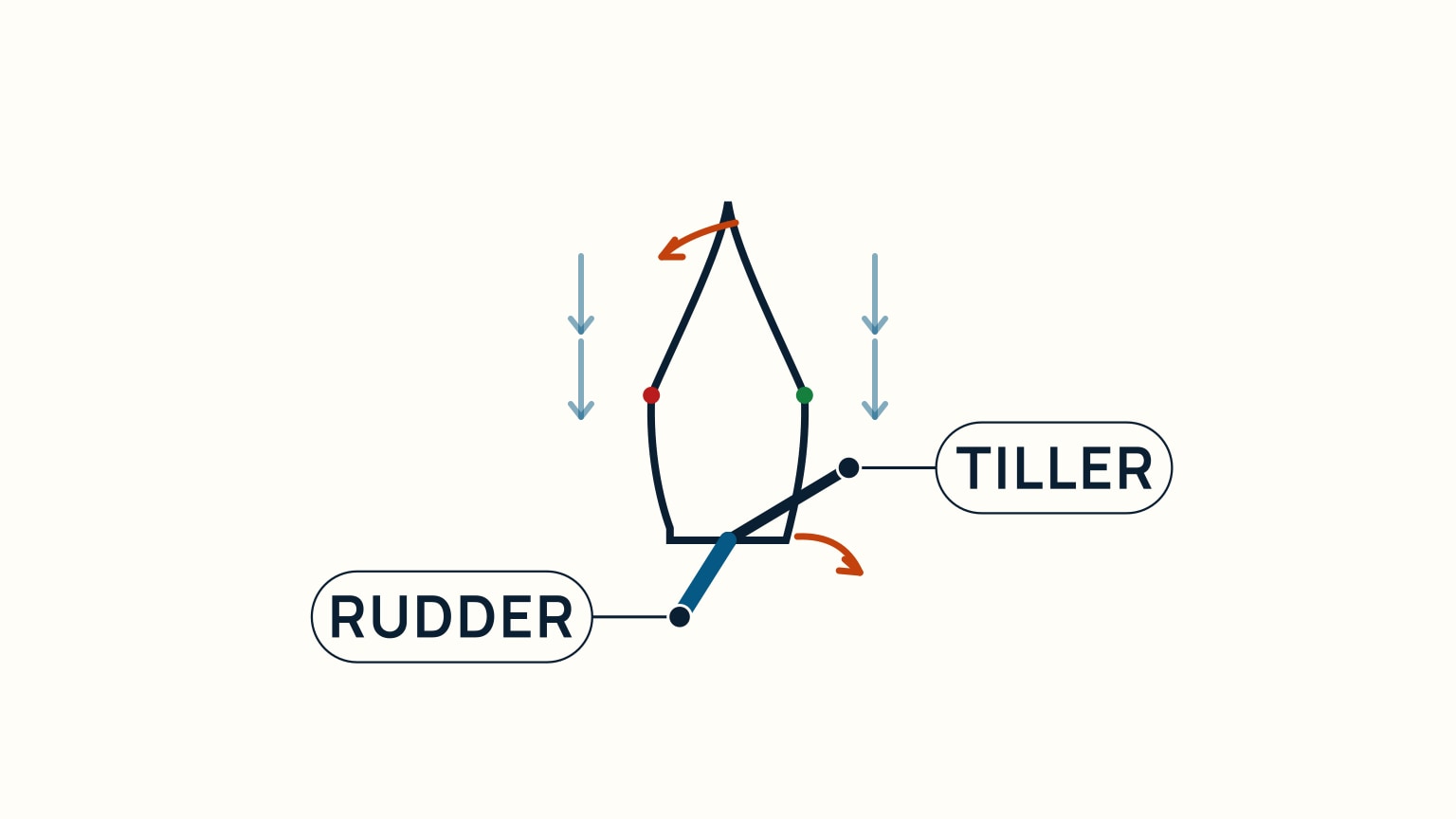
A tiller feels backwards the first time you use it, and the mechanism explains why. The tiller and the rudder blade are opposite ends of the same lever, hinged at the stern: push the tiller to one side, and the rudder blade swings to the other side of the centerline.
Once that blade is deflected, water flowing past it builds more pressure on one face than the other, and that pressure pushes the stern toward the side you pushed the tiller. Because the boat pivots near its middle, the bow swings the opposite way. The rule you'll hear (push the tiller away from where you want the bow to go) isn't a fact to memorize so much as the natural end point of that chain of cause and effect.
Speed changes how much push you need, on a tiller or a wheel. A boat moving briskly turns with a small helm movement; a slow boat needs the helm pushed harder and held over longer to get the same turn.
Wheel Steering Turns Like a Car
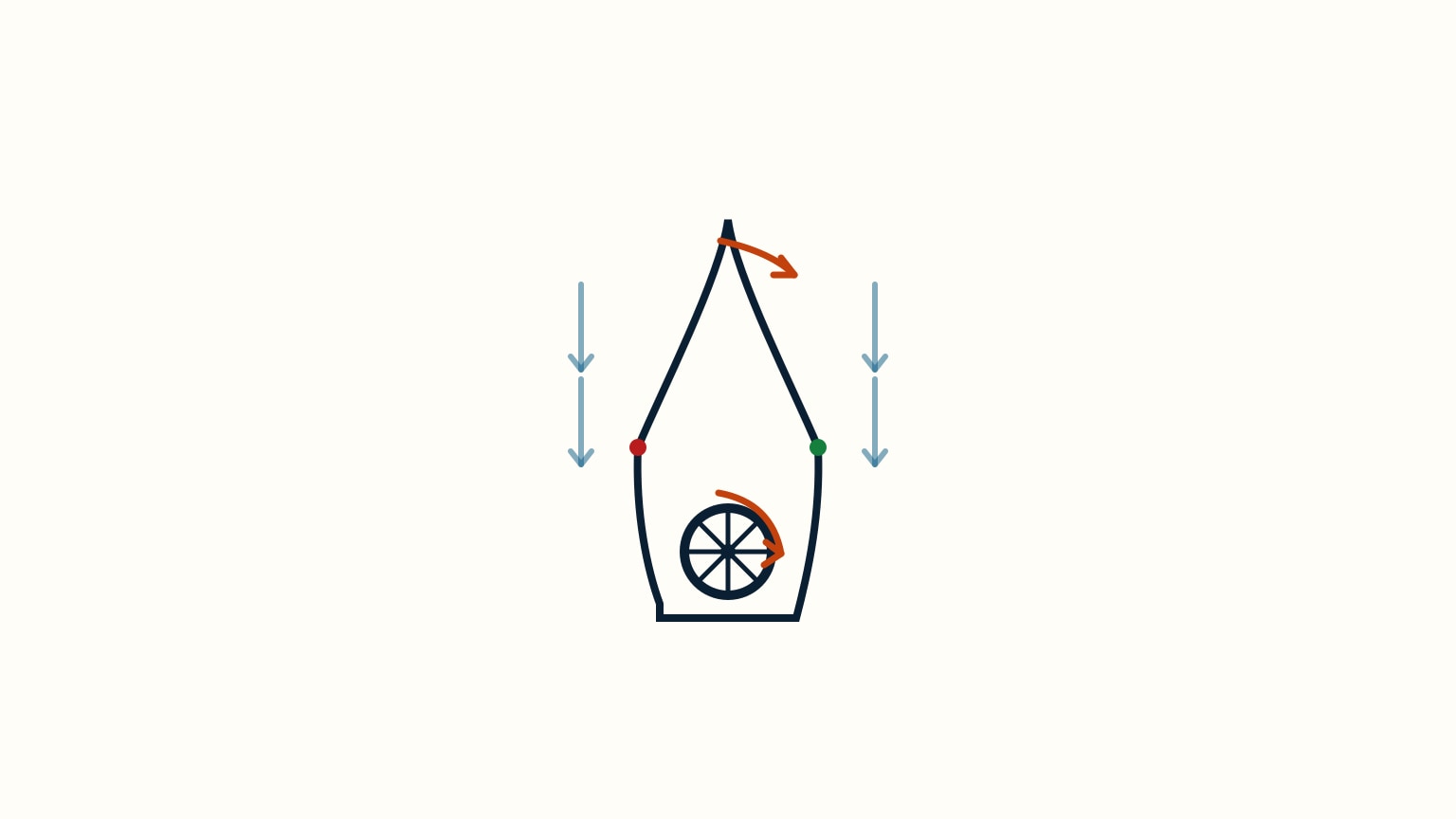
A wheel skips the reversal entirely. Turn it toward the side you want the bow to go (left to turn left, right to turn right), the same habit you already have from driving. That's why many sailors find a wheel more intuitive the first time out, even though a tiller gives quicker, more direct course changes and has far less gear to maintain.
A wheel still turns the same kind of rudder blade underneath the boat, so the water-flow rule from the last section still applies: no flow past the blade, no steering, on a wheel-steered boat exactly as much as a tiller-steered one.
If you get the chance to try both a tiller and a wheel before choosing a boat, take it: the direction habit is the only real difference between them, and it's worth feeling for yourself.
Steer to a Point, Not the Compass
Use small corrections and wait for the boat
Choose a distant reference on the intended heading. Move the tiller or wheel a small amount, feel the boat begin to turn, then ease the control toward center before reaching the new heading. Holding a large input too long creates an S-shaped track and excess rudder drag.
Keep the boat moving. A rudder needs water flow to work, so steering becomes weak as speed falls. If the boat is in irons, first use the recovery taught for that boat to get the bow away from the wind and refill the sails. More helm angle alone will not create useful flow.
Coordinate heading with sail trim
When heading up, sails may need trimming. When bearing away, they usually need easing. Communicate before a larger course change so the crew can manage sheets and boom safely. A turn with unchanged trim can leave sails flogging or overloaded.
Use sail feedback. Luffing at the front of the sail can show that the boat has headed too close to the wind. Heavy helm may show imbalance, excess heel, or poor trim rather than a need to pull harder. The weather-helm guide explains why a boat may keep trying to turn into the wind.
Practise a steady handover
The outgoing helm states course, wind angle or visual reference, traffic, and any control issue. The incoming helm takes the control and repeats the target before the first person lets go. Avoid both people steering at once.
Practise straight courses, gentle turns, tacks, and stopping in open water. Use both tacks and note how wind, waves, heel, and sail balance change the feel. The no-go-zone guide helps connect steering angle with the wind.
Compass heading is useful, but staring down at it weakens lookout and creates overcorrection. Look ahead, glance at the compass to confirm, and return your eyes outside. The aim is a smooth track with continuous awareness, not a perfectly frozen number.
When handing over at night or in poor visibility, include the compass heading and the external cues still available. The new helm should confirm both before the hand leaves the control. Keep a separate lookout so the person steering is not the only one scanning.
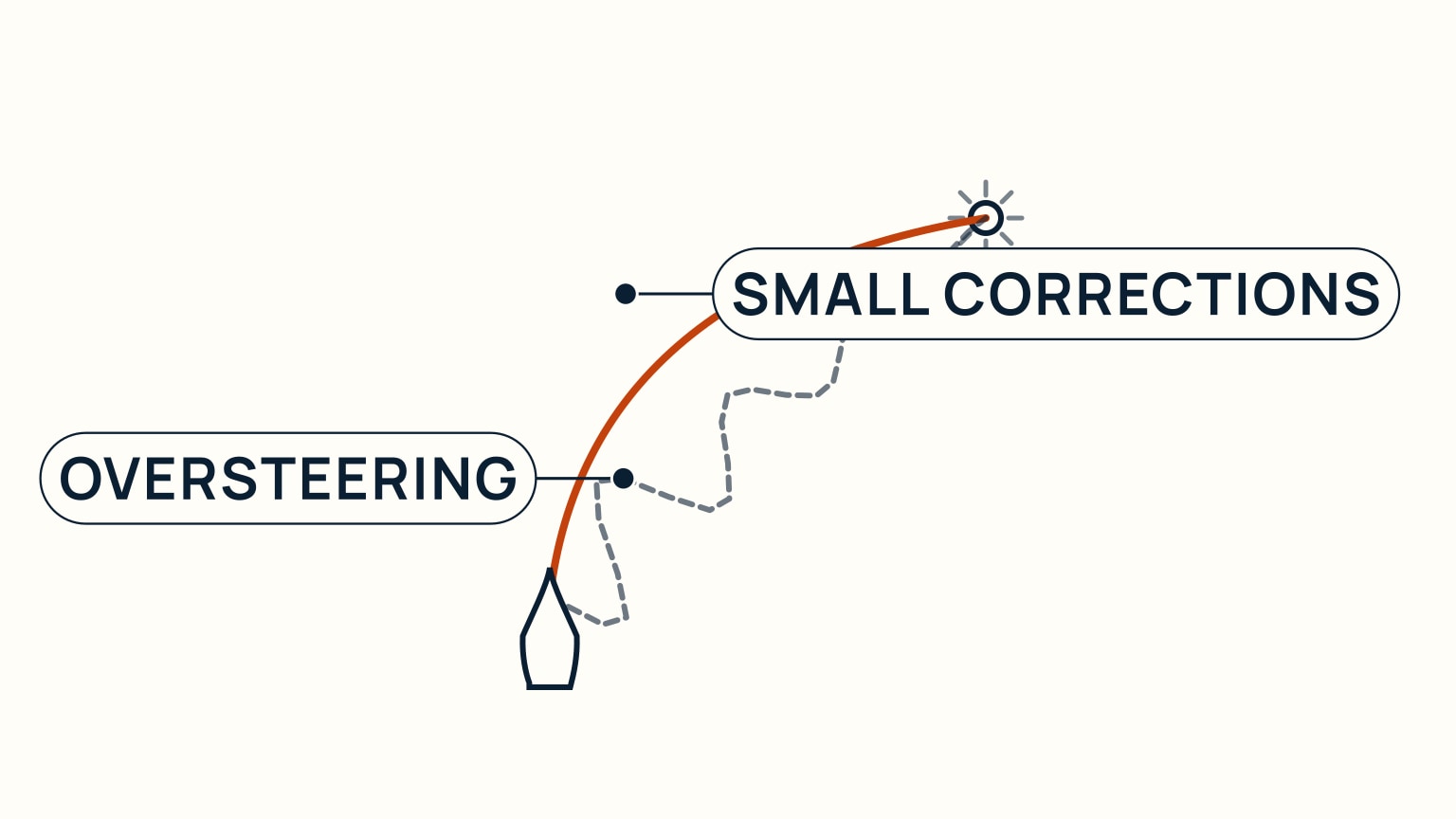
Once you're moving and turning the right way, the next skill is holding a course without over-correcting. Beginners tend to oversteer: the boat zig-zags back and forth because the helm gets a big, late correction every time the bow drifts, instead of a small, early one.
The fix is where you look. Pick something steady and far away (a landmark on shore, a distinctive cloud, a star at night) and steer to keep the bow pointed at it, rather than fixating on the compass or the wake behind you. Apply a small amount of helm, wait for the boat to respond, and ease it back toward center as soon as you see the bow start to swing your way; waiting too long is what turns a correction into an overshoot.
A compass still matters for checking your heading, but it works best as an occasional glance, not something you steer with your eyes fixed on: the same way you'd glance at a car's dashboard instead of driving by it.
Steering a sailboat well isn't about strength or reflexes: it's a handful of habits that stack on top of each other: get the boat moving before you expect it to answer, remember which way your tiller or wheel actually turns the bow, and aim for something steady out ahead instead of chasing the needle. Every one of those habits gets easier with time on the helm, and the zig-zagging you might do on your first try is a completely normal stage, not a sign you're doing it wrong.
If you want to build that feel deliberately rather than by trial and error, SailStarter's beginner lessons walk through steering, helm commands, and the rest of the fundamentals one short, focused step at a time. Try a lesson and see how quickly the tiller stops feeling backwards.
Try it from the lesson
Can you spot the next move?
You want the bow to swing to starboard. Which way do you push the tiller?
Why you can trust this guide
. We build each guide from public seamanship and safety sources, then teach the universal principle before any local difference.