Chart your course
How to Tack a Sailboat, Step by Step
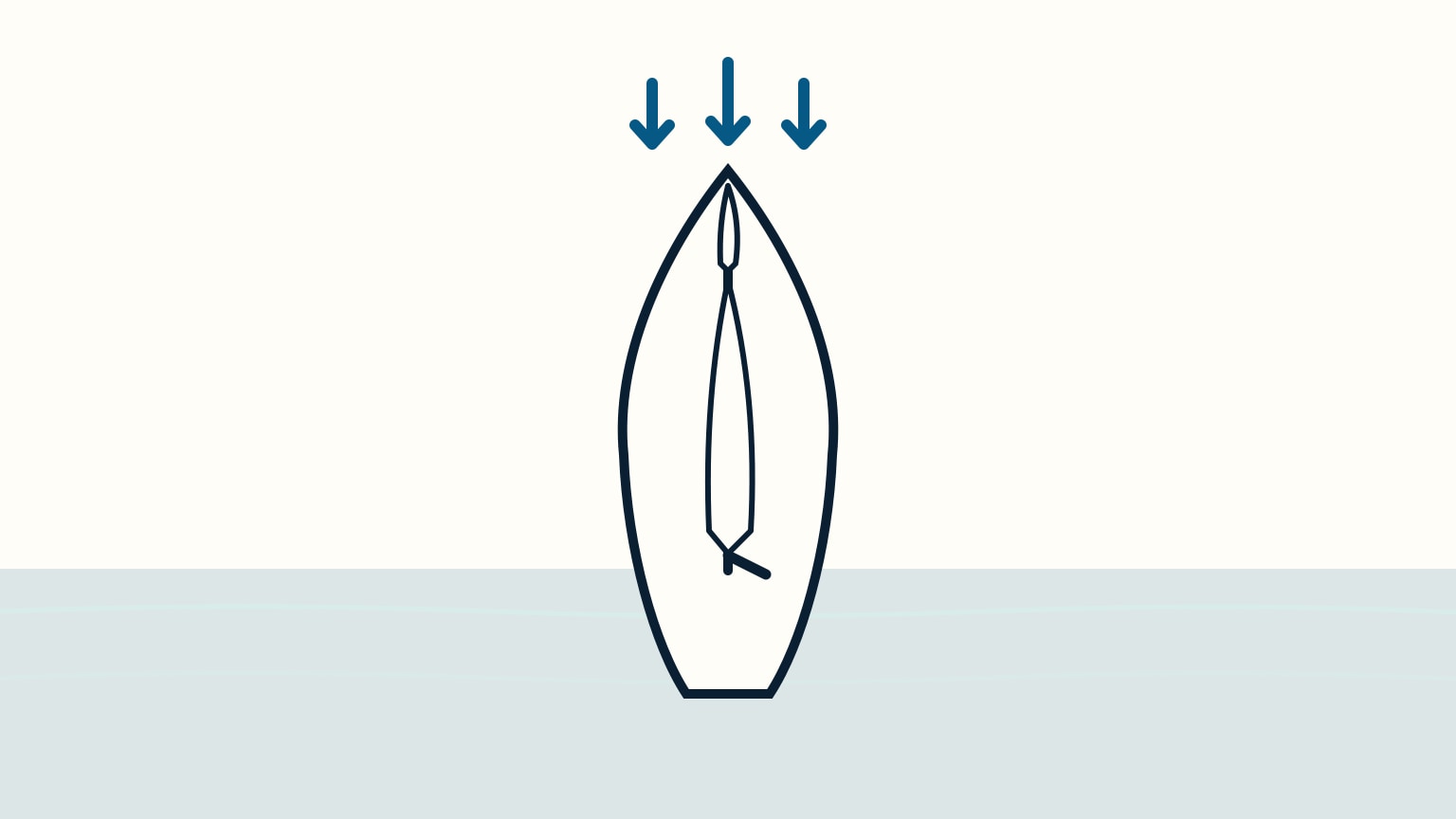
Quick answer
The short version
To tack a sailboat, turn the bow through the wind from close-hauled (sailing as close to the wind as the boat can point) on one side to close-hauled on the other, a course change of roughly 90 degrees. Before you turn, wrap the new jib sheet two or three times clockwise around its winch so it is ready to load. The helm gives a heads-up like "ready about," the crew answers "ready," and the helm commits to the turn with a short call. Steer briskly and steadily, without rushing or hesitating. The moment the jib begins to luff as the bow swings through head-to-wind, cast off the old sheet in one motion, keeping your hands clear of the drum. Haul the new sheet in hand-over-hand while the sail is still soft, then finish the last, hard pull on the winch.
Every sailor tacks dozens of times in a single session, and the first few can feel like a lot happening at once: a call from the helm, a turn, a sheet coming off one winch and going onto another, all within a few seconds. Slow it down, though, and a tack is really just four things happening in order: get ready, turn, release, and trim. This guide walks through that sequence step by step, from the helm's call to the moment your boat settles onto its new course. None of it needs strength or speed, just knowing what happens next, and when.
Know Which Tack You're About to Be On
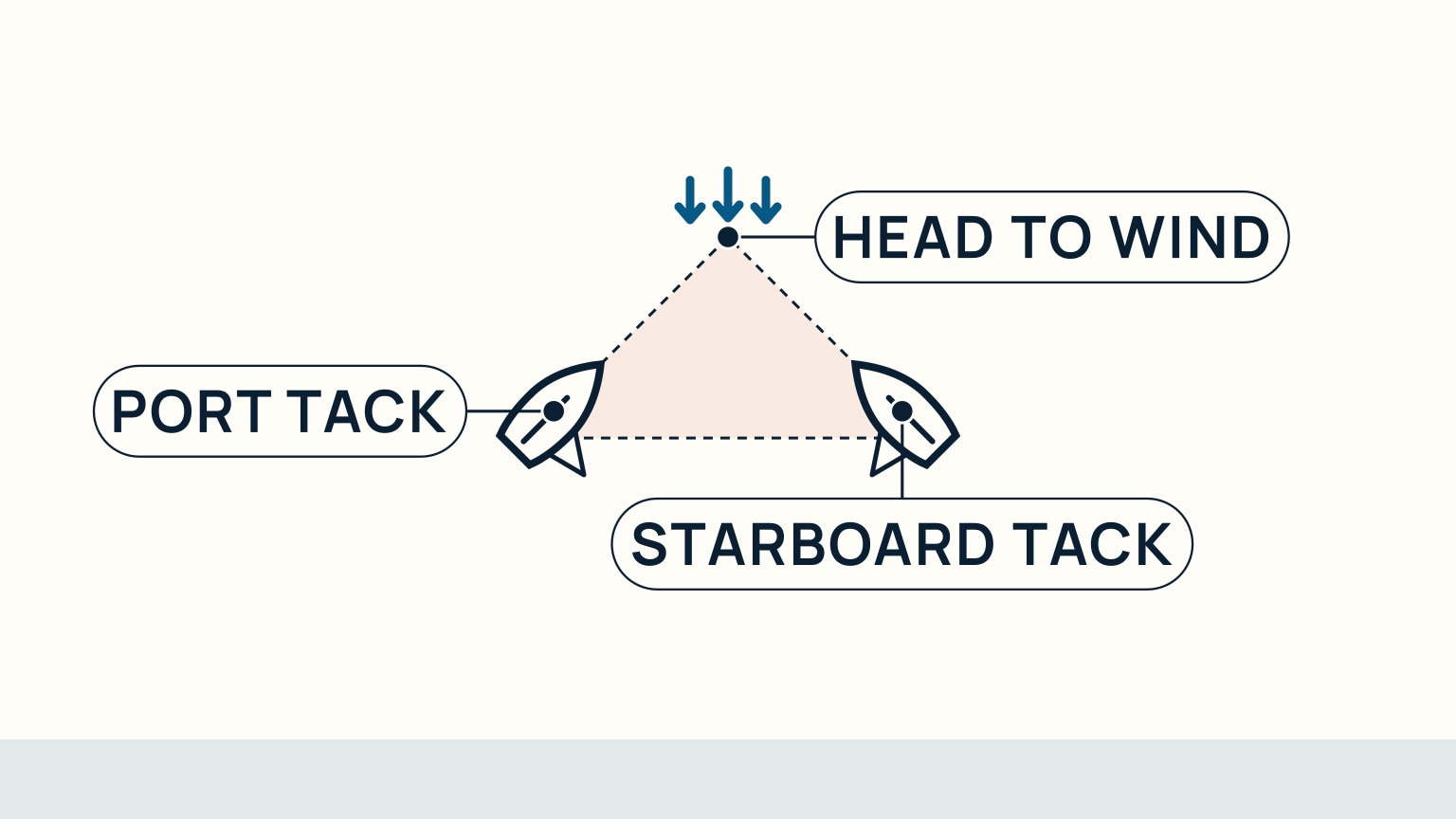
A tack is the turn that carries your bow from close-hauled on one side of the wind, through head-to-wind, to close-hauled on the other side. Since each close-hauled course sits roughly 45 degrees off the wind, the total course change in a tack comes out to about 90 degrees.
Which side the wind is on has a name, and it's worth knowing at a glance. Wind over your port side is port tack; wind over your starboard side is starboard tack. The tack takes its name from the wind, not from the boom: the boom always sits on the opposite side, so on port tack it's out to starboard, and on starboard tack it's out to port. If you lose track mid-maneuver, check which side the wind is hitting your face, or read it backward from where the boom sits.
Call the Tack and Prep the New Sheet
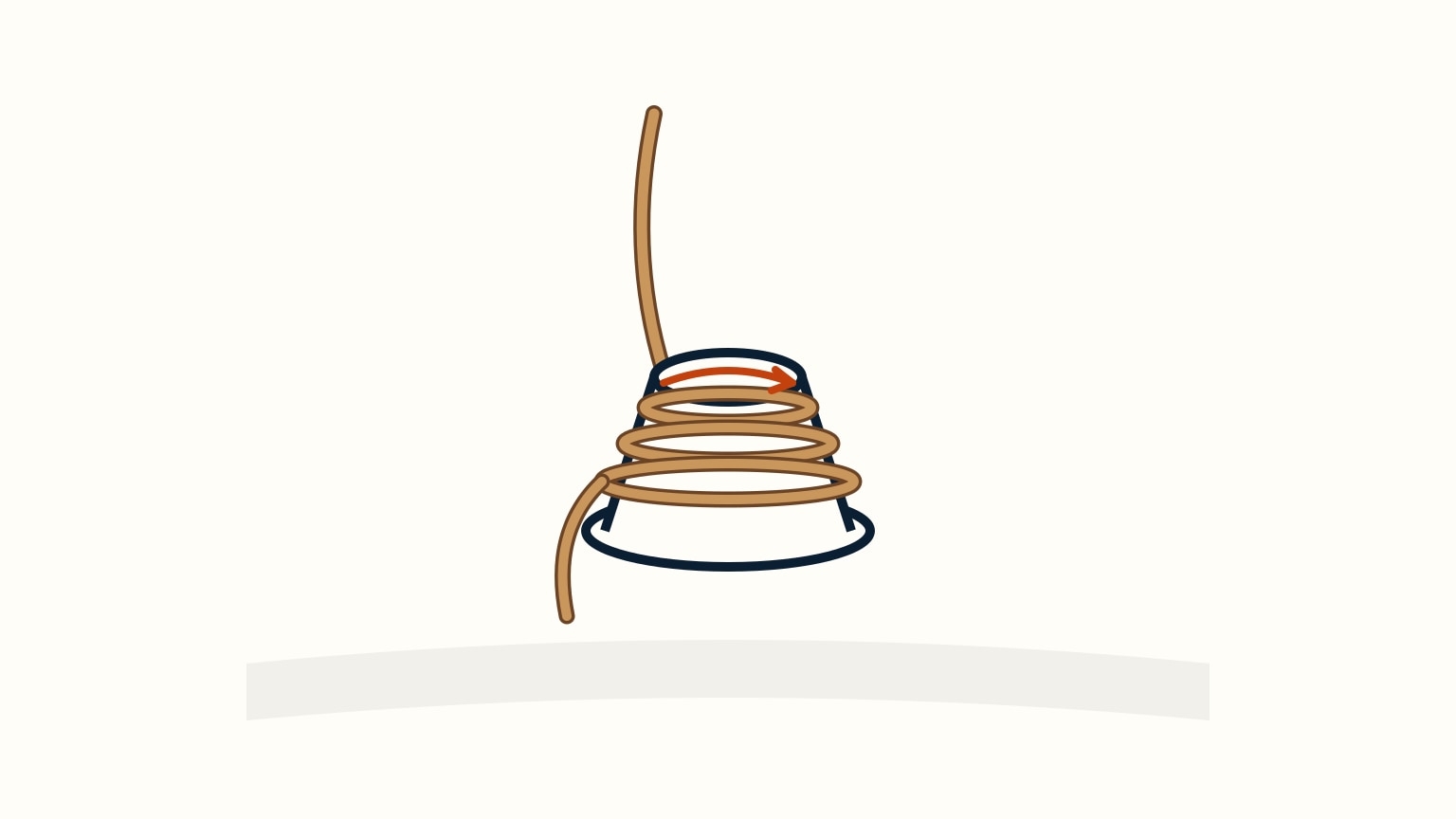
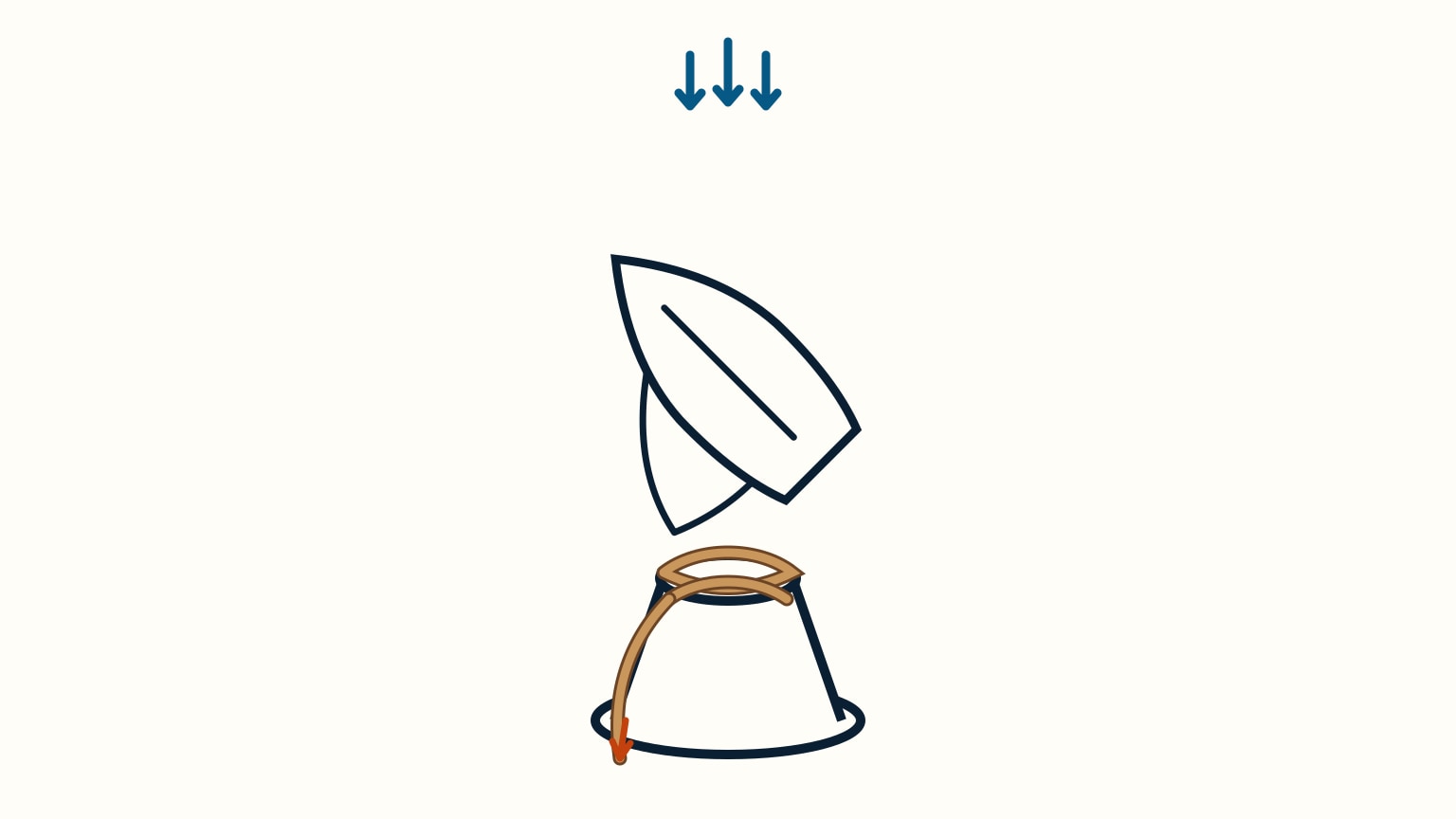
Before the boat turns, the crew gets the new jib sheet ready. Take the lazy sheet (the one that isn't currently loaded) and wrap it two or three times clockwise around the winch it's about to load, so it's primed to take a pull the instant the sail starts to fill on the new side.
The turn itself starts with a spoken exchange. The helm gives a heads-up ("ready about," "prepare to tack," or a boat's own version of it) and the crew answers "ready" once everyone's set. The helm then commits to the turn with a short call, often "hard alee," as the wheel or tiller goes over. None of this wording is standardized: different boats and instructors use different calls for the same moments, so learn the words your own boat uses rather than expecting one fixed script everywhere.
Turn Briskly and Release the Old Sheet at the Luff
As the helm turns, keep it brisk and steady. Avoid a snap turn or a timid creep. Turning too fast scrubs off boat speed you will want on the new tack; turning too slowly can lose the momentum needed to carry the bow all the way across, stalling the boat head-to-wind with no way to complete the turn.
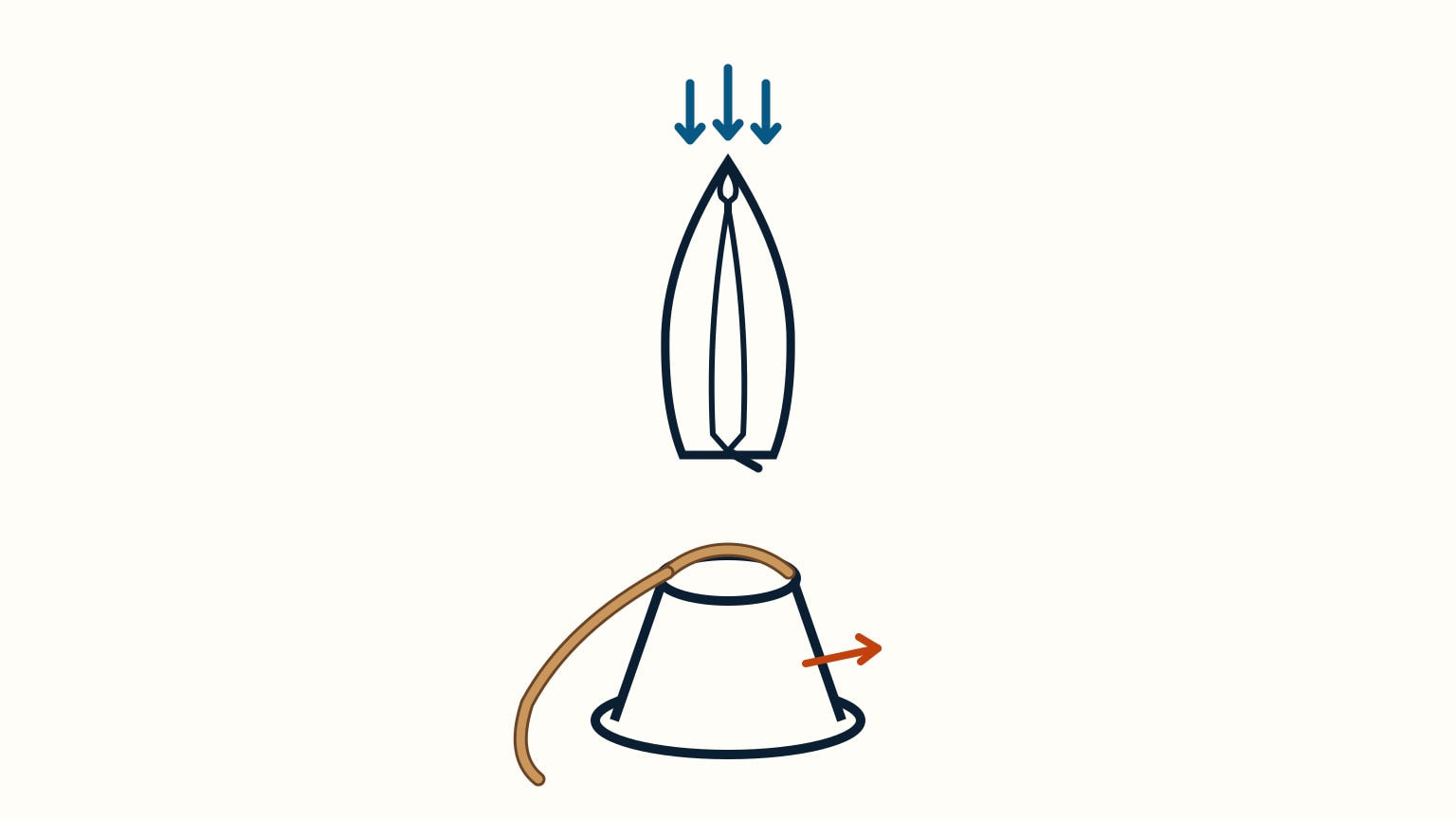
Watch the jib. The moment it begins to luff as the bow swings through head-to-wind, the sail has lost its load. That is your signal to cast off the old sheet. Because the sail is already unloaded, you can unwind the wraps off the winch drum in one motion and let the sheet run free, keeping your hands well clear of the drum and wraps as the line runs out, rather than easing it gradually the way you would a sheet still under load. Cast off too early and you spill the drive the boat still needs; wait until the sail fills again on the new side and you will be fighting a loaded sheet instead of a slack one.
Haul In the New Sheet and Settle on the New Tack
On the new side, haul the sheet in hand-over-hand while the sail is still soft and easy to move: this is the fastest part of the job, since a soft sail trims in easily but a filled one fights you. As the load builds and hauling by hand gets hard, finish the last, hardest pull on the winch.
The mainsail needs none of this choreography. As the boat swings through the turn, the boom crosses the centreline on its own and the mainsail finds its new close-hauled trim without anyone touching a sheet. Once both sails are set and the boat has settled onto its new close-hauled course, the tack is done. You are now on the tack opposite the one you started, ready for the next leg upwind.
Set up a clean practice lane
Choose open water with room on both sides and keep a proper lookout. Identify the windward side, current tack, new course, and any traffic or shallow water before starting. Repeat the crew calls at normal speaking volume. A call is useful only when each person knows the action that follows.
Run several tacks with the same roles. Change one detail at a time, such as the helm's turn rate or the timing of the old-sheet release. The upwind sailing guide explains how each turn fits the larger zigzag route.
Diagnose where the tack stopped
If the boat enters irons, check whether it began with enough speed, turned positively through the no-go zone, and avoided an early attempt to settle on the new course. Use the in-irons recovery guide if the bow stalls into the wind.
If the headsail hangs on the rig, avoid pulling harder without seeing the cause. Check release timing, lazy-sheet position, and whether the sail has room to cross. If the new sheet is over-trimmed before the boat accelerates, ease toward a workable shape and settle the helm.
Finish before judging the manoeuvre
A tack is not complete when the bow crosses the wind. Confirm the new tack, trim both sails for the new course, coil or clear the sheets, and regain lookout. Then compare the actual track with the intended one. A fast turn followed by a long recovery may be less effective than a calm turn that leaves the boat balanced.
Debrief in one sentence from each role. The helm names the course change, the old-sheet trimmer names the release cue, and the new-sheet trimmer names when the load arrived. Use those observations for the next repetition. This keeps practice focused on timing and communication instead of blaming one person for a manoeuvre performed by the whole crew.
Tacking reads as a lot of separate steps on paper, and after a dozen real ones, it becomes a single smooth motion your hands and eyes do together. The pieces don't change: get the new sheet ready, call the turn, steer it briskly, release the old sheet the instant the jib luffs, and haul in the new one before it loads up. What changes with practice is how much of it you have to think about along the way.
If you'd like to build that instinct somewhere lower-stakes than a rolling foredeck, SailStarter's beginner lessons walk through tacking, along with the points of sail, sail trim, and helm commands that lead up to it, one short step at a time. Try a lesson and see how quickly the sequence starts to feel automatic.
Use a three-part score after each practice tack. First, did the boat cross the wind and regain speed? Second, did the crew control both sheets without tangles or unsafe turns? Third, did the boat finish on the intended clear course? This prevents a quick sheet change from hiding a poor track or a well-steered turn from hiding unsafe line handling.
Rotate roles only after the current crew can repeat the calls. A new helm should first watch the telltale and bow through several turns. A new trimmer should trace both sheets before load arrives. Slow role changes preserve the shared sequence while each person learns a different view.
Try it from the lesson
Can you spot the next move?
The wind is blowing over your port side. Which tack are you on, and which side is the boom?
Why you can trust this guide
. We build each guide from public seamanship and safety sources, then teach the universal principle before any local difference.