Chart your course
Boat Club vs Owning a Sailboat
Quick answer
The short version
A boat club gives you access to a shared fleet under a membership agreement. Owning gives you control of one sailboat and responsibility for its storage, insurance, maintenance, administration, and repairs. A club often suits sailors who want regular days afloat without managing an asset, provided its fleet, reservations, training, and location fit. Ownership suits sailors who value one familiar boat, flexible access, personal equipment choices, and longer trips enough to take on the continuing work. Compare actual sailing days, not slogans. Read the club contract, build a complete ownership budget, and include travel, booking limits, guests, fuel, damage exposure, cancellations, and the time spent preparing or maintaining the boat.
You can change course later. A club can be useful while you learn which boat and sailing pattern you enjoy. Ownership can fit when your preferred waters, crew, and maintenance appetite are clearer. Some sailing clubs also offer shared boats, courses, crewing contacts, or low-cost hire rather than a commercial fleet subscription. Treat every arrangement as its own product. The broad comparison in how much it costs to own a sailboat supplies the ownership side; this article puts it beside contracted access.
Access, responsibility, and cost split very differently between the two routes.
| Dimension | Boat club | Owning |
|---|---|---|
| What you get | Booking rights to a shared fleet | Control of one particular boat |
| Maintenance responsibility | Often bundled — dockage, storage, insurance, repairs; fuel usually extra | Carried entirely by you — survey, service, sails, rigging, bottom work, reserve |
| Availability | Reservation calendar, rolling slots, booking limits, weather cancellation rules | Available any day, but limited by weather, maintenance, storage, and launch work |
| Boat familiarity | Varied boats across the fleet | One familiar boat, with your own setup and equipment |
| Cost structure | Joining fee plus recurring dues, fuel, and add-ons | Purchase and setup, then fixed annual costs plus use and repair |
| Control over the boat | Limited to what the fleet or category rules allow | Full control over rigging, provisioning, and maintenance schedule |
Compare the Product You Actually Receive
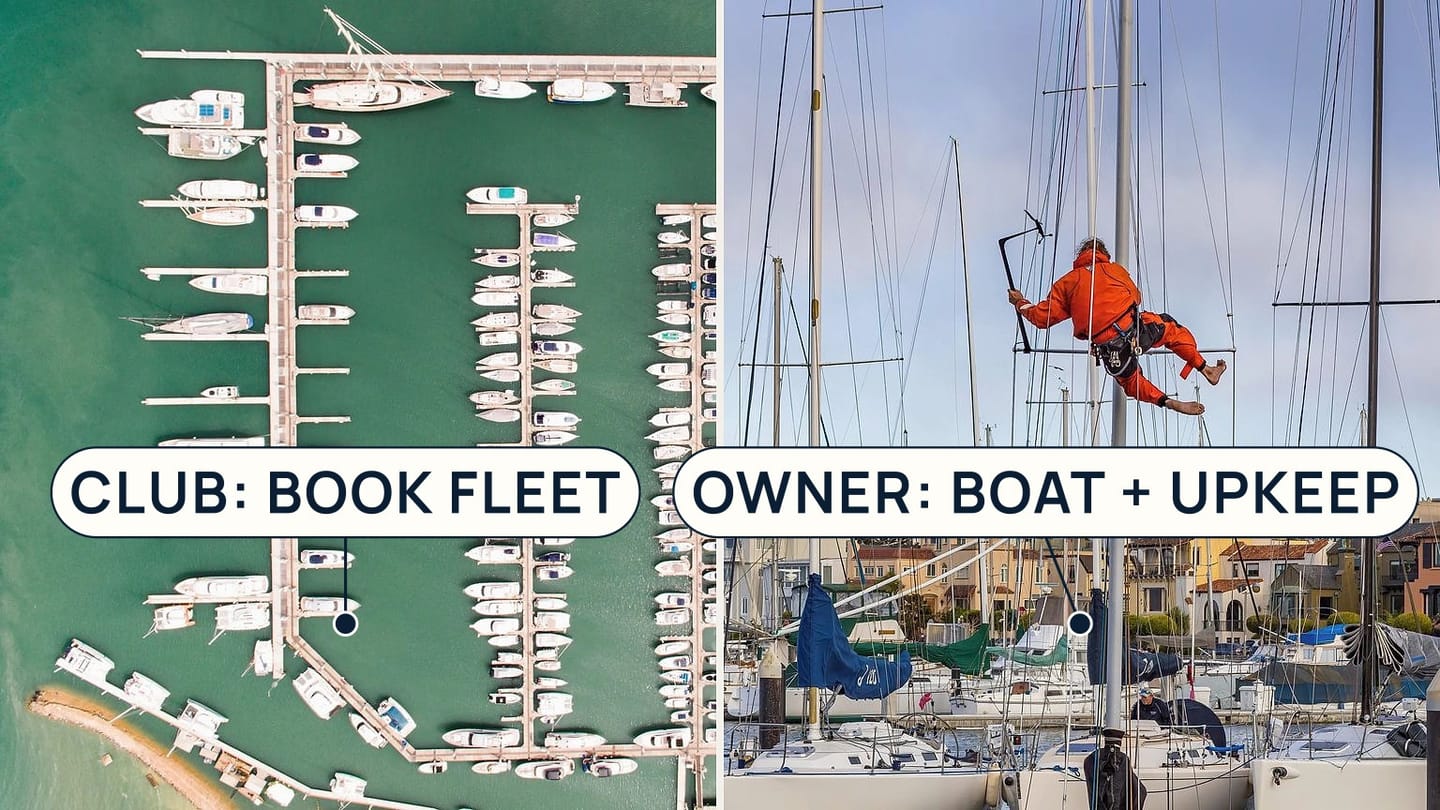
A commercial boat club normally sells booking rights, not a share of a named boat. Its agreement defines which fleet or category you can use, who may operate, how reservations work, what training is required, and what happens after damage or late return. A sailing club may work differently, with member duties, club-owned dinghies or keelboats, organized racing, and informal crewing. Ask whether you are joining a community, buying a reservation service, or doing both.
Ownership gives you one particular boat. You decide how it is rigged, provisioned, maintained, and left between trips, within local rules and contracts. You can learn its sounds, controls, sail inventory, and docking behaviour. You also carry the consequences when the engine needs service, a sail tears, a berth disappears, or paperwork is due.
Write down the sailing job before comparing either route. Do you want short day sails, racing, instruction, weekend cruising, family trips, or longer passages? A club with powerboats and two small sailing boats is not equivalent to owning a coastal cruiser. A club with good training and frequent dinghy access may be much better for a beginner than an owned yacht that is too demanding to sail often.
Check who cleans, fuels, inspects, and repairs the fleet. One current club example bundles maintenance, dockage, storage, insurance, and repairs while fuel remains extra. Another agreement exposes additional fees and member damage duties. Neither package is universal. The contract is what you are buying.
How do you test availability instead of reading "unlimited"?
Ask the club to demonstrate its reservation calendar for the boats and times you would use. Record how many future bookings you can hold, how far ahead you can book, whether weekends and holidays differ, and whether the reservation promises a specific boat or only a category. Some current agreements use rolling slots that return after a sail. That can support frequent use without guaranteeing every preferred Saturday.
Read weather cancellation and no-show rules. Who decides that conditions are unsuitable? Do you regain the booking right, lose it, or pay a fee? What happens if the club withdraws a boat for maintenance? Check late-return penalties and whether another member's delay can shorten your booking. A clean app interface does not answer these contract questions.
Map your travel and sailing window. If the base is an hour away and a booking is half a day, how much useful water time remains? Can you make a same-day reservation after seeing the forecast? Are dawn, evening, overnight, one-way, or multi-day trips available? A club can remove launch and maintenance work while still limiting the kind of trip you want most.
Ask about guests, children, pets, training sign-offs, reciprocal locations, and switching boat types. Confirm who is allowed to helm. If reciprocal use matters, read the conditions at the other location rather than assuming your home rules travel with you. For a sailing fleet, ask whether boats carry the reefing, navigation, and safety equipment needed for your intended water.
Ownership changes availability in a different way. The boat may be yours every day, but weather, maintenance, storage access, crew, and launch work still decide whether it sails. Compare booked access with usable access, not with an imaginary owner who never loses a weekend to repairs.

How do you price the full commitment?
For the club, list joining fees, recurring dues, taxes, fuel, booking add-ons, training, damage security, insurance or waiver, guests, late return, cleaning, cancellation, and travel. Note the term, renewal process, price-change clause, pause or cancellation method, and what happens to unused booking rights. One published club agreement allows recurring dues and separate additional fees, with unused rights affected when membership ends. Your local wording may be different.
For ownership, start with purchase and setup, then separate fixed annual costs from use and repair. Include survey and haulout before purchase, finance if any, tax or registration where applicable, insurance, berth or storage, launch, routine service, sails, rigging, engine, batteries, bottom work, winter or storm preparation, and an uncertain-repair reserve. The used sailboat buying checklist helps identify the first-year inspection work that a listing price hides.
Value time honestly. Club members may spend time travelling, booking, checking in, and learning different boats. Owners spend time inspecting, cleaning, arranging service, buying parts, keeping records, and moving the boat. Some owners enjoy that work. Others would rather spend the same day sailing a prepared fleet boat. Neither preference belongs in the currency column, but it belongs in the decision.
At the end of the trial period, divide what you actually paid by usable sailing days, not by planned bookings. Keep a second count for nights or longer trips if those matter to you. A club that delivers many short sails can be good value for skills practice yet poor value for family weekends. An owned boat may show the reverse pattern. Use both the number and the pattern of trips, because one cost-per-day figure can hide the access you care about.
Do not turn purchase price into an annual cost with a casual percentage. Boats, locations, condition, and storage vary too much. Use real quotes. Also avoid comparing a club's current monthly dues with an ownership budget that omits the purchase and setup costs. You need a decision-quality estimate, not false precision.
Choose With a Trial Year
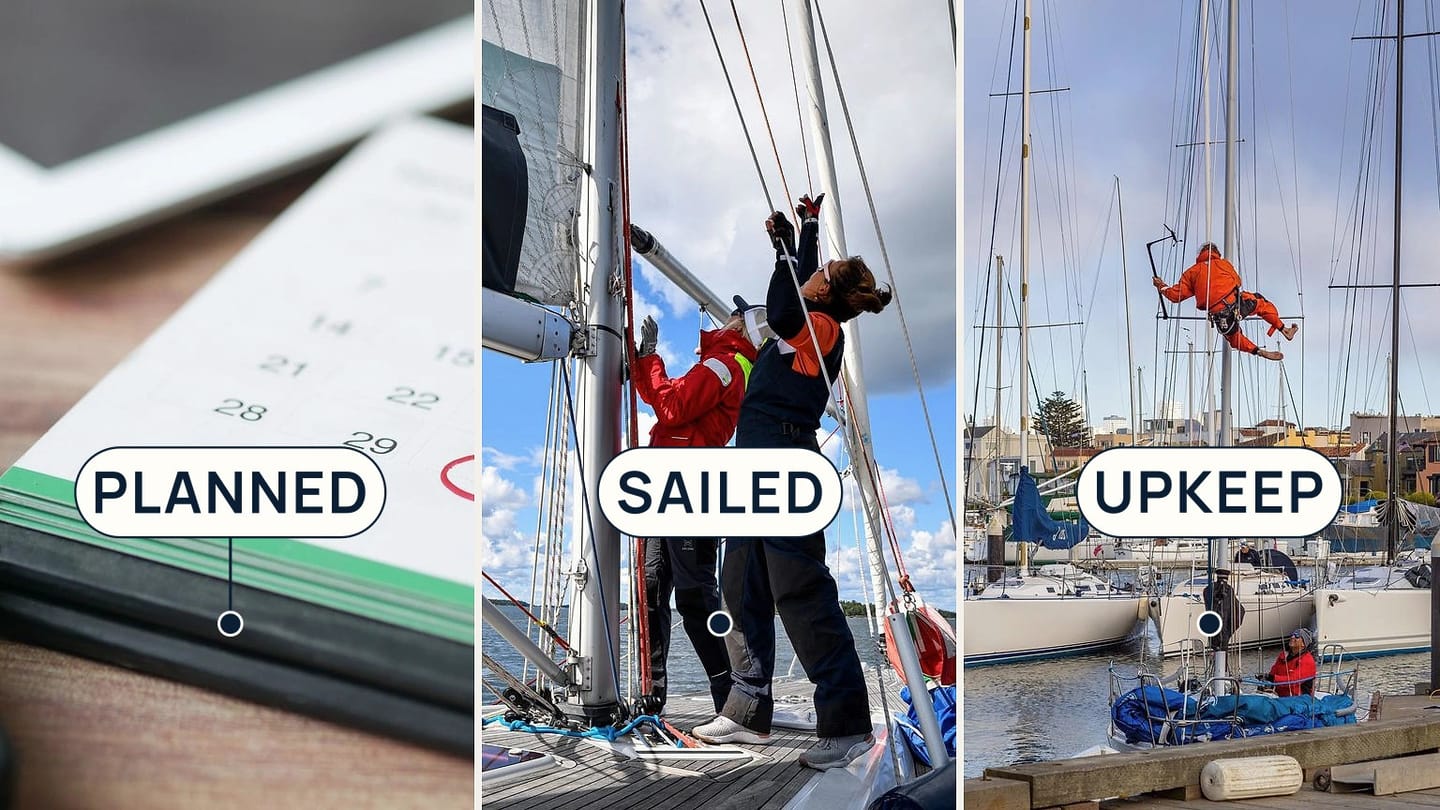
Estimate how often you sailed in the last year or could realistically sail in the next one. Mark the actual days, crew, trip length, and boat type. If you are new, use a club, course, crewing opportunity, or rental pattern to collect evidence. The RYA notes that clubs can provide shared boats, training, and crewing contacts, while models differ by venue. That variation is useful: you can choose a low-commitment route that matches the next skill you need.
Build two twelve-month scenarios. In the club scenario, use its reservation rules to place the trips you want on a calendar. Include a cancelled weather day and one preferred date when your first-choice boat is unavailable. In the ownership scenario, place maintenance, storage, launch, and one uncertain repair on the same calendar. Then count usable sailing days and total commitment.
Before joining, read the full agreement and ask questions in writing. Before buying, define the boat's job and arrange independent inspection. If both routes are close, choose the more reversible decision. A year of club sailing can refine your purchase brief. A rushed boat purchase is harder to unwind.
Ownership becomes more convincing when you repeatedly want the same boat, overnight access, personal setup, a wider cruising plan, and control over maintenance. Club access becomes more convincing when varied boats, short trips, low administration, and a prepared fleet matter more. Shared ownership is a third option, but it needs a written agreement about schedule, money, maintenance, damage, and exit. Review buying your first sailboat before treating the club comparison as a reason to buy immediately.
Use SailStarter's boat-choice lesson to turn this comparison into a one-page test. Write your five most likely sailing days, regular crew, preferred trip length, waters, and the equipment you need. Ask the club to show how those trips fit its real booking rules. Ask local marinas, insurers, yards, and surveyors for the ownership quotes behind the same trips. Then choose the route that puts you on a suitable boat often enough to learn, without hiding work or restrictions. You can repeat the exercise next year as your habits become clearer. Choose the arrangement that supports a sailing routine you will actually use.
Try it from the lesson
Can you spot the next move?
A wide sailboat glides past on two side-by-side hulls, barely leaning at all. What type is it?
Why you can trust this guide
. We build each guide from public seamanship and safety sources, then teach the universal principle before any local difference.