Chart your course
Catamaran vs Monohull for Beginners
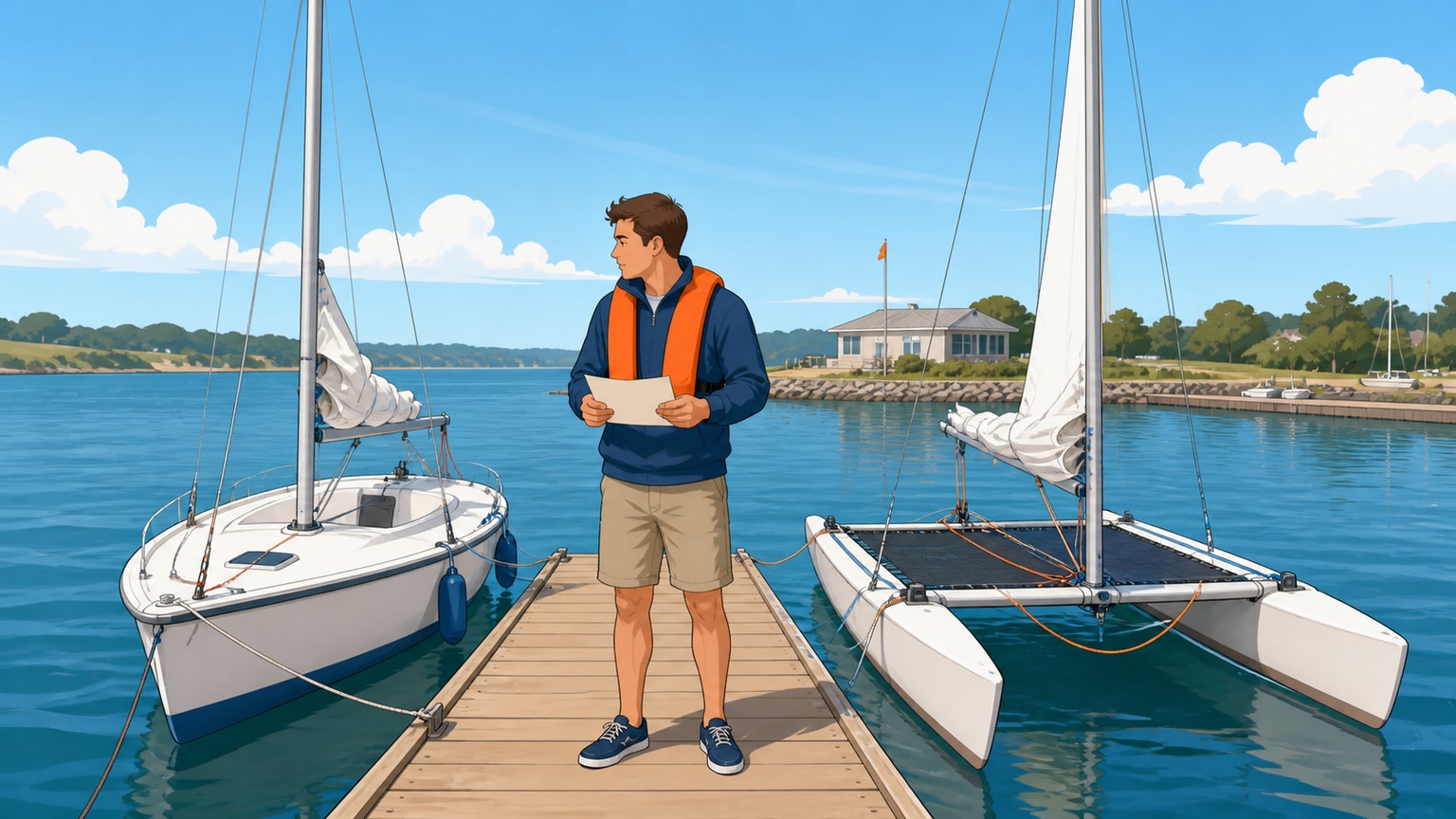
Quick answer
The short version
A catamaran has two hulls and normally sails with less dramatic heel, or sideways lean, because its hulls stand far apart. A monohull has one hull and commonly uses a keel and ballast, so it heels as wind loads the sails and then resists that heel. Both can be suitable for beginners, and sailing organisations offer complete-beginner paths in multihulls and monohulls. Choose based on the boat you hope to sail later, the kind of feedback you enjoy, and the quality of local instruction. A catamaran is not automatically easier, and a monohull is not automatically more “real.” They teach the same wind principles through different physical cues.
Boat comparisons often mix beach catamarans, cruising catamarans, dinghies, and large yachts as if only the hull count mattered. Size and design still change the experience. This article compares the broad beginner cues you can expect, not every boat carrying one or two hulls.
Start with the visible difference. Then look at what it does to stability, heel, steering feedback, and the skills an instructor will emphasize. That makes the choice practical rather than tribal.
The comparison becomes clearer when the boats are in the same size and course setting. A small training catamaran and a large cruising monohull would mix hull form with many other design differences.
Hull structure drives the heel, stability, and feedback a beginner actually feels.
| Dimension | Catamaran | Monohull |
|---|---|---|
| Hull structure | Two hulls with sails and structure between them | One hull, often with a centreboard or fixed keel |
| Heel under sail | Stays flatter through most of its normal range | Heels as wind loads the sails |
| Source of stability | Wide separation between the two hulls | Keel and ballast, or crew weight on a light dinghy |
| Beginner feedback cue | Sail shape, speed, and other signals the instructor points out | Strong physical cue through lean and helm feel |
| Fits this later goal | Beach or cruising catamaran sailing and chartering | Crewing on local monohull yachts or a dinghy fleet |
Count the Hulls, Then Look Below
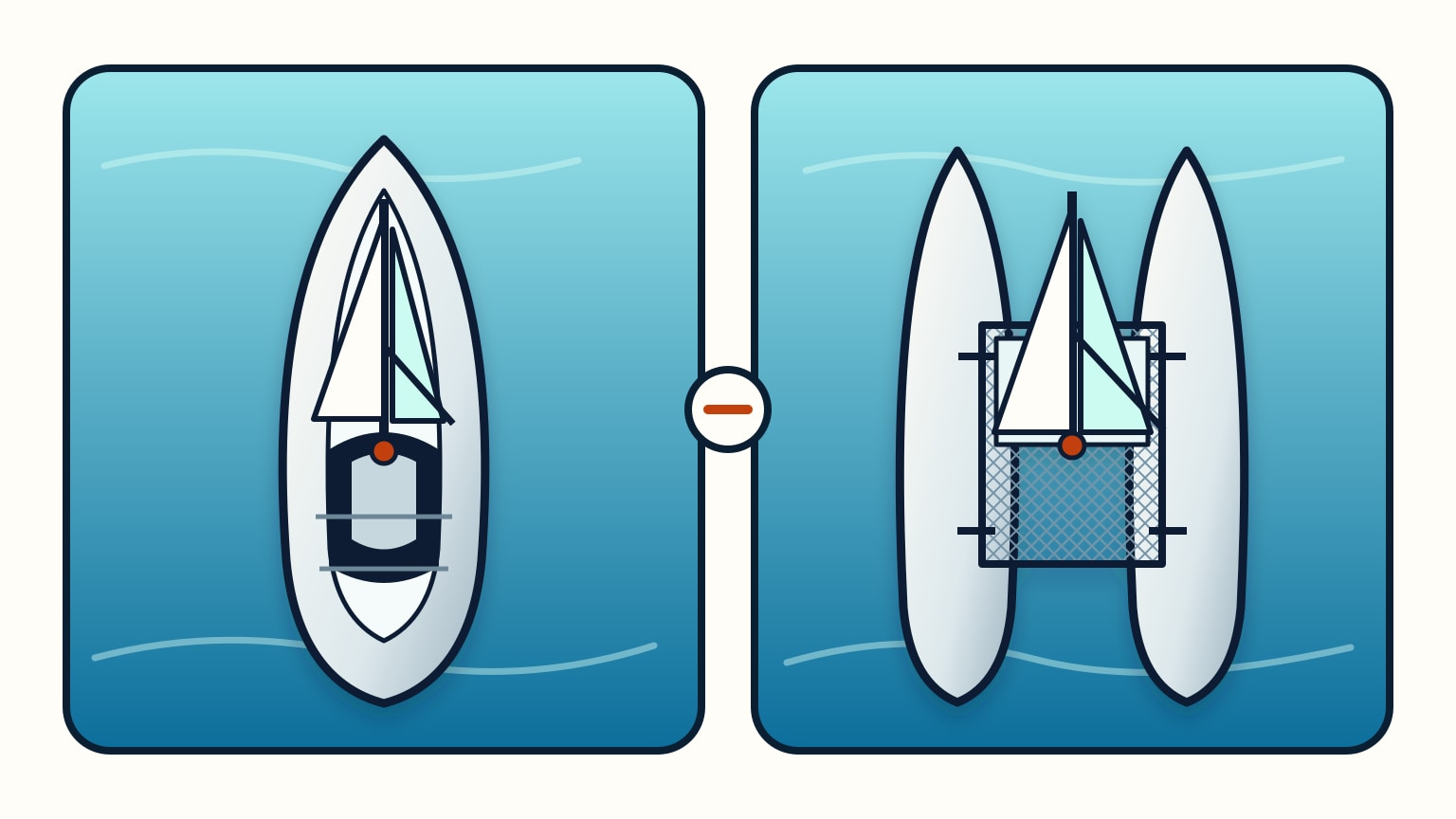
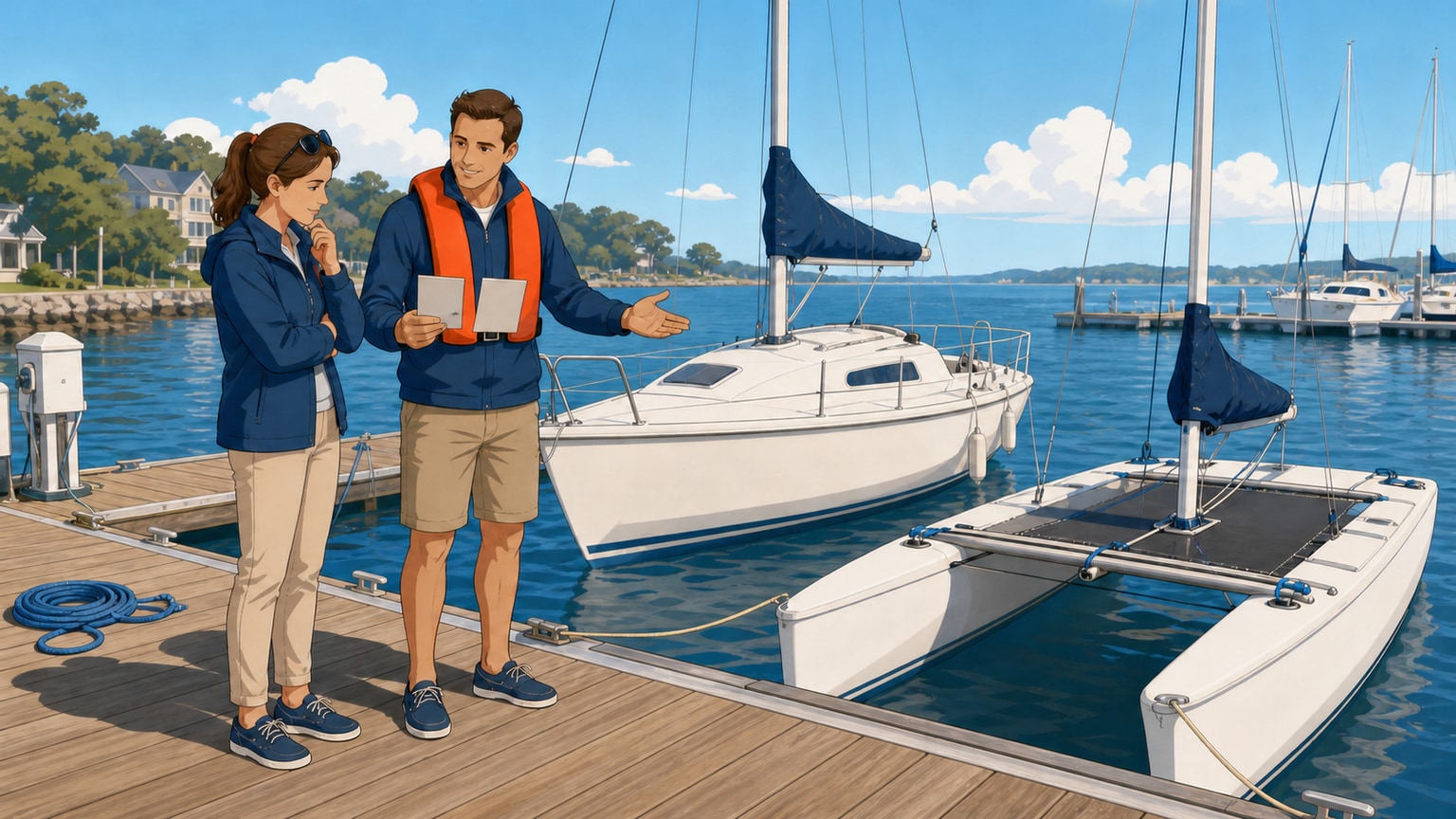
A monohull is one hull. Many training monohulls use a centreboard if they are light dinghies or a fixed keel if they are heavier keelboats. The underwater surface resists sideways movement while the hull leans under sail pressure.
A catamaran is two hulls with the sails and connecting structure between them. Their separation creates a wide platform. The stability provided by those two hulls keeps the boat flatter without relying on the heavy keel used by a traditional monohull.
Hull count does not tell you the whole size or purpose. A small catamaran can be a quick, open training boat sailed by two people. A cruising catamaran can be a large yacht. A monohull can be a tiny dinghy or an ocean-going keelboat. Compare boats in the same learning setting before drawing conclusions about comfort or difficulty.
Ask whether the school means a small open multihull, a small ballasted monohull, or a larger yacht. That answer changes the comparison more than the word “catamaran” alone.
Learn From Heel or From a Flatter Ride
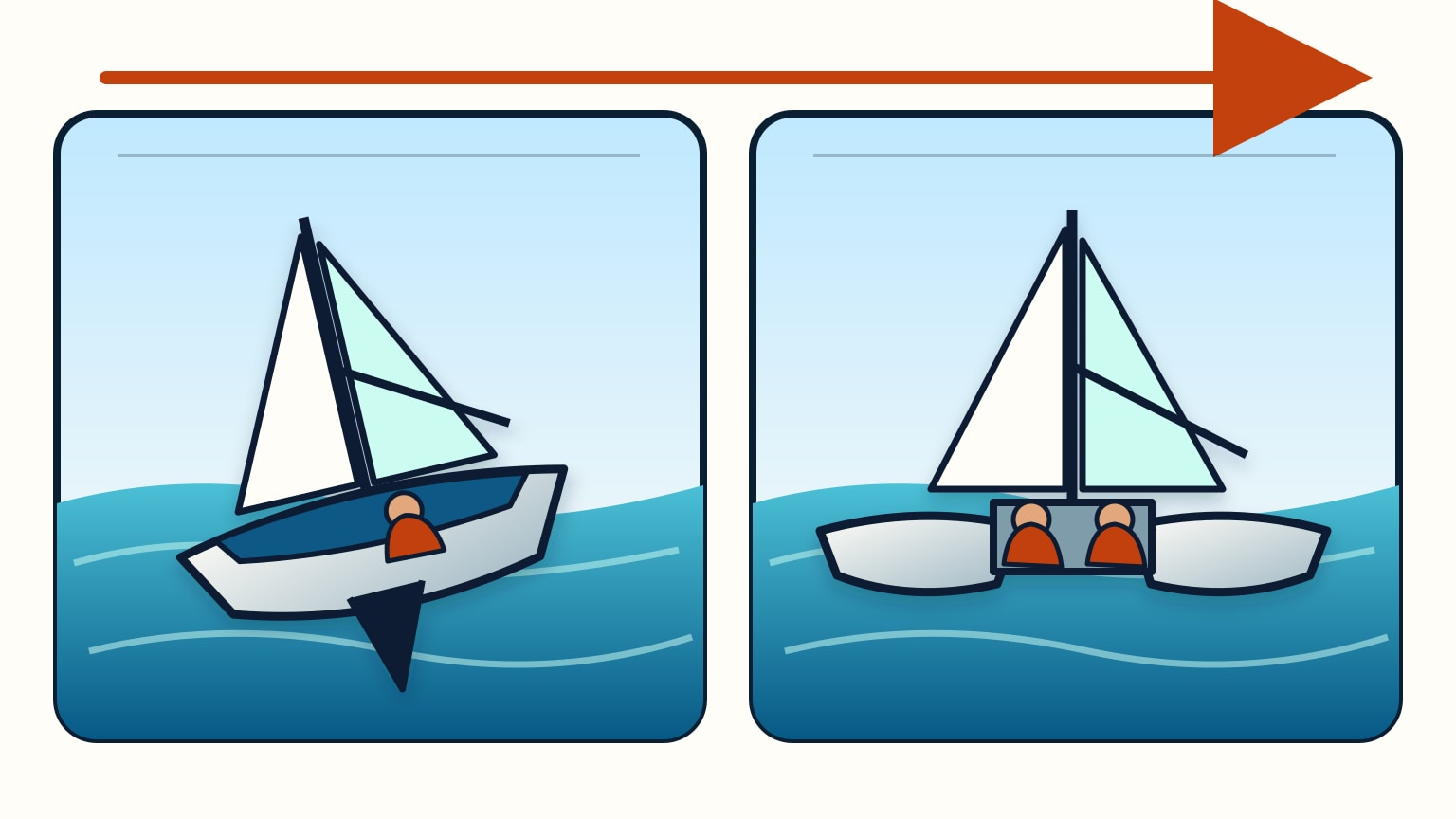
A monohull normally heels as wind pressure builds in its sails. That lean gives a beginner a strong physical clue: the sail plan is loading, the crew’s position matters, and the boat may need a trim or heading adjustment. Ballast or crew weight resists the motion, depending on the design.
A catamaran’s wide stance keeps it flatter through much of its normal sailing range. Beginners who dislike the first sensation of heel may prefer that feel. The reduced lean does not remove the need to read wind and load. It changes the signals you watch.
Do not treat less heel as an absence of load or as proof that every catamaran feels the same. Multihull designs vary widely in size and performance. Ask the school which design it uses, and let the instructor explain how that particular boat communicates changing wind pressure.
Less heel should never be read as an absence of load. The instructor will show which visual and steering cues replace the strong leaning sensation a monohull provides.
Do both boats share the same principles?
Both boats still sail by adjusting course and sails relative to the wind. You learn points of sail, sheet control, steering, tacking, gybing, and crew communication. The vocabulary follows you between hull forms.
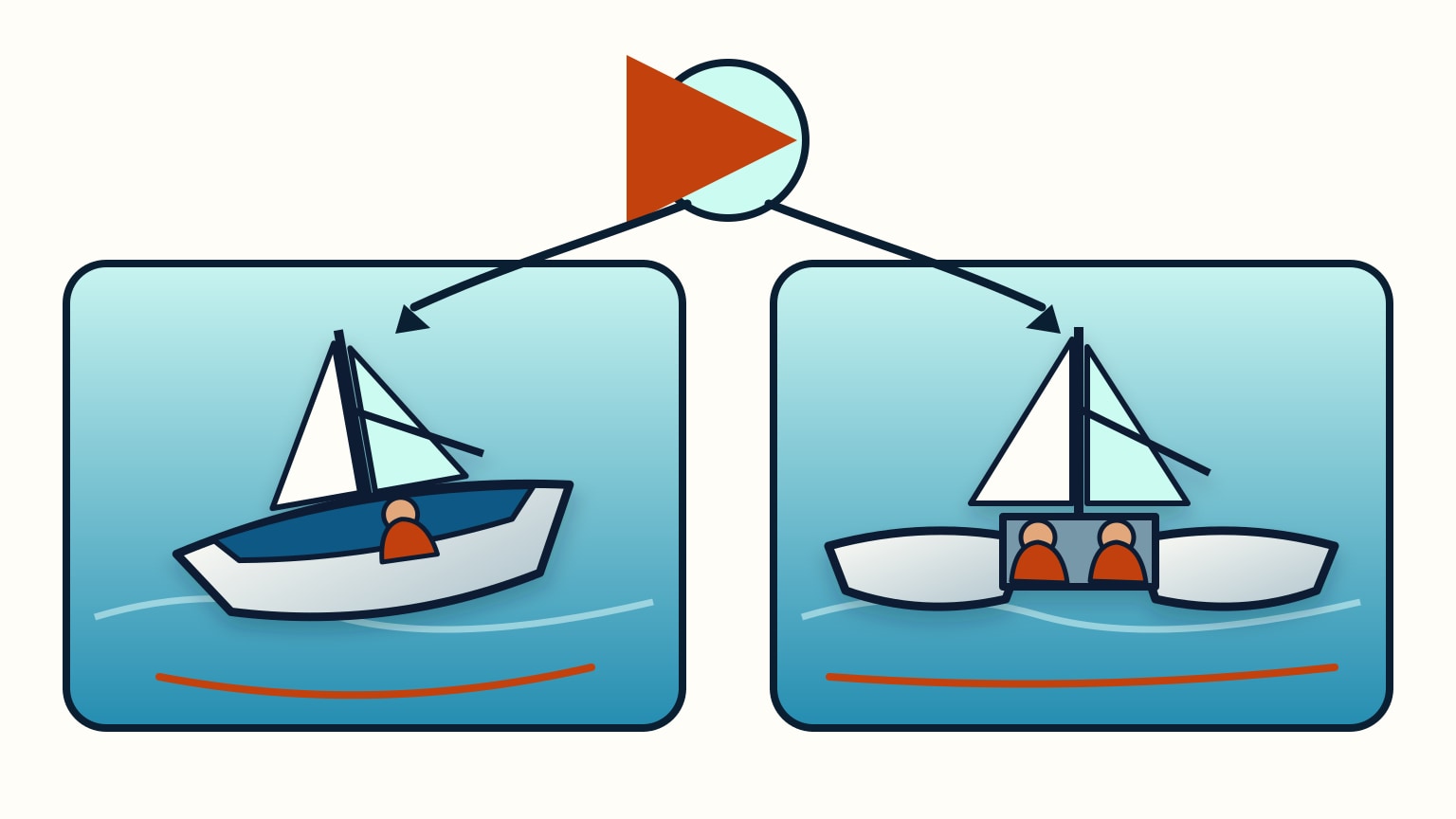
The response can differ. A monohull’s heel makes changes in pressure easy to feel through lean. A catamaran stays flatter, so the same change may be less obvious through lean alone. That contrast is one reason to learn aboard the actual boat rather than assuming that familiar physical feedback will transfer unchanged.
These are reasons for instruction, not reasons to fear one choice. Both boats use the same foundations: steer relative to the wind, trim the sails, prepare before each manoeuvre, and manage the boat's balance. A careful beginner learns the common principle first, then notices how this particular boat expresses it.
For example, both boats tack through the wind, yet their different hull forms can require different handling techniques. Practise the version taught for the boat beneath you.
Choose for Access and Your Next Goal
If you picture yourself sailing beach catamarans or eventually chartering a cruising catamaran, beginning on a multihull makes its handling cues familiar early. If you expect to crew on local monohull yachts or join a dinghy fleet, a monohull course may connect more directly to those opportunities.
Local access matters just as much. Ask which designs the school uses, how the instructor-to-boat setup works, and whether you can practise on the same type after the course. A suitable boat with good support beats a theoretical ideal that is unavailable after one lesson.
You can cross over later. The second hull form often sharpens your understanding because familiar ideas feel different. You already know what trim and wind angle mean, so you can focus on heel and handling differences without starting the language again.
Before booking, ask how many people share each boat and what happens after the course. Regular access to a suitable practice boat is a strong reason to choose that path first.
Compare the lesson you can repeat
Ask each school what boat you will actually sail, how many learners share it, and how often you will handle the helm and sheets. Then ask where you can practise afterward. A boat type available every week at a nearby club may teach you more than your theoretical first choice that you can only sail once.
Look beyond the broad hull label. A small beach catamaran and a cruising catamaran share two hulls but offer very different space, systems, and crew roles. A light dinghy and a ballasted keelboat are both monohulls but give different feedback and consequences. The dinghy versus keelboat guide helps separate that second choice from the catamaran question.
Use the first course to learn shared principles
Whichever hull form you choose, focus on wind direction, points of sail, steering, sail trim, lookout, and crew communication. Name the cues the instructor uses. A monohull may show increasing load through heel and helm feel. A catamaran may stay flatter, so the instructor may direct your attention to sail shape, speed, and other changes. Learn the boat's cue without assuming it will appear the same way on every design.
When you later cross over, keep the shared idea and reset your expectations about response. Ask for a briefing on turning, stopping, docking, sail reduction, and the boat's limits. Do not treat experience on one hull form as proof that you already know the handling of another.
Decide with four practical questions
First, which boat connects to the sailing you want to do next? Second, which course gives you enough time on the controls? Third, which design and venue suit the crew's access and comfort needs? Fourth, where can you continue practising with suitable support?
Write the answers for both options. If one school cannot explain the practice path, keep looking. If both paths are sound, choose the one that makes you more likely to return. You can learn the other form later, and the contrast may sharpen your understanding. For more help separating names, review types of sails and the boat descriptions in the first lesson before visiting the training fleet.
Start with SailStarter’s boat-types lesson to separate hull count from keel, centreboard, and rig. That distinction prevents a common mix-up: a catamaran describes two hulls, while a sloop describes a sail plan, so one boat can be both. Once the categories are clear, visit a local club or school and look at its actual training boats. Ask which physical cues the instructor teaches first, how many people sail each boat, and what practice follows the course. Your goal is not to settle an argument between designs. It is to choose a well-supported first experience that connects with the sailing you want to do. Either route can build a sound foundation.
If possible, take a short supervised trial in each type before booking a longer course. Use the same questions afterward: What cue showed excess load? How did the boat turn and stop? Where did the crew sit and move? Which controls could you reach? The comparison should describe what you felt and did, not repeat a general claim about comfort or speed.
Try it from the lesson
Can you spot the next move?
A wide sailboat glides past on two side-by-side hulls, barely leaning at all. What type is it?
Why you can trust this guide
. We build each guide from public seamanship and safety sources, then teach the universal principle before any local difference.