Chart your course
Dead Reckoning for Beginners

Quick answer
The short version
Dead reckoning advances your last known position using the course you steered, the speed you made, and how much time has passed, so you always have a working estimate of where you are between fixes. Steer 060 degrees at 4 knots for 90 minutes and your dead-reckoning position sits 6 nautical miles from where you started, along that course line. It is deliberately approximate: it does not know about current, leeway, or a small steering error, which is exactly why you check it against a real fix (two bearings crossed, a landmark passed close aboard, a GPS reading) whenever you can get one, and restart the plot from there.
Before GPS, dead reckoning was the entire method: chart, compass, log, and a pencil, advancing a line across the paper one leg at a time. It has not gone away, because a chartplotter can lose its fix, a battery can die, and knowing roughly where you are without staring at a screen is worth having regardless of what electronics are aboard. The math is simple enough to do in your head; the discipline is doing it consistently, every time you change course or speed, and updating it the moment a better position arrives.
Advance a fix along your course and speed
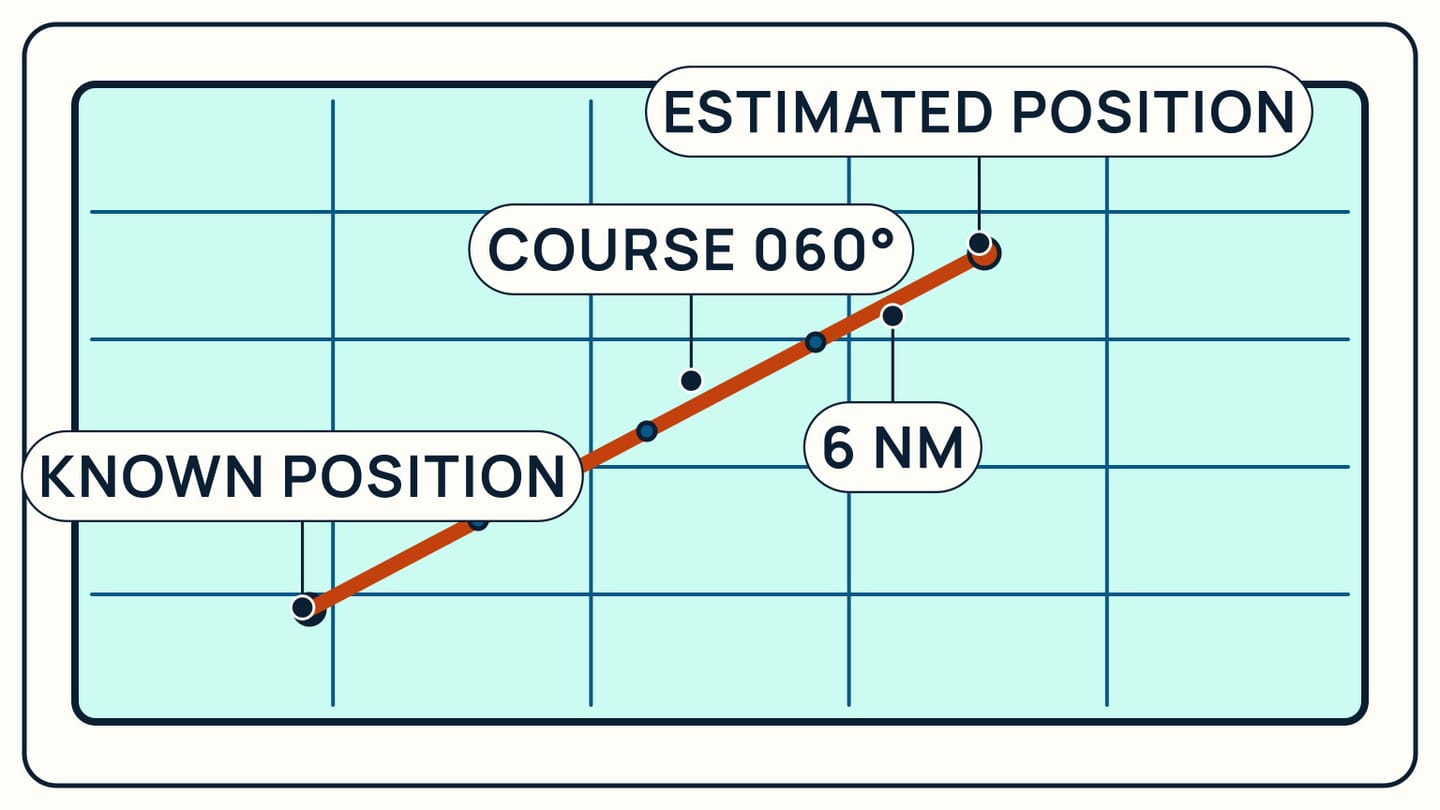
Start from a position you trust completely, called a fix: a spot you got from crossed bearings, a buoy passed close aboard, or a GPS reading you have reason to believe. From there, draw a line in the direction of the course you are steering, and mark off the distance you expect to cover using the same distance-speed-time arithmetic behind any passage plan: distance equals speed multiplied by time.
Say you leave a fix steering 060 degrees true at a steady 4 knots. Ninety minutes later, work out how far that leg has carried you: at 4 knots for an hour and a half, the boat has covered 6 nautical miles. Measure that 6 nautical miles along the 060-degree line from your fix, and the point you land on is your dead-reckoning position at that moment. Not a guess, a calculated estimate, built from numbers you actually have, and worth exactly as much as those numbers are accurate.
Label it properly so anyone else looking at the chart can read it back: the course above the line, the speed below it, and the time beside the point itself. A line with no label is just a mark; a labeled one is information another person aboard can use without asking you what it means.
The plot only works if the log feeds it honestly
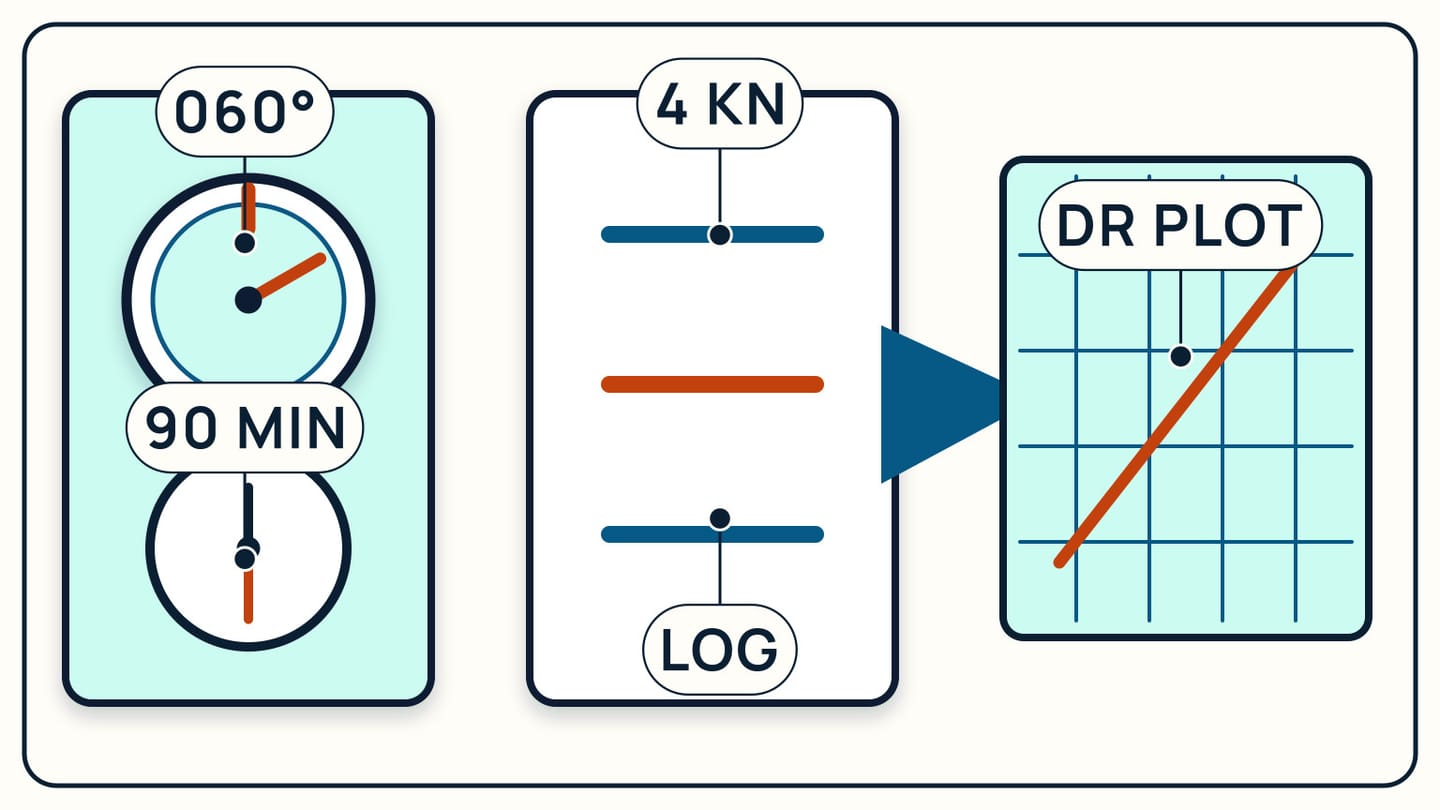
Dead reckoning runs on four numbers, and all four have to come from somewhere real: the course actually steered, not the course you meant to steer; the speed actually made, read off the log or GPS rather than assumed from the boat's rated hull speed; the time elapsed, read off a watch or the boat's clock; and the position you started from. Miss any one of those and the whole line drifts away from where the boat actually is, even though the arithmetic itself was done correctly.
This is why the habit matters more than the formula. Note your course and speed every time either one changes, and write down the time you changed it. A compass course held for 90 minutes at 4 knots is one clean leg to plot; three unlogged course changes across that same 90 minutes, remembered roughly afterward, turn one simple calculation into a guess wearing the clothes of a calculation.
Keep it simple on a small boat: a notebook, a pencil, and a glance at the compass and speed log each time something changes is enough. The plot is only ever as good as what actually went into it.
Know what the estimate cannot see
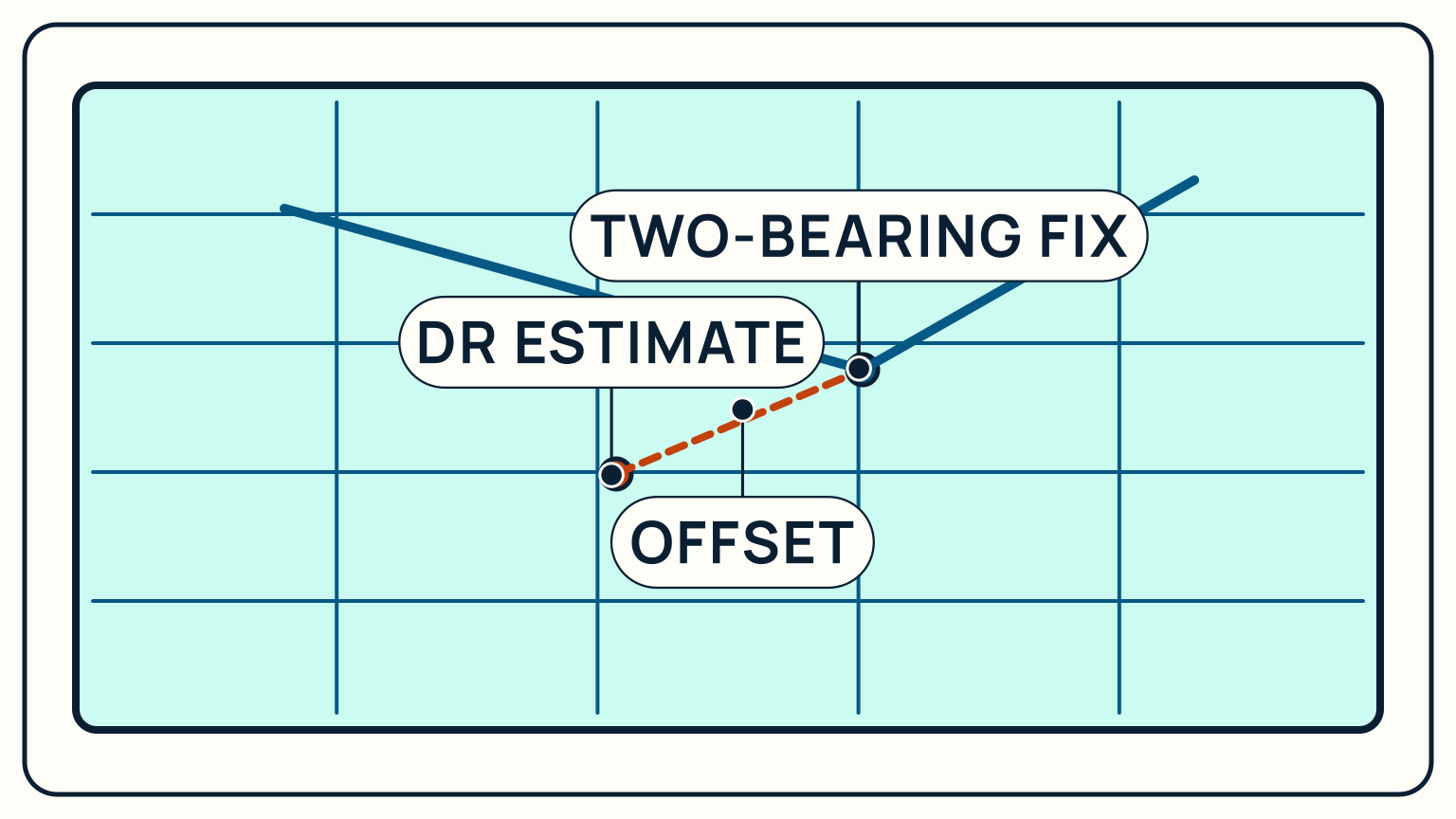
Dead reckoning assumes the boat moves exactly as steered and logged, with nothing pushing it sideways. Real water rarely cooperates. Current moves the boat bodily with it, wind creates leeway, a sideways slide off the intended track, and even careful steering wanders by a degree or two. None of those show up in a plain dead-reckoning line, because the line only knows the numbers you fed it.
When you get a genuine fix, for example two compass bearings on charted landmarks crossed to a point, compare it against where the dead-reckoning line said you would be. The gap between the two is not an error to feel bad about, it is useful information. It tells you roughly how much the current has been setting you, in which direction, and lets you adjust your next estimate accordingly rather than repeating the same blind guess forward.
Two specific words describe that gap precisely, and they are worth knowing even as a beginner. Set is the direction the current has been pushing you; drift is the distance it has carried you, usually stated as a speed in knots. Wind adds a separate effect called leeway, the sideways slide of the boat off its intended track, and it affects sailing vessels more than most other boats because of how much hull and rig sit exposed to the wind. Current and leeway together are usually the two biggest reasons a real fix and a dead-reckoning position disagree.
Once you know that current effect, you can apply it to future dead-reckoning legs and call the corrected result an estimated position instead of a plain dead-reckoning one. It is still an estimate, just a better-informed one, and it is still no substitute for the next real fix.
Mark it often enough to catch a problem early
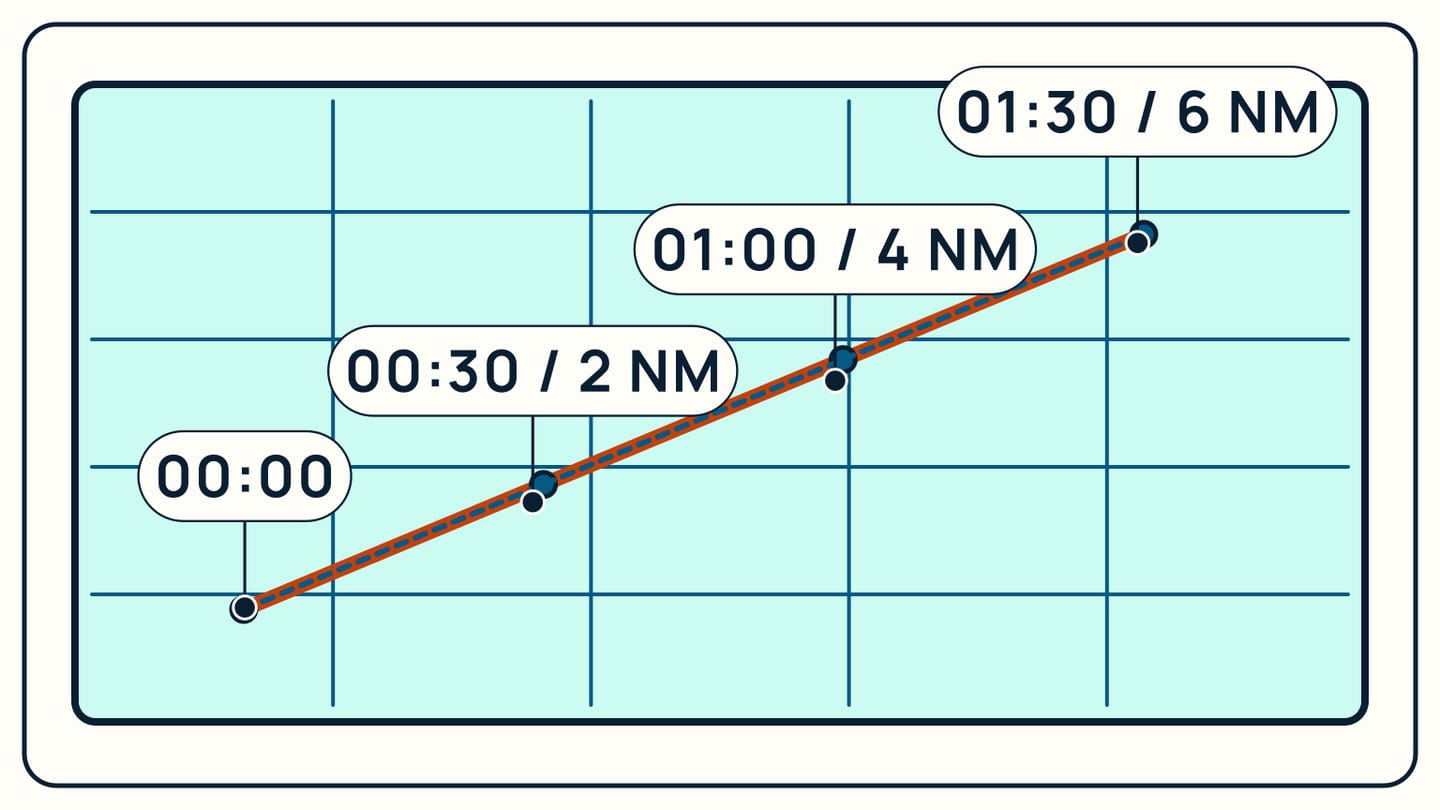
A dead-reckoning position is worth marking at least every hour, after every change of course or speed, and after every fix, so the chart always shows a recent estimate rather than one that is hours stale. On a short coastal hop, marking more often than that, say every 30 minutes, costs almost nothing and pays for itself the first time something looks wrong.
Working the earlier example, that 4-knot, 060-degree leg breaks into three tidy 30-minute marks: 2 nautical miles at the first mark, 4 at the second, 6 at the third. Each one is a checkpoint. If your actual position at the second mark looks nothing like the plotted 4-nautical-mile point, you find out with an hour of options still ahead of you, not at the end of the leg when the only choices left are worse ones.
There is a fourth trigger worth adding to the list above: mark a dead-reckoning position after plotting a single bearing too, since one line of position by itself only crosses your course line at one point, and that crossing is worth recording even though it is not yet a full fix. The longer a passage runs without a real fix, the further a dead-reckoning position can have drifted from the truth, which is exactly why frequent marks matter more on a longer offshore leg than on a short afternoon sail where the next landmark is rarely far away.
Frequent marks also make the plot easier to explain to anyone else aboard. A chart with clean 30-minute intervals tells a clear story about where the boat has been and where it is likely headed next; a single line from three hours ago tells almost nothing useful about right now.
Reset the plot at every new fix
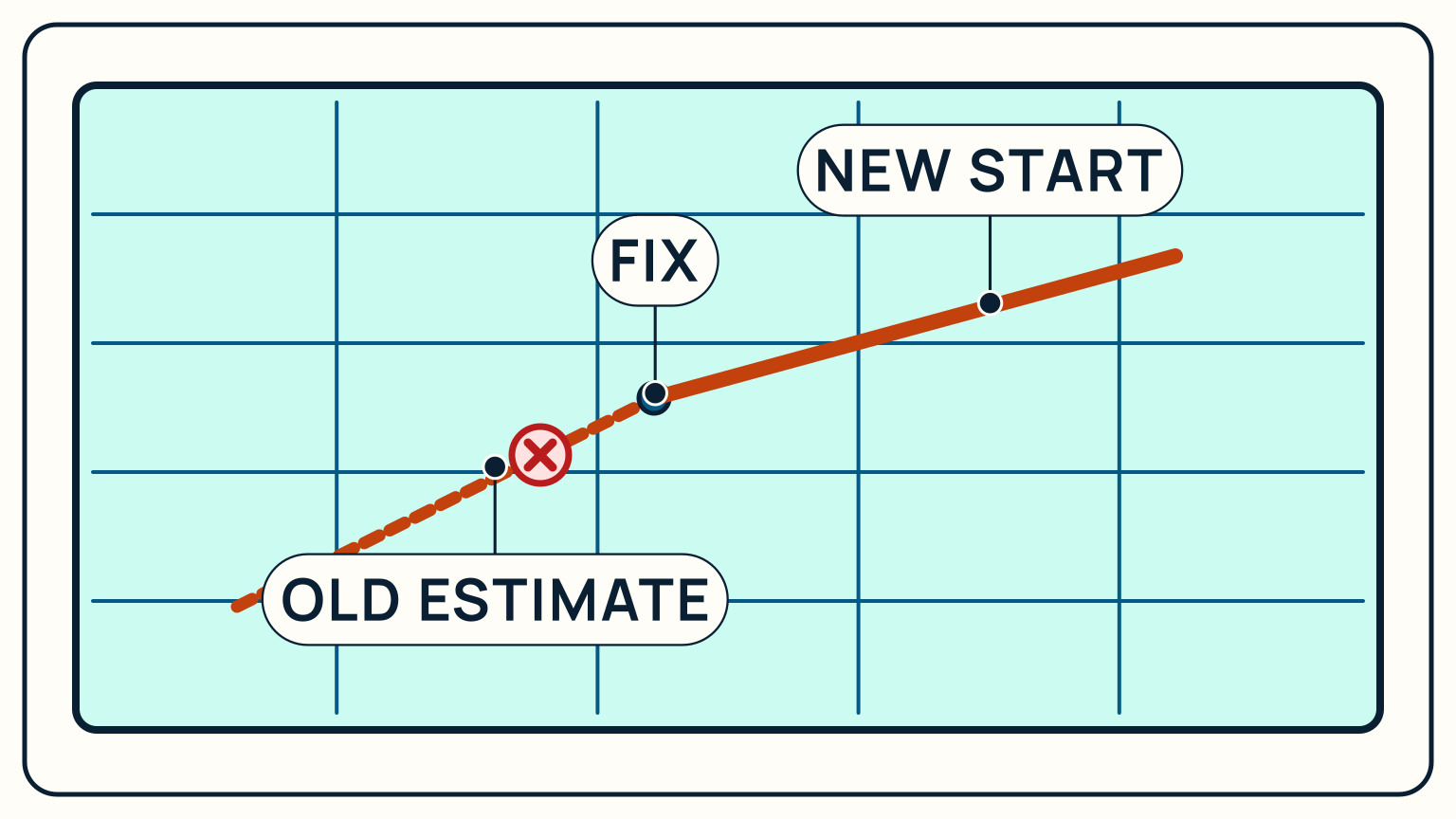
A dead-reckoning line is only meant to bridge the gap until your next real fix, and once that fix arrives, the old line has done its job. Start a fresh course line from the new fix rather than continuing the old dead-reckoning line from wherever it happened to end. Carrying an outdated line forward just compounds whatever error already crept in.
Log every fix as you take it: the time, the position, and how you got it, whether from two bearings, a buoy passed close aboard, or a GPS reading. That log is what makes the habit worth having beyond the moment. If the electronics fail or visibility drops, your last logged fix plus the course and speed you have held since is exactly the position you would work forward from, or read out over the radio if it ever came to that.
Treat the reset as routine, not an event. Every fix earns a fresh line; every fresh line is dead reckoning doing exactly what it is meant to do until the next one arrives.
Dead reckoning is not a relic from before GPS. It is the same course-speed-time arithmetic behind distance, speed, and time planning, applied continuously so you always have a working position between fixes instead of a blank chart. Practice it on a calm afternoon with nothing at stake, crossing a couple of bearings with a hand-bearing compass to check your own line against reality. SailStarter's Module 10 lessons take this further, including how to take a position fix, once you can plot a course line confidently.
Try it from the lesson
Can you spot the next move?
You take a single bearing on a lighthouse. What does that one bearing actually tell you (your exact position, or something less)?
Why you can trust this guide
. We build each guide from public seamanship and safety sources, then teach the universal principle before any local difference.