Chart your course
How to Take a Compass Bearing

Quick answer
The short version
A compass bearing is the direction from where you are to something you can see, read off a compass and expressed as a number from 000 to 359 degrees. Point a hand-bearing compass at a lighthouse and read 072 degrees: that is the direction from your position to the lighthouse, not the other way around. One bearing alone only tells you that you are somewhere along that line. Cross it with a second bearing on a different object and the two lines meet at a single point, your position. Bearings also work for safety in their own right, since a steady, unchanging bearing on an approaching vessel is the classic sign of a collision course.
A hand-bearing compass is one of the cheapest, most reliable instruments on a small boat, and it does two jobs at once: it helps you work out where you are, and it helps you judge whether another vessel is on a path to meet you. Both uses come down to the same skill, sighting an object accurately and reading the number the compass gives you. Once that part is automatic, everything downstream, position fixes, collision checks, keeping a running log of bearings on a passage, gets a lot easier.
Sight the object, not the compass
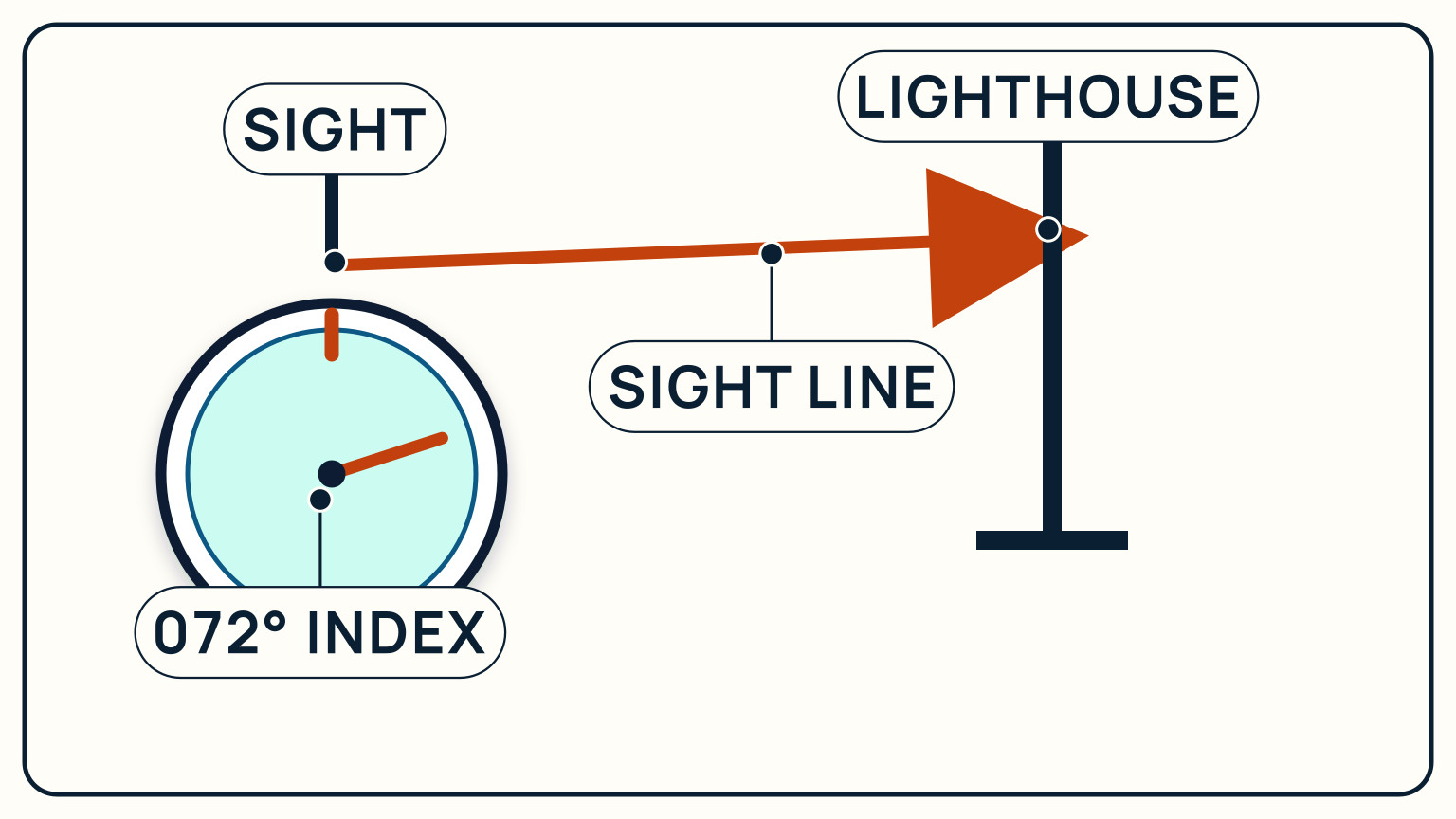
Hold the compass up at eye level and look through its sight, lining it up directly on the object you want a bearing to. A lighthouse, a headland, a buoy, or another boat all work, provided you can identify exactly which one it is on the chart. A bearing on the wrong object, taken confidently, is worse than no bearing at all.
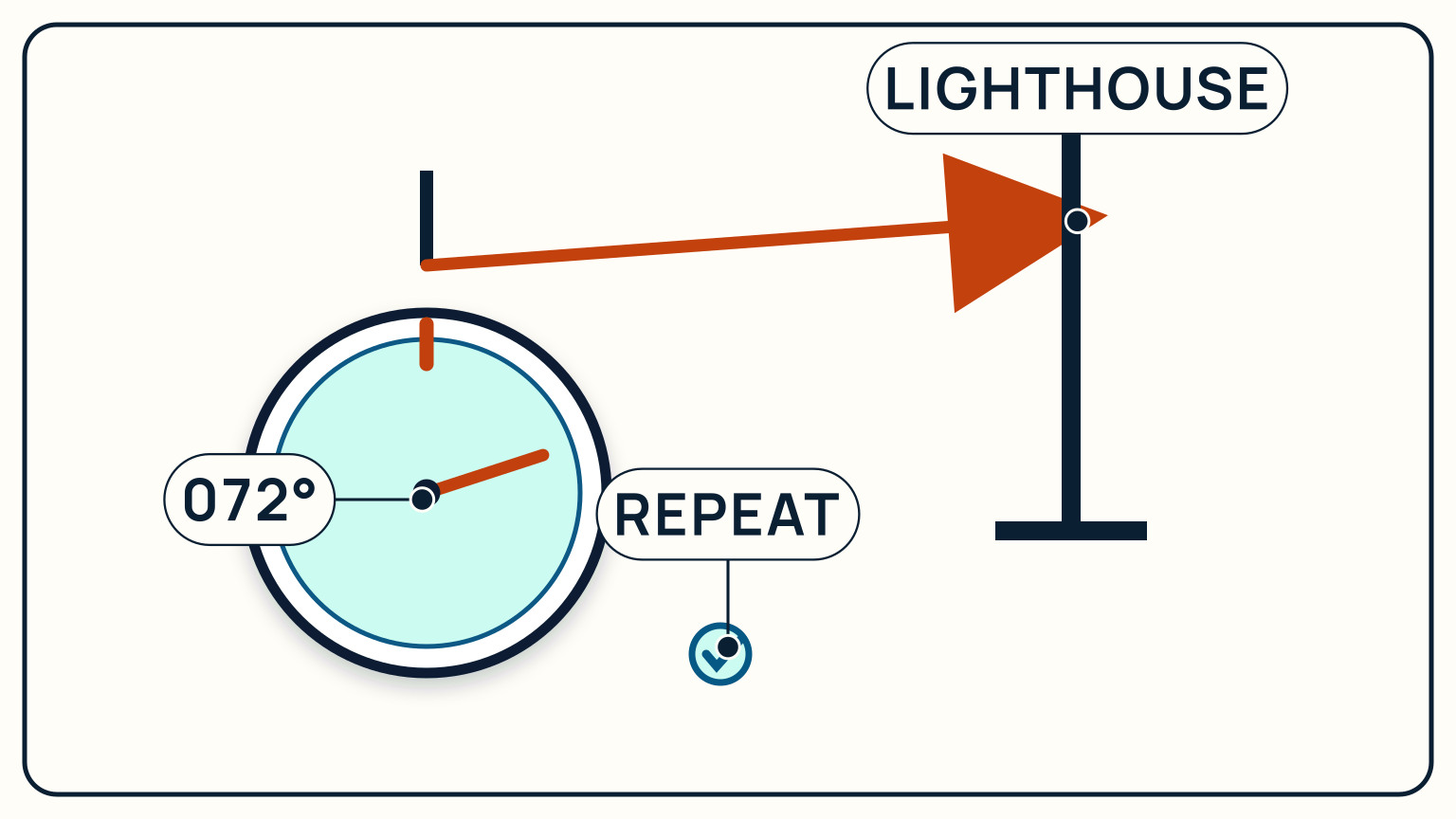
Hold the compass level and steady for a few seconds before reading it. A compass card swings and settles slowly, especially on a moving boat, and a bearing grabbed in the middle of a swing is a guess dressed up as a reading. Sailing instructors who teach the technique put it simply: accuracy comes down to repeatability, meaning you get the same number back if you sight the same object twice in quick succession. If two attempts disagree by more than a couple of degrees, sight again rather than trusting either one.
Practice this on land before you need it on the water. Sighting a fixed object from your own porch or a park bench, then checking the bearing against a map, builds the steady-hand habit somewhere nothing is moving under your feet.
Read the number the same way every time
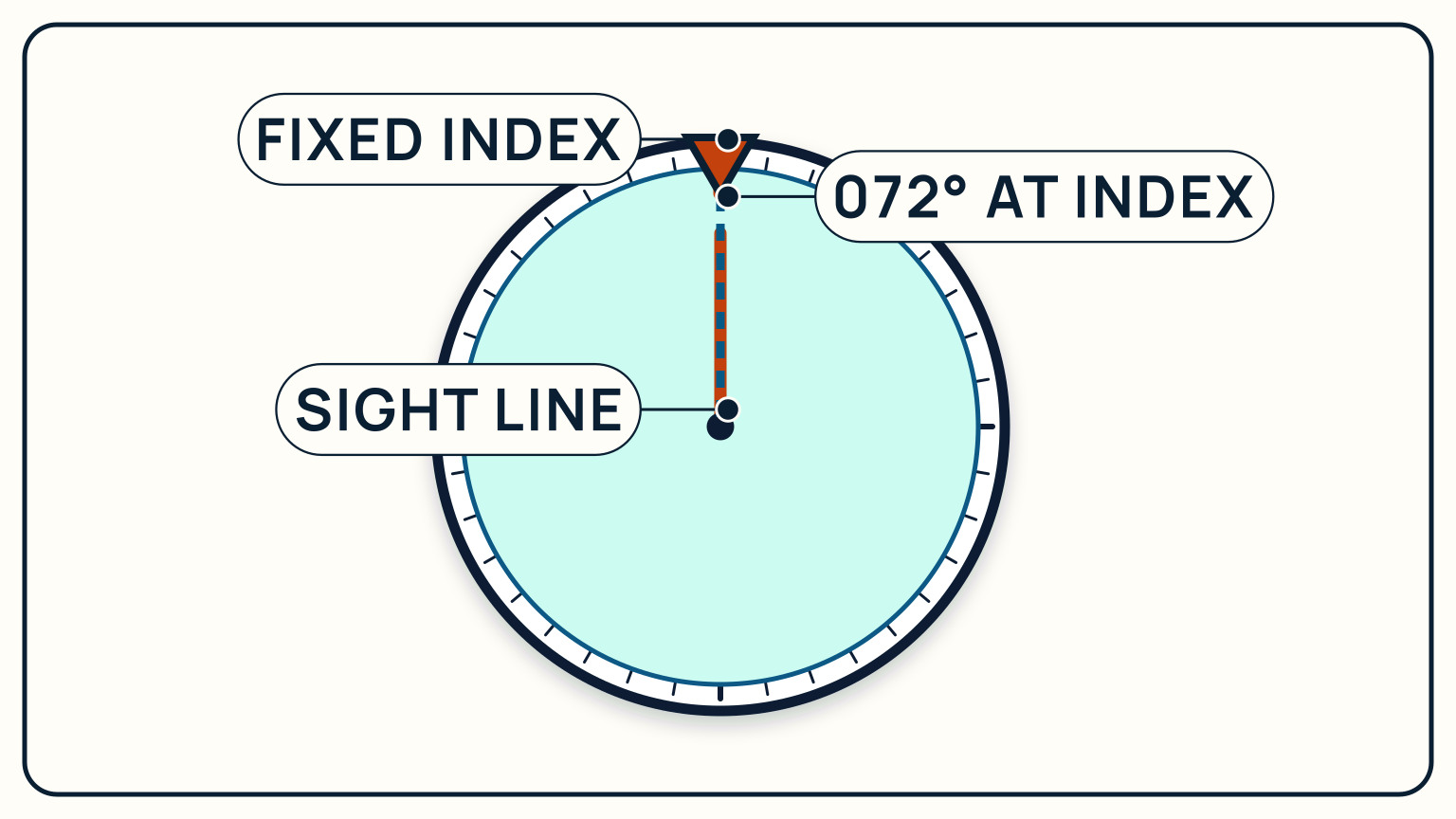
A hand-bearing compass reads the bearing where a fixed index mark crosses the rotating compass card, not wherever your eye happens to land. Once the object is sighted and the card has settled, read the number sitting at that mark, 072 degrees, meaning the lighthouse lies 072 degrees from your position.
That reading is a magnetic bearing, because the compass card is responding to the earth's magnetic field rather than true north. Before you plot it on a chart, convert it: read the variation value and direction printed at the center of your chart's own compass rose, and apply it the way that rose shows, to turn your magnetic reading into a true bearing. Skip that step and a bearing that looks perfectly precise on the compass lands in a slightly wrong spot on the chart.
Write the number down as soon as you read it, along with the time and which object it was taken on. A bearing you are still holding in your head five minutes later, after the boat has rolled through a wave or two, is a bearing you are about to misremember.
Cross two bearings to fix your position
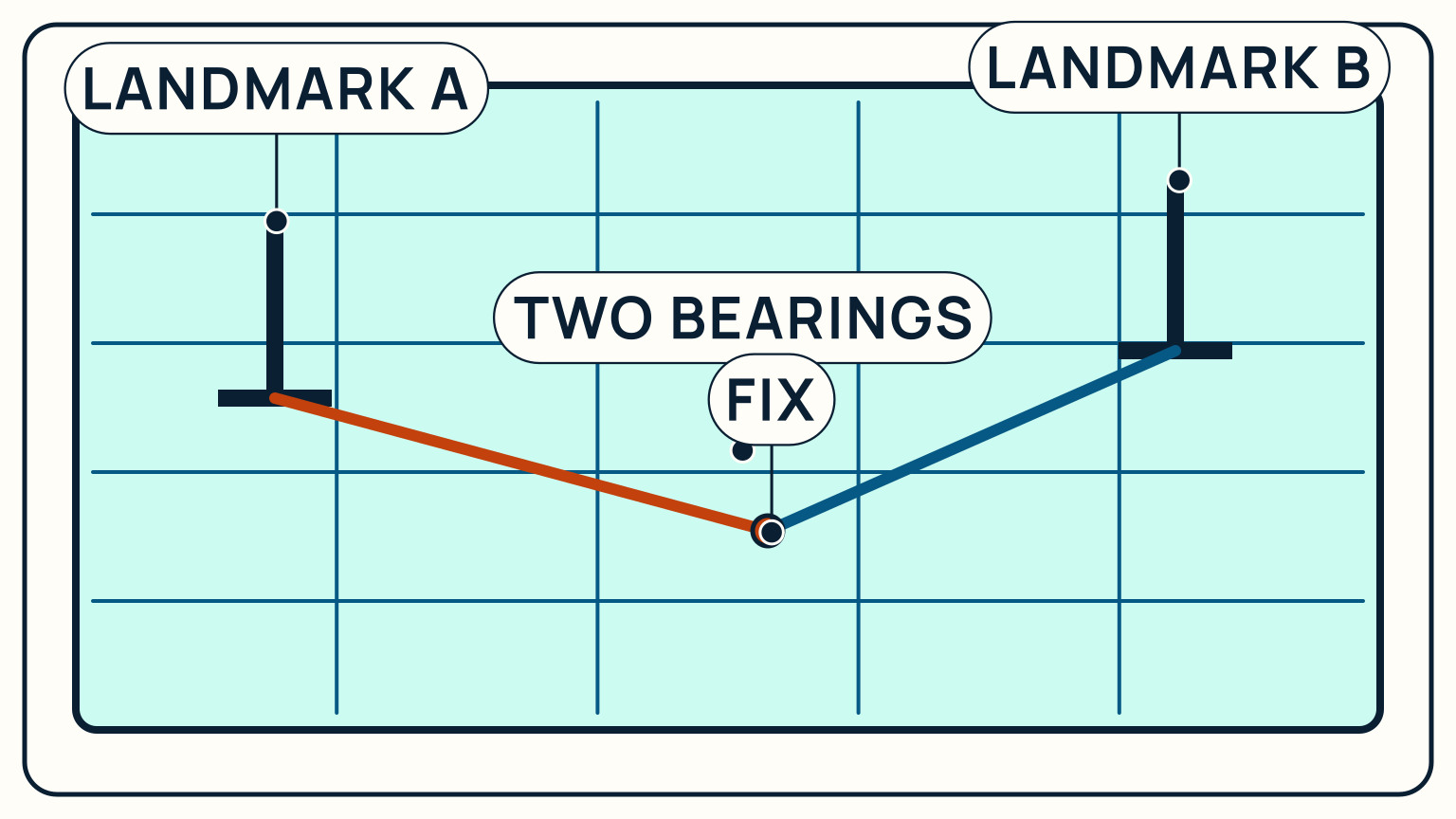
One bearing only places you somewhere along a single line running through the object you sighted; it does not say where on that line you are. Take a second bearing on a different, well-separated object, plot both lines on the chart from their charted positions, and the point where the two lines cross is your position, called a fix.
Two objects spread roughly 90 degrees apart from your point of view give the sharpest crossing angle and the most reliable fix. Objects close together in angle produce two nearly parallel lines that cross at a shallow, mushy angle, and a small error in either bearing then shifts the fix by a lot. If you can find a third object, take a third bearing too: three lines rarely meet at one exact point, and the small triangle they leave, called a cocked hat, tells you how much to trust the fix.
Only one identifiable object in sight, such as a single offshore lighthouse? You can still get a fix with a technique called a running fix. Take a bearing on the object and note the time, then hold your course and take a second bearing on that same object a while later. Use your speed and the elapsed time to work out how far you have travelled, advance the first bearing line forward by that distance along your course, and where the advanced line crosses the second bearing is your fix. That advancing step borrows straight from dead-reckoning math, so any current or steering error during the interval carries into the running fix too, unlike a true two-object fix taken at a single instant.
This is also exactly what taking a position fix is built from, and it is the tool that checks a dead-reckoning estimate against where you actually are.
Use a steady bearing to judge collision risk
Bearings are not only for fixing your own position. Taking a bearing on an approaching vessel and repeating it a few minutes later tells you something safety-critical: whether that vessel is on a path to meet yours. The international collision regulations are direct about it: risk of collision is deemed to exist if the compass bearing of an approaching vessel does not appreciably change, and that risk can still exist even with some bearing change when the other vessel is very large, towing something, or already close.
Practice the same sighting technique on a fixed object first, so it is automatic before you ever need it on a moving one. Sight the same lighthouse or headland twice, a few minutes apart, and confirm you get the same 072-degree reading both times if neither of you has moved. That repeatability is exactly what you are checking for on an approaching vessel: a bearing holding steady, rather than swinging clearly ahead or astern of you, is the warning sign worth acting on early.
This is a habit, not a one-off check. Keep sighting an approaching vessel every few minutes until you are certain which way the bearing is actually moving, and treat a slowly drifting bearing with some caution rather than instant relief. The same collision regulations require any course or speed change made to avoid a collision to be large enough to be readily apparent to another vessel, precisely because a small change is not, so a bearing that only just seems to be opening is not automatic proof that the other vessel has altered course at all.
Log every bearing you take
A bearing is only useful once it is written down where someone else, or your own later self, can find it: the object sighted, the bearing itself, the time, and which charted feature it corresponds to. A log entry reading "072, lighthouse, charted light characteristic noted, 1430" says everything a fix or a collision check needs, at a glance, days or years later if it ever matters.
This habit compounds. A logged bearing lets you plot a fix immediately, without trying to remember which of two similar-looking headlands you actually sighted. It lets a crewmate pick up the plot exactly where you left it. And if you ever need to hand your position to someone else over the radio, a recent logged bearing alongside your last known fix is a large part of what you would read out.
Build the habit on calm days when nothing depends on it, so it is already second nature by the time visibility drops or a genuine navigation decision is riding on the numbers in your log.
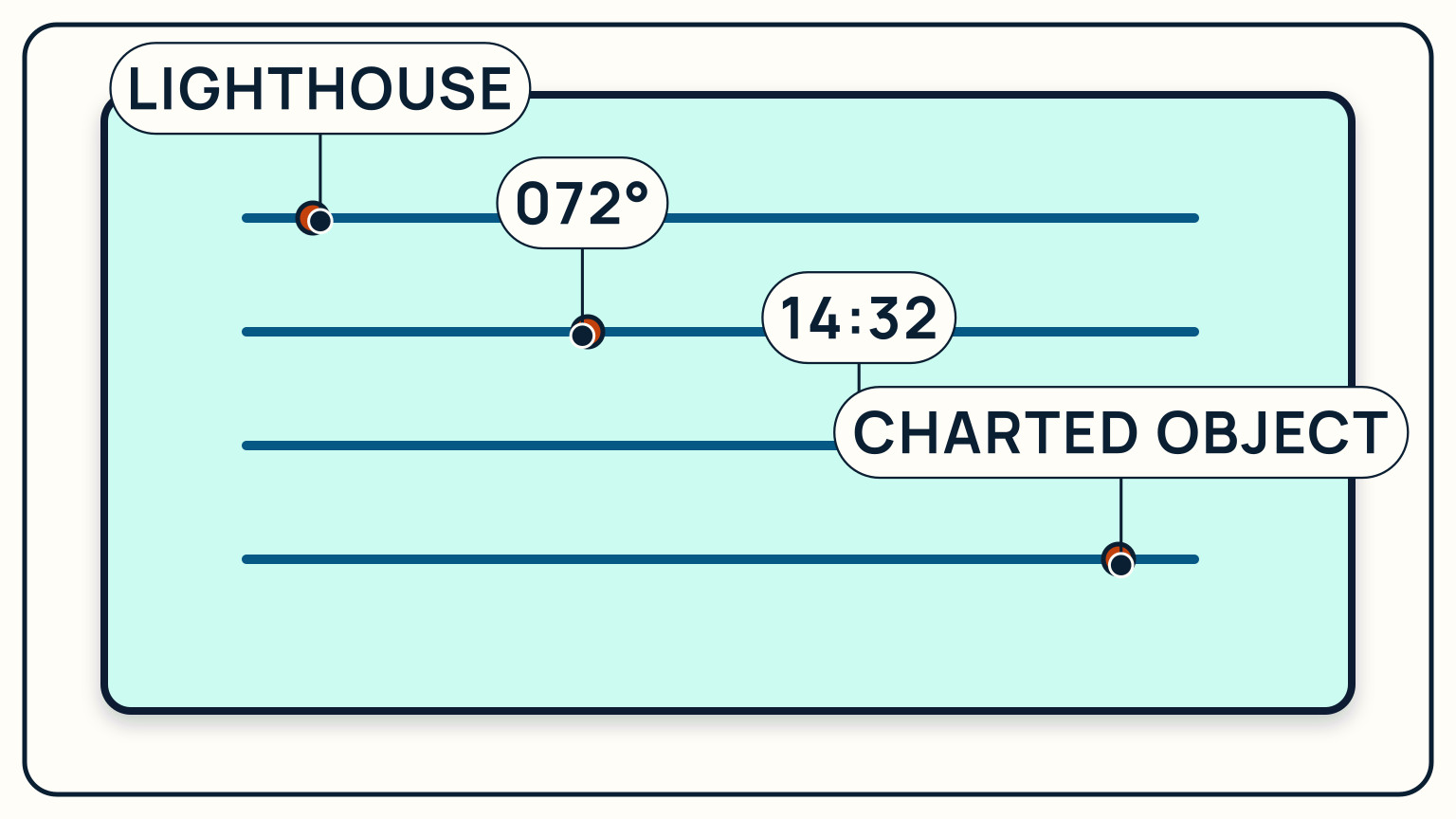
A hand-bearing compass rewards practice more than almost any other instrument on a small boat, and most of that practice can happen on dry land before it ever matters afloat. Sight fixed objects, check that you get the same reading twice, and cross a couple of bearings into a fix the way dead reckoning depends on between real positions. SailStarter's Module 10 lessons put this together with reading a chart and steering the course you plot, each one short, visual, and followed by a quiz.
Try it from the lesson
Can you spot the next move?
You take a single bearing on a lighthouse. What does that one bearing actually tell you (your exact position, or something less)?
Why you can trust this guide
. We build each guide from public seamanship and safety sources, then teach the universal principle before any local difference.