Chart your course
Fixed vs Folding vs Feathering Propellers
Quick answer
The short version
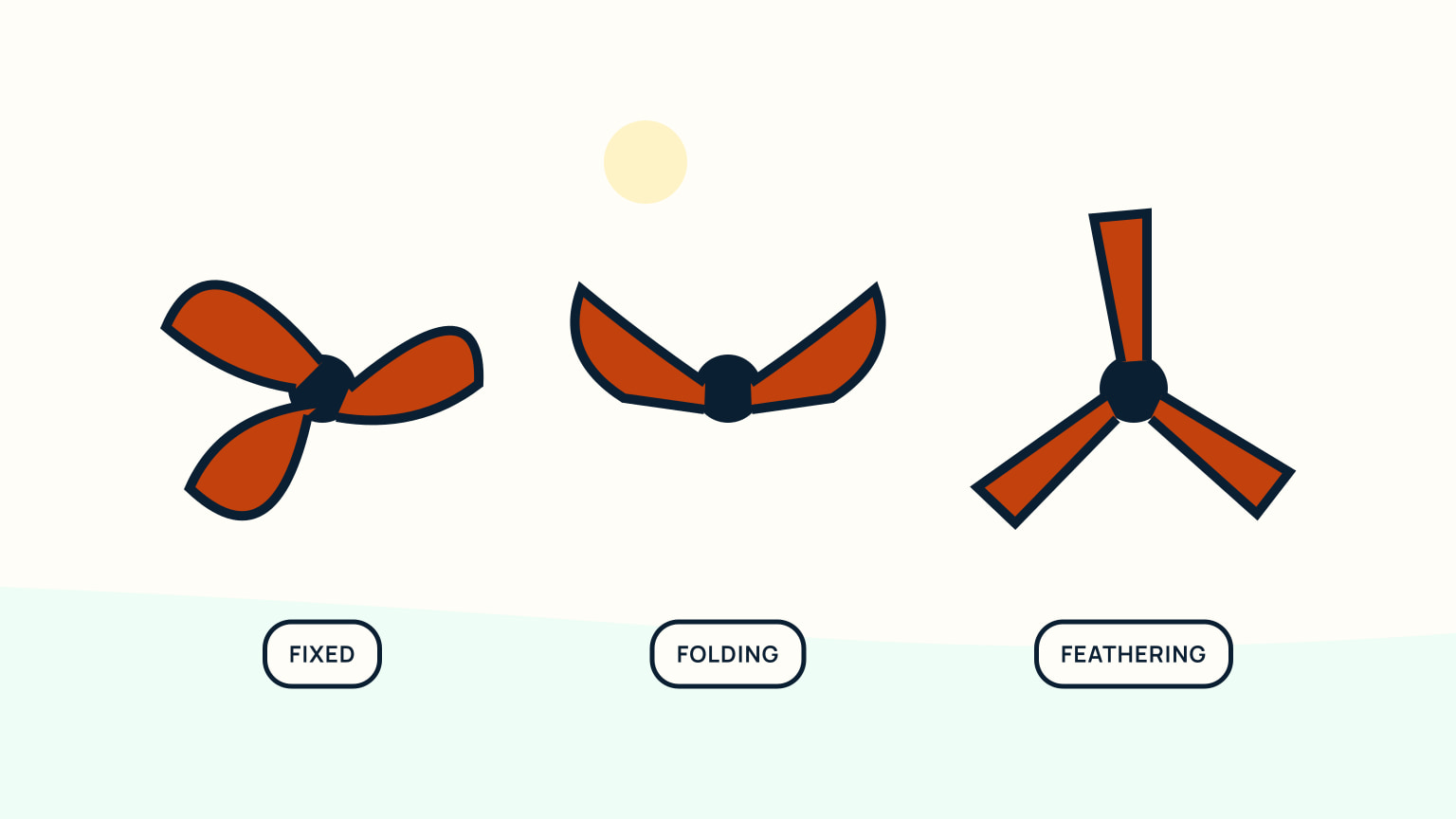
A fixed propeller keeps rigid blades in their operating position. A folding propeller hinges its blades toward the hub to reduce drag under sail, then opens them for motoring. A feathering propeller rotates its blades toward a low-drag angle and changes their angle for ahead or astern thrust. Choose among them only after confirming engine power, gearbox or saildrive, reduction ratio, rotation, shaft or hub dimensions, diameter and clearance, pitch, and approved hardware. Moving designs add inspection and service. The correct gear-lever position while sailing is model-specific, so use the drive and propeller manuals rather than a rule remembered from another boat.
The three categories describe motion, not guaranteed performance on your hull. Blade count, shape, pitch, diameter, aperture, engine, reduction, and installation all matter. A well-matched fixed propeller may be a better decision than a moving propeller chosen from reputation alone. Start with the drivetrain and ask the manufacturer or a qualified propeller specialist to confirm the complete package. The saildrive and shaft comparison explains the two common support layouts.
The three types trade sailing drag against moving parts and service complexity.
| Dimension | Fixed | Folding | Feathering |
|---|---|---|---|
| Blade behaviour under sail | Same geometry always; exposed blades create drag | Hinge closed toward the hub for low drag | Rotate toward a low-drag angle |
| Moving parts | None — rigid blades | Hinges plus a geared or synchronized mechanism | Blades rotate on their own axes via a mechanism |
| Inspection and service | Simplest — damage, corrosion, fouling, clearance, anodes | Adds pivots, gears or links, stops, seals or grease points | Adds pivots, gears or links, stops, seals or grease points |
| Failure mode to watch | Blade damage, bending, fouling, loosening | Mechanism fouled or worn, opens or closes unevenly | Mechanism wear or adjustment issues |
| Main tradeoff | Simple parts, easy visual inspection | Reduced sailing drag, more parts to service | Reduced sailing drag, more parts to service |
Start with the drivetrain
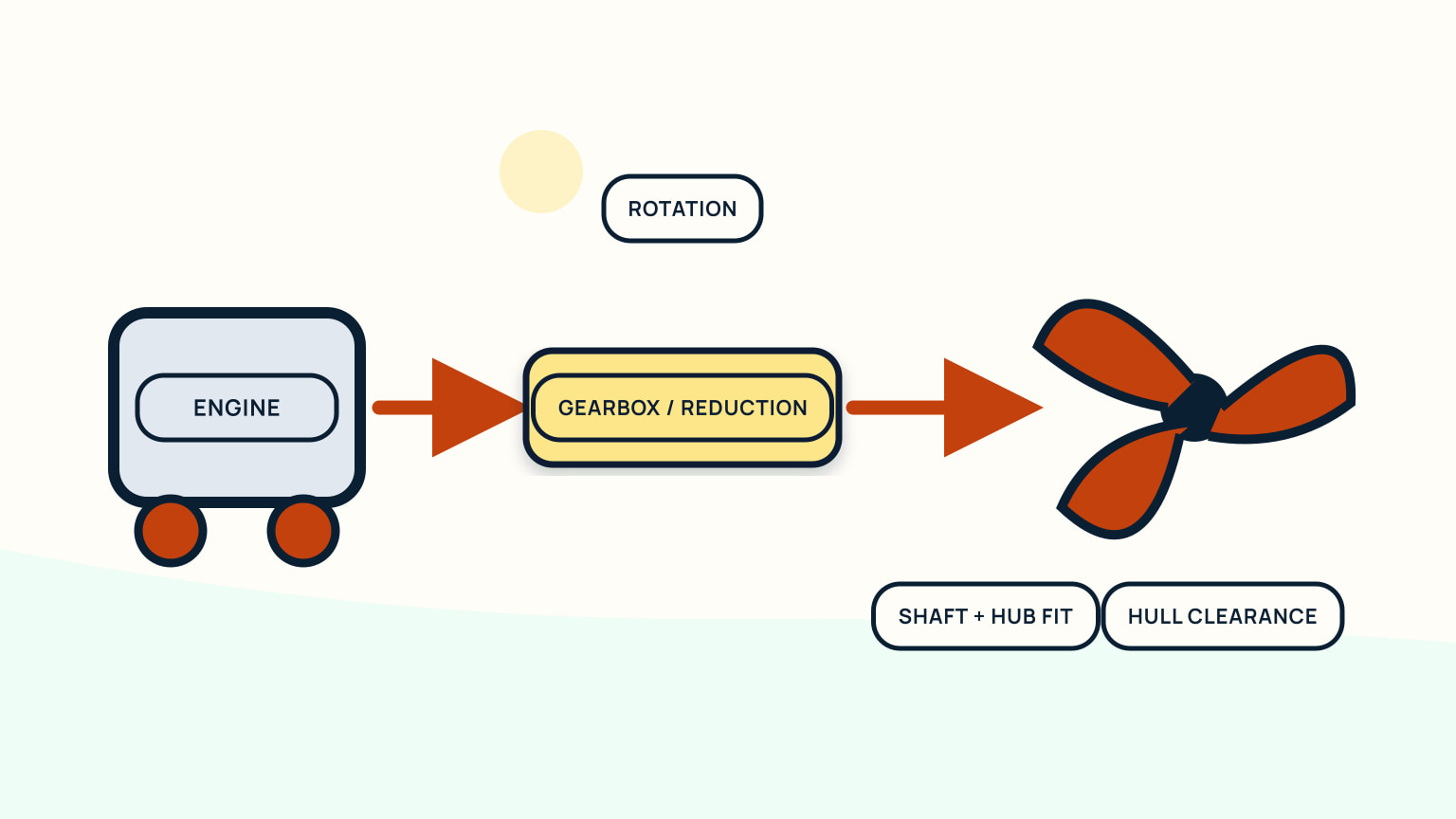
Record engine maker and model, rated power, gearbox or saildrive model, reduction ratio, output rotation, shaft diameter or saildrive spline, current propeller markings, blade count, diameter, pitch, hub, and available clearance. Verify each item from manuals, plates, drawings, or direct measurement by the appropriate person.
Note the boat's intended use. Manoeuvring astern, motoring in waves, sailing performance, vibration, fouling conditions, haulout access, and maintenance tolerance may carry different weight. Do not reduce the choice to “fast” or “simple.”
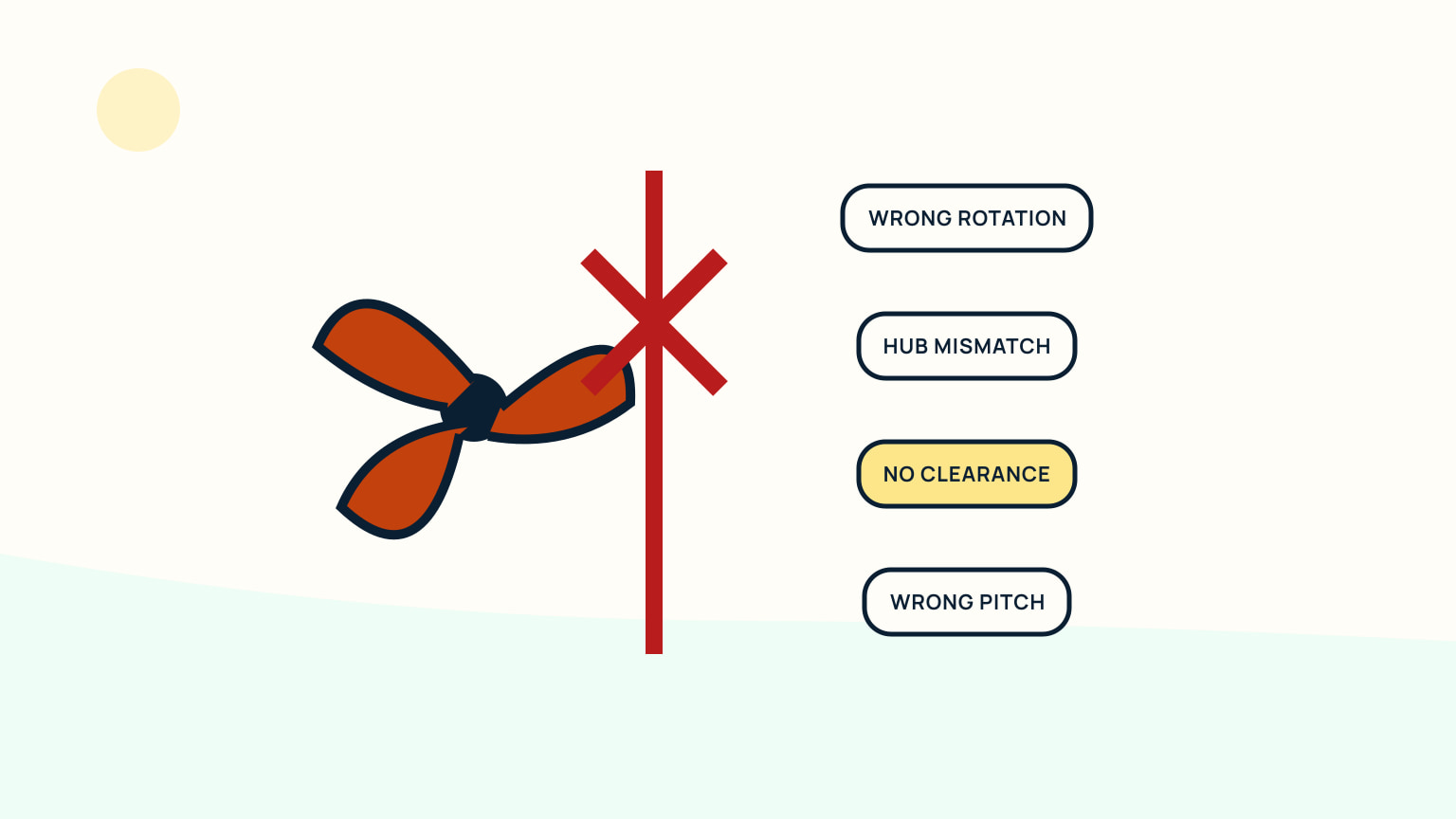
Ask the propeller maker to approve the specific combination. An engine power range on a product page is only one input. Incorrect rotation, pitch, diameter, hub, fasteners, or clearance can produce poor operation or damage.
Bring performance evidence when changing an existing propeller. Record whether the engine reaches the approved operating condition under the maker's test, how the boat accelerates and stops, vibration, cavitation-like noise, fouling, and manoeuvring behaviour. Avoid treating a single speed reading as a complete trial. Hull condition, load, weather, and instrument accuracy can affect comparisons. A propeller specialist may ask for waterline length, displacement, aperture dimensions, or photographs. Supply measured and documented inputs, clearly distinguishing them from estimates.
See the operating positions
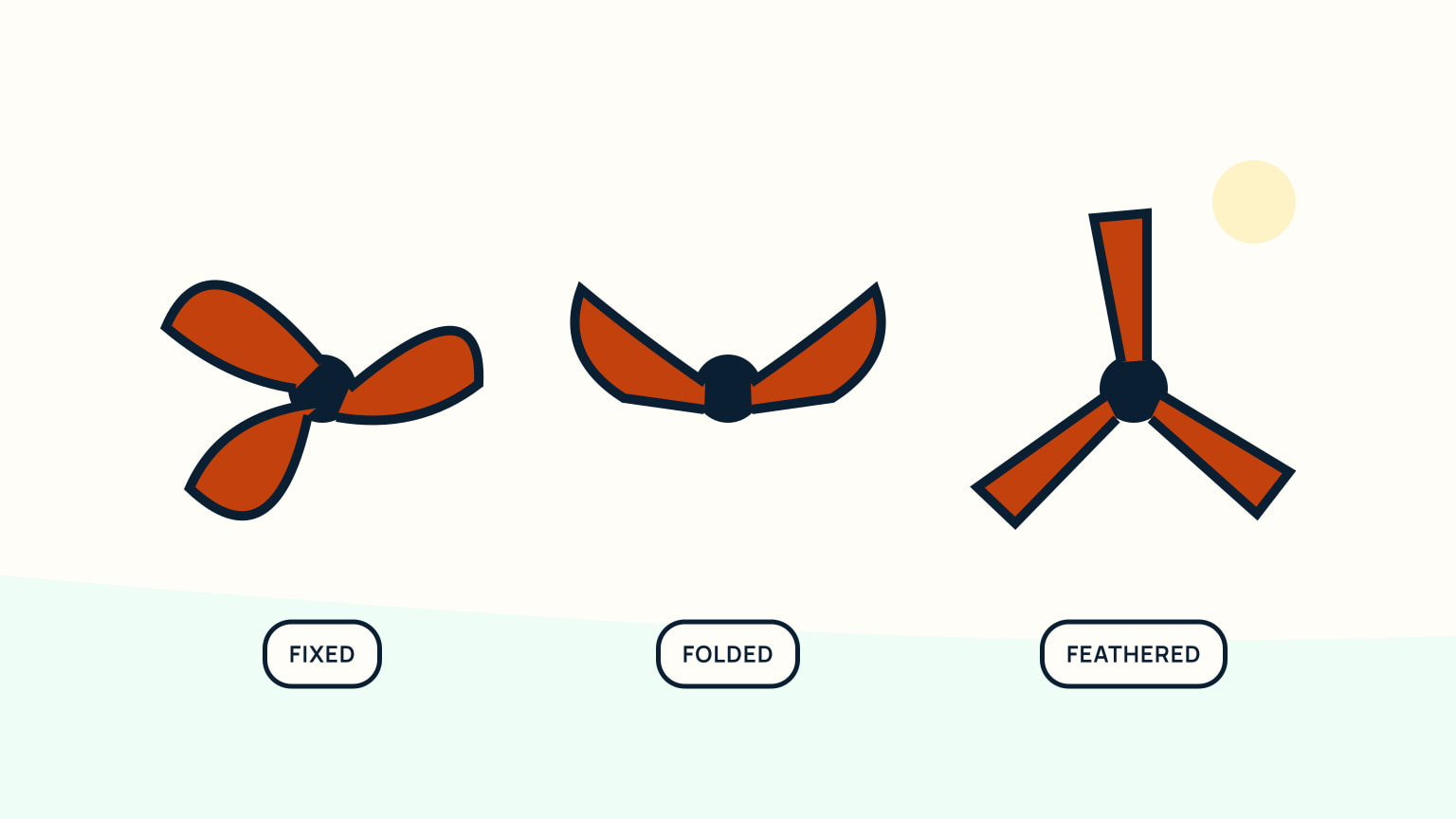
A fixed propeller presents the same blade geometry whether the engine is running or the boat is sailing. Its simplicity makes the parts and visual inspection easy to understand, though the exposed blades continue to create drag under sail.
A folding propeller uses hinged blades. Water flow folds them close to the hub under sail; rotation and the geared or synchronized mechanism open them for ahead and astern operation. Inspect that all blades move freely and together according to the model instructions.
A feathering design turns blades around their own axes. Under sail they align toward a low-drag position; under power the mechanism sets an operating angle. Because mechanisms differ, use the exact exploded drawing rather than assuming every hub shares the same gears, stops, or lubrication points.
Consider failure positions. A fouled or worn folding mechanism may not open or close evenly. A feathering mechanism can suffer wear or adjustment issues. A fixed blade can still be damaged, bent, fouled, or loosened. Ask how the model is inspected before launch and how abnormal movement appears. Do not move blades by hand without the maker's procedure, especially when the engine or shaft could turn. Photograph all blades from consistent angles during haulout so later changes are easier to recognize.
What service needs differ?
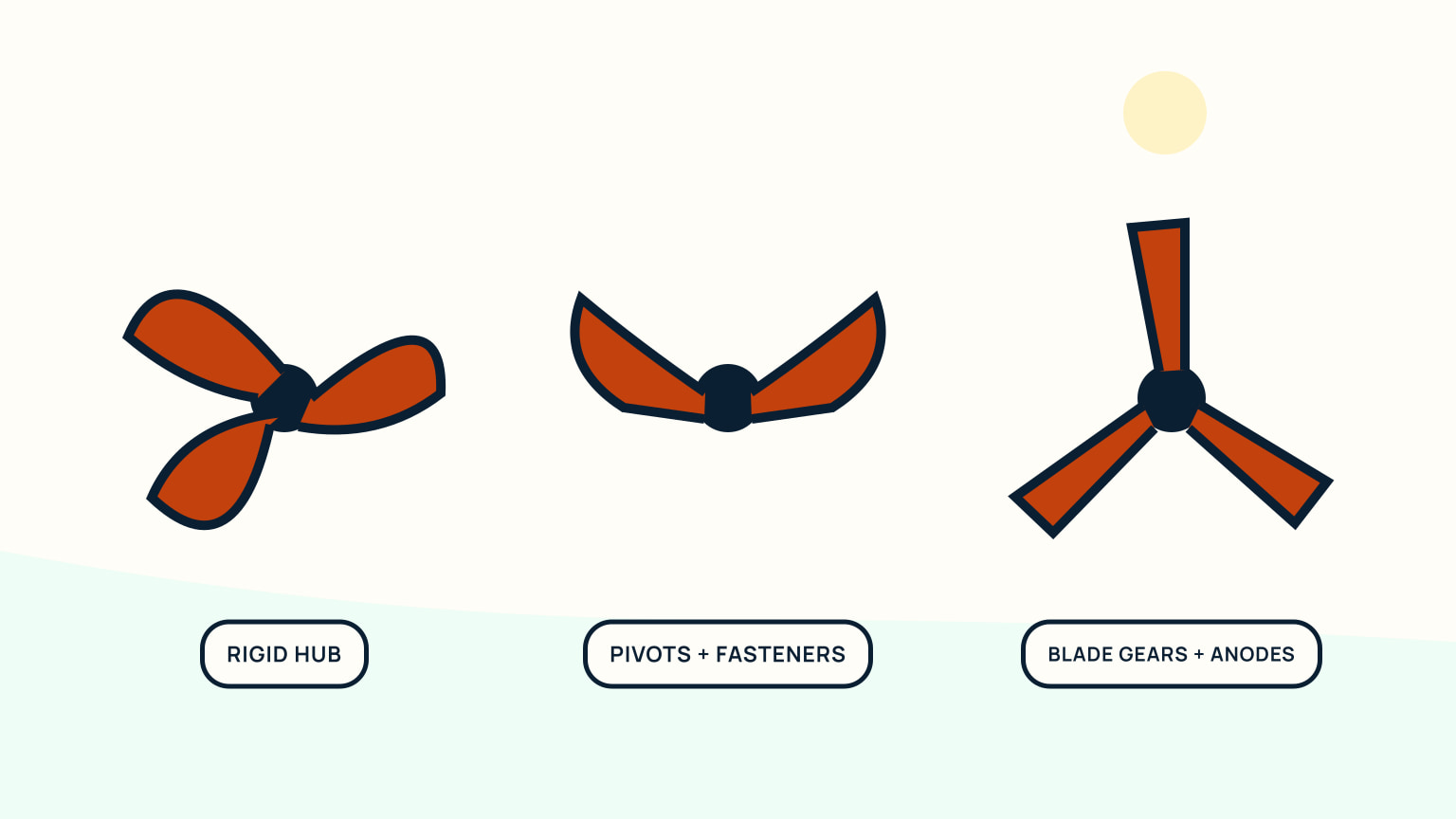
A fixed propeller still needs inspection for damage, corrosion, fouling, attachment, clearance, and anodes where fitted. Its lack of blade hinges reduces the number of moving hub parts, but it does not remove drivetrain maintenance.
Folding and feathering propellers add blade pivots, gears or links, stops, seals or grease points depending on model, and synchronized movement. Follow the maker's schedule for cleaning, inspection, lubrication, anodes, fasteners, blade play, and replacement parts. Use only specified lubricants and locking methods.
Record what can be done afloat and what needs haulout. Check local parts and specialist support before buying a rare model. A moving propeller that cannot be serviced where you cruise may cost more time than its sailing benefit is worth to you.
Anodes deserve model-specific attention. Their alloy, location, electrical contact, fasteners, and replacement threshold come from the drive and propeller makers plus local corrosion conditions. Do not paint over required contact surfaces or install an unapproved metal merely because it fits. Record anode condition before removal and compare loss over a known interval. Unusually rapid or uneven loss may call for corrosion assessment beyond the propeller. Keep coating work clear of hinges, gears, seals, and blade faces where the instructions require movement or bare contact.
Avoid mismatched parts
Propeller fit is a system problem. Confirm hub or spline, taper, key, nut, locking hardware, spacers, anodes, blade clearance, shaft or drive rotation, and approved puller or installation tools. Similar-looking hardware may have a different material, thread, or geometry.
Changing blade geometry can change engine loading and operating speed. The propeller supplier needs accurate boat and drivetrain information to select diameter and pitch. Do not copy a nearby boat unless its hull, engine, reduction, and installation are genuinely the same and the manufacturer accepts the match.
After installation, follow the specified land checks, launch inspection, and operating trial. Watch for vibration, abnormal noise, poor opening, leakage, contact, or engine behaviour outside the approved range. Stop and resolve a mismatch before continuing to use it.
Confirm what is included in the supplied kit. Cone, nut, locking screw, tab washer, key, spacer, anode, puller provision, and thread compounds may differ by installation. Reusing hardware can be prohibited even when it looks sound. Make a pre-install photograph and parts count, then a final photograph showing the locking method and clearances. Keep the purchase specification with the service record. If the boat later changes engine, gearbox, or reduction, revisit the propeller match instead of assuming the previous selection remains suitable.
Choose with the manual open
Read the propeller and drive manuals together. They control installation, torque, locking, lubrication, anodes, operating checks, and the gear-lever position while sailing. One saildrive manual may instruct a particular sequence to fold or feather a propeller; another drive or propeller can differ.
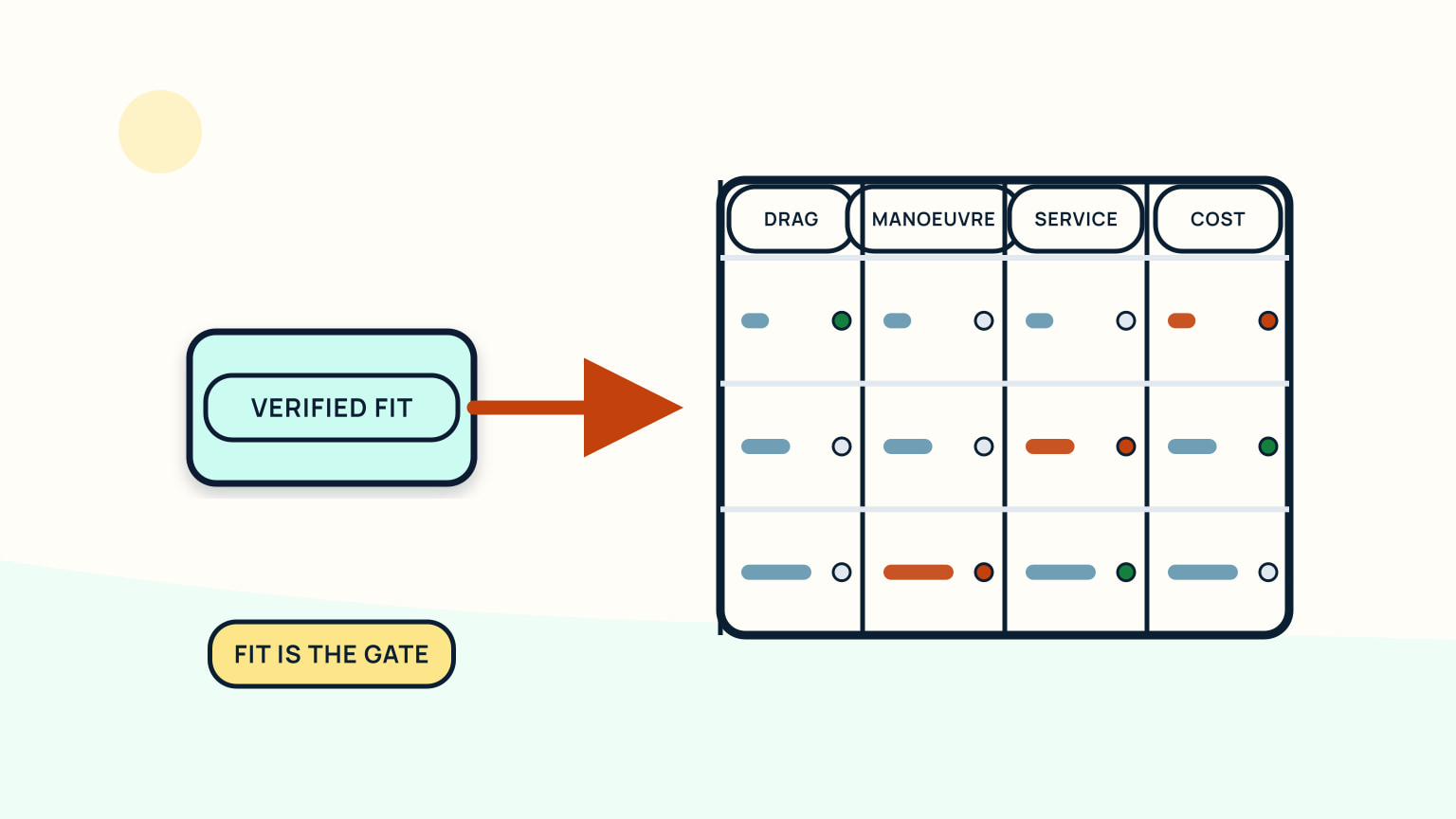
Build a simple decision sheet. Put verified compatibility first, then compare motoring control, sailing drag, moving parts, inspection access, haulout schedule, local service, spares, and total installed price. Ask which claim is supported by the exact proposed model rather than the category.
For a used propeller, identify it before assigning value. Check records and inspect wear, corrosion, blade movement, gears, stops, fasteners, and anodes with a qualified person. Unknown history belongs in the survey and budget, not in the seller's equipment premium.
Ask how the chosen model behaves when fouled and how easily the crew can inspect it. A low-drag benefit may be important to a performance-focused owner, while simple local service may matter more to a remote cruiser. Put these preferences after compatibility and safe operation. Request the current manual, warranty conditions, parts list, and service network before paying. If claims about drag, reverse thrust, or vibration influence the decision, ensure they apply to the exact blade count and size proposed, not another item in the same product family.
Plan the acceptance trial before installation. Agree who checks clearances and locking ashore, who inspects immediately after launch, and what engine and manoeuvring checks follow. Record hull cleanliness, loading, weather, and instrument source so the result can be compared with earlier performance. Confirm ahead and astern response in a safe area, then inspect for leakage, movement, vibration, or abnormal sound. If the model must fold or feather through a particular gear sequence, practise that sequence from the manual and verify the expected position at the next safe inspection.
For future haulouts, photograph every blade edge, root, pivot, and the hub from fixed angles before and after cleaning. Note blade movement and anode condition according to the manual. A consistent record can reveal wear or damage that memory misses. Keep the approved propeller specification with the engine and drive documents, including rotation, reduction, diameter, pitch, hub, and installation hardware. If any drivetrain component changes, send the full updated package back to the propeller maker for review.
Begin with the engine and drive plate, then photograph the existing propeller markings and clearance. Send that evidence to the manufacturer or specialist before comparing prices. The haulout planning guide helps schedule underwater work. SailStarter lessons can help you understand propulsion language, while the maker approves the actual fit and operation.
Try it from the lesson
Can you spot the next move?
The engine is idling, the boat is safely secured and the propeller area is clear. What should you confirm before departure?
Why you can trust this guide
. We build each guide from public seamanship and safety sources, then teach the universal principle before any local difference.