Chart your course
How Much Water Does a Sailboat Crew Need?
Quick answer
The short version
There's no single amount of water that fits every sailboat crew. A widely used emergency-preparedness baseline puts drinking and basic sanitation at roughly one gallon (about 3.8 litres) per person per day, but that figure describes short-term survival on land. Onboard, measured use swings far wider: cruisers who track their own consumption report anything from about 3.8 litres per person per day for drinking-only use to 75-115 litres (20-30 gallons) a day once showers, dishwashing, and laundry are added. The right figure for your trip comes from four things you can check on your own boat: usable tank capacity, your crew's measured daily use by activity, how far the route runs before a confirmed refill, and the reserve you hold back and never spend on convenience.
Water planning on a boat is really five small habits working together: knowing your tank's usable capacity, knowing what your crew actually drinks and uses in a day, matching that against the route and its refill points, protecting a reserve you don't touch for convenience, and checking the numbers again once you're underway. Skip any one of them and the others stop meaning much. A full-looking tank gauge doesn't tell you what the pump can actually deliver, and a comfortable number from last season doesn't account for a hotter passage or a guest who showers twice a day. A familiar crew on a weekend hop and strangers on a longer passage need different numbers from the same two steps: measured use and reserve. What follows walks through the sequence with a worked example, so you can build a plan for your own boat and crew instead of borrowing someone else's number.
How much water does a sailboat crew actually use in a day?
It depends far more on habits than on headcount. Cruisers who log their own consumption report drinking-only use as low as about 3.8 litres (1 gallon) per person per day, typical full-time cruising couples averaging 15-23 litres (4-6 gallons) per person per day, and boats with hot showers and a washing machine running as high as 75-115 litres (20-30 gallons) per person per day. That's roughly a twenty-fold range for a crew of the same size, driven by climate, onboard fixtures, and habits like showering and laundry rather than by how many people happen to be aboard.
The only way to know your own number is to measure it. The first day of a trip is a poor test day, since everyone behaves carefully because they know they're being watched. Pick an ordinary day once that novelty has faded, and record every use by category: drinking, hot drinks, cooking, dishwashing, personal washing, and any deck or gear rinsing. Splitting the total into categories shows which uses are flexible, like a shorter shower, against ones that stay fixed, like drinking and cooking water. Repeat the measurement once with the actual crew before a longer passage, since habits keep shifting after that first careful day.
What does your tank actually hold, and how far will it go?
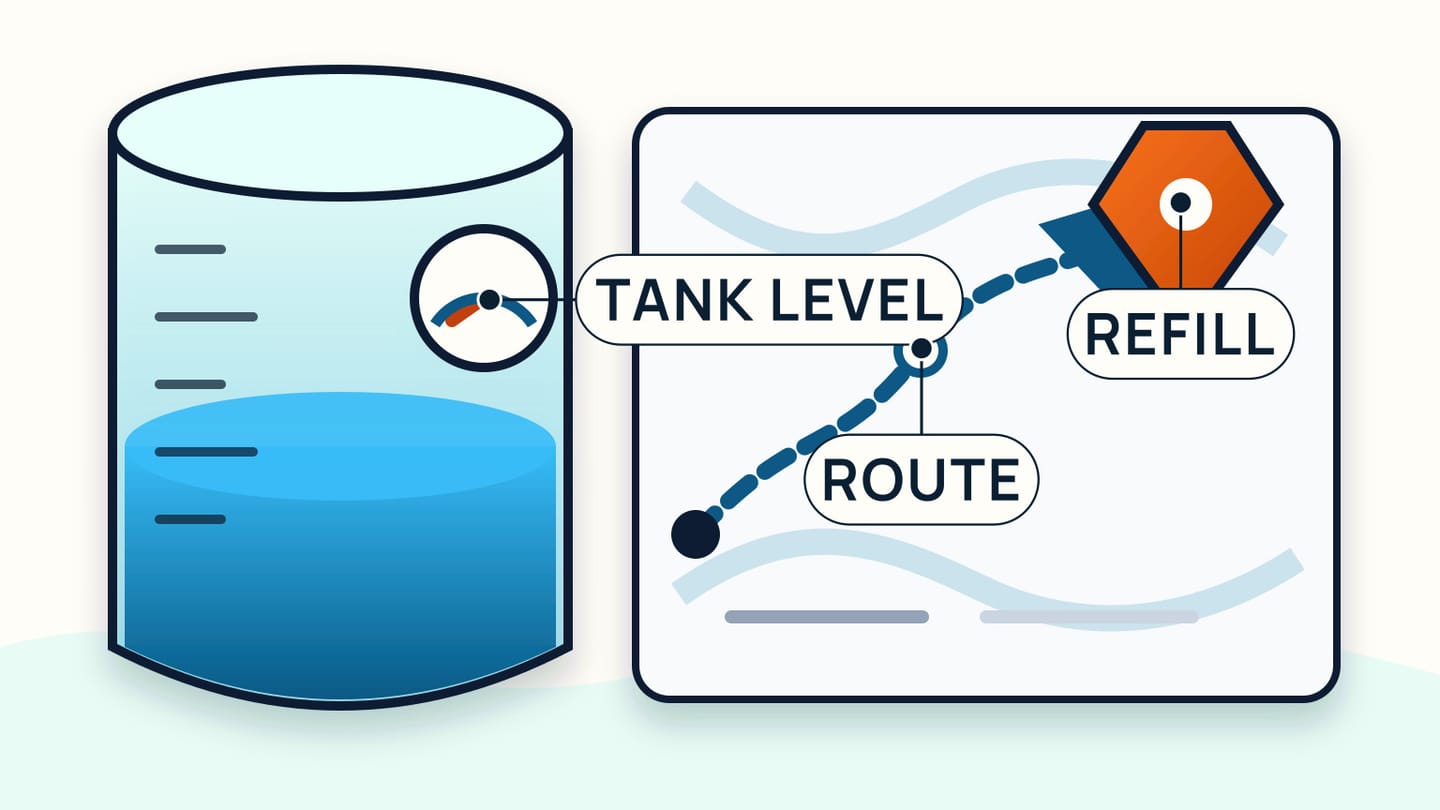
Start with usable capacity. The number printed on the tank rarely matches what actually reaches a tap: fill necks, pickup tube placement, and pump location usually leave a few litres unreachable, and a fault anywhere between tank and tap cuts that further. If you haven't already, trace the path from tank through strainer, pump, and filter to each tap using our walkthrough of a sailboat's freshwater system, so you know exactly what's supplying water before you plan a trip around it.
For example, picture that same 150-litre tank shared by a crew of four on a five-day passage with no confirmed refill along the way. Divided evenly, that's 7.5 litres (2 gallons) per person per day if the crew used every drop with nothing held back. Treat that number as a ceiling rather than a target: it assumes a full tank at departure, ignores any reserve, and says nothing about whether your crew's measured use from the section above actually fits inside it. Then check the route itself. Confirm which refill points are genuinely open, reachable by your boat, and offering water fit to drink — a symbol printed on a chart confirms none of that on its own. Two confirmed stops beat one hoped-for one.
Keep drinking water separate from water for tasks
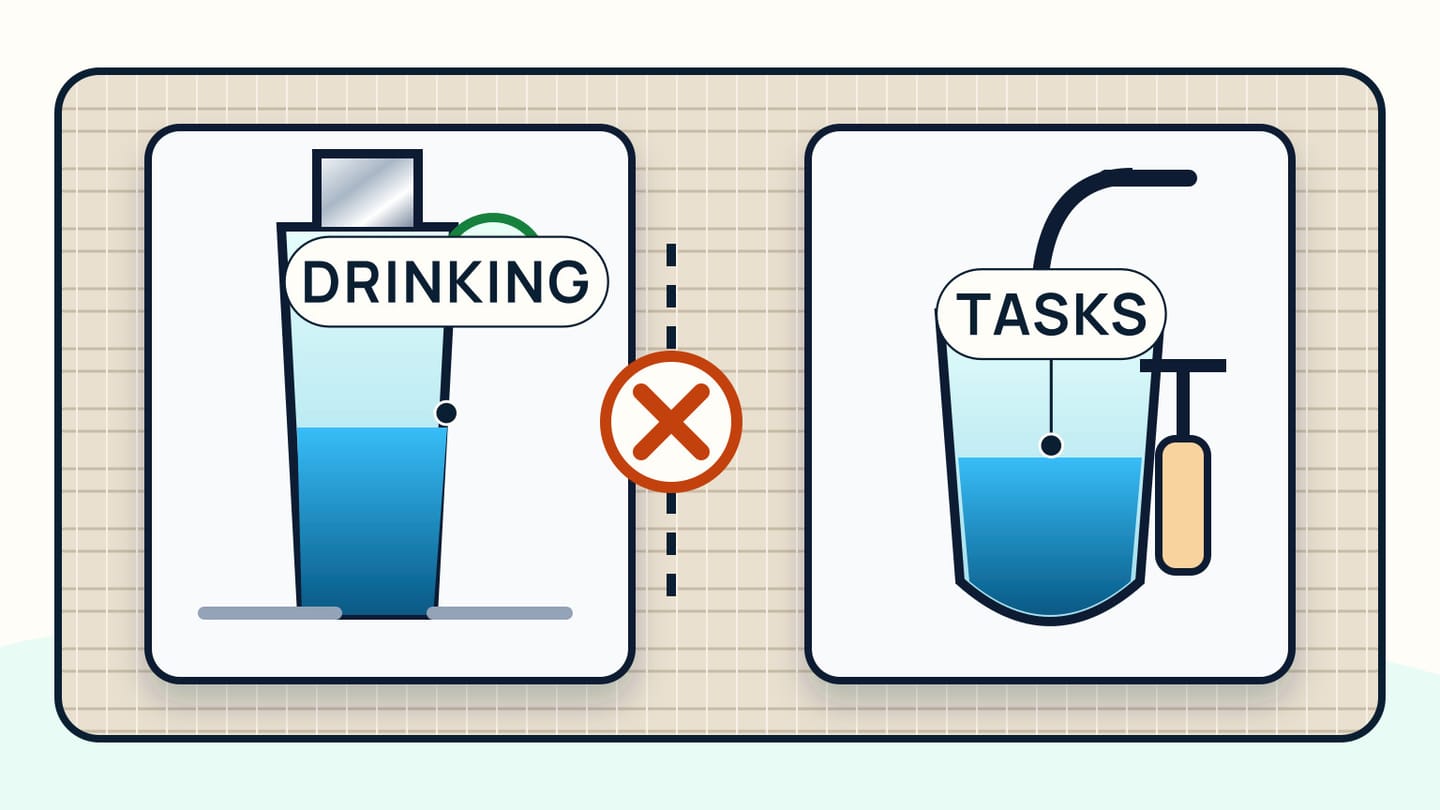
Not every litre on board needs to meet the same standard. Water you drink or cook with should come from a source and container you trust, kept apart from water you use for washing dishes, rinsing gear, or cleaning the deck. On a boat with one tank and one tap, that separation is a habit rather than plumbing: decide in advance which containers or draws are for food and drink, keep them closed and clean, and don't let a washing-up bucket double as a drinking source. If you're ever unsure whether a source is fit to drink, treat it as unsuitable until you can verify it or switch to water you already trust.
The same logic carries into the galley. The water assumptions behind our sailboat cooking guide start from the same trusted source you use for drinking, so settle the drinking-versus-task split before you plan meals. Sorting it out partway through a passage, once supplies are already tight, takes far more effort. A strip of tape or a permanent-marker label on each container makes the split obvious to every crew member, including a guest who's never used your system before and would otherwise guess.
Set aside a reserve you don't touch
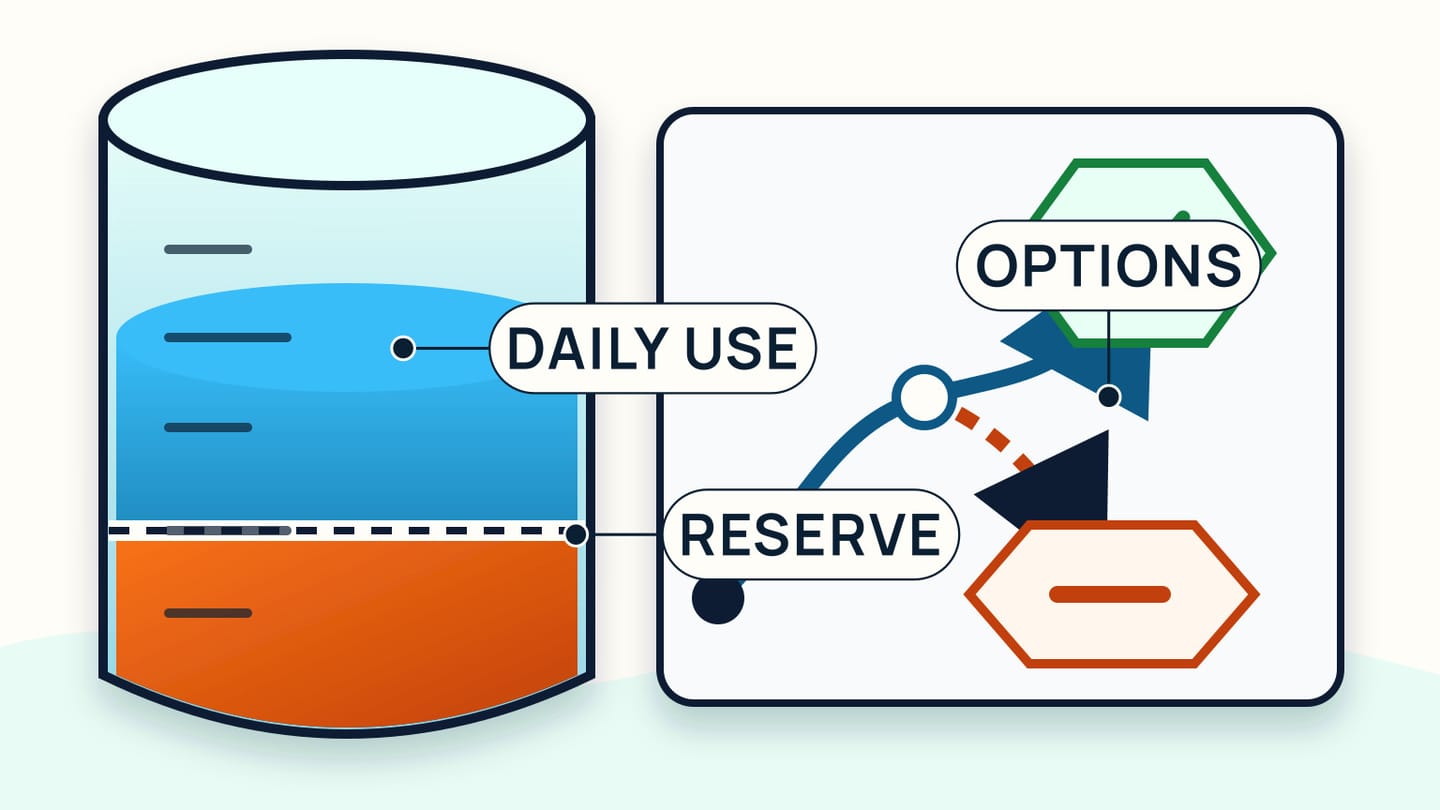
Decide on a reserve before you leave the dock. Waiting until the tank gauge drops further than expected turns the decision into a scramble instead of a plan. Base the figure on route length, crew size, weather, how confident you are in the next refill, and what a delay would cost you: a reserve that only has to cover a calm afternoon at anchor is different from one that has to cover a weather-bound extra day offshore. Once it's set, write the number down and treat it as already spent, so nobody reaches into it for a long shower.
Subtract that reserve from the tank-ceiling figure you worked out earlier, and what's left is what's actually available for planned daily use. Treat a leak, a failed pump, extra heat, or a closed refill point as a reason to protect the reserve further; routine convenience never is. A watermaker can add real margin on a longer route by producing fresh water from seawater through reverse osmosis, but treat its output as a bonus once it's proven reliable on your boat. It doesn't replace the reserve itself: membranes left unused for weeks can foul and cut production exactly when you need it most.
Review the water plan every day underway
Check remaining water at roughly the same time each day and compare it with what your log says you should have used since the last check. Three numbers are enough to log each time: the gauge or dip-stick reading, any water added at a refill, and the gap between what the log predicts and what the tank shows. A small, steady gap usually means the earlier estimate needs adjusting; a sudden one usually means something on the boat changed, so check for a stuck float, a slow leak into the bilge, or a container that quietly went unused before assuming the worst.
Tell the whole crew what's left and what's about to change before scarcity turns into an argument about who used the last of it. If the numbers stop matching the plan, that's the moment to shorten the route, ration a specific use, or head for a confirmed refill while the reserve still buys you choices. A check that takes two minutes at the chart table is what keeps a plan made on shore still holding up a week into the trip.

A water plan built this way travels well precisely because every number in it came from your own boat. Once you've measured your crew's actual use, checked what your tank can really deliver, and set a reserve you're willing to defend, you have a plan that survives a hotter passage, a different guest list, or a refill point that turns out to be closed.
If you'd rather build habits like this one with guided practice than relearn them trip by trip, SailStarter's lessons work through the same kind of practical planning for other onboard systems, including provisioning food and water together in the sailboat provisioning checklist. Try a lesson and see whether the format fits the way you like to learn before your next trip.
Try it from the lesson
Can you spot the next move?
The engine is idling, the boat is safely secured and the propeller area is clear. What should you confirm before departure?
Why you can trust this guide
. We build each guide from public seamanship and safety sources, then teach the universal principle before any local difference.