Chart your course
How to Raise a Mainsail: A Beginner's Safe First Hoist
Quick answer
The short version
To raise a mainsail, assign roles first. The helm points the bow into the wind and watches traffic. The crew clears the sail and main halyard (the line that raises it) and eases the mainsheet and boom vang so the sail can rise freely. On the skipper’s command, hoist smoothly while looking up and guiding the sail’s leading edge into its track. If the sail stops or the halyard suddenly feels tight, stop immediately. Never add winch force. Lower the sail slightly, find and clear the snag, then continue only on command. When the sail is fully raised, secure the halyard, adjust the boom support, stow the lines, and prepare to sail. Follow your boat’s manual and skipper’s instructions.
Raising the mainsail is not about pulling as hard as you can. A smooth hoist starts before the sail moves: the crew checks the main halyard (the line that lifts the sail), prepares the sail, and agrees who will steer and who will hoist. The helm keeps the boat pointing into the wind and watches traffic while the crew raises the sail and looks up for snags. If the sail stops moving, everyone stops. Adding more force can turn a simple jam into broken gear.
The steps here are recognizing the basic system, preparing as a team, hoisting on the skipper’s command, clearing resistance, and securing the sail for the move into sailing. Hardware and controls differ between boats, so follow your boat’s manual and your skipper’s instructions.
Recognize the Mainsail Hoisting System
Start by finding the head, the top corner of the mainsail. The main halyard attaches here. This line runs up the mast, through a block at the masthead, and back toward deck level. When the crew pulls the halyard, it lifts the head.
Next, look at the luff, the sail’s front edge beside the mast. As the sail rises, the luff follows a groove or track. It may use small slides, rounded slugs, external cars, or a rope sewn into the sail’s edge, called a boltrope. A slug is a small nylon barrel secured ahead of the boltrope and fed into the mast slot; a slide is a small, flat, T-shaped piece doing the same job, either inside the mast slot itself or in a separate track bolted onto the mast. Either one reduces friction and sail wear compared with a plain boltrope running straight in the groove, which is why most boats beyond the simplest daysailers use one. A boltrope-only luff is cheaper and simpler, but the sailcloth around it can bunch and jam as it rubs the mast, and the whole sail has to come out of the track every time it is lowered rather than staying loaded on slides.
Now identify what supports the boom, the horizontal spar below the sail. Some boats use a topping lift, a line from the mast area to the boom. Others use a rigid boom vang, a fitting that can support the boom from below. Lazy jacks, lines that help gather a lowered sail, are not a substitute for boom support.
For now, only identify and trace these parts. Do not attach, release, or adjust unfamiliar gear. Follow your boat’s manual and the skipper’s instructions.
Prepare the Boat and Assign Crew Roles
Before you raise the mainsail, agree who does what. Follow the skipper’s instructions and the boat’s manual, because deck layouts differ.
- Skipper or helm: Hold the bow into the wind. Keep watching for traffic and obstacles while the crew prepares the sail. At anchor or on a mooring the bow will usually settle into the wind on its own unless a strong current is fighting it, which makes holding position easier than it sounds; under way, the helm has to work at it actively.
- Crew: Remove the sail cover. Remove the sail ties and keep them together. Confirm that the halyard, the sail’s lifting line, is securely attached and runs clear.
- Support the boom: Check for a topping lift, or a rigid vang that holds the boom up. Do not rely on lazy jacks to carry its weight.
- Remove resistance: Ease the mainsheet, the line controlling the boom, and the vang, which pulls the boom down. If fitted, slacken the lazy jacks so the sail’s stiff battens do not snag. Make sure the loose halyard tail is free to run.
- Clear the working area: Keep everyone away from the boom, mainsheet, winch handle, and moving hardware. A blow from the boom or an uncontrolled mainsheet is one of the most common causes of serious injury on a sailboat, and the mainsheet itself can burn skin or snap a block across the cockpit as a projectile. If the boom does start to swing, the instinct to grab it and stop it is natural but dangerous: a moving boom can hurt wrists, elbows, and shoulders far more than it costs you to just step clear.
When each person reports ready, the skipper can give the command to hoist the mainsail.
Raise the Mainsail on the Skipper’s Command
Before you raise the mainsail, confirm that your station is ready. The skipper holds the boat with its bow into the wind so the sail can flap freely. Answer “Ready” clearly, then wait for the command to hoist.
Raise the mainsail by hand, pulling the halyard (the line that lifts the sail) hand over hand. Guide the sail’s leading edge, called the luff, as your boat’s system requires. Follow the boat’s manual and the skipper’s instructions.
As the sail rises, watch the sail and halyard continuously, including overhead. Check that the luff moves smoothly and that battens do not catch on lazy-jack lines. If anyone sees a snag, they should call out. Hold the halyard where it is and do not force it.
Keep your hands, hair, loose clothing, and tools away from winches and other moving parts. If a winch is needed, start with about two wraps around the drum and add more as the load builds; too few wraps can let the line slip. Keep the area around the winch handle clear of people and objects, and never let the line override itself on the drum. If it does override anyway, tell the rest of the crew rather than working it quietly on your own, and clear it, when there's time, by reversing the lead direction and pulling the riding turns out by hand.
Stop Immediately if the Sail Stops Moving
When you are raising the mainsail, look aloft and check that it keeps moving smoothly. If it stops or the halyard suddenly feels harder to pull, call out “Stop” so the whole crew knows.
Do not pull harder or add winch force. A powerful winch can turn a small snag into broken equipment; on any boat, trying to force a jammed system by pulling harder only adds more load to whatever is already stuck.
Common causes include:
- a batten, the stiff strip inside the sail, caught in the lazy jacks (the lines that help gather the sail)
- a slide or slug jammed in the mast track, sometimes simply because it has worn out or the track has picked up dirt
- a bolt rope, the rope sewn into the sail’s front edge, stuck in its groove
- the halyard wrapped around another fitting, such as a lazy-jack attachment, especially if it was left loose enough to flop around
- the boat no longer pointing into the wind
Battens often catch in lazy jacks. This is a routine snag, not a sign that you did something wrong. If it happens, keep the bow pointed as close to straight into the wind as you can, stop hoisting, and lower the sail until the batten clears the line, then steer gently back toward the wind until the sail settles back into its pocket before you try again. If the halyard goes tight before the sail is all the way up, look aloft first to confirm the free part of the halyard has not wrapped around something, and check that the boltrope or slugs are not simply jamming in the track.
Stop hauling and keep the line controlled. Follow the skipper’s direction. You may lower the sail slightly, find the cause, clear it, and try again. If the problem cannot be cleared safely, the skipper should stop the hoist. Being able to lower the mainsail promptly matters if the wind builds.
Follow your boat’s manual and the skipper’s instructions.
Secure the Hoist and Transition to Sailing
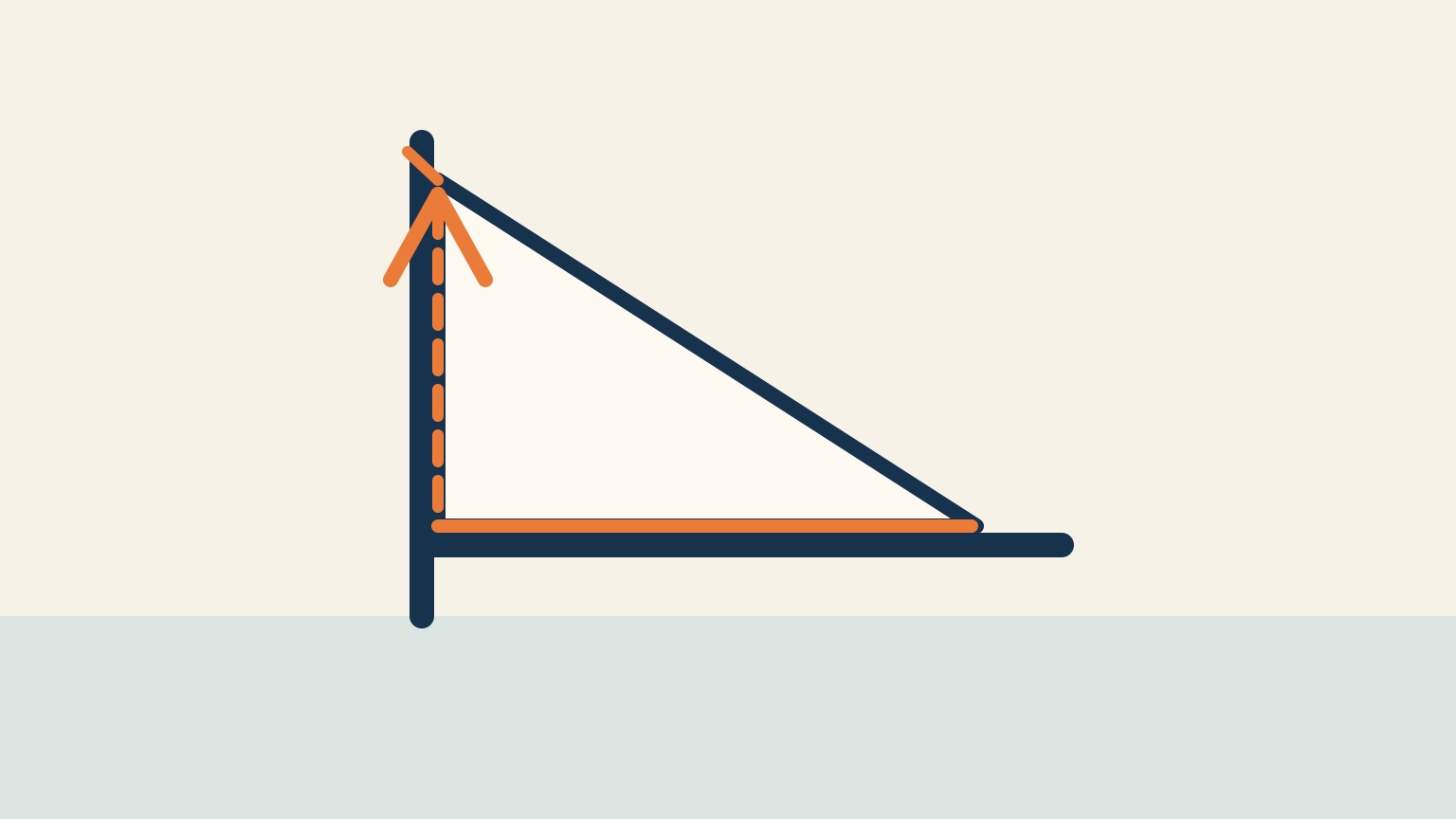
The final step in raising the mainsail is to stop at the intended height, not to pull harder. Check that the sail is fully up and that its front edge, called the luff, has the tension the skipper requested. In light wind, slight luff wrinkles are acceptable. In stronger wind, the luff should look smoother and tighter. Because the halyard can stretch, it is worth glancing up again later in the day to confirm the hoist height has held.
Secure the halyard, the line that raised the sail, on the boat’s cleat or similar locking fitting. Arrange the spare line neatly so it stays clear and can run when the sail must come down. Some sailors also check periodically that a halyard left attached to the sail for long stretches has not gradually worked loose at the shackle.
If the boat has an adjustable topping lift, ease or release it now. This lets the sail take the boom’s weight and pull taut. Re-tension it before reefing (reducing sail area) or lowering the sail.
Clear and stow loose lines and sail ties. Then wait for the skipper to bear away from the wind, sheet the main in to get the boat moving, or briefly back it against the wind to help the bow turn off, and manage the engine. Follow the skipper’s instructions and the boat’s manual for the exact sequence.
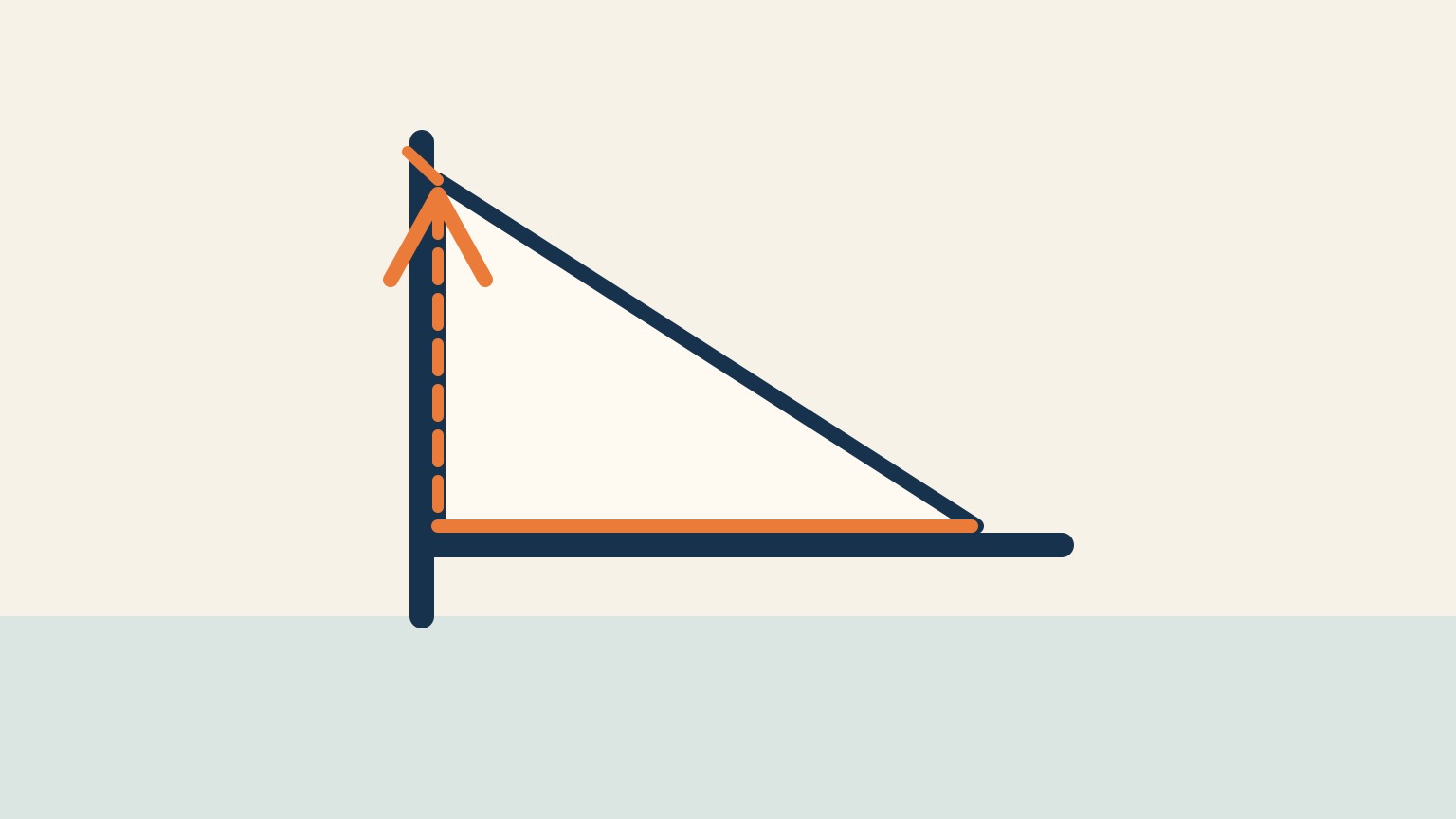
To raise a mainsail smoothly, work as a crew. The person at the helm keeps the boat pointed into the wind and watches the surroundings. The hoisting crew watches the sail and halyard as they move. If the sail stops, everyone stops. Clear the snag instead of pulling harder. Once the sail is fully raised, secure the halyard, set the luff tension, and ease the topping lift if the boat uses one. Then start sailing when the skipper says so.
Follow your boat’s manual and your skipper’s instructions for the exact hardware and sequence.
Try SailStarter’s visual lessons on pointing into the wind and spotting a jam before your next crew-supported hoist, and see how to lower and flake a mainsail once you're ready for the other half of the job.
Try it from the lesson
Can you spot the next move?
The boat is off to one side of the wind and the main is hard to raise. What change makes the hoist easier?
Why you can trust this guide
. We build each guide from public seamanship and safety sources, then teach the universal principle before any local difference.
- liveabout.com
- liveabout.com
- carpediemsailing.com
- sailing-blog.nauticed.org
- sailing-blog.nauticed.org
- uk.boats.com
- modernsailing.com
- sailboat-cruising.com
- sailmagazine.com
- bwsailing.com
- johnkretschmer.substack.com
- sailrite.com
- deckhardware.com.au
- schaefermarine.com
- support.seldenmast.com
- seldenmast.com
- uksailmakers.ie
- fisheriessupply.com
- fisheriessupply.com
- en.wikipedia.org
- precisionsailloft.com
- harken.com
- harkenindustrial.com
- sailingworld.com
- yachtingmonthly.com
- theyachtrigger.com
- northsails.com
- northsails.com
- northsails.com
- northsails.com
- catamaranguru.com
- imo.org
- ecolregs.com
- nauticalknowhow.mysailingcourse.com
- discoverboating.com
- pbo.co.uk