Chart your course
Narrow Channel Rules for Sailors
Quick answer
The short version
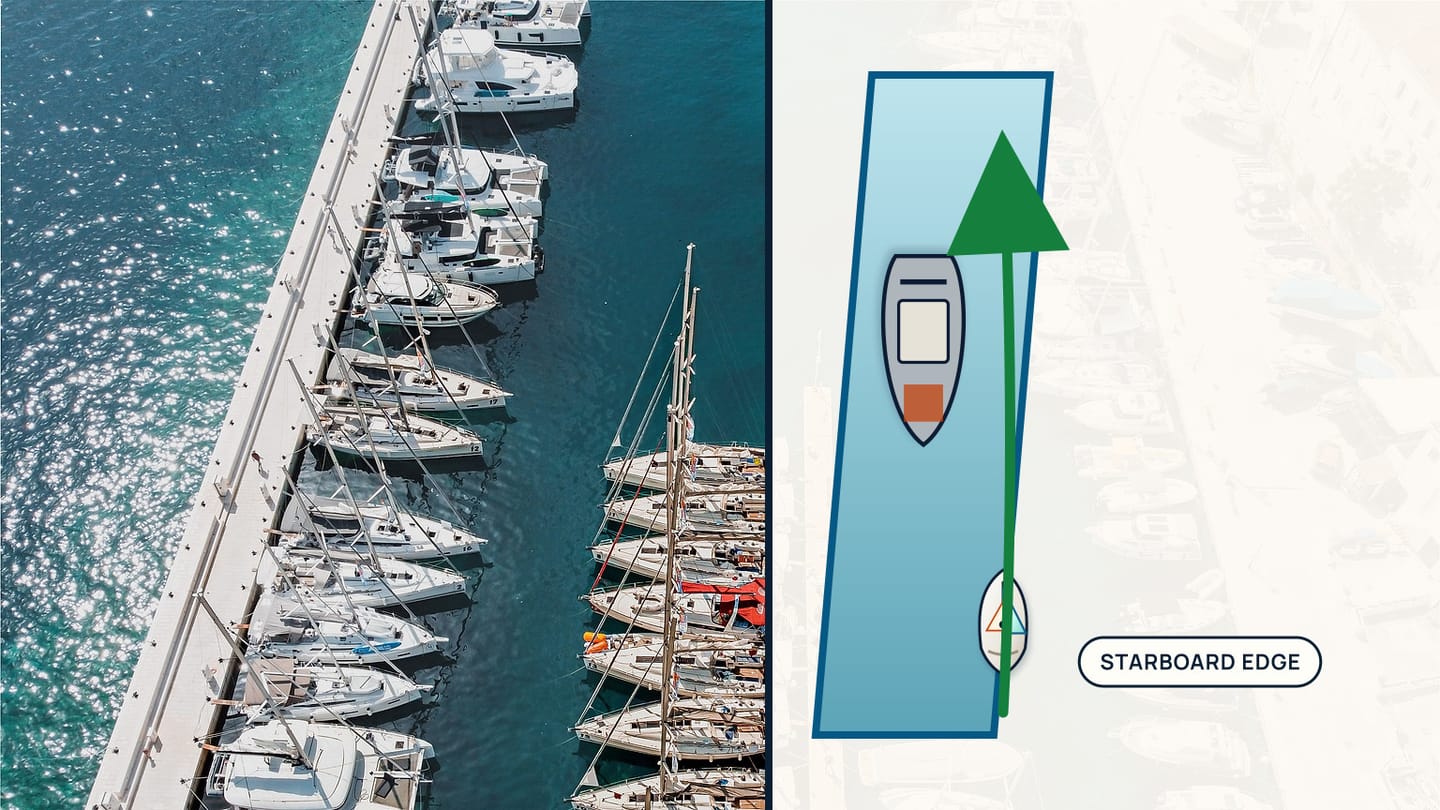
In a narrow channel or fairway, a sailing vessel does not gain priority simply because it is under sail. COLREG Rule 9 says vessels travelling along the channel keep near the starboard outer limit when it is safe and practicable. It also says a sailing vessel must not impede a vessel that can navigate safely only inside that channel. Read the waterway before committing, keep your movement predictable, and give constrained vessels room early. If the route, traffic, or local directions are unclear, wait outside the tight section while you build a plan.
Open water gives you many ways to avoid another boat. A dredged channel may give you only one. Depth, bends, banks, traffic, current, and room to turn can remove options long before two vessels look close. That is why Rule 9 is best understood as a planning rule rather than a last-second right-of-way puzzle. The practical question is not, “Who should move now?” It is, “Will my present course make another vessel alter or slow when it has nowhere useful to go?”
This guide sits beside the broader boat right-of-way rules, the lookout habits in how to avoid collisions at sea, and the route checks in how to plan a sailing trip. Local authorities may add traffic schemes, speed limits, reporting requirements, or special directions. Verify the current chart, notices, and local rules before entering an unfamiliar channel.
Read the waterway before you enter
Start with the chart and the view ahead. Find the channel edges, depth limits, bends, crossing traffic, entrances, and places where you could safely wait. Then compare that planned picture with what you can actually see. A vessel apparently off to one side may be following a bend that soon puts it on your route. A ship that looks distant can still be the vessel with the fewest manoeuvring choices.
Next, sort traffic by constraint. A deep-draft ship, tug with a tow, ferry working a fixed route, or commercial vessel approaching a berth may depend on the dredged water. Your sailboat may be able to wait, use water outside the fairway, start the engine, or choose another time. Rule 9 focuses on the vessel that can navigate safely only within the channel, not on size alone. Do not guess at another vessel's exact draft. Treat the visible limits, its course, and the available water as evidence, then preserve a generous escape route.
Before the entrance, brief the crew. Name the expected side of the channel, the next bend, the nearest waiting area, and what would make you turn back. Put one person on lookout where sails, spray, or a cabin roof do not hide approaching traffic. A useful entry check is simple: can you see far enough to make an early decision, and can you leave the channel without crossing another vessel's path? If either answer is uncertain, hold outside and reassess.
Make your movement easy to understand
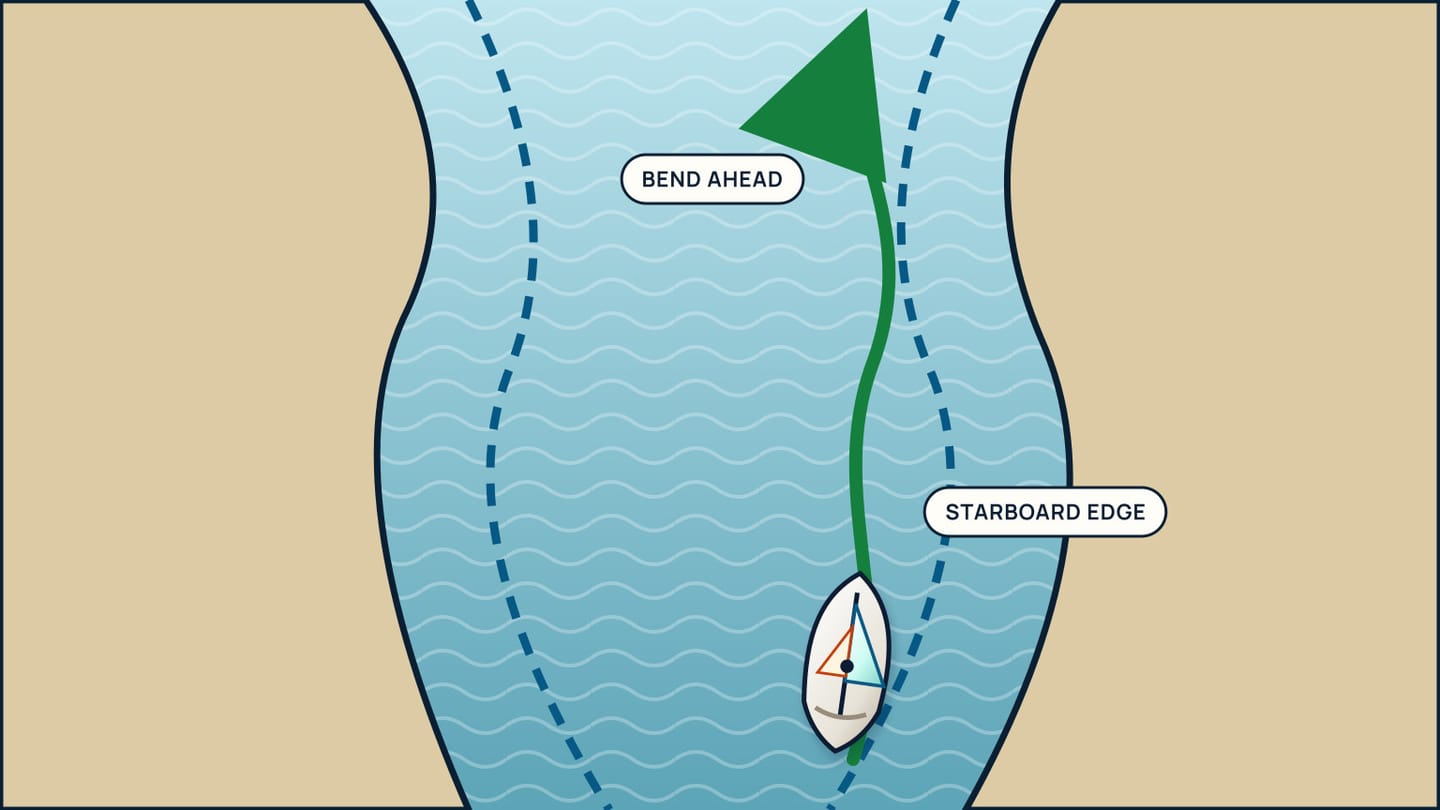
Predictability is working room. Once established in the channel, keep a steady course and speed when conditions allow. Small, repeated changes make it harder for another bridge team to judge where you will be. If you need to alter, do it early enough that the new course is obvious and leaves time to monitor the result.
Sails can complicate that picture. A header may reduce your ability to hold the starboard side. A tack may carry you across most of the fairway. A lull may slow you in the one place where traffic cannot pass. Think through those possibilities before the narrow reach, not after the boat loses drive. Starting the engine, reducing sail, or waiting can be sound seamanship when it makes the transit controlled and readable. The right choice depends on your boat and the actual conditions.
Keep the crew's actions readable too. Agree who is steering, who watches astern, and who handles sheets. Avoid a cockpit debate during a close approach. If a manoeuvre is needed, state it in plain language and confirm that the crew heard it. VHF information can help when used correctly, but a radio conversation does not replace compliance with the collision rules or a visual lookout. Never build the plan around an assumption that another vessel has heard you.
A common mistake is to “hug” the edge without checking whether it is safe. Rule 9 says near the starboard outer limit as is safe and practicable. Shoaling water, obstructions, moorings, and local directions still matter. The channel edge is a reference for an orderly transit, not a command to place the hull in danger.
Cross and overtake only with room to finish
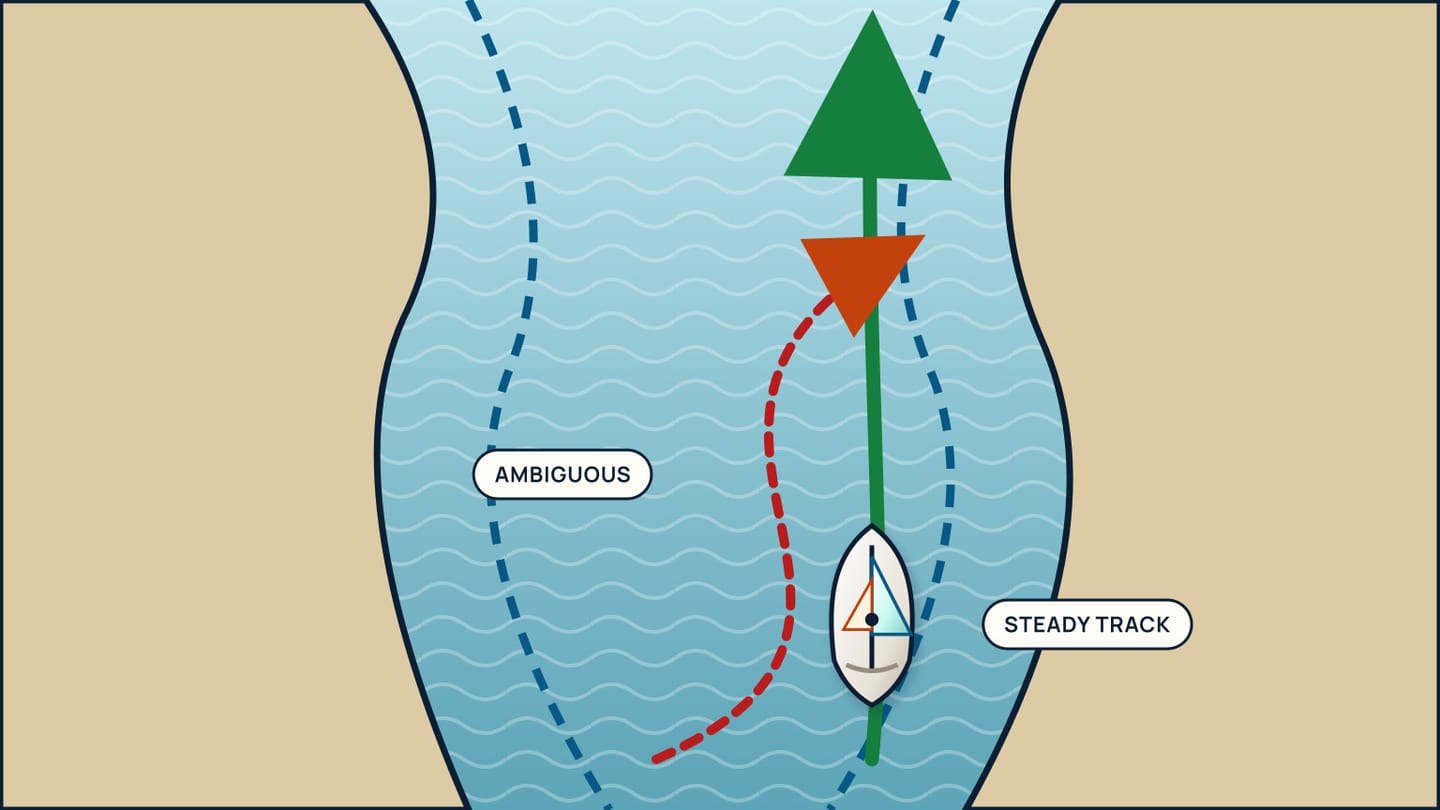
Crossing a narrow channel is a short manoeuvre with a long planning horizon. Rule 9 says not to cross if doing so impedes a vessel that can navigate safely only inside the channel. Look both ways, include traffic hidden by bends or structures, and ask where every vessel will be when your stern clears the working route. If you need another boat to slow, turn, or wonder what you are doing, the gap is not ready.
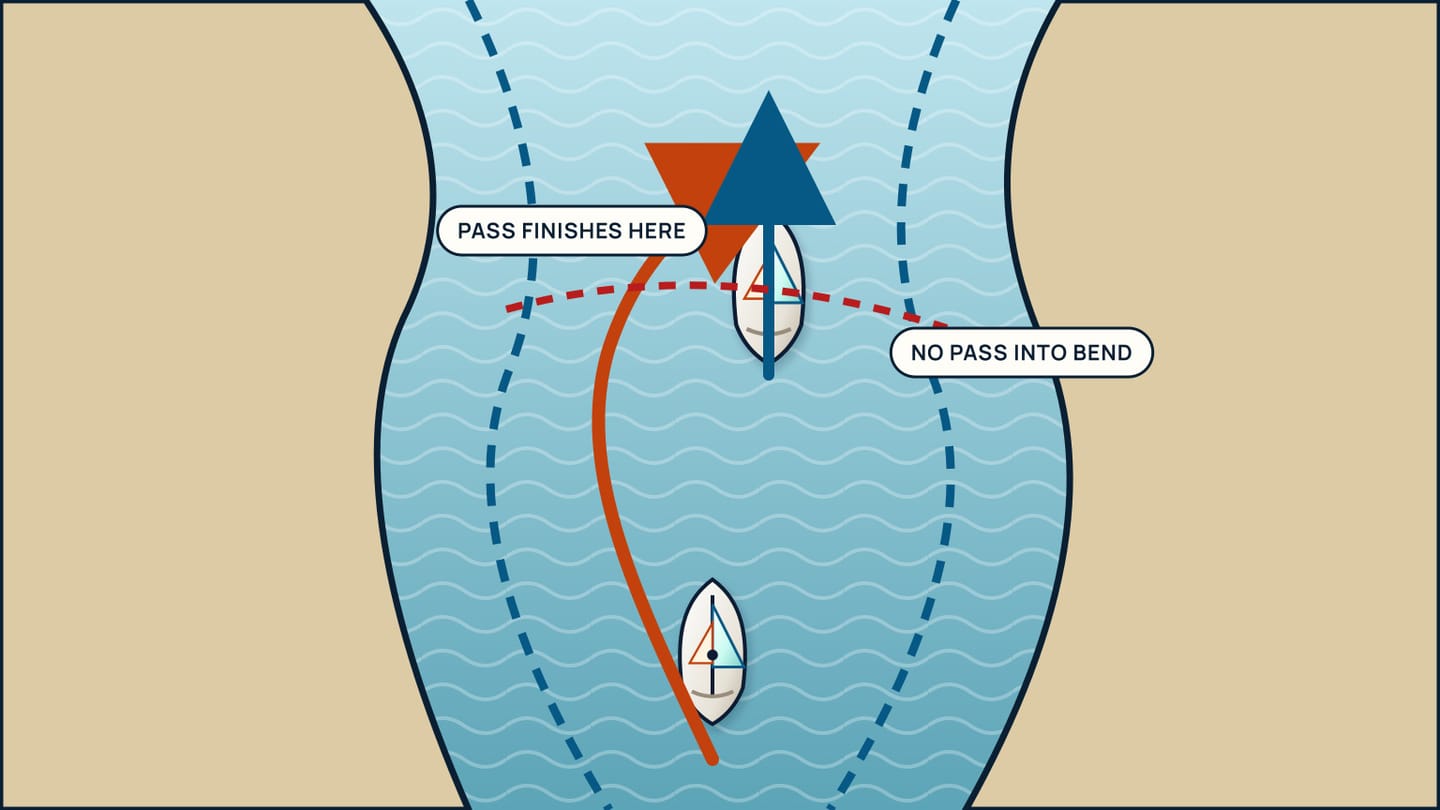
Overtaking needs the same full-path thinking. Passing a stern is not the end of the manoeuvre. You need space to move out, draw alongside without squeezing either vessel toward a bank, and return only when finally past and clear. Rule 13 still makes the overtaking vessel responsible for keeping out of the way. In a narrow channel, the vessel being overtaken may need to cooperate before a safe pass is possible. The COLREGs include sound-signal procedures for that situation, but local practice and visibility affect how those procedures are used. Verify current local requirements rather than improvising.
Imagine a slower yacht ahead just before a bend. The straight section looks wide enough to pass, yet the bend will hide oncoming traffic and push both boats toward the same outer line. Waiting costs a few minutes. Beginning the pass spends most of your safe margin and may force three vessels to solve the problem together. The disciplined decision is to remain astern at a distance that leaves a clear view and try again only where the whole pass is visible.
Give constrained vessels the channel they need
A sailing vessel's normal privileges do not cancel Rule 9. When a large vessel can safely navigate only within the channel, your job is to avoid impeding its passage. Act while your options are still wide: wait before entering, move into safe water outside the fairway, or complete a crossing well before the vessel arrives. Do not loiter at a bend, entrance, or turning basin and expect the other vessel to solve the geometry.
Judge the entire vessel, not only its bow. A ship may need room for its stern to swing through a turn. A tow can occupy far more water than the tug suggests. Wind and current can demand a course that looks offset from the channel centreline. Those observations do not require you to calculate the other vessel's handling. They tell you to leave an unmistakable, generous lane.
Bank effect, squat, stopping distance, and pilotage are specialist subjects and vary with the vessel and waterway. A beginner does not need to estimate them to make a conservative choice. The visible fact that a vessel is following the only deep route is enough to keep clear of that route. If you cannot tell whether your action will impede it, choose the option that removes you earlier.
Watch after you move. A turn that seemed helpful may still leave your stern or sails projecting into the fairway. Confirm that the bearing opens and the other vessel can continue without a course change caused by you. Keep monitoring until the interaction is plainly over.
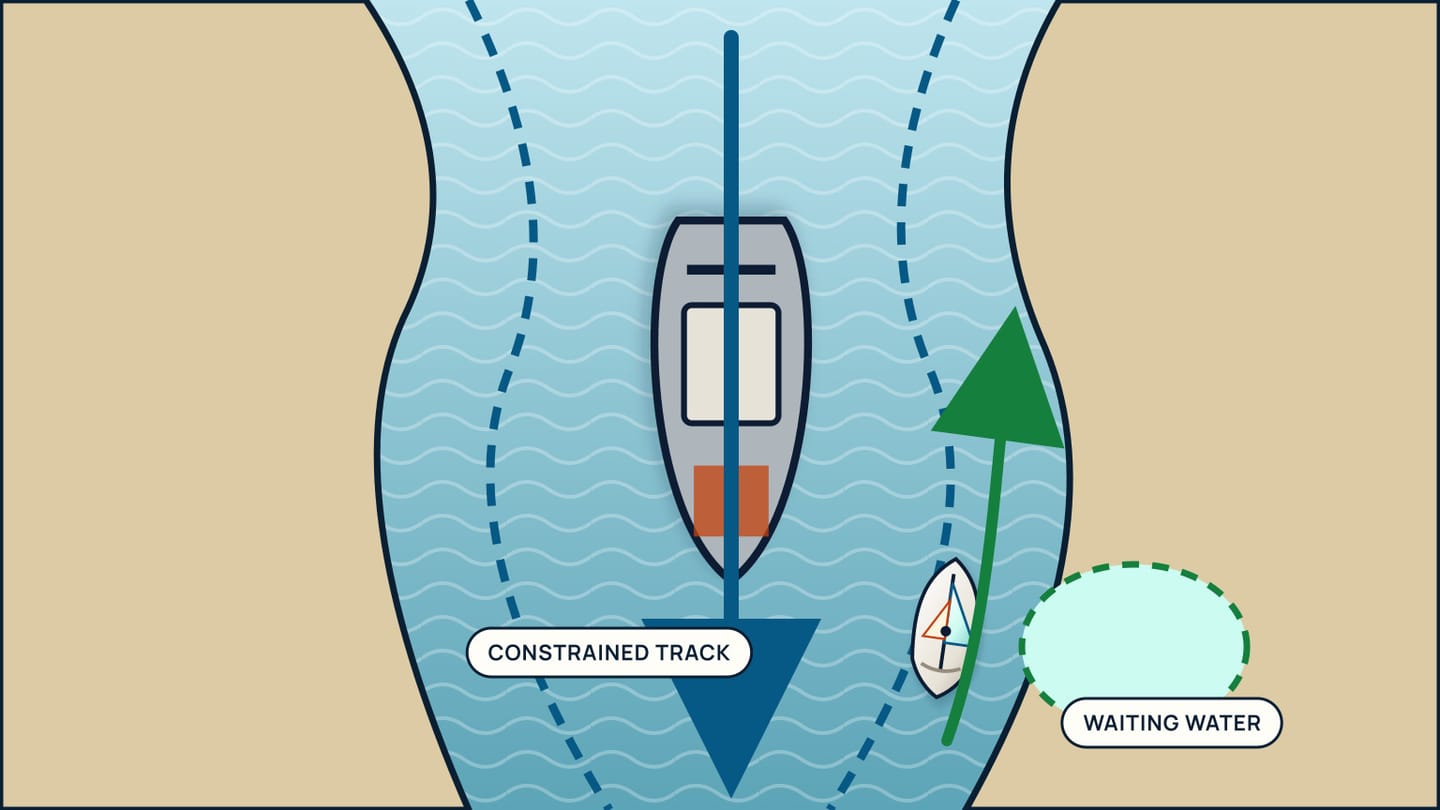
Keep an exit in every version of the plan
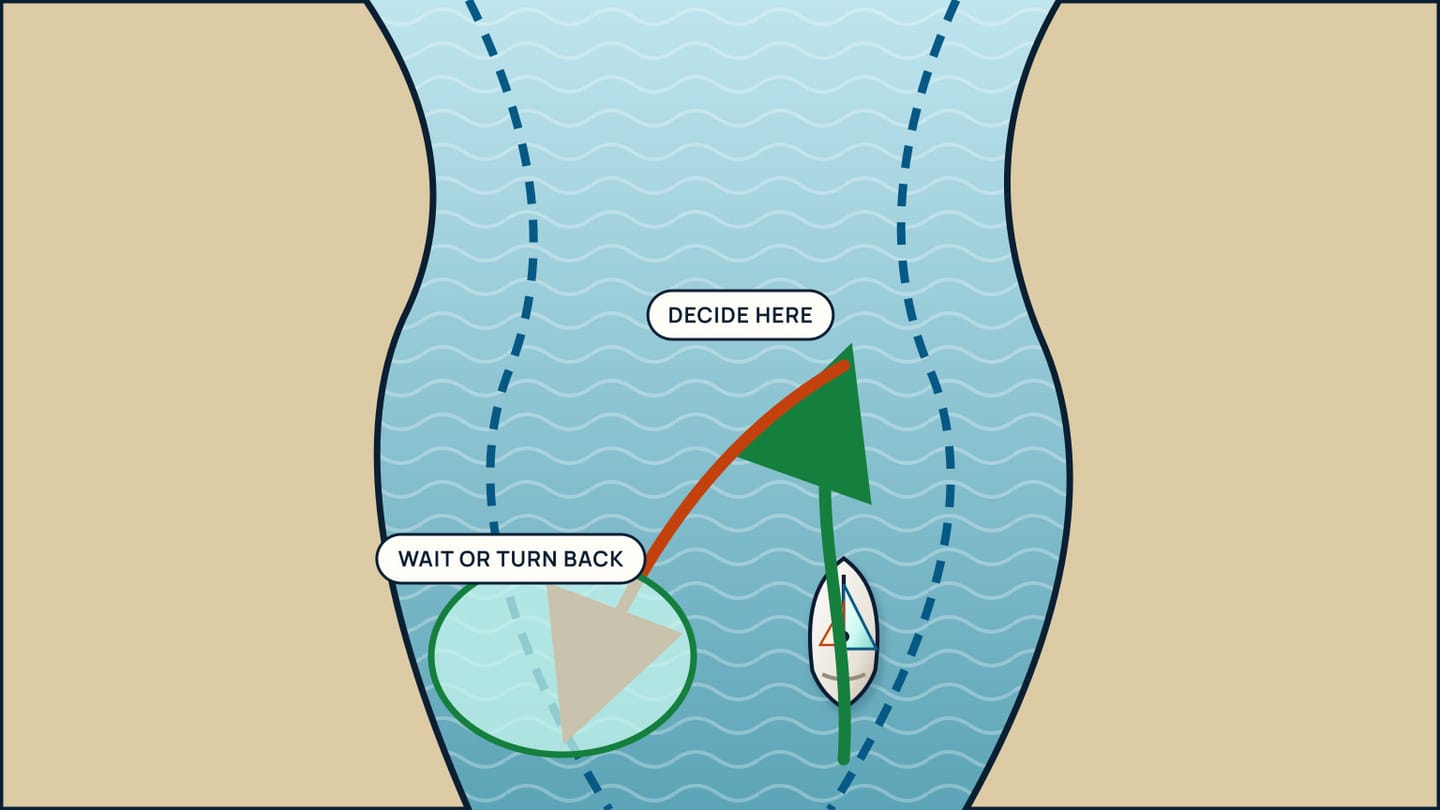
Good channel plans contain decision points. Before entering, choose a last place to wait. Before a bend, choose the minimum visibility you will accept. Before a crossing, decide what approaching traffic cancels it. These are not fixed universal numbers. They are conditions you can observe before pressure narrows your judgment.
Use a short spoken loop: “traffic, space, escape.” Traffic covers vessels ahead, astern, crossing, and hidden by the next feature. Space means depth and manoeuvring room for your boat and theirs. Escape means a safe action available now, not a theoretical turn after the gap closes. Repeat the loop whenever the waterway changes.
Turning back is a normal result, not a failed transit. Suppose the wind fades as you approach a bridge reach and a commercial vessel appears beyond it. Pressing on may leave you slow and hard to predict inside the pinch point. Returning to the waiting area restores time, visibility, and control. The earlier you make that choice, the less dramatic it feels to everyone aboard.
After the passage, review the clues that mattered. Note which bend hid traffic, whether the lookout position worked, and where the boat lost manoeuvring room. That turns one local transit into reusable seamanship. The rule provides the framework; careful observation supplies the safe answer in that particular channel.
SailStarter's visual lessons build the collision-avoidance habits behind this plan: identify the situation, make an early readable choice, and keep checking until vessels are safely clear. Use them to prepare for an onboard briefing with an experienced skipper, then verify the rules and directions for the waterway you will actually sail.
Try it from the lesson
Can you spot the next move?
The encounter rule makes you give-way. What does Rule 16 require?
Why you can trust this guide
. We build each guide from public seamanship and safety sources, then teach the universal principle before any local difference.