Chart your course
Boat Right of Way Rules, Explained Simply
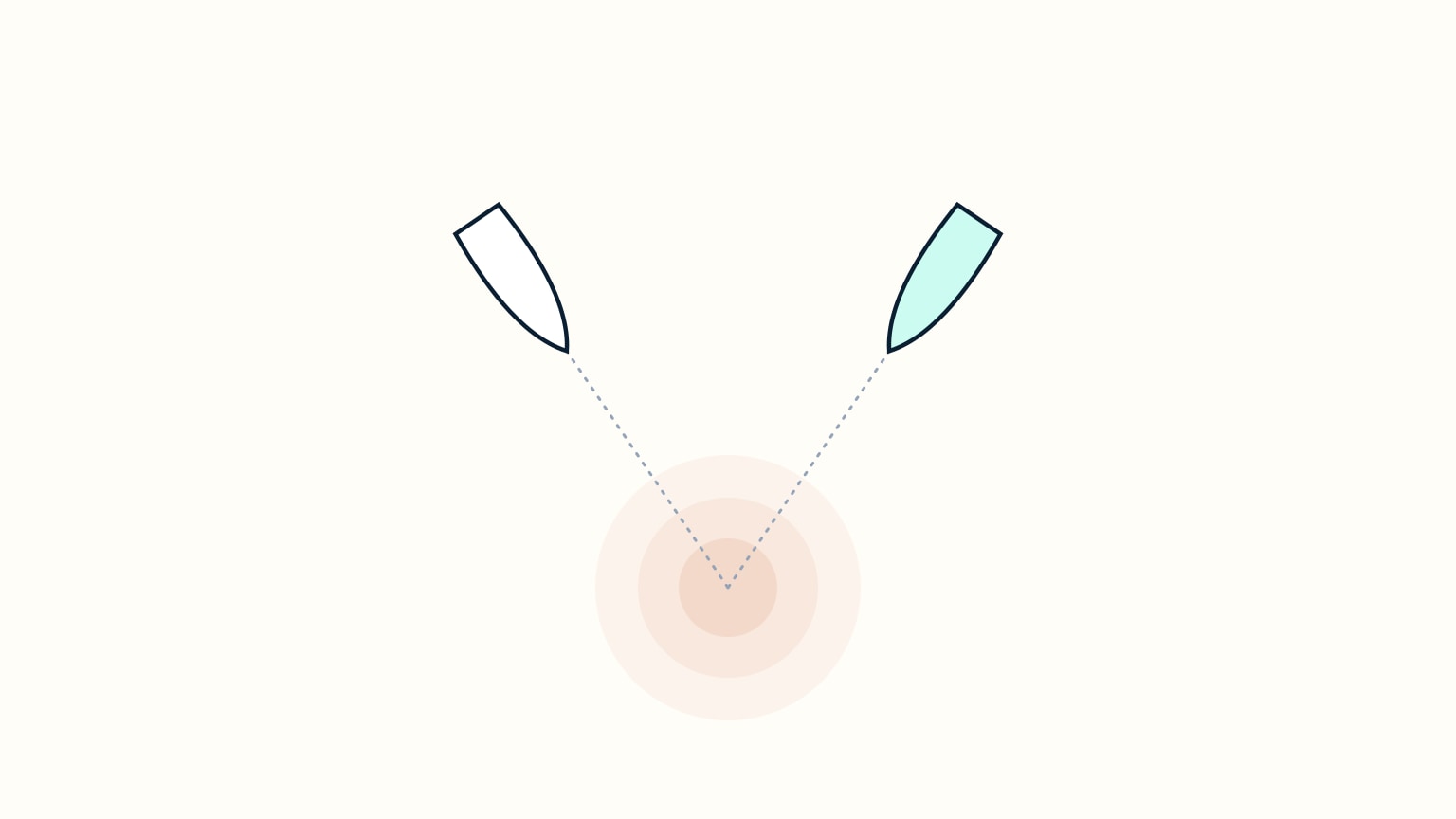
Quick answer
The short version
"Boat right of way rules" is everyday shorthand for something more precise: the COLREGs (the international collision-avoidance rules every vessel sails under) don't actually hand one boat a "right of way." They assign two roles instead. The give-way vessel must act early and obviously to keep clear. The stand-on vessel holds its course and speed, but only until it's apparent the give-way vessel isn't keeping clear, at which point holding course stops being the safe choice. You spot a real risk of collision by watching another vessel's compass bearing: if it stays steady while the distance keeps shrinking, you're on a collision course. Underneath both roles sits one more idea: the less maneuverable vessel gets more room, and good seamanship always overrides rigid rule-following.
Every new boater hears "right of way" and pictures a car at a four-way stop: one vehicle waits, the other goes. On the water, that mental model causes real danger, because nobody has the right of way into a collision. The actual rules (international, not particular to any one country) assign roles instead of rights: one vessel acts, the other holds steady, and both keep watching each other the whole time. This guide walks through what those two roles really require, how you notice a collision course before it becomes one, which vessels get the most room when maneuverability is limited, and the one principle that overrides all of it when a rule and reality disagree.
The Two Roles: Give-Way and Stand-On
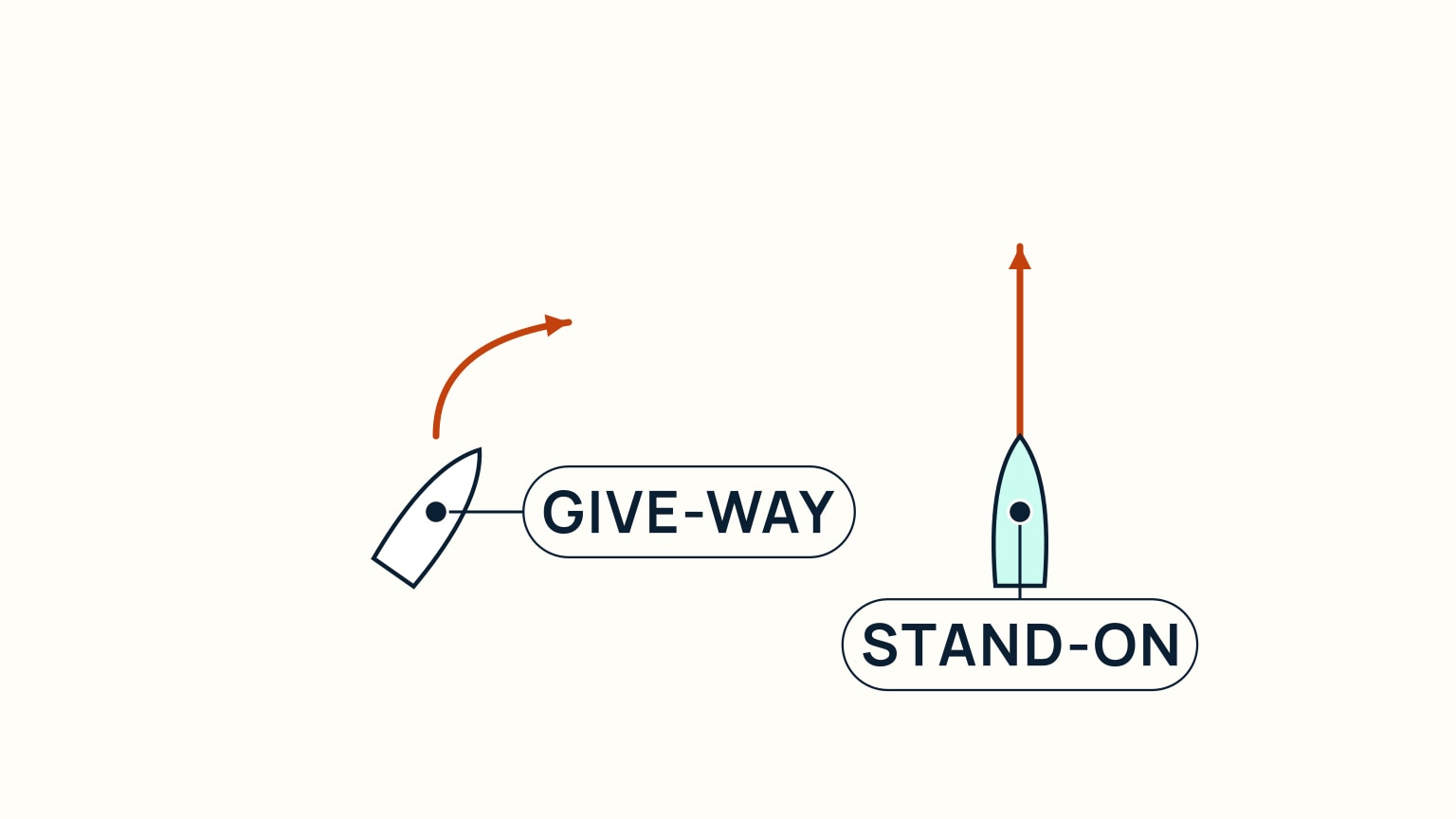
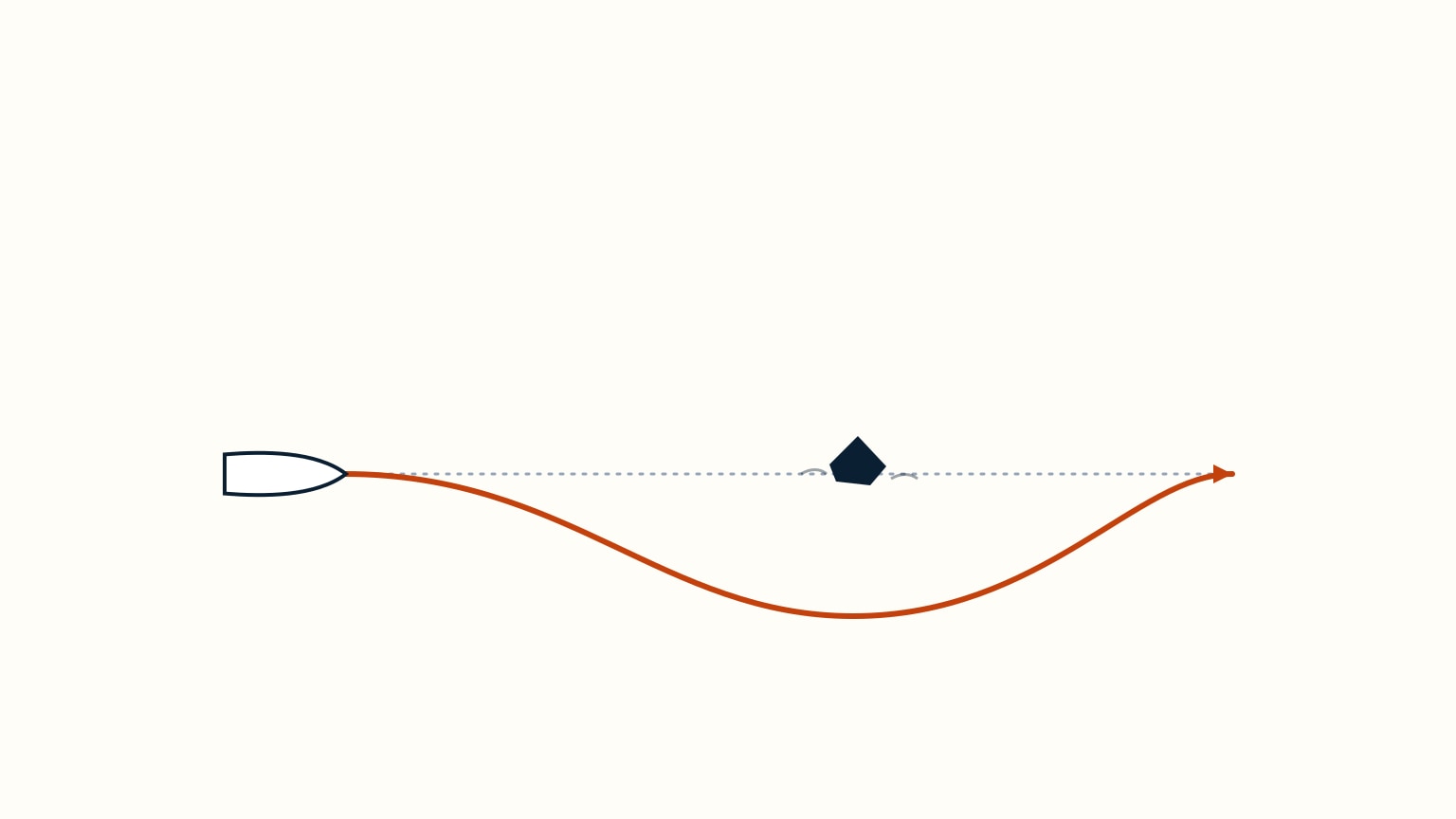
COLREGs Rule 16 gives the give-way vessel one job: take early and substantial action to keep well clear: not a last-second nudge, but a turn or speed change the other vessel can actually see happening in time to trust it. Rule 17 gives the stand-on vessel the opposite-looking job: hold your course and speed, so the give-way vessel has something predictable to steer around.
That word "stand-on" trips people up. It doesn't mean you have the right of way, and it doesn't mean holding course no matter what. The moment it's apparent the give-way vessel isn't keeping clear, the stand-on vessel may act alone to avoid a collision. And if things ever get so close that the give-way vessel's own action can no longer prevent it, the stand-on vessel must act, whatever the "rule" seemed to say a minute earlier. One vessel acting never cancels the other's own duty to keep clear.
Spotting a Collision Course: The Steady Bearing
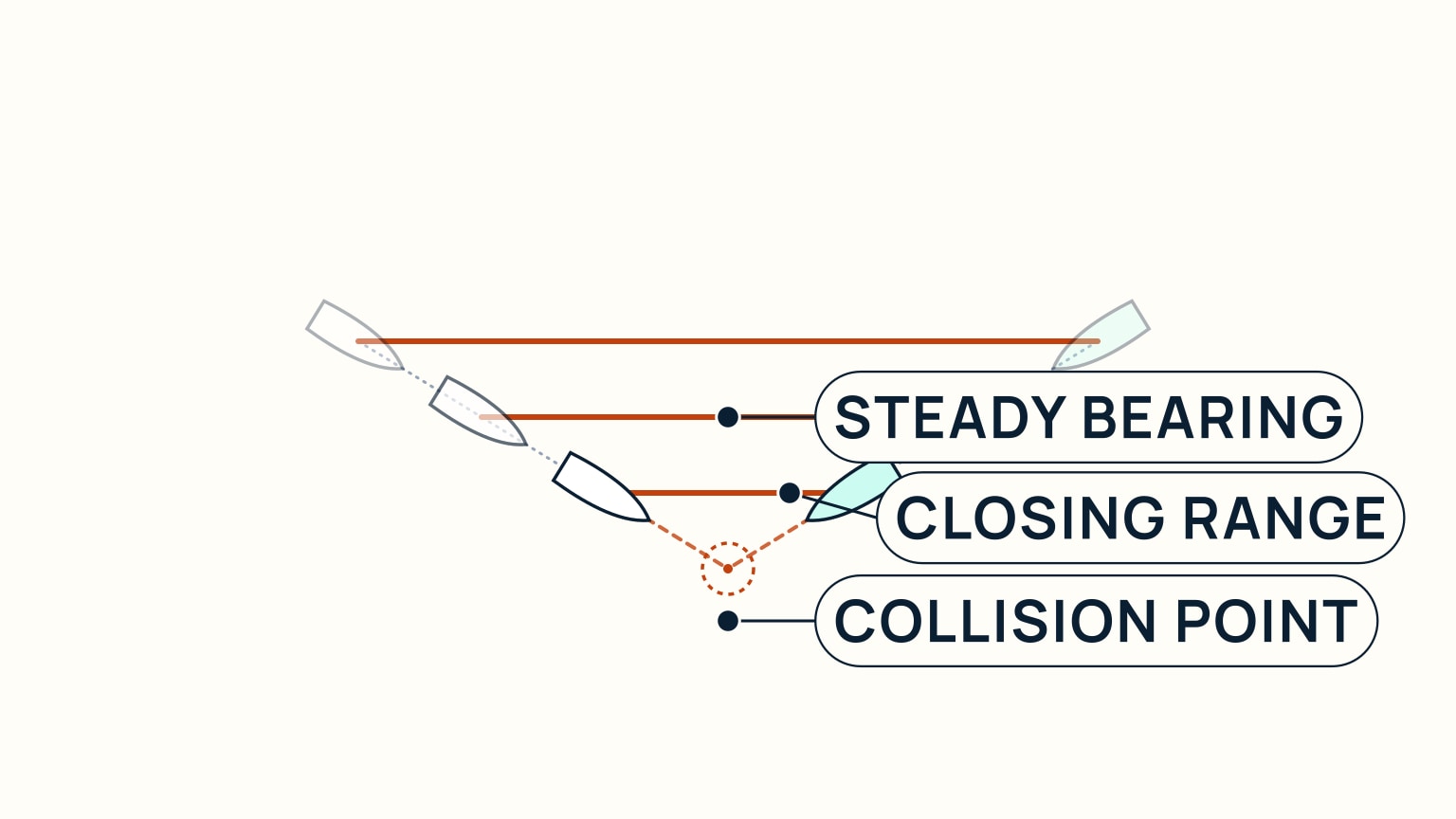
Before any of this matters, you need to notice the risk in the first place. COLREGs Rule 7 gives you the test: use every means available to check whether risk of collision exists, and if there's any doubt, treat it as real.
The clearest sign is a steady compass bearing. Watch where another vessel sits relative to a fixed point on your own boat. If that bearing doesn't shift while the distance between you keeps shrinking, you're on a collision course, even though nothing about either boat's own heading looks alarming. The reverse isn't automatically safe, either: a bearing that IS visibly swinging can still carry real risk close to a very large vessel, a tow, or at close range, where the geometry involved punishes a late reaction. Watching both bearing and distance turns "that boat looks kind of close" into an actual decision to act.
Who Gives Way to Whom: The Priority Ladder
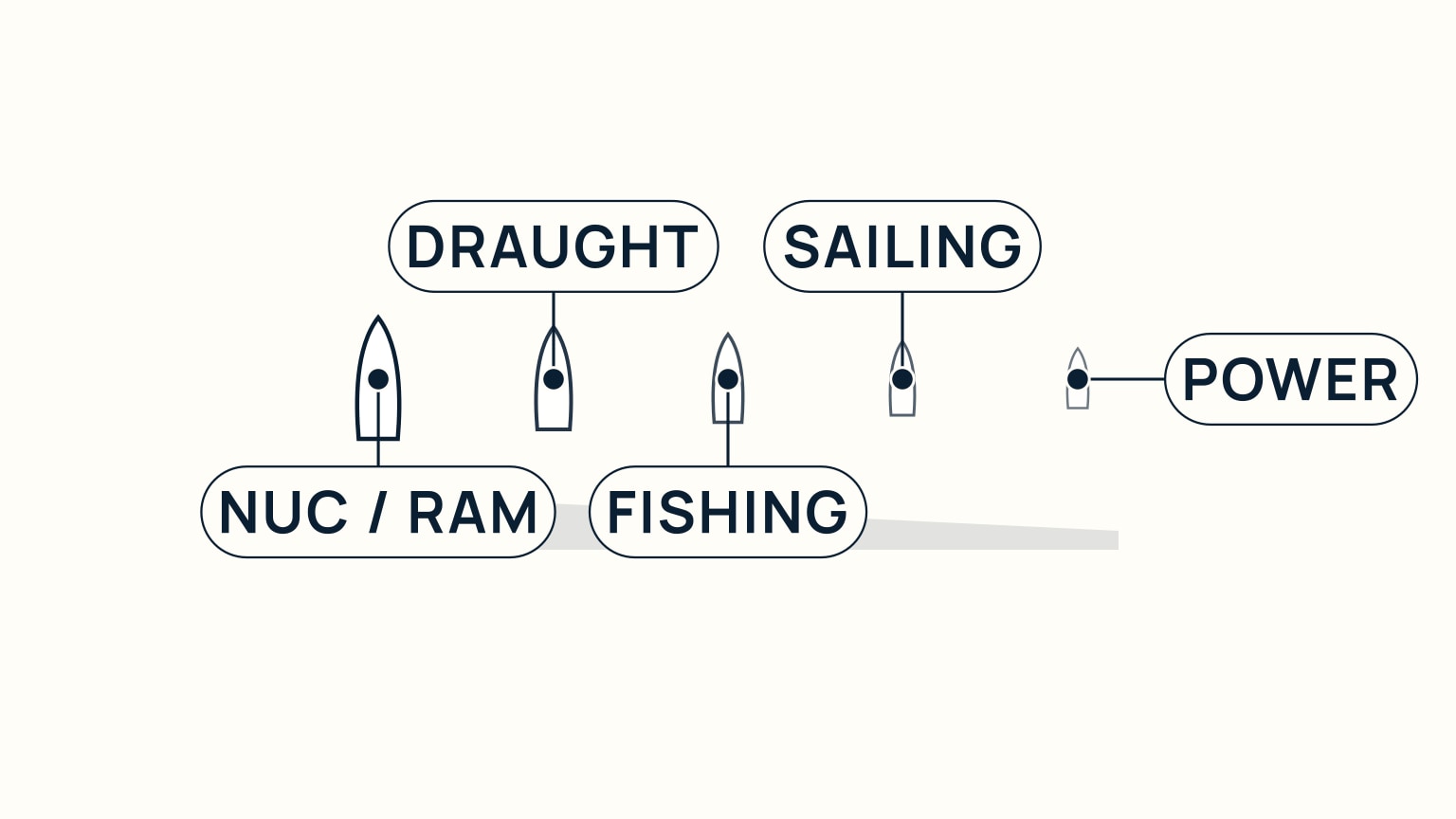
Give-way and stand-on decide who acts once a specific encounter (crossing, meeting head-on, overtaking) is already sorted out. Underneath that sits a second layer: some vessels are so much less able to get out of the way that everyone else owes them room, roughly from least maneuverable to most: a vessel not under command (something's genuinely broken and it can't steer as required), a vessel restricted in its ability to maneuver (tied to work like a dredge, a tow, or a survey line that limits its moves), a vessel constrained by draught (too deep for the water it's in to leave its channel, so other vessels avoid crowding it, though its own duty back is a lighter "navigate with caution"), a vessel fishing with gear that limits its moves, a sailing vessel, and a power-driven vessel.
This ladder answers "who gives way to whom" between different categories of vessel: it doesn't decide who gives way between two sailing vessels, or two power-driven ones; that's a separate set of rules entirely, built on the same give-way and stand-on roles above.
When the Rulebook Isn't Enough: Good Seamanship
A repeatable encounter check
Start with risk, not vessel labels. Look at the other vessel, take a bearing, and check it again after a short interval. If the bearing stays nearly steady while the range closes, treat collision risk as present. If you are unsure, the rules tell you to assume that risk exists. A changing bearing is reassuring only when there is enough distance and the other vessel is not a large ship, a tow, or already close.
Next identify the encounter and the vessels' actual status. Ask whether either vessel is overtaking, whether a narrow channel or traffic lane changes the duties, and whether one vessel is not under command, restricted in ability to manoeuvre, or engaged in fishing. A yacht with sails set is still power-driven while its engine is propelling it. Only after those checks should you settle the give-way and stand-on roles.
If you are give-way, make an early, clear change that creates obvious separation. Then keep watching. A small alteration that leaves the bearing nearly steady has not solved the problem. If you are stand-on, hold a predictable course and speed while the give-way vessel acts. That predictability helps both crews read the developing geometry. It does not give you permission to wait for impact. Rule 17 allows action when the give-way vessel is not responding and requires action when that vessel can no longer prevent collision alone.
What to say during the encounter
A simple spoken report keeps a crew focused: “vessel on the starboard bow, bearing steady, range closing.” Add your role and planned action once identified. Avoid saying only “we have right of way.” That phrase hides the continuing lookout and avoidance duties that apply to both boats.
Recheck after every manoeuvre. The bearing should begin to open, the passing side should remain clear, and no third vessel should be creating a new conflict. Continue until the boats are past and clear. Overtaking duties, in particular, do not disappear because the bearing changes during the pass. For the broader distinction between everyday language and the actual rules, compare whether sailboats have right of way and the practical lookout and safe-speed guide.
At night or in poor visibility, vessel identification and bearing changes take more care. Use every appropriate source available aboard, keep the lookout active, and reduce uncertainty early. The same test remains useful: if doubt exists about collision risk, treat the risk as real and create time to assess it.
Every rule above assumes a competent, attentive skipper is applying it, not reciting it. COLREGs Rule 2 makes that explicit: nothing in the rules excuses you from the ordinary practice of good seamanship, or from the special circumstances of the moment, and applying any rule has to give due regard to the real dangers of collision and navigation in front of you. If following a rule literally would put you in immediate danger, seamanship can call for departing from it.
In practice, that means a give-way vessel doesn't wait to see exactly how much room the rulebook technically owes it before turning around a hazard, and a stand-on vessel doesn't hold a rigid course into a boat that's clearly not maneuvering as expected, arguing about whose "turn" it was. The rules describe roles and priorities so two boats can predict each other's behaviour. They were never meant to be argued over after the fact: the goal, every time, is no collision at all.
None of this replaces practice. Reading about a steady bearing is one thing; picking it out from the helm, with real distances and real timing, is another skill entirely: and the same goes for recognising which vessel around you is restricted in its ability to maneuver before you're already close enough that it matters. SailStarter's short lessons walk through give-way and stand-on roles, the collision-course test, and the priority ladder the same way this guide did, then build on them with the specific crossing, head-on, and overtaking situations these roles apply to. If you're getting ready for real time on the water, or just want the rules to finally make intuitive sense instead of feeling memorised, it's a reasonable next step.
Try it from the lesson
Can you spot the next move?
The encounter rule makes you give-way. What does Rule 16 require?
Why you can trust this guide
. We build each guide from public seamanship and safety sources, then teach the universal principle before any local difference.