Chart your course
Parts of a Sail: The Names Every Beginner Sailor Should Know
Quick answer
The short version
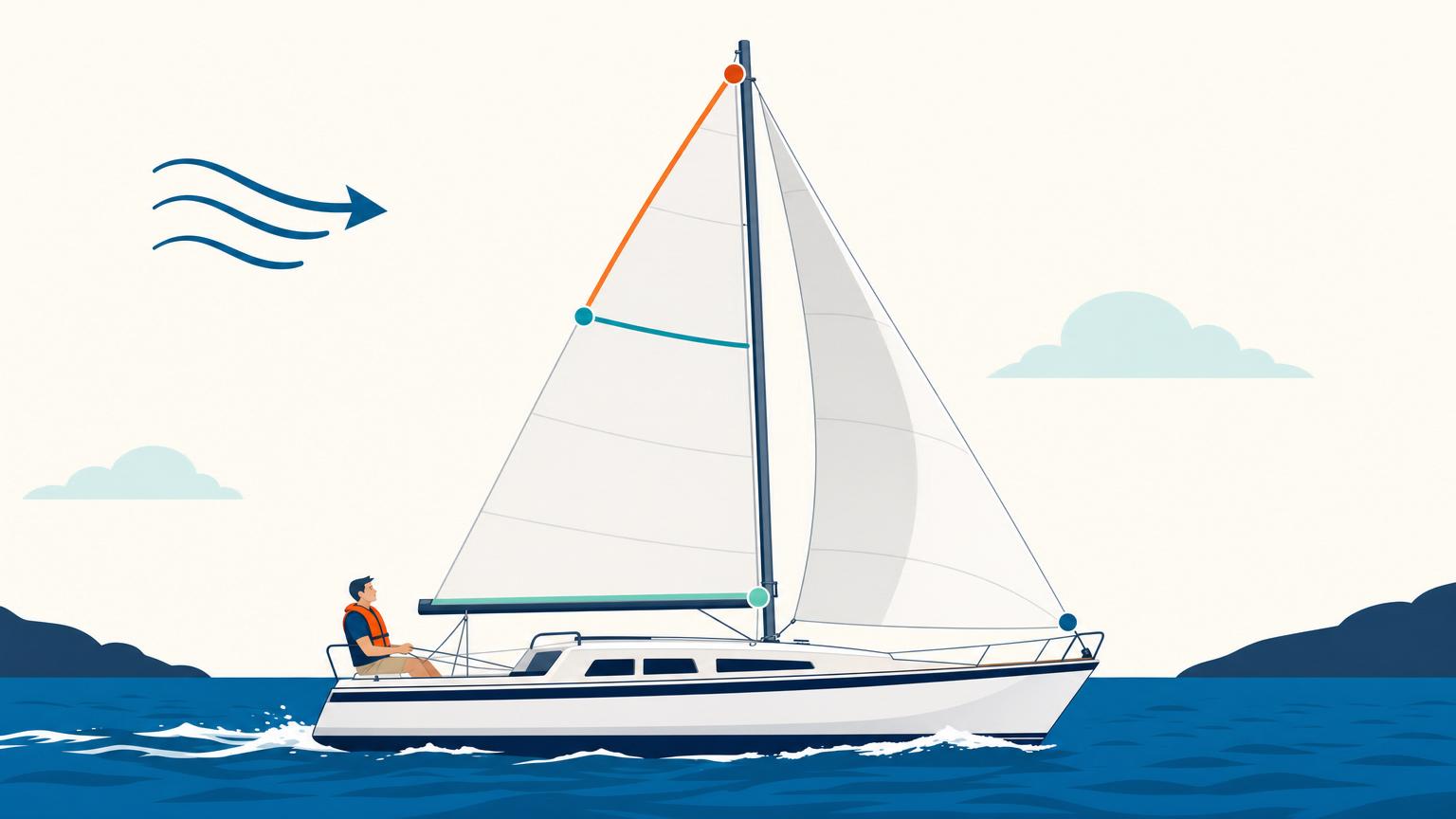
A sailboat uses cloth for its driving force. Its sails help move the boat forward, while the keel and rudder support direction and stability rather than drive. The basic parts of a sail are easy to decode: a triangular sail has three named edges and three named corners. On a sloop (a boat with one mast and two sails), the mainsail sits behind the mast, while the headsail sits in front. The usual headsail is a jib; a larger jib that overlaps the mast is called a genoa.
The luff is the front edge. It runs up the mast on a mainsail and attaches to the forestay (the line supporting the mast from the front) on a headsail. The leech is the back edge, and the foot is the bottom edge.
The head is the top corner, pulled up by a halyard (the line that raises the sail). The tack is the bottom front corner. The clew is the bottom back corner.
At first, a sail can look like a plain triangle of cloth. Then someone mentions the “luff” or “clew,” and sailing can sound like a foreign language. This article is your decoder for the parts of a sail. You will learn these two words (and the rest of the basic sail terminology) through shape and position.
First, you will meet the two main sail names on a sloop, a sailboat with one mast: the mainsail behind the mast and the headsail in front. A jib is a common headsail. A genoa is a larger jib that overlaps the mast. Next come the three corners: head, tack, and clew. You will see which corner a halyard (the line that raises a sail) pulls. Then you will learn the three edges: the luff, leech, and foot, including the edge that runs up the mast on the mainsail.
The Two Sails on a Sloop
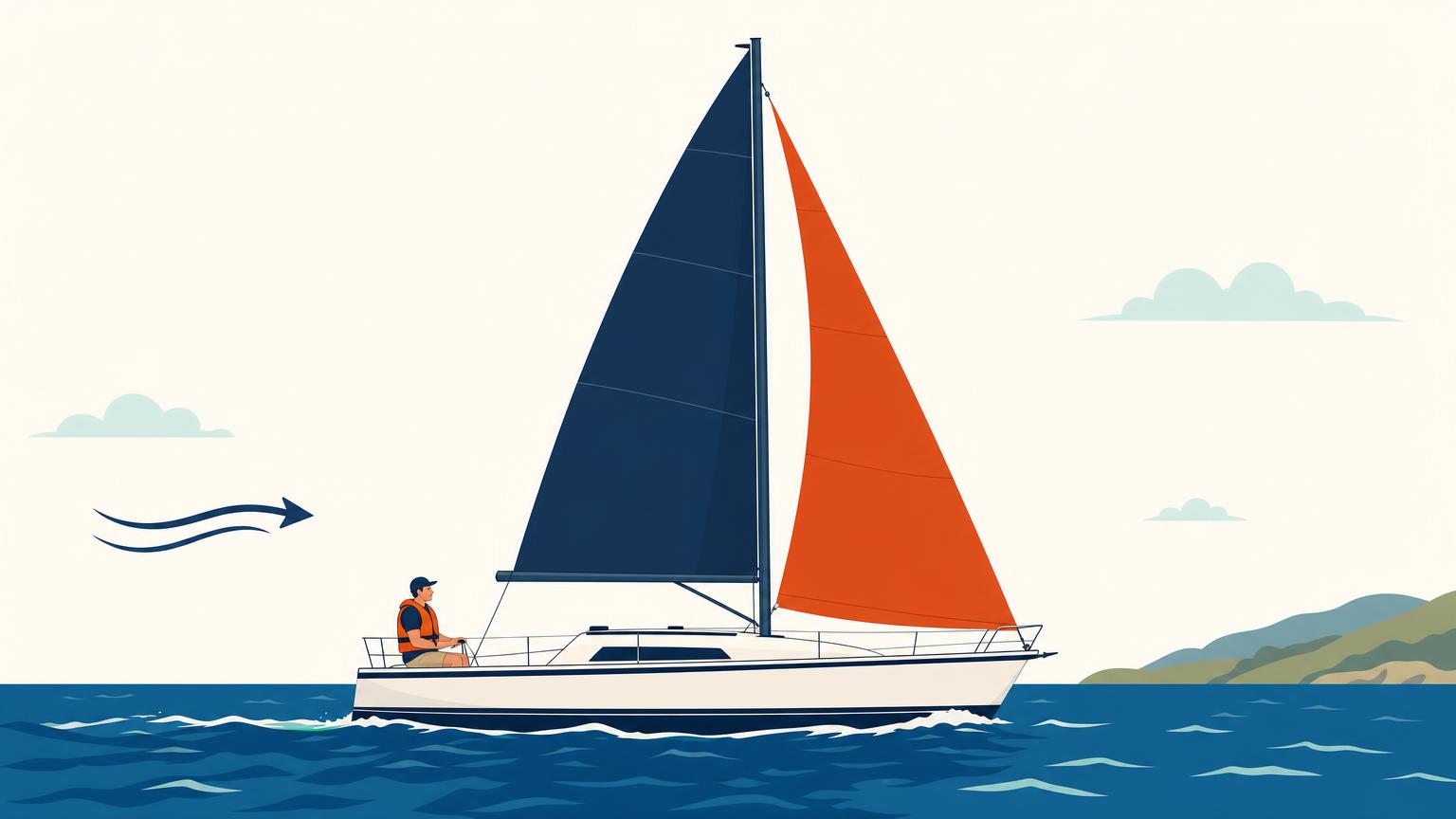
A sloop has one mast, the tall pole, and two working sails that use the wind to create forward drive. The Bermuda sloop is the most common modern rig, so it is the kind of boat many beginners first meet.
Behind the mast is the mainsail. Its front edge attaches to the mast. Its bottom edge usually runs along the boom, the horizontal pole that extends behind the mast.
In front of the mast is the headsail. “Headsail” is a general name for a sail in this position. The most common headsail is a jib.
You may also hear the word genoa. A genoa is a larger headsail. From the side, its back edge reaches past the mast and overlaps part of the mainsail. That visible overlap is the easiest beginner clue that you are looking at a genoa rather than a traditional jib.
Once you can tell these two working sails apart, the parts of a sail you meet next (its corners and edges) are easier to place.
The Three Corners: Head, Tack, and Clew
A triangular sail has three corners. You can remember them by starting at the top, then moving along the bottom from front to back.
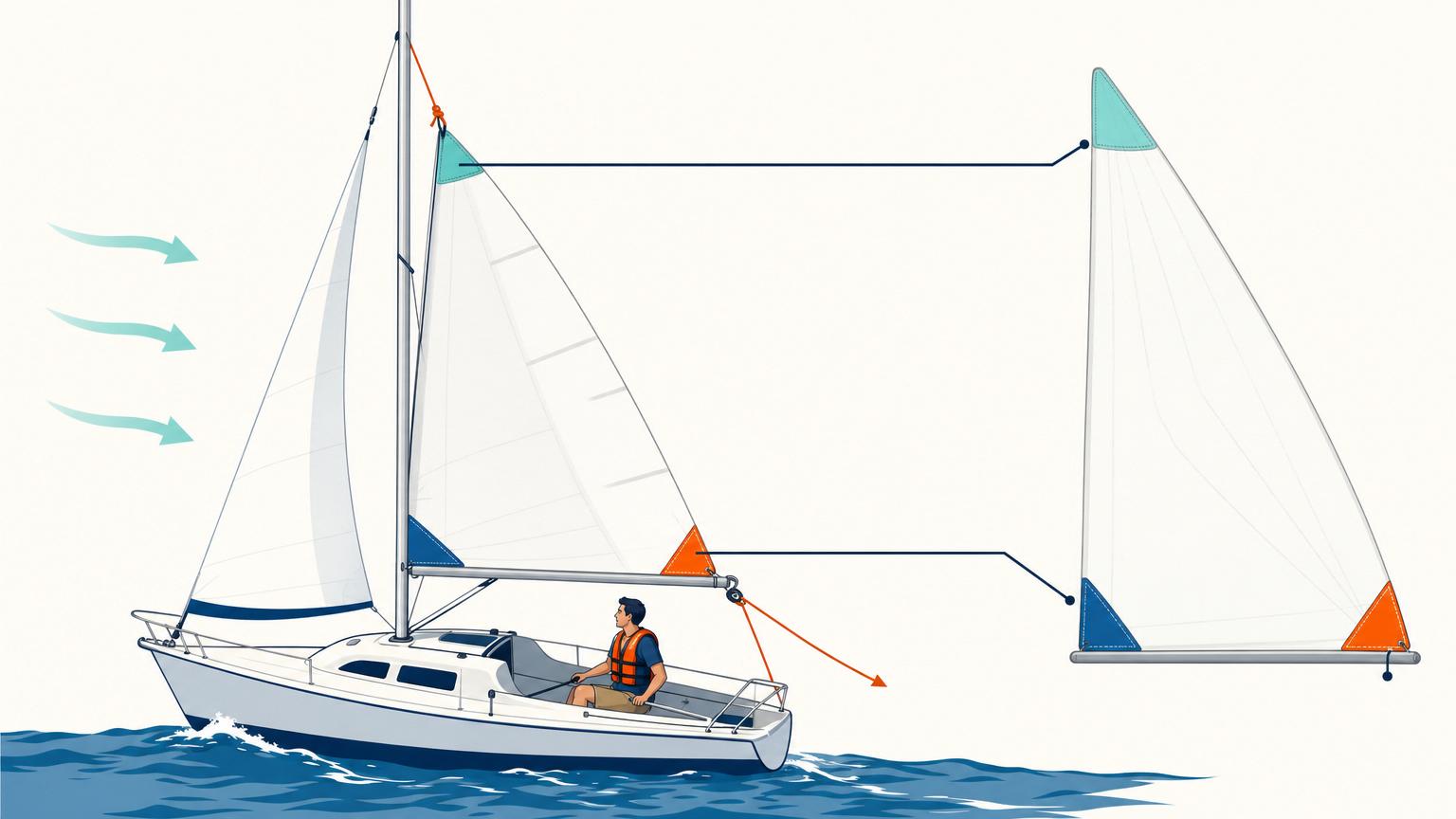
The head is the top corner. A halyard (the line used to raise a sail) attaches here and pulls the sail upward.
The tack is the lower forward corner. “Forward” means toward the front of the boat. This corner is usually fixed near the mast or deck. On a mainsail, it sits near the point where the mast and boom meet. On a headsail, it is commonly secured to deck hardware.
The clew is the lower aft corner. “Aft” means toward the back of the boat. This corner is adjusted to help control the sail. Sheets (the lines used to trim a sail) attach to a headsail’s clew. On a mainsail, an outhaul adjusts the clew along the boom.
One word can cause confusion: the sail corner is called the tack, but tacking is also a maneuver that turns the boat’s bow through the wind.
The Three Edges: Luff, Leech, and Foot
Each edge runs between two corners:
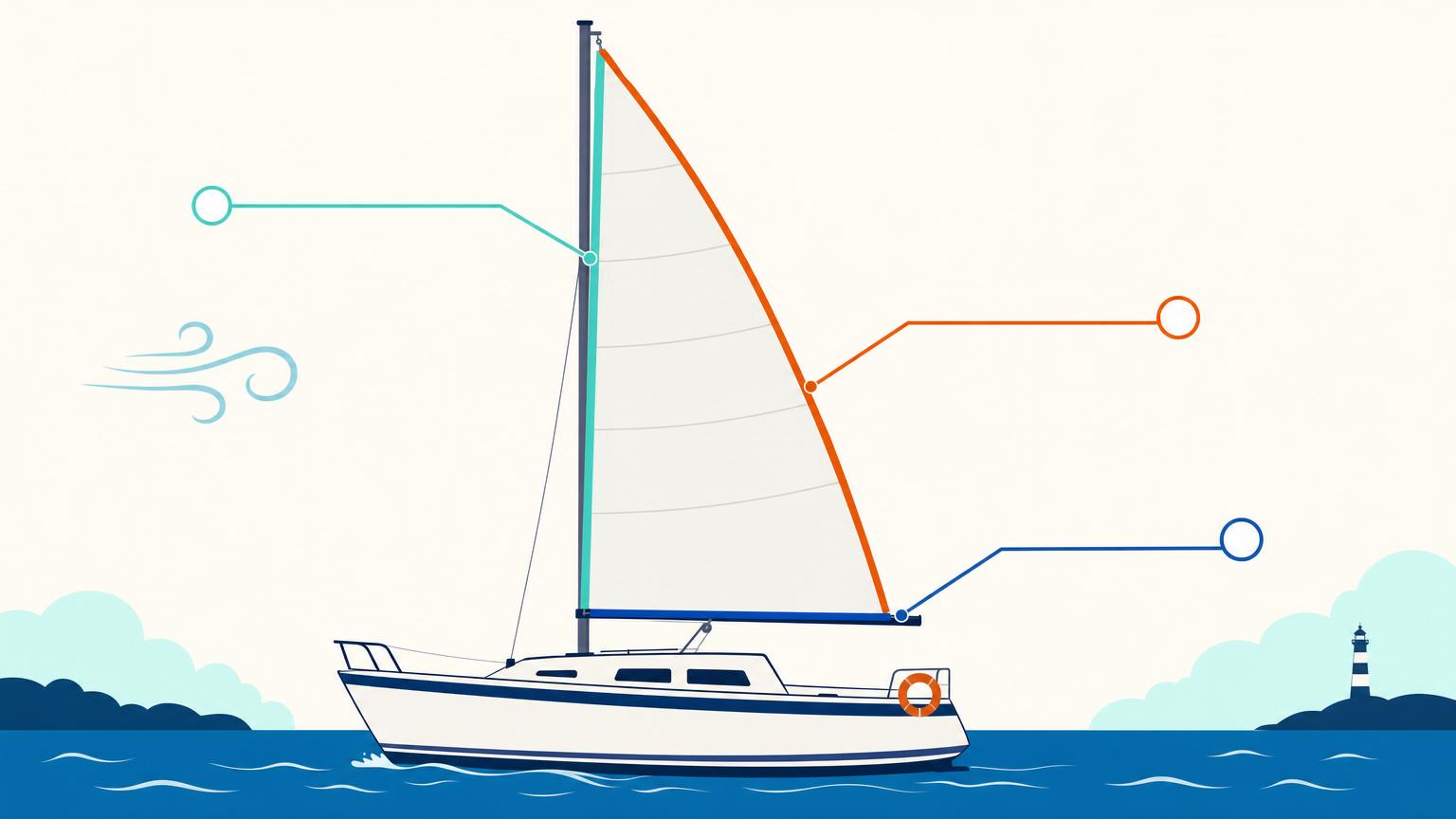
- Luff: the forward edge, from the head down to the tack. On the mainsail, the luff runs along and attaches to the mast. On the jib, it runs along the forestay (the wire or other rigging that supports the mast from the front).
- Leech: the back edge, from the head down to the clew. This is the edge farthest behind when you view the sail from the side.
- Foot: the bottom edge, from the tack to the clew. The mainsail’s foot usually sits along the boom, the horizontal pole behind the mast.
Attachment details vary by boat. A mainsail’s whole foot may fit into the boom, or only its tack and clew may connect to it. A jib can also attach to its forestay in different ways. The edge names stay the same: forward is the luff, back is the leech, and bottom is the foot.
Use the names in real instructions
Stand beside a lowered or safely secured sail and trace each edge from corner to corner. The head joins luff and leech. The tack joins luff and foot. The clew joins foot and leech. Repeat the pattern on the headsail, then point to where each corner attaches on the boat.
Now connect the names to controls. A halyard raises the head. The tack is secured near the forward lower attachment. A sheet controls the clew. The exact fittings and routes differ by sail and boat, but the corner names let the crew discuss the same part without pointing across a moving deck.
The types of sails guide helps you place those shared parts on jibs, genoas, and off-wind sails. The jib versus genoa guide uses overlap and clew position to separate two common headsails.
Diagnose with an edge or corner
When the forward edge flutters, say that the luff is luffing. When the aft edge shakes, name the leech. When the lower edge needs inspection, call it the foot. Specific language helps another crew member look at the same evidence and choose the relevant control.
Avoid using a part name as a complete instruction. "Check the clew" still needs a reason: a sheet attachment, chafe, twist, or sail shape. Keep hands clear of loaded corners and lines, and follow the skipper's direction before changing anything.
Make a three-minute recognition drill
Use a photograph or an unrigged sail. Point to one corner or edge and ask a partner to name the two parts that meet there. Then reverse the task: call "tack" and have them point. Finish by naming the control or attachment associated with each corner on the actual boat.
This drill builds working vocabulary without a long glossary. Once head, tack, clew, luff, leech, and foot are automatic, sail trim, reefing, hoisting, and inspection instructions become easier to follow because every action has a precise place.
You can now look at a triangular sail and find your way around it. On a sloop (a boat with one mast, a mainsail behind it, and one headsail in front), you know which sail is which. You can also trace the head, tack, and clew around its three corners, then follow the luff, leech, and foot along its three edges. That vocabulary helps everyday instructions make sense. If someone mentions the halyard, the line that raises the sail, you know it pulls at the head. If they mention a sheet, a line used to adjust a sail, you know it acts at the clew. Keep building that picture with SailStarter’s short beginner lessons.
Look at a reefed mainsail and find the new working tack and clew created by the reefing system. The loose cloth below remains part of the sail, while the load should be carried by the reef points designed for that job. Follow the boat's instructions and do not assume the small intermediate ties carry working load.
Then inspect one sail bag label and compare it with the rigged sail. Record the boat's own name for the sail, its corners, control lines, and storage place. This connects general vocabulary with the inventory the crew must handle.
When someone gives an instruction, repeat the part and action: "Ease the sheet at the clew" or "Check the luff near the tack." Specific repetition confirms that both people are looking at the same area. It also makes later maintenance notes much easier to understand.
Use the same names when you inspect a seam or patch so the maintenance note identifies its exact location.
Try it from the lesson
Can you spot the next move?
A halyard raises a triangular sail. Which corner does it attach to?
Why you can trust this guide
. We build each guide from public seamanship and safety sources, then teach the universal principle before any local difference.
- media.sailing.org
- sailing.org
- sailing.org
- sailing.org
- racingrulesofsailing.org
- americansailing.com
- americansailing.com
- northsails.com
- en.wikipedia.org
- military-history.fandom.com
- en.wikipedia.org
- en.wikipedia.org
- en.wikipedia.org
- uksailmakers.com
- rollytasker.com
- uksailmakers.com
- uksailmakers.com
- inavx.com
- ipfs.io
- 1066.co.nz
- simple.wikipedia.org
- en.wikipedia.org
- uksailmakers.com
- en.wikipedia.org
- nomadsailing.co.uk
- oceansafety.com
- en.wikipedia.org
- en.wikipedia.org