Chart your course
Types of Sails Explained for Beginners
Quick answer
The short version
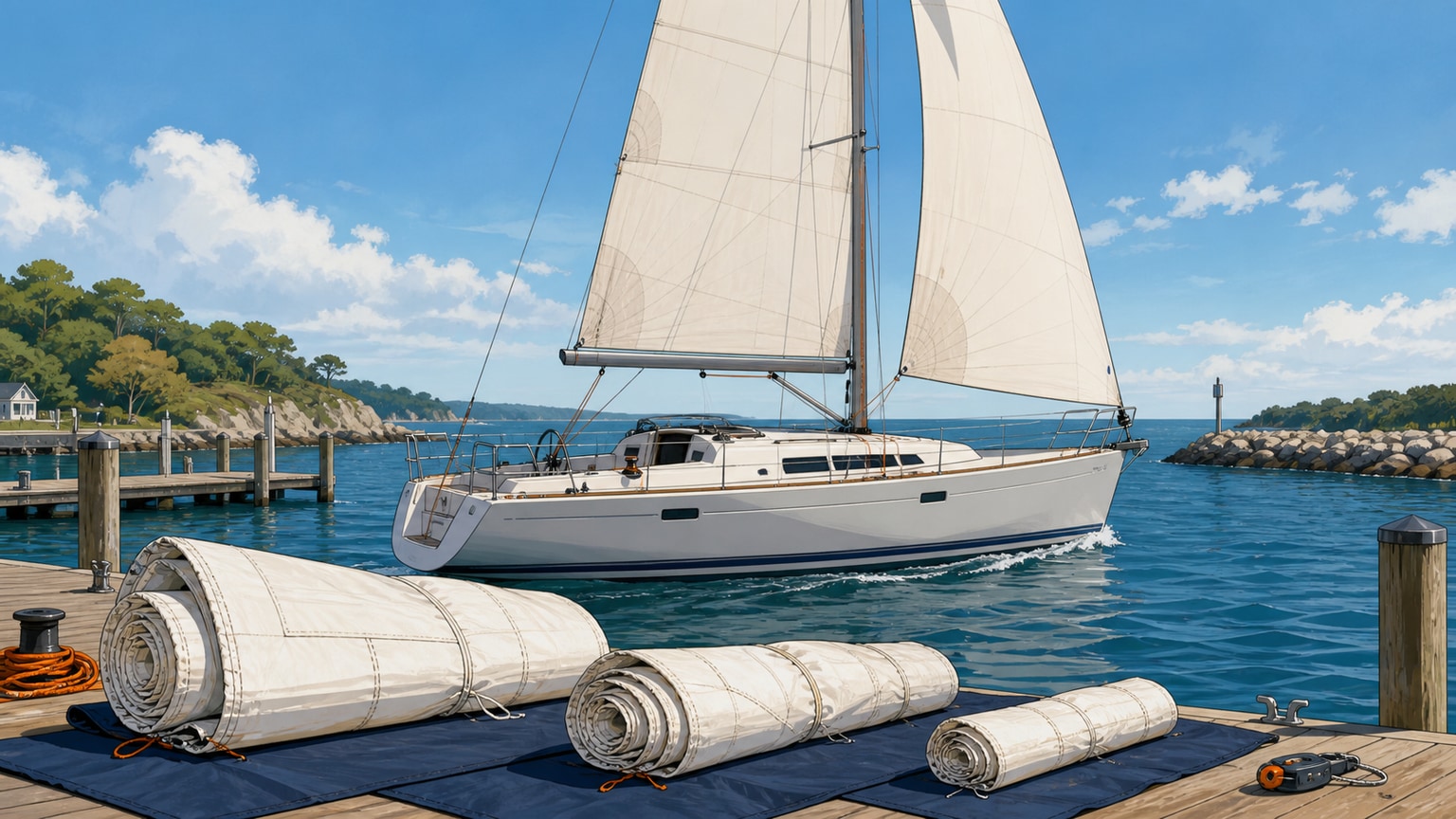
Most beginners need to recognize three sail families. The mainsail sits behind the mast and is usually supported along its lower edge by the boom. A headsail sits forward of the mast: a smaller non-overlapping version is commonly called a jib, while a larger one that overlaps the mast is a genoa. For sailing away from the wind, a boat may set a fuller spinnaker or asymmetric gennaker ahead of the mast. In stronger conditions, sailors reduce sail area by reefing the mainsail or changing to a smaller headsail. The exact sail inventory depends on the boat, so start with position and purpose before memorizing every specialty name.
Sail names can look like a catalogue until you put them on the boat. A common sloop has one mast and normally uses a mainsail plus one headsail. Those two working sails cover much of ordinary sailing. Other sails change the available area or shape for a particular wind range and direction. You do not need to choose them on your first day. Learn to identify which sail is behind the mast, which is ahead, and whether the extra sail is built for upwind or off-wind work. That gives you a reliable base when a skipper introduces the boat's own inventory.
The Mainsail and Headsail
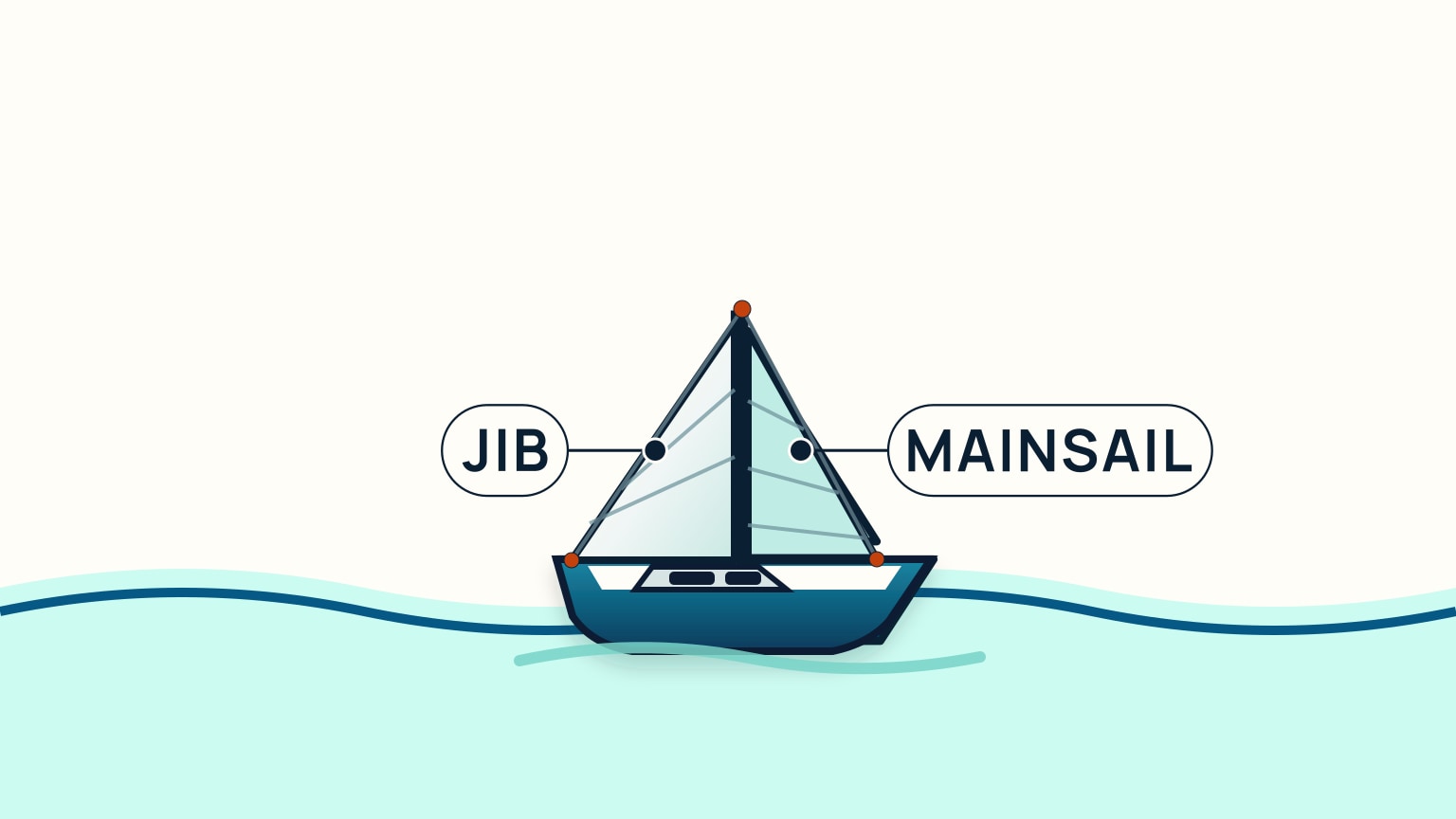
The mainsail is set behind the mast. Its forward edge, the luff, is attached along the mast, and its lower edge, the foot, is associated with the boom on the common rig. The mainsheet controls the boom and therefore the mainsail's angle. A halyard raises the sail to the masthead. Reefing reduces the mainsail's exposed area when the boat needs less power while keeping the same working sail in use.
Headsail is the family name for a sail set forward of the mast. On a sloop it works with the mainsail, and its sheets run aft on both sides so the crew can control it after a tack. The ordinary headsail may be called a jib. A genoa is a larger jib whose area overlaps the mast when viewed from the side.
Position is the easiest recognition tool: behind the mast means mainsail; ahead of it means headsail. Size and overlap then distinguish many jibs from genoas. Look at where the luff is supported and where the lower corner's sheet leads. Boat designers and sailmakers use more exact measurements, but a beginner can start with this visible difference and confirm the boat's own name with the skipper.
Jib, Genoa, and Smaller Options
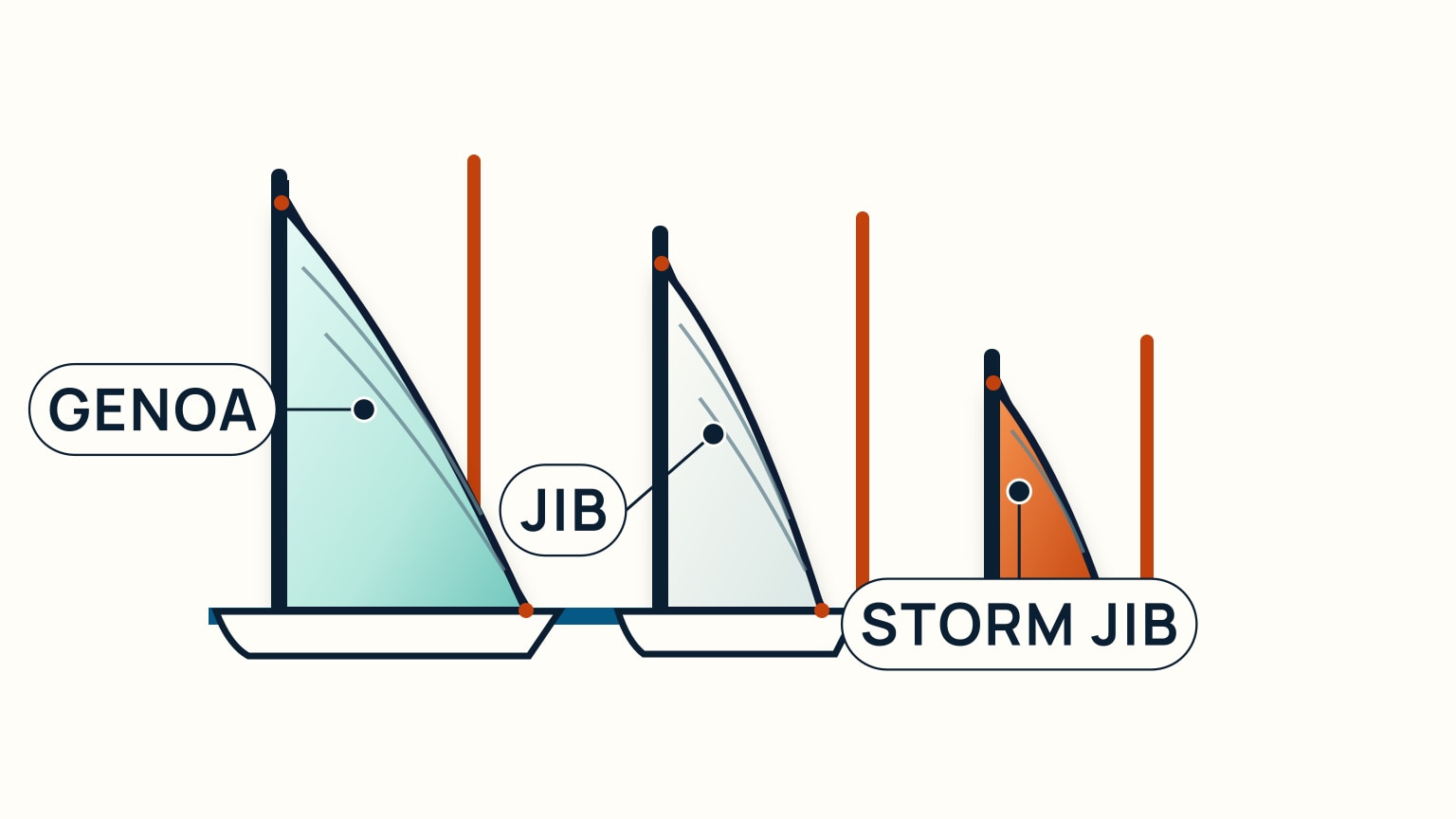
A working jib is a compact headsail that does not overlap the mast. It is easier to see around and move across the foredeck area during a tack than a large genoa. A genoa adds sail area, which can provide more drive in lighter wind, but its larger overlap also creates more cloth and line to manage.
As wind strength rises, the useful headsail becomes smaller. A working jib can replace a genoa, and severe-weather sail inventories may include a compact storm jib. Do not treat that sequence as a universal wind-speed chart. The right change depends on the boat, its sail plan, the sea state, and the skipper's judgment.
A jib furling-and-reefing system can roll the same headsail around its luff support for storage or reefing. Partly furling it reduces the working area, but it remains the same headsail rather than becoming a different sail family. The tradeoff is shape: Seldén's Furlex manual notes that a reefed sail is less efficient than an unreefed sail of the same area. Ask which arrangement the boat carries before naming what you see. Then watch which sheets control it after a tack.
Spinnakers and Gennakers Off the Wind
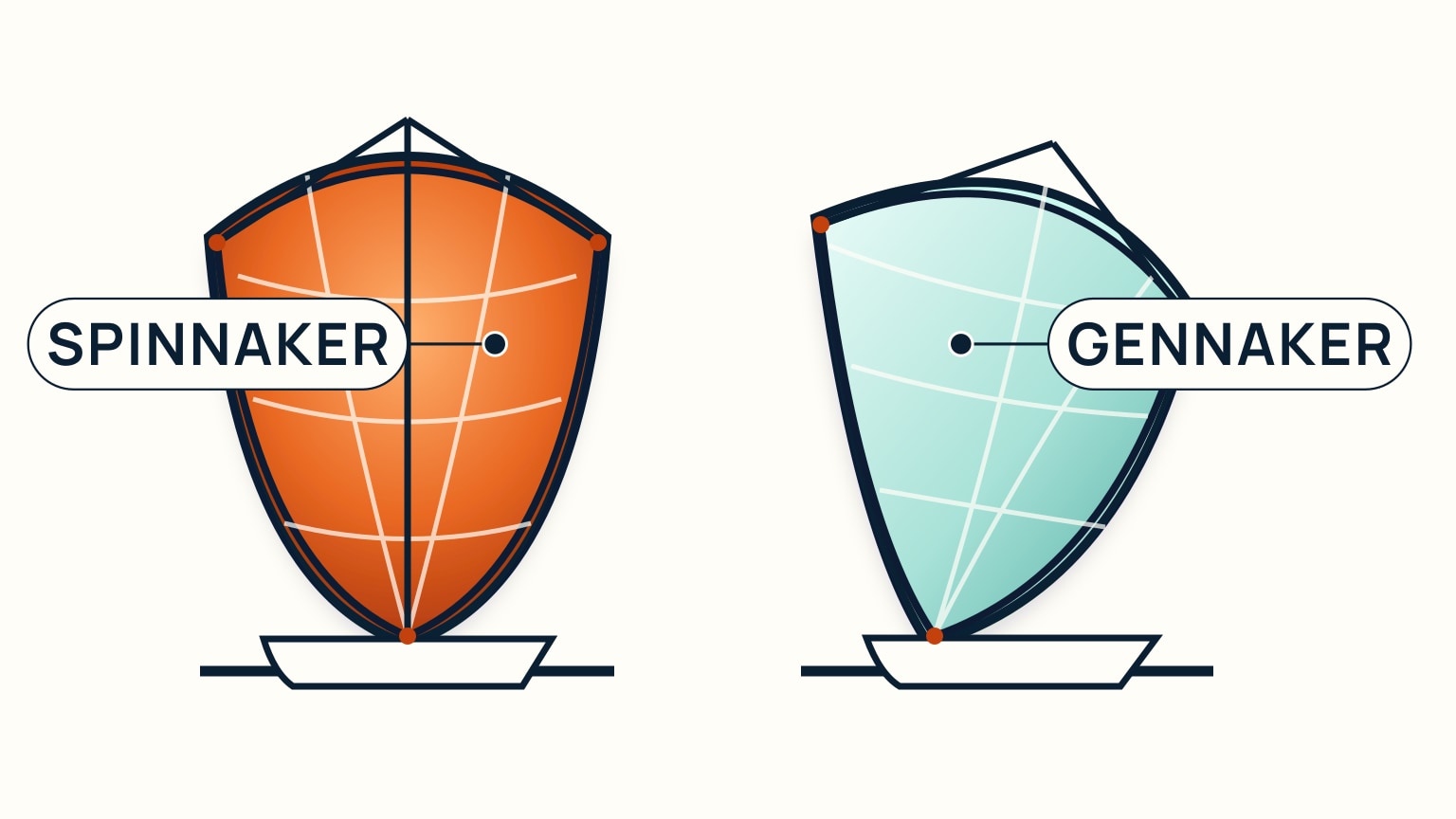
A spinnaker is a large, full sail set forward of the mainsail for sailing off the wind. A symmetric spinnaker has mirror-image sides around its vertical centreline. Its windward lower corner is commonly held out by a spinnaker pole and becomes the tack while that pole is attached. It is visually distinct from the flatter triangular jib because it fills into a deep curved shape.
An asymmetric spinnaker has three distinct corners. Its head is hoisted on a halyard, its tack is fastened at the bow or bowsprit, and sheets attach to its clew. A gennaker combines that asymmetric, genoa-like form with fuller spinnaker-like girth. North Sails describes it as an all-purpose off-wind sail for reaching or almost running without a spinnaker pole. For a beginner, the useful recognition is simpler: it is an extra, fuller sail intended for off-wind sailing and uses a different setup from the working jib.
Do not raise or lower one without instruction. A symmetric sail adds a pole and control rigging; an asymmetric sail fixes its tack at the bow or bowsprit. Watch the skipper's sequence, follow your assigned role, and learn the boat's name for the sail before generalizing.
Identify by position, corners, and job
Start with where the sail sets. The mainsail is behind the mast. A jib or genoa sets ahead of it. An off-wind sail also sets forward, but its fuller shape, corners, and rigging distinguish it from the working headsail. Then name head, tack, clew, luff, leech, and foot where those terms apply.
The parts of a sail guide teaches those shared names. Use them to ask precise questions about a real inventory rather than relying on colour or size.
Separate jib and genoa
Look at overlap. A genoa extends aft past the mast area when trimmed, while a non-overlapping jib does not. Both remain headsails. A partly furled genoa has reduced area but does not become a different sail family just because less cloth is exposed.
The jib versus genoa guide compares handling, trim, and selection. Confirm the sailmaker's label and the boat's usual name, since inventories can include several sizes and special cuts.
Recognize off-wind setups
A symmetric spinnaker has matching sides and commonly uses a pole to control its windward lower corner. An asymmetric spinnaker has distinct tack and clew, with the tack set at the bow or bowsprit. A gennaker is an asymmetric, fuller off-wind sail whose exact design and name belong to the sailmaker and boat.
Do not infer the hoisting or lowering sequence from the shape alone. Poles, tack lines, sheets, halyards, socks, and furlers create different procedures and loaded paths. Follow the skipper and boat-specific instructions.
Make an inventory card
For each sail aboard, record its name, position, attachment points, control lines, suitable use, reefing or change method, and storage location. Add a photograph of the bag label and rigged sail when useful. This card helps a new crew connect the general families with the exact equipment.
Review the card before departure and ask which sails are planned. A beginner does not need to memorize every specialist name. You need to identify the working sails, keep clear of their loaded controls, and understand why the skipper chooses a different area or shape as course and wind change.
Lesson 1.7 in SailStarter gives you the close visual match for this article. It places the working sails on the rig and connects each name to its location and job. Use the lesson to practise recognition, then compare it with the real boat in front of you. Some boats carry only a mainsail and jib. Others have a wide inventory of genoas, code sails, and spinnakers. You do not need to know every option to be useful. Identify the sail by position first, then ask which version the boat carries. Ask which sails are planned for the day and how the skipper wants the crew to prepare, control, and stow them. Review the same three sail families again after your next outing.
Add sail condition to the inventory. Note damaged stitching, chafe, stained areas, stiff or torn cloth, missing hardware, and repairs. Do not hoist a questionable sail merely to identify it. Ask a sailmaker when condition or suitable use is uncertain.
Trace every control while the sail is unloaded. Follow halyard, sheets, tack line, pole controls, furler, or other gear fitted to that sail. Identify which lines become loaded and where crew must stay clear. The name makes more sense when it is attached to a real setup.
After a sail change, record what was used, why it changed, and how the boat responded. Over time, the log links the inventory with actual wind and course decisions. That is more useful than memorizing a long list of sail categories with no boat attached.
Try it from the lesson
Can you spot the next move?
A halyard raises a triangular sail. Which corner does it attach to?
Why you can trust this guide
. We build each guide from public seamanship and safety sources, then teach the universal principle before any local difference.