Chart your course
RYA Competent Crew vs Day Skipper
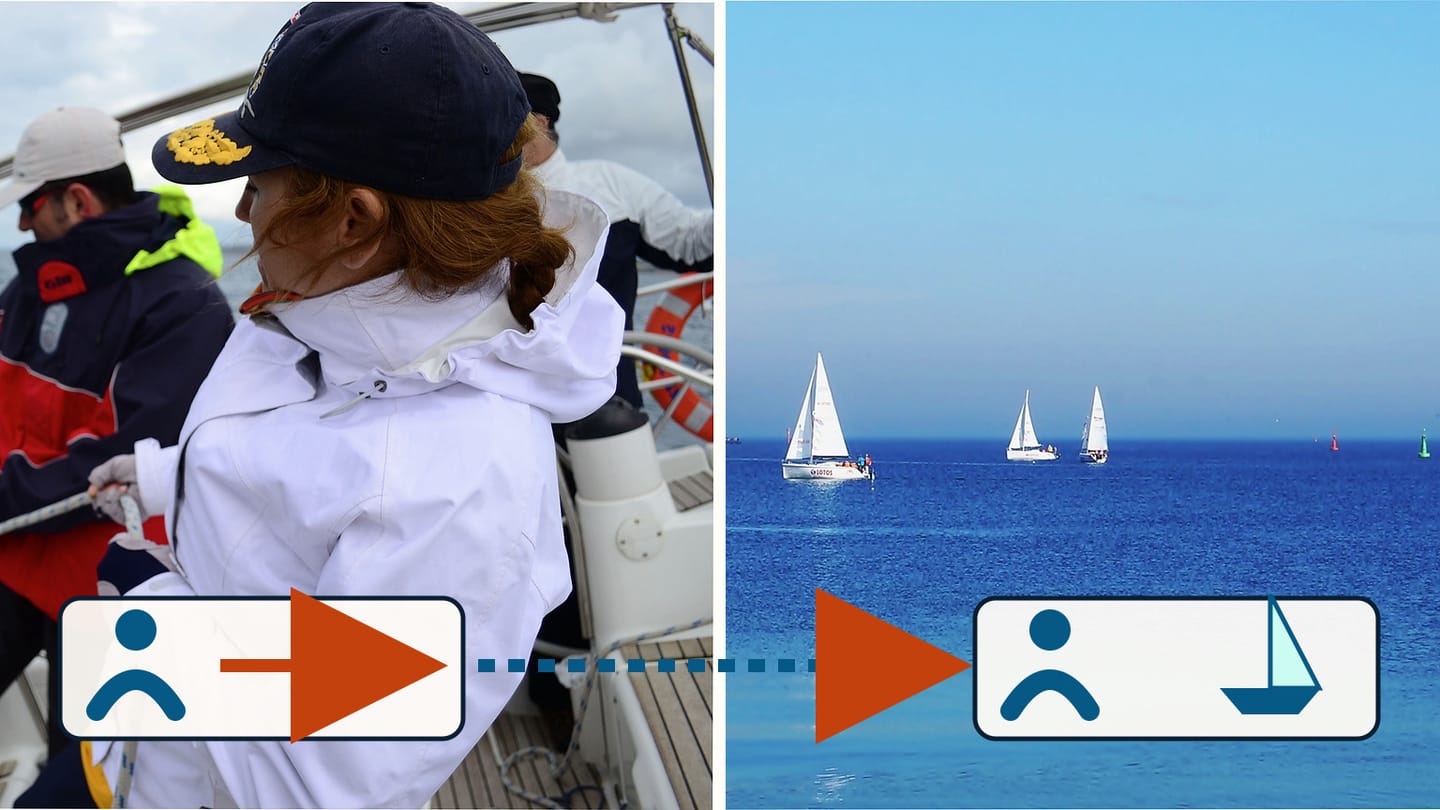
Quick answer
The short version
RYA Competent Crew is for learning to be an active, useful crew member on a cruising yacht. The RYA lists no required previous experience. Day Skipper practical sailing is a later course for a sailor moving toward taking charge of a small yacht and crew on day trips in familiar waters. It expects basic sailing experience plus navigation and theory knowledge at the stated level. Choose Competent Crew when the onboard jobs are still new. Discuss Day Skipper when you can already contribute as crew and are ready to practise planning, decisions, and responsibility as skipper.
These are UK scheme names, although approved centres operate in many places. They do not replace local rules or a charter company's own assessment. Check the exact current entry requirements with the training centre, especially if your experience came from a different course system. The wider principle is universal: choose training for the role you need next. Our sailing certification overview explains how named schemes fit into a broader learning plan.
The two courses train different roles on the boat, with different entry expectations.
| Dimension | Competent Crew | Day Skipper |
|---|---|---|
| Role in the team | Active, useful crew member | Skipper in charge of the yacht and crew |
| Prior experience required | None stated | Basic sailing ability, prior time and mileage, night hours, navigation knowledge |
| Course content | Steering, sail handling, reefing, ropework, safety equipment, living aboard | Passage planning, pilotage, weather, rules of the road, handling under sail and power, emergencies |
| Core skill tested | Understand a briefing, prepare the job, report when ready | Select an approach, brief the crew, assign work, adapt the plan |
| Suits this sailor | Onboard jobs are still new | Already contributes as crew, ready for responsibility |
How do crew and skipper jobs differ?
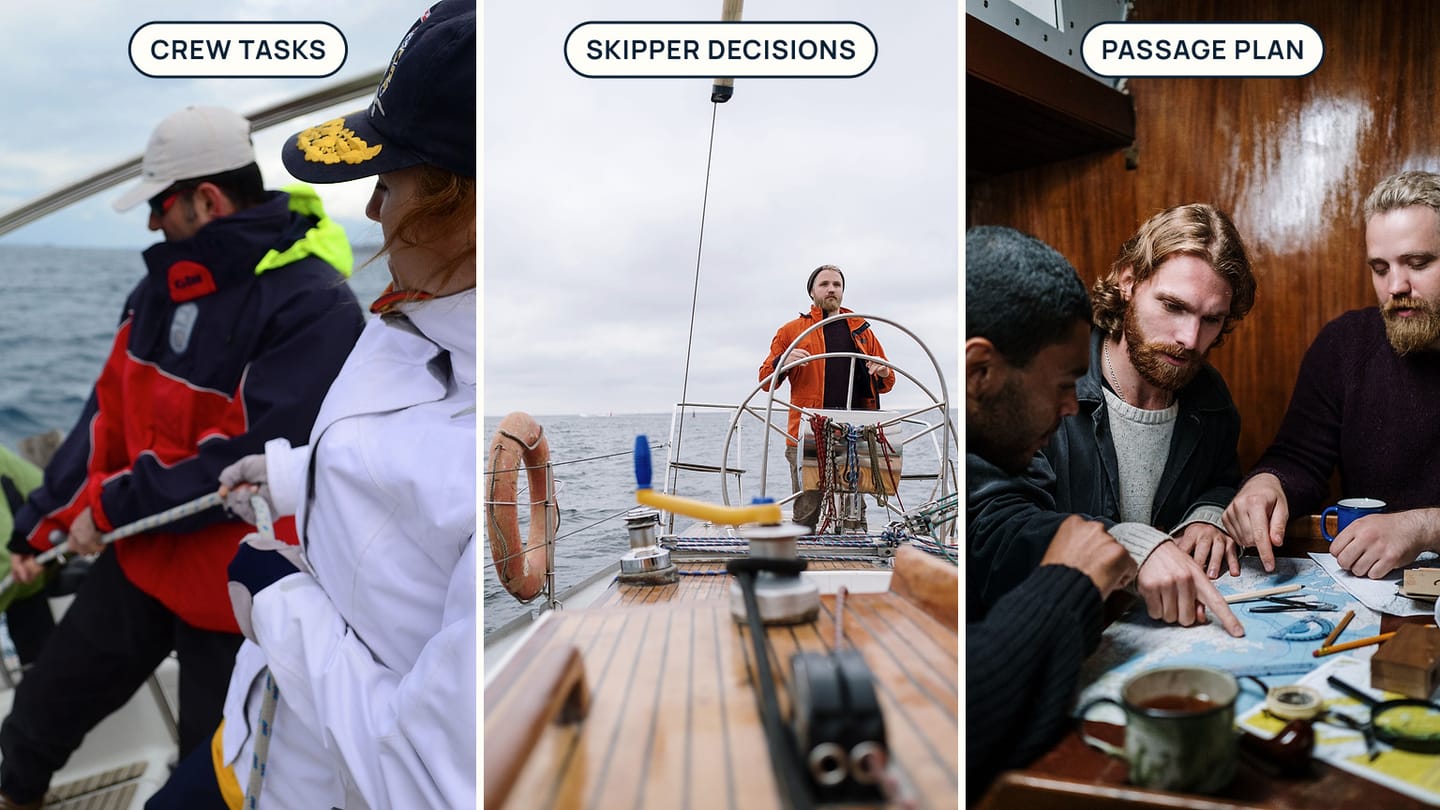
Competent Crew turns a passenger into someone who can take part in running the yacht. The RYA describes a hands-on course aboard a cruising boat. Its published content includes steering, sail handling, reefing, ropework, personal safety equipment, general duties, and the practical routines of living aboard. Assessment comes from the work done during the course. You learn by joining the crew, not by standing aside while the instructor handles everything.
Day Skipper changes your position in the team. The practical course covers preparation, deck work, navigation, pilotage, weather, rules of the road, handling under sail and power, passage-making, and emergency situations. The connecting task is taking charge. A skipper has to combine information, choose a plan, explain it, assign work, and keep checking what happens next.
This difference is easy to test. Imagine an approach to an unfamiliar berth. A competent crew member should understand the briefing, prepare the assigned line or fender, report when ready, and carry out the job. A Day Skipper student must also select a workable approach, consider the boat and conditions, place each crew member, brief an exit, and change the plan when the approach is not developing safely.
Both roles matter. Skipper training does not make crew work beneath you. A skipper who cannot understand the work at the bow, mast, or sheets cannot give a useful briefing. Competent Crew supplies that practical base.
A useful exercise is to retell one manoeuvre twice. First, describe the crew view: the line to prepare, the safe place to stand, the call to expect, and the report to give when finished. Then describe the skipper view: why that manoeuvre suits the situation, what each person needs, what could make it fail, and when to stop. If the second account is mostly blank, more active crewing and theory will make later skipper practice much more productive.
How does entry experience compare?
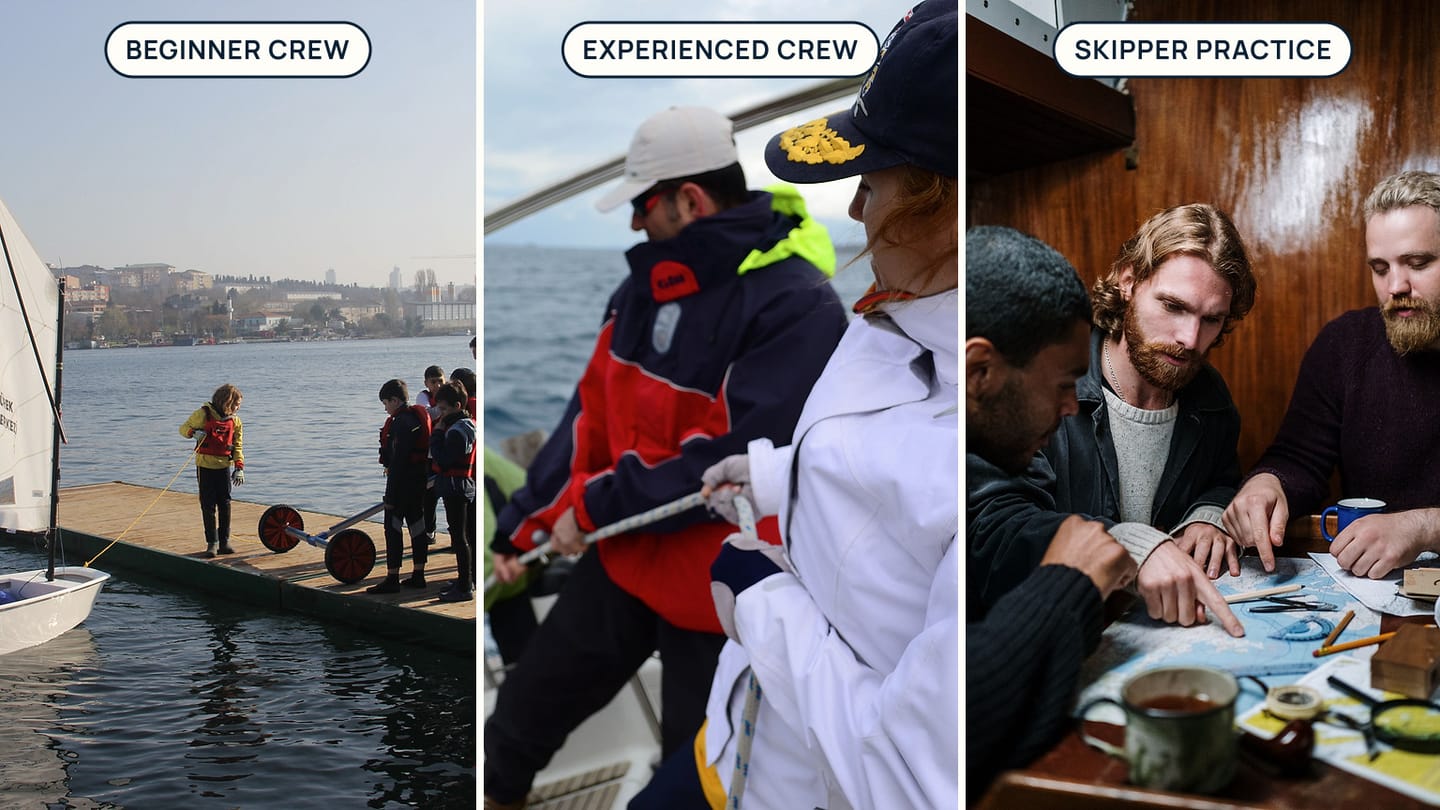
Competent Crew has no required previous experience, so it suits a true beginner and a passenger who wants to become involved. Some students arrive after a short introductory sail. Others have never slept or cooked aboard. Tell the centre which description fits you. The course environment includes life aboard as well as sailing tasks, and knowing that in advance helps the centre answer practical questions.
Day Skipper practical sailing has stated entry expectations. The current RYA course page lists basic sailing ability, prior time and mileage aboard a sailing yacht, night hours, and navigation knowledge at Day Skipper shorebased level. Check the live course page and centre details rather than relying on an old summary, since published requirements can change.
Numbers alone do not show how you used that time. Before booking, separate active experience from passenger time. List when you helmed, handled sails, prepared deck gear, worked through an arrival, or took part in a plan. Include where you still relied on step-by-step prompting. The centre can then compare your experience with the demands of the practical course.
If your sailing is extensive but informal, ask for placement advice. You may not need to start at the beginning, yet a short coached session can reveal whether local terminology, yacht systems, or navigation practice needs attention. If you hold Competent Crew but have not sailed since the course, arrange fresh crew time before taking on skipper work.
Do not book Day Skipper simply because friends took it. Readiness is shown by usable crew skills and enough theory to make practical decisions afloat.
Night hours are another reason to check the live entry requirements rather than guessing. Time aboard after dark is not interchangeable with reading about lights or planning at a desk. If your log does not show the expected experience, ask the centre how to gain it appropriately. Likewise, completing theory long ago may call for revision before you try to apply chartwork, pilotage, weather, and collision rules while also directing a crew.
Match the yacht and water
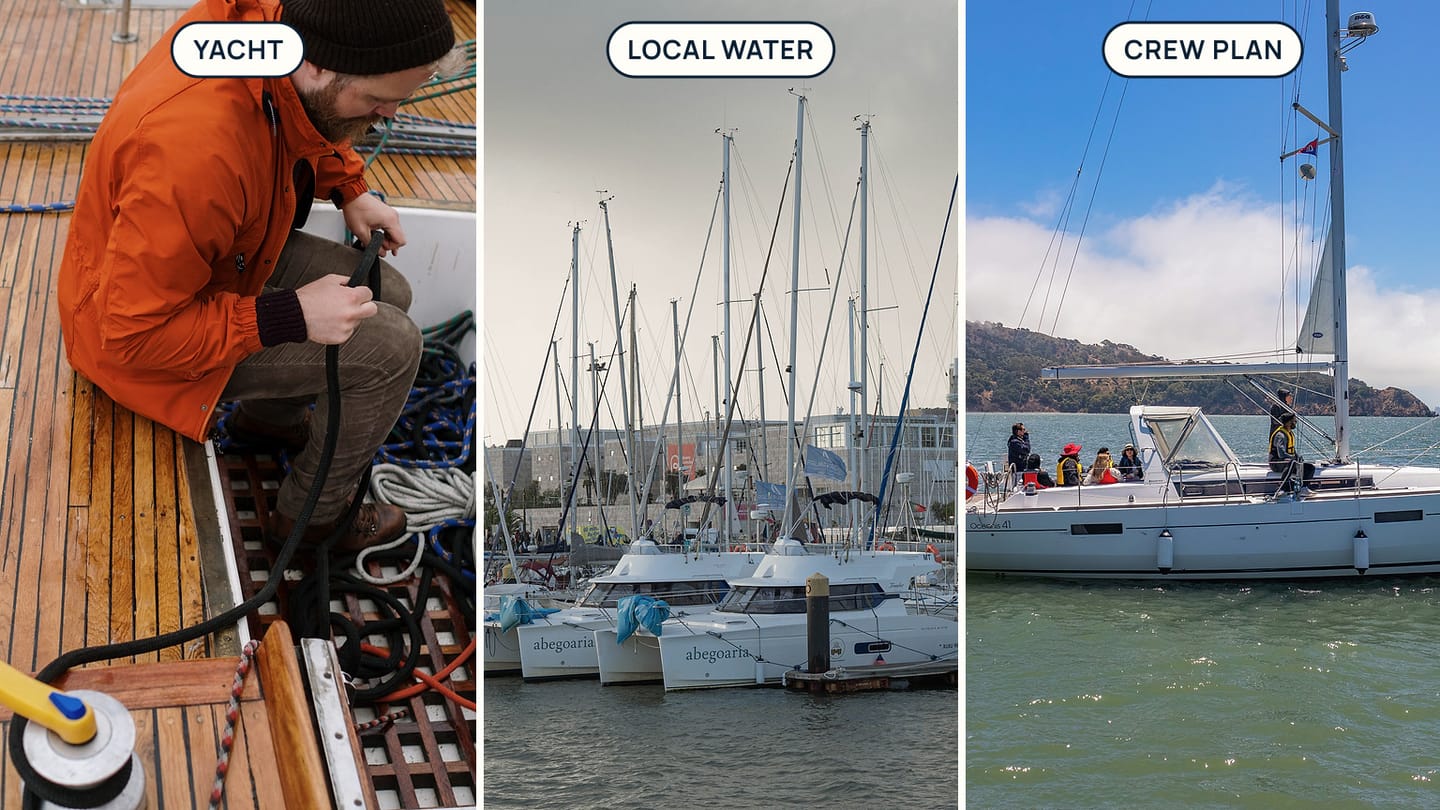
Ask what yacht you will sail and where the course operates. A training yacht's size, layout, steering system, engine controls, and deck arrangement affect how you carry out each task. Tidal water, busy approaches, open coast, or a sheltered training area can affect the examples available during the course. The standard may be the same while the daily experience differs.
For Competent Crew, look for genuine task rotation. Will students steer, handle lines, change or reef sails, and take part in daily care of the boat? How many people share the yacht? What clothing and personal equipment should you bring? If living aboard is new, ask about bunks, meals, and how the centre manages any accessibility or dietary needs.
For Day Skipper, ask how students rotate through command. Find out how passage planning, pilotage, handling under power, and handling under sail are practised. Ask what happens when weather or boat availability changes the programme. A clear answer should describe alternative teaching, not promise that every exercise will occur in ideal conditions.
Connect the training boat to your next real use. If you plan to join a family cruiser, volunteer at a club, or seek a charter later, tell the instructor. Similarity helps, but exact sameness is unnecessary. You are learning transferable decisions and procedures, then adapting them to each boat through a proper briefing and handover.
For charter plans, remember that a training certificate and charter acceptance are separate. The provider may consider the destination, its particular yacht, recent experience, and crew. Verify local evidence requirements and written terms before making travel commitments.
The training area should also suit the learning question. A sheltered area can provide frequent repetitions of boat handling. More complex water can expose a student to planning and pilotage decisions, although conditions may reduce the number of exercises completed on a particular day. Ask the centre what its normal area allows students to practise and how instructors keep everyone involved when one student has command.
Choose the next practical step
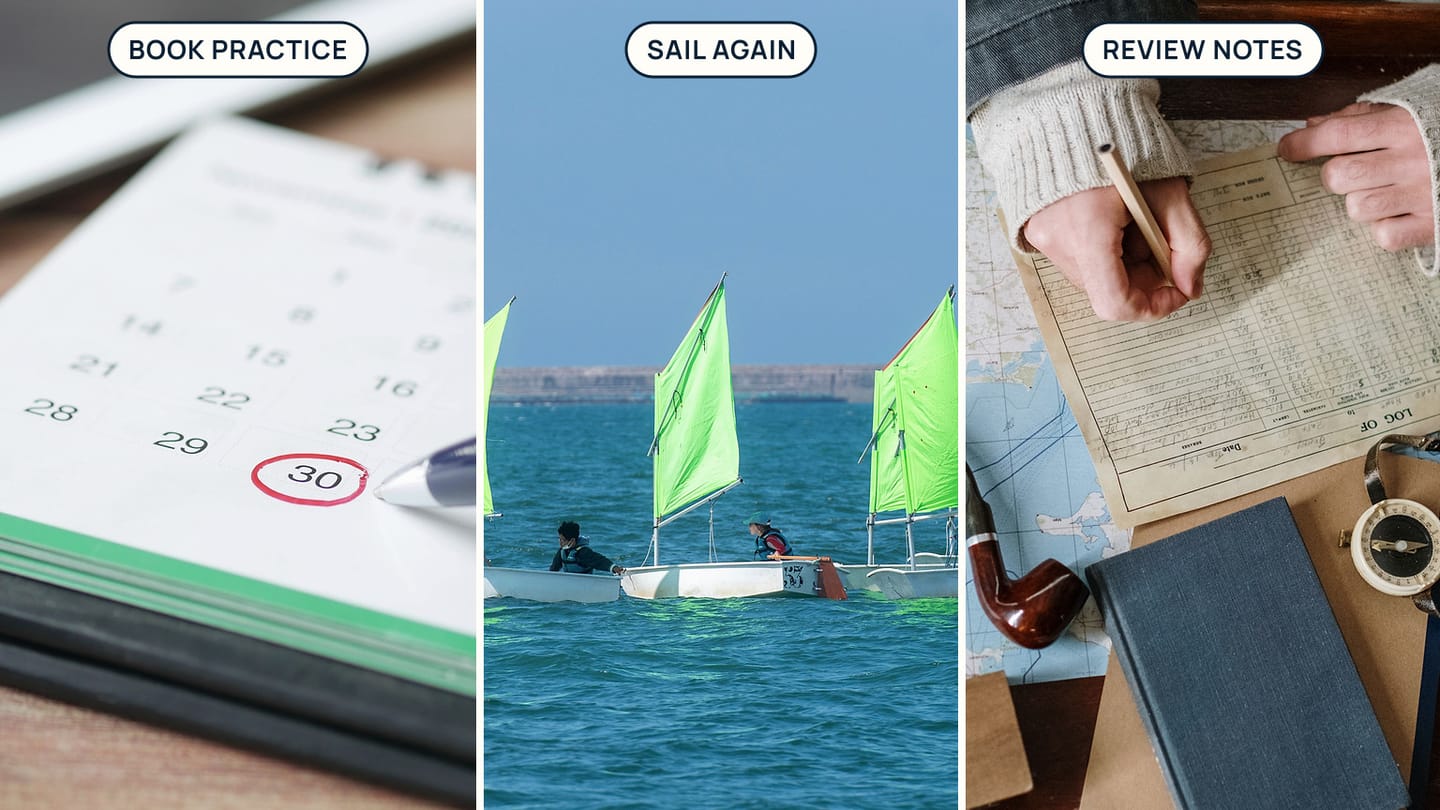
If you are new, Competent Crew gives you several days of repeated work aboard one cruising yacht. Afterward, sail again as crew soon enough to repeat the routines. Ask for a defined job rather than simply another ride. One day you might focus on helm responses and lookout; another might centre on sail changes and preparing for arrival.
If you already meet the Day Skipper entry profile, refresh the theory before the practical course. Then practise explaining a small plan aloud. A workable briefing says what the boat will do, who handles each task, what hazards matter, and what signal will stop the attempt. Clear language matters because skipper decisions only help when the crew understands them.
If you are between the two courses, do not force a course booking to fill the gap. Join a club, training centre, or known skipper for supervised sailing. Keep a log of the boat, role, tasks, conditions, and help received. Ask an instructor which missing experiences would make Day Skipper useful rather than overwhelming.
After Day Skipper, keep the first independent trips modest and familiar. The course outcome names day trips in familiar waters. It is not a claim that every graduate is prepared for any yacht, coast, weather, or charter. Build range through suitable practice and further coaching.
Whichever route you choose, judge progress by the decisions and jobs you can repeat calmly. A certificate marks completed training. Regular time afloat turns the training into dependable seamanship.
Keep your next outing close to the course you have just completed. After Competent Crew, volunteer for the same kinds of deck and helm jobs before adding complexity. After Day Skipper, plan a familiar daytime trip with an experienced crew and generous room to adjust. Brief it, carry it out, and compare the result with the plan. One carefully reviewed trip will expose the next useful practice target more clearly than collecting another certificate immediately.
SailStarter can help you prepare the vocabulary and basic boat concepts before either practical course. Work through your first day as crew, note anything that remains unclear, and ask about it during the briefing. Use the app as preparation and review; let qualified instruction and real practice supply the hands-on learning.
Try it from the lesson
Can you spot the next move?
You turn to face the stern. A crewmate points at your right hand. Which side of the boat is that?
Why you can trust this guide
. We build each guide from public seamanship and safety sources, then teach the universal principle before any local difference.