Chart your course
VHF SRC Radio Certificate: What You Need
Quick answer
The short version
An SRC is a marine VHF operator qualification used in the United Kingdom and in some related training contexts. It teaches the person operating the radio. A separate ship radio licence applies to the radio installation on a UK-flagged vessel. Those are two different pieces of compliance. Other countries use different certificates and exemptions, so “Do I need an SRC?” cannot be answered worldwide from the boat type alone.
Check the flag state, where the boat will operate, the equipment carried, and whether the trip crosses national borders. In Canada, ISED says pleasure boaters need the Restricted Operator Certificate - Maritime (ROC-M). In the United States, the Coast Guard Navigation Center describes an exemption for many domestic recreational VHF users, subject to listed limits; international voyages or other radio equipment can change the answer. Verify current local rules before transmitting. For operating practice, start with how to use a marine VHF radio.
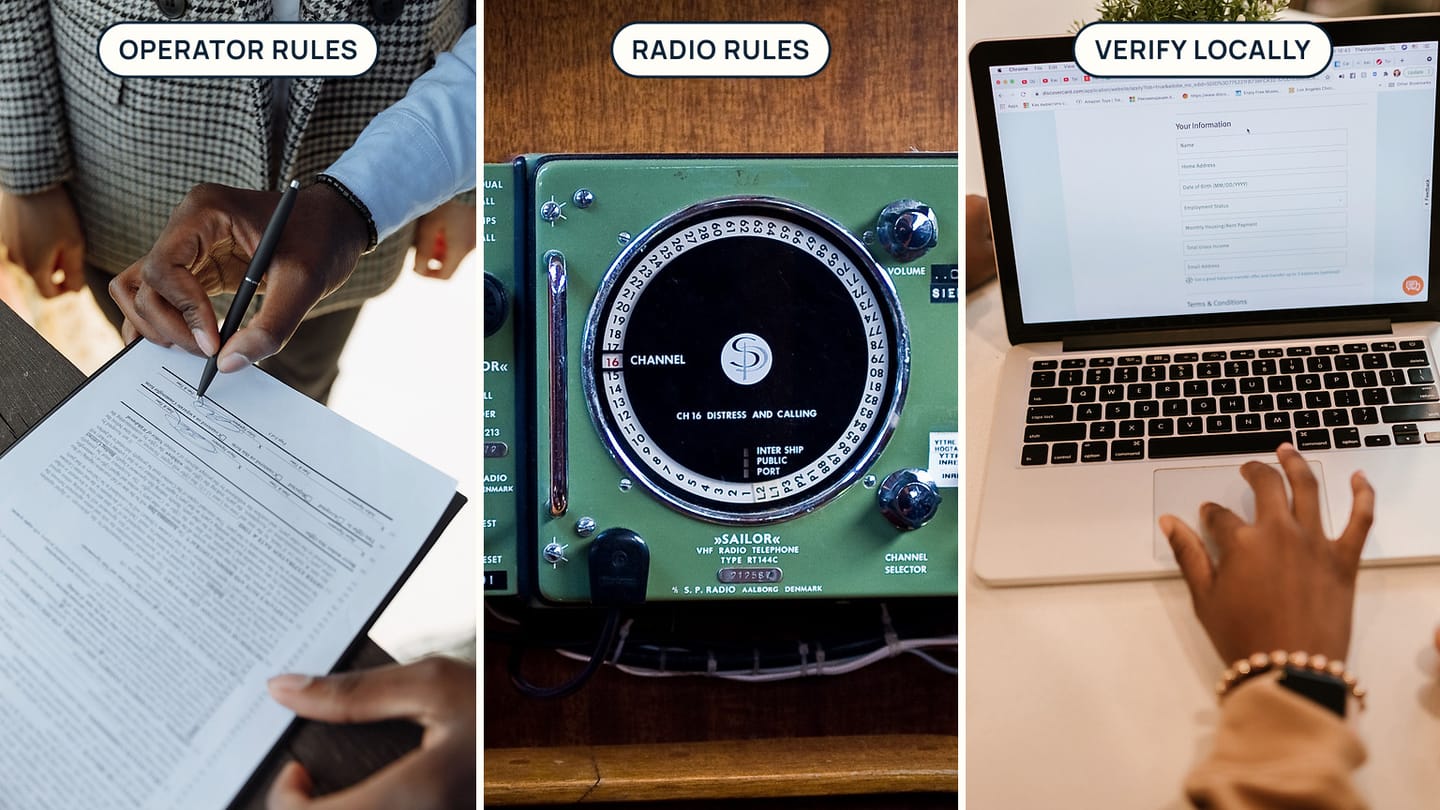
Separate operator and boat rules
The operator rule concerns the person pressing the push-to-talk button. The boat rule concerns permission for the station and equipment carried aboard. A course completion document for a person does not automatically license a boat, and a licensed radio installation does not prove that every operator has the required qualification.
United Kingdom: the RYA describes the SRC as the minimum operator qualification for marine VHF on a UK-flagged vessel. It also explains that the Ship Radio Licence is separate. That distinction matters when you borrow, buy, or charter a boat. You may have the personal qualification while the owner remains responsible for the vessel's station paperwork.
CA: ISED states that pleasure boaters require the ROC-M, which is issued through Canadian Power and Sail Squadrons. Calling every marine radio course “SRC” can therefore send a Canadian beginner toward the wrong certificate name.
US: the domestic recreational exemption described by the Coast Guard has conditions. Do not reduce it to “Americans need no licence.” A boat communicating in foreign ports, travelling internationally, or carrying equipment outside the exemption may have different requirements.
Before enrolling, write down four facts: vessel flag, normal cruising area, planned foreign travel, and installed or portable radio equipment. Ask the relevant national authority or recognised course provider which operator credential and station licence apply. Keep the answer with the boat's documents, and verify it again when the voyage or equipment changes.
Canada and the UK also illustrate why borrowed boats need a document check. Your personal operator credential may travel with you, while the vessel paperwork and radio identity remain connected to the station aboard. Ask the owner where those details are kept and whether the intended voyage changes the requirements. In the US, read every condition attached to the domestic recreational exemption before relying on it. These labels are examples, not a complete international comparison; another flag state may use different names and processes.
Learn the radio basics
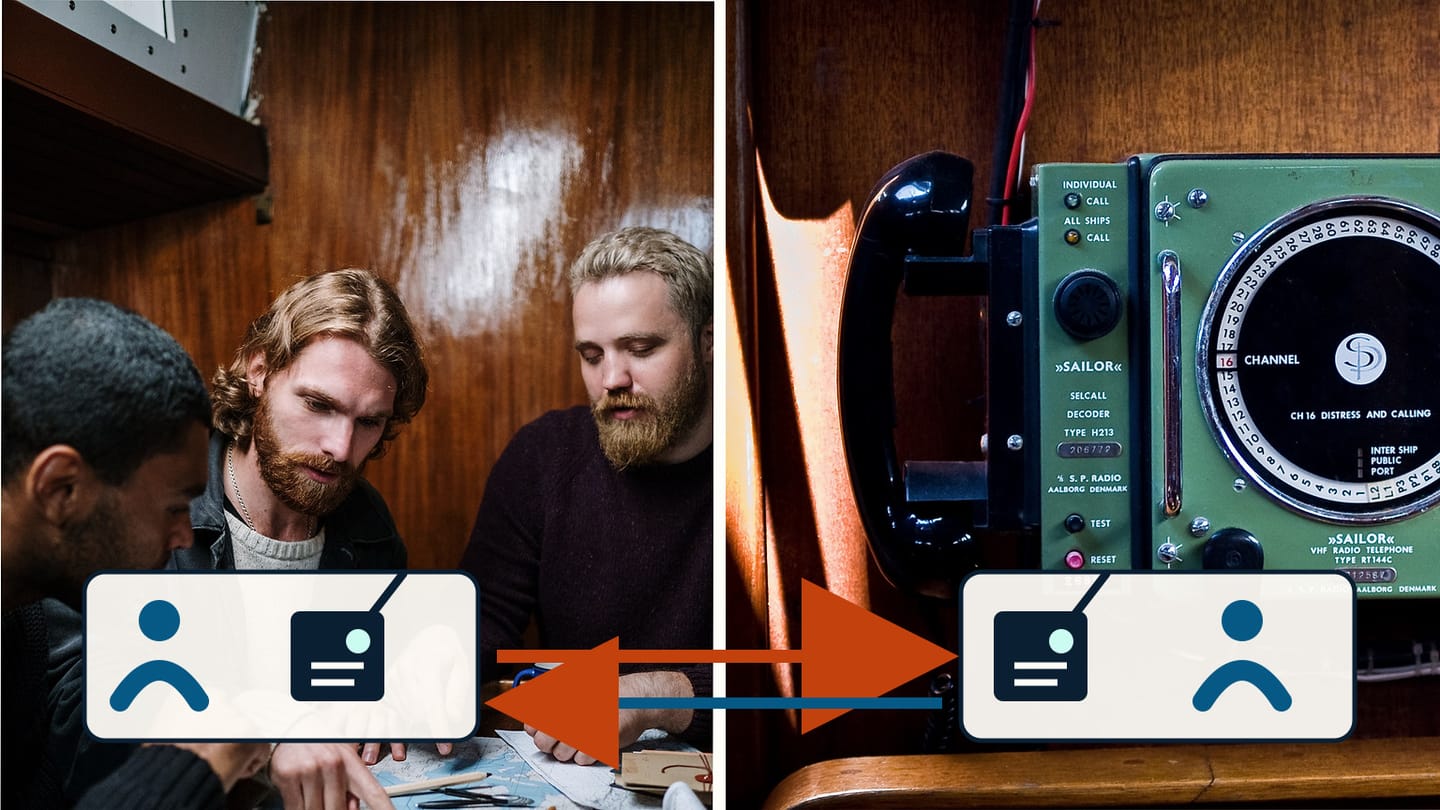
Marine VHF is a shared, mainly line-of-sight service. Everyone listening to a working channel hears the transmission, so brief, organised speech helps keep it usable. Training should teach you to listen before transmitting, select the appropriate channel, hold the microphone correctly, speak clearly, and release the button so another station can answer.
Learn the structure of routine, urgency, safety, and distress traffic through the course required in your area. Do not invent a distress script from an online summary. The operator needs to know which call fits the situation, what information to give, how to repeat it, and how to follow instructions. Digital Selective Calling and any connected position equipment also need equipment-specific instruction.
Practise identifying the boat without hunting for paperwork. The operator may need the vessel name, position, nature of the problem, people aboard, and assistance required. The exact procedure depends on the call. Keep necessary station information where an operator can find it, and show new crew how to access it during the safety briefing.
Radio work includes receiving. Repeat back important details when the procedure calls for it, write down information that affects the boat, and tell the skipper promptly. If a transmission is broken or unclear, ask for repetition instead of filling gaps from guesswork.
Range is affected by antenna height, installation, surroundings, and other factors. Treat “line of sight” as a reason to maintain the equipment and plan other communication options, not as a promise of a fixed distance. A handheld and a fixed set are used differently; learn the controls on the actual unit carried aboard.
Build a radio card for the boat, using the official procedure taught in your course. It can point operators to the vessel's name, station identity, position source, and the location of the full instructions without replacing them. Check that the card still matches the installed set after maintenance. If the displayed position or time is wrong, report the equipment problem to the skipper rather than reading incorrect data into a call.
Choose the right local course
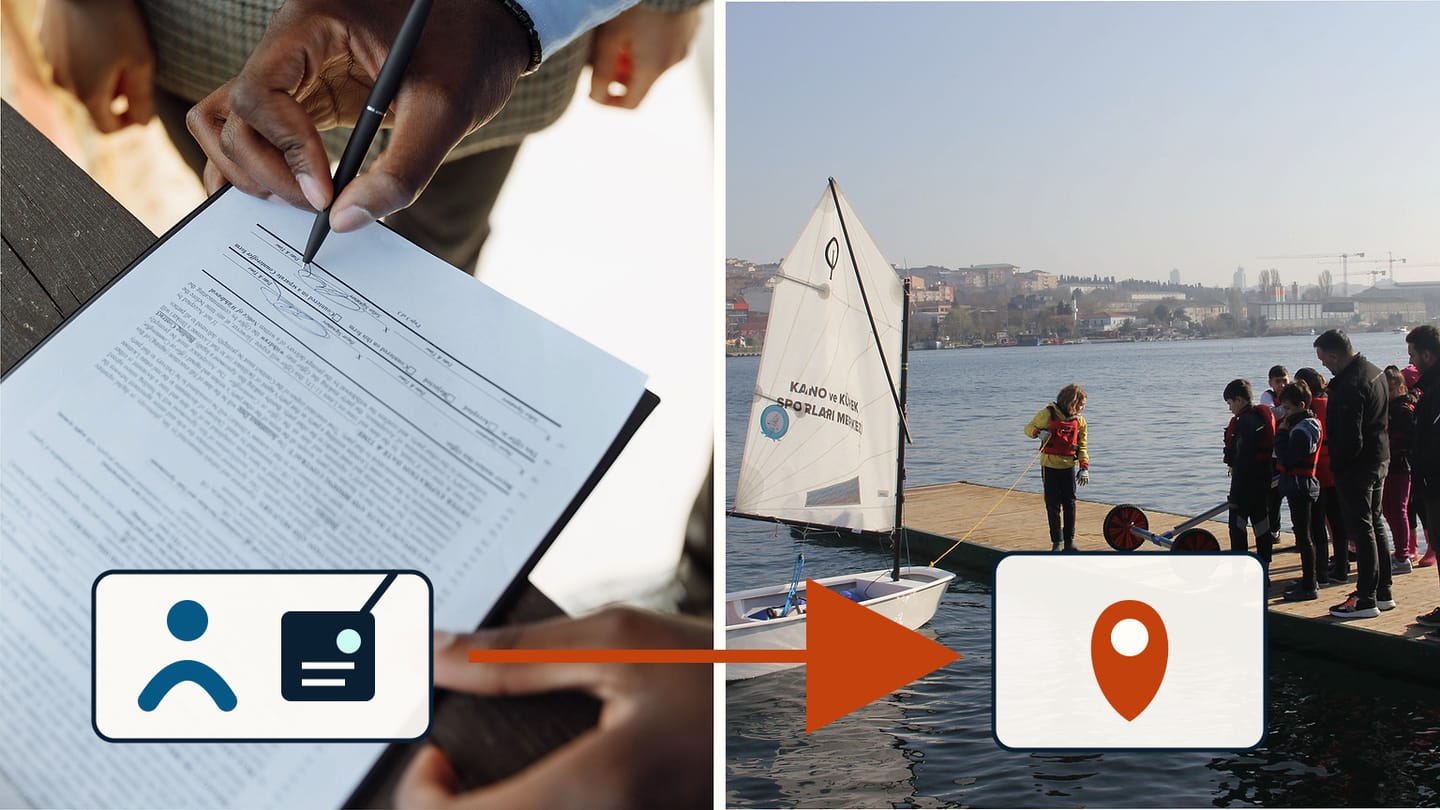
Begin with the national authority, not a course advertisement. Confirm the credential's exact name and whether an exam, practical assessment, minimum age, or approved provider is required. Check whether the course covers the radio and digital functions you will use. Current official pages matter because licensing arrangements and application processes can change.
Ask how the training is delivered and assessed. A useful radio course provides repeated spoken practice, correction, and time on representative controls. Reading procedure words silently does not prepare you for a noisy cockpit or a time-sensitive call. If training is online, find out how the spoken and equipment-handling parts are tested.
Match the course to the intended boat. A sailor using a fixed VHF with Digital Selective Calling should understand that installation, while a dinghy coach with a handheld has a different physical setup. The governing procedure remains formal, but buttons, menus, power choices, and display layouts vary. The course should teach the standard routine and make clear where the equipment manual takes over.
Check recognition before paying for travel. A certificate useful on one flag state or under one national system may not answer another authority's requirement. If you plan to charter abroad, ask the charter company what operator and vessel documents it expects, then verify the legal position through the relevant authority. Provider acceptance and legal compliance are related questions, not substitutes for each other.
Avoid courses that promise a worldwide licence without naming the authority or scope. Keep the completion record, but also record its issue date, exact title, and any renewal or replacement instructions supplied by the issuer.
Ask what language the assessment uses and whether accommodations are available when relevant. Radio procedure depends on exact, intelligible information, yet training should still be accessible. If you will operate with an international crew, practise the standard words taught by the recognised course and agree who handles routine traffic. Never create a second unofficial vocabulary that competes with the formal procedure during a difficult call.
Keep practising the routine
After qualifying, learn every radio you regularly sail with. Find the power control, volume, squelch, channel selector, high/low power setting, emergency controls, and position information without transmitting unnecessarily. Use the manual and a lawful training mode where available. Never make a false live distress call for practice.
Include the radio in the departure briefing. Identify who normally communicates, who can take over, what station details are posted, and how the crew will call for help if the usual operator cannot. Check that the microphone and handset can be reached, the set receives properly, and any handheld is charged and protected as intended.
Rehearse with a written scenario away from the live calling channel. One person supplies a changing situation; the other selects the correct category of call, gathers information, and speaks it in order. Then swap roles and correct missing details. Add realistic interruptions only after the basic sequence is dependable.
On the water, listen to legitimate traffic to become familiar with pacing and clarity, while respecting channel use. Use routine calls only for a real purpose and follow local channel guidance. Write down unfamiliar terms after the trip and verify them from the course material or authority guidance.
Review the setup when the boat, equipment, cruising country, or vessel flag changes. A qualification does not freeze the regulatory answer forever. Current local rules, station licensing, and the radio's own operating instructions remain part of responsible use.
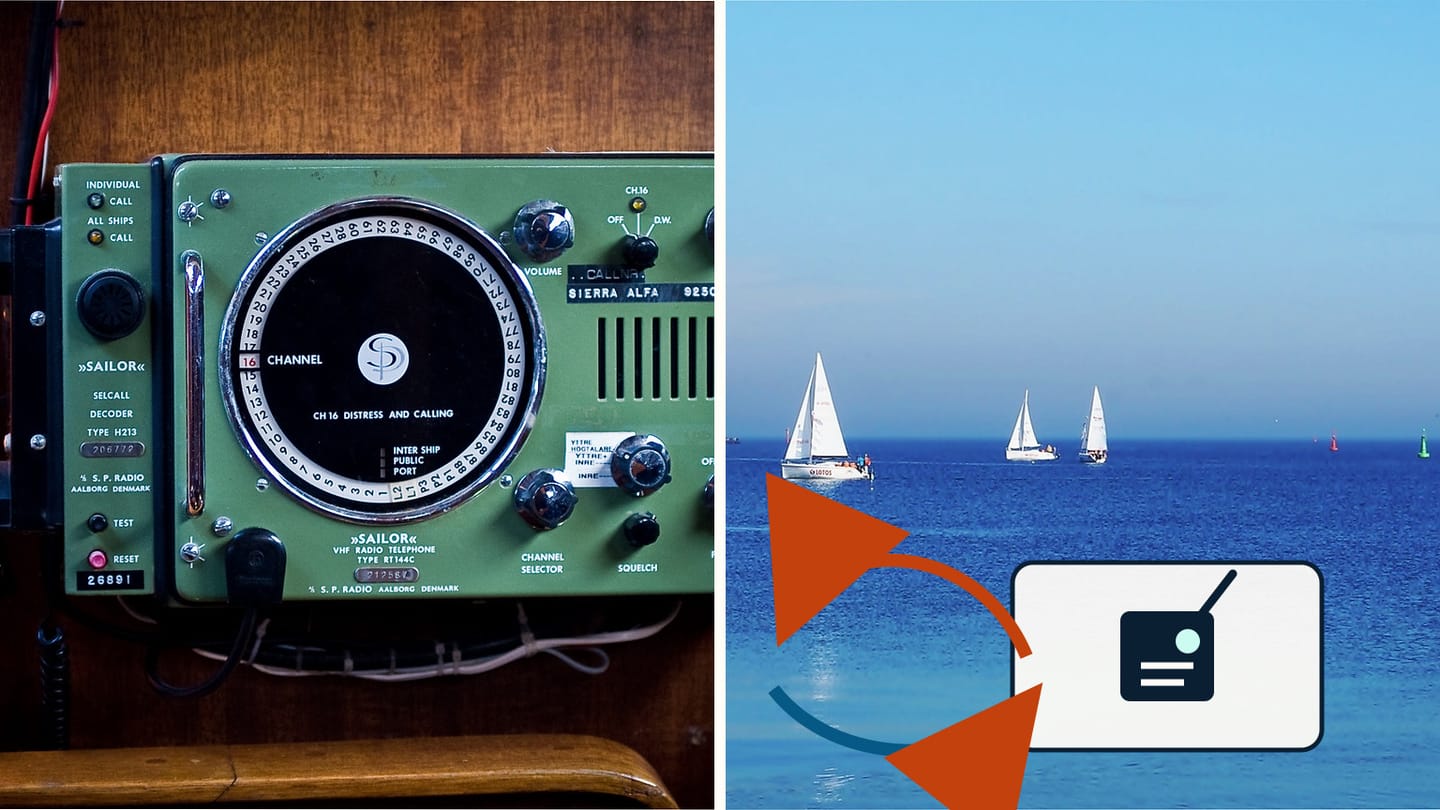
SailStarter can prepare you for the boat context around a formal radio course. Study essential sailing safety equipment, then locate the real VHF during your next supervised briefing and ask the skipper to explain the boat-specific setup. Use recognised training for regulated procedures and live transmission; use the lesson to arrive with better questions.
Try it from the lesson
Can you spot the next move?
You turn to face the stern. A crewmate points at your right hand. Which side of the boat is that?
Why you can trust this guide
. We build each guide from public seamanship and safety sources, then teach the universal principle before any local difference.