Chart your course
Sailboat Racing Rules for Beginners
Quick answer
The short version
Begin with the current Racing Rules of Sailing, the notice of race, and the sailing instructions for your event. World Sailing publishes the rules in four-year editions; the current edition is 2025-2028, with changes and corrections published separately. National prescriptions, class rules, and event documents can add or change applicable details, so an old summary is not enough.
For a first race, learn the course and start procedure, avoid contact, give room early, and understand the basic right-of-way relationship for the situations you are likely to meet. The skipper remains responsible for the boat's decisions. A new crew member should report what they see and follow the briefing instead of trying to call a protest from a half-remembered rule. Ordinary collision-avoidance obligations also remain relevant outside the conditions where racing rules apply. Verify current event and local rules. See how to join a racing crew for finding a suitable first boat.
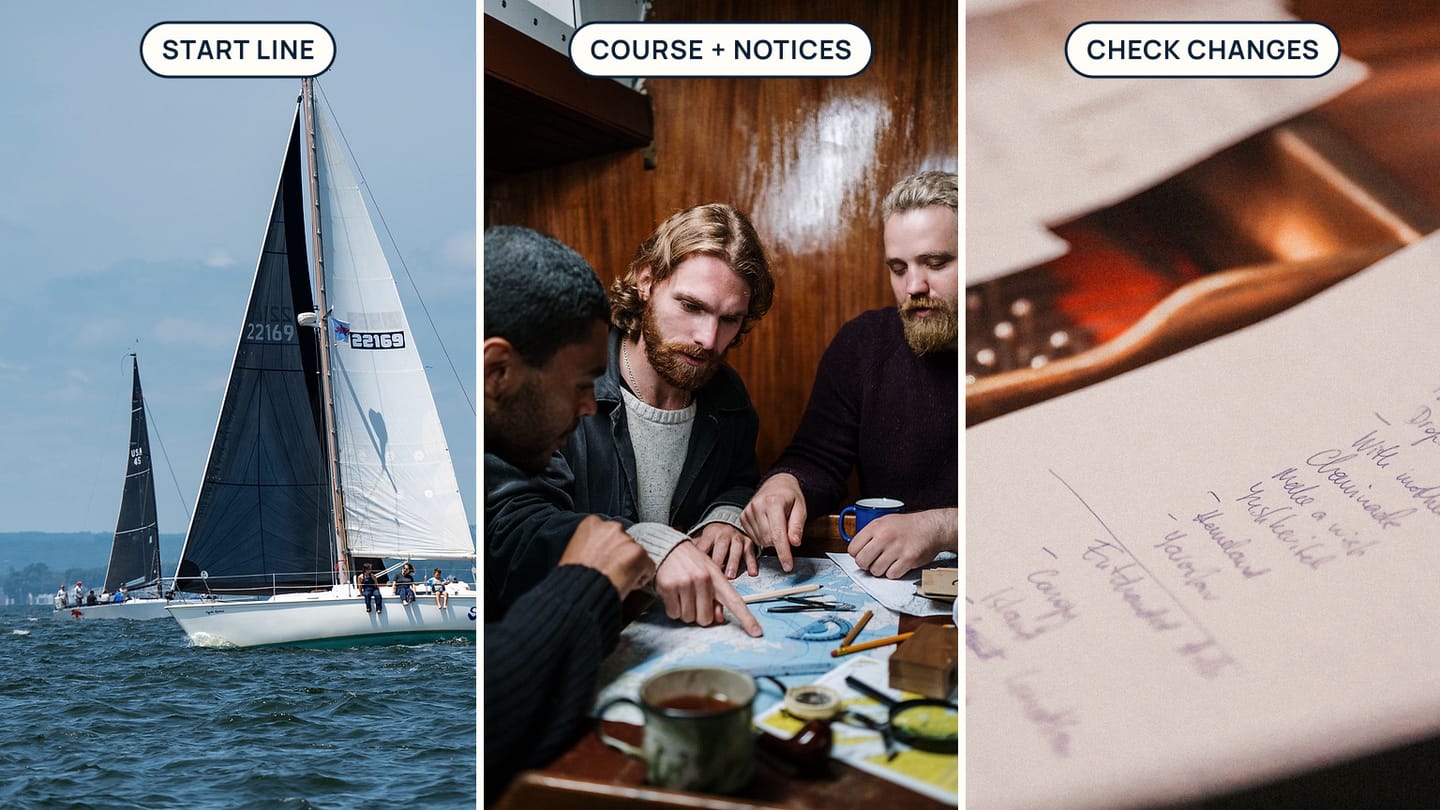
Learn the race course and notices
The notice of race tells you what event is offered and sets important entry information. Sailing instructions tell competitors how that event will be run. Read the current versions supplied by the organising authority. Check for posted amendments and signals at the venue, since a document saved earlier may no longer be complete.
Before leaving the dock, identify the start area, marks, course sequence, finish, scheduled warning signal, and method used to announce or display the course. Learn what the marks look like in real water as well as on paper. If the event uses several fleets, confirm your class flag or other identifier and the order of starts.
Ask the skipper how information reaches the crew. One person may track timing while another watches flags and nearby boats. A beginner can help by repeating an observed signal exactly: colour or shape, location, and time seen. Avoid announcing what it “must mean” unless that interpretation is your assigned role.
Course knowledge affects ordinary deck work. A mark rounding may bring a sail change, crowded water, and a fast manoeuvre together. The crew briefing should connect the next course leg with your position, line, and safe place. If the course changes, wait for the skipper or position leader to update the task.
Keep the event documents accessible after racing. They are needed to understand an incident, scoring question, or change. A social-media explanation from another event cannot replace the rules that governed yours.
Make a one-page event note without copying the rulebook. List where official notices appear, your fleet's identifying signal, scheduled start information, the course source, and the skipper's crew assignments. Add the date and version of any amendment you used. This page is an index to the controlling documents, not a home-made substitute. When something changes, update the index and keep the official notice.
Start with safety and room
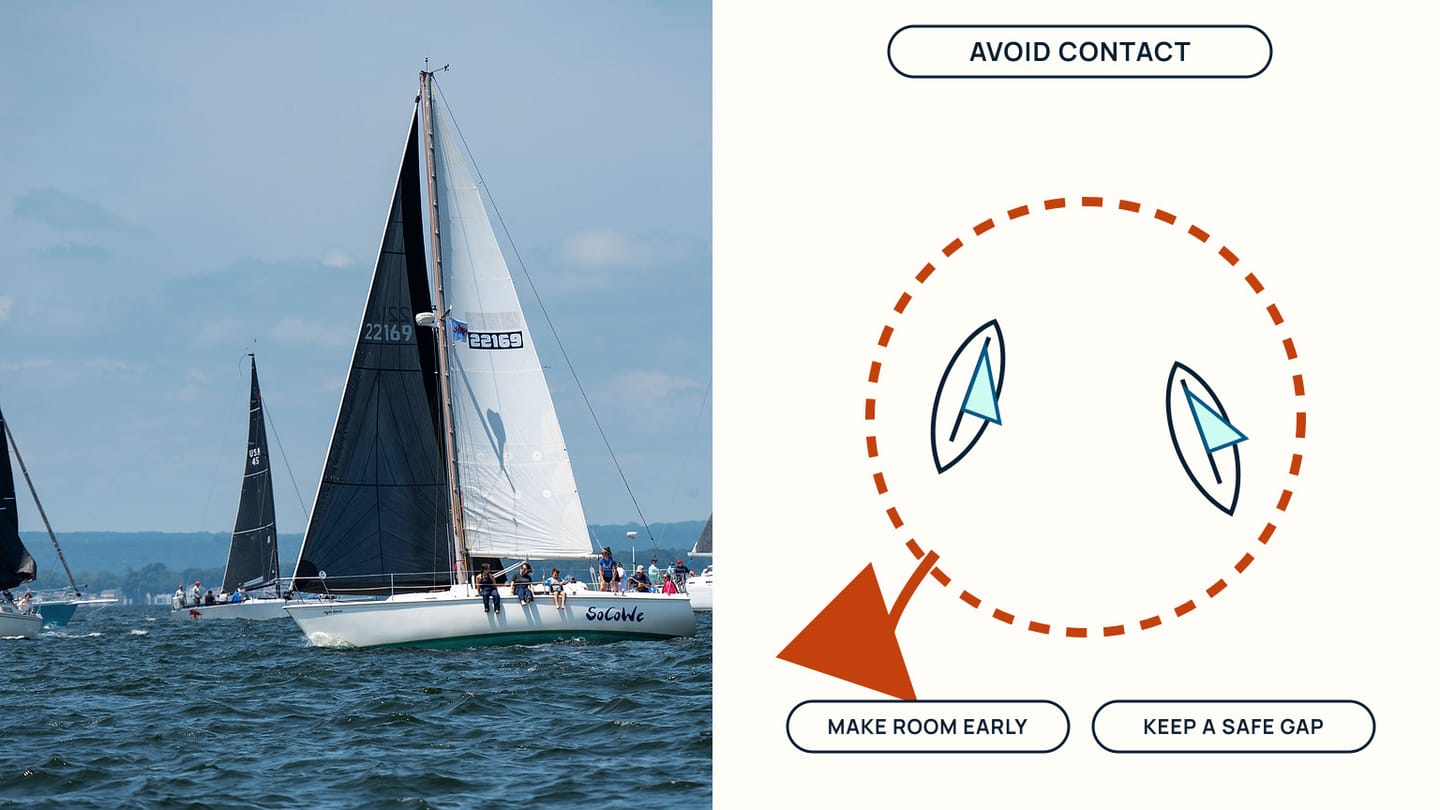
Avoiding contact is a practical starting habit even when you believe your boat has right of way. Close racing creates changing angles and limited time. Keep looking beyond the sail or crew member in front of you, report boats that may converge, and give the skipper enough time to act.
“Room” has defined meanings in the racing rules and changes with the situation. Do not turn it into a general claim that your boat deserves any space it wants. For a beginner, the useful action is to recognise developing compression near a mark, obstruction, or start line and report it early. The skipper applies the rule.
Your lookout report should be observable: “Red boat on the starboard side, bow nearly level, closing,” rather than “They have to move.” Continue watching after the first report. Relative position can change quickly when either boat alters course or speed.
Protect people aboard as well as space between boats. Know where the boom and loaded lines will move during a tack or gybe. Stay in the position assigned during a crowded rounding. A sudden attempt to improve the view can block the helm or a trimmer at the moment the boat needs a clean manoeuvre.
Racing rules and the COLREGs do not create one simple formula for every encounter in every place and time. Learn from the current rulebook and event briefing, and verify local navigation requirements. When doubt develops on a beginner boat, creating separation early is usually more useful than arguing while the gap disappears.
Starts deserve extra restraint. Boats may gather near a line while changing speed and course. A new lookout should report boats hidden by sails, movement from behind, and the distance to visible line ends as assigned. Keep fingers away from loaded sheets and do not stand where the helm needs to move. The skipper manages timing and rights; the beginner supplies timely observations.
Understand the basic rights
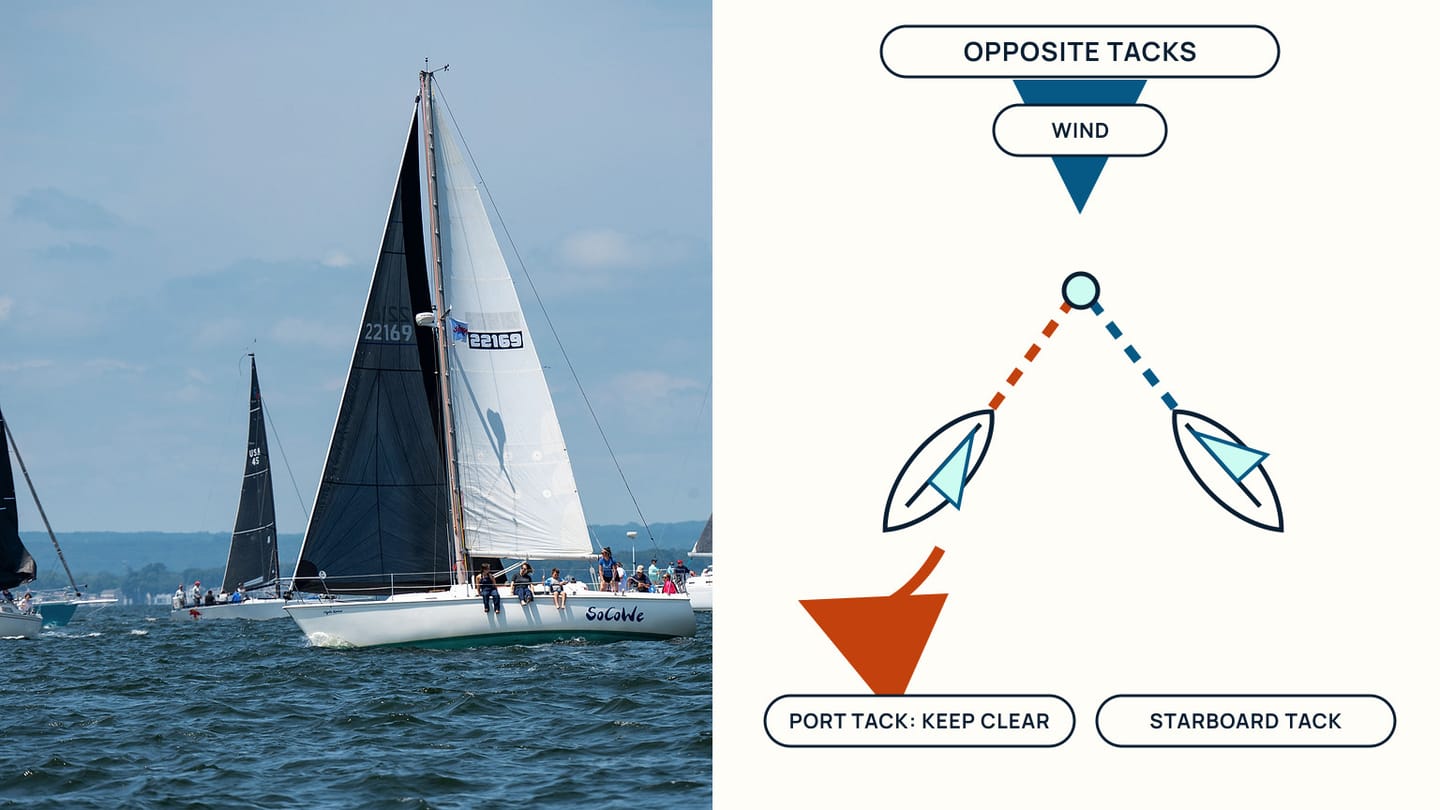
Start with tack. A boat is on starboard tack or port tack according to the racing-rule definitions. When boats are on opposite tacks, the port-tack boat keeps clear of the starboard-tack boat. Learn to identify the boat's tack from the wind and sail position, then confirm how your skipper describes it.
Next learn the relationship between windward and leeward boats on the same tack, and between a boat clear astern and one clear ahead. These terms also have precise definitions. Use diagrams and coached examples from the current rules rather than inventing them from ordinary-language meanings. Overlap, mark-room, starting, and changing course add conditions that make slogan-only learning unreliable.
Practise with paused scenes. Point out each boat's tack, relative position, and direction before asking which rule applies. Then move the scene forward and notice when the relationship changes. On the water, your first job is observation: identify the other boat and report where it is. Let the skipper decide the required action.
Do not assume right of way permits any manoeuvre. The rules place obligations on right-of-way boats too, including limits around changing course and the continuing duty to avoid contact. Read the exact current wording with an instructor or experienced racer.
At a mark, resist compressing the entire mark-room system into “inside boat gets room.” The applicable rule depends on facts such as overlap, timing, and the mark. Ask the skipper which situations a new crew member should recognise, and study those before adding unusual cases.
Use model boats on a table to test definitions. Fix an arrow for wind direction, move one boat at a time, and say when a tack or overlap changes. Then find the exact definition and relevant rule in the current edition. If your explanation depends on moving both boats at once, reset the scene. Small steps expose the fact that triggers a rule more clearly than a fast animated example.
Handle incidents and keep learning
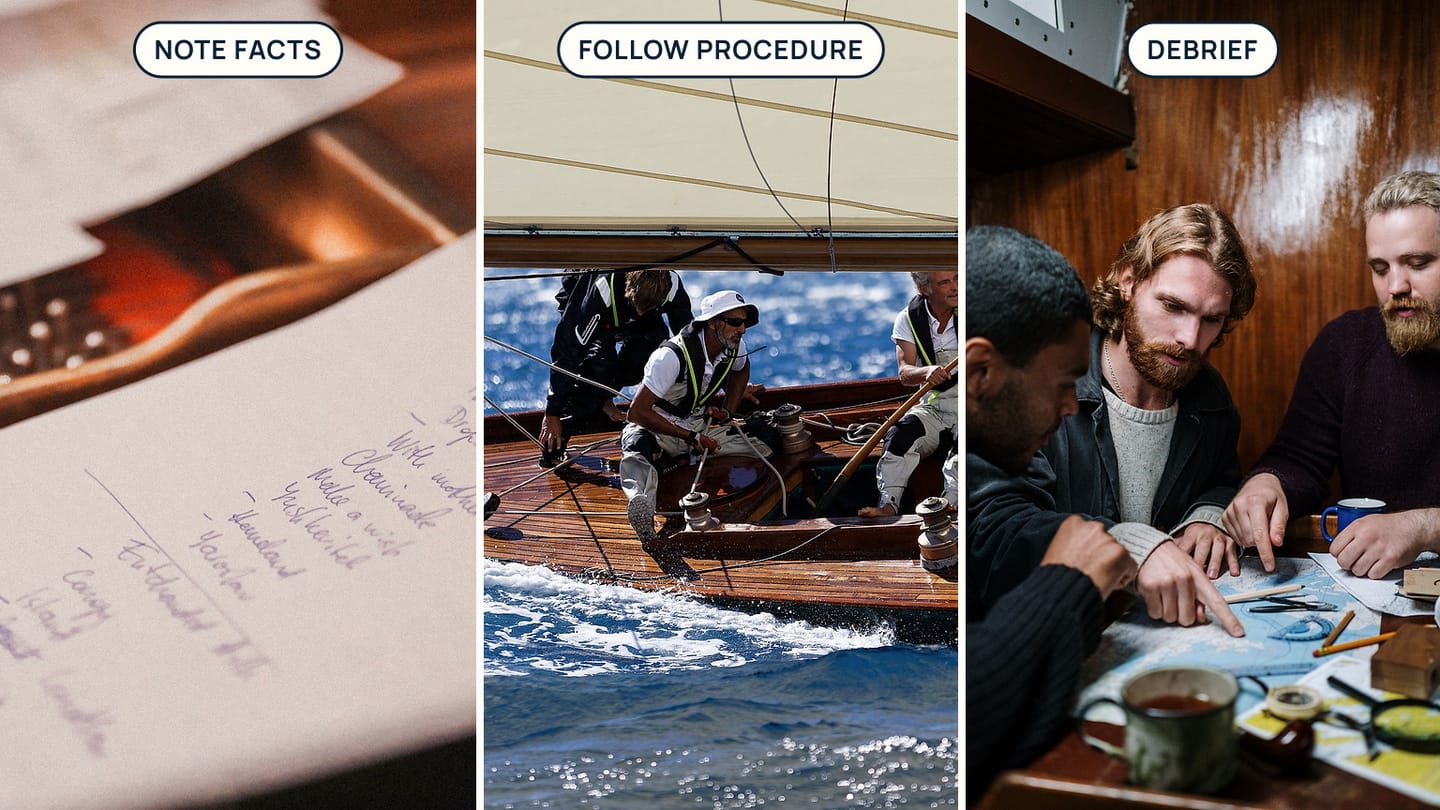
If boats come close or touch, keep doing your assigned safety task until the skipper changes it. Note facts without conducting an argument across the water. Record the time, course area, boats involved, their relative positions, calls heard, and what changed. Separate what you personally saw from what another crew member reports later.
Follow the procedure in the current rules and event documents. Time limits, forms, penalties, hearings, and scoring questions belong to the event process. A beginner should not promise another boat that the skipper will take a particular action. Pass the information to the person in charge.
Debrief with a sketch made after the boat is secure. Draw wind direction, boat tracks, the mark or start line, and the sequence of changes. Compare the sketch with the relevant definitions and rule text. If accounts differ, keep the disagreement visible rather than forcing a neat shared memory.
Study one recurring situation at a time. Opposite-tack meetings may be the first subject, followed by same-tack positioning, starts, and common mark approaches. Use World Sailing's current publications and any teaching material approved by your club or national authority. Check that examples match the 2025-2028 edition and published corrections.
Ask experienced racers to explain the earliest clue, not merely the final rule number. Learning to notice a developing overlap or converging boat gives the crew time. Memorising a result after the boats are already locked together does not.
Keep each reviewed incident in a dated notebook so later rule editions do not blur the original decision.
Use SailStarter to build the sailing vocabulary beneath the rulebook. Review port versus starboard, then ask your club for the current event documents and a coached beginner rules session. The app helps you recognise boat relationships; the official rules and experienced local instruction determine how those relationships govern a real race.
Try it from the lesson
Can you spot the next move?
You turn to face the stern. A crewmate points at your right hand. Which side of the boat is that?
Why you can trust this guide
. We build each guide from public seamanship and safety sources, then teach the universal principle before any local difference.