Chart your course
Sailboat Starter Clicks but Won’t Turn
Quick answer
The short version
A starter click means part of the control circuit acted; it does not prove which component failed. Stop repeated attempts and observe the pattern. Does the panel stay bright, dim sharply, or go dead? Is there one solid click or rapid chatter? Does the engine move at all? Check the intended battery and isolation state, neutral and installed interlocks, and visible heavy-cable connections with the engine stopped and isolated as directed. Do not bypass protection or bridge terminals. Heat, smoke, arcing, fuel odour, damaged wiring, a locked or uncertain engine, or no clear manual-led check requires a qualified engine or electrical technician.
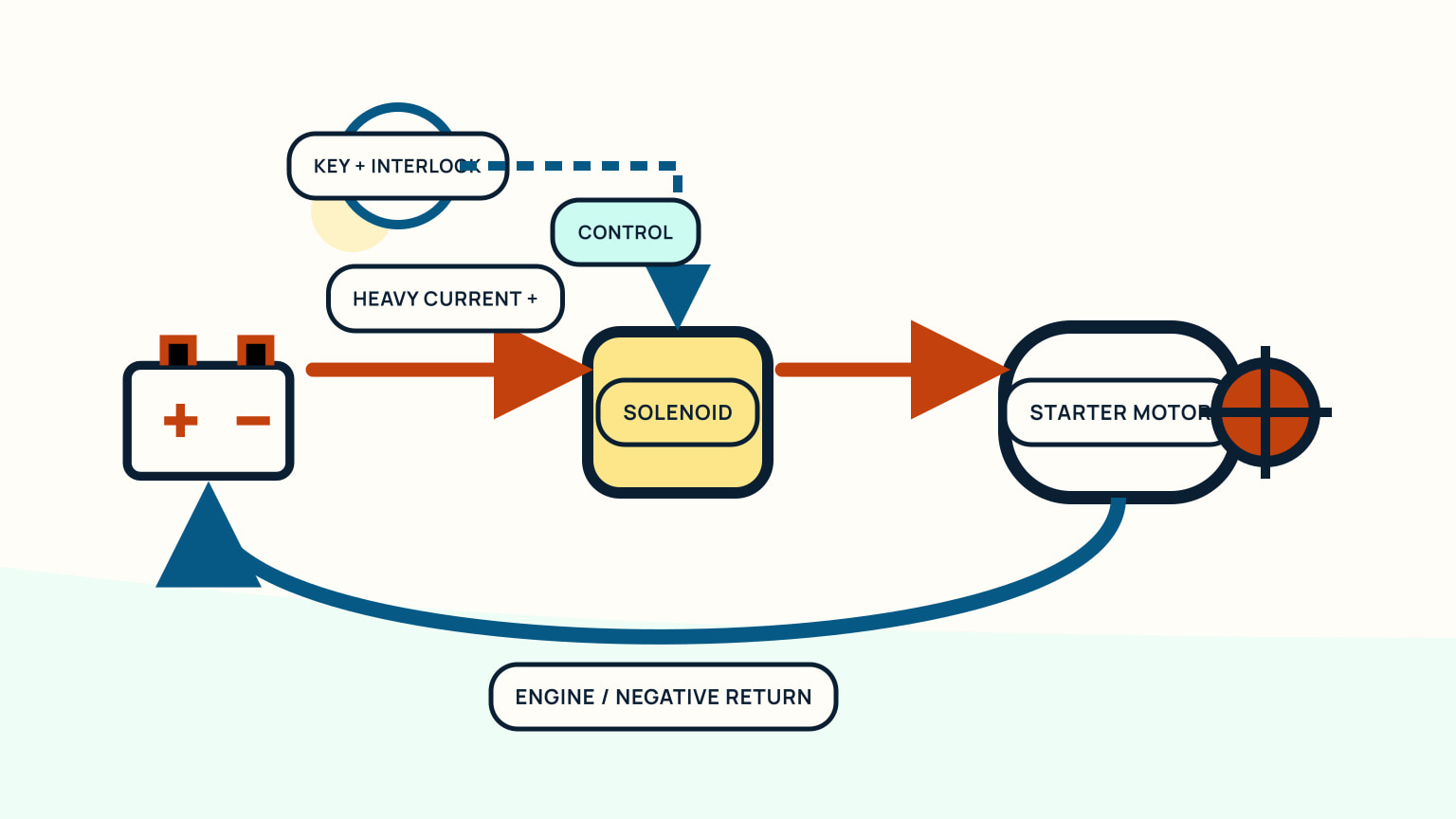
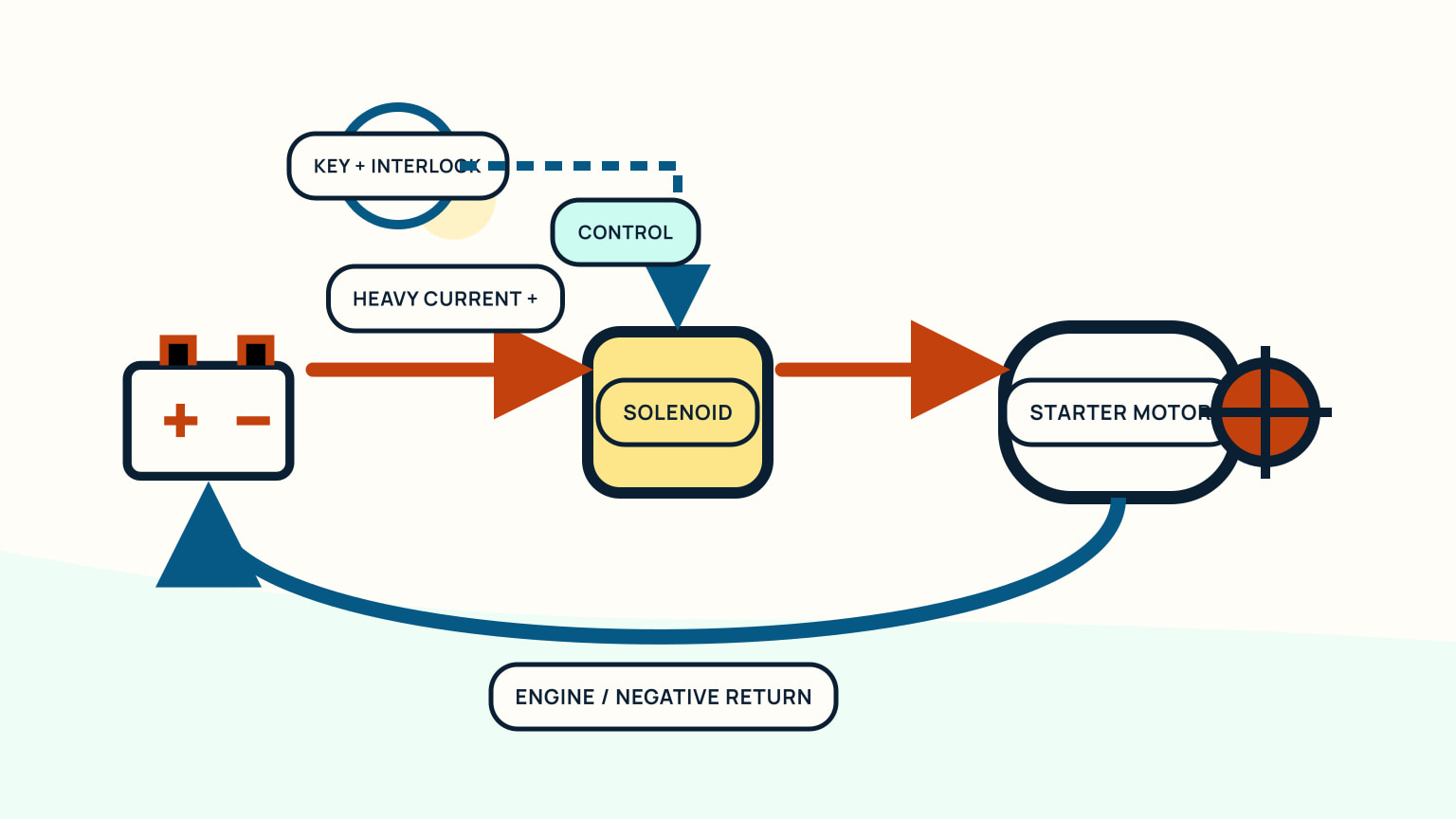
The starting path is easier to understand as a chain: battery, isolation and circuit protection, start control and interlocks, solenoid, heavy cables, starter motor, engine, and return path. A weakness anywhere can produce a click. Your first job is to preserve power, protect the boat, and collect evidence. The broader marine diesel no-start guide separates no-crank from normal cranking without firing; this article stays with the click-and-no-turn symptom.
Stop repeated starting
Release the control when the engine does not turn as expected. Repeated attempts can flatten the battery and overheat the starter or cables. Follow the installed manual's attempt and cooling limits. Do not keep trying merely because the click changes.
Record the first attempt while memory is fresh. Note panel lights, alarms, battery monitor, one click or chatter, any partial movement, smell, and sound. Ask whether the batteries were recently charged, switched, disconnected, or replaced and whether electrical or engine work occurred since the last normal start.
Protect the immediate situation. Keep enough electrical reserve for essential equipment, arrange assistance if manoeuvring is affected, and investigate only when the boat is secure. A machinery problem is secondary to the navigation risk it creates.
Count attempts and their length from the start. A later technician needs to know whether the starter was energized once briefly or many times until the battery fell. If the engine space is closed, do not keep trying while searching for the sound; stop, open access safely, inspect, and make only the next manual-permitted attempt. Remove loose gear near belts before that attempt. A click that follows recent flooding, collision, overheating, or long lay-up deserves a broader engine check before more electrical demand is applied.
Check the basic power path
Confirm that the intended start battery and isolation switches are in the documented state. A label may be wrong or a selector may feed a different bank after earlier modifications, so compare with the boat's schematic. Do not combine banks unless the operating instructions call for it.
With the engine stopped and the circuit isolated as directed, inspect accessible battery terminals, main cables, engine return connection, switch connections, protection devices, solenoid leads, and starter cable. Look for looseness, corrosion, chafe, unsupported weight, heat damage, or a connection recently disturbed. Never move an unidentified high-current conductor.
Panel dimming and rapid chatter can be useful evidence of supply dropping under demand, but neither proves that the battery itself is faulty. Connections, cables, switching, return path, solenoid, starter, or a resisting engine can affect the same observation.
Battery state must be assessed under the installed battery and engine instructions. A resting monitor value does not show how the complete path behaves under starter demand. If the manual permits a boost or combine function, confirm the correct sequence and what banks it connects before using it. Never substitute a loose automotive jumper lead in a crowded machinery space. If another approved battery source changes the symptom, that is evidence about supply, not automatic proof that one battery should be replaced without checking connections and charging history.
Confirm controls and interlocks
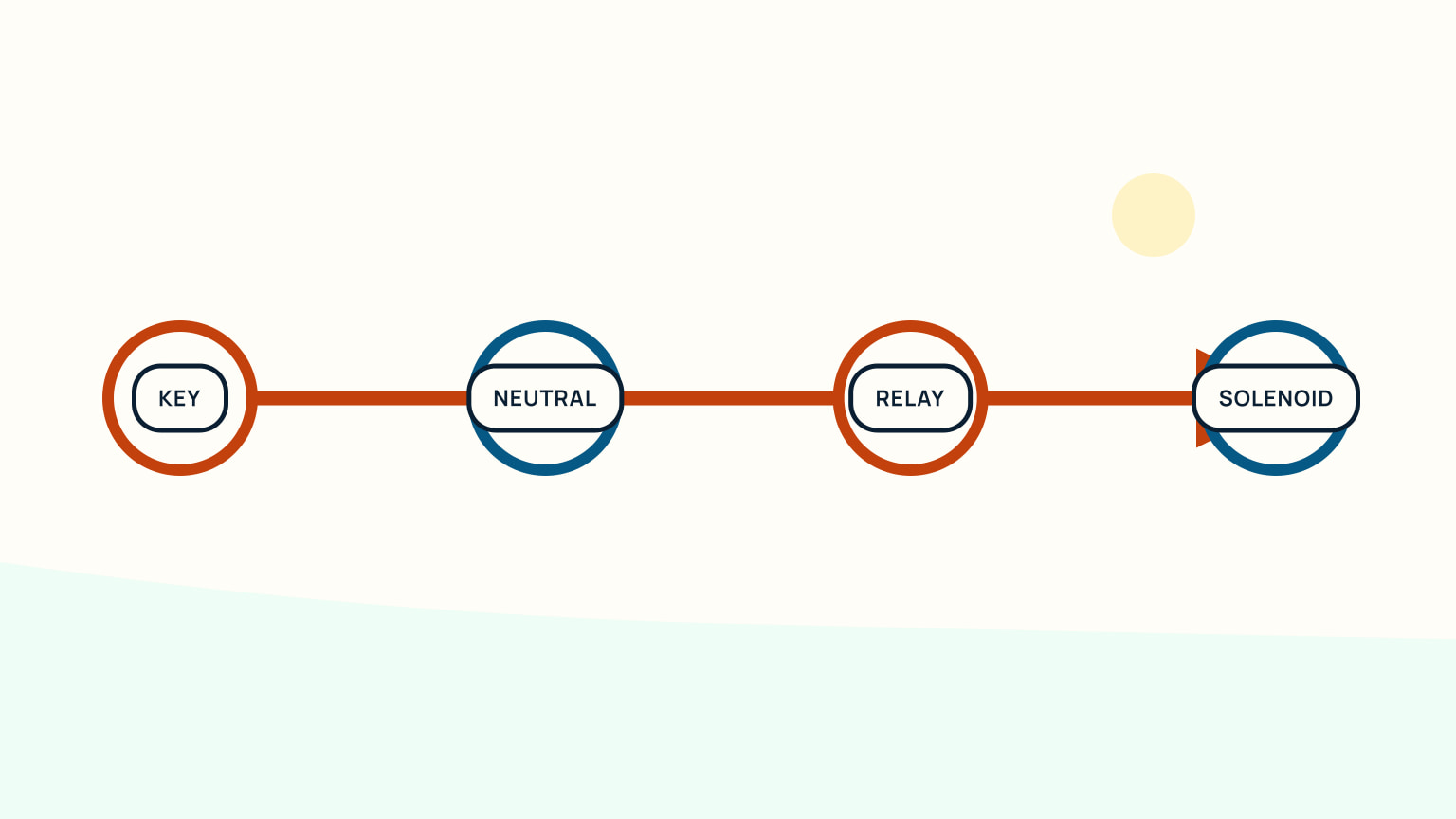
Place the gearbox control in the exact neutral position and confirm the engine stop control is reset as the manual requires. Check the key, panel, emergency stop, and any clutch, neutral, or remote-station interlock fitted to the boat. Operate them normally; do not bypass a safety device to make the starter run.
Listen for where the click occurs. A relay behind the panel, a solenoid on the starter, and a separate control box may sound similar from the cockpit. A second person can observe from a safe position with hands, clothing, and tools clear of belts and machinery, but no one should lean over moving parts during an attempt.
If a control feels different, sticks, or works only when held off-centre, record it and stop. Adjustment and fault testing depend on the installed control and wiring. An improvised jumper removes evidence and can defeat neutral protection.
Multi-station boats add another layer. A flybridge or cockpit panel, key enable, start relay, or stop circuit may interact with the lower station. Confirm which station has control and whether an emergency-stop device is reset. Check the manual for panel self-tests and alarm meanings before interpreting a dark display. If a fuse opens again after replacement with the specified type, stop. Repeatedly replacing protection without finding the cause removes a useful warning and can heat the wiring.
Look for useful evidence
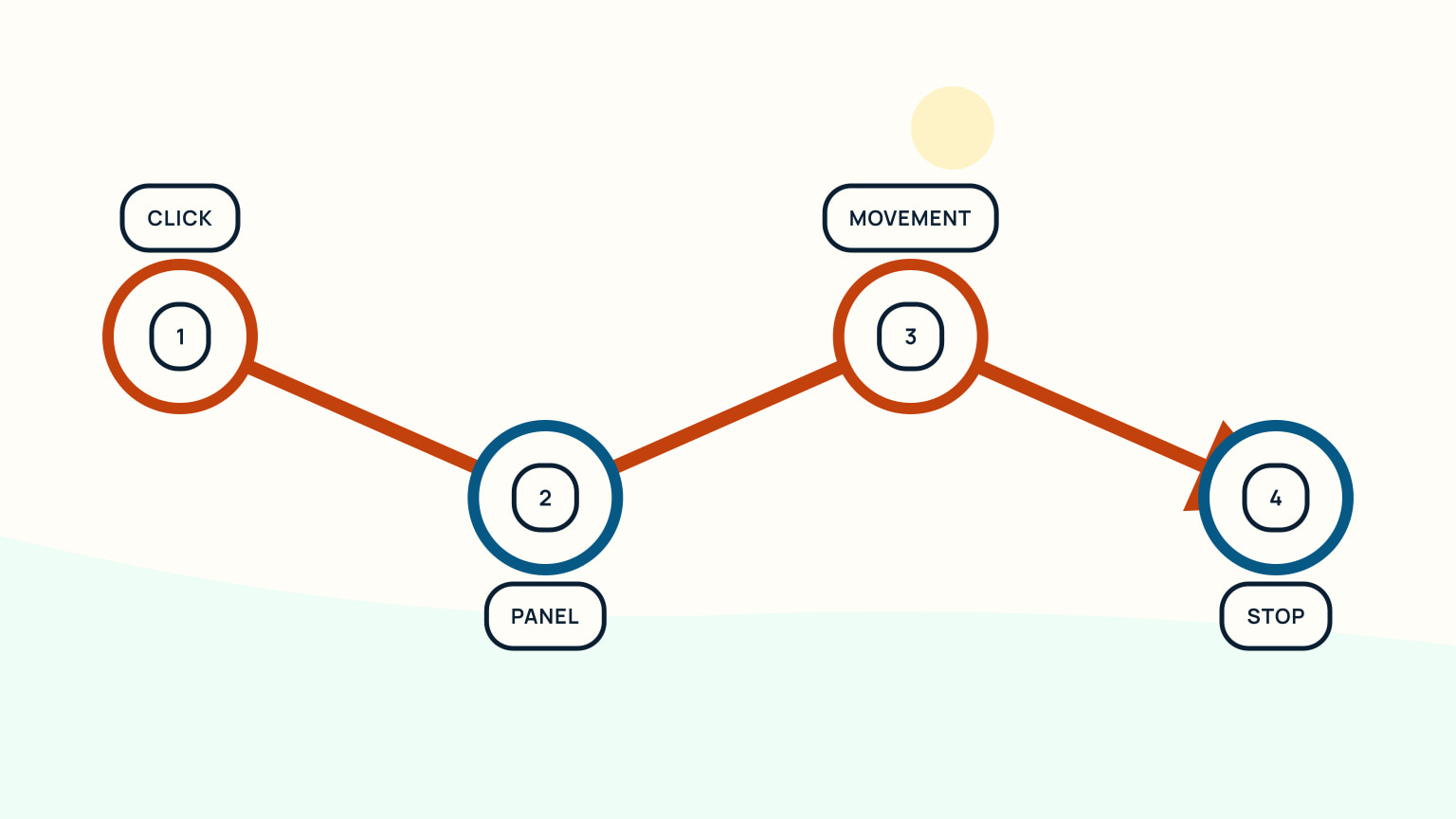
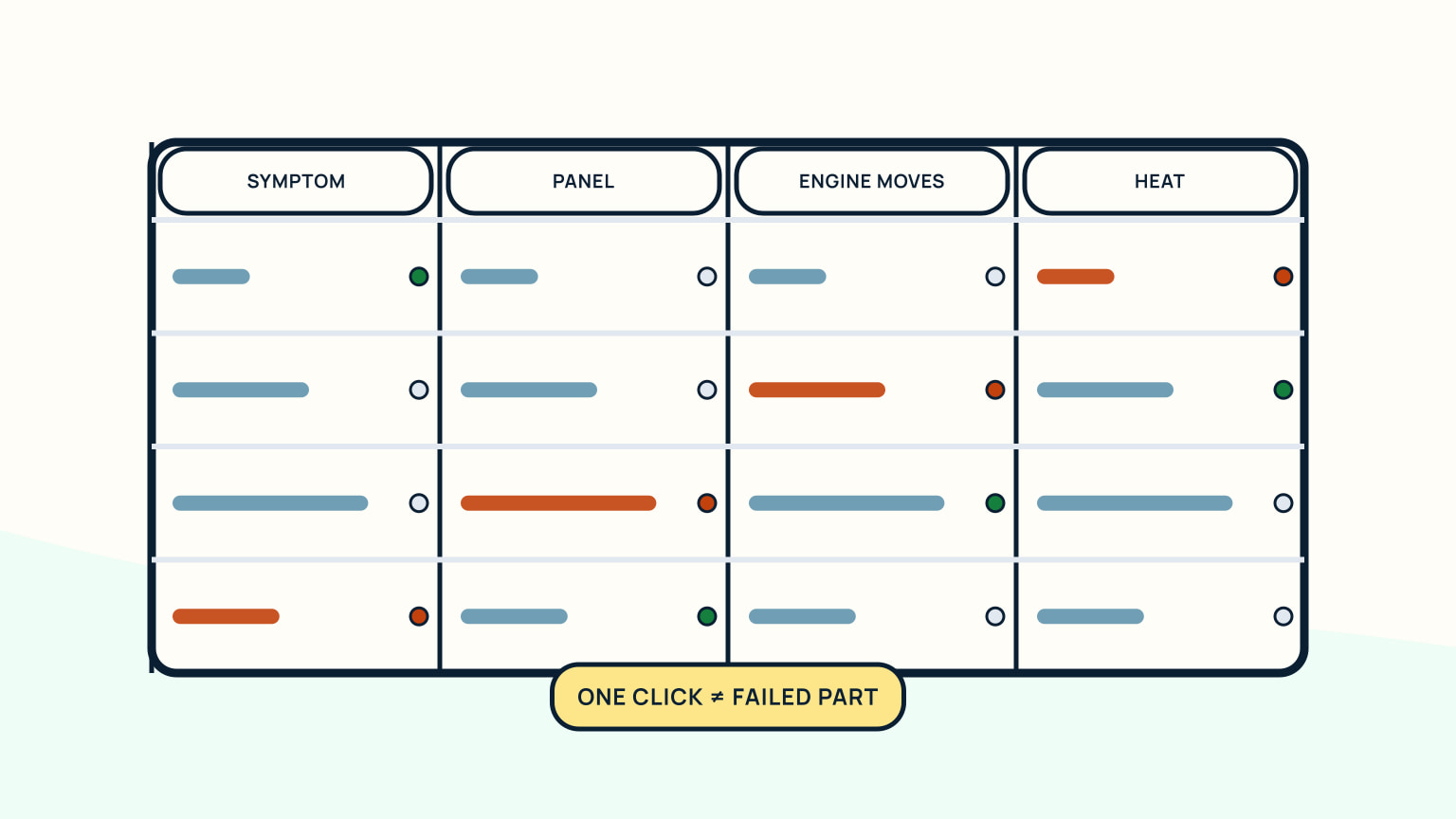
Use observations the next person can reproduce. One solid click with no dimming differs from rapid chatter and a dark panel. A starter that turns the engine a fraction and stops differs from one with no movement. A hot terminal, burnt smell, or smoke changes the urgency.
Consult the installed manual for any permitted battery, fuse, connection, or engine checks. If it specifies measurements, record the exact test points, operating state, instrument, and result. A voltage written without where and when it was measured is easy to misread.
Consider mechanical history without trying to force the engine. Recent water ingress, overheating, impact, internal work, or a change in oil or coolant may make a no-turn symptom more than an electrical problem. Leave manual rotation and internal checks to the prescribed procedure or a technician.
Add environmental context. Low temperature, a long idle period, recent heavy electrical use, wet connectors, or movement in rough water may explain when the symptom appears without proving a cause. Compare with the last normal start: battery switch state, charger use, engine temperature, and sound. If you can safely make a short recording, capture panel and sound together. Avoid editing several attempts into one clip because the sequence matters. Label the file with date and attempt number for the service handoff.
Escalate before damage
Call for qualified help when the basic controls and visible connections do not reveal a safe correction, or when you find heat, smoke, arcing, damaged insulation, fuel, battery damage, an abnormal engine state, or repeated fuse operation. Internal starter, solenoid, high-current wiring, battery load, and engine diagnosis require the right equipment and access.
Provide engine and starter model, battery system, schematic, recent service, exact click pattern, panel behaviour, readings with test conditions, and photographs. State every attempt and any change you made. This lets the technician start with the path instead of repeating uncertain tests.
After repair, verify guards, cable support, terminal protection, neutral operation, starting, charging, and alarms according to the manuals. Add the work and next check to the engine checklist and battery maintenance record.
If the technician finds a poor connection, ask whether cable support, sealing, terminal protection, or inspection access should change to prevent recurrence. If the starter or solenoid is removed, preserve model and part information. If the engine itself resisted rotation, document the mechanical diagnosis before reinstalling electrical parts. A repaired starter path should also leave the charging system able to restore the battery after the permitted test. Do not finish with a successful crank and an exhausted bank that masks another fault.
Once starting is normal, create a baseline recording from the cockpit and engine space under safe conditions. Note panel behaviour, sound, cranking duration, battery state, and the first charging indication. Repeat after battery, cable, starter, control, or engine work. The goal is not to time every start obsessively. It is to preserve what normal looks and sounds like on this engine, so a gradual change can be described before it becomes a click with no movement.
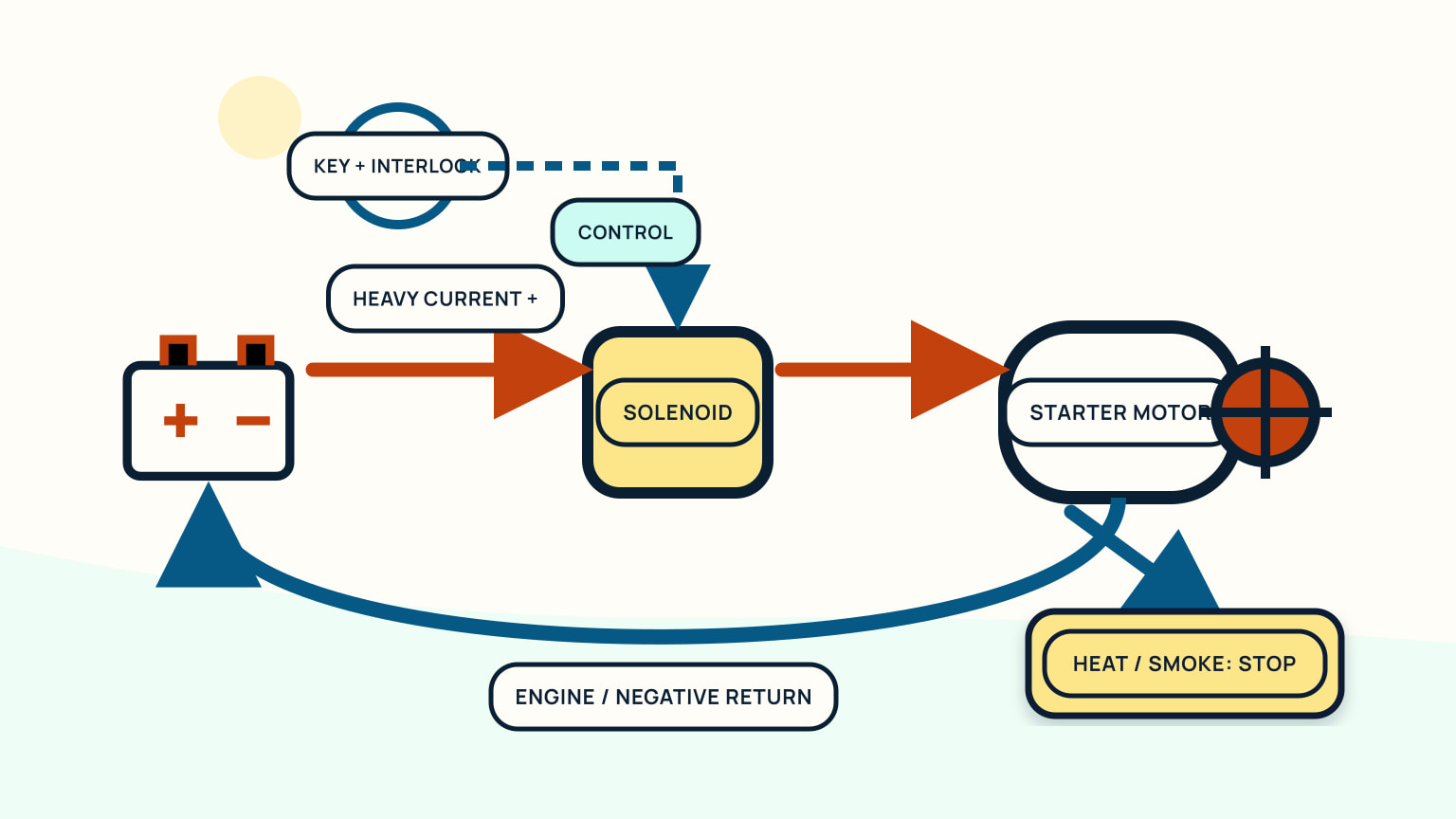
One unexpected click is enough reason to pause and observe carefully. Work through control state and visible power-path evidence without bypassing anything. If the cause remains uncertain, preserve the battery and hand the recorded symptom to a technician. SailStarter lessons can help you read the system and communicate clearly, while the installed manuals define the permitted checks.
Preserve the normal baseline.
Try it from the lesson
Can you spot the next move?
The engine is idling, the boat is safely secured and the propeller area is clear. What should you confirm before departure?
Why you can trust this guide
. We build each guide from public seamanship and safety sources, then teach the universal principle before any local difference.