Chart your course
Sailing With a Dog: A Practical First-Trip Guide
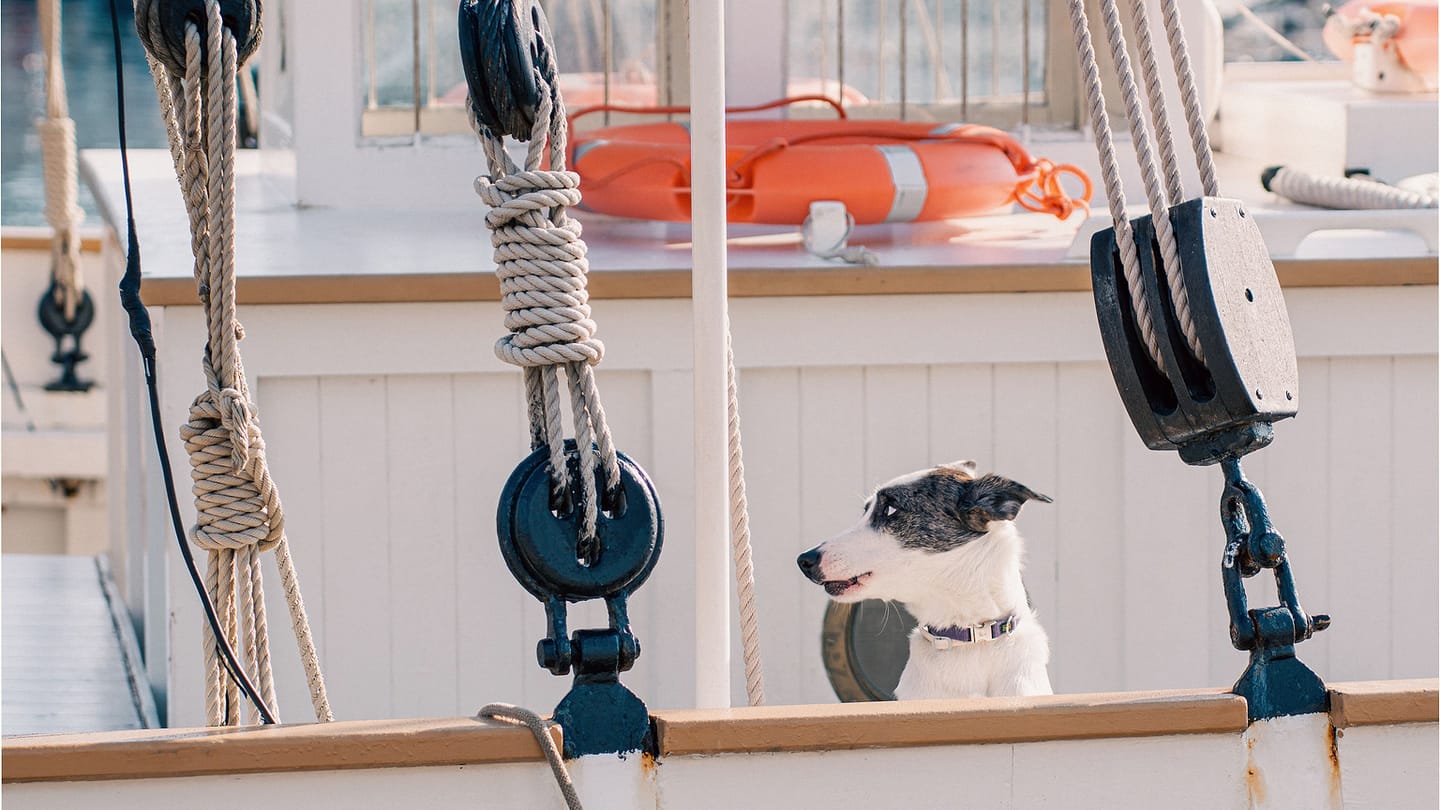
Quick answer
The short version
Introduce a dog to the boat gradually before attempting a full sailing day. Start with a quiet visit while secured, practise the exact boarding route, and establish one nonslip resting place. Use a properly fitted harness or canine flotation aid with a tested lifting method, but do not treat it as permission for the dog to roam on deck. Bring fresh water, shade, waste supplies, and any food or medication the dog normally needs. Keep the first moving trip short and close to a safe return. Check veterinary advice, destination entry rules, and marina policies before travel.
Dogs differ in balance, confidence, health, and response to noise. The right question is not whether dogs in general enjoy sailing. It is whether this dog remains comfortable and manageable on this boat in these conditions. The same individual-by-individual judgment applies when sailing with children: a general guide can prepare you, but only watching this particular passenger tells you whether the day is actually going well.
Write down the stopping conditions before leaving: distress that does not settle, unsafe movement, illness, equipment failure, or weather beyond the skipper's plan. Decide where you can return or land. The dog cannot understand why continuing matters to the crew, so its welfare must remain a real limit on the day.
Prepare on Land
Practise wearing the chosen harness or flotation aid before arriving at the marina. Let the dog walk, sit, and rest in it. Pair the equipment with calm, familiar routines rather than putting it on for the first time during departure.
Visit the secured boat when the dock is quiet. Introduce engine noise, moving lines, and the cockpit in small steps. Stop if the dog shows sustained distress. A veterinarian can help when age, health, motion sickness, or anxiety makes travel uncertain.
Keep early visits short enough that the dog can leave calmly. Practise waiting before crossing the gangway and settling on a mat in the chosen resting place. Use the same cue and route each time. Familiar repetition on a stationary boat separates training from the movement and workload of departure.
Building Confidence Without Rushing It
Order matters more than speed. Let the dog get comfortable standing and lying down on the boat before you start the engine, and let it get used to engine noise before you introduce the restraint gear it will wear on the water. Layering several unfamiliar experiences at once (new gear, engine noise, and an unfamiliar surface all together) is what turns a manageable introduction into a bad one. If the dog is relaxed at one layer, add the next. If it is not, stay there longer instead of moving on just to keep to a schedule.
Knowing When to Bring in Your Vet
Age, existing health conditions, motion sensitivity, and general anxiety all change how much preparation a dog needs, and a land-based routine cannot substitute for professional judgment on any of them. If your dog has a heart or joint condition, gets carsick easily, or reacts to loud or unfamiliar situations with more than passing nervousness, talk to your veterinarian before the first boat visit rather than after a bad one. They know the dog's history in a way a general guide cannot, and can tell you whether sailing is a reasonable plan for this particular animal at all.
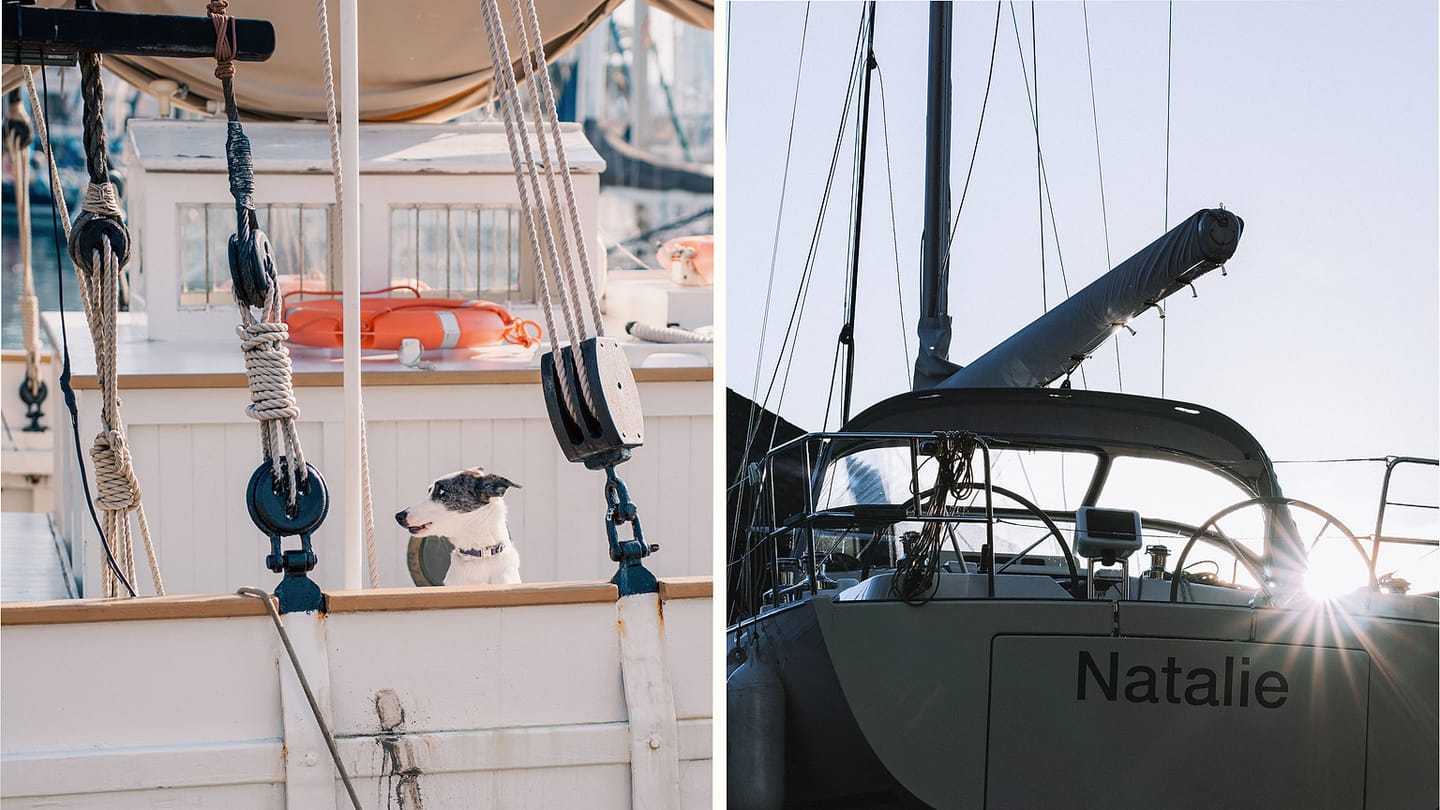
Fit and Test Gear
Choose equipment that fits the dog's body and does not restrict breathing or normal movement. Check closures and inspect the lifting handle. Test the recovery method with the boat secured and enough adults to control the exercise. Do not discover under way that the handle is inaccessible or the dog slips out.
A flotation aid supports recovery, while a secure harness supports restraint and boarding. One product may combine these functions, but only its instructions can confirm that. Attach restraint where it cannot pull the dog overboard or tangle with working lines.
Check the fit again after the dog has walked and lain down. Look for rubbing around the front legs, pressure at the neck, or loose straps that could catch a fitting. The lifting test should support the dog as the maker intends. Never lift from a collar or an unsuitable handle.
Common Fitting Mistakes
The most common problems show up long before the boat leaves the dock. Fitting new gear for the first time on departure day skips the calm practice that helps a dog accept it, and any discomfort shows up right when you need the dog settled. Picking a size from the dog's breed or weight alone, instead of checking the fit on the actual dog, is another way to end up with straps that ride loose or a handle that cannot support a real lift. Treating a flotation aid as a substitute for supervision is a third mistake: flotation helps with recovery. It does not stop a dog from going overboard in the first place, much as preventing a crew member from going overboard matters more than any recovery plan, however well rehearsed.
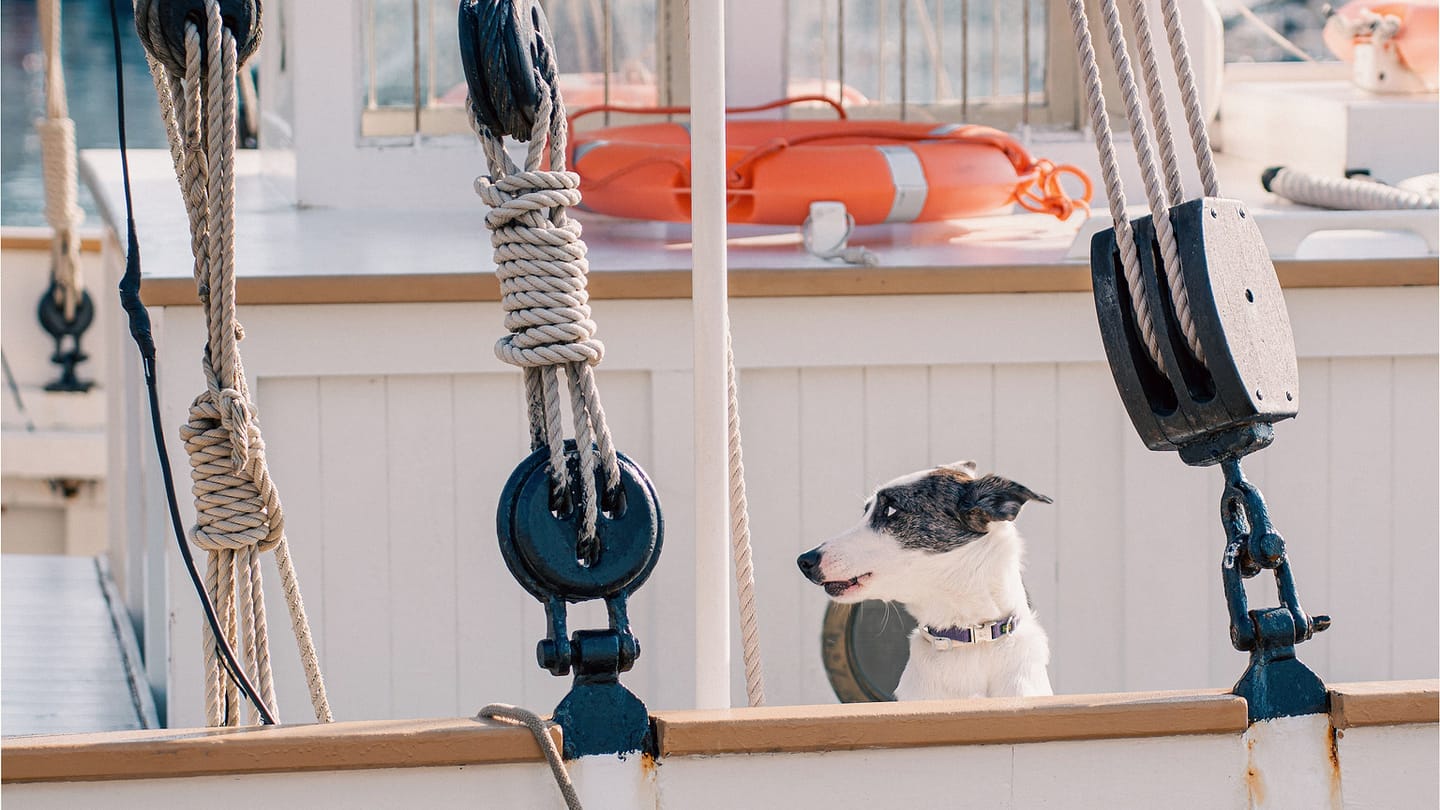
Make Boarding Safe
Use one controlled route on and off the boat. A ramp or lift may help, but it must suit the dock height, freeboard, and dog's ability. Keep paws away from gaps, moving gangways, and loaded lines. One person boards the dog while another keeps the boat controlled.
Create a nonslip resting area away from sheets, winches, and the helm. The dog should not need to cross the working cockpit each time the boat tacks. Secure water so it cannot slide, and prevent access to food, chemicals, hooks, and other hazards.
Assign one adult to control boarding while the skipper manages the vessel. Keep the lead short enough to prevent wandering but arranged so it cannot tighten around a leg or loaded line. At a moving dock, wait for a stable moment rather than asking the dog to jump across a changing gap.
A Boarding Routine Worth Rehearsing
Decide the roles before you reach the dock, not while the dog is already pulling at the lead. One person handles the dog and nothing else. Another manages the boat, the lines, and the gap between boat and dock. Move in one direction at a time and go straight to the resting place rather than pausing partway across the deck. The same rule that keeps crew moving safely around a working sailboat applies here: know where you are going before you start moving, and do not linger somewhere lines or gear pass through. Secure water, food, and anything the dog could knock loose only once the dog itself is settled, not before.
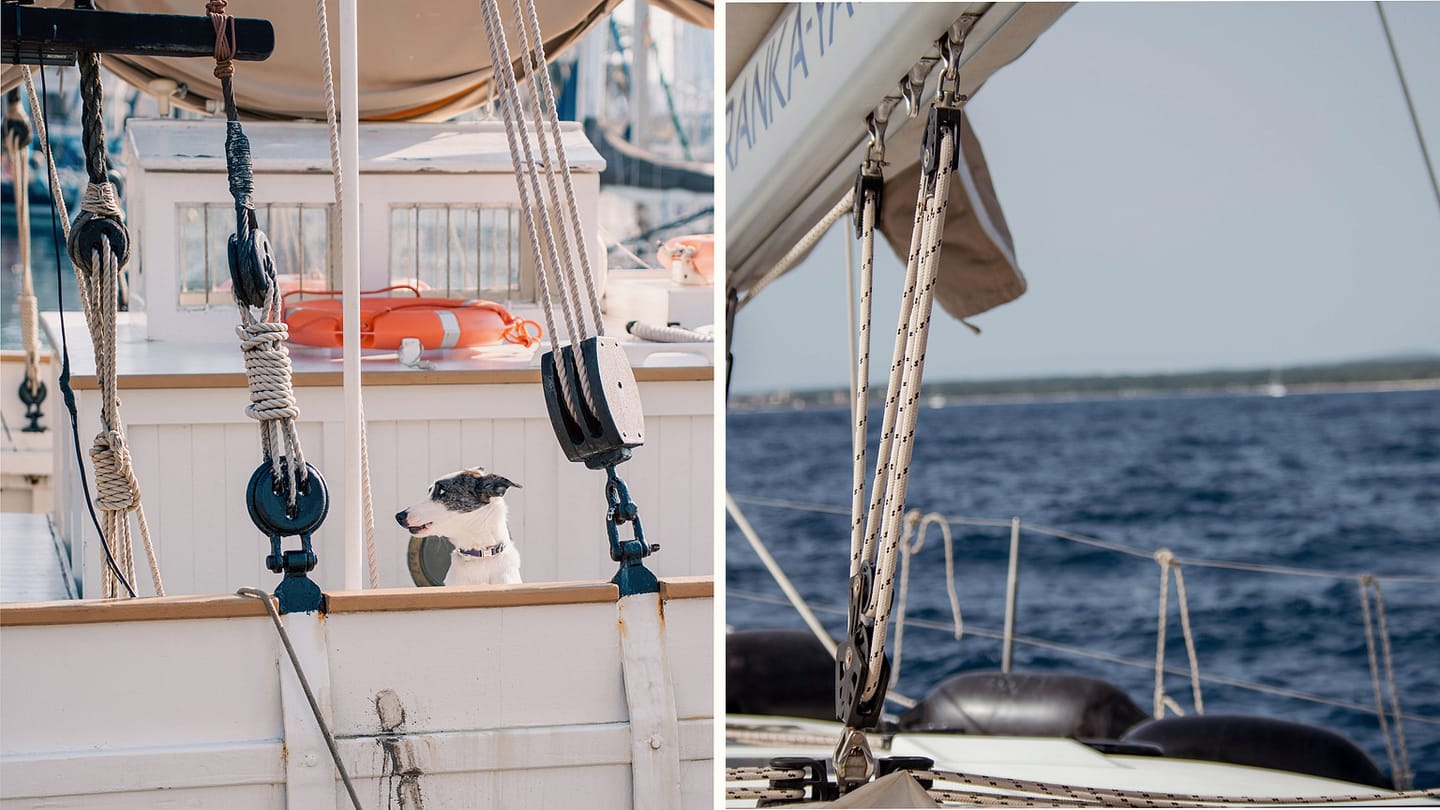
Keep the First Trip Short
Choose calm water and an easy return. Begin with movement under power or sail only as conditions and the skipper's plan allow. Watch for panting unrelated to heat, drooling, repeated attempts to escape, trembling, or inability to settle. Return rather than trying to train through distress afloat.
When to Turn Back
Treat any of the warning signs above as your answer, not a problem to manage through. Turning back early because the dog is unhappy is not a failed trip. It is the plan working as intended, and it tells you what this dog can handle before you try a longer day. Resist the urge to push on because you already arranged the trip or because conditions look easy from the cockpit. The dog cannot make that judgment call for itself, so the decision to continue or return is entirely yours to make on its behalf.
Plan shade, water, rest, and toilet stops, much of it overlapping with any sailing trip packing list, with the addition of whatever this dog specifically needs. Never assume seawater is drinkable. On longer journeys, destination rules for animals, vaccinations, identification, and quarantine may apply. Verify them with the relevant authorities before committing to the route.
Watch the deck temperature as well as the air. Provide a dry place with grip and ventilation, and offer fresh water regularly. Arrange waste disposal without leaving the dog unsecured. If landing ashore is part of the plan, confirm that animals are permitted before relying on that stop.
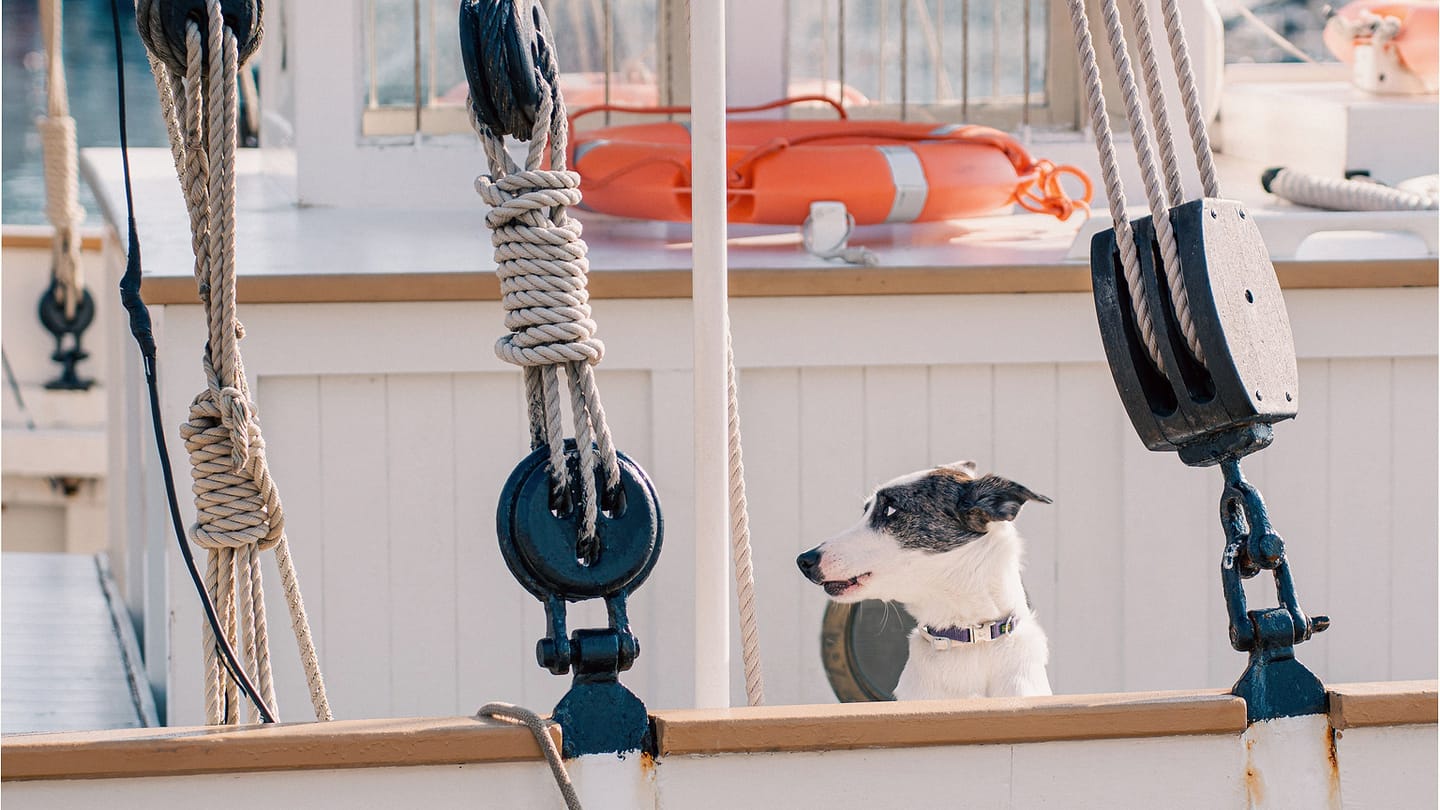
Use SailStarter's onboard movement lesson to inspect the boat from a dog's height. Trace the boarding route, resting place, water location, and every working line that could trap a paw or tether. Rehearse the lift with the boat tied up and agree who handles the dog while the skipper handles the boat. Then make the first moving trip deliberately modest. You are collecting information about comfort and control, not proving that the dog can endure a long day. A calm return gives you useful evidence for planning the next outing.
Record whether the dog settled, accepted water, moved securely, and recovered normally afterward. Change only one major difficulty at a time. Another dock visit, a better mat, or different fitted equipment may be the next step. Some dogs will remain happier ashore, and that is a sound conclusion.
Try it from the lesson
Can you spot the next move?
You sailed with this skipper last month and know the boat well. Does today still get a full briefing?
Why you can trust this guide
. We build each guide from public seamanship and safety sources, then teach the universal principle before any local difference.