Chart your course
How to Find a Sailboat That Needs Crew
Quick answer
The short version
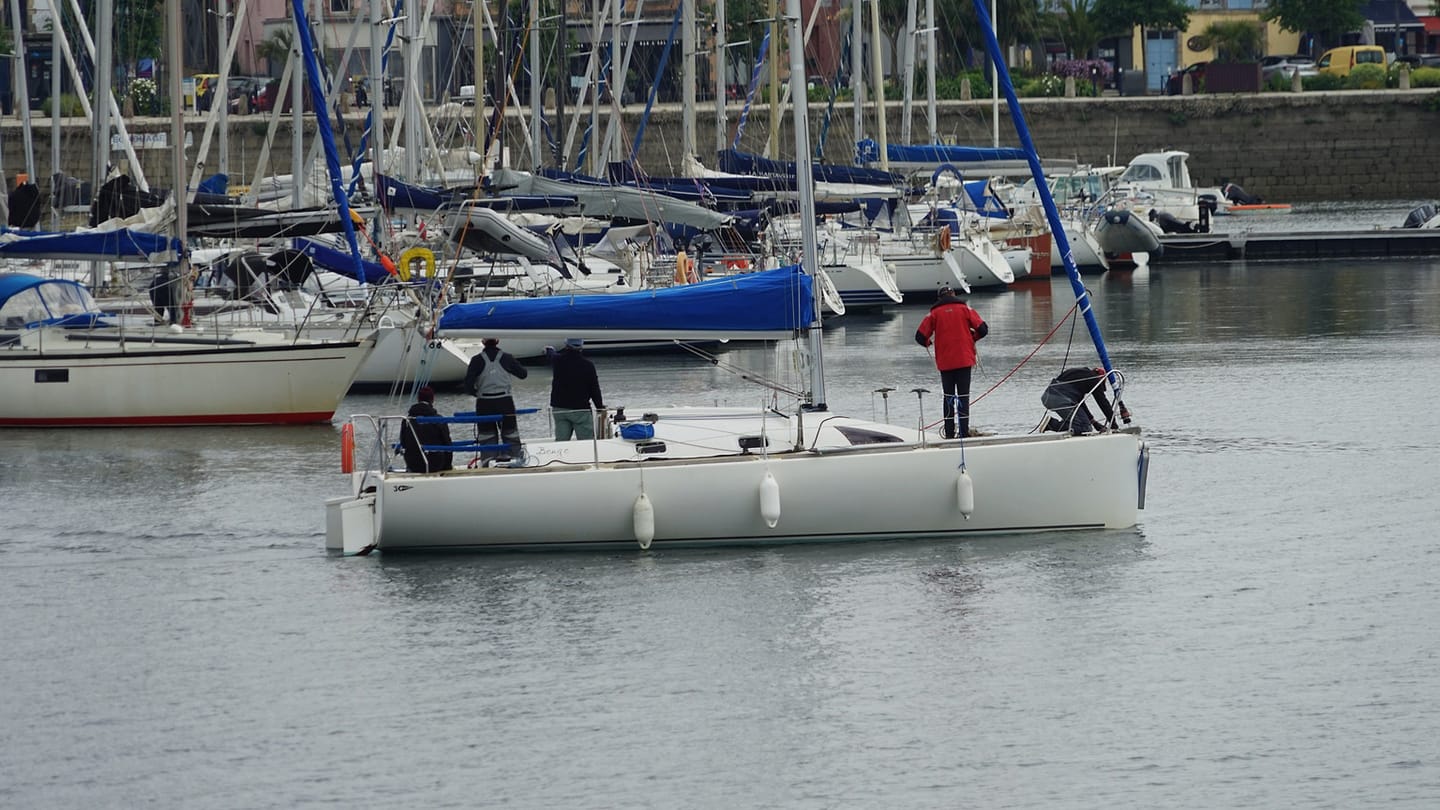
The best first place to find a sailboat that needs crew is a local club, race organizer, community sailing centre, or sailing school. Show up, describe your experience honestly, and ask for a short local day sail before considering a long passage. Specialist crew-listing sites broaden the search, but they usually introduce people rather than verify the skipper, crew, boat, or equipment. Screen every opportunity yourself. Agree on route, conditions, duties, costs, safety gear, sleeping arrangements, and a way to leave before you travel. A beginner can be useful through reliability, attention, and willingness to learn without pretending to have skills not yet practised.
Owners look for crew for different reasons: racing, watchkeeping, company, shared daily costs, deliveries, or paid work. Those are not interchangeable offers. Decide whether you want local practice, a holiday, mileage, racing, or employment. A precise goal makes suitable listings easier to recognize and unsuitable ones easier to decline.
Start Locally Where People Can Know You
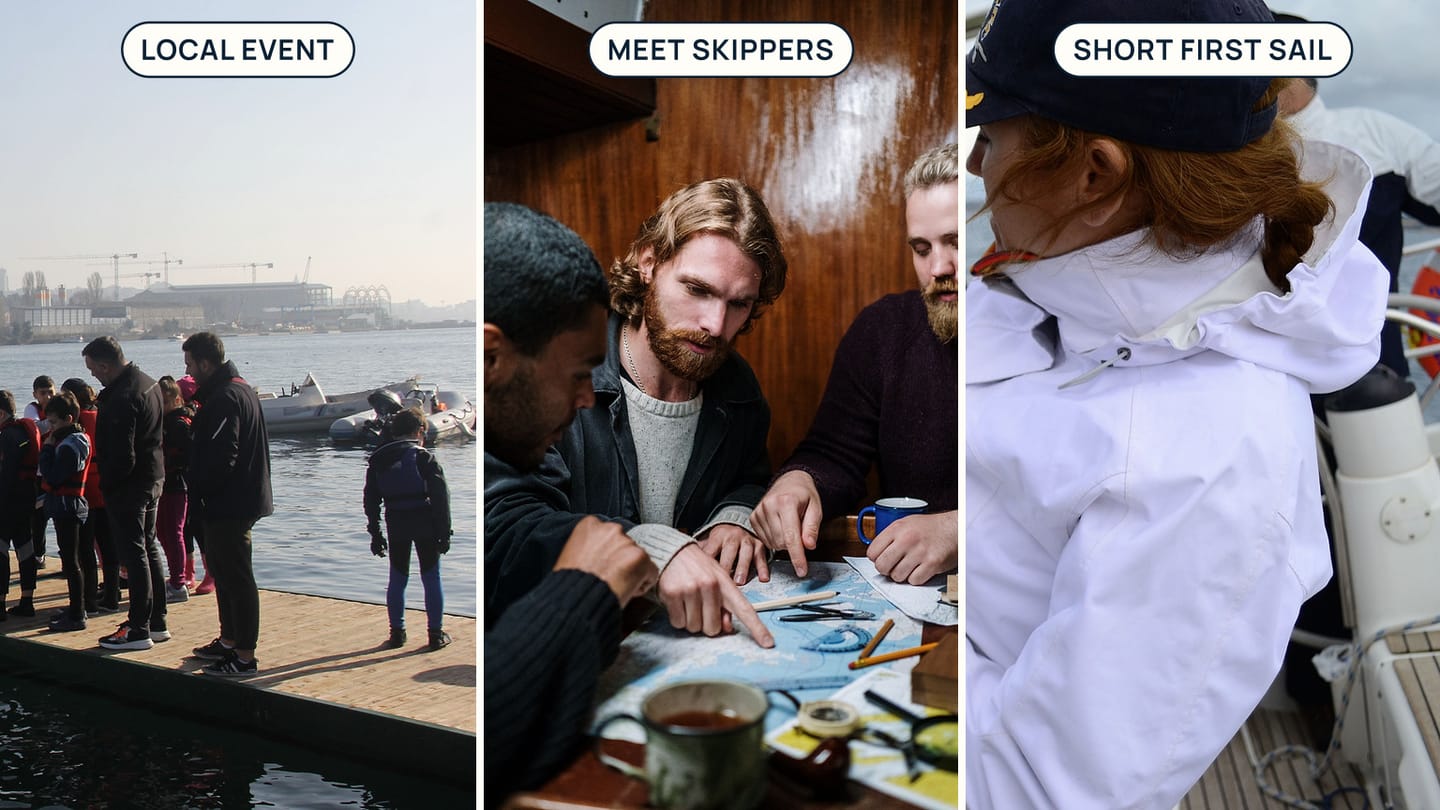
Local sailing works well because both sides can begin with a limited commitment. Search club calendars for race nights, social sails, open days, and crew boards. Contact the sailing office or race committee and ask whether there is a crew coordinator. A school may know graduates and owners who need another pair of hands. Community centres and one-design fleets can have similar networks.
Do more than send a general “take me sailing” message. State your availability, transport limits, clothing, relevant training, comfort in the water, and whether you are willing to race. Say exactly what you have done aboard. “Two supervised dinghy sessions; can follow helm instructions; no keelboat experience” is more useful than “beginner but fast learner.”
Arrive early and be dependable. Racing owners often need crew who can commit to a series, help prepare the boat, and return next week. Cruising owners may value someone who listens, keeps lookout, and helps with ordinary work. Reliability gives an owner a reason to teach appropriate tasks, while seamanship grows through the work itself.
Ask first for a short sail in manageable conditions. You learn how the skipper communicates and maintains the boat without being committed offshore or far from transport. Review first-time sailing expectations and beginner etiquette before you go. They will help you participate without guessing at cockpit customs.
Build a Profile That Owners Can Use
Keep availability concrete
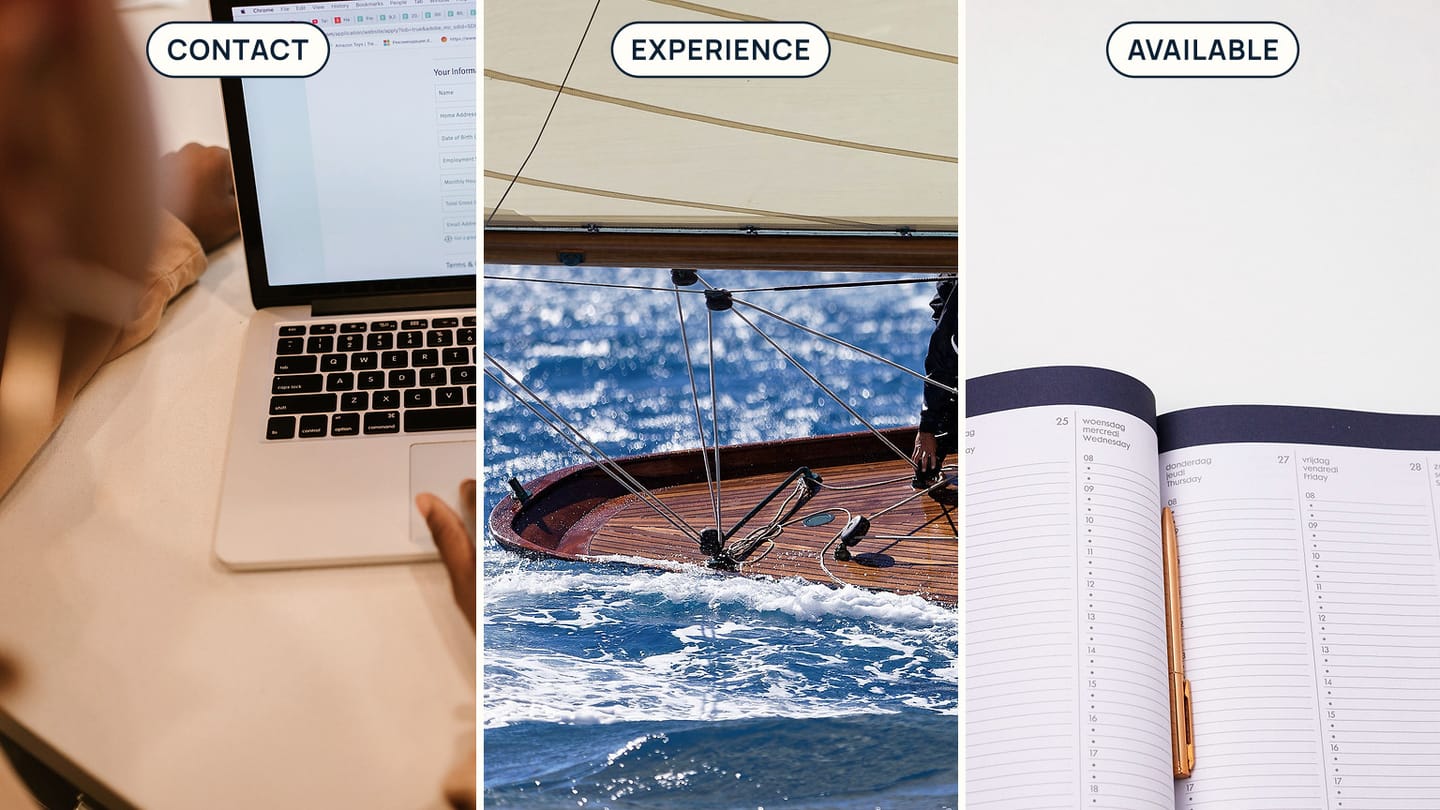
Owners often plan around tides, race starts, maintenance, and other crew. Replace “available most weekends” with the next four dates you can attend and the latest time you can confirm. Say whether you have a car, can reach the marina independently, and can stay for putting the boat away. If your availability changes, update the owner promptly. This ordinary courtesy is one of the few useful qualities a newcomer can demonstrate before stepping aboard.
References should be proportionate. After a few good local sails, ask whether the skipper is willing to confirm that you arrived, listened, and performed the stated beginner tasks. Do not ask for an endorsement of skills the skipper has not observed. A short accurate reference helps another owner understand what “some experience” means.
A useful crew profile is short and factual. Include your home area, dates, sailing goal, practical experience, certificates if relevant, languages, physical or dietary constraints that affect the trip, and the roles you are willing to take. Mention cooking, mechanical, medical, navigation, or communications experience only when it is real and applicable. Do not make a professional claim from a recreational course.
Separate what you have observed from what you can perform. If you have steered under supervision, say that. If you have never stood a night watch, do not imply offshore competence because you completed online navigation lessons. Owners can plan around an honest beginner. They cannot plan around inflated experience.
When replying to a listing, refer to its dates, route, and stated need. Ask two or three important questions rather than sending a biography. For example: “I am available for both race evenings and can arrive an hour early. I have crewed twice on a similar keelboat. Would this role suit a learner, and is there a practice sail before the series?”
Specialist sites list local sails, races, offshore passages, deliveries, shared holidays, and paid roles. Read how each service works. Crewseekers, for example, says it acts as an introducer and does not warrant the people or vessel. Its listings also use different financial arrangements. Treat a polished profile as a conversation starter, not proof.
Screen the Skipper, Boat, and Proposal
Match the trip to the weakest uncertainty
If the skipper is new to you, keep the first route short. If the boat has just been bought or refitted, allow extra caution even when the skipper is familiar. If the route, overnight watch, or weather is beyond your experience, do not let a friendly meeting erase that gap. Change one major unknown at a time. Familiar people on an unfamiliar boat, or a familiar boat with one new crew member, is easier to assess than a distant passage where everything is new.
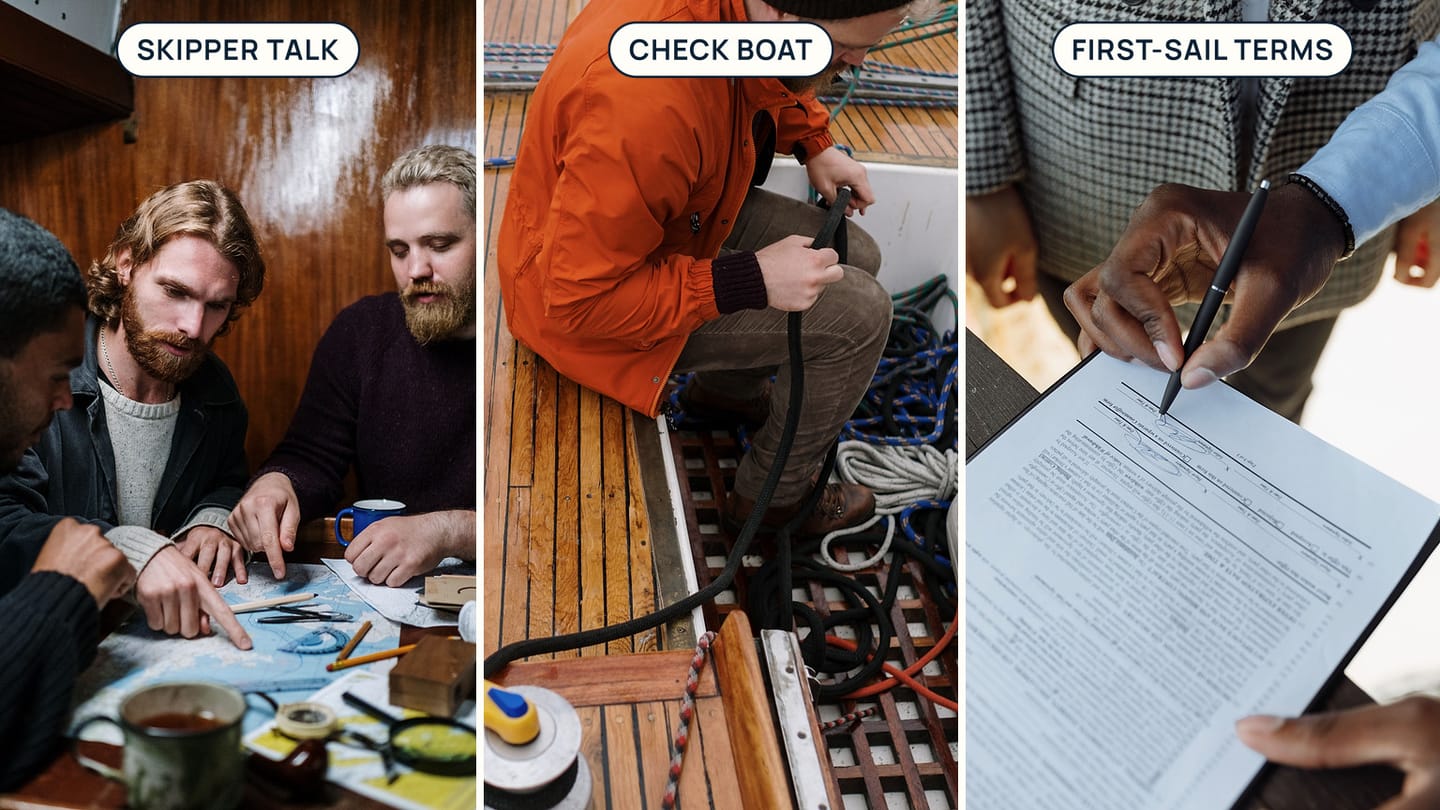
Have a call before meeting. Ask the skipper to describe the boat, route, planned stops, expected conditions, crew, watch system, and your jobs. Discuss how decisions are made and what experience the skipper has on that boat and route. A patient, specific answer is more useful than claims of being “very experienced.”
Meet in a public or safe place, or bring someone when meeting for the first time. See the actual boat before a substantial trip. Ask about flotation, harnesses where relevant, communications, emergency equipment, and the crew-overboard plan. You do not need to conduct a formal survey to notice neglected rigging, blocked movement, missing briefings, or a skipper who resents reasonable questions.
Share the itinerary and contact details with someone ashore. Keep your own travel documents, money, phone, medication, and a fallback route. Know where you can leave before departure and at planned stops. For a long trip, check travel and medical arrangements that apply to you. Trust discomfort early; declining politely at the dock is safer than hoping a poor situation improves offshore.
Red flags include pressure to decide immediately, changing costs, unclear ownership or permission to use the boat, alcohol affecting departure, dismissal of weather concerns, no safety briefing, or duties far beyond the advertised role. A skipper's authority for safe operation does not require you to surrender personal judgment or accept abuse.
Agree on Work, Money, and the First Sail
After the sail, settle agreed costs promptly and ask before posting photographs that identify people or the boat. Return borrowed gear clean and report damage or loss. If you decline another invitation, a brief honest answer is enough. Good local networks are small; considerate endings matter as much as enthusiastic introductions.
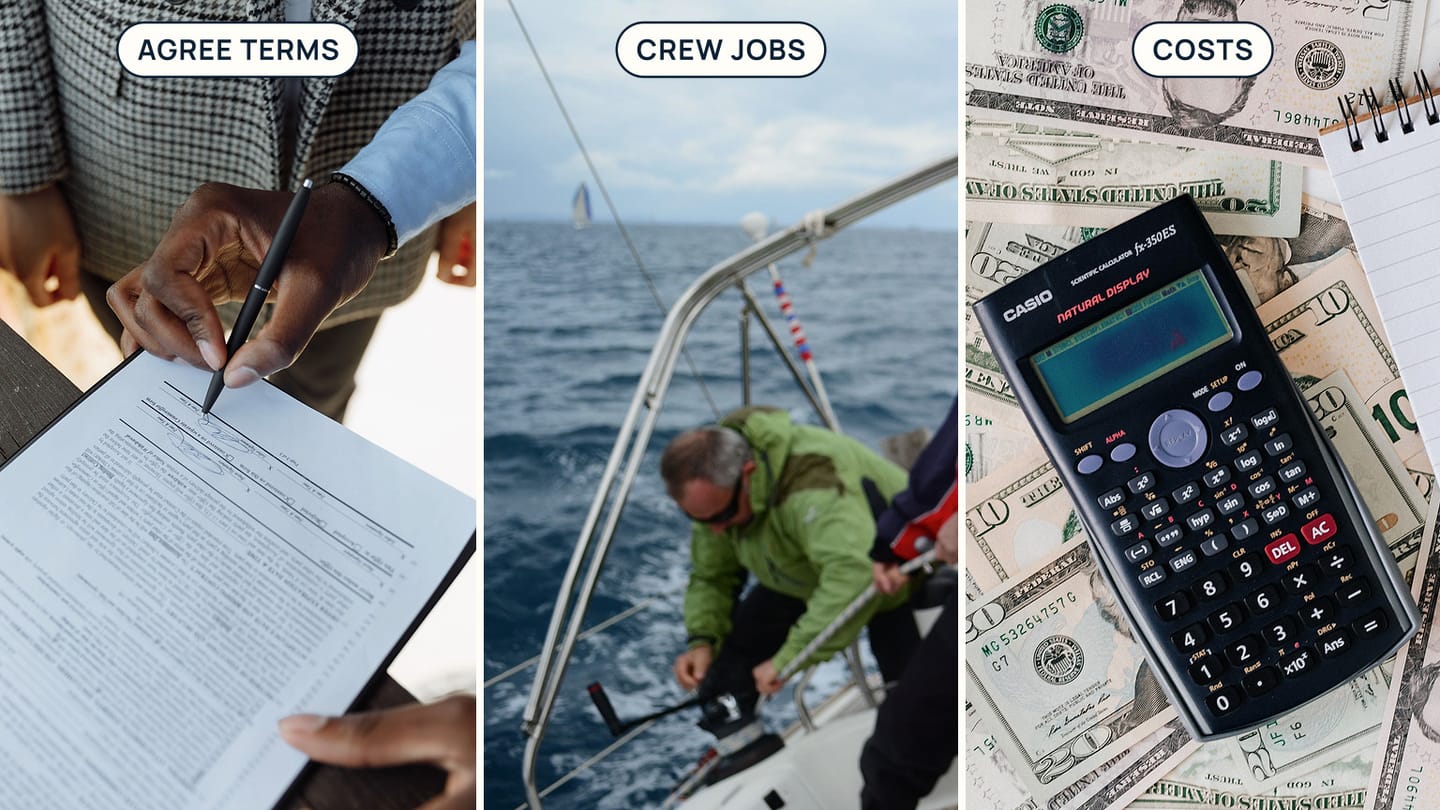
Write down who pays for travel, food, fuel, marina fees, and other daily expenses. Listings may describe no contribution, shared contribution, working passage, or a paid position. Ask what the words mean in this specific arrangement. A shared holiday is not automatically employment, and paid professional work can carry legal and qualification requirements. Verify current local rules.
Discuss daily life as carefully as sailing. Where will each person sleep? Who cooks and cleans? Are smoking, alcohol, pets, or guests involved? What are the privacy and communication expectations? On a small yacht, an ordinary mismatch becomes hard to escape.
For the first sail, agree on time, route, return plan, clothing, and cancellation contact. Ask for a crew brief before departure. The crew-safety briefing guide explains the topics you should expect without dictating the skipper's exact order. Repeat instructions when asked and speak up early when you do not understand.
Afterward, thank the skipper and record the boat, conditions, tasks, and one thing to practise. Decide whether you would sail together again before agreeing to a longer trip. A series of local outings builds skill and mutual trust more reliably than chasing impressive mileage on unfamiliar boats.
Finding crew work is partly networking, but it is not luck alone. Be visible, specific, honest, and dependable. Screen opportunities with the same care an owner should use to screen you. The right first boat is not the one going farthest. It is the one where the proposed job matches your ability and questions are welcome.
Use SailStarter to prepare for the small jobs a new crew member is likely to meet: boat directions, lines, lookout, wind, points of sail, and clear helm communication. Review the crew-briefing lesson before joining and keep the phone away when you are meant to watch or listen. Online preparation will not verify an unfamiliar skipper or make you passage-ready. It can, however, help you ask better questions and follow the first demonstration with less confusion. Let your experience grow one well-screened sail at a time.
Try it from the lesson
Can you spot the next move?
You sailed with this skipper last month and know the boat well. Does today still get a full briefing?
Why you can trust this guide
. We build each guide from public seamanship and safety sources, then teach the universal principle before any local difference.