Chart your course
The Crew Safety Briefing: What Every Skipper Covers Before Casting Off
Quick answer
The short version
At the dock, the skipper raises their voice, points to the safety locker, and makes one thing clear: anyone can ask a question or raise a concern. A crew safety briefing then follows a short order: the emergency plan, where everyone gathers, crew roles, gear locations, and how to call for help. Everyone knows where the lifejackets are, what to do if someone goes overboard, and where the engine and fuel shutoffs are. The skipper also names a backup who can steer, start or stop the engine, and use the radio. You repeat this briefing before every sail because crews, boats, and plans change. Safety knowledge should never live in one person’s memory.
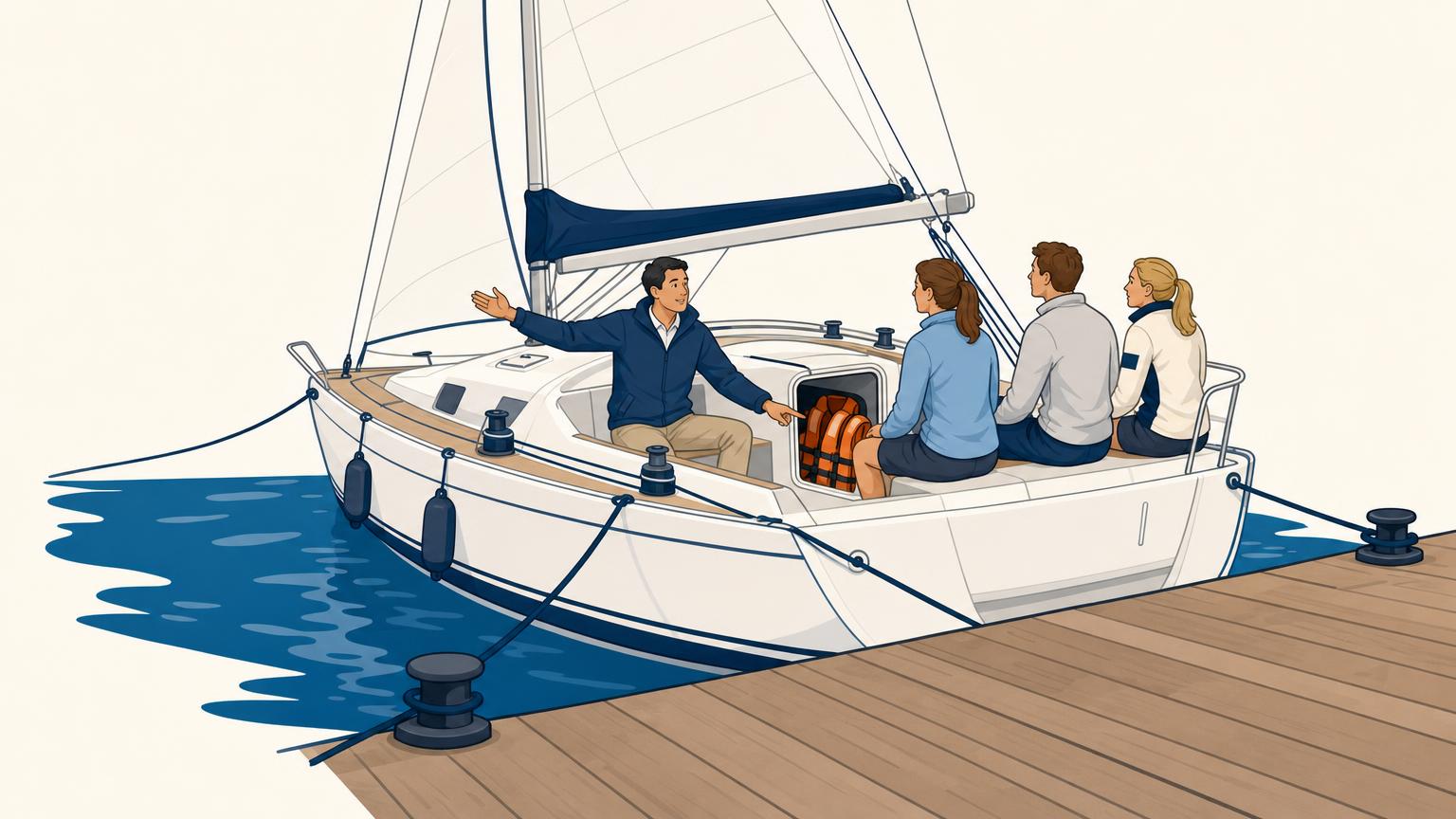
The dock lines are still tied. The skipper raises their voice just enough to reach everyone, then points toward the safety locker. The crew turns to look. This calm pause takes only a few minutes, but it gives everyone the same starting point before the boat moves.
A crew safety briefing is more than a checklist. It sets the tone: safety comes first, and you should speak up if something seems wrong or unclear. It also follows a short, familiar order. You hear the emergency plan, learn where key gear is kept, and review how to call for help. One crew member is named as the backup who can step in if the skipper cannot.
This article shows why that simple ritual belongs before every sail, even when the boat and crew feel familiar.
Set a Safety-First, Speak-Up Tone
This is how the crew safety briefing opens: with a calm welcome, not a warning. While the boat is still at the dock, the skipper speaks up so everyone can hear over the dock noise. They may point to the safety locker or radio as the crew gathers, before the lifejackets are even out.
The skipper thanks everyone for joining and explains the aim: enjoy the sail while keeping safety first. They also make one rule clear. If you have a question, notice a concern, or see that something differs from the plan, say so straight away.
Speaking up should feel expected, not merely permitted. That applies on every sail, to first-timers and long-time crew alike. Experience does not make silence useful.
This opening makes safety a shared responsibility. Safety knowledge does not belong to the skipper alone, and no crew member needs to wait for permission to raise a concern. A clear, reassuring tone helps everyone feel informed and can ease the skipper’s mind too.
Follow the Same Short Order
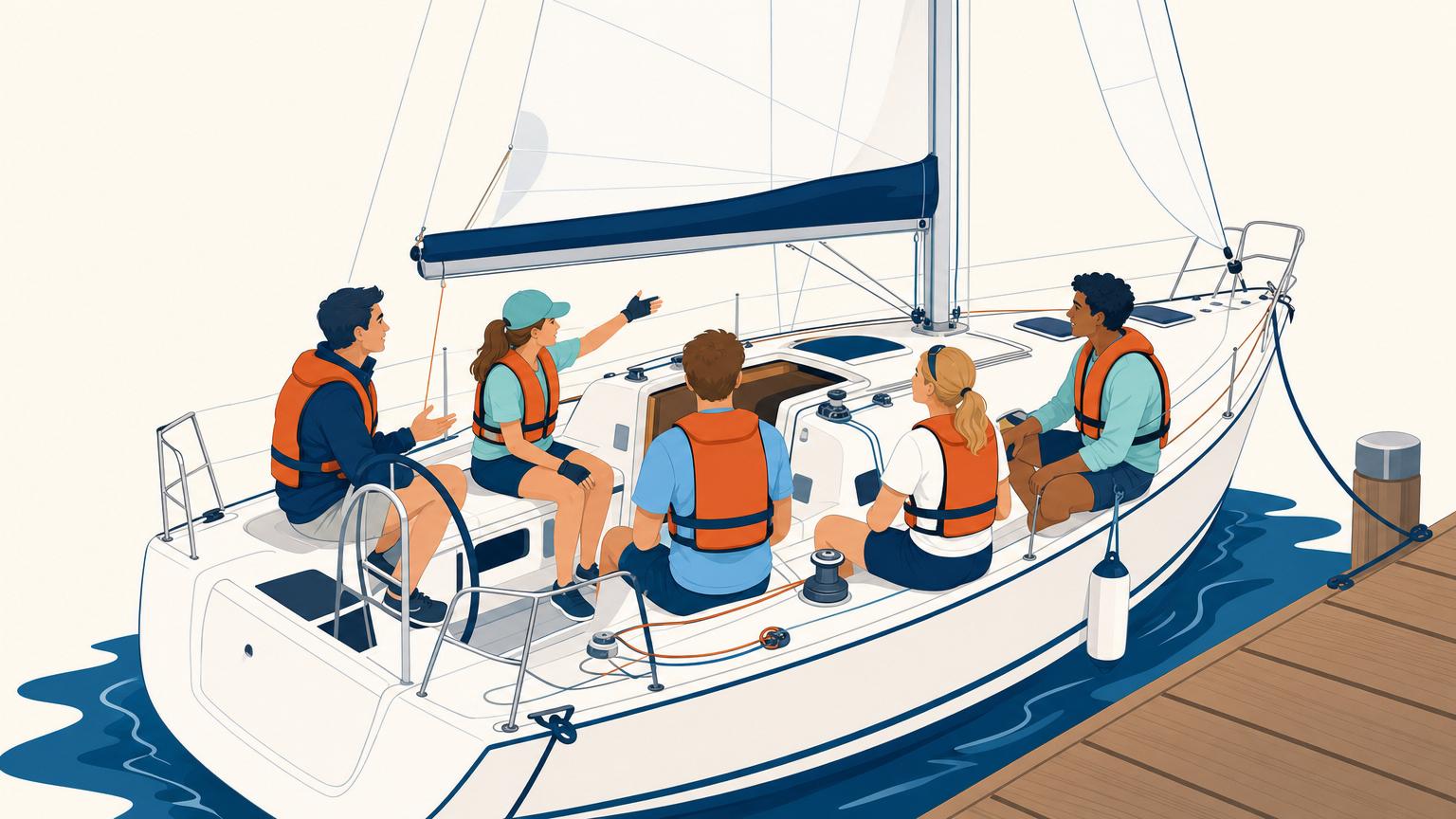
The dock lines are still secure. The skipper raises their voice, points across the boat, and the crew follows that pointing hand. Using the same order on every trip helps everyone anticipate what comes next.
A crew safety briefing has three clear beats:
-
Explain the emergency plan. Say how the alarm will be raised, where everyone should gather, and what each person will do. Name the backup now: this is the person who takes over if the skipper cannot.
-
Point out the gear and the one-line what-ifs. Show where the lifejackets and other essential safety equipment are. Briefly cover what to do if someone goes overboard, plus where the engine or fuel shutoff is. Keep these points short and practical.
-
Show how help is called. Point out the radio or other communication equipment. Explain how to make a routine or distress call, and name who will make it. At least one person besides the skipper should know the process, so the boat can keep functioning if one person is unavailable.
Name the Person Who Can Step In
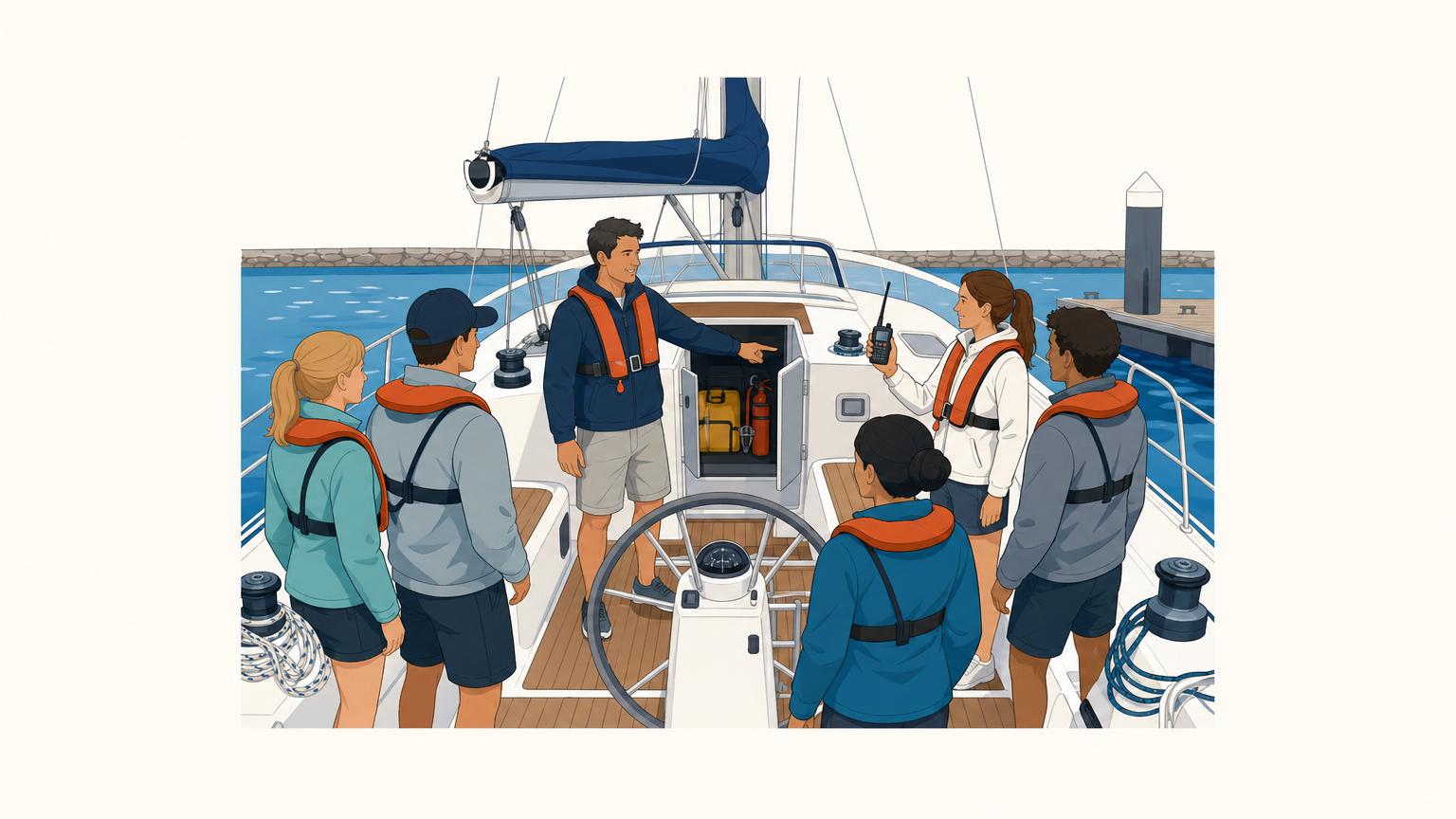
During the crew safety briefing, you name one person who can take over if the skipper becomes unavailable. You may hear this role called the first mate, second-in-command, or alternate skipper. Saying the person’s name removes a question nobody wants to be asking later and helps the boat keep functioning.
If you are named as the backup, you need to know the boat’s basic controls. You should be able to steer, start or stop the engine, and use the VHF radio to call for help.
The briefing identifies this role; it does not teach every skill on the spot. It gives the skipper a chance to find out what you already know and arrange one-to-one instruction before departure if needed. The aim is simple: essential knowledge does not stay with one person.
Repeat It Even with Familiar Crew
Make crew demonstrate the critical actions
Pointing at equipment is not the same as preparing someone to use it. Ask crew members to locate their own flotation, show how it closes, and identify the agreed assembly place. Have the person assigned to communications find the VHF, Channel 16 controls, DSC distress cover if fitted, and the boat's position information. The second-in-command should know how to reduce power or stop the boat and where the emergency plan is kept.
Keep demonstrations short and tied to likely roles. One person can show how to release a loaded sheet safely. Another can locate the fire extinguisher without removing or discharging it. Someone else can point to the first-aid kit, emergency steering method, bilge alarm response, or throwable flotation. On a small day sail, the list stays short. On a longer or unfamiliar passage, watch roles, medical information, communications, flooding, fire, and crew-overboard actions need more detail.
Use closed questions only for facts, such as “Who is second-in-command?” Use open prompts for understanding: “Show me how you would call attention to an emergency,” or “Where would everyone gather?” A nod can hide confusion. A brief demonstration exposes it while the boat is still secured.
Repeat when the people or plan change
Familiar crew still need a briefing because the boat, route, weather, equipment, and assigned roles may have changed. State what is different today. If a new person joins, repeat the relevant briefing for everyone rather than giving a rushed private version that creates two plans aboard.
Revisit the brief after a major change. A night leg, stronger weather, reduced visibility, illness, equipment failure, or altered watch system may change who does what. The original safety culture still applies: anyone can raise a concern when reality no longer matches the plan.
A complete briefing should leave every person able to answer four questions: How do I raise the alarm? Where do I go? What is my first action? Who takes charge if the skipper cannot? Pair this guide with making a Mayday call and the safety-equipment checklist so the spoken plan matches the equipment actually aboard.
Finish by asking for questions and waiting long enough to receive them. A rushed “everyone good?” invites silence. Ask instead whether any instruction, fitting, role, or medical concern is unclear. Resolve the issue at the berth when possible. The briefing has worked when crew can act and speak up, not when the skipper has reached the end of a memorized list.
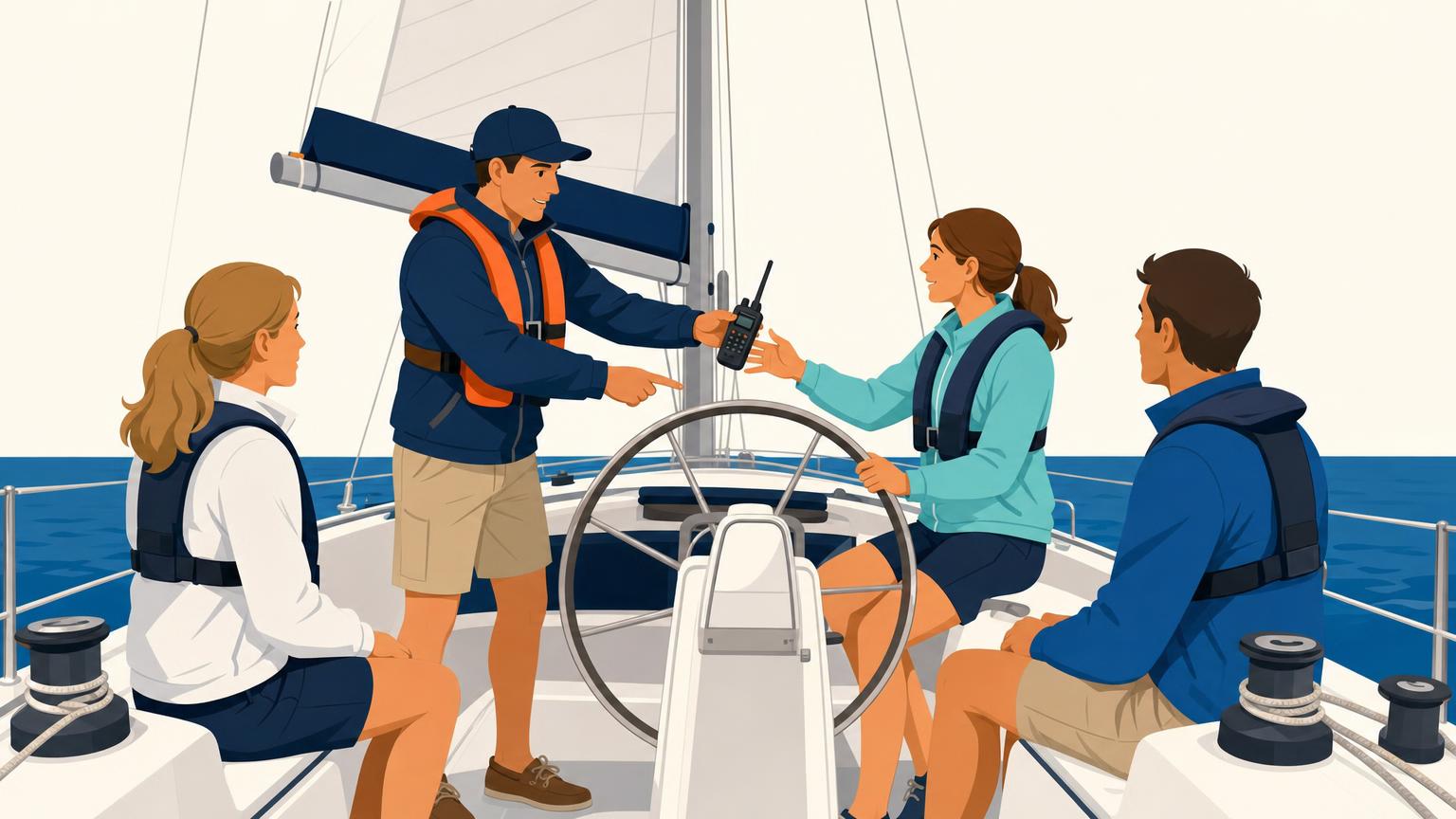
With the dock lines still tied, the skipper points toward the radio. A regular crew member pauses. They sailed this boat last season, but the details are no longer fresh.
That is why the crew safety briefing happens before every sail. Time may have passed since your last trip. You may be on a borrowed or chartered boat, or sailing with someone new or less experienced. The plan and crew roles may also be different today.
Keep it short: a few minutes covering a handful of points rather than a full lesson in each emergency skill.
The crew also confirms who is the backup skipper and what each person will do. Repeating the ritual refreshes memory, finds mistaken assumptions while you are still at the dock, and keeps essential safety knowledge shared by the crew rather than held by one person.
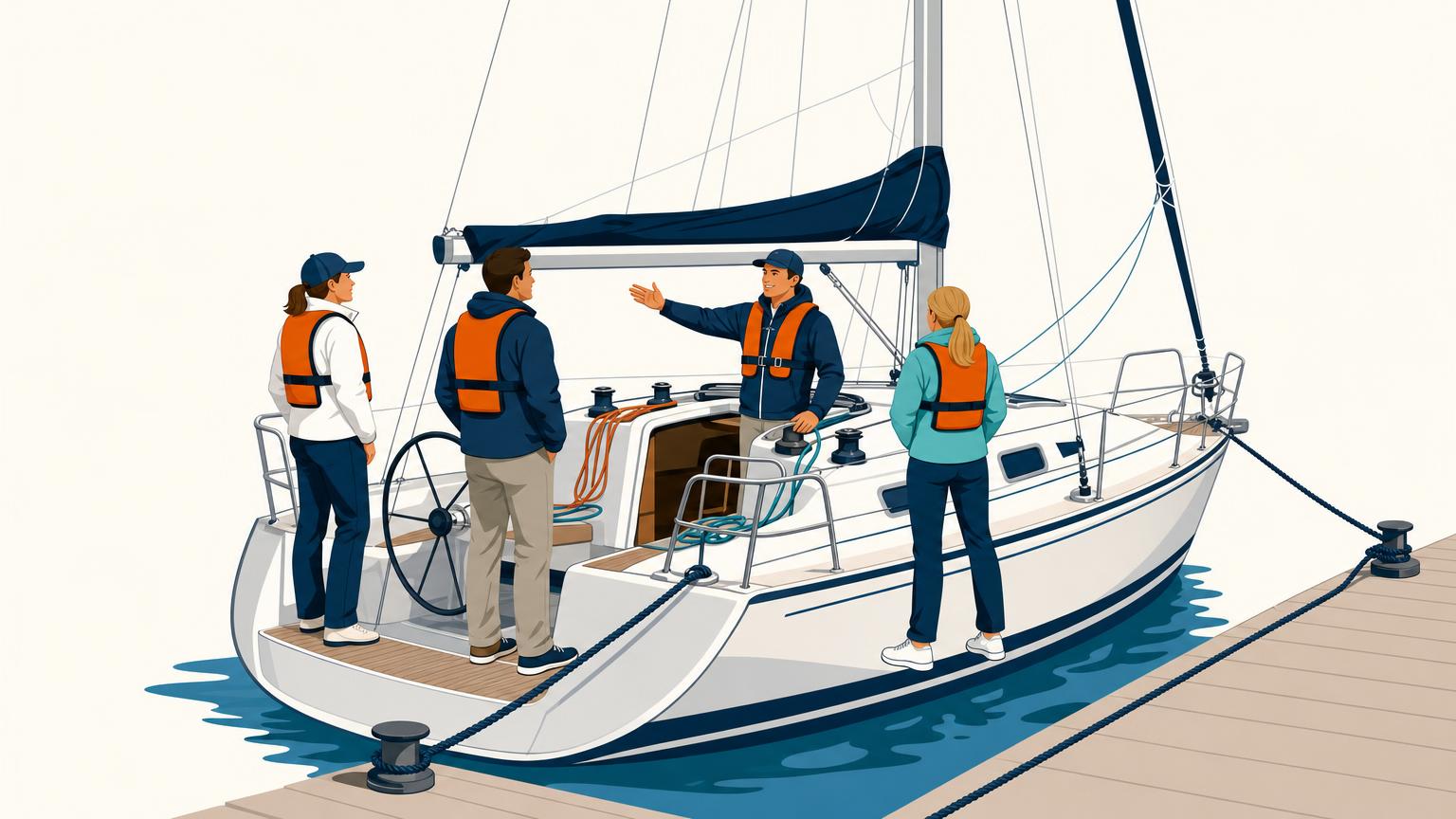
A crew safety briefing is a short ritual you repeat before each sail, not a lecture you give once. It gives everyone the same basic picture: how the crew will respond, where essential gear is kept, and how to call for help. It also makes questions and concerns part of normal teamwork. By naming a backup skipper: the person who can step in if the skipper becomes unavailable: you keep the boat’s safety knowledge from resting in one person’s memory. Familiar crew benefit too, because time away or a different boat can change what people remember. To practise this calm, repeatable approach, start with SailStarter’s short Crew Safety Briefing lesson, then continue with the beginner lesson on lifejackets.
Try it from the lesson
Can you spot the next move?
You sailed with this skipper last month and know the boat well. Does today still get a full briefing?
Why you can trust this guide
. We build each guide from public seamanship and safety sources, then teach the universal principle before any local difference.
- ussailing.org
- modernsailing.com
- americasboatingclub.org
- yachtingnz.org.nz
- boatingnz.co.nz
- spinsheet.com
- safe-skipper.com
- safe-skipper.com
- pitter-yachting.com
- coastalsafety.com
- info.sailingvirgins.com
- nauticalknowhow.mysailingcourse.com
- boattests101.com
- takemefishing.org
- aceboater.com
- navcen.uscg.gov
- en.wikipedia.org
- imorules.com
- maritimenz.govt.nz
- rya.org.uk
- rnzys.org.nz
- research.fiu.edu