Chart your course
How to Start Sailing as an Adult
Quick answer
The short version
The simplest way to start sailing as an adult is to book a short taster with a local club or training centre, then choose a practical beginner course on the kind of boat you want to sail. No previous experience or boat ownership is required. Dinghies give immediate feedback and may be sailed alone or with one or two other people. Keelboats and cruising yachts let you learn as part of a crew. Before booking, ask how much time is afloat, what equipment is supplied, and what practice is available afterward. Use online learning for vocabulary and theory, but build steering, sail handling, and judgment through supervised time on the water.
You do not need to decide your lifelong sailing goal before the first session. The first useful decision is smaller: do you want a quick experience, a structured course, or an introduction through a club? Each route can lead to the others. A taster shows whether you enjoy the boat and venue. A course creates a clear progression. A club can provide people, practice, and access to boats after training. Start with the option that gets you safely afloat without forcing a large purchase. You can refine the plan once you know what the activity feels like and which boat suits you.
Try Sailing Before You Commit
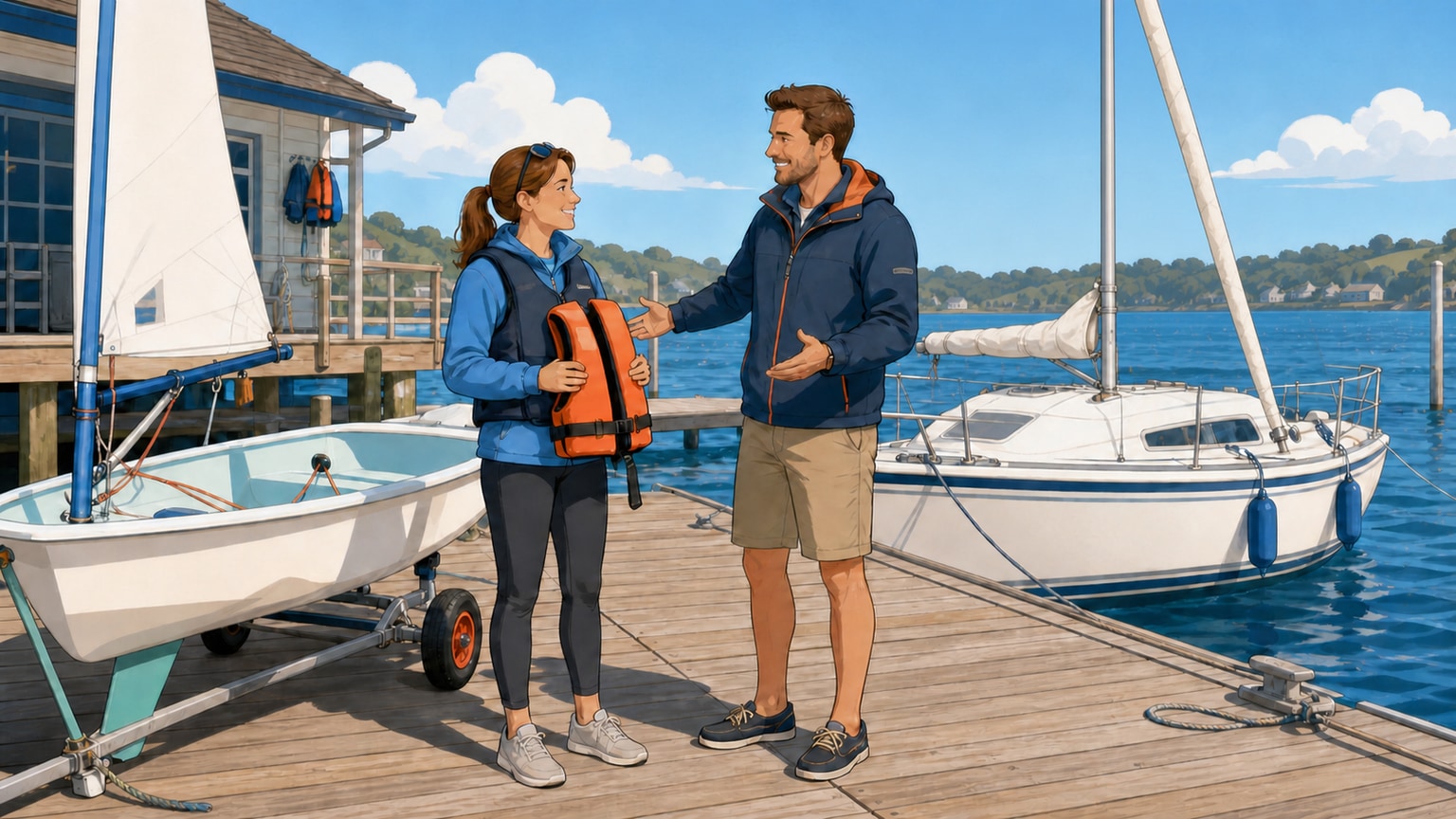
Look for a club open day, discover-sailing session, or beginner taster. These sessions are designed for people with no experience and usually put you with an instructor or experienced sailor. They are short enough to answer practical questions: Are you comfortable with the motion? Do you prefer a small responsive boat or a larger crewed boat? Does the venue feel welcoming? Can it support any mobility or access needs you have?
You normally do not need specialized clothing for a first try. Ask the provider, then bring secure footwear, layers, sun protection, and dry spare clothes. The venue commonly supplies the boat and lifejacket or buoyancy aid. Confirm what is included instead of buying equipment in advance.
During the session, take a turn steering or handling a simple line if invited. Active participation tells you more than a ride where someone else performs every task. Ask how many students normally share the teaching boat and how much time each person gets to act. Leave with the name of the next practical step and the real total cost of taking it.
Choose the Boat and Course Path
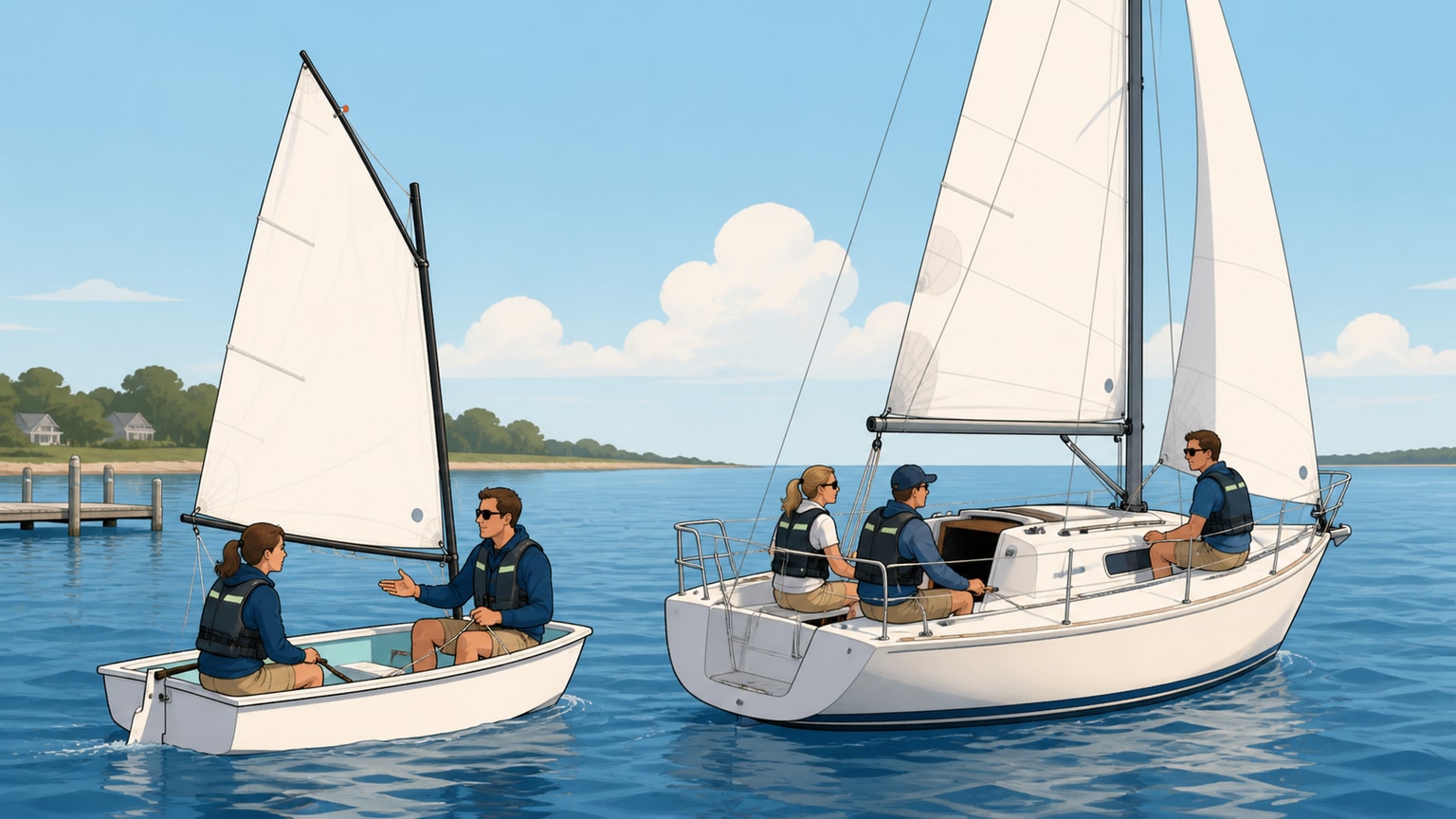
Dinghy sailing is a direct way to feel how wind, steering, sail trim, and body position work together. Small boats are light, launch from a beach or slipway, and respond quickly. Expect a more physical experience and ask whether capsize practice forms part of the local course.
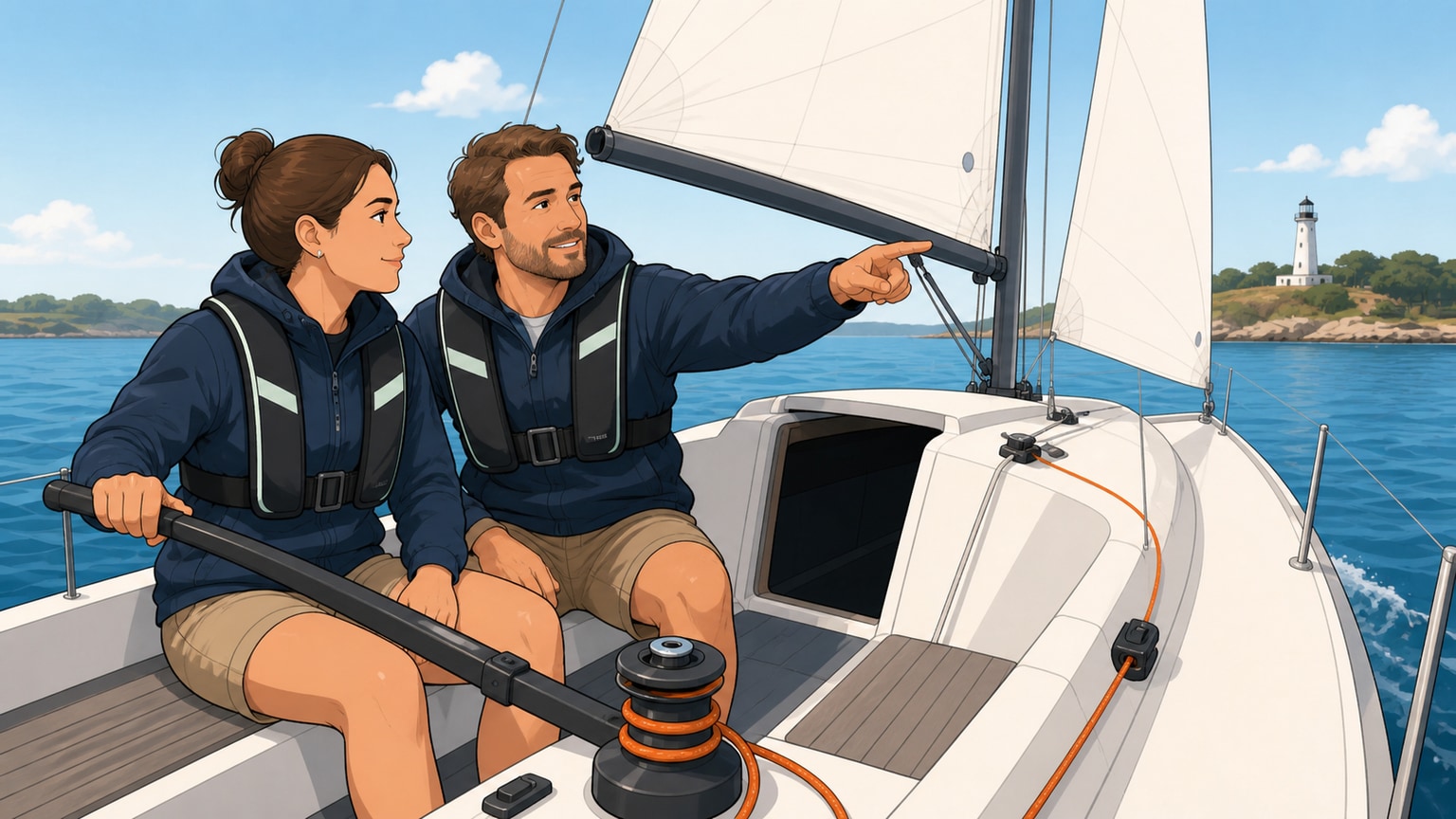
Keelboats and cruising yachts are larger and normally sailed by a crew. They suit adults interested in social day sailing, yacht crewing, or future cruising. Early tasks can include steering, working a sheet, keeping lookout, and helping leave or return to a dock. A fixed keel gives a different feel from a centreboard dinghy, but neither path is automatically better for every learner.
Choose a recognized local provider with qualified instructors and meaningful afloat time. Course names and credentials vary by region, so compare the actual skills and hours rather than selecting by a familiar acronym alone. Ask what happens when weather prevents a planned water session and what the course expects you to do afterward. A beginner program is much more useful when it leads to supervised practice, club boat access, or regular crew opportunities.
Turn the Course Into Regular Sailing
Choose a route that produces practice
Compare four entry routes: a short introductory sail, a structured beginner course, regular crewing, and access through a club or shared boat. The first tells you whether you enjoy the setting. A course gives a sequence and correction. Crewing adds repetition and shows how different skippers organize a boat. Club or shared access can create regular sailing without immediate ownership.
Ask each provider how much helm and sail-handling time you will receive, what boat type it uses, how group size affects practice, what happens in unsuitable weather, and what next step follows the course. A certificate or course completion does not by itself create independent judgment. You need repeated decisions on the water.
Pick the path that fits your likely sailing. Dinghy training gives direct feedback and active boat handling. A keelboat may better match cruising plans and can feel steadier to some beginners. Neither route closes the other. The useful choice is the one you can attend often and connect to real sailing afterward.
Build a simple first-season plan
Set a narrow goal for the first few sessions: prepare the boat, steer a course, trim on basic points of sail, tack and gybe with a crew, stop, and return safely. Add weather, reefing, anchoring, navigation, and emergency practice as the foundation becomes reliable. The learning-time guide explains why elapsed weeks matter less than repeatable skill.
Keep a short log. Note boat, conditions, role, manoeuvres, one correction, and the next practice target. Bring that target to the next skipper or instructor. “I want to practise stopping under sail from both tacks” produces better learning than “I need more experience.”
Avoid buying a boat to solve lack of access before you understand the work involved. Crew, rent, join a club, or use a school long enough to learn which size and sailing style fit you. If ownership remains the goal, the first 30 days as an owner shows the systems and maintenance baseline that begins after purchase.
Adults do not need childhood experience, unusual strength, or perfect confidence to start. They need suitable instruction, clear communication, manageable conditions, and enough regular practice to turn new terms into familiar actions.
Questions for the first provider
Ask what happens if wind is too light or strong, whether flotation is supplied, what clothing is expected, and whether the course has physical prerequisites. Confirm costs beyond tuition, such as membership, equipment, exam, or boat-use fees. Ask how a learner gets practice after the final class.
Notice how the provider answers safety and access questions. Clear explanations about supervision, weather limits, boat choice, and speaking up matter more than promises that everyone becomes confident quickly. Choose an environment where you can admit uncertainty and receive a specific correction.
If the first route does not fit, change it. A person who dislikes a crowded keelboat course may enjoy a smaller group, and someone who finds a dinghy too physical may prefer a stable keelboat introduction. The goal is regular, well-supported time afloat.
A course introduces skills; repetition makes them usable. Before you book, ask the club or centre how graduates keep sailing. Some clubs have coached practice, social sailing, shared boats, or owners seeking crew. You can join a crew without owning a boat, and you can learn a great deal by returning to the same boat and team regularly.
Prepare between sessions with a short list rather than an entire nautical dictionary. Learn boat directions, the jobs of a halyard and sheet, and the difference between windward and leeward. Review the maneuver you practised last time. Online lessons and visual diagrams are useful here because they reduce the mental load when an instructor gives a practical call. They do not replace the action itself.
Keep a simple log of dates, boat type, conditions, and jobs tried. It helps you ask for the next suitable task and compare different experiences. Include one question for the next session and one action you want to repeat. You are building familiarity, not racing toward a title.
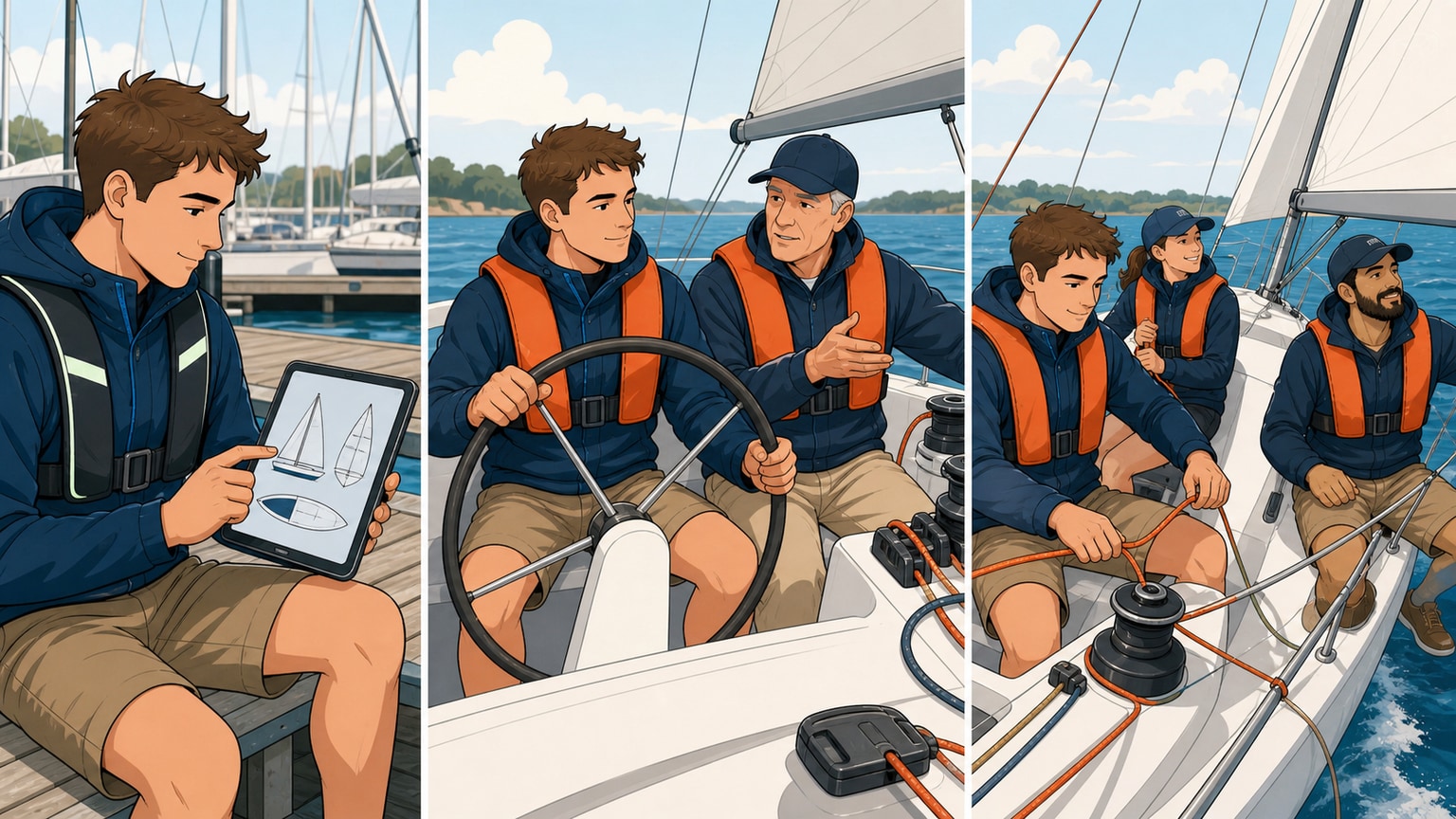
Start with SailStarter's opening lesson before your taster or course. It introduces the basic layout and language through short visual explanations, then checks what you remember. That preparation can make your first practical session less crowded with new words, leaving more attention for wind, movement, and the instructor's demonstration. Continue to learn locally with qualified people and verify current rules and course requirements where you sail. Revisit the lesson after your first outing, when each part now connects to something you saw. You do not need a boat, an expert friend, or childhood experience. You need one realistic first session and a practical route back onto the water after it. Write down the provider's suggested next step, its full cost, and the route to regular practice before the details fade. Then book only the next practical stage that fits your time and budget. Keep that plan simple enough to repeat; consistency matters more than speed.
Try it from the lesson
Can you spot the next move?
You turn to face the stern. A crewmate points at your right hand. Which side of the boat is that?
Why you can trust this guide
. We build each guide from public seamanship and safety sources, then teach the universal principle before any local difference.