Chart your course
How to Join a Sailboat Racing Crew
Quick answer
The short version
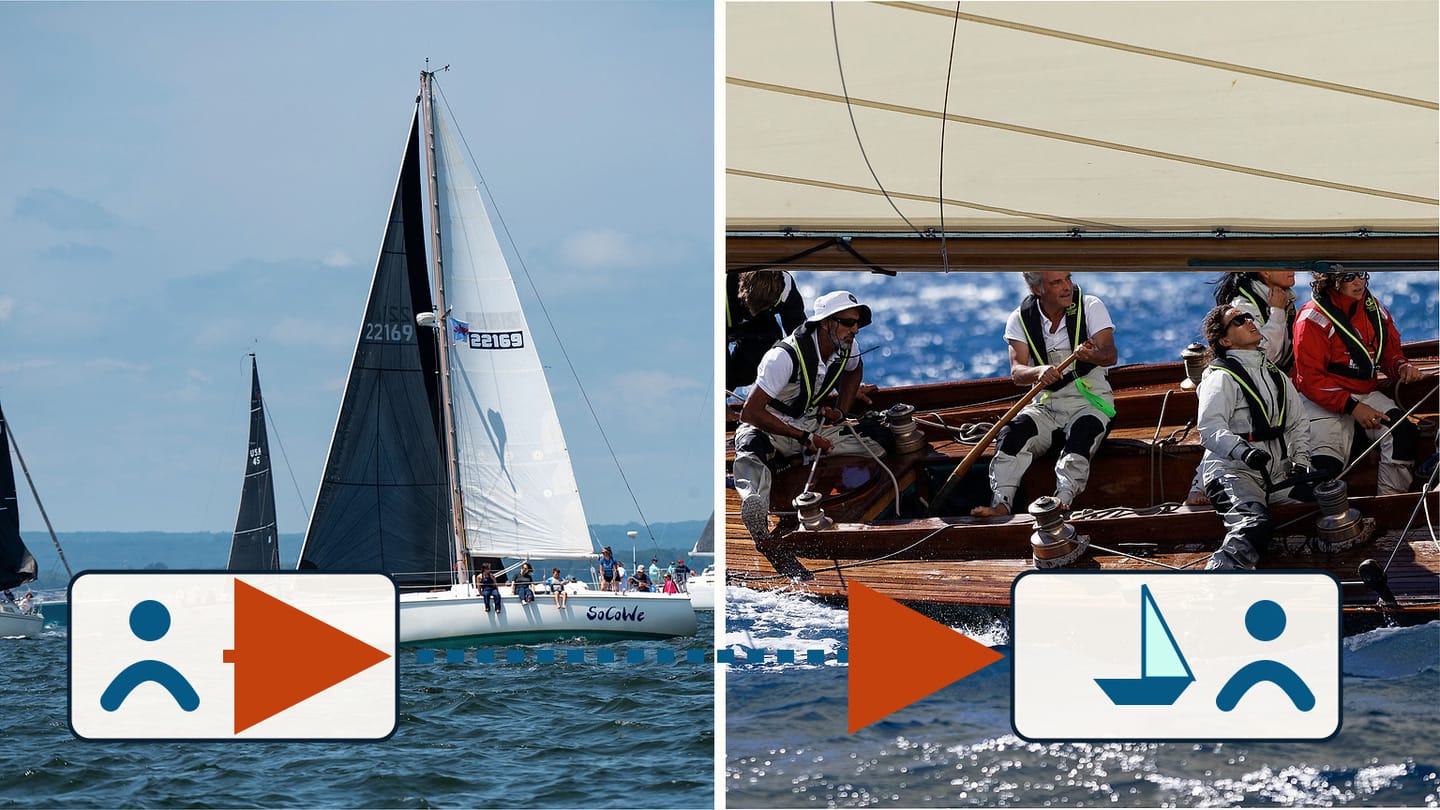
The simplest way to join a sailboat racing crew is to contact a local club or race organiser, say that you are new, and ask which fleet welcomes beginners. Give your availability, sailing experience, and practical limits honestly. Offer to help with a defined entry-level job, arrive early, bring the clothing and personal safety equipment requested, and stay for packing up. A skipper needs a dependable learner more than an impressive story.
Clubs, schools, owners, race organisers, and crew-listing services can all create introductions. A listing service does not verify the skipper, boat, or equipment for you. Before sailing on an unfamiliar boat, discuss the duties, expected conditions, safety gear, costs, communications, and how you can leave if the arrangement is unsuitable. Leave the plan with someone ashore. Then learn the event documents and the skipper's briefing for that race. Sailboat racing rules for beginners will help with the vocabulary.
Find a welcoming fleet
Begin close to home because repeated attendance is more useful than a single distant race. Search club calendars for novice nights, casual weekday series, open days, training races, and crew boards. Contact the race office or fleet captain rather than sending the same vague message to many boat owners. Ask when crews normally meet and whether a beginner can watch from shore before committing.
Your first note can be short: “I am available most Thursday evenings, have three supervised keelboat sails, and am comfortable following instructions. I would like to learn a basic crew role and can arrive early.” Add anything that affects placement, such as limited mobility, no racing experience, or the need to borrow a lifejacket. Do not claim “experienced crew” because you know knots from a course.
Ask what kind of racing the fleet does. Small one-design boats, large handicap fleets, and casual club racing can create very different cockpit jobs. Find out how physical the proposed position is, whether the boat races in exposed water, and what training happens before the start. A welcoming programme should be able to explain where a new person begins.
Meet the skipper in a public club setting and look at the boat before the first race where possible. Discuss who makes decisions, how the crew communicates, the expected return time, and what happens if conditions or the crew change. If the answers feel evasive or the arrangement exceeds your comfort, decline. Another introduction will come.
Verify current local rules, club requirements, and event terms. Racing does not remove the need for ordinary collision avoidance outside the scope and times set by the applicable racing rules.
Keep a small contact list rather than waiting for one owner. Record the fleet contact, normal race night, beginner process, and date you last checked. When a skipper says the boat is full, ask whether the club has a substitute list. Race crews change with work, weather, and boat maintenance, so a calm follow-up before the next series is more effective than daily messages. Never arrive expecting to board without a confirmed place.

Offer a useful first role
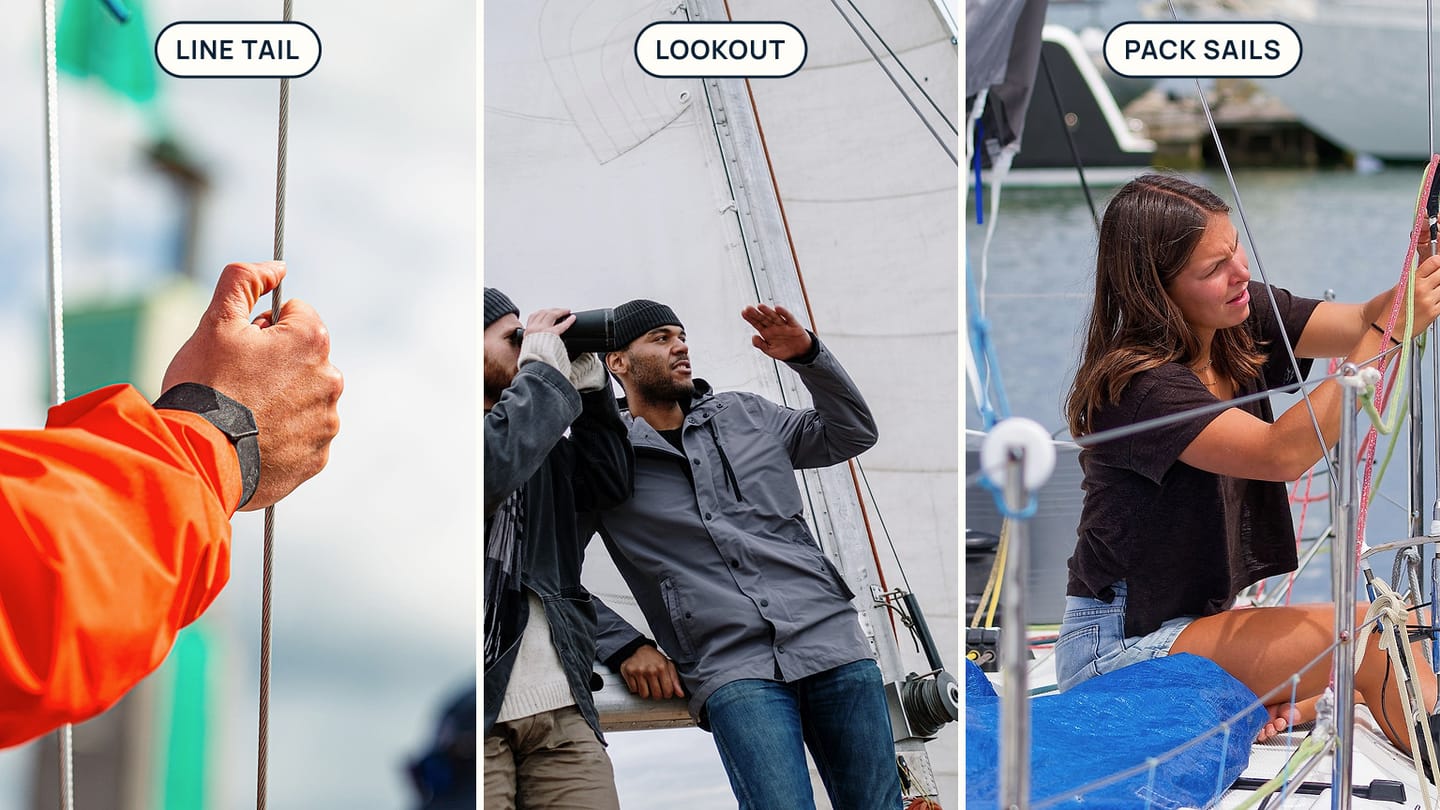
Ask for one job with a clear start and finish. A beginner may tail a line while an experienced crew member controls it, keep lookout and report traffic, help move equipment when directed, or pack sails after racing. The exact assignment depends on the boat. Do not assume a position from an online diagram, since line layouts and crew systems differ.
Learn where to sit or stand before the boat becomes busy. Ask which lines you may touch, where hands and feet must stay clear, and which command means stop. Repeat your assignment back in your own words. If you lose track, say so early. Silent guessing can turn a small misunderstanding into a tangled line or missed manoeuvre.
Line tailing is a good example of useful support. The controlling crew member manages load at the winch or cleat; the tailer keeps slack organised and follows instructions. Before starting, ask how much tension to maintain and where excess line should lie. Never wrap a loaded line around a hand. The skipper or position leader should demonstrate the boat's method.
Lookout work also needs precision. Report the object, its direction relative to the boat, and whether the situation appears to be changing. Avoid shouting conclusions you cannot support. A clear observation gives the skipper information while leaving the decision with the responsible person.
Treat shore work as part of the role. Removing covers, carrying sails, checking assigned gear, washing down, and packing the boat teach its layout. They also give the crew time to explain what happened without the pressure of a start sequence.
Some entry roles are unsuitable for a particular body, experience level, or day. Tell the skipper about an injury, restricted movement, or task you cannot perform before the boat leaves. Ask for another useful position rather than pushing through silently. The crew can often change lookout, timing, shore, or light line-handling duties when it has time to plan. Hiding a limit until the start removes those choices.
Prepare for race day
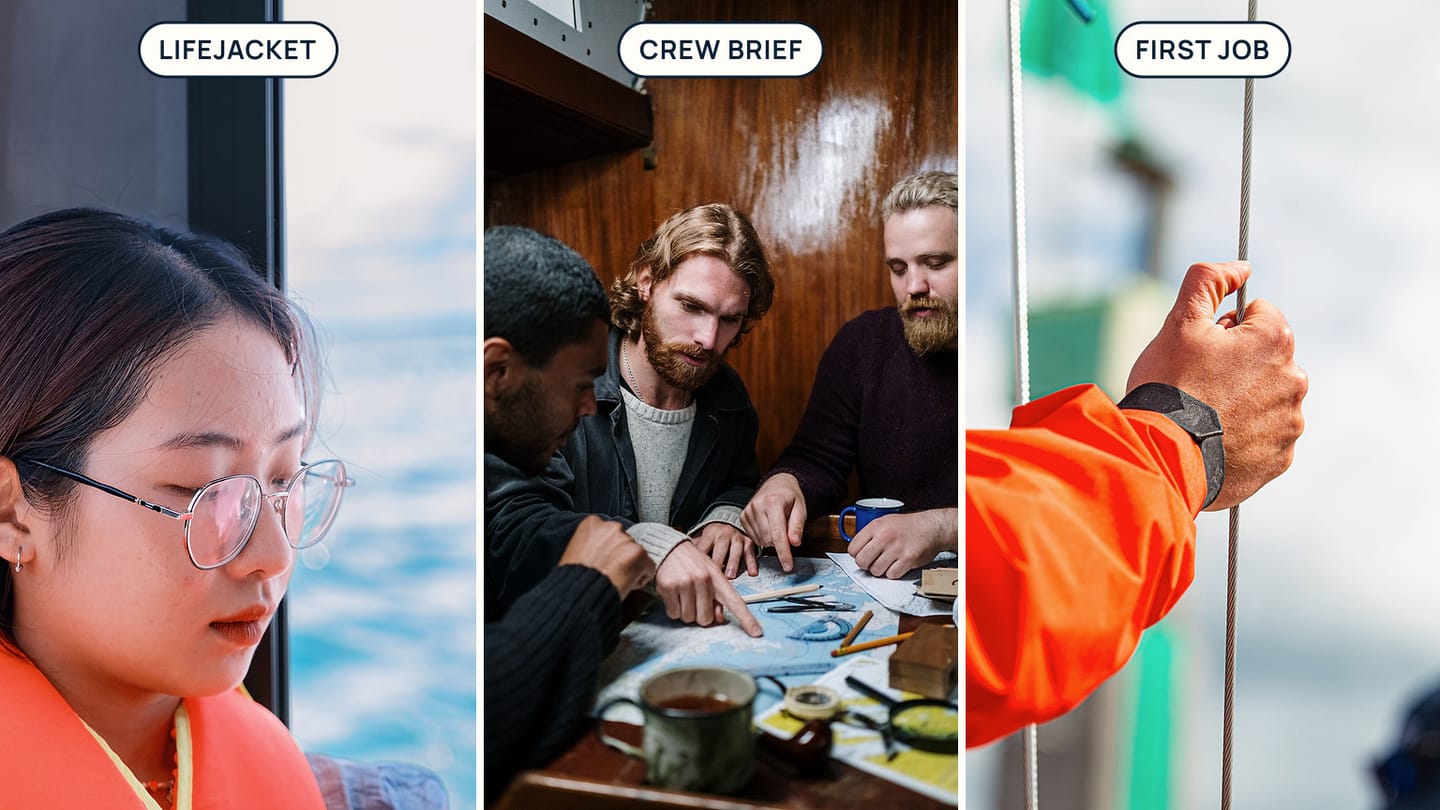
Confirm the meeting time, expected finish, clothing, food, water, and personal safety equipment the day before. Pack for the actual forecast and the boat's storage limits. Secure glasses and hats, protect anything that should stay dry, and avoid loose straps that can catch on deck fittings. Ask before bringing a bulky bag.
Read the notice of race and sailing instructions at the level the skipper requests. These event documents can define the schedule, course information, communication, and changes that apply to that event. Class rules and national prescriptions may also matter. You do not need to interpret everything alone, but you should know where the current documents are and attend the briefing.
Arrive before the stated crew time. Racing preparation has dependencies: a late person can delay weighing, sail selection, rigging, and the trip to the start area. Tell the skipper promptly if travel trouble makes you late. Do not appear at departure time expecting a long personal lesson.
During the safety briefing, locate personal flotation equipment, emergency gear relevant to your role, and a safe place during manoeuvres. Learn how the skipper calls a tack or gybe and how the crew acknowledges. Ask about the first job before leaving the dock. The common sailing commands guide explains why wording must still be confirmed boat by boat.
Conditions can cancel racing or change your position. Accept the skipper's decision without lobbying for a more exciting outing. If you are moved to another role, repeat the new instructions and name any task you have never done.
Learn the return routine as carefully as the start. The crew may approach the dock tired, with sails to lower and lines to prepare. Ask where your racing position ends and your harbour assignment begins. Put away personal items before they become obstacles, then remain available until the skipper releases you. Many first impressions are made after the finish, when the boat still needs coordinated work.
Be the crew invited back
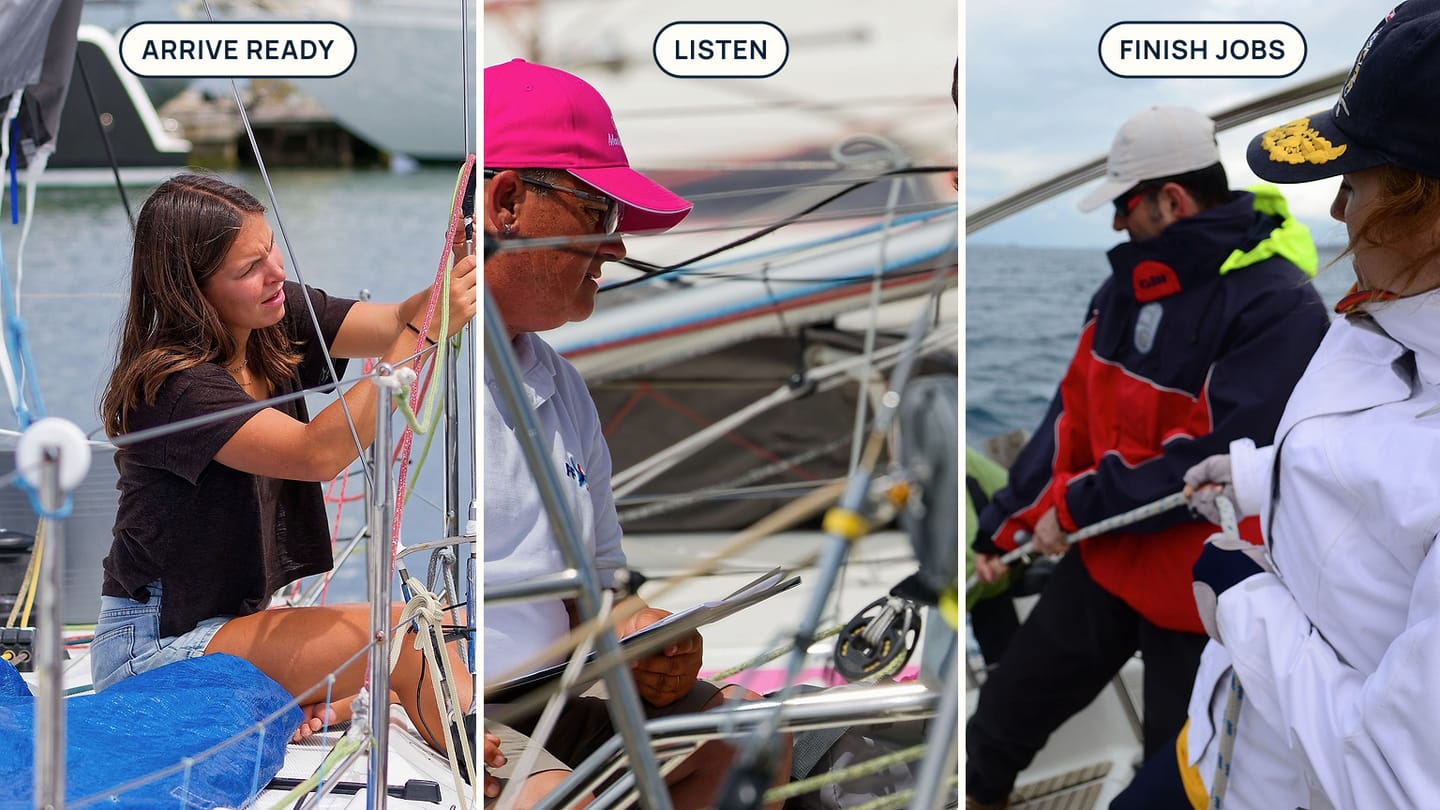
Reliability begins before sailing. Answer messages, give notice when unavailable, and arrive ready for the agreed work. On board, listen through the full instruction before acting. Racing speech can be short because timing matters; save broad questions for a quieter leg or the dock.
Own mistakes without a speech. Say what happened, make the area safe, and wait for the next direction. Afterward, ask one specific question: “Where should that sheet have been before the tack?” A precise question is easier to answer than “How did I do?”
Keep awareness beyond your assigned line. Stay out of another person's working space, look before crossing the cockpit, and report anything unexpected. Do not abandon your job to help elsewhere unless asked. A well-intended extra pair of hands can obstruct a rehearsed sequence.
Finish the day with the boat. Help lower, fold, rinse, carry, and stow as directed. Return borrowed equipment and ask when results or the next crew call will be posted. Thank the skipper and the person who coached your position. If you want another race, say so plainly and give your next available dates.
Write a private note after leaving: boat, position, calls heard, task sequence, one mistake, and one point to practise. Over several races, ask to repeat the same role until it becomes dependable before seeking a busier position. Crews value someone who improves the shared routine.
Use SailStarter to prepare the basic language before you contact a fleet. Review your first day as sailing crew, then write a truthful three-sentence introduction and one question about beginner roles. The app can make the briefing easier to follow; regular attendance, safe coaching, and real work aboard are what make you part of a racing crew.
Try it from the lesson
Can you spot the next move?
You turn to face the stern. A crewmate points at your right hand. Which side of the boat is that?
Why you can trust this guide
. We build each guide from public seamanship and safety sources, then teach the universal principle before any local difference.