Chart your course
Abandoning a Sailboat: When and How
Quick answer
The short version
Abandoning a sailboat is not the automatic next step after a serious failure. It is a change from one survival platform to another, and the second platform is usually smaller, wetter, harder to see, and less capable. The decision turns only when remaining aboard has become the greater danger.
That sounds tidy ashore. At sea, a crew may be pumping, fighting a fire, helping an injured person, speaking to rescuers, and trying to launch a raft at the same time. Preparation matters because it separates those jobs before fear compresses them into one. The skipper still makes the decision from the casualty in front of them, the boat’s behaviour, the weather, and the equipment actually fitted.
This is a decision framework, not a substitute for hands-on sea-survival training. The launch and boarding sequence for any raft must come from its maker and the yacht’s installation plan. Local carriage and distress rules also vary, so confirm them before departure.
Why is the yacht usually the first survival craft?
Even a disabled yacht may still provide buoyancy, a deck above the water, protection from wind and spray, a fixed VHF aerial, electrical power, pumps, tools, food, water, and a large radar and visual target. A raft gives a crew flotation after the yacht becomes untenable, but it gives up much of that capability. Moving too soon can turn a controlled casualty into cold-water exposure, a failed boarding, a separated crew, or a raft drifting away from the position given to rescuers.
“Stay with the boat” is therefore a useful starting bias, not an absolute rule. Maritime New Zealand advises a person in cold water to get onto an overturned boat or wreckage if possible because it reduces immersion and makes them easier to spot. That principle helps explain why an afloat yacht has survival value. It does not mean remaining beside a burning yacht, a vessel about to founder, or wreckage that creates an immediate hazard.
While the yacht remains habitable, work the casualty. Find and control the source of flooding if that can be done safely. Isolate fuel or electricity where the boat’s emergency plan calls for it. Use the correct fire-fighting response. Reduce sail or prepare anchors if loss of propulsion or steering threatens a lee shore. Assign one person to communications and one to keep a continuous count of everyone aboard. A crew that has already divided these roles can keep evaluating the boat instead of treating the first frightening symptom as the final verdict.
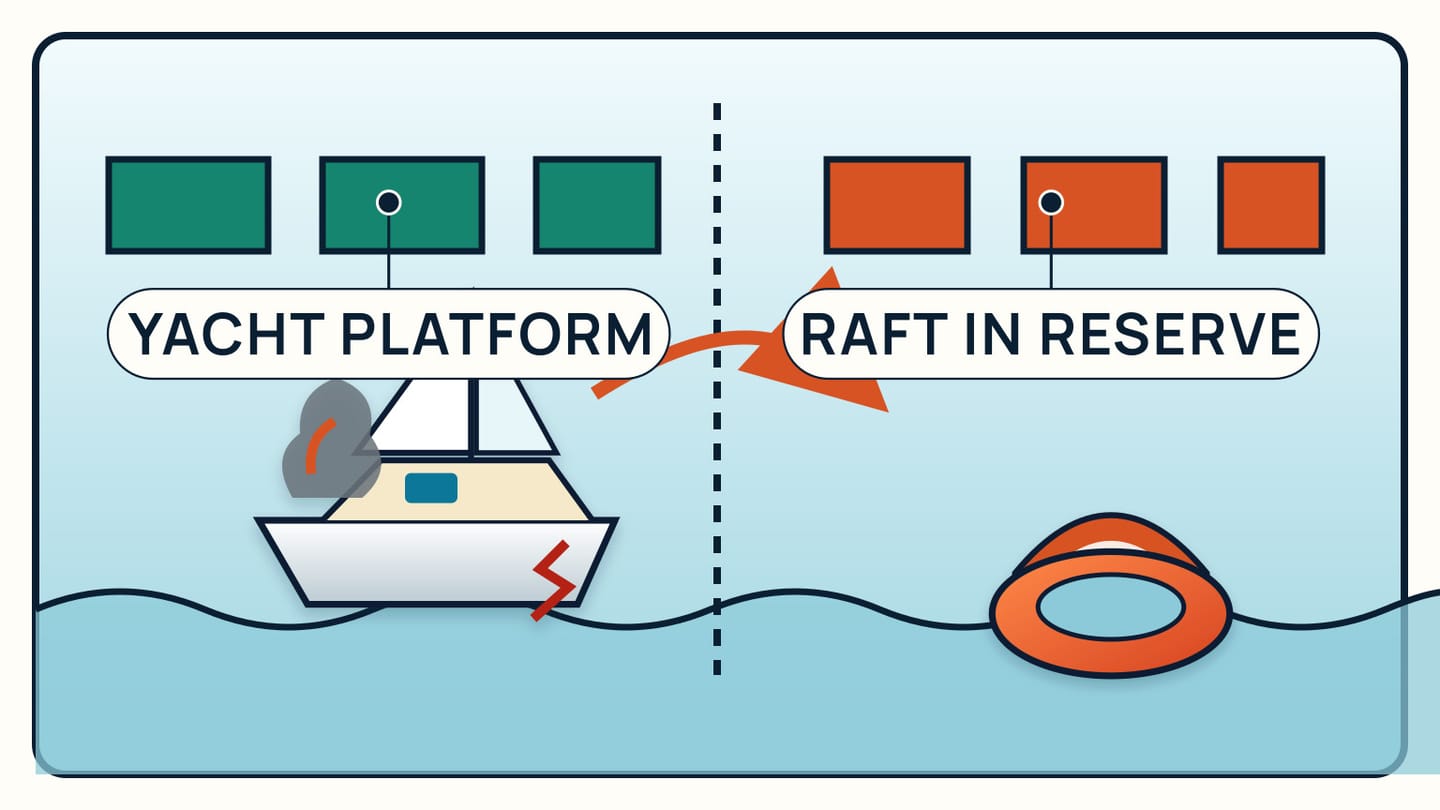
The comparison is practical: what useful protection does the yacht still provide, and which of those protections is being lost? A stable water level with effective pumps is different from water rising despite every available pump. Smoke confined and diminishing is different from heat or toxic smoke cutting off the deck, radio, and raft. A boat with a verified position and two-way contact buys options. A raft should be readied before those options disappear, but readiness is not yet the abandon order.
What changes the decision from stay to leave?
There is no universal heel angle, water depth, or countdown that decides this for every yacht. The crew needs trends. Record whether water is rising, steady, or falling. Watch whether smoke, heat, or fire is spreading. Notice whether the structure is deforming, stability is deteriorating, or access to the muster and launch point is closing. Recheck after each attempt to control the casualty. One observation is a snapshot; two or three observations show which way the emergency is moving.
Immediate threats can shorten that process. An uncontrolled fire may make distance from the hull essential. Progressive sinking can remove the deck and entangle people or the raft. Toxic smoke, dangerous cargo, breaking structure, or a position in surf may make the yacht’s remaining buoyancy irrelevant. Conversely, rough water, darkness, a damaged raft container, or an obstructed launch area may make transfer itself hazardous. The question is not simply “Is the yacht badly damaged?” It is “Which available place now offers this whole crew the better chance of surviving until rescue?”
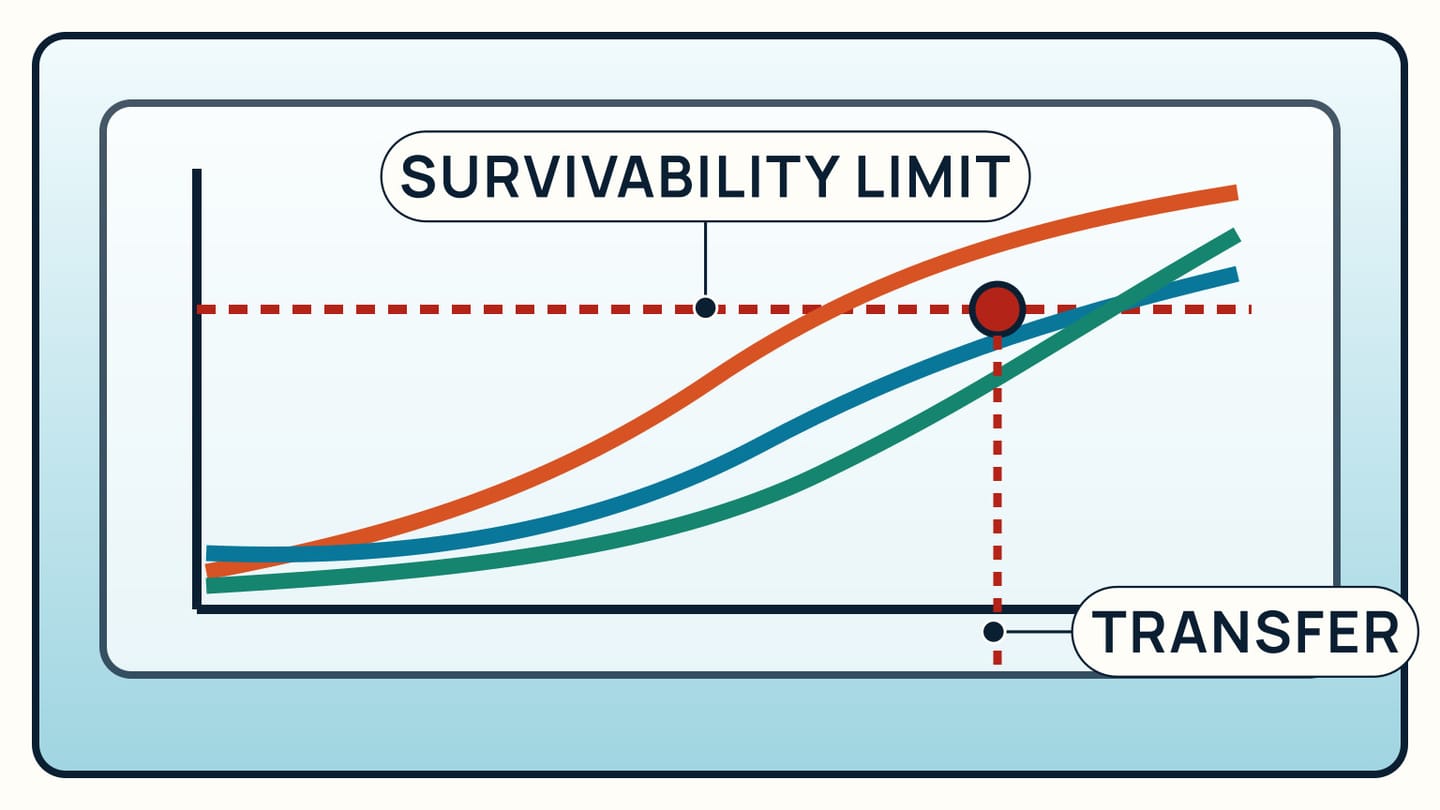
Make that judgment out loud. The person in command should say what has changed, what the crew is preparing, and what specific worsening condition would trigger departure. For example: the pumps are holding for now; everyone dresses and musters; the raft is made ready; departure follows if the water resumes rising or the battery and radio are about to be lost. This creates a shared trigger without pretending the future is certain. If the trigger arrives, the crew acts on a decision already understood rather than debating it at the launch point.
Preparation should not consume the people needed to save the yacht. Dress warmly and put lifejackets on early, before movement becomes difficult. Move the ditch bag, waterproof handheld VHF, registered beacon, first-aid kit, water, and other voyage-specific survival equipment to the muster area while access remains safe. Keep the raft secured until the installed procedure calls for deployment. Personal luggage is not part of this transfer.
What should the distress message establish?
Do not wait for the abandon order to call for help. A grave and imminent danger calls for a Mayday while the yacht’s higher aerial, power supply, position source, and calmer working platform are still available. If the radio and installation support Digital Selective Calling, send the distress alert as trained, then make the voice call on the designated distress channel. Give the position early, followed by the nature of the distress, the assistance needed, the number of people aboard, injuries, and useful details about the vessel and survival craft.
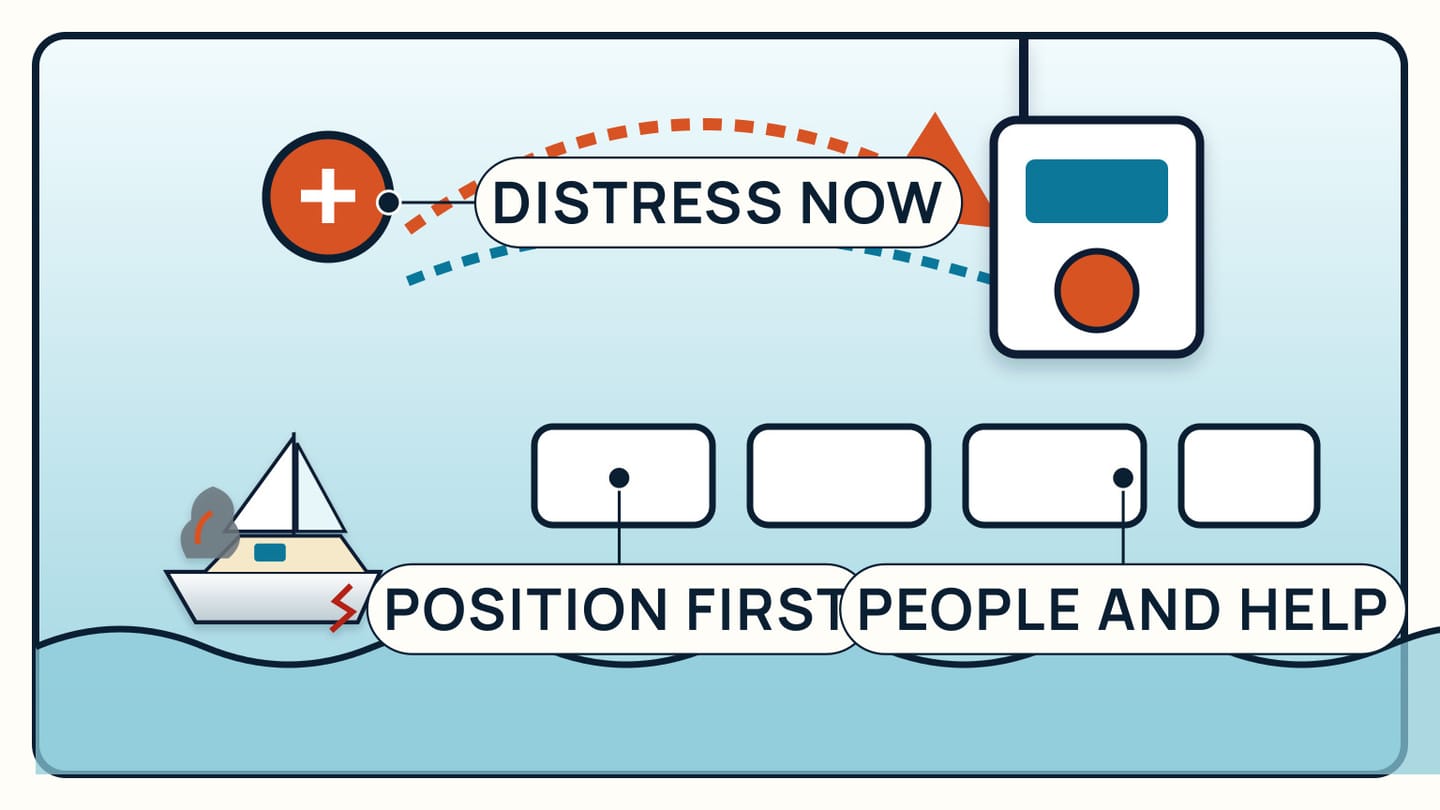
Tell the coordinating station when the situation changes. “Taking on water, pumps holding” and “abandoning now into one orange raft” describe different search problems. Report the raft colour, number aboard, beacon status, and whether anyone is injured. If time and safety allow, confirm that the yacht is being abandoned. Keep the handheld radio with a named person rather than tossing it into a pile of loose gear.
Activate an EPIRB or other carried beacon according to its instructions and the situation. A beacon is not a replacement for a voice exchange: its alert and position help start and sustain the search, while radio lets the crew describe changes and receive rescue directions. Nor is radio a reason to delay the beacon until the fixed set fails. The equipment works best as overlapping paths. The Mayday call guide gives the spoken sequence in a form worth rehearsing beside the actual radio.
After transmitting, listen. A rescue coordination centre may ask for the yacht’s description, intentions, endurance, medical details, or another position. Conserve the handheld battery, but do not switch it off blindly after one call. Follow the instructions received and keep the radio and beacon attached to people or the raft so a wave cannot remove the crew’s link to the search.
How do you transfer people and equipment into the raft?
The raft’s manual and its stowage arrangement control the launch. Before an emergency, the people who routinely sail aboard should locate the secured end of the painter, learn what releases the container, understand what inflates the raft, identify the intended boarding side, and know what must never be cut prematurely. A generic article cannot safely resolve a hydrostatic release, a valise on a shelf, and a canister in a cradle into one launch recipe.
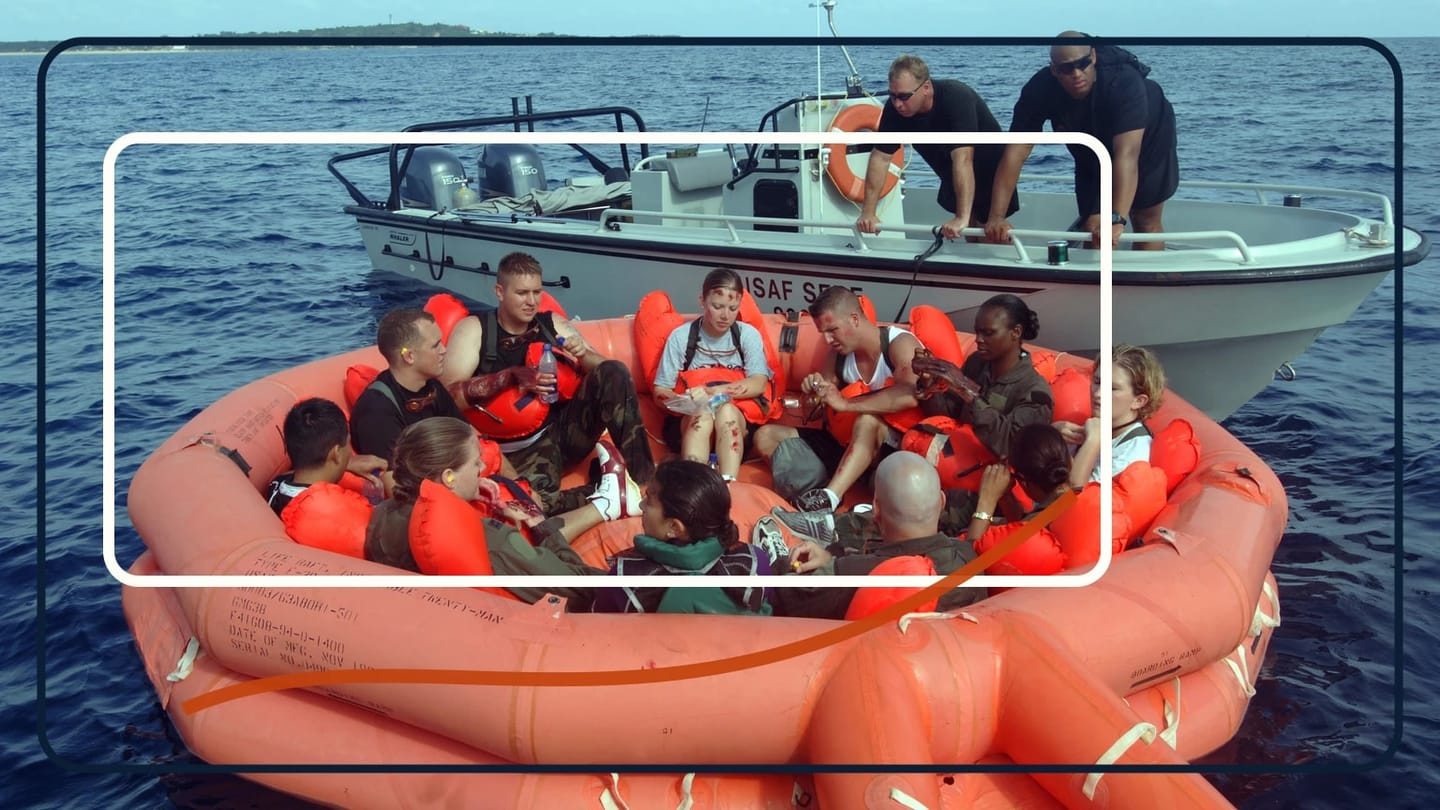
The common sequence is about control. Muster in warm layers, waterproofs, and correctly fastened lifejackets. Count people by name. Assign someone to the raft, someone to communications and beacon, someone to the ditch bag and survival equipment, and someone to assist the least mobile crew member. The Maritime and Coastguard Agency’s drill guidance calls for the raft to be prepared with its painter secured and recommends dry boarding when possible. A person who boards directly from the yacht avoids the cold shock, heat loss, and physical difficulty of climbing from the sea.
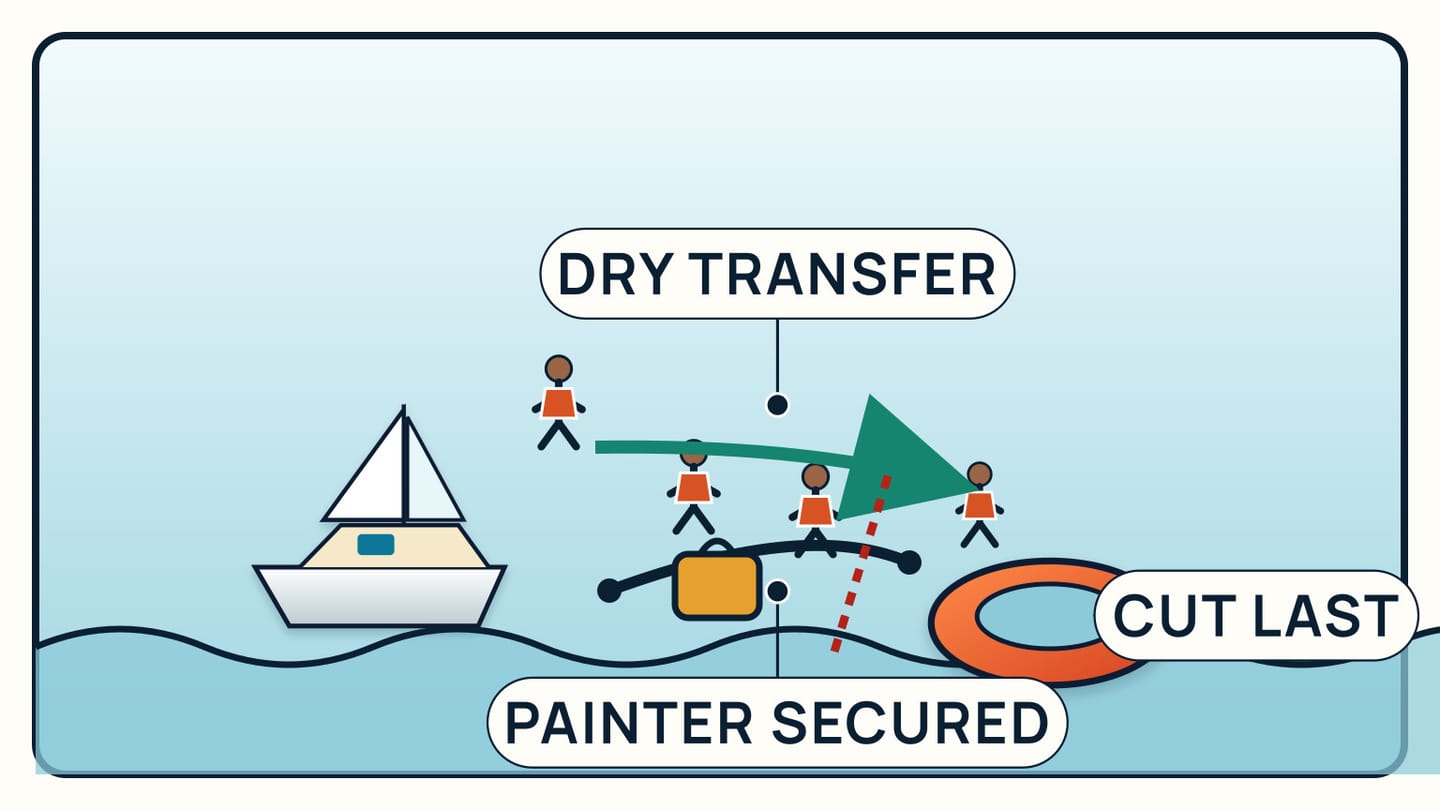
Choose the launch and boarding place using the yacht’s plan and the conditions. The lee side may provide shelter on some vessels and casualties, but fire, rigging, breaking seas, or the direction the hull is drifting can make another station safer. Keep the raft clear of sharp fittings, propellers, loose lines, and flames. Inflate and right it as its instructions require. Establish physical control before transferring gear or people, and never let a gear bag take priority over a person.
Board in the order set during the briefing, with help positioned at both ends of the move where possible. Keep the entrance clear once each person is seated. Pass essential equipment under control, preferably clipped or tied as intended rather than thrown. Count again inside the raft. The painter is a lifeline during launch and boarding; cut or release it only at the last practicable moment, when everyone and the intended equipment are aboard and remaining attached has become the greater hazard. If the yacht is burning or sinking, move clear. If it remains afloat and safe to approach, official guidance notes that staying reasonably close can help rescuers find the crew.
Entering the water is a last resort. If it cannot be avoided, follow trained water-entry and raft-boarding techniques rather than improvising a jump onto the raft. Never jump on people or the inflatable tubes. Getting everyone out of the water promptly matters because immersion strips heat and strength that may be needed for boarding and signalling.
What matters once everyone is clear?
Start with another named head count, then check breathing, bleeding, burns, cold stress, seasickness, and the ability of each person to help. Confirm that the beacon is operating as intended and that the portable radio, flares, light, water, first aid, and raft pack are physically aboard. Secure loose items. Follow the raft maker’s instructions for canopy, ballast pockets, sea anchor, ventilation, repair kit, and survival pack; those details vary and can change how the raft behaves.
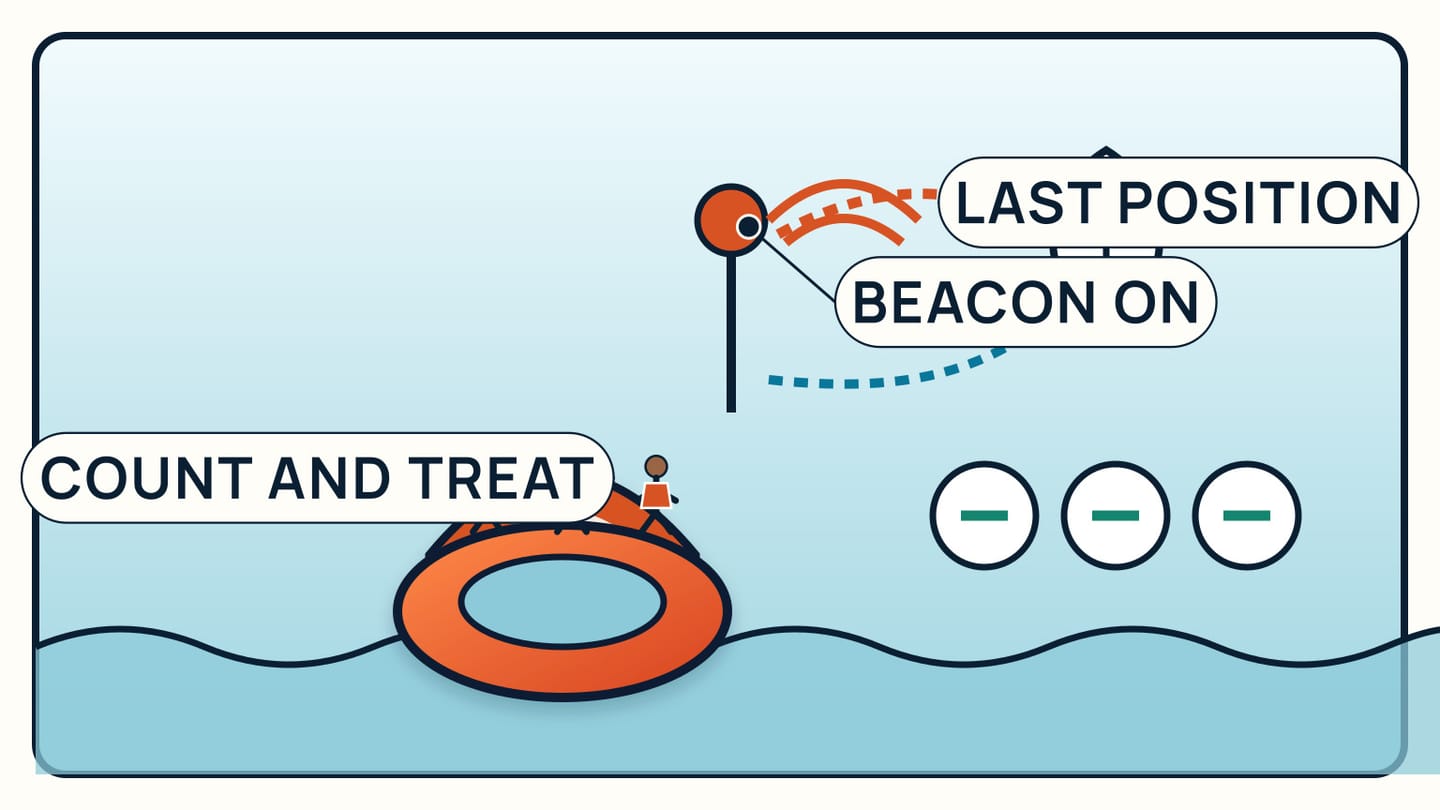
Reduce exposure. Get people as dry and sheltered as the raft permits, insulate them from the floor, and manage ventilation without admitting unnecessary spray. Keep people together and keep lookout and communication duties rotating. Use pyrotechnic signals only as instructed and when they can help a known or likely rescuer see the raft. The aim is not constant activity; it is preserving heat, attention, equipment, and morale for the wait.
Unless the yacht presents an immediate hazard, remaining near it or near the last reported position can make the search easier. Do not set off on an improvised voyage because land appears close. Wind, current, cold, and distance are hard to judge from raft level. If rescuers give directions, follow them. If the yacht sinks, beware of debris and surface contamination, then keep the rafts or survivors together where possible.
The time to make this sequence familiar is at the dock. Conduct a dry drill with the actual crew: call the muster, put on clothing and lifejackets, locate each item, assign hands, read the raft instructions, simulate the distress update, and confirm who counts and who assists. Do not trigger inflation gear or disturb sealed survival equipment merely to practise. A service agent or sea-survival course can provide controlled experience with the equipment.
Good abandonment seamanship is not a dramatic leap. It is a chain of small, explicit decisions that preserves the yacht’s shelter while it remains useful, prepares the alternative before access closes, summons rescue early, and moves the entire crew without losing a person or the means of being found. Next, practise the exact call in SailStarter’s lesson The call you hope to never make: Mayday.
Try it from the lesson
Can you spot the next move?
Your engine has died and you're drifting in a calm, safe anchorage with no other traffic nearby. Is that a MAYDAY?
Why you can trust this guide
. We build each guide from public seamanship and safety sources, then teach the universal principle before any local difference.