Chart your course
How to Make a Mayday Call: What to Say, and When
Quick answer
The short version
A Mayday call opens with the word MAYDAY itself, spoken three times, then THIS IS and your vessel's name, also three times, then your call sign or MMSI (your radio's own ID number) once if you carry either. Repeat MAYDAY and your vessel's name a final time, and the real message begins: give your position first, since it's the single most essential fact a rescue effort needs, then what's wrong, the help you need, how many people are aboard, and anything else useful, closing with OVER. On a DSC-equipped set, press and hold the red distress button before you speak (it sends your MMSI, your position only if the set has working GPS data, and a broad distress category if one was selected), then make the spoken call anyway, since the button cannot send the full situation.
A Mayday call sounds intimidating mostly because nobody rehearses it: you hope to never key the mic for this reason, so the words never get the chance to become familiar the way an everyday hail does. But the call itself is short, and it follows one fixed shape everywhere: not for ceremony, but because that shape is what lets a stranger, hearing you for the first time, act on what you say. Once you know the order and why each piece exists, there's nothing left to freeze up over: you're working through a short, logical list, not composing a speech. The rest of this piece covers when the call is actually warranted, exactly what to say and in what order, and how the DSC button fits in before you ever speak a word.
When It's Actually a Mayday
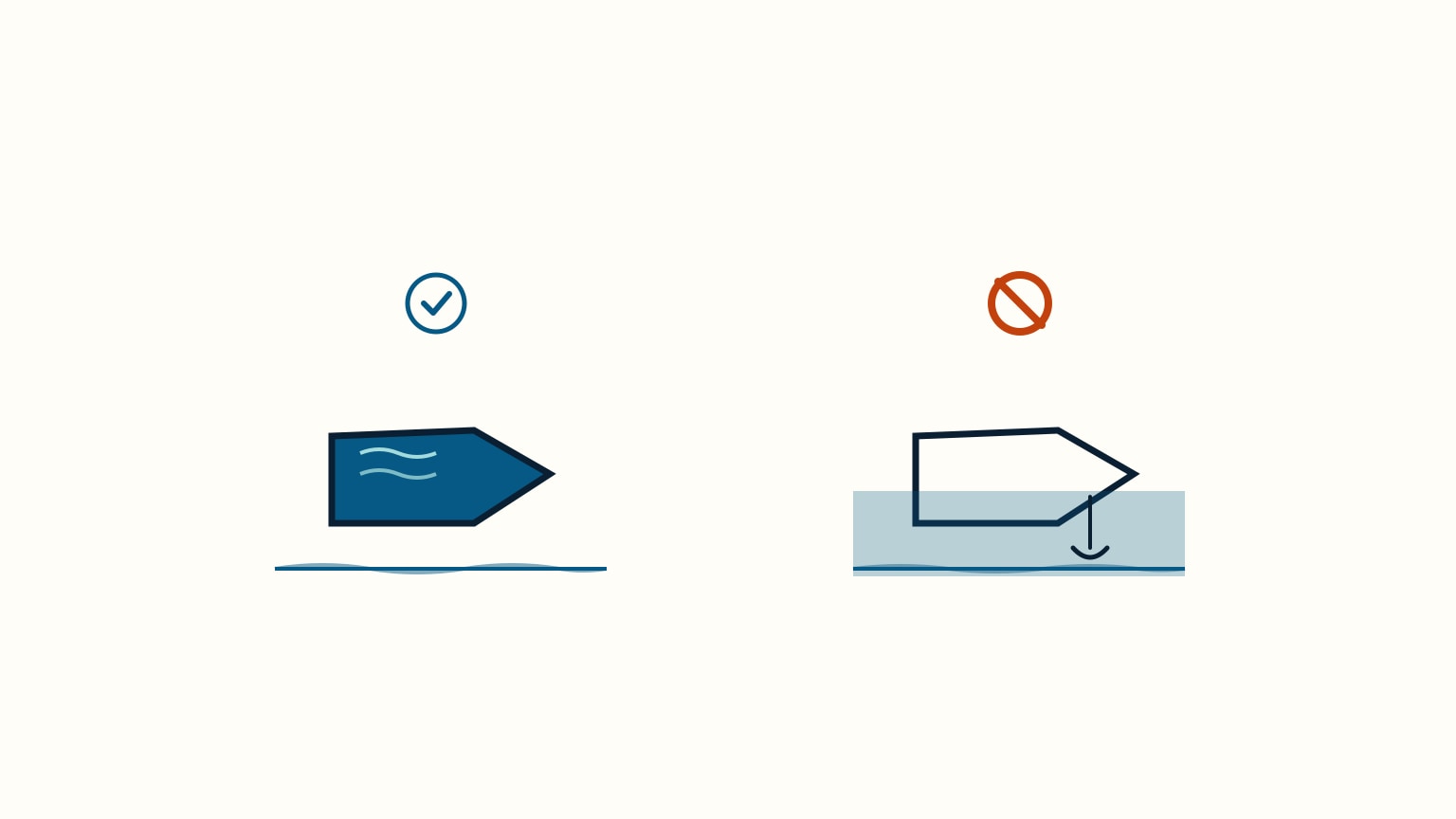
MAYDAY is reserved for grave danger to your vessel or the people aboard it (fire, sinking, a holed or badly flooding hull, a serious injury). It isn't the right call for a problem that leaves you and your crew safe, or for one that's genuinely urgent without being immediately dangerous (a boat drifting toward shore or into a busy channel, for instance). Situations like that use a different distress signal with a lower threshold, a separate call this course covers on its own. The test worth keeping in mind isn't how worried you feel: it's whether the danger is real, immediate, and serious enough that you need help now, not eventually. Get that judgment right, and everything downstream (who answers, how fast, and with what) follows from it.
Open With MAYDAY, Your Boat, and Your ID
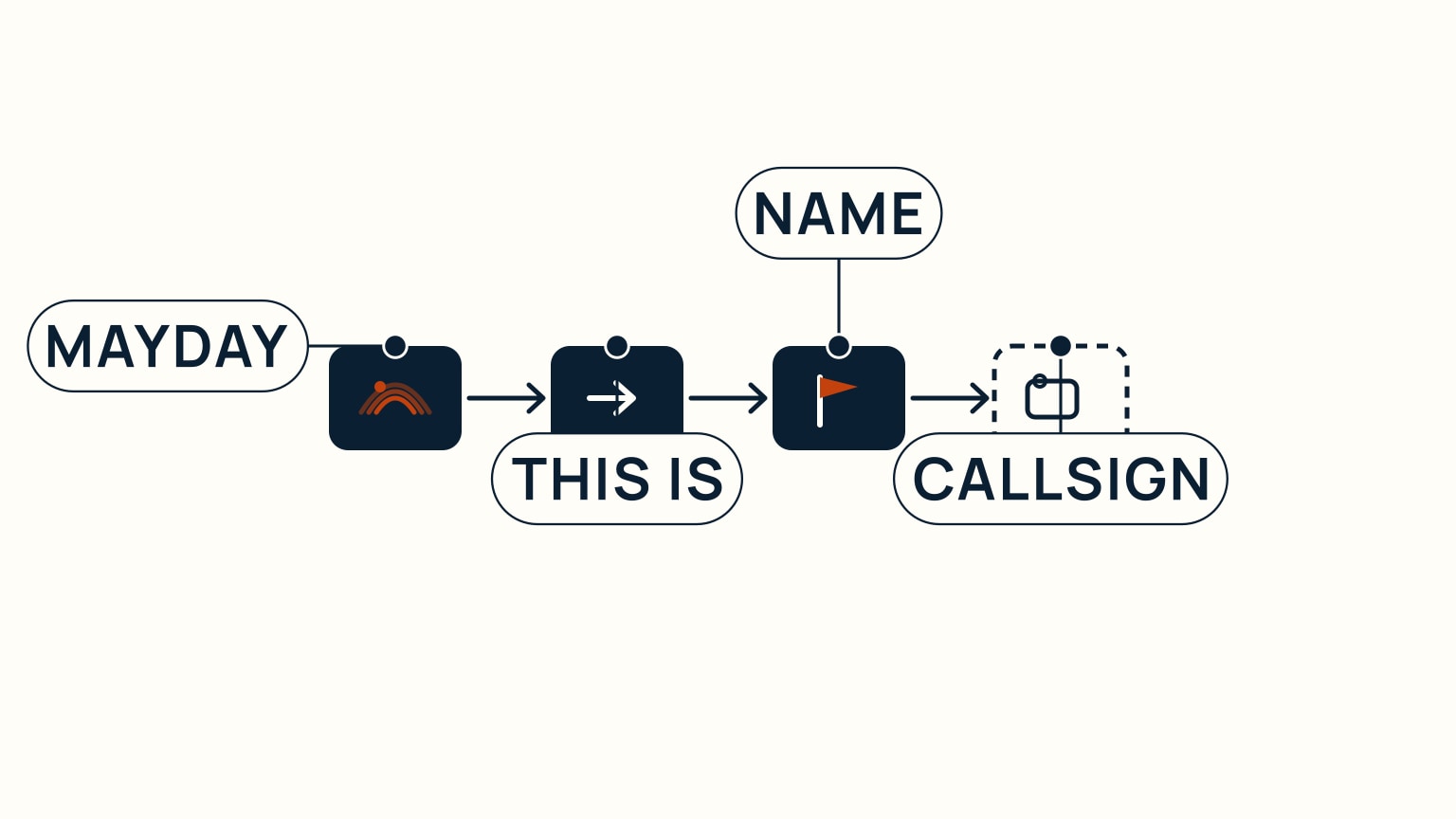
Every Mayday opens the same way, and the repetition is doing real work, not padding: on a noisy channel, through static or crosstalk, three chances to catch a single word beat one. Start by speaking the word MAYDAY itself three times. Follow it with THIS IS, then your own vessel's name, also three times: the boat's identity matters as much as the fact that something is wrong. If you carry a call sign or an MMSI, add it once; if you carry neither, move on. Then say MAYDAY and your vessel's name one more time, a short pause that marks the shift from announcing the emergency to actually describing it. Nothing in this opening states what's wrong yet; its whole job is making sure whoever is listening knows, beyond doubt, that a distress call is starting, and which boat is making it.
Give the Facts in the Order a Rescuer Needs Them
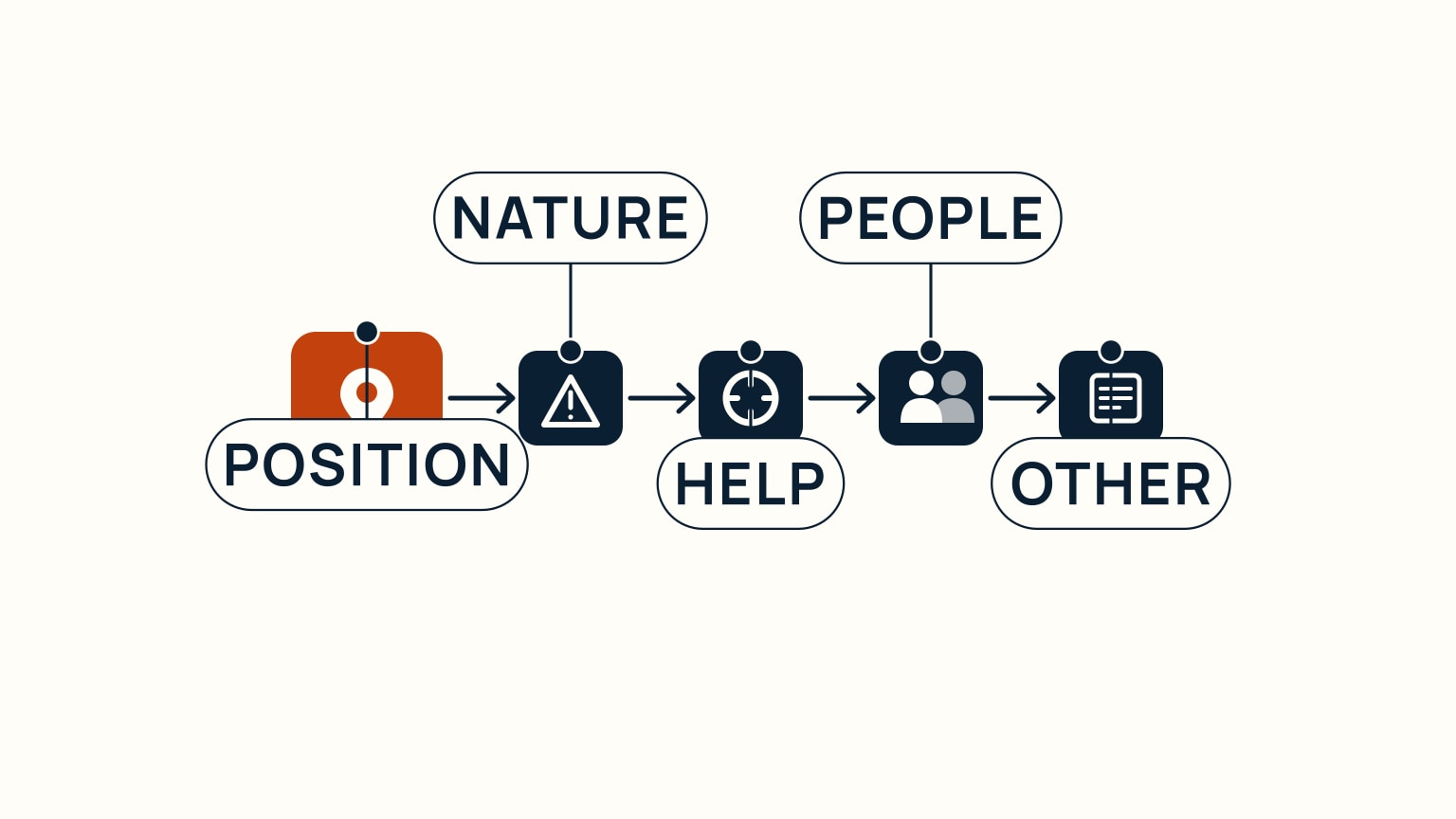
Once the opening ends, say your position (as latitude and longitude if you have it, or as a bearing and distance from a landmark you can identify). Position earns that priority because a rescue effort treats it as the single most essential fact in the whole message, ahead even of what's actually wrong. After position: what's actually wrong (fire, flooding, a serious injury), then the help you want, how many people are aboard, and any other detail that could matter, like the vessel's length or an unusual feature of its hull. Close with the word OVER, let go of the button, and listen. No answer? Stay on full power and repeat the whole call from the top rather than assuming you weren't heard.
Press the DSC Button First, Then Talk
Prepare the information before you need it
Keep the vessel name, call sign or other radio identity, and instructions for finding position beside the VHF. Show another crew member how to switch on the set, select Channel 16, adjust volume and squelch, press the push-to-talk control, and use the DSC distress control if fitted and connected. A distress button without current position input may send less useful information, so understand what the installed system actually provides.
During the crew brief, practise the order without transmitting: MAYDAY repeated three times, vessel name and identity, position, nature of distress, assistance required, people aboard, and other information that helps rescuers. The caller should release the transmit control to listen. Speak slowly and clearly. If the first transmission receives no response, repeat as the situation and radio procedure require.
Position is the part most likely to stop a frightened caller. Know how to read latitude and longitude from the installed navigation equipment, and know a plain-location alternative if equipment fails. Include direction and distance from a charted feature only when you can state them accurately. The position-fix guide helps build that habit.
Keep the call tied to the emergency
Use MAYDAY for grave and imminent danger requiring immediate assistance. Give the nature of distress in plain words: sinking, fire, collision, person overboard, grounding with danger, or a medical emergency, as applicable. State what help is needed and the number of people aboard. Add vessel description, flotation, injuries, or abandonment plans when they help responders.
After the call, maintain a listening watch and follow the responding station's instructions. Continue immediate actions aboard: control flooding or fire, recover a person, prepare survival equipment, or make the vessel easier to locate. Do not let composing a perfect message delay an urgent lifesaving action or the initial alert.
If the skipper cannot call, the nominated crew member should. That is why the crew safety briefing assigns communications before departure. Keep the written prompt where a newcomer can see it without searching through a manual.
A false or accidental DSC alert must be cancelled through the correct current procedure for the equipment and area. Do not switch off and assume it vanished. Learn the cancellation steps from the radio manual and local authority guidance before using the boat.
Keep that procedure beside the radio as well.
If your radio has DSC, lift the guard over the red distress button and hold it down until the set confirms transmission: IMO guidance says more than three seconds, while training examples commonly use about five, so know your own radio's instructions. That press sends an automatic alert carrying your boat's MMSI and, only when your set has working GPS data, your position. If you selected a nature of distress first, the alert can carry that broad category too; otherwise it is sent as undesignated. Either way, the button is a head start, not the whole job: follow it immediately with the spoken Mayday call above, because the alert cannot describe the full situation, what help you need, or how many people are aboard. Pressed it by accident? Cancel it right away through your set's own menu (never by switching the radio off, since most sets simply resume the alert once they're powered back on), then confirm the cancellation by voice, with your MMSI and boat name, on channel 16.
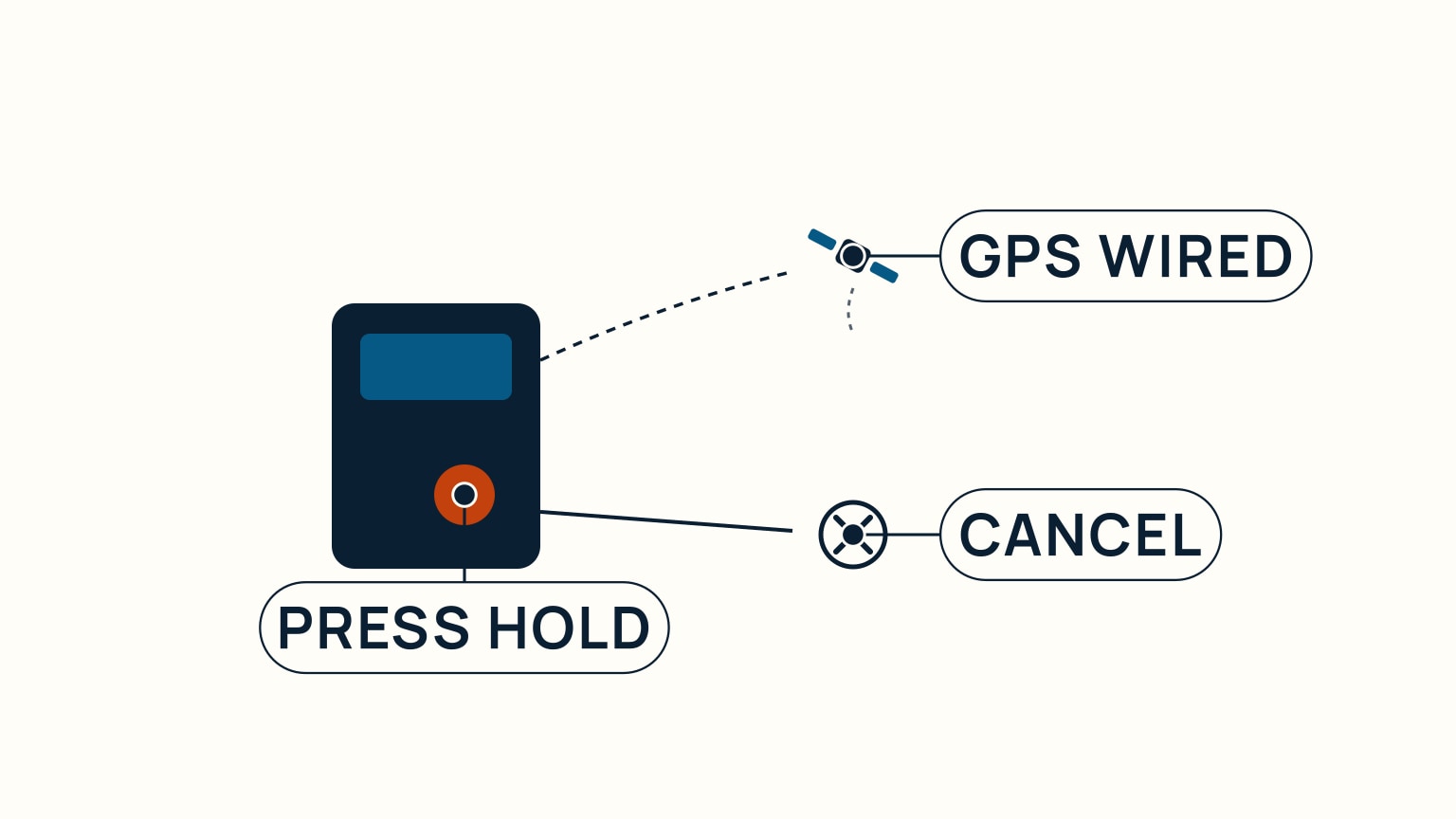
None of this needs to live in your memory perfectly before it matters: a Mayday call is short enough, and logical enough, that most of it falls into place once you understand why the order is what it is: position first because it's the fact a rescue effort treats as most essential, the DSC button first because it buys everyone a head start while you're still talking. What's worth doing now, long before any emergency, is finding your own radio's distress button, checking whether it's wired to a GPS, and saying the opening out loud once so it isn't the first time your voice has ever done it. SailStarter's Module 9 lessons walk through this alongside the rest of marine radio communication (channel 16, hailing, and the everyday habits that make a VHF set feel familiar), so the one call you hope never to make is one you'd actually know how to.
Try it from the lesson
Can you spot the next move?
Your engine has died and you're drifting in a calm, safe anchorage with no other traffic nearby. Is that a MAYDAY?
Why you can trust this guide
. We build each guide from public seamanship and safety sources, then teach the universal principle before any local difference.