Chart your course
Marine VHF DSC Explained
Quick answer
The short version
Digital selective calling, or DSC, is a data layer sitting on top of an ordinary marine VHF. Lift the red cover, hold the distress key for the few seconds your set asks for, and the radio transmits a coded alert on channel 70 carrying the nine-digit identity programmed into it, plus your position if a GPS is feeding the set. Then you pick up the microphone and make the spoken Mayday on channel 16, because the digital alert cannot describe what has gone wrong. The set keeps repeating its alert until a station acknowledges. Press the key by mistake and you cancel it on the radio, then say so by voice. You never switch the radio off to make it stop.
If your set has a hinged red cover over one key, it has this feature, and plenty of owners have never lifted that cover to look underneath. That matters more than it sounds, because two setup failures are easy to miss: an identity that was never programmed in, and a set that has no position source wired to it. Both leave a radio that looks perfectly normal until the day it has to speak for you. Ten minutes alongside on a calm afternoon is enough to find out which kind of set you have.
What the digital alert actually sends
The nine-digit number at the heart of all this is an MMSI, a Maritime Mobile Service Identity, described by one national navigation authority as a number used by DSC, AIS and certain other equipment to identify a ship or a coast radio station uniquely. It travels with every DSC call you make. The alert itself goes out on channel 70, which is reserved for this traffic and where voice is not permitted at all, so you will never hear a DSC alert as speech.
Position is the part that surprises people. A distress alert includes position information only if the radio has an internal GPS or is connected to one. A manufacturer puts the same limit plainly in its own manual: the call automatically includes the vessel's MMSI and latitude and longitude, and the position can be sent only if the set is properly connected to an operating GPS receiver. A recreational Class D set can also carry the nature of the distress, the coordinates, the time of the last position update, and the type of communication that should follow.
What it cannot do is explain anything. There is no free text field, no way to say the rig is down or someone is unconscious. Range has limits too. The function works within reach of a shore-based channel 70 watch, and one manufacturer's warning puts that at roughly 20 nautical miles under normal conditions.
Set the radio up long before you need it
Two jobs make the difference between a working alert and an anonymous beep. The first is entering the MMSI. Take this slowly, because many sets deliberately resist being changed later: one current recreational model accepts the number twice and then shows an error and has to go back to factory service for any further change. Read the digits aloud with someone checking the paperwork rather than typing them from memory.
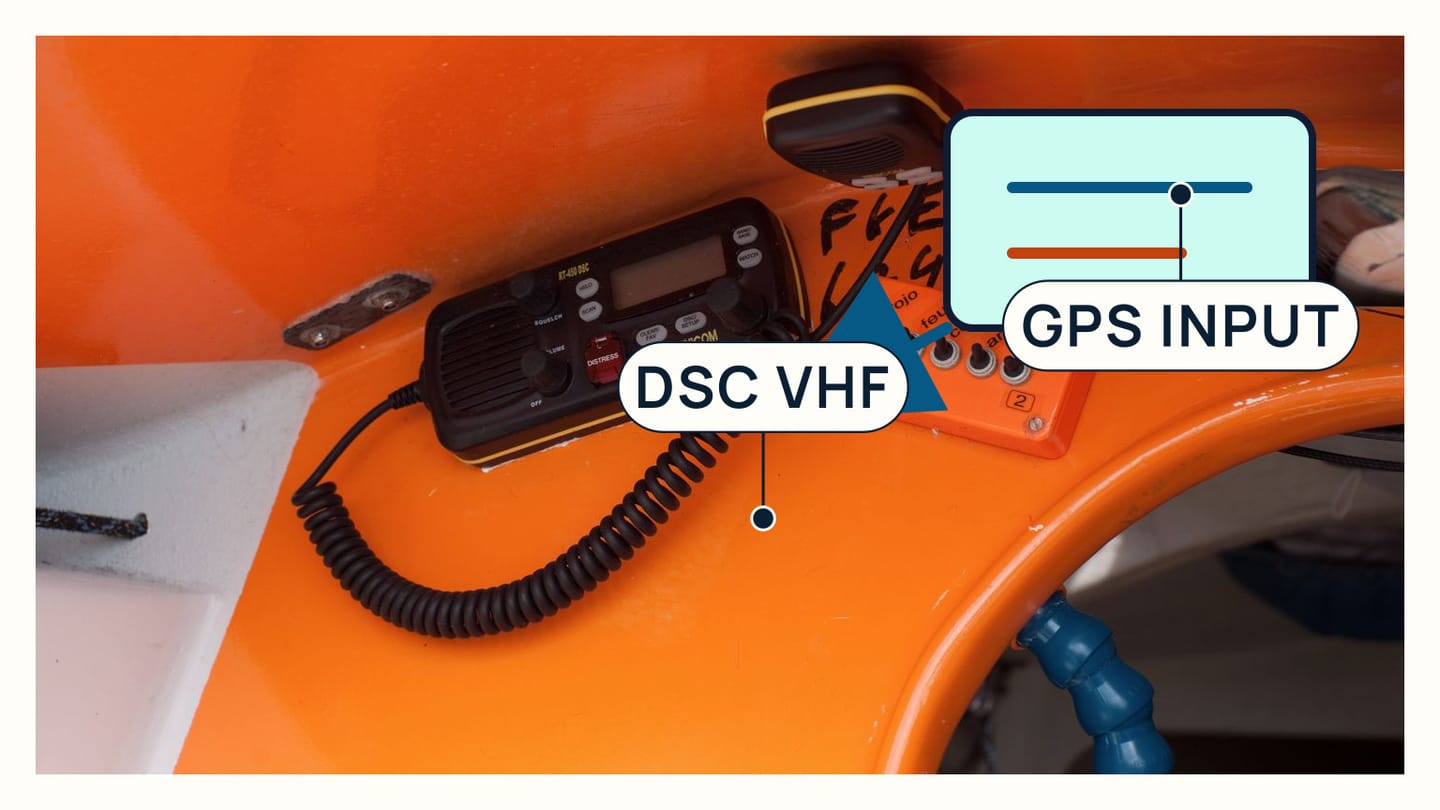
The second job is the position source. Either the set has GPS built in or something has to feed it a live fix. A radio with no position input still alerts, and rescuers still get your identity, but they start with a search area instead of a point. If your set displays an INVALID position or nothing at all where the latitude should be, that is the problem to solve before the season starts, not the one to discover during it.
Behind the number sits a record with your contact details and a description of the boat. When a boat changes hands the previous owner arranges release of the MMSI with whoever issued it, and the new owner arranges the update. Who issues that number, and which station or operator licence goes with it, is decided country by country. One national authority routes different vessel types to different issuers; another requires a vessel radio licence that carries the MMSI plus a separate operator certificate. Check what applies where your boat is registered and sailed rather than assuming the arrangement travels.
Press, hold, then pick up the microphone
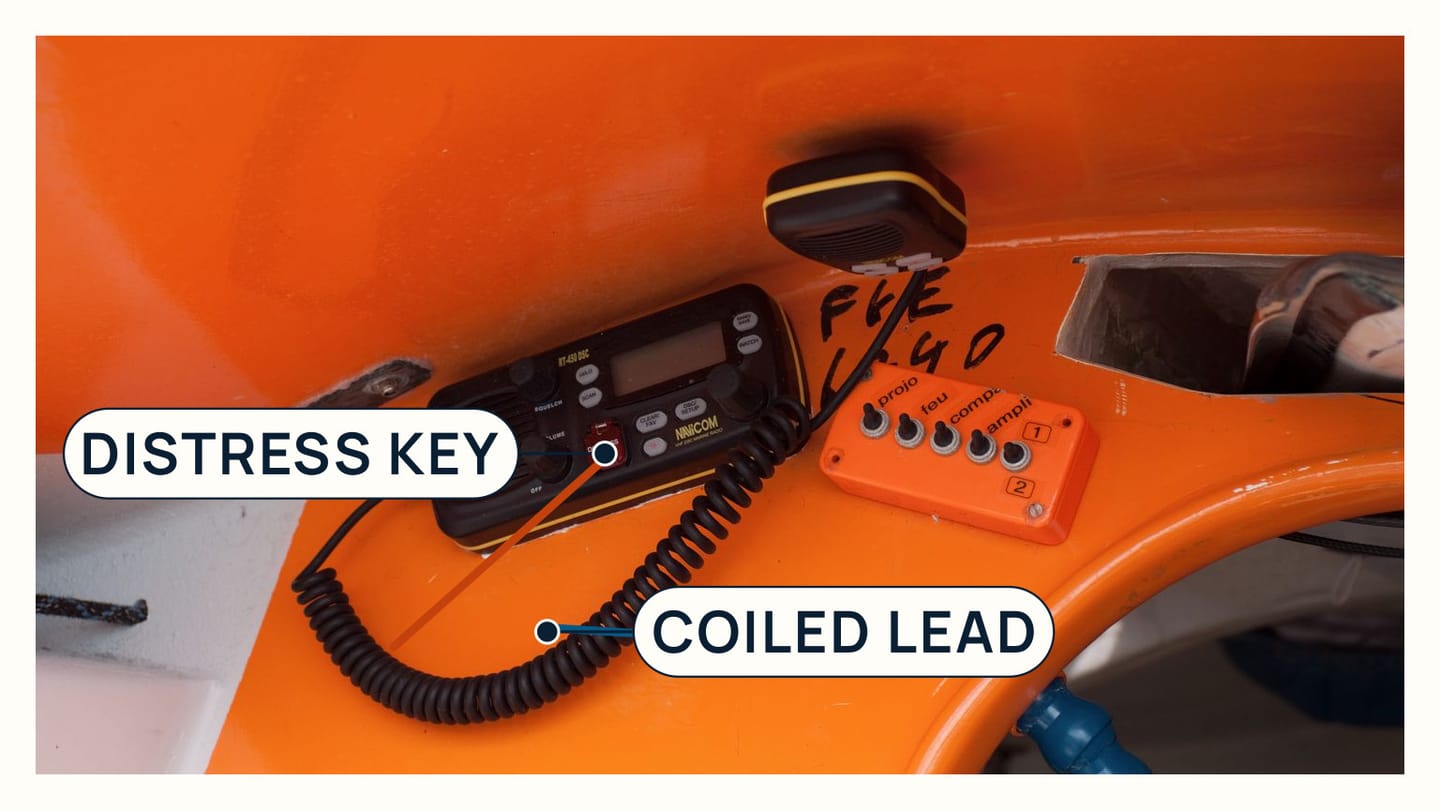
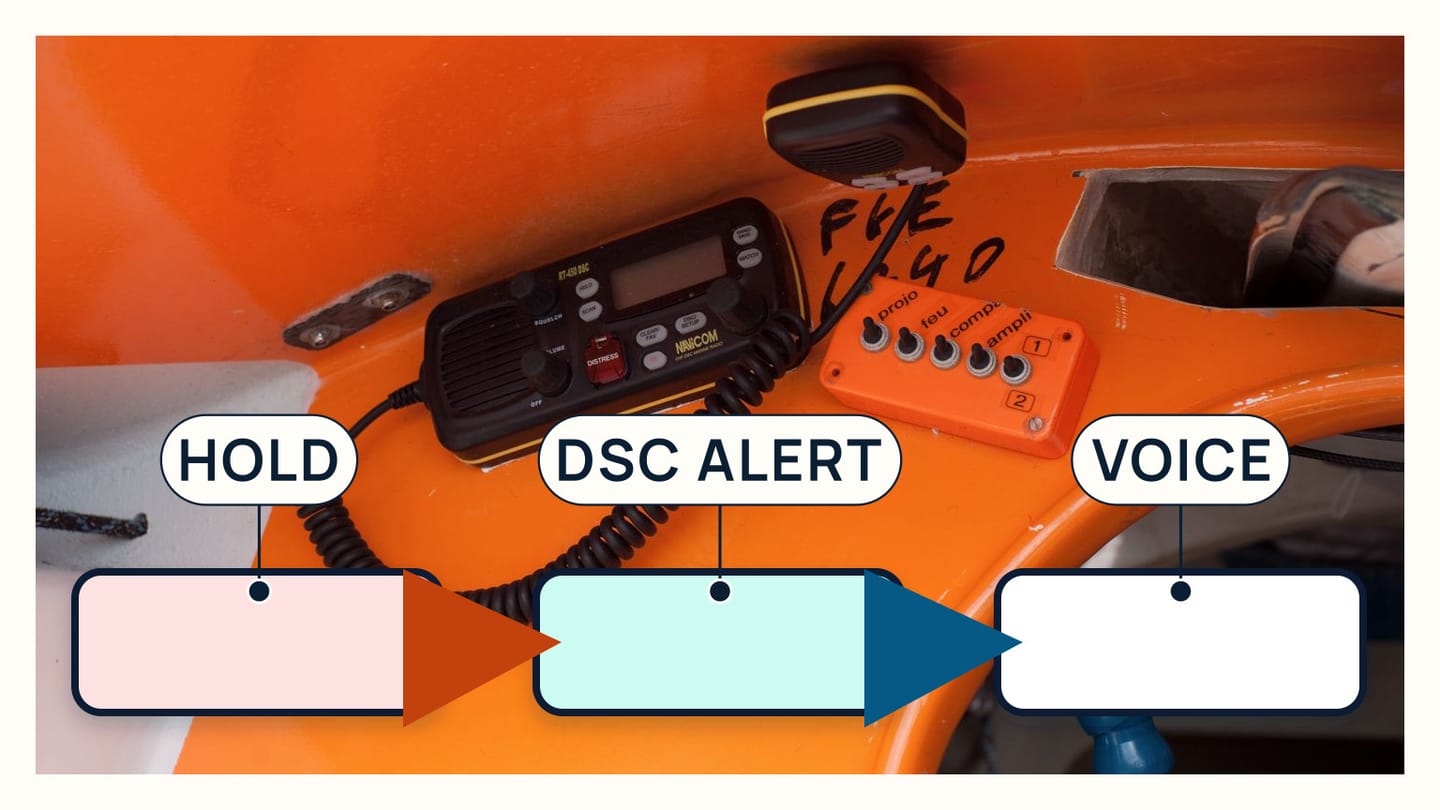
The physical action is deliberately awkward so nobody does it by accident. You lift a red spring-loaded cover, press the distress key, and hold it. One current set asks for three seconds or more and counts the hold on its display, and another may want longer, which is exactly why you want to know your own set. Some radios then offer a short list of distress categories. If none of them obviously fits, send the alert anyway rather than spending time in a menu.
Once the alert is away, the radio starts working on its own. It keeps a watch between channel 16 and channel 70 waiting for a reply, and repeats the alert at four minute intervals until one arrives. When an acknowledgement does come in, that set sounds an alarm and switches itself to channel 16 for you.
Your job in that gap is the voice call. Speak the Mayday on 16 with your position, what has happened, what help you need, and how many people are aboard. The alert says who and where. Only you can say what.
If the key gets pressed by mistake, cancel it. Use the radio's own cancel function, and do not reach for the power switch first, because most sets simply resume transmitting the alert when they come back on. Then announce the cancellation by voice on channel 16 with your MMSI and the boat's name. Handled openly and immediately, it is a mistake, not a crime.
Test the set without calling for help
There is one rule here with no room in it: under no circumstances should a distress alert be sent to test a radio. Every real alert pulls attention away from someone who may need it.
The equipment gives you safer ways to check the same wiring. Sets carry an automated test call function that asks a distant station to answer, and the display shows the acknowledging station's own nine-digit identity when it does. Some coastguard services publish an identity for exactly this purpose, so ask your own maritime authority what number to store rather than borrowing one from an article written for a different coast.
A position request call is the other useful check. Send one to a DSC set that has a working GPS and it answers automatically with its position, which is how installers and inspectors confirm that an installation is actually feeding coordinates. Do this with a willing neighbour, not a stranger.
Then rehearse the part no menu can help with. Find the red cover with your eyes shut. Work out whether you can reach it while braced against the boat's motion. Show anyone else who sails with you where it is and what happens when they use it, because the person who needs to press it may be the one who never touches the radio. Pair that with the plain VHF basics and it becomes a ten-minute drill.
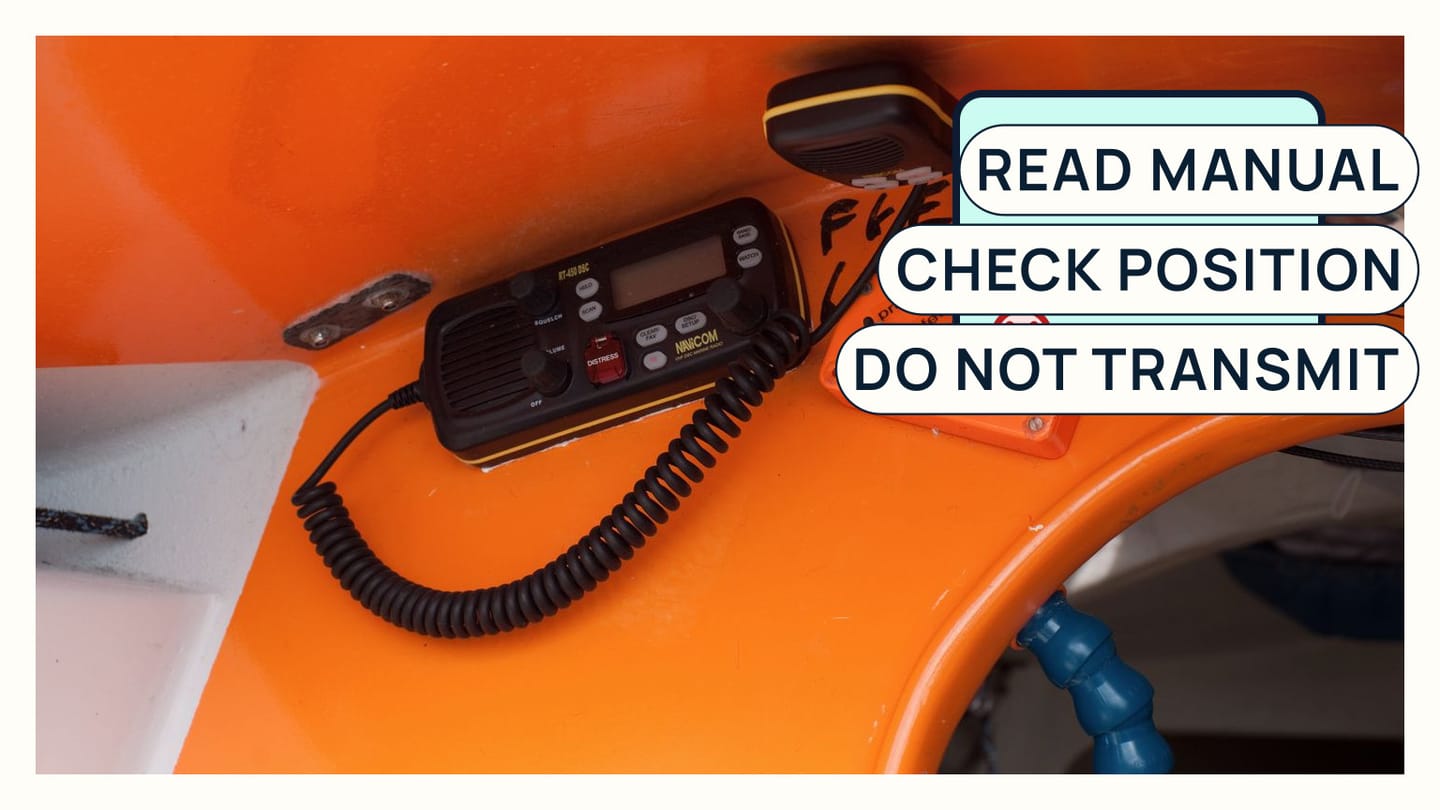
Keep the identity and the position current
A DSC alert is only as useful as the paperwork behind it. The registration record attached to your MMSI is what someone reads while deciding how many resources to send and who to telephone ashore. A stale phone number or a boat description from two owners ago quietly costs time at the worst moment. Review it the same way you review insurance, once a year, and after anything changes.
Watch the position field too. Sailors get used to a display and stop reading it, so make a habit of glancing at the latitude on the radio itself, not the chartplotter, before you leave the dock. A GPS feed can fail at a connector without anything else on the boat noticing.
Remember that the same number identifies you on AIS. A wrong or borrowed MMSI therefore misidentifies your boat to every ship that has you on screen, long before any rescue service is involved. If you sell the boat, the radio and its number belong in the handover paperwork. If you buy one, treat an unknown programmed number as a job to sort out. None of this is difficult. It just has to happen while nothing is going wrong.
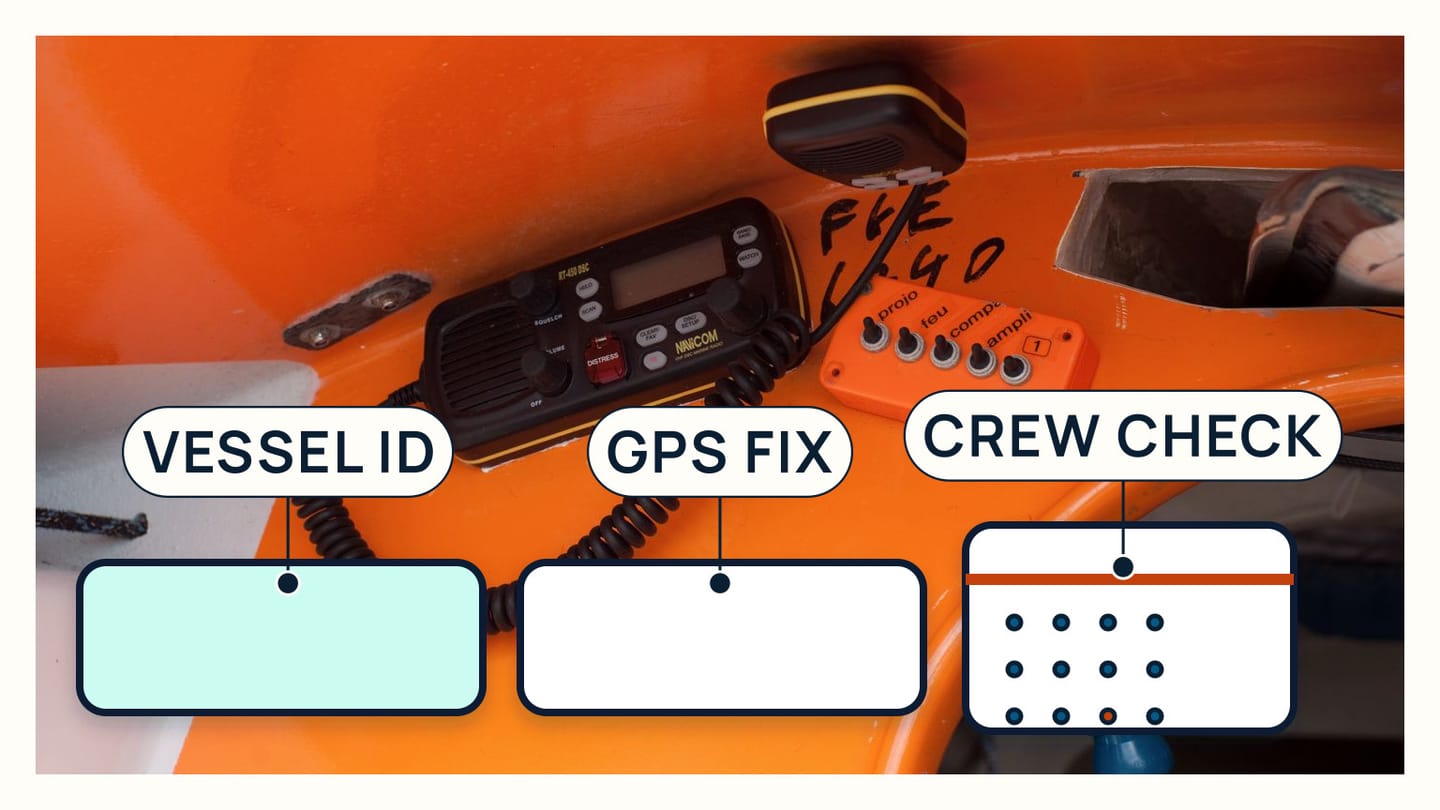
Marine VHF DSC rewards the sailor who spends a quiet hour with the manual and the microphone before the season starts. Learn where the cover is, prove the set knows who you are and where you are, and make sure at least one other person aboard could do the same thing without you. If the whole radio still feels like a black box, SailStarter's Module 9 lessons walk through marine communication one habit at a time, from turning the set on and understanding channel 16 to the words of a distress call. Short visual lessons, a quiz after each one, and no pretence that a screen replaces time on the water.
Try it from the lesson
Can you spot the next move?
Your engine has died and you're drifting in a calm, safe anchorage with no other traffic nearby. Is that a MAYDAY?
Why you can trust this guide
. We build each guide from public seamanship and safety sources, then teach the universal principle before any local difference.