Chart your course
EPIRB vs PLB for Sailors
Quick answer
The short version
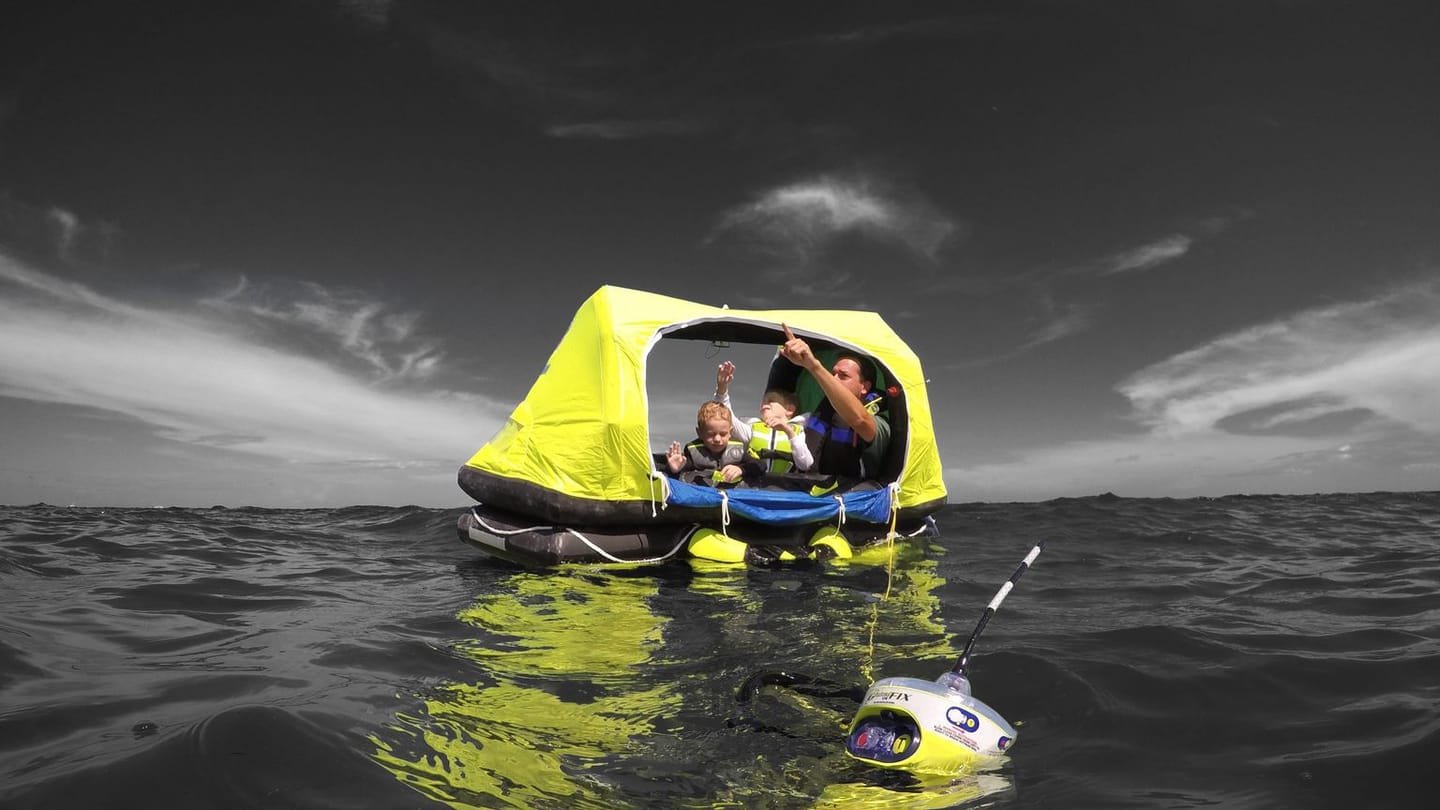
Both devices are 406 MHz distress beacons and both reach the same satellites, so the real question is what each one is attached to. An EPIRB is the beacon designed for use aboard a marine vessel. A PLB is the beacon designed to be carried by an individual. That difference decides everything downstream: the EPIRB floats, carries a strobe, transmits for at least 48 hours, and in one common mounting releases itself when the boat goes down. The PLB is smaller, activates only when a person presses it, and runs for a minimum of 24 hours. If the boat is lost with the crew together, the EPIRB speaks for the boat. If one person goes over the side, only what is strapped to that person can speak at all.
Beacons cover the gap where a radio stops helping. A VHF call needs someone in range to hear it, and out beyond that range a distress alert has to travel by satellite instead. A 406 MHz beacon does exactly that, anywhere in the world, without depending on a nearby vessel or a coastguard antenna on a headland. What it will not do is anything you have not already arranged: the device has to be registered, mounted where it can work, and still in date. Those three chores are where most of the useful thinking lives.
What each beacon is attached to decides how it activates, how long it transmits, and what emergency it actually covers.
| Dimension | EPIRB | PLB |
|---|---|---|
| Attached to | The vessel | The individual person |
| Activation | Automatic float-free release (Category I) or manual (Category II) | Manual only |
| Minimum transmit time once activated | At least 48 hours | At least 24 hours |
| Buoyancy and mounting | Floats, built-in strobe, float-free bracket outside the vessel | Small; depends on the wearer keeping the aerial clear of the water |
| Best-suited scenario | A whole-boat event — fire, flooding, sinking, crew together | Crew overboard — one person separated from the boat |
| Size tradeoff | Larger, built to survive being abandoned with | Smaller, trades size and battery life for portability |
Two beacons, two different things being found
The satellite programme that receives these alerts sets out the naming clearly. A beacon designed for use aboard a marine vessel is an EPIRB, a beacon designed to be carried by an individual is a PLB, and the aircraft version is an ELT. Each unit transmits a unique 15-character hexadecimal identity, and that identity is the key to a registration record held by a national authority.
The path from a button press to a person on the phone is worth knowing. Satellites pick up the 406 MHz burst and relay it to ground stations called Local User Terminals. Those build a distress alert, pass it to a Mission Control Centre, and the Mission Control Centre distributes it to a Rescue Coordination Centre or a search and rescue point of contact. Geostationary satellites deliver the alert almost at once but can only report a location if the beacon has encoded its own position, while the low-earth and medium-earth constellations work out a location independently. The medium-earth network provides near real-time global coverage.
One practical footnote for sailors who like the idea of a PLB in a pocket instead of a bracket on deck: carrying a PLB aboard a vessel can require approval from the local authority, so that substitution is not automatically yours to make.
What is each unit actually built to survive?
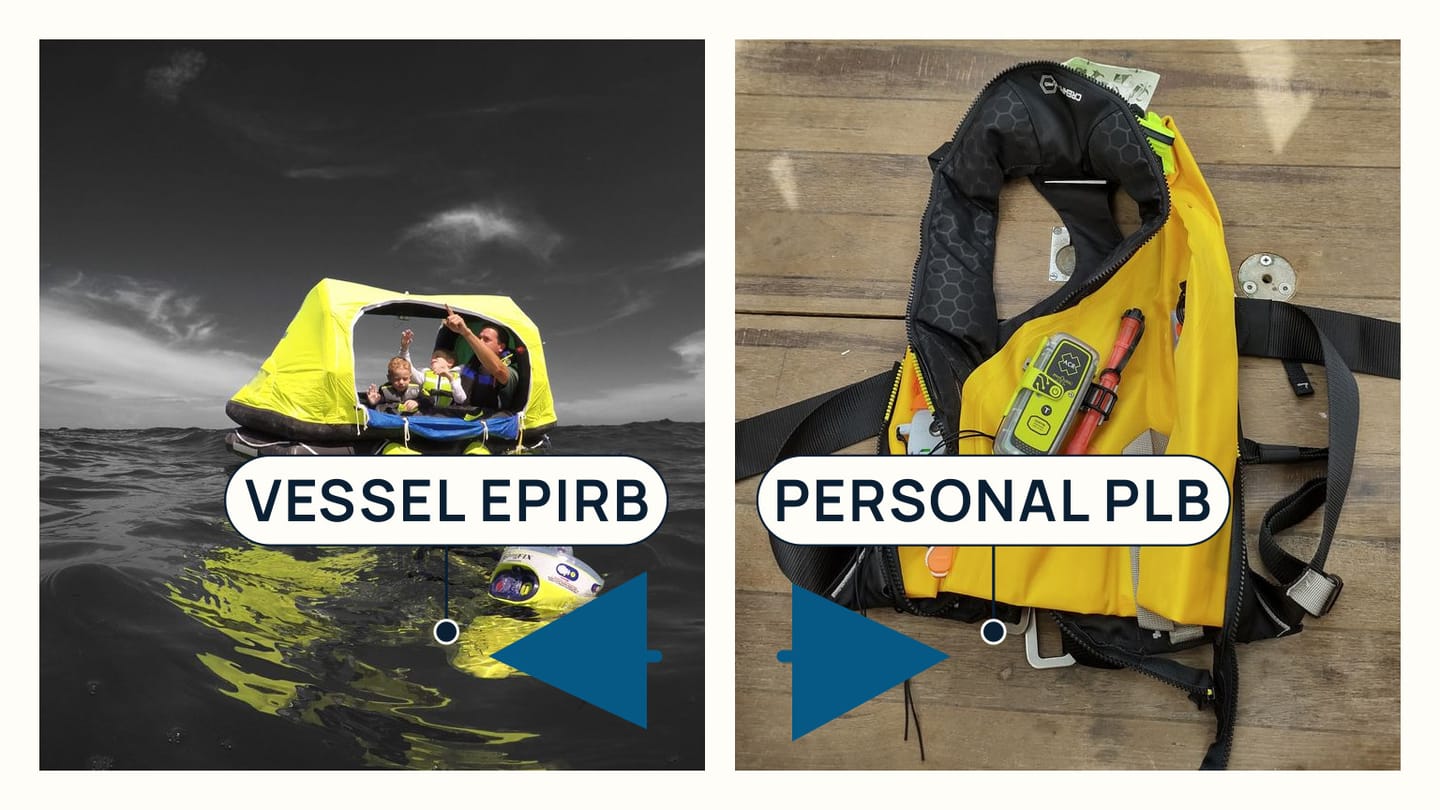
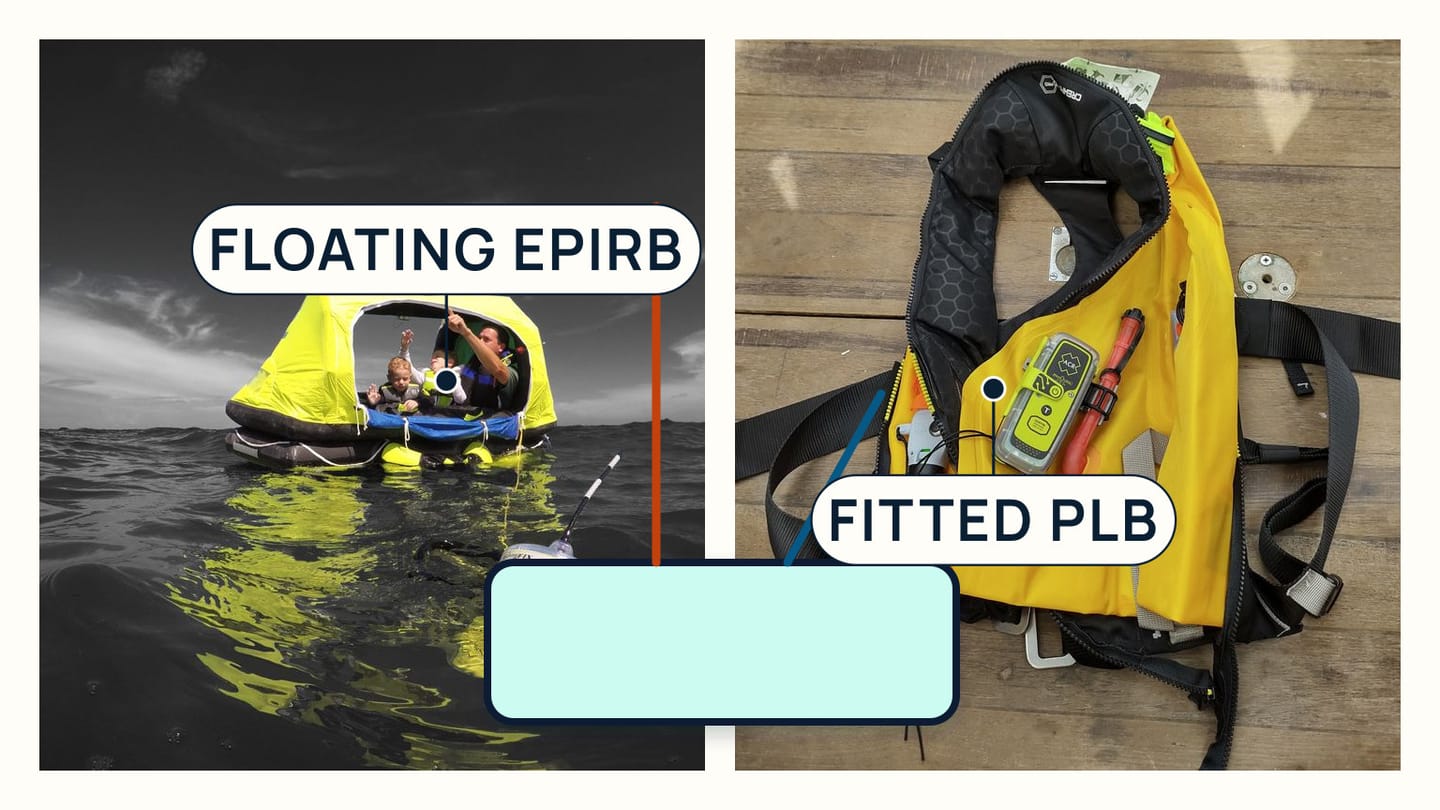
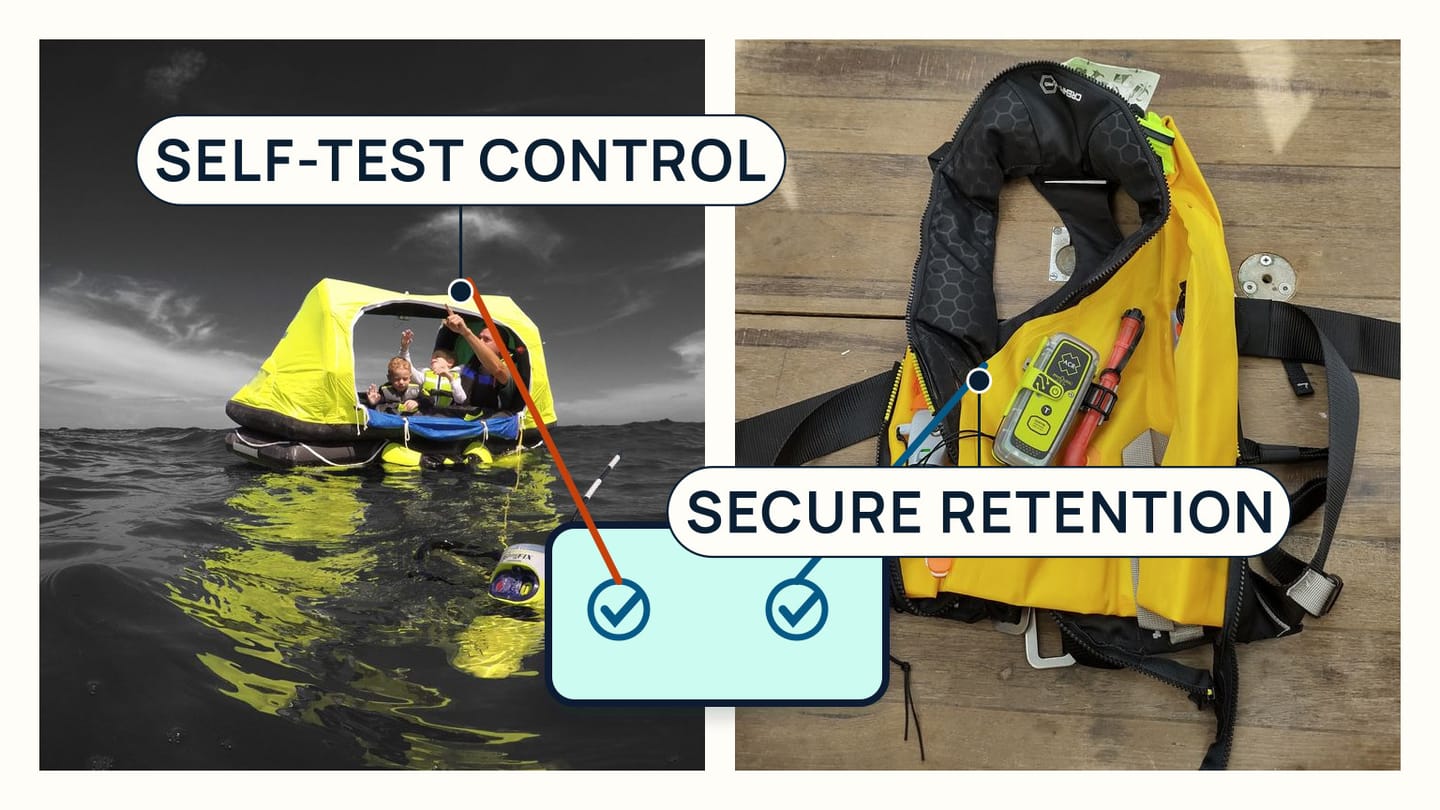
An EPIRB is built to be abandoned with. It floats, it carries a built-in strobe, and it transmits for at least 48 hours once activated. In a Category I installation it sits in a float-free bracket outside the vessel in clear open space, where a hydrostatic release lets it go as the boat sinks past roughly one to four metres. It then surfaces with the aerial vertical and starts transmitting on its own. A Category II unit does the same job but only when a human activates it, so it is stowed somewhere reachable. The authority that publishes this guidance is blunt about the difference: beacons that cannot float free have inherent limitations in situations such as a capsized vessel.
A PLB trades all of that for size. It activates manually and only manually, its minimum operating life once activated is 24 hours rather than 48, and because it is small it depends on the wearer keeping the aerial clear of the water. Stowed in a jacket pocket at the bottom of a locker it is decoration. Fitted into the lifejacket you actually wear, it goes over the side when you do.
That hydrostatic release deserves one more sentence, because it is a dated consumable rather than permanent hardware. A national maritime authority states that the release on a float-free EPIRB is replaced two years after installation unless the manufacturer says otherwise, with the due month and year marked on the unit at fitting. Inspectors keep finding the same faults: extra lashings tied around a housing so the beacon can never float free, straps done up too tight or too loose, and units quietly years past their date.
How do you choose around the emergency you are planning for?
Work backwards from the scenario. A fire, a flooding hull, or a keel failure is a whole-boat event, and everyone will be in one place or in one raft. The vessel beacon covers that, and a float-free mounting covers the version where nobody has time to fetch anything. A crew overboard is the opposite shape: one person, separated from the boat, and reachable only by whatever they were wearing when they went. No amount of gear in the cockpit locker helps there.
It is also worth knowing that a satellite beacon is not the only personal device on the market, and the alternatives solve different problems. A personal AIS beacon alerts nearby vessels with AIS receivers over roughly five miles of local coverage, which puts a mark on your own crew's chartplotter. A PLB alerts rescue authorities through the satellite system instead, from anywhere, but nobody within sight of you learns anything from it. Offshore racing rules treat them as separate items for that reason: World Sailing's 2026-2027 Offshore Special Regulations require a water and manually activated 406 MHz EPIRB for the relevant categories, require any EPIRB registered after 2026 to include internal GNSS and the ability to transmit AIS, and separately list an AIS crew overboard beacon for each crewmember.
Those regulations bind entered racing boats, not your weekend cruise, and no beacon of any kind is a reason to skip staying attached to the boat in the first place. Read them as a well-argued benchmark, then decide what your own sailing needs.
Test it the way the makers intend
Every 406 MHz beacon has a built-in self-test on a separate switch or setting, and that self-test can be run at any time without putting an alert into the system. It is the only routine check most owners will ever need. The one catch is that each test draws on the battery reserve the beacon is holding for a real emergency, so the manufacturer's guidance sets how many are sensible across the unit's life. Read that number and stick to it rather than testing on a whim.
Activating a beacon for real as a test is a different matter entirely. It requires advance coordination with the Mission Control Centre serving your region, and authorisation is granted only in exceptional circumstances. Doing it without permission, outside a genuine emergency, is treated as an offence in many countries. There is no informal version of this, and no quiet corner of the ocean where it does not count.
Register the beacon before you test it, so that if something does go out by accident there is a name and a telephone number attached to it. Then spend the rest of that afternoon on the things a self-test cannot check. Can you reach the bracket while the boat is heeled? Does the crew know which locker holds it? Can somebody who has never handled one work out the cover and the switch without instructions, in the dark, wearing gloves?
Registration and dates are the parts that go stale
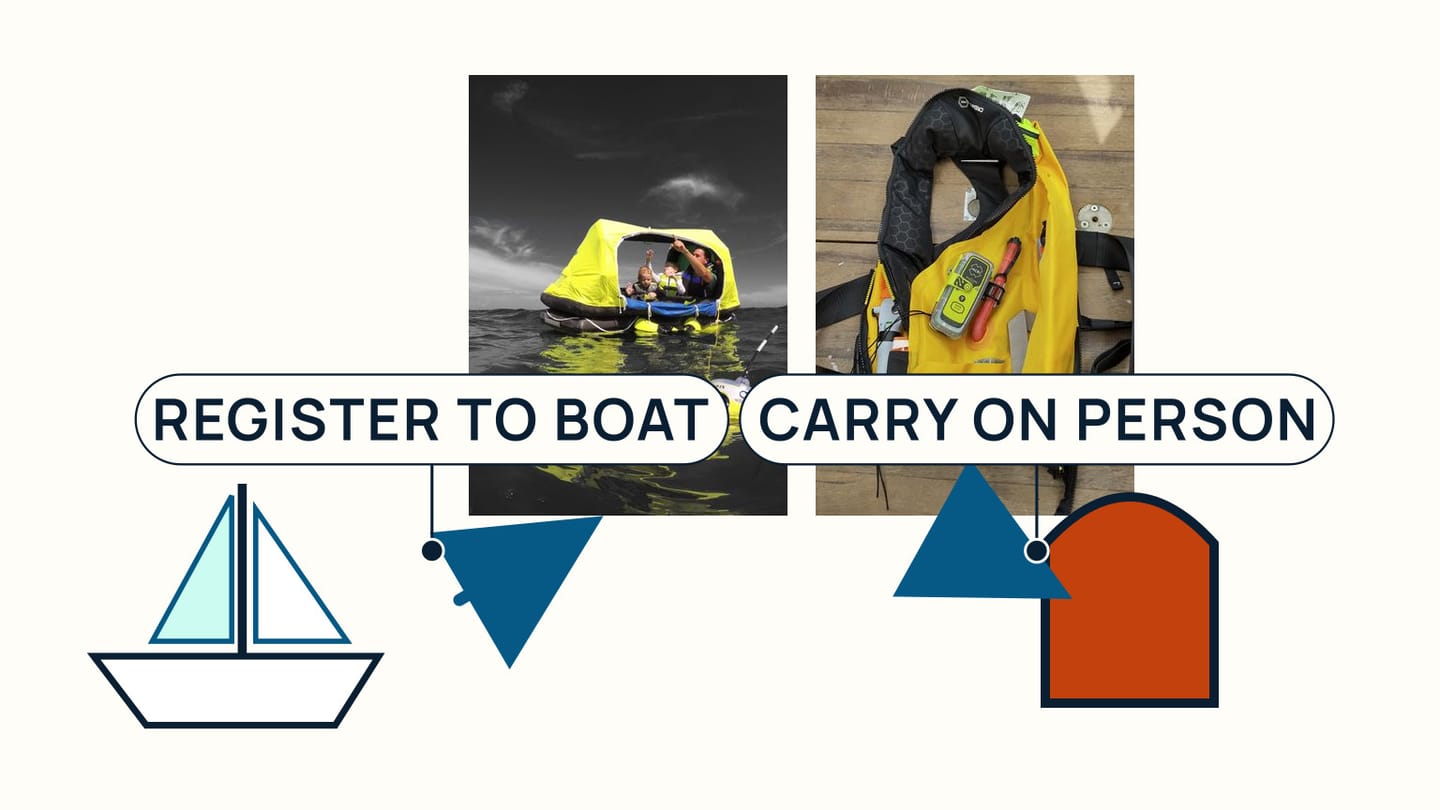
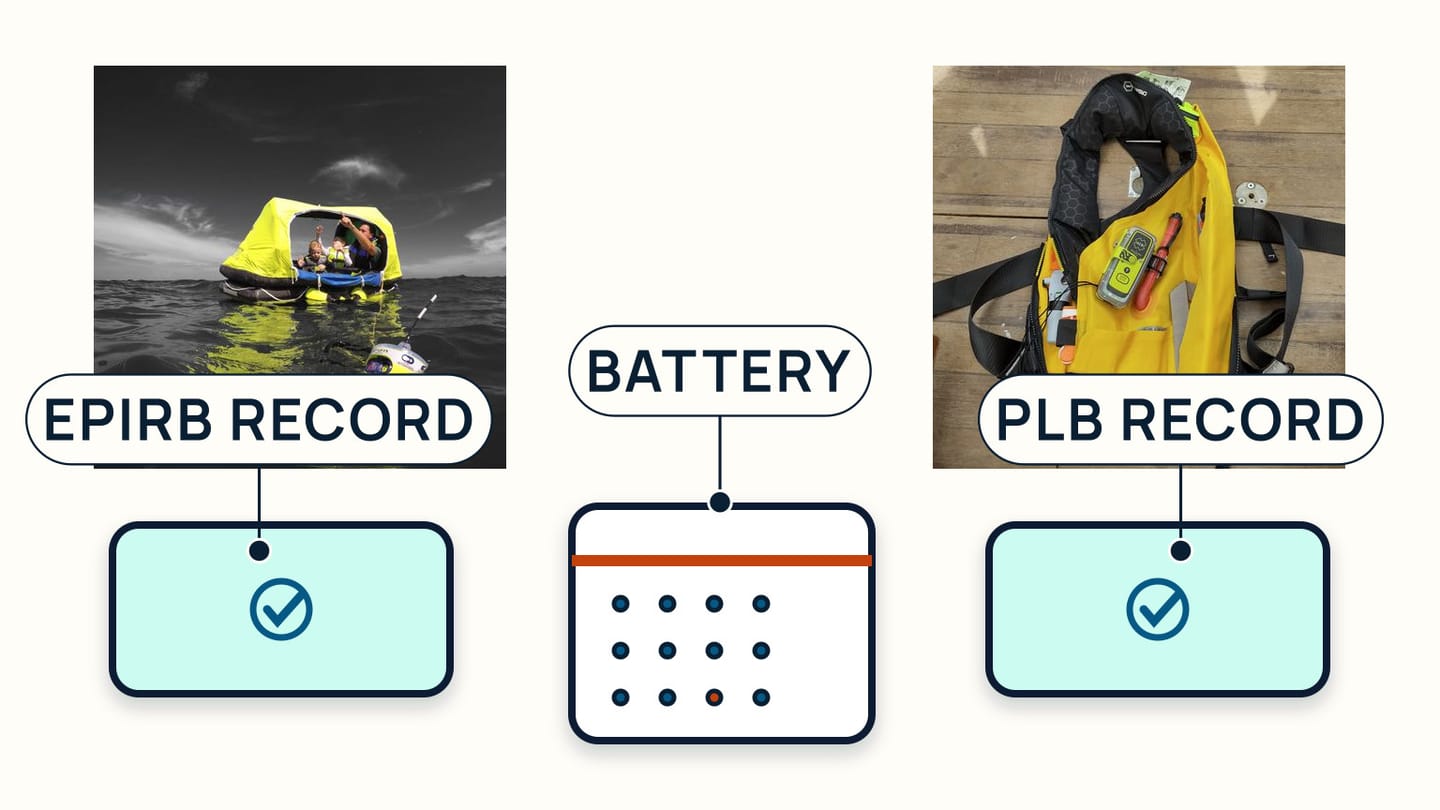
Registration is the least glamorous part of owning a beacon and by far the most consequential. You register with the national authority associated with the country code inside the beacon's 15 Hex ID, or in the International Beacon Registration Database where your country runs no register of its own and permits direct registration. It costs nothing. Whether it is legally compulsory is set nationally, so check what your own authority says, but treat it as compulsory regardless.
Here is why it earns its place. When an alert arrives without a position, search and rescue staff have nothing to work with except the registration record. Your contact details, the boat's description, and the name of someone ashore who knows your plans become the search. The same record lets a coordinator telephone you to check a suspected accidental activation, instead of launching resources at an empty sea. Keep it current the way you keep insurance current, and update it whenever the boat, the crew list, or your shore contact changes.
Two details catch people out. A beacon sold on stays tied to the old owner's record until that owner marks it as sold, and only then can the buyer register it, so a secondhand unit is worth checking before you trust it. And if the beacon offers Return Link Service, understand what the confirmation means: it tells you the distress message reached the authorities, not that anyone has launched. Battery expiry dates, service intervals, and that two-year hydrostatic release all belong on the same annual list as your safety equipment check.
Thinking about EPIRB vs PLB for sailors usually ends in the same place: one of each, a vessel beacon aboard and a personal device on anyone who goes forward in rough weather, because the two cover genuinely different accidents. Whatever you buy, the registration form and the expiry dates matter more than the brochure. If you would like the wider picture of how distress alerting fits together, from a spoken Mayday to what happens after someone hears it, SailStarter's Module 9 lessons cover marine communication in short visual steps with a quiz at the end of each one.
Try it from the lesson
Can you spot the next move?
Your engine has died and you're drifting in a calm, safe anchorage with no other traffic nearby. Is that a MAYDAY?
Why you can trust this guide
. We build each guide from public seamanship and safety sources, then teach the universal principle before any local difference.