Chart your course
Anchor Chain vs Rope Rode
Quick answer
The short version
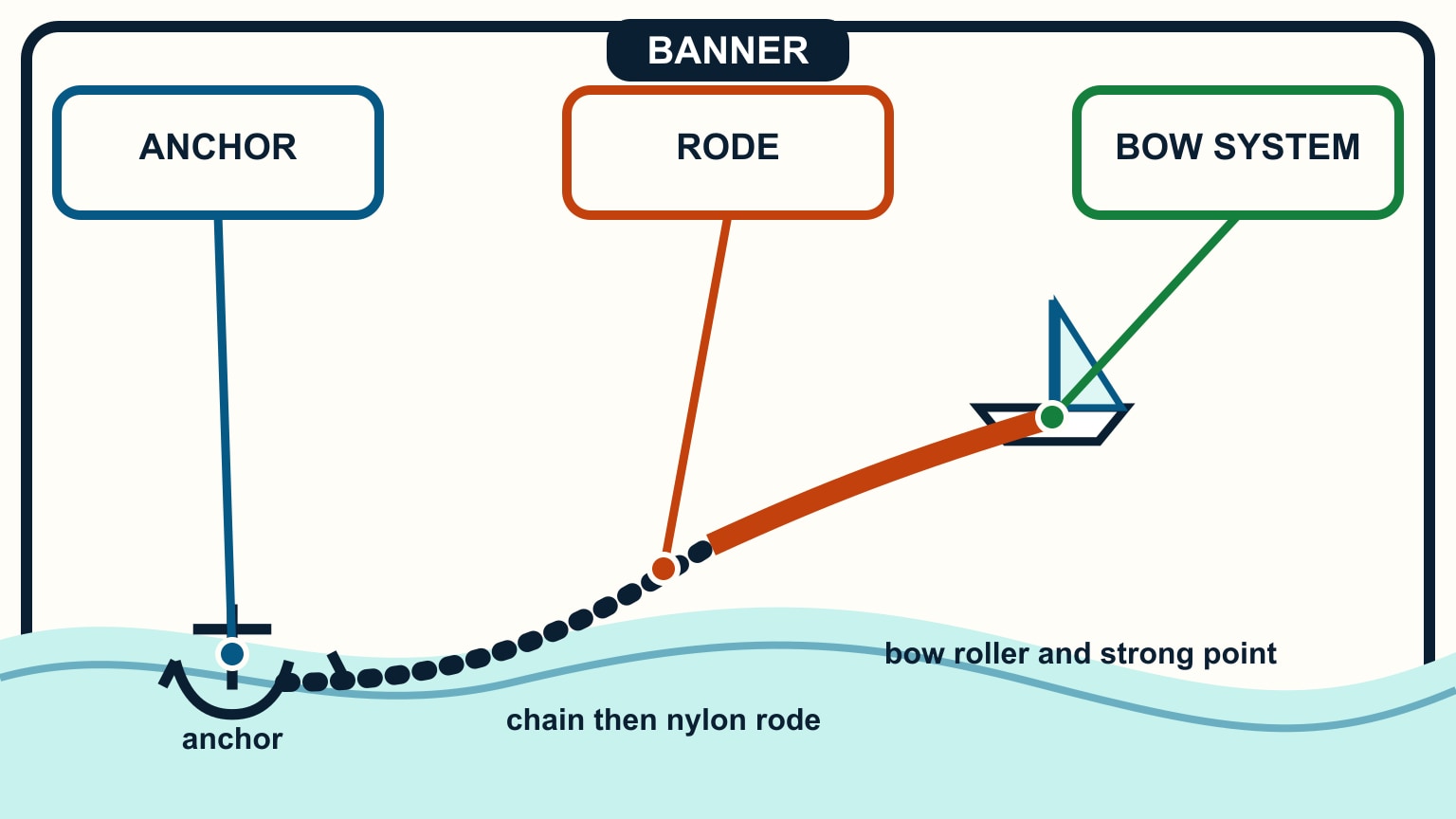
Chain resists seabed abrasion and passes securely through a matching chain gypsy, but it is heavy, noisy, and has little useful stretch. Nylon rope is lighter and elastic, so it absorbs changing loads, yet it needs protection from chafe and must fit the boat's handling gear. A combination rode can put chain near the seabed and rope farther aft, provided the splice or connection runs through the bow roller, windlass, and locker without jamming. Choose the whole system for the boat, anchor, expected bottom, depth, windlass, storage, strong points, and crew. Do not select one material from a single ratio or headline.
The rode is everything connecting the anchor to the boat. Its job changes along that path: resist abrasion near the bottom, transmit load, absorb shock, pass through deck gear, and stow without tangling. Before buying anything, read anchor scope explained so material choice and deployed length remain separate decisions.
Each material trades abrasion resistance, stretch, and weight differently along that same load path.
| Dimension | Chain | Nylon rope | Combination |
|---|---|---|---|
| Abrasion resistance near the seabed | High — tolerates rock and coral contact | Low — saws through where it rubs | High near the anchor, where the chain leader sits |
| Elastic stretch to absorb load | Minimal; usually needs a snubber or bridle | Significant; softens snatching loads | Comes from the rope section, once chain is pulled straight |
| Weight to carry and stow | Heavy; harder to lift and store high in the bow | Light | Lighter than all-chain, heavier than all-rope |
| Deck-gear fit | Needs a matching chain gypsy | Needs the diameter and construction approved for the gypsy | Needs a splice or connection that travels through the gypsy cleanly |
| Noise at the bow | Higher | Lower | Reduced versus all-chain |
| Chafe protection needed | Rarely, though shackles and swivels still need inspection | Always, at rollers, chocks, rock, or coral | At the rope section only |
Begin at the bow roller and locker
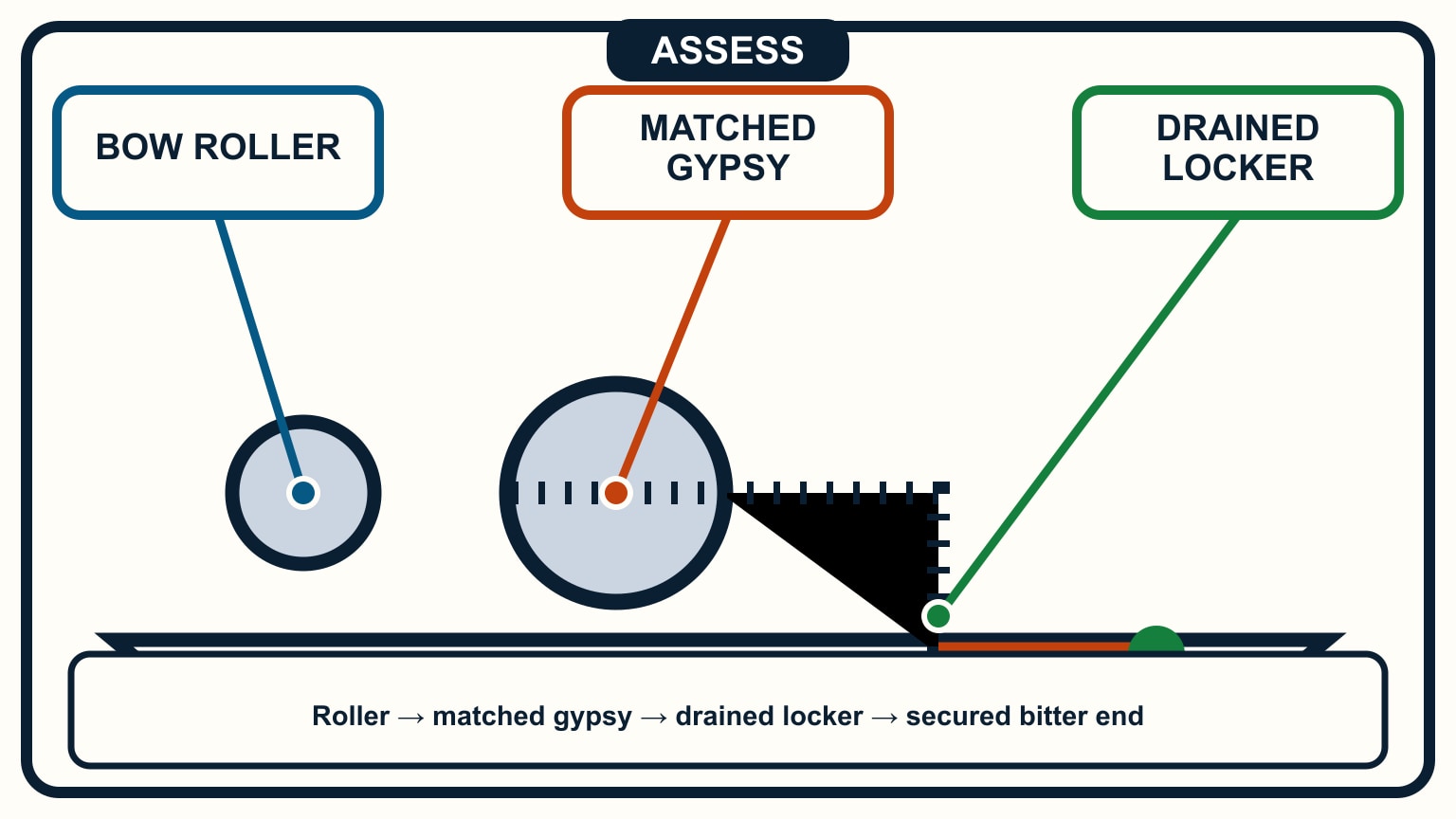
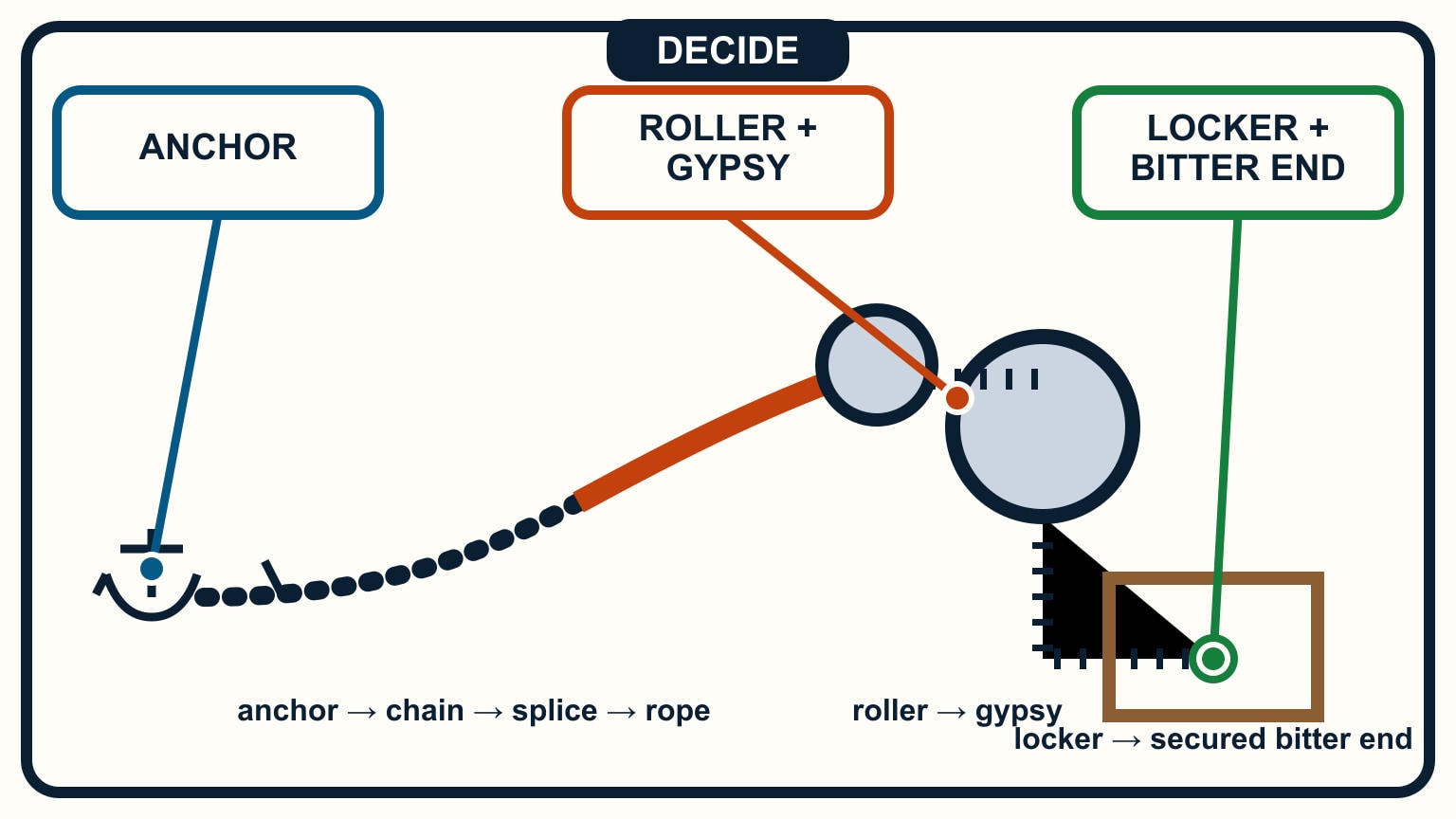
Inspect the installed route from anchor shank to the boat's strong point. The anchor must sit securely on the roller. Chain or rope must approach the windlass in the alignment its manual specifies, leave the gypsy cleanly, and fall into a locker with enough depth and drainage. A rode that looks ideal on a product page can fail as a system if it piles beneath the windlass or its splice stalls at the deck pipe.
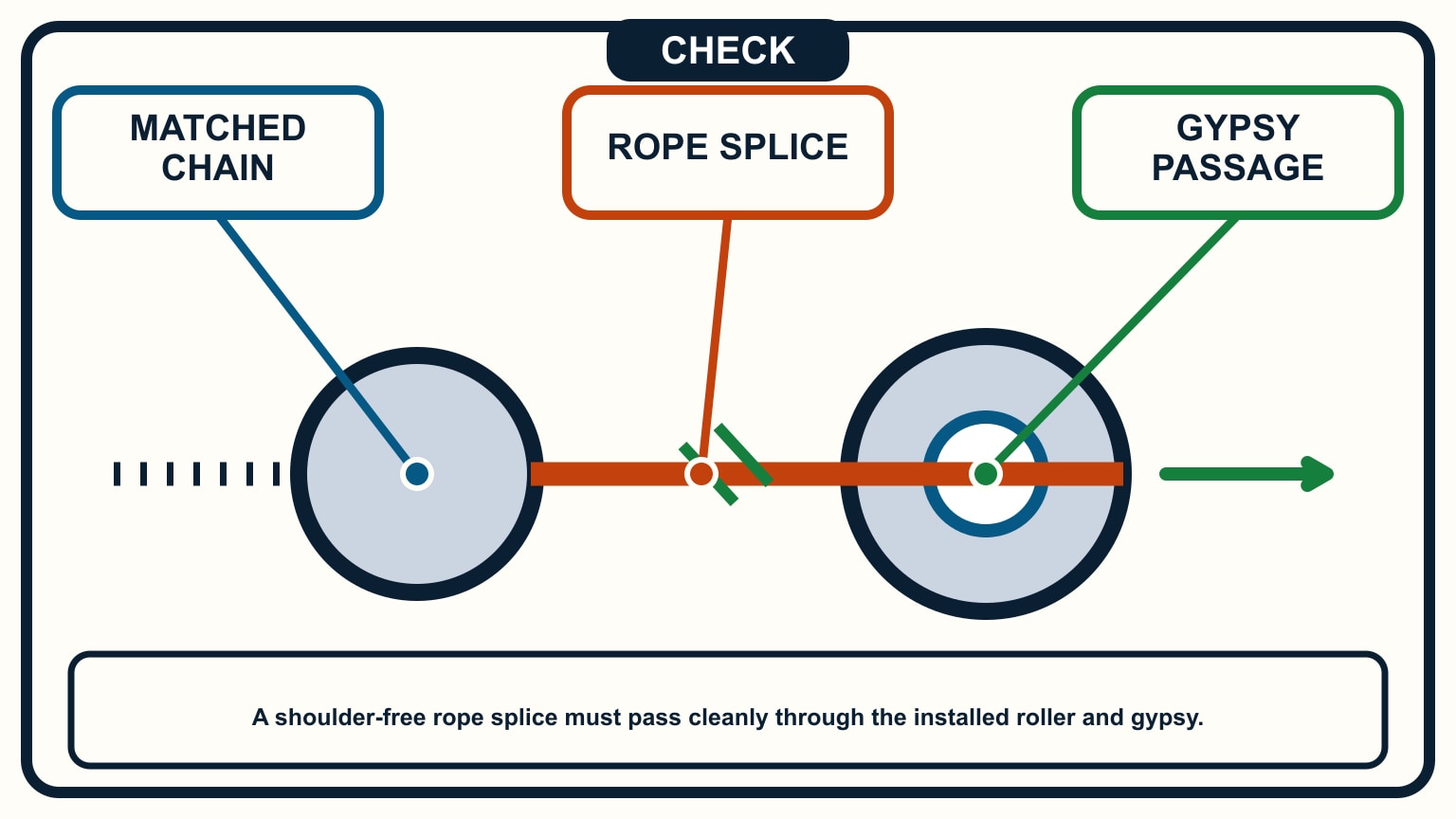
Identify the windlass model and the exact gypsy. Chain is calibrated by dimensions as well as nominal size. Rope also needs the diameter and construction approved for that gypsy. Lewmar and other manufacturers publish compatibility information because a mismatched link or line can ride, slip, or jam instead of seating properly. A manual windlass or hand-retrieved rode creates a different handling limit.
Find the independent strong point used to secure the rode. The windlass should not be treated as the final mooring point. Check the cleat, samson post, chain stopper, snubber arrangement, and backing structure. Trace where hands and feet would be during deployment and recovery, then remove any route that asks a crew member to stand in a bight or reach near a loaded gypsy.
Measure the locker and examine its contents. Mud, standing water, corrosion flakes, stiff rope, and a poorly finished splice all affect how the system works on the next recovery.
What happens under load?
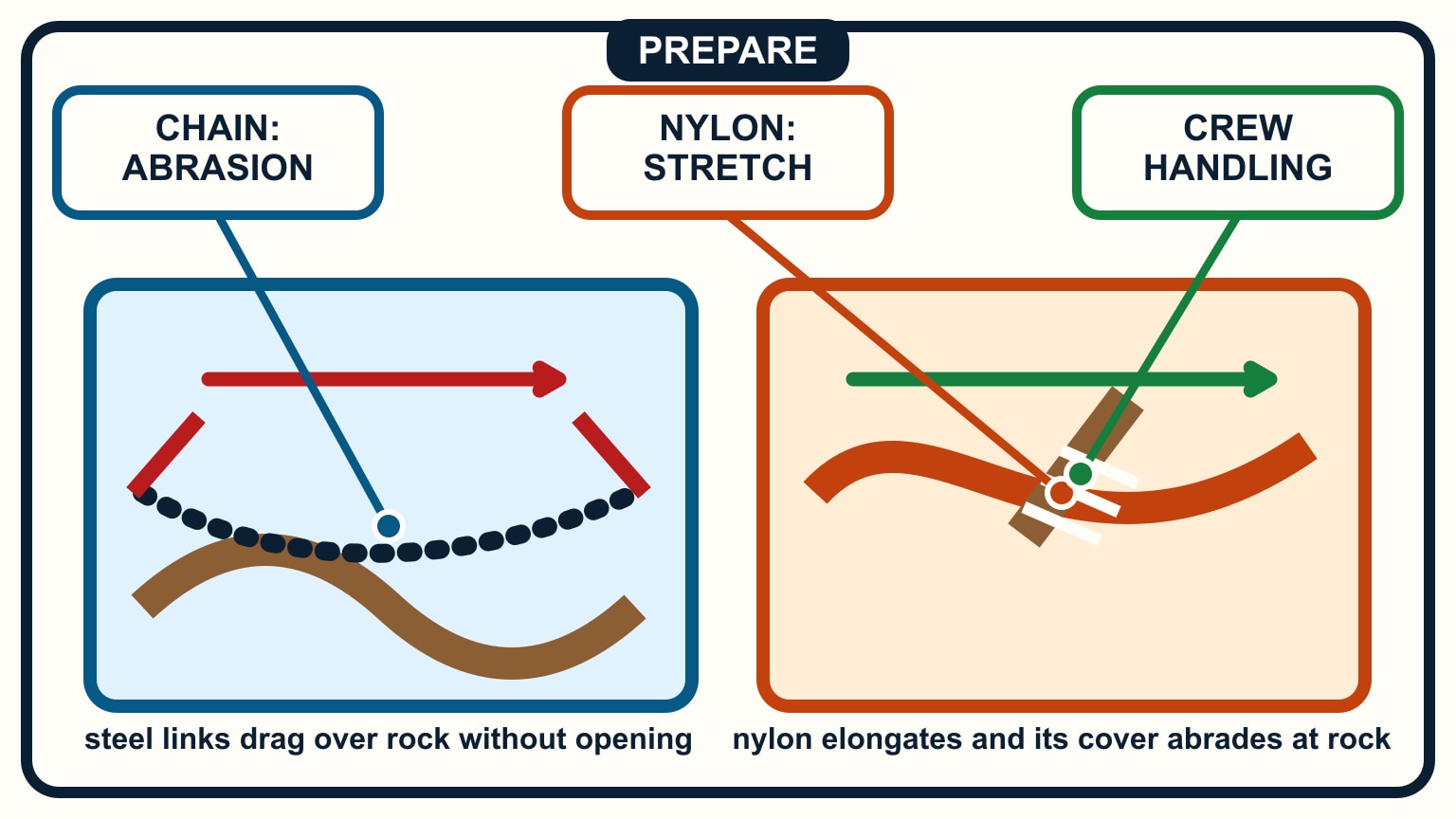
Chain brings weight and abrasion resistance to the lower part of the rode. On a rough bottom, metal can tolerate contact that would quickly damage unprotected rope. Its weight also makes it harder to carry forward, retrieve by hand, and stow high in the bow. Chain does not provide the same elastic stretch as nylon, so an all-chain system normally uses a correctly sized snubber or bridle to absorb changing loads and move strain away from the windlass.
Nylon rope is light and stretches under load. That elasticity can soften snatching as the boat surges. The same material is vulnerable where it saws over rock, coral, a roller cheek, a rough chock, or another line. It also changes handling: wet rope occupies locker space, can form turns, and must be kept clear of the propeller and crew.
Neither material guarantees holding. The anchor must be suitable and set in the bottom, enough rode must be deployed for the conditions, and every link in the load path must be sound. Heavy chain cannot rescue an anchor skimming over the seabed. Stretchy rope cannot compensate for a cut halfway through its cover.
For the broader ground-tackle decision, compare boat anchor types after you understand the boat's bow and rode route.
Picture the rode from bow to seabed
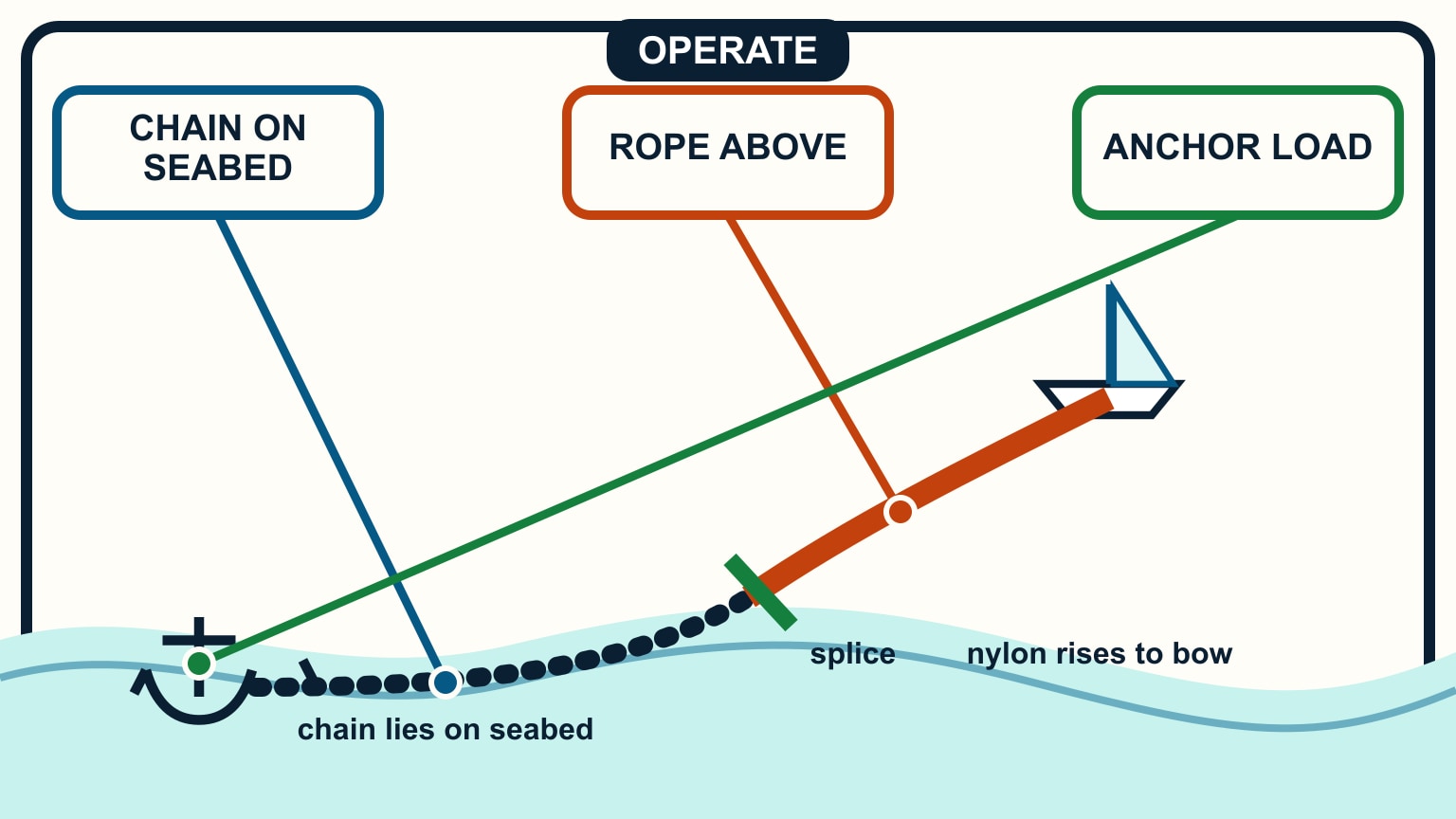
Under light load, chain may hang in a curve before it reaches the bottom. As wind and waves build, that curve can straighten and its remaining cushioning falls away. The rode then needs elasticity elsewhere, usually from nylon in a rope rode or an all-chain snubber. This is why “chain has catenary” is incomplete advice. The useful question is what absorbs a changing load after the chain is pulled straighter.
The lower rode also moves as the boat swings. Chain can sweep the seabed and abrade marine habitat. Rope near rock or coral can chafe through. Anchorage choice, bottom type, swing room, and local environmental rules therefore matter alongside material. Use current local guidance and avoid anchoring where the bottom or regulations make it inappropriate.
A combination rode divides the jobs. A chain leader stays near the anchor and takes early seabed contact; nylon provides lighter bulk and elasticity farther along the system. The transition must remain strong and must pass through every piece of hardware used in normal operation. Some boats use a splice designed to travel through a combination gypsy; others use a connection that needs manual handling.
Draw your own boat's path at three moments: anchor on the roller, rode running during deployment, and rode loaded at anchor. The drawing often reveals a missing strong point, a sharp edge, or a connection that cannot travel as assumed.
Inspect the transition and wear zones
Work from the anchor toward the bitter end, the inboard end secured to the boat. On chain, look for distorted, elongated, deeply corroded, or badly worn links. Pay extra attention where the chain bears on the roller, gypsy, stopper, hook, and seabed. Confirm shackles and swivels are installed and secured as their makers require, without side-loading a part that is not designed for it.
On rope, inspect the full circumference for broken yarns, glazing, hard patches, cuts, inconsistent diameter, and internal abrasion where the construction allows it to be opened. Check the eye or splice at the chain and the part that sits in a cleat or windlass. Salt and dirt can hide damage, so clean and dry the rode according to the rope maker's instructions before a detailed inspection.
Exercise the transition unloaded. Feed it over the bow roller and through the windlass at the slowest controlled pace allowed by the manual. Watch from a safe position. It should seat, travel, and fall without a crew member pulling near the gypsy. If it hesitates, climbs, or bunches, stop and correct the compatibility or locker issue.
Marking length can help deployment, but marks must remain readable and must not harm the rope or chain. Keep a written key aboard. A colour code remembered by one person is not a crew system.
Choose the system your crew can recover
Build the decision around a real anchoring day. How deep is the water, what bottom and exposure are expected, how much rode can the locker carry, and who must handle it if the windlass stops? A heavy all-chain rode may fit the cruising job and powered gear but be unrealistic to lift manually. A rope-heavy rode may be manageable yet demand more chafe protection and a different gypsy.
Price the complete change. New chain may require a different gypsy, stronger locker support, a chain stopper, and attention to bow trim. New rope may need a purpose-made splice, revised chafe protection, and a clean fall into the locker. Include the anchor connector, snubber or bridle, strong points, and a way to secure the anchor for sea.
Test the system in sheltered conditions. Deploy, set, transfer load off the windlass, recover, wash, and stow it with the normal crew. Then practise the manual or backup method in the windlass manual. The trial should reveal whether the crew can communicate, whether the rode self-stows, and where a hand might be tempted into danger.
Once selected, use the rode as part of a full overnight anchoring routine, with position checks and changing conditions still driving the watch.
SailStarter can teach the anchoring sequence and the boat vocabulary behind these choices. The final specification still belongs to the vessel's manuals, equipment makers, and a competent installer or rigger. Start at the bow rather than at the chandlery: identify the roller, gypsy, locker, strong points, expected bottom, and realistic backup recovery. A rode is successful when every part works together and the crew can inspect, deploy, load, and recover it without improvisation.
Before buying, lay out the proposed system from anchor shank to bitter-end attachment on paper. Record every rated connector, splice, roller, gypsy, cleat, and locker turn. A component that cannot pass the installed route or be inspected in place is not a complete solution, however attractive its catalogue specification looks. Then ask the equipment maker or a competent rigger to resolve any mismatch.
Try it from the lesson
Can you spot the next move?
Besides a lunch stop, when else does a day-sailor reach for the anchor?
Why you can trust this guide
. We build each guide from public seamanship and safety sources, then teach the universal principle before any local difference.