Chart your course
Anchoring in Sand vs Mud vs Weed
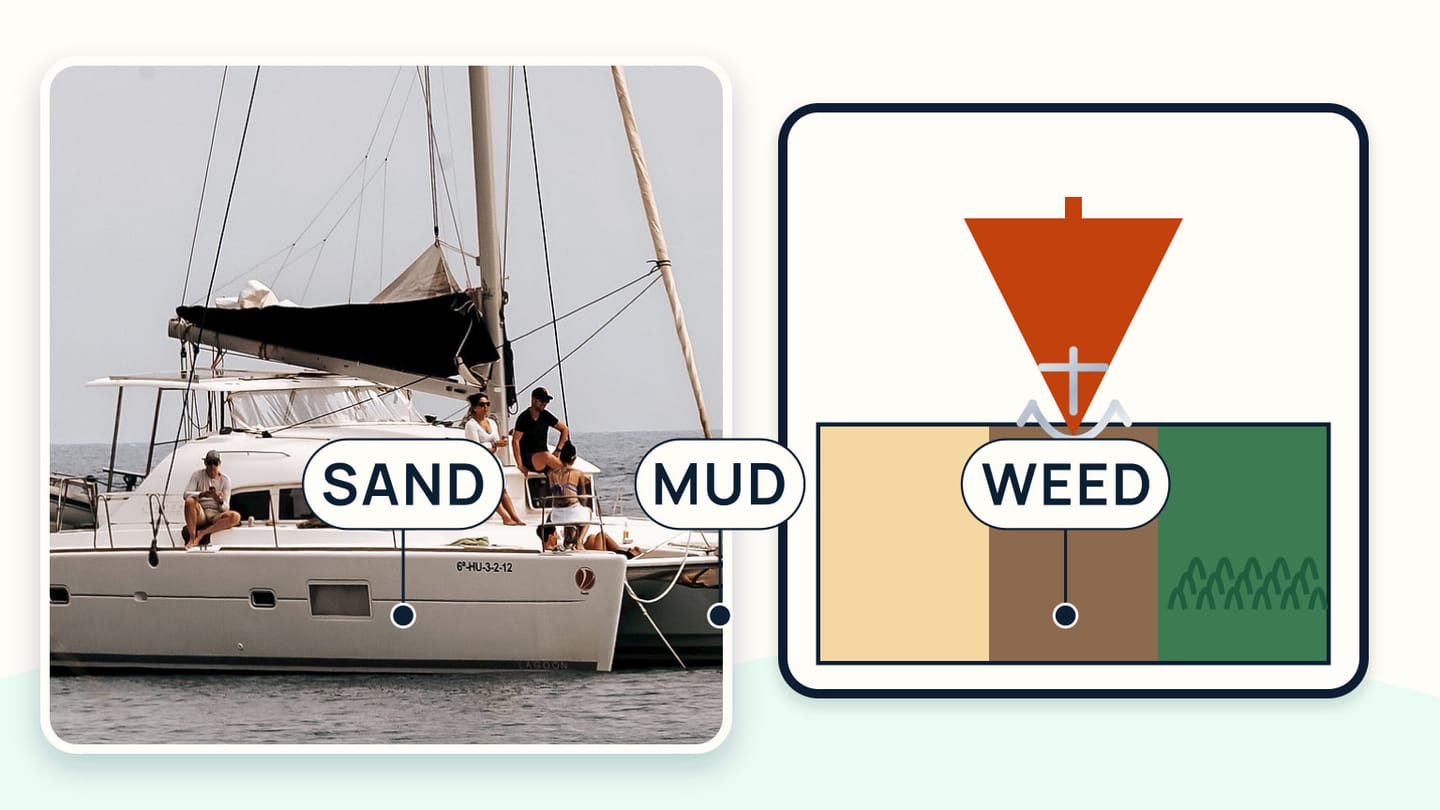
Quick answer
The short version
Sand, mud, and weed are useful clues about an anchorage. They are not promises that your anchor will hold. Charts can show bottom information, depth, and hazards. Looking at the water and what comes up on the anchor adds more clues. The decision is settled only when your own anchor has set in the patch you chose and you have checked that it holds. If it does not, recover it, inspect it, and try a different patch or a different plan instead of arguing with the bottom label.
Good anchoring is a chain of small decisions. Pick a protected place with room. Read the chart and conditions. Lower the anchor in a controlled way. Pay out suitable rode, then confirm the boat is staying put. Bottom type changes how you interpret the attempt, especially when the first pull does not feel convincing. This guide helps you respond without pretending that one anchor or one seabed name wins everywhere.
Read the chart as a planning tool
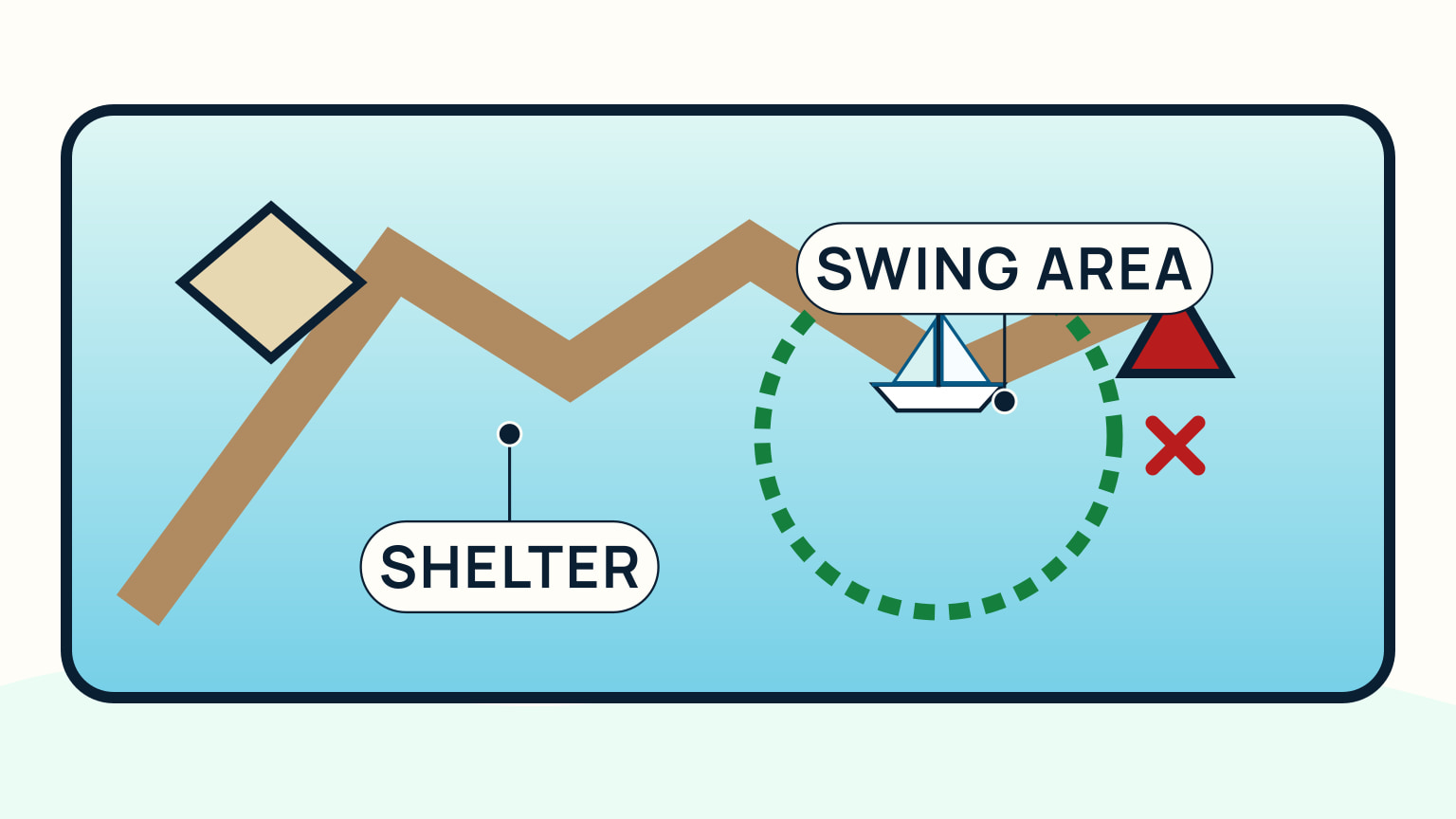
Start before the anchor reaches the water. Nautical charts can carry depths, hazards, bottom characteristics, and other anchorage information. That gives you a first picture of the place, including whether the water is deep enough and whether the whole expected swing area contains an obvious problem. It does not show every change in a living seabed or every obstacle that matters to your boat on that day.
Use the chart with what you can observe. Look at nearby boats, wind, current, and the available room. Check the weather protection that drew you there in the first place. Then keep the plan flexible. A charted abbreviation might lead you to a likely patch, while a trial set tells you what actually happened. How to choose an anchorage gives the wider site-selection process, and anchor scope explained covers the rode geometry that lets an anchor work once you have chosen the place.
Treat firm sand as a test, not a guarantee
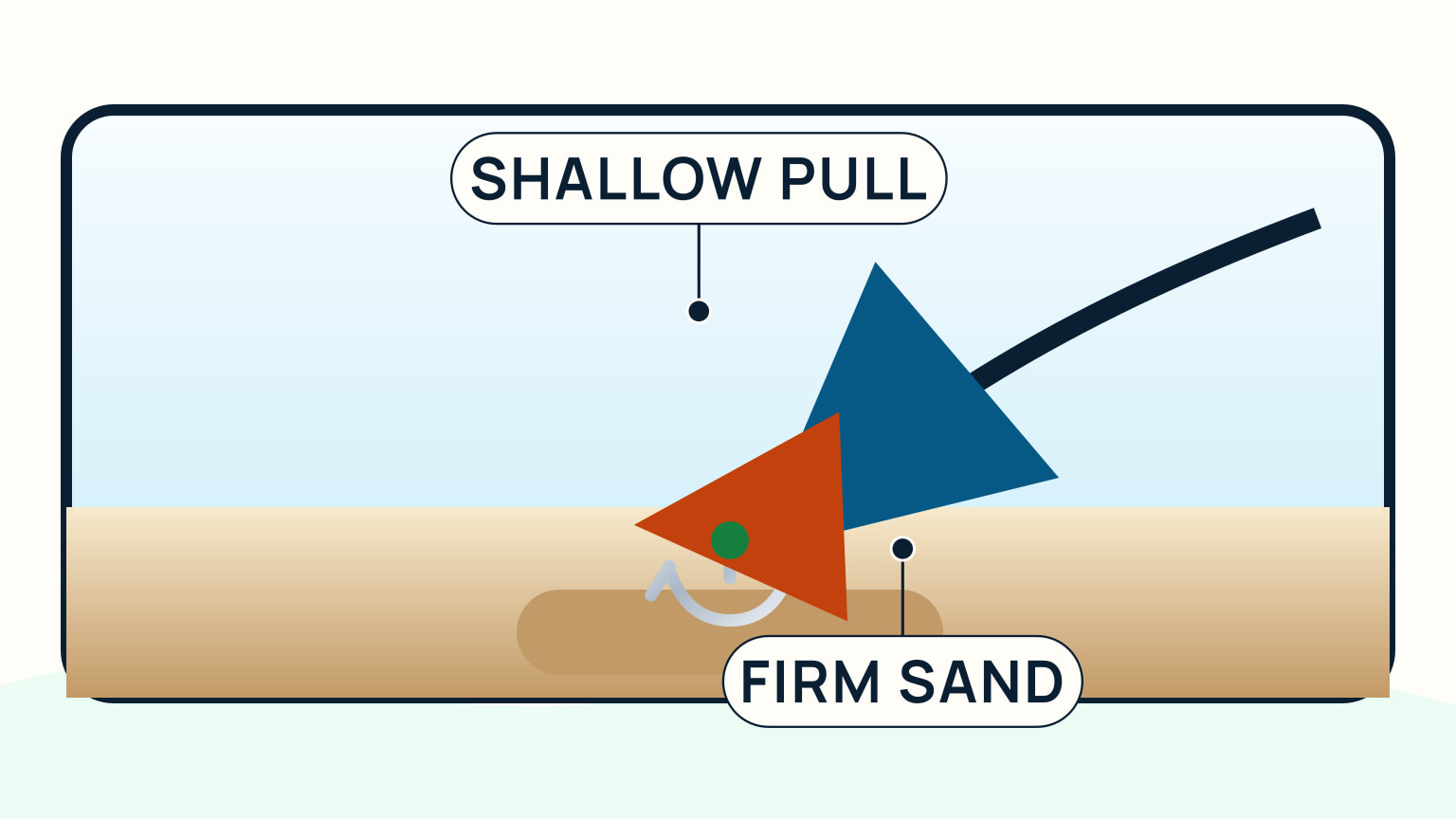
Clear firm sand can give an anchor a consistent chance to penetrate. Rocna's seabed guidance also notes that very hard sand can resist initial entry. That is why "sand" does not finish the job. The actual patch may be compacted, scattered with hard material, or different from the charted description. Lower under control and let the boat move back as you pay out rode, rather than dropping the anchor with no plan for how it will land.
Once the rode is out, make a deliberate holding check. Use a transit, bearing, or another reliable way to see whether the boat is staying where the set says it should. If the anchor skips, does not bite, or comes back carrying a clue that the patch is unsuitable, move. Do not keep increasing force in the hope that the bottom will change its mind. A new patch a short distance away can give a different result, which is useful information rather than a failure.
Give soft mud time and a careful check
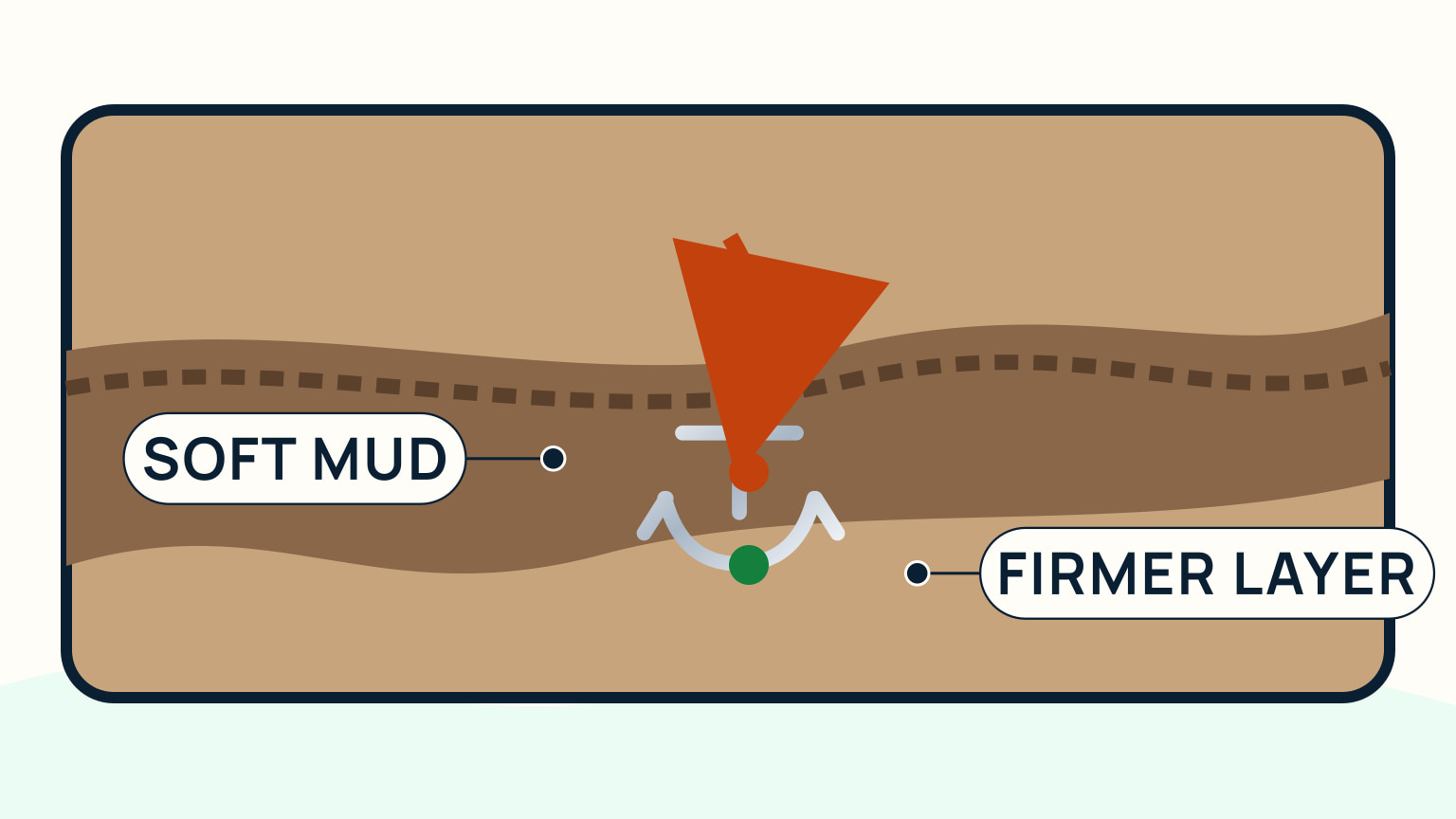
Soft mud needs a different kind of patience. Rocna's guidance says that soft mud can need time and an anchor geometry suited to developing holding. A quick tug can therefore be a poor substitute for a thoughtful set and a continued position check. The relevant question is still the same: has this anchor, in this patch, held the boat through the load you are asking of it?
Be especially cautious of a thin firm layer over softer material. It can make an early check feel more certain than the deeper holding material deserves. Pay attention to what is on the anchor if you recover it, then reassess the patch and your plan. You may decide that the result is adequate after a proper confirmation. You may decide that the holding evidence is not good enough for the time you intend to stay. Neither answer comes from the word mud alone.
Assume weed can block the working parts
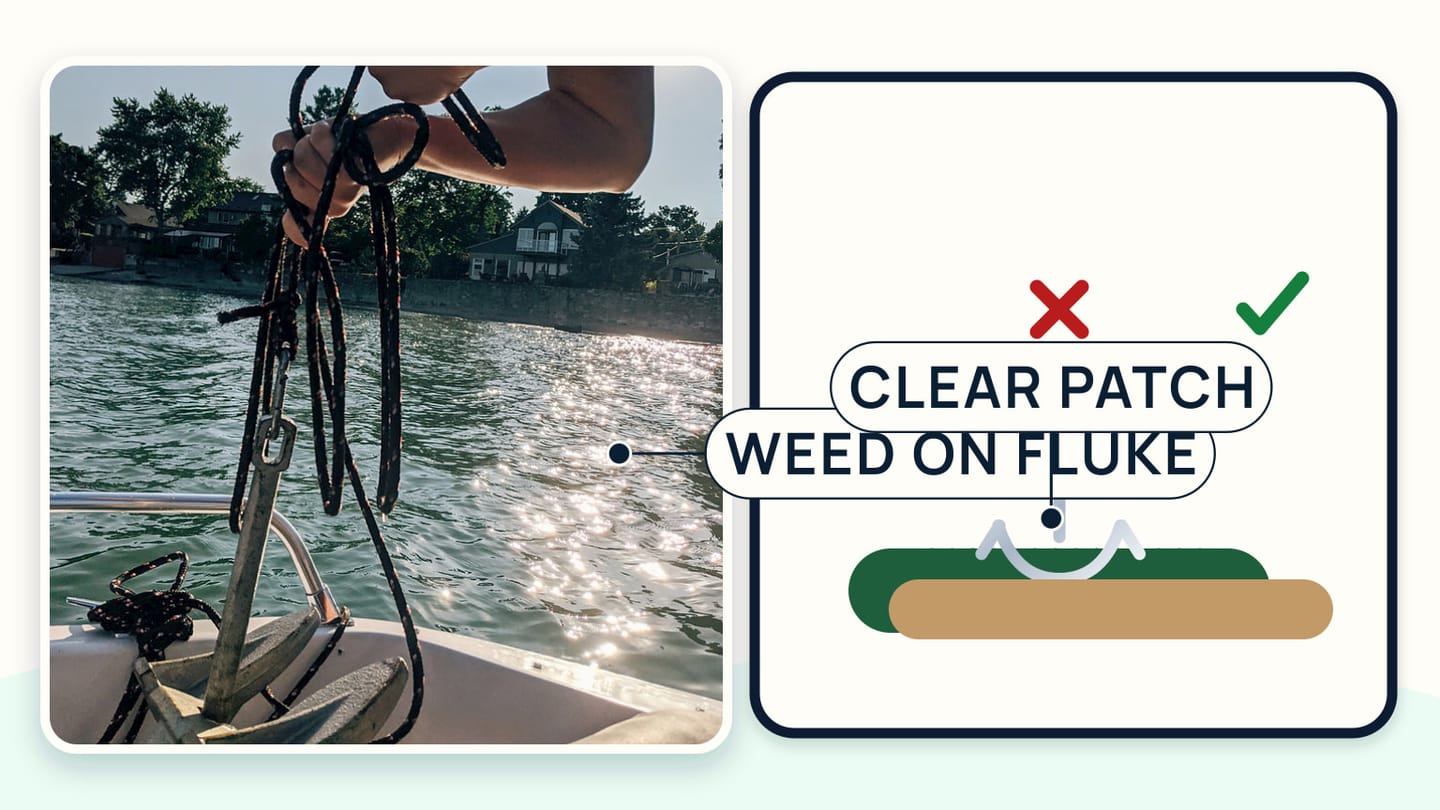
Weed presents a different problem. It can stop an anchor reaching the material below and can foul the fluke or other working surfaces. When that happens, the anchor may look as though it has found the bottom while actually sitting on a layer it cannot penetrate. More rode does not turn a fouled anchor into one that has reached holding ground.
Use the recovery as evidence. If weed comes up around the anchor, inspect where it caught and decide whether a clearer patch is available. Keep crew and hands clear of loaded rode while you reset. You may find a workable gap; you may find that the anchorage is simply a poor match for your equipment and plan. The sensible response is to change position or leave, not to label an unproven hold as good enough because other boats are nearby.
Prove the set and keep checking it
Every bottom type returns you to the same final step: confirm the set. Anchor with enough room, use suitable scope for the conditions and your rode, then observe the boat's position. A transit of fixed features or another consistent reference can reveal movement that the cockpit does not make obvious. Check again when wind, current, tide, or your expected stay changes. The boat's swing area is part of the decision, not something to calculate after everyone has settled in.
If the anchor fails to prove itself, bring it up and learn from what you find. A reset is often quicker and calmer than spending an evening worrying about a questionable hold. How to set an anchor alarm is a useful extra watch tool, but it does not replace the first set check. SailStarter's choosing-your-spot lesson helps you put bottom clues, shelter, and swing room together before the anchor goes down.

SailStarter can give you the visual foundation for choosing an anchorage and setting an anchor. The water still asks you to read the actual place. Bring current charts, watch the conditions, use your boat's gear correctly, and move when the holding evidence is weak.
Make the first attempt easy to review. Note the depth, the rode you paid out, the place you dropped, the reference you used to check movement, and what the anchor brought back if you recovered it. That small record trains you to distinguish a real set from a hopeful impression. It also makes a later conversation with an experienced skipper much clearer. You can describe what the anchor did instead of relying on the word "bad."
Weather, local restrictions, and the condition of ground tackle still matter alongside bottom type. If the site is unsuitable for any of those reasons, choosing another anchorage is the right answer even when the seabed looks promising.
Give the crew a simple observation task after setting. One person can watch the reference, another can keep an eye on the rode and nearby boats, and the helm can decide whether the evidence is enough. Small shared jobs make it less likely that everyone assumes someone else has confirmed the hold.
The anchor has no obligation to match an expectation formed from a chart symbol. Good anchoring stays responsive to the evidence at the boat.
Talk through the reset before you need one. Decide who watches the boat's position, who handles rode, and where the crew will stand while the anchor is recovered. A planned reset makes it easier to move calmly when the first patch has not provided convincing evidence. The goal is not to defend the first attempt. It is to end up securely anchored.
Treat the first set as a sequence of observations rather than a single pull. Look at the patch before anchoring, note what the boat does as the rode takes up, then use the same reference again after the load settles. If you recover the anchor, inspect it before deciding what the result means. Clean sand, soft material, or weed on the working parts are useful clues only when you connect them to the way the boat actually held.
That sequence also makes a move easier to justify to the crew. Instead of saying that a bottom type felt wrong, you can say what you observed: the anchor skipped, the transit changed, the fluke came up fouled, or the swing area was no longer suitable. Choose the next patch with those facts in mind. A careful reset is part of normal anchoring, and it gives you a better basis for the next holding check than repeating the same attempt harder.
When you leave the anchorage, include the set in the debrief. A quick note about the bottom, the holding check, and any reset gives the next anchoring decision a factual starting point instead of a story remembered after the weather has changed.
Try it from the lesson
Can you spot the next move?
The chart shows a kelp patch right where you were planning to drop the hook. Why does that change your plan?
Why you can trust this guide
. We build each guide from public seamanship and safety sources, then teach the universal principle before any local difference.