Chart your course
Anchor Snubber vs Bridle
Quick answer
The short version
A snubber is one elastic line between an all-chain rode and a strong point on the boat. A bridle does the same job with two legs, usually leading to strong points on opposite sides of the bow. Both should take the anchoring load off the windlass, add stretch as the boat surges, and protect the chain from a hard metal-to-metal load path. Choose between them from the boat's strong points and bow geometry. Size the line and attachment for the boat, protect every rubbing point, pay out enough chain for the elastic line to carry the load, and keep crew clear while the system is tensioned.
This is not a comfort accessory added after anchoring. It is part of the loaded ground tackle. The chain hook, hitch, or pendant, the nylon line, its chafe gear, the cleats, and their backing all need to work together. Start with anchor chain versus rope rode if the role of elasticity in the full system is still unclear.
Both arrangements unload the windlass and add stretch, but they split the job differently across the bow.
| Dimension | Snubber (single line) | Bridle (two legs) |
|---|---|---|
| Attachment points | One line to one primary strong point | Two legs, each to its own strong point |
| Typical boat fit | A monohull with a fair, central lead | A catamaran, where two legs can centre the pull between the hulls |
| Inspection and recovery | Simpler — one line, one connection | More to check — both legs, both leads, both cleats |
| Load sharing | The single line carries the whole load | Both legs should share the pull evenly; a slack leg signals a length or lead problem |
| Routing risk | Must clear hardware along one lead | A leg crossing hardware can be worse than a clean single snubber |
| Chafe protection | Needed at one contact zone | Needed at each leg's own contact zone |
First move the load off the windlass
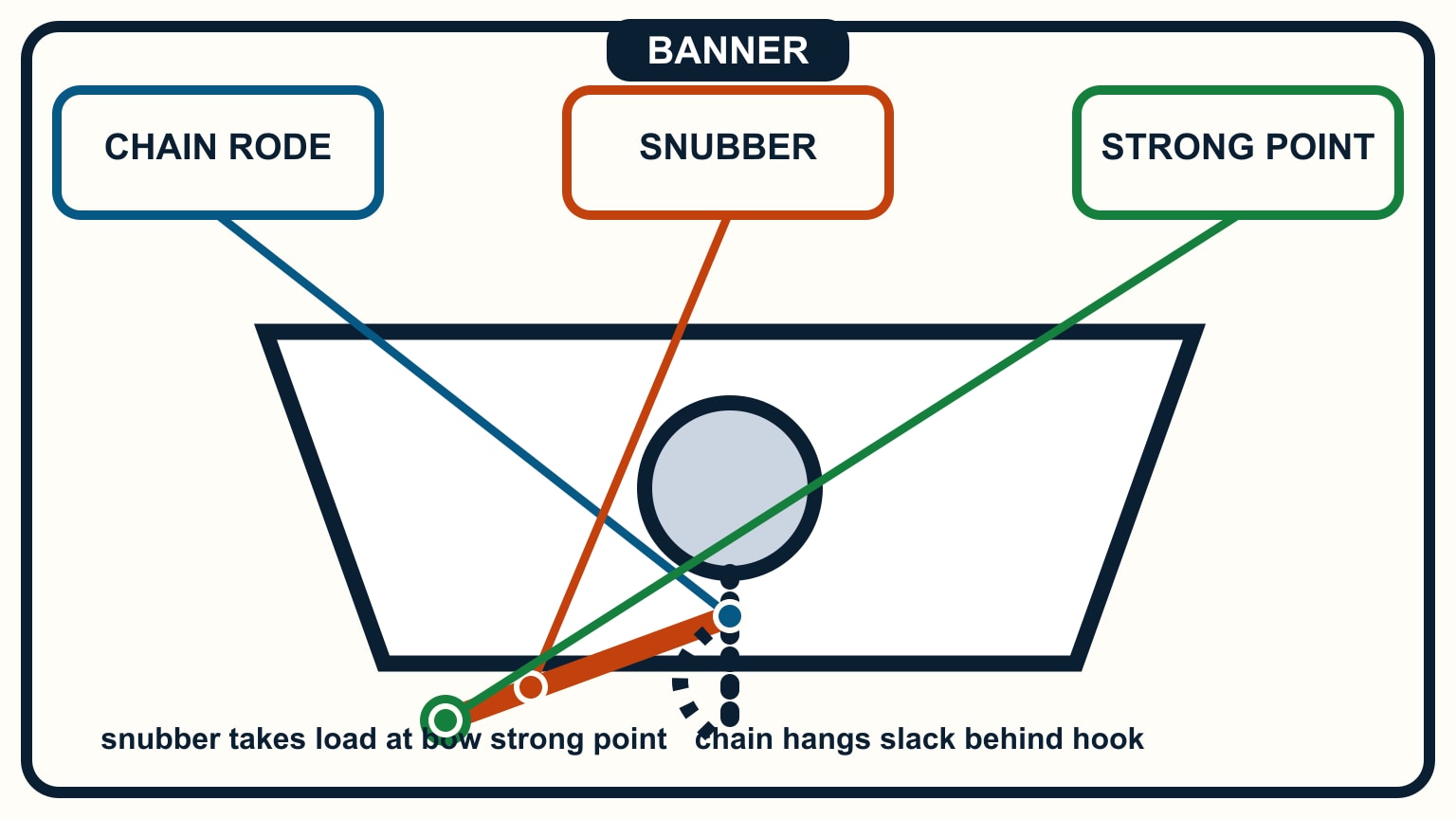
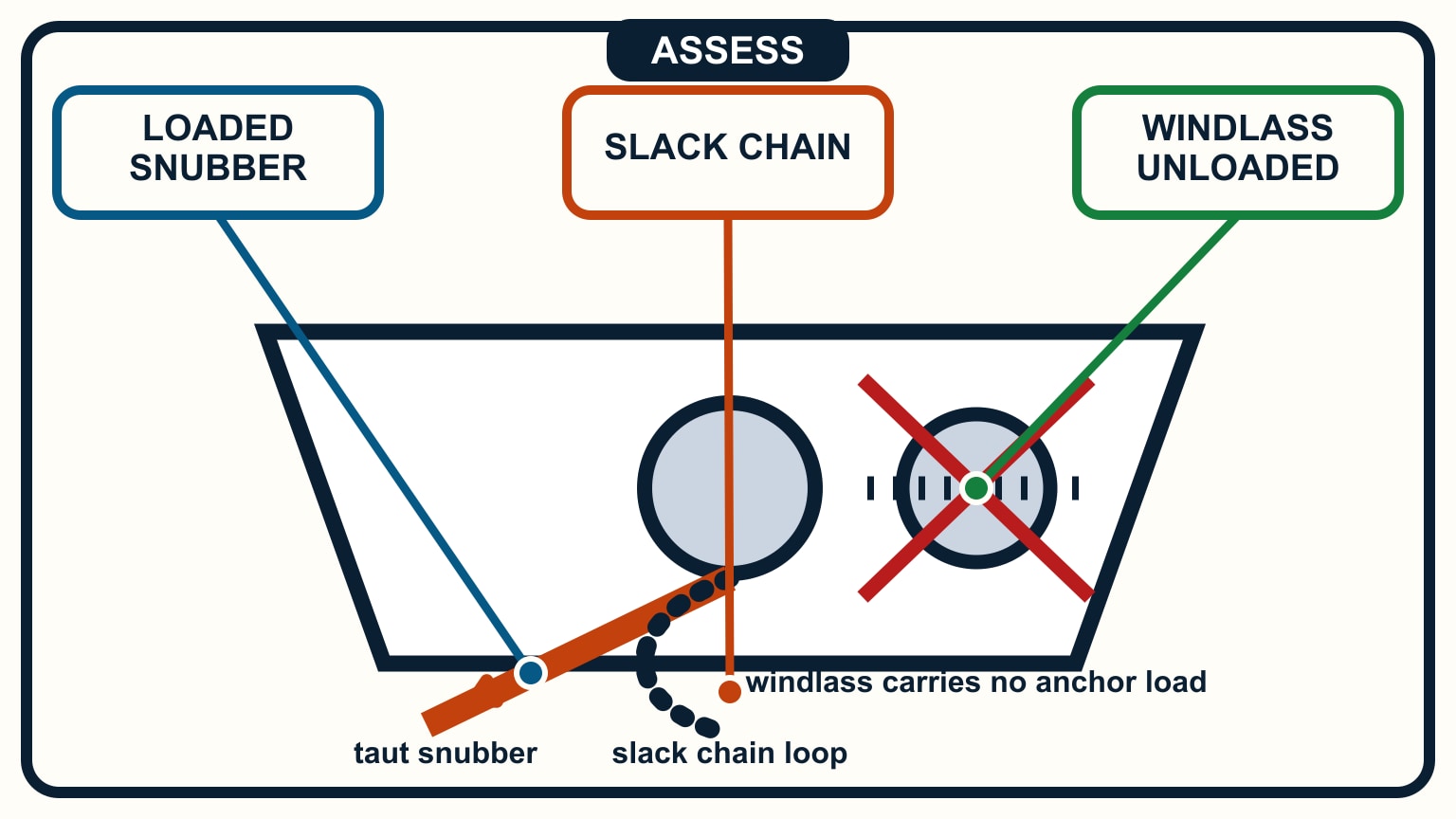
Set and check the anchor before rigging the snubber or bridle. With the boat controlled and the chain temporarily held as the windlass manual directs, connect the elastic line to the chain using the approved hook, pendant, or hitch. Lead the line to a proper strong point and take up slack. Then pay out more chain until it hangs loose between the attachment and the windlass. That visible slack confirms the elastic line, rather than the gypsy, is carrying the steady load.
A windlass raises and lowers the rode. Its gearbox, motor, deck joint, and gypsy are not the intended overnight mooring point. Manufacturer guidance calls for securing the rode independently and using a snubber or chain hook once the anchor is set. A chain stopper may be part of the installed arrangement, but it does not replace elastic shock absorption.
Do the transfer slowly. Keep fingers away from the chain hook, gypsy, cleat, and any bight. Nobody should straddle the line or lean over it to see whether the connection has seated. The helm and bow crew need a stop signal that works without shouting.
After the load settles, check that the chain remains slack at the windlass and that the line leads without pressing against a sharp roller cheek, pulpit base, or deck edge.
Choose one leg or two from the bow layout
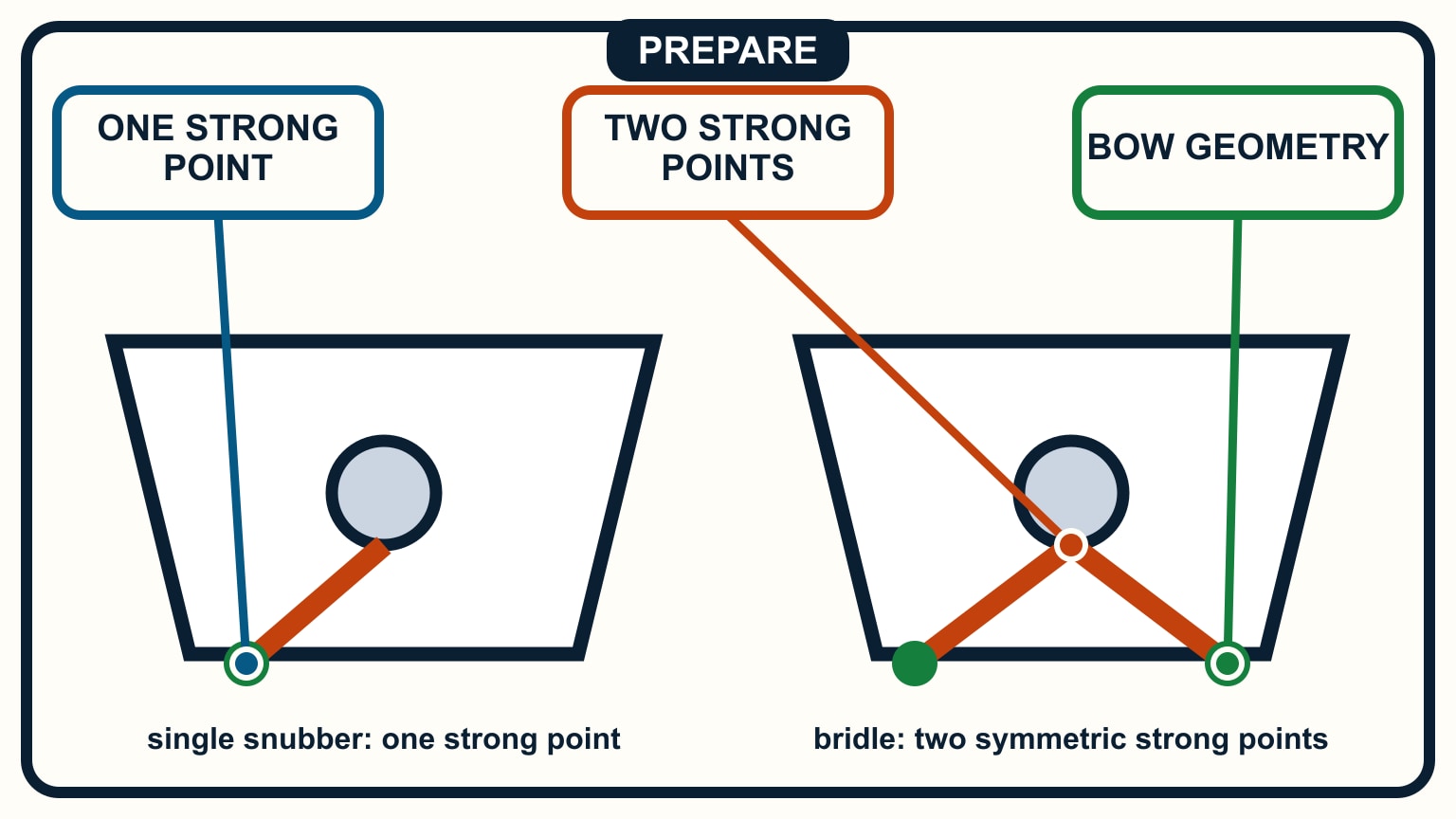
A single snubber uses one line and one primary strong point. It can suit a monohull with a fair central lead and a cleat backed for the anchoring load. Its simplicity makes inspection and recovery straightforward. The line still needs room to stretch without rubbing and must not pull sideways across hardware designed for another direction.
A bridle splits the connection into two legs. Each leg leads to its own suitable strong point, meeting at the chain attachment. On a catamaran, that geometry can bring the effective pull toward the centre between the hulls. On other boats, it can centre the rode ahead of the bow and distribute the arrangement across two leads. Two legs do not excuse weak cleats or unequal chafe.
Draw the loaded path before choosing. Mark the chain attachment, every fairlead or chock, and the cleat or post at the end of each leg. The line should clear anchors, rollers, stanchions, navigation lights, and sharp deck fittings through the boat's expected swing. A bridle whose port leg crosses hardware may be worse than a clean single snubber.
Use the boat builder's information and the equipment maker's sizing guidance. Do not assume any bow cleat is an anchoring strong point merely because a dock line fits around it.
Give the elastic line room to work
Nylon is commonly chosen because it stretches under load. That stretch softens the peak as wind or a wave moves the boat back. A short, oversized line may be strong on paper yet have little working length available to absorb movement. A very light line may stretch but lack the required strength. Follow a system-specific sizing table rather than copying another boat.
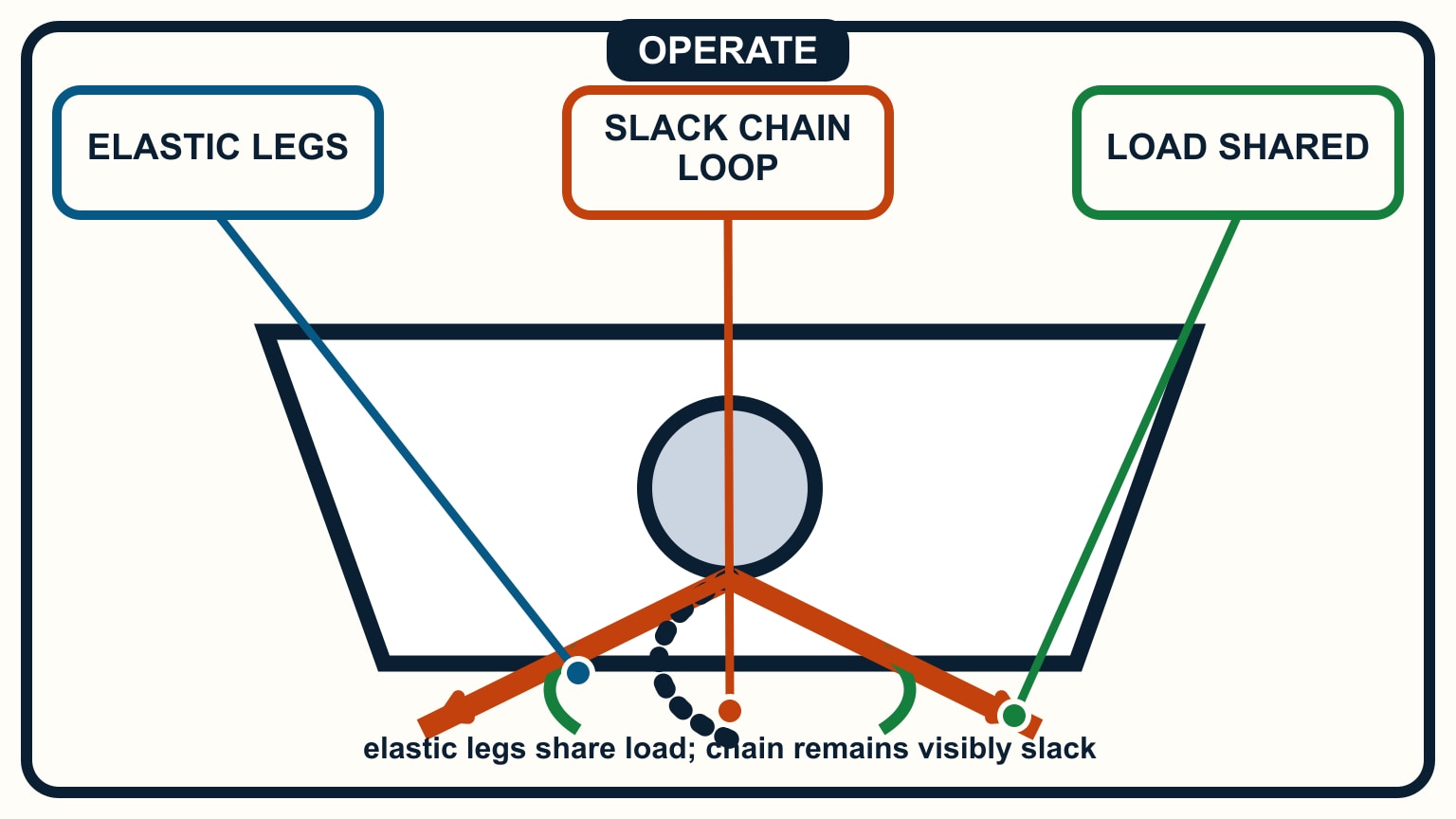
Chain's hanging curve offers some cushioning while sag remains. As load builds, the chain straightens and that effect reduces. The snubber or bridle must still have useful stretch at that point. Pay out enough chain after the connection so the elastic line carries the load and the loose chain does not repeatedly catch the seabed or bow gear.
Watch the first load cycles from a safe place. Both bridle legs should share the pull as intended. If one stays slack, inspect the lengths and leads instead of tightening the other under load. A single snubber should not drag across the stem or jump out of its fairlead as the boat yaws.
The arrangement can also reduce chain noise transmitted through the bow, but silence is not the test. Confirm the load path visually and recheck it after the wind or tide changes.
Protect every edge the line crosses
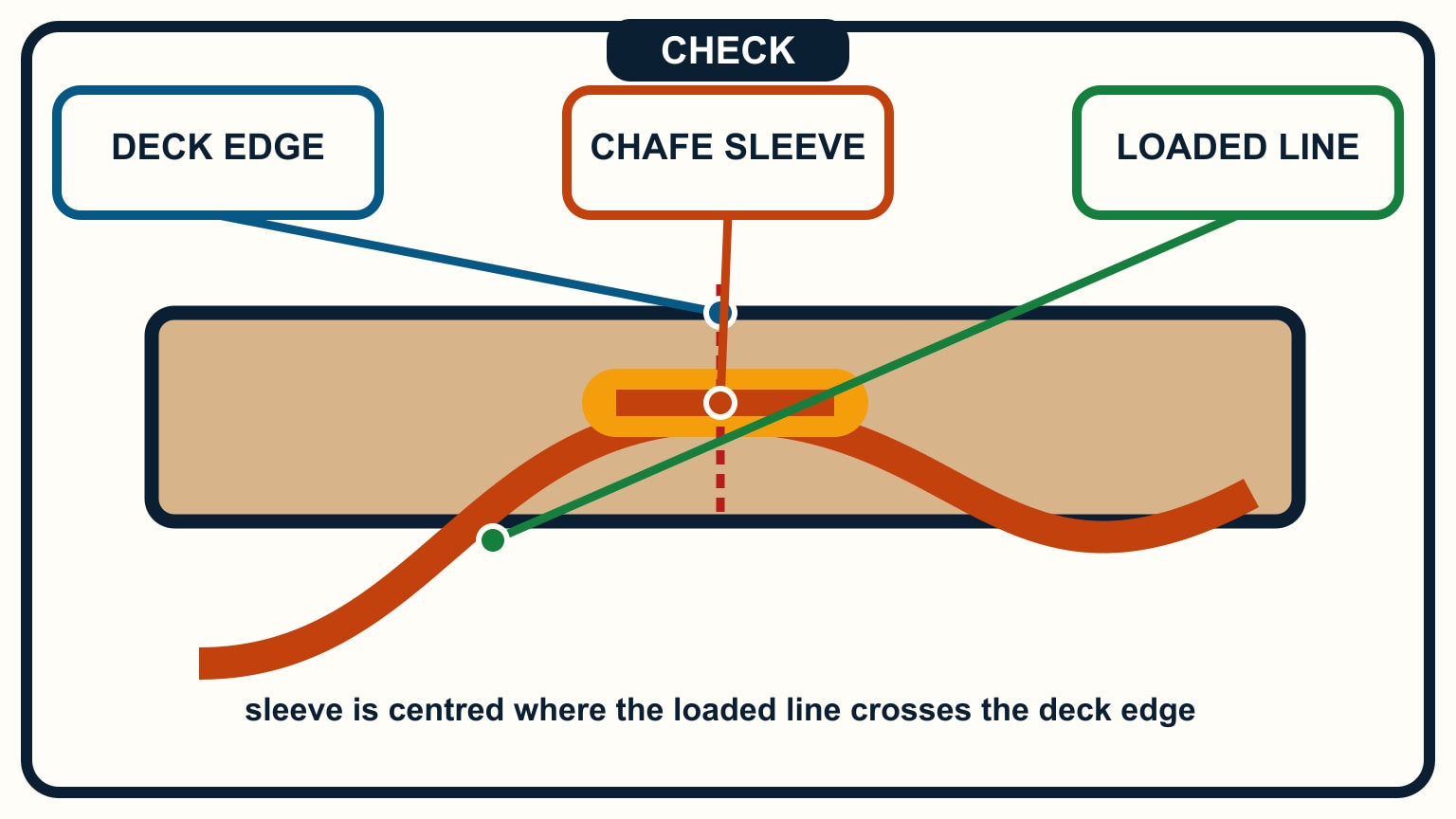
Chafe concentrates where a loaded line touches a chock, roller, toe rail, stem fitting, or rough surface. Fit chafe protection that stays over the contact zone while the boat swings. A loose sleeve that slides away from the edge creates the appearance of protection without covering the wear point. Inspect the line beneath the sleeve, not only the outside cover.
Check the chain connection too. A hook must match the chain and seat in the orientation its maker shows. A hitch or soft pendant must use the specified rope and method. Make sure the connection cannot strike the hull, jam under a roller, or fall away when the rode briefly goes slack. Never reach down to reseat it while the system can reload.
At the boat end, the line should bear on the cleat or strong point cleanly. Avoid a lead that lifts a cleat, saws across another line, or traps the tail where it cannot be released. Secure tails so they stay aboard without entering the water or windlass.
Inspect the loaded system after a change in wind, sea state, tide, or nearby traffic. A fresh rub mark, one hot or stiff patch, unequal bridle legs, or chain taking load at the gypsy calls for a reset in controlled conditions.
Plan the release before loading the system
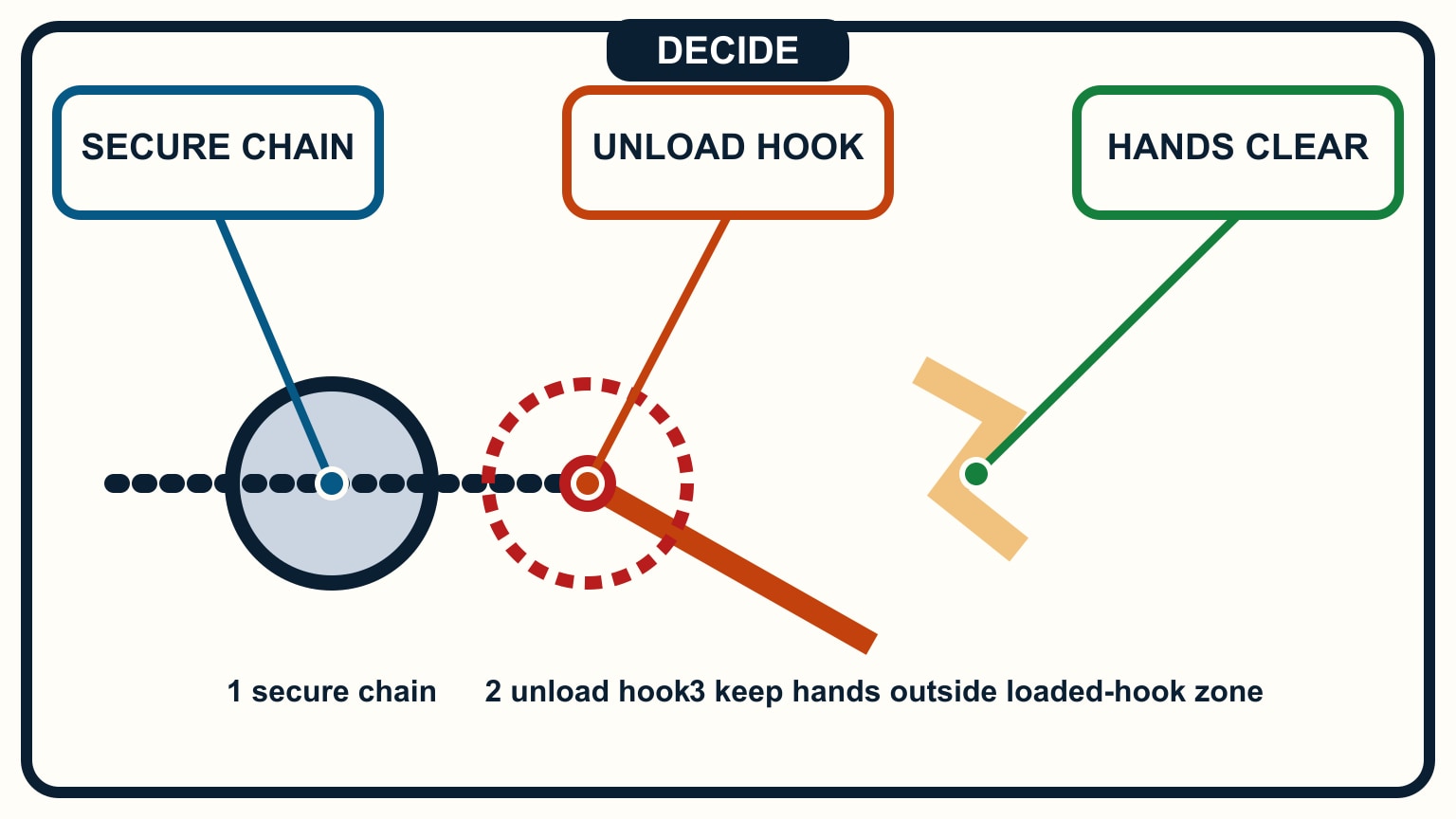
Every setup needs a recovery sequence. Decide how the crew will bring chain back onto the stopper or windlass, remove the snubber connection, and clear both line and hook before the chain runs. Practise in calm water. The person at the control must be able to stop before another person reaches near the gypsy or chain.
Carry a way to reduce load without putting hands into it. The correct method depends on the installed system and may use the boat, engine, chain stopper, or a second prepared line. Cutting a loaded nylon line is a last-resort action with recoil risk; keeping the crew out of its snap-back path matters from the start.
Inspect and dry the snubber after use. Look for glazing, broken fibres, stiffness, cuts, distorted splices, worn thimbles, and hook damage. Retire uncertain components according to their maker's guidance. A dedicated snubber or bridle is easier to track than a spare dock line repeatedly borrowed for the job.
Combine this hardware check with how to anchor overnight safely and what to do if the anchor drags. The elastic line reduces shock; it does not set the anchor, create swing room, or replace an anchor watch.
SailStarter's anchoring lessons can give you the sequence and vocabulary to follow what the crew is doing at the bow. The boat's strong points, rode, and windlass manual decide the actual rig. Whether you choose one leg or two, look for the same evidence: the windlass is unloaded, the nylon has room to stretch, chafe protection covers the real contact point, and nobody needs to touch the system while it is carrying the boat.
Practise the whole transfer in settled conditions. One crew member handles the hook or hitch while another controls chain, and both stay outside the bight. Load the snubber gradually, confirm the windlass is genuinely unloaded, then rehearse reversing the sequence. Mark the normal lead on deck so a later night watch can spot an unusual angle, crossed leg, or missing chafe guard without leaning over the bow.
After recovery, rinse, dry, and inspect the elastic line away from load. Retire it when abrasion, hardening, cuts, heat damage, or uncertain history make its strength doubtful; do not keep it merely because it still stretches.
Try it from the lesson
Can you spot the next move?
Besides a lunch stop, when else does a day-sailor reach for the anchor?
Why you can trust this guide
. We build each guide from public seamanship and safety sources, then teach the universal principle before any local difference.