Chart your course
Boat Anchor Types Explained: Plow, Scoop, Fluke, and Claw
Quick answer
The short version
Recreational boats commonly carry one of four digging-in anchor styles: fluke (Danforth-style), plow, claw, or a newer scoop/new-generation design. There are also two specialists reserved for narrower jobs: a grapnel anchor for small craft hooking onto rock or coral, and a mushroom anchor for a permanent mooring rather than everyday use. None of the four common families is the single best choice; each digs into the bottom differently, so which one holds best depends on whether you're anchoring in sand, mud, grass, or rock. A scoop-style anchor's roll bar and deep-scooping fluke generally deliver strong holding power for the group, while a fluke anchor packs plenty of bite for its weight in sand and mud alone. Pick by the bottom you expect, then size from a published chart, never a guess.
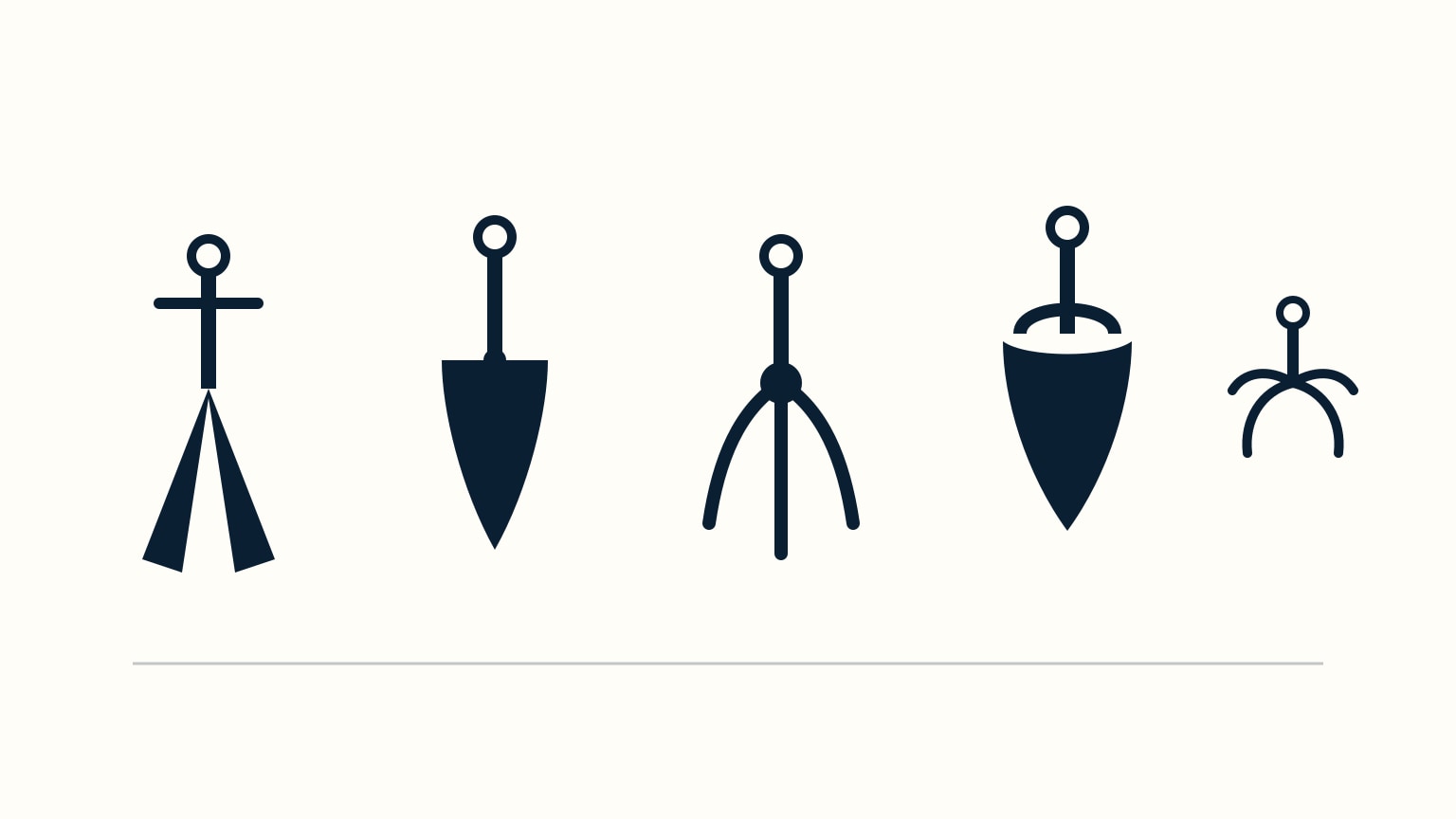
Walk any marina and you'll spot anchors that barely look related to each other: a flat twin-plate shape, a hinged plow blade, a three-pronged claw, a bulbous roll-bar design, a folding grapple, even a mushroom-shaped dome under a mooring buoy. They're not interchangeable, and recognizing the shape tells you a lot about where that anchor is meant to work. This article walks through the anchor families a beginner is likely to see or choose between: the three classic digging-in shapes, the newer scoop design that's become a common upgrade, and two specialists (grapnel and mushroom) built for narrower jobs than everyday anchoring. Lesson 12.1 covers how the whole ground-tackle system (chain, rode, and stowage) works together once you've picked an anchor; this article is about telling the anchors themselves apart.
Fluke, Plow, and Claw: The Classic Digging-In Anchors
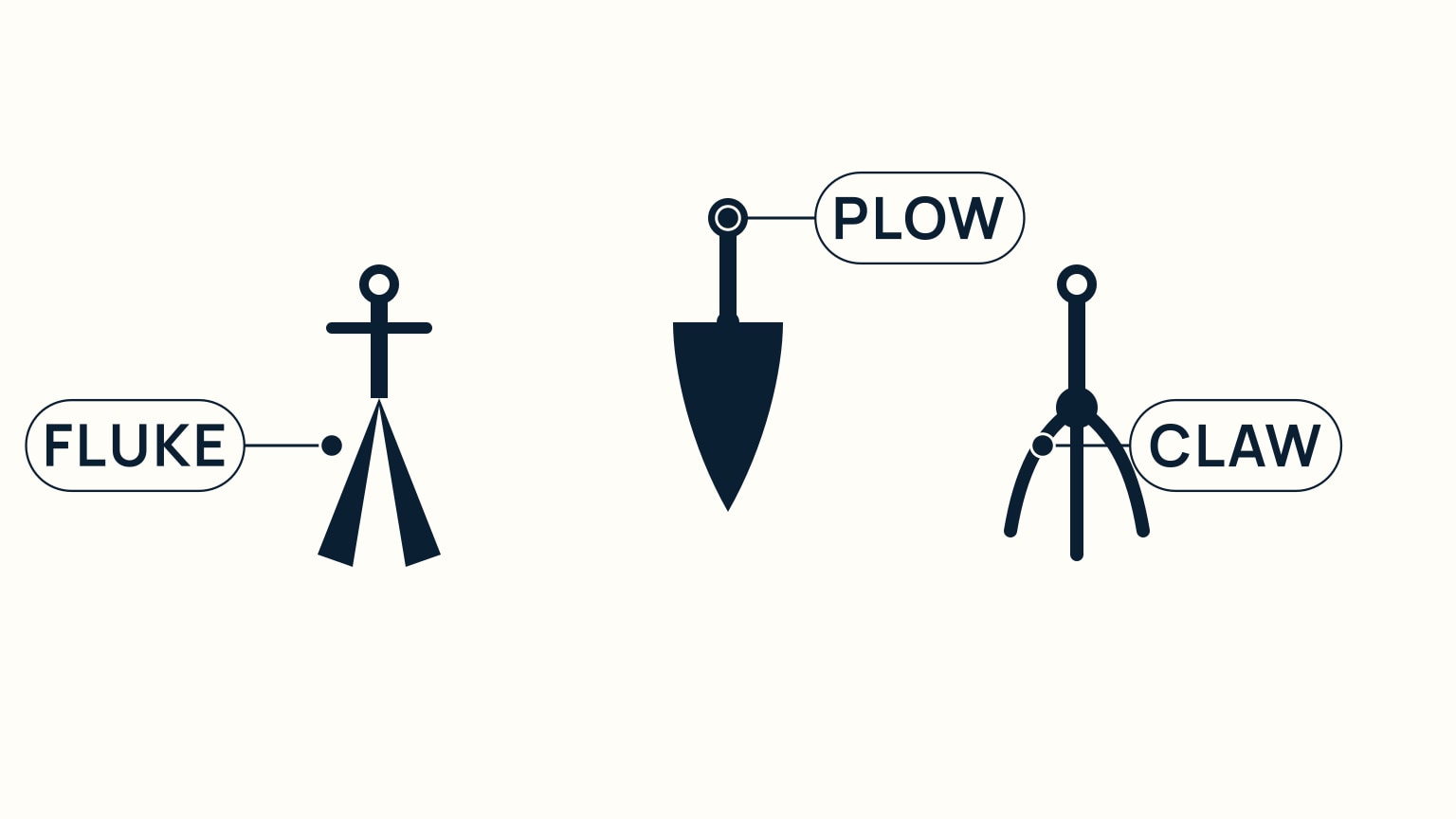
Three shapes cover most of what a beginner will meet at a chandlery. A fluke anchor (the Danforth-style shape is the best-known example) is built as two large, flat, hinged flukes on a stock: light for its holding power, and best in sand or mud, where the flukes bite deep, but poor on hard or grassy bottoms where they can skate instead of dig. A plow anchor (CQR and Delta are common examples) takes its shape from a farm plow: a single shank with a wedge-shaped blade that buries itself once pulled and re-buries easily if the boat swings and briefly breaks it free. A claw anchor (Bruce is a classic example) has a heavily weighted, three-pronged tip that sinks and orients itself quickly, giving steady, if not top-tier, holding across sand, mud, and even light rock. None wins everywhere. The bottom you expect decides which shape fits the job.
Scoop Anchors: The Newer High-Holding Design
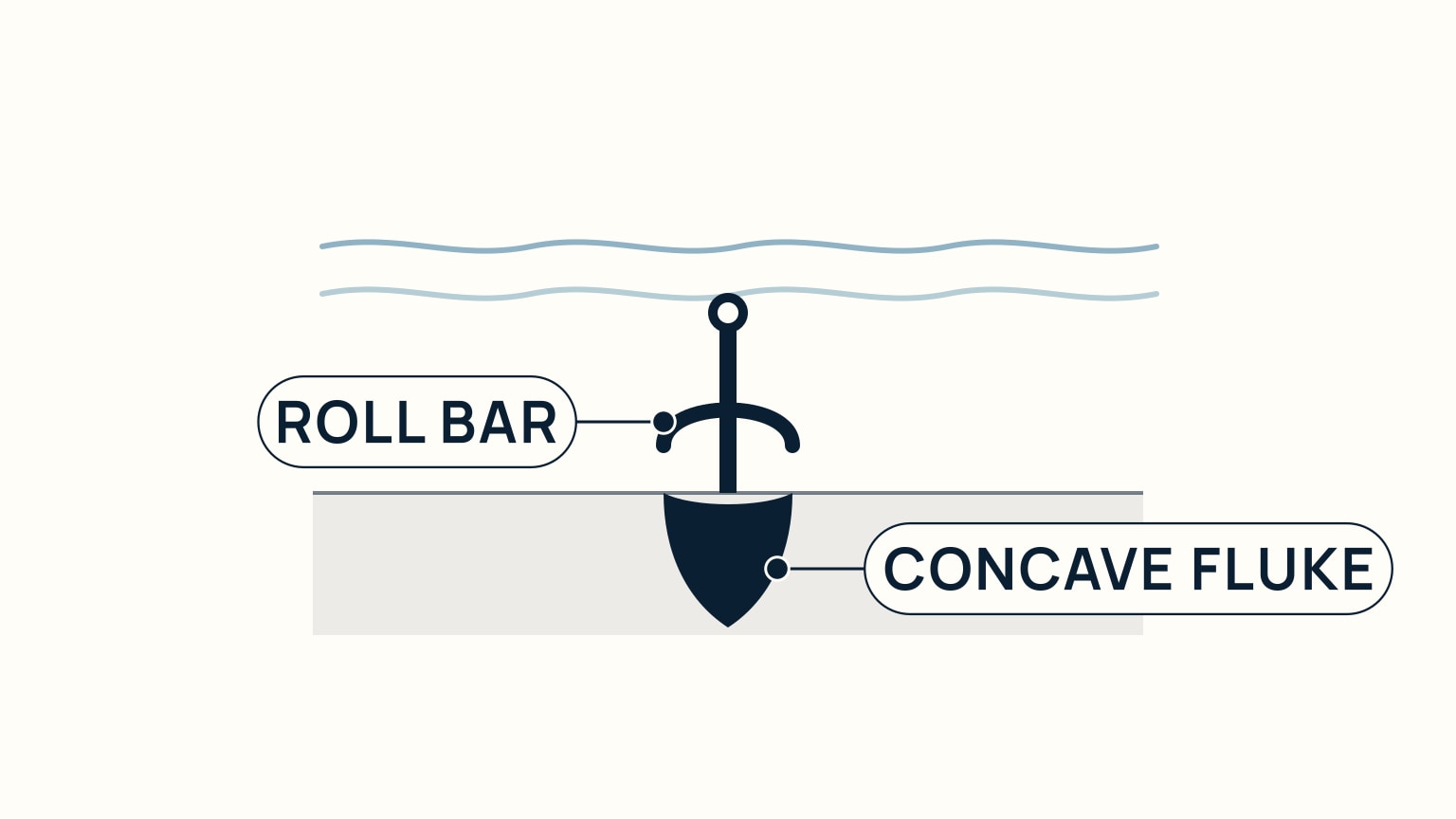
A newer family of anchors, developed from the late 1990s on, is usually called a scoop or new-generation anchor. Two features set it apart from the classic three: a roll bar arching over the top that helps the anchor land right-side up before it ever touches bottom, and a concave, spoon-shaped fluke that scoops into the seabed and drives itself deep with comparatively little chain and rode paid out. Some versions add their own twist: a hollow fluke that fills with mud or sand as it sets, adding weight beyond the metal alone, or a slotted tip built to cut through grass and kelp instead of skating over it. Rocna, Manson Supreme, and Spade are common examples of the style, not the only ones. Independent testing cited by manufacturers has rated some scoop designs at the highest holding-power classification available, ahead of older shapes of similar weight. That's a real advantage, though it's one data point, not a guarantee on every bottom.
Grapnel and Mushroom: Two Specialist Anchors
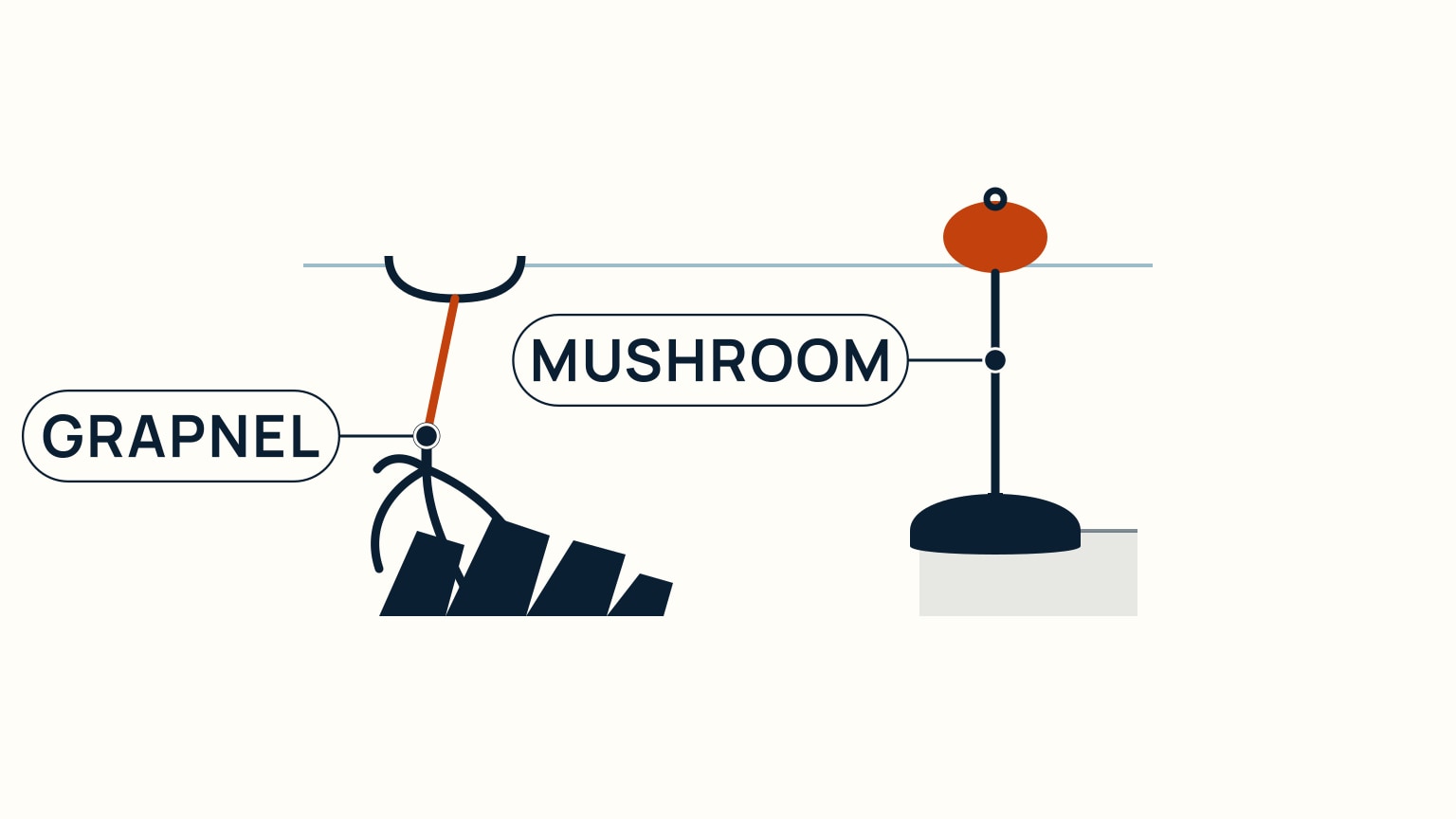
Two more anchor shapes matter, but neither is a beginner's everyday bower anchor. A grapnel anchor is a handful of curved, often-folding prongs that hook onto rock, coral, or debris rather than digging into sediment: any prong can catch, so it holds however it lands. That makes it a natural fit for a small dinghy, kayak, or paddleboard anchoring over a rocky patch, but it has little grip in plain sand or mud and isn't built for an overnight stay or real weather. A mushroom anchor works on a different principle from every anchor above: instead of digging in, its smooth, dome-shaped head holds by sheer weight plus a suction effect as it settles into soft mud or silt. That's exactly why it's the anchor under a permanent mooring buoy, left in place to bed in over months, and not something you'd want as your working anchor. A mooring-sized mushroom for a 30-foot boat can weigh 300 to 450 lb, far more than any anchor you'd raise by hand.
Matching Bottom to Anchor, Then Sizing It Right
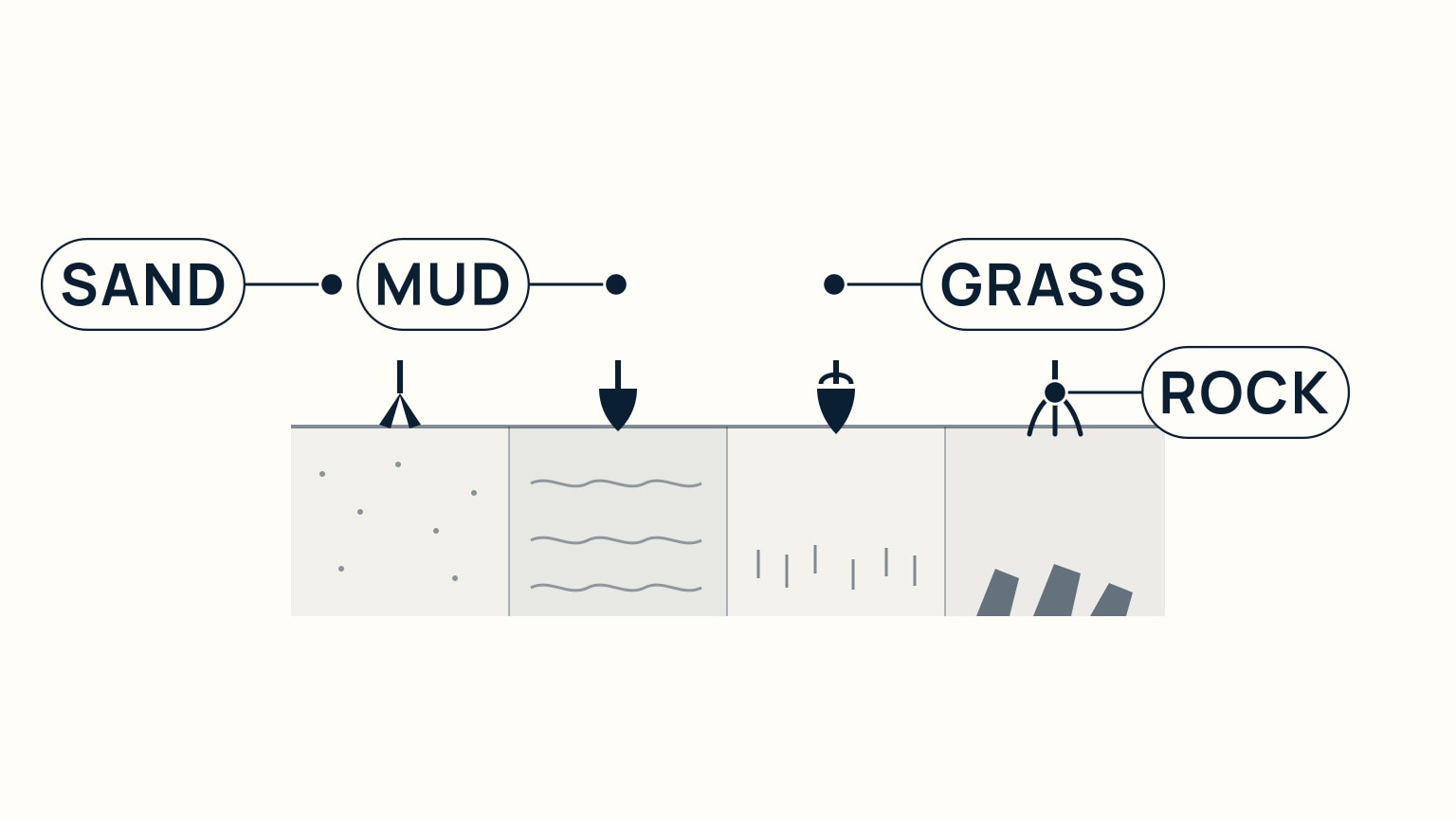
Choosing an anchor starts with the bottom you actually expect to anchor in, not a fixed favorite: a fluke anchor for sand or mud, a plow or claw for a wider mix of bottoms including some rock or grass, and a scoop-style anchor when you want strong all-round holding. Many sailors carry a second, different-style anchor as backup, since the bottom under one anchorage rarely matches every anchorage you'll ever visit. Once you know the type, size it from the manufacturer's or an authority's own published chart matched to your boat's length and displacement, never a guessed number. Those charts are built around moderate conditions, commonly around 30 knots of wind; because wind load rises fast rather than in a straight line, the load in a 42-knot blow is roughly double that at 30 knots, so published guidance is to size one or two steps larger whenever stronger weather is expected.
Make a bottom-first choice
Start with the places you expect to stop. Write down the usual bottom for each anchorage, then compare that list with the strengths and limits of the anchor families above. Soft sand or mud gives a fluke room to bury. Mixed bottoms may favour a plow, claw, or scoop design. A grapnel belongs to a much narrower light-duty job, while a mushroom normally belongs under a permanent mooring. This simple exercise prevents an attractive shape or familiar brand from becoming the only reason for your choice.
Next, open the sizing table published for the exact anchor model. Match the table to the boat information it requests, rather than assuming two anchors of equal weight are interchangeable. Read the conditions behind the recommendation as well. A table based on average proportions, moderate protection, and a stated wind level does not promise the same result for every boat or anchorage. If your expected use is more demanding, follow the maker's own guidance about moving up in size.
Check the whole ground-tackle plan
An anchor choice is incomplete until you know how it will be used and backed up. Ask where the primary anchor sits, whether it can deploy without snagging, and whether the crew can recover it. Then identify the second anchor and the different bottom or failure it covers. Carrying two identical solutions may leave the same weakness twice.
The guide to a lee shore explains why a ready anchor can also buy time when wind is pushing a boat toward danger. The grounding recovery guide shows another specialist use, where an anchor is carried toward deeper water and used to pull the boat free. Neither job changes the anchor's basic limits. It still needs a suitable bottom, correct size, and a complete rode.
Before buying, make three notes: expected bottom, published size for your boat, and the reason for your backup choice. If any line is blank, keep researching. That short record is more useful than a claim that one design is simply best, because it ties the equipment to the water where you will ask it to hold.
Recognizing these shapes is the easy part. An anchor is only as good as the system behind it. SailStarter's lesson 12.1, "The gear that grips," walks through how chain and nylon rode work together once you have picked an anchor, why every shackle pin gets seized shut, why the rode's bitter end has to be made fast to the boat, and how to size the whole system from a published table rather than a guess. Ground tackle can act as an emergency brake if an engine fails while wind is pushing the boat toward danger. Try the lesson and put a name to every piece of gear on your own bow.
Before settling on a model, ask how it will be launched, recovered, secured, and backed up on your bow. A suitable shape that cannot be handled by the regular crew is not yet a complete choice.
Try it from the lesson
Can you spot the next move?
Besides a lunch stop, when else does a day-sailor reach for the anchor?
Why you can trust this guide
. We build each guide from public seamanship and safety sources, then teach the universal principle before any local difference.