Chart your course
Anchor Trip Lines and Buoys Explained
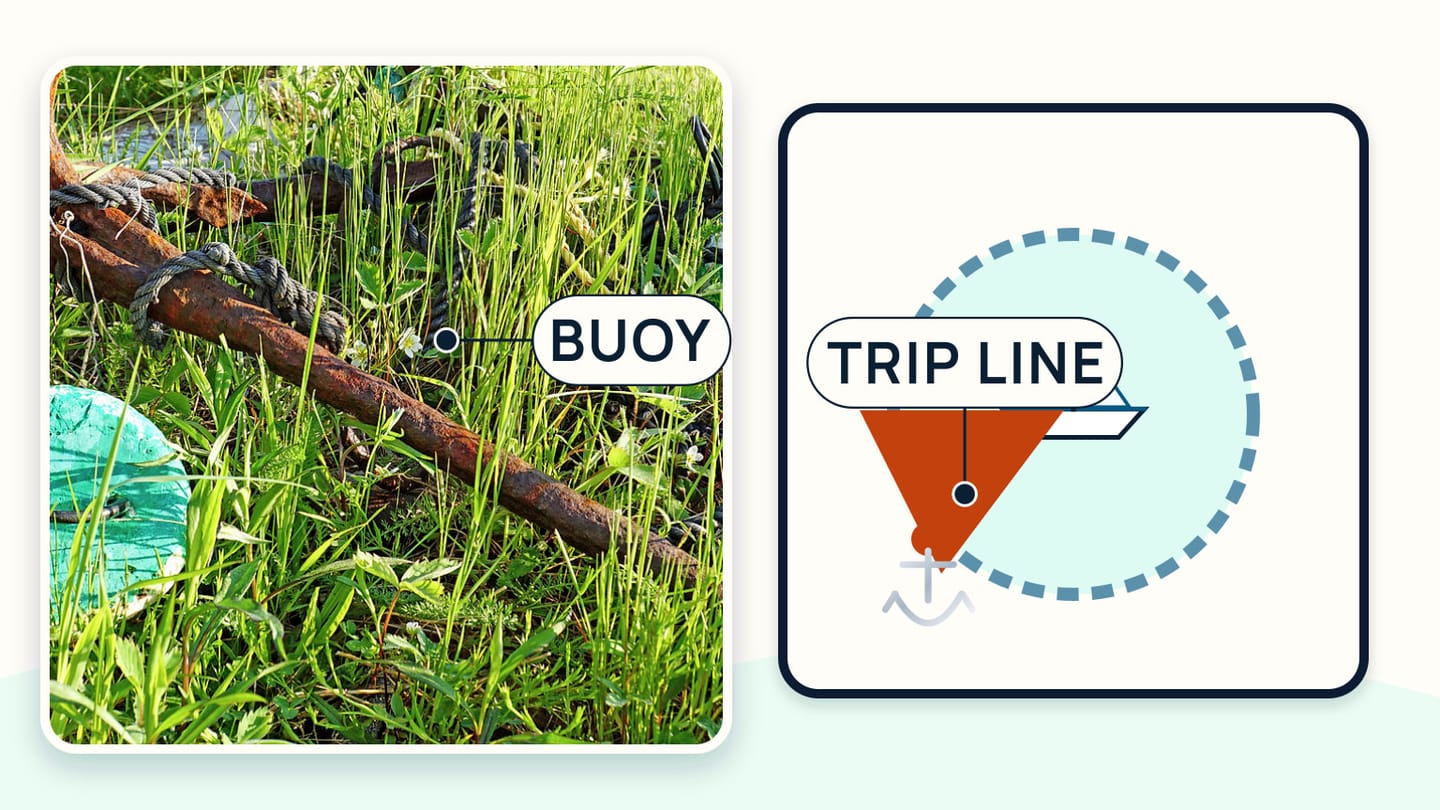
Quick answer
The short version
An anchor trip line is a separate line attached to the anchor's recovery point. It can let you pull from a different direction if the anchor is fouled or difficult to recover. A buoy may mark that line at the surface. The arrangement does not make an anchor hold better, and it does not make a crowded or unsuitable anchorage safe. Before using one, decide whether the line and buoy will remain visible and clear of traffic, propellers, rudders, neighbouring rode, and your own recovery path.
Trip lines appeal because they seem like cheap insurance. They can also add another floating object and another line near moving boats. The useful mindset is not "always rig one" or "never rig one." It is whether this anchorage, this anchor, and this crew have a clear recovery reason and a way to prevent the trip line from becoming the new problem.
Separate recovery gear from holding gear
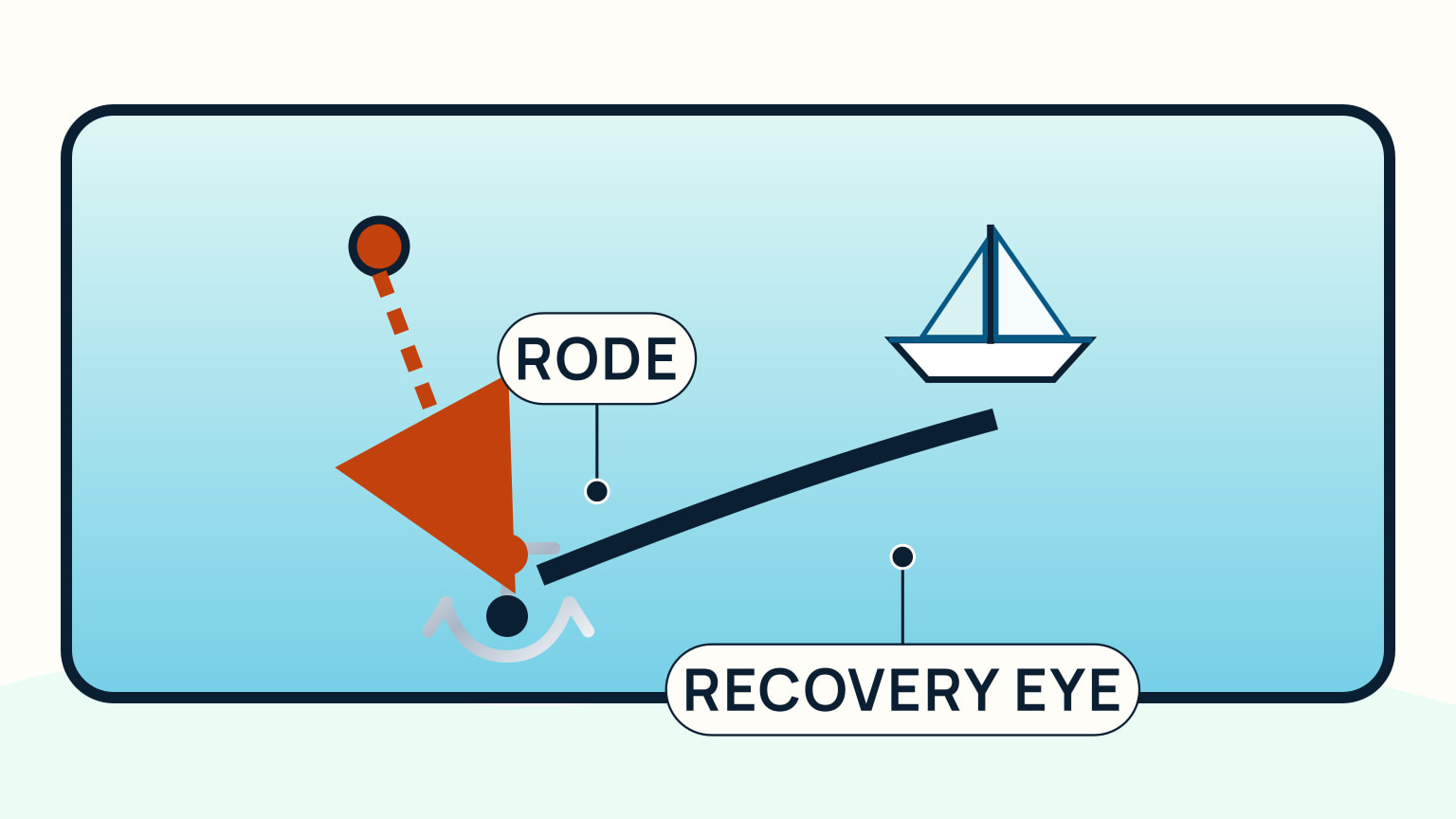
Your main rode does the anchoring job. It connects the boat to the anchor and needs suitable scope and a proven set. A trip line has a narrower role. It connects to a recovery point so that, if required, a pull can be applied from another direction. That may help with an obstruction that is holding the anchor in a way the normal rode cannot release.
Keep the distinction plain. A trip line does not improve holding power. It does not change the bottom, make inadequate scope acceptable, or solve a poor swing area. You still need the normal anchoring plan: choose the place, set the anchor, confirm it, and monitor it. Anchor scope explained and how to choose an anchorage cover those primary decisions. Add a trip line only after they make sense on their own.
Decide whether the anchorage has room for it
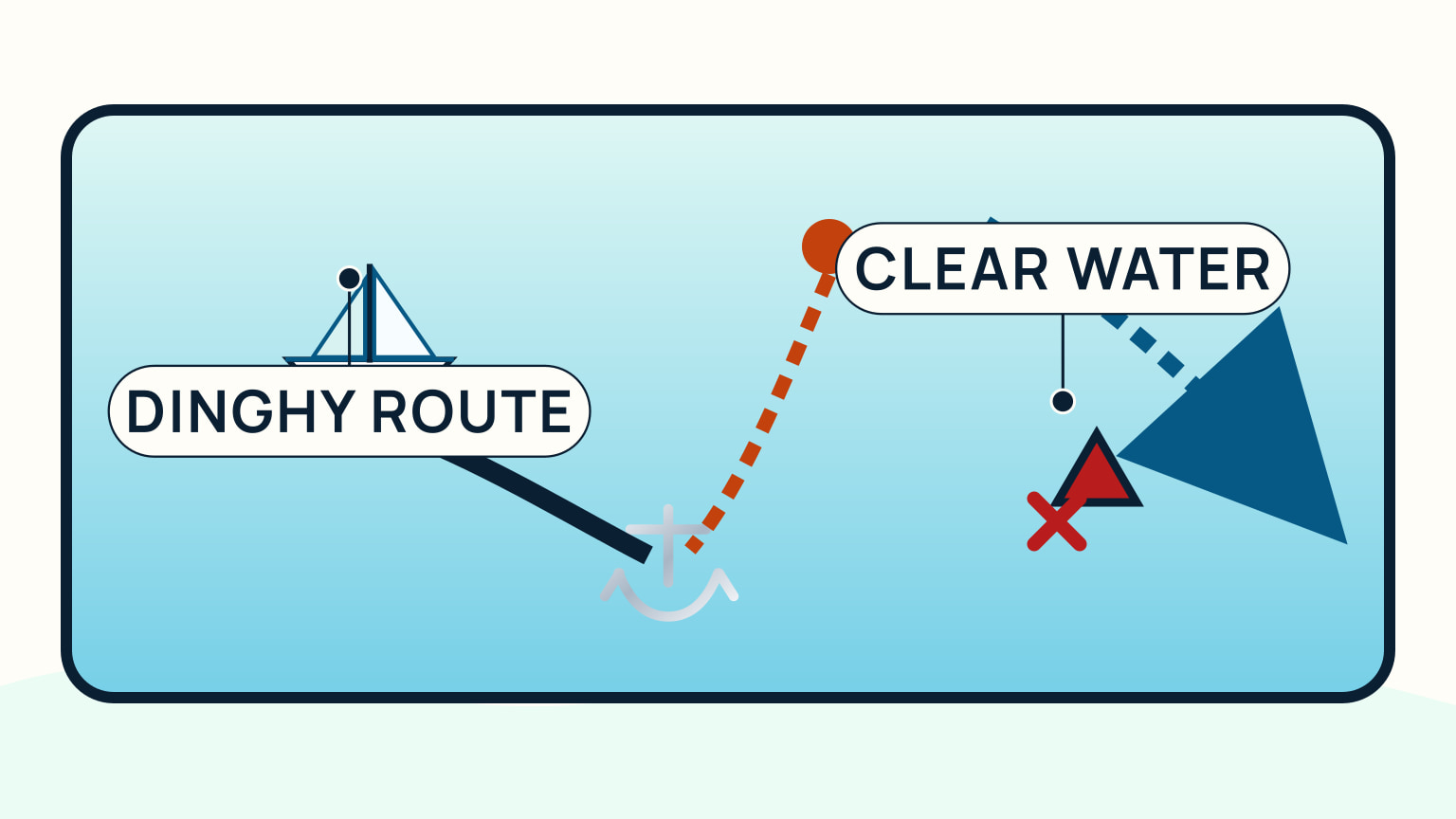
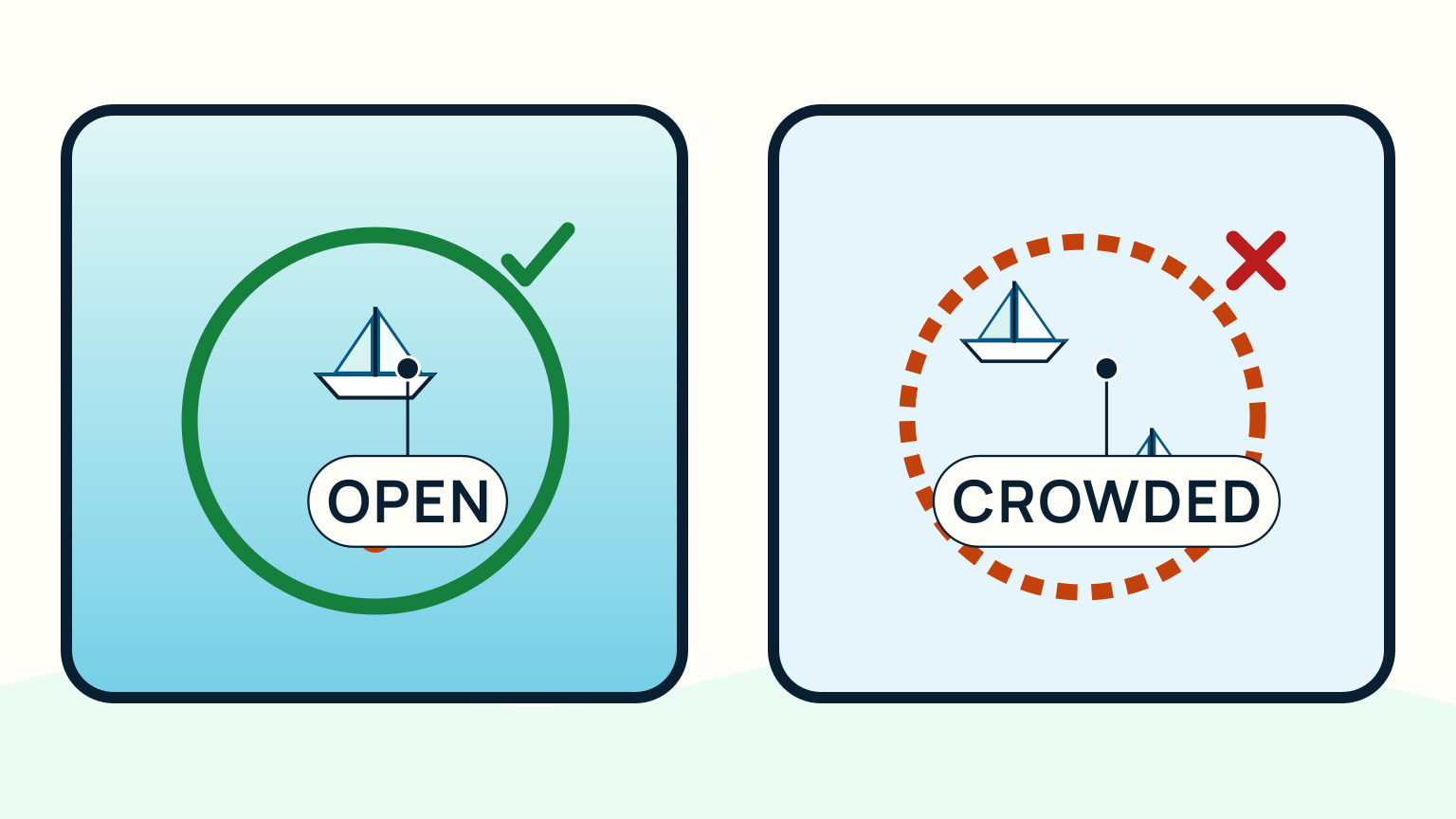
A buoyed line needs a place where it will not create an avoidable problem. Think about boats arriving and leaving, dinghies, propellers, rudders, nearby anchors, and how the line will move if wind or current changes. In a busy or tightly packed anchorage, another visible object may confuse others or leave too little room to recover cleanly. In a quiet open place, the same arrangement may be easier to see and manage.
The line length matters too. It needs to accommodate the greatest depth you expect, including tidal change, without leaving excessive loose floating line. That is a planning problem, not a number to copy from another boat. Check the water depth, expected change, and the location of the buoy relative to the boat. If you cannot explain where the slack will go as conditions move, the trip line is not ready to use.
Rig the connection for the anchor you have
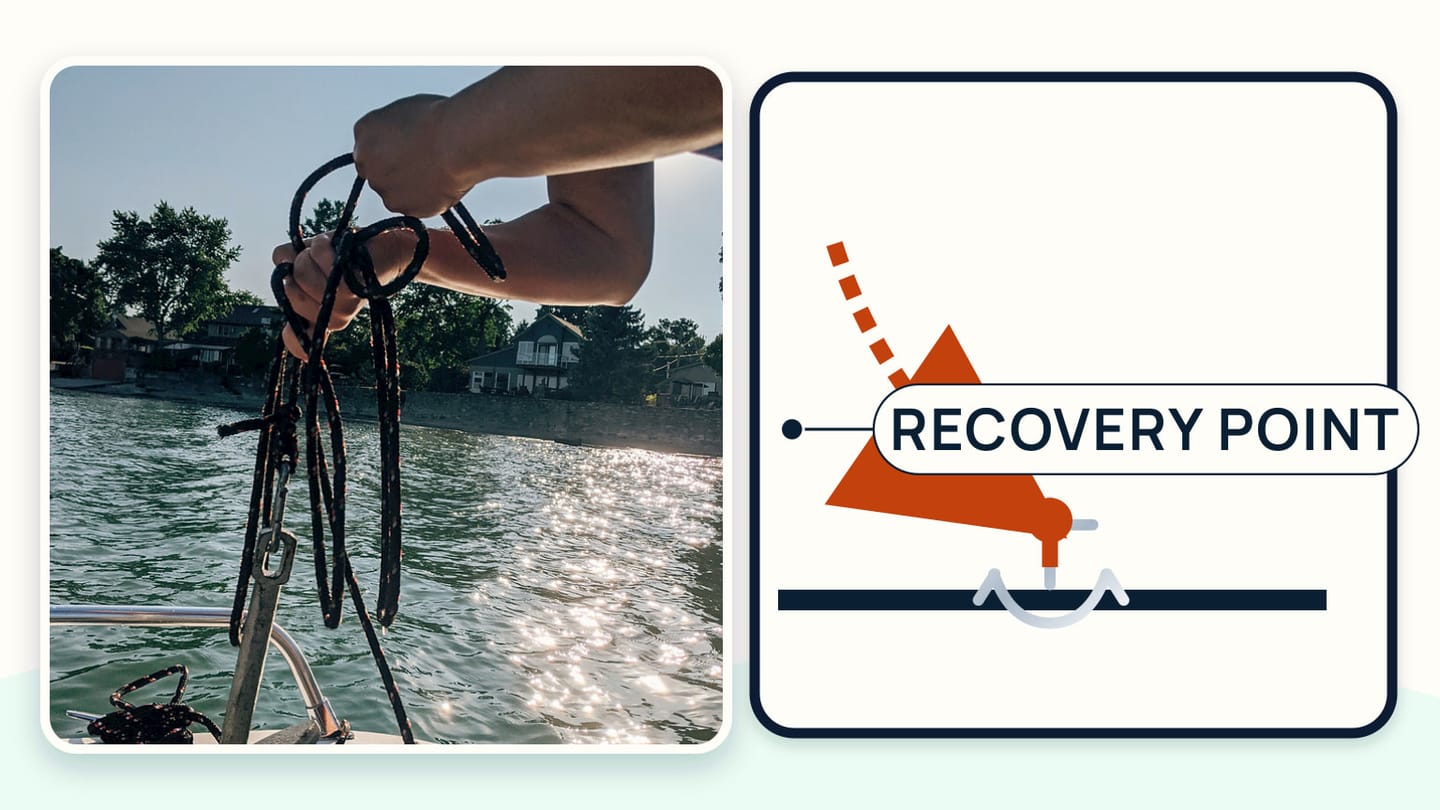
Find the recovery point in the documentation for your specific anchor. Do not clip a line to an unfamiliar part because it looks like a convenient hole. The trip line has to work with the anchor's intended recovery arrangement, and its attachment should be checked before it goes overboard. When in doubt, use the maker's instructions or a qualified rigger rather than making a loaded connection from a guess.
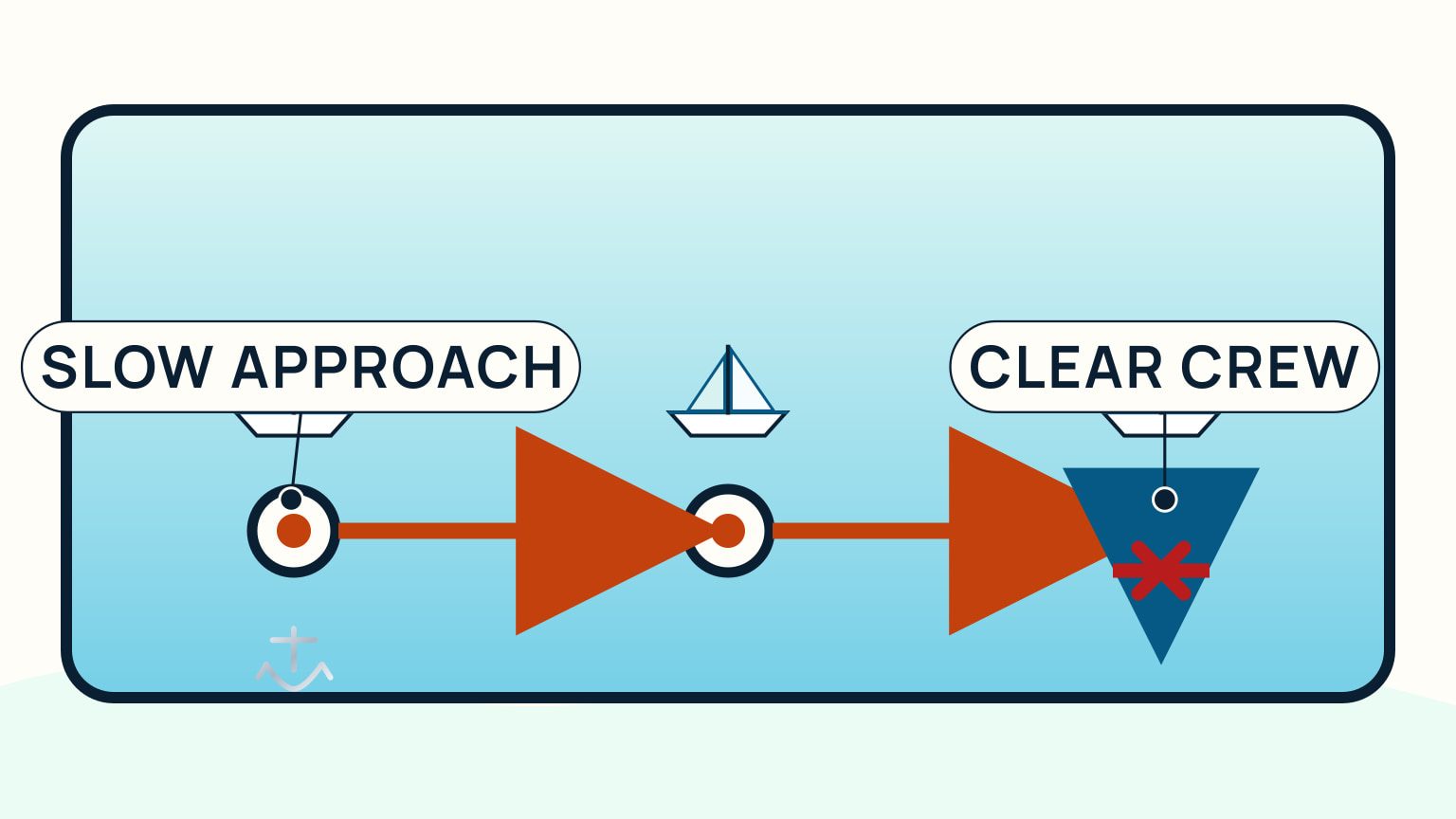
Then watch the entire route. The trip line should reach the surface buoy without crossing the main rode in a way that defeats recovery. The buoy should be visible. The line should not hang where it can reach running gear. This is a good time to assign one crew member to observe while another handles the line. Clear communication matters because a trip-line problem is often easiest to fix before the anchor is loaded.
Recover with the boat, not the windlass alone
Recovery is the point where an apparently simple line can become loaded and unpredictable. Lewmar's windlass guidance says to move the vessel toward the anchor during recovery so the windlass is not overloaded. It also calls for people to keep clear of the windlass and rode or chain while it operates. Apply the same caution to the trip line. Keep hands and feet clear of anything under tension, and keep the person handling the line in view of the helm.
Use the boat's movement to reduce load. Bring the vessel toward the anchor as conditions permit, pause to reassess if the line is not leading as expected, and do not turn the windlass into a towing device. While at anchor, the main rode should be secured as the installed windlass manual directs, such as to a proper strong point or chain stopper. The trip line is for recovery. It should not become an unplanned load path while the boat is riding at anchor.
Know when to leave the line out of the plan
Skip a trip line when the anchorage is too busy, the recovery point is unknown, the crew cannot explain the setup, or the buoy and line would create a collision or fouling concern. Those are not signs of poor seamanship. They are reasons to avoid adding equipment that does not suit the place. An anchor that cannot be recovered easily may call for a different anchoring strategy, a clearer patch, or professional local advice.
Make the decision before you anchor, not while the line is loaded. If you need an extra aid after arrival, take time to look at the traffic, depth, and rode pattern again. How to weigh anchor walks through the normal recovery sequence, and SailStarter's weighing-anchor lesson gives beginners a visual place to start. The plan remains simple: set well, stay aware, and recover without putting people near loaded gear.
SailStarter can make the normal anchoring and recovery sequence easier to recognize before you try it aboard. Use that preparation with the instructions for your anchor and windlass, plus the conditions in the actual anchorage. A trip line is optional recovery equipment. It deserves the same care as every other loaded line on deck.
Brief the crew before the recovery starts. Name the person at the helm, the person handling the main rode, and the person who will watch the trip line and buoy. Agree on a stop signal that everyone understands. If the line begins to lead toward running gear, disappears under another rode, or becomes loaded in a way nobody expected, stop the operation and reset the plan. A pause is much safer than trying to solve a changing line problem by pulling faster.
After recovery, inspect the anchor and both lines before stowing them. What came up can explain why the anchor was hard to release and can affect the next choice of anchorage or setup.
Keep a knife, gloves, or other equipment only where your boat's safety practice and the job require them. Do not introduce extra actions because a trip line feels specialized. The safest setup is one the crew understands, can monitor, and can abandon without anyone needing to work close to a loaded line.
That judgment stays more important than having an optional recovery line available.
Store the trip line so it cannot escape on the next deployment or become confused with the main rode. Labeling it in the boat's normal gear plan is useful when more than one person handles the foredeck. The aim is for the optional system to be unmistakable when needed and absent from the workflow when it is not.
Choose the simple recovery plan that suits the place. A line that cannot be monitored or recovered safely is not a useful precaution.
Before departure, make the trip line part of a short recovery brief rather than a private bit of foredeck knowledge. Identify the main rode, the recovery line, the buoy, and the point at which the helm should stop. Decide where the observer will stand and how that person will tell the helm that a line is leading toward a rudder, propeller, or another boat's rode. Those checks are specific enough to rehearse, and they keep the optional line from becoming an improvised system once load comes on.
Use the same discipline when you change anchorage or depth. Recheck the expected depth range, the amount of line that can be managed without creating loose surface loops, and the route the buoy will take as the boat swings. If one of those details is uncertain, leave the trip line out and use the normal recovery plan. The decision is not a test of confidence. It is a choice to keep every line aboard understandable before anyone needs to handle it under load.
Write down any part of the arrangement that differs from the boat's usual anchoring routine. The next crew should be able to identify the optional line, the recovery point, and the reason it was chosen without needing to reconstruct the decision from loose gear.
Try it from the lesson
Can you spot the next move?
Your crew starts hauling the rode in hand over hand while the engine idles in neutral. What's wrong with that?
Why you can trust this guide
. We build each guide from public seamanship and safety sources, then teach the universal principle before any local difference.