Chart your course
Dragging Anchor: How to Tell and What to Do
Quick answer
The short version
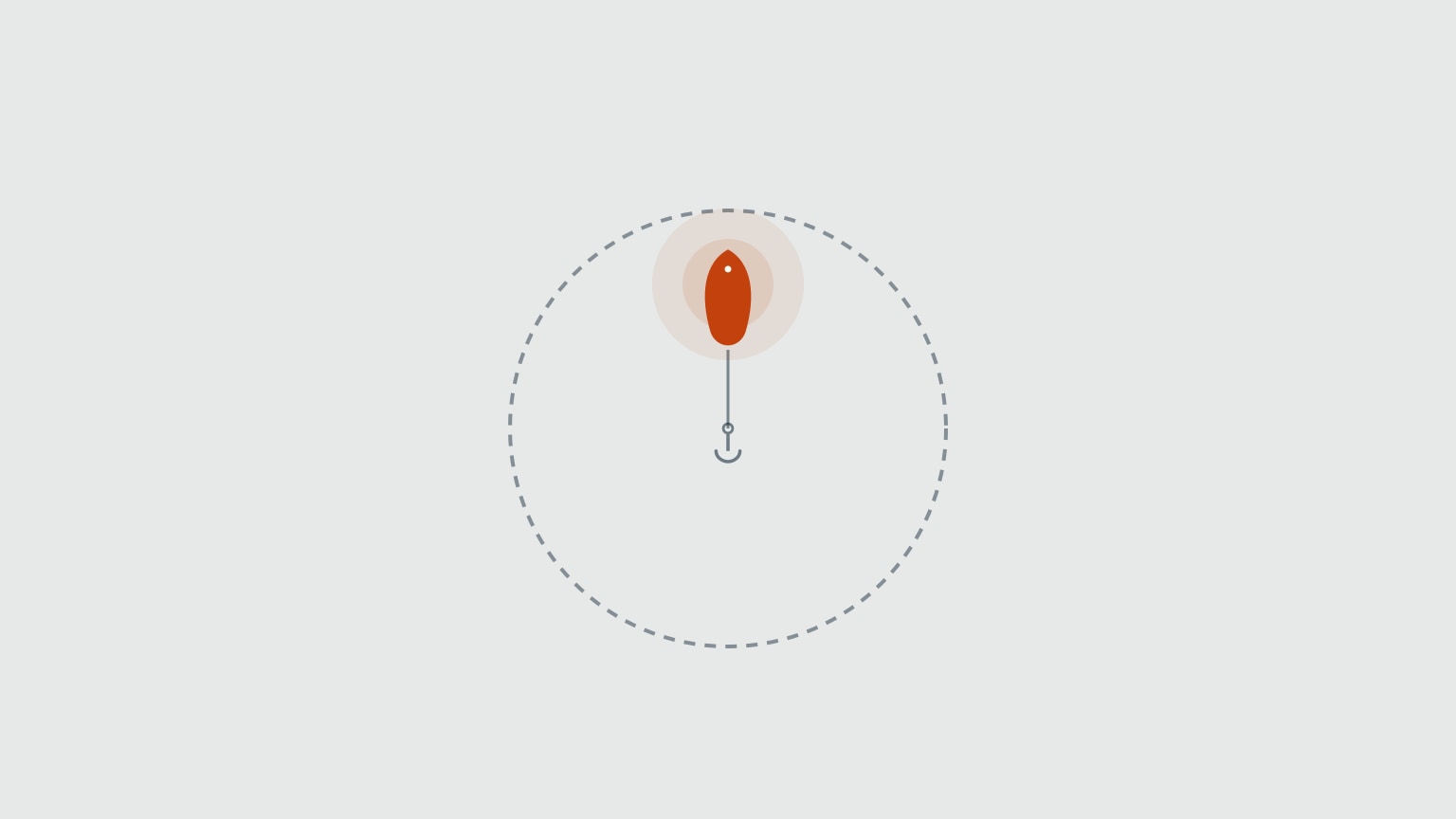
You'll know your anchor is dragging when the references you fixed the moment you set it (two shore bearings or a transit, the depth, your plotter position) start to change instead of holding steady, or the rode goes slack after being taut, or the bow falls off the wind. A GPS anchor alarm backs up that manual check by sounding once you cross a radius sized to your own swing. The first response is almost always to veer more scope and ease the engine, not to panic; re-anchor in a new spot only if that doesn't hold. A wind shift doesn't change your swing circle, but it changes where you sit inside it, so recheck neighbors and depth after any real shift, and keep your anchor light or ball showing so other boats can see you're there. In gusty conditions, a real watch schedule (not just worrying) is what actually catches trouble early.
You picked the anchorage, sized your scope, and proved the anchor was holding. Now comes the part that lets you actually sleep: keeping tabs on it. A dragging boat rarely announces itself with a bang; it slips a few meters at a time, quietly, until the bearings you fixed at anchor no longer line up. This article covers the habit that catches a drag early, the real signs that separate dragging from ordinary swinging, how to size a GPS anchor alarm so it actually helps, what to do the moment you confirm you're moving, and the light or shape that tells every other boat you're anchored. If you haven't chosen your spot or set your scope yet, read how to choose an anchorage and anchor scope explained first, lessons 12.2 and 12.3. This picks up once the anchor is down and proven.
Record Your Baseline the Moment You're Set
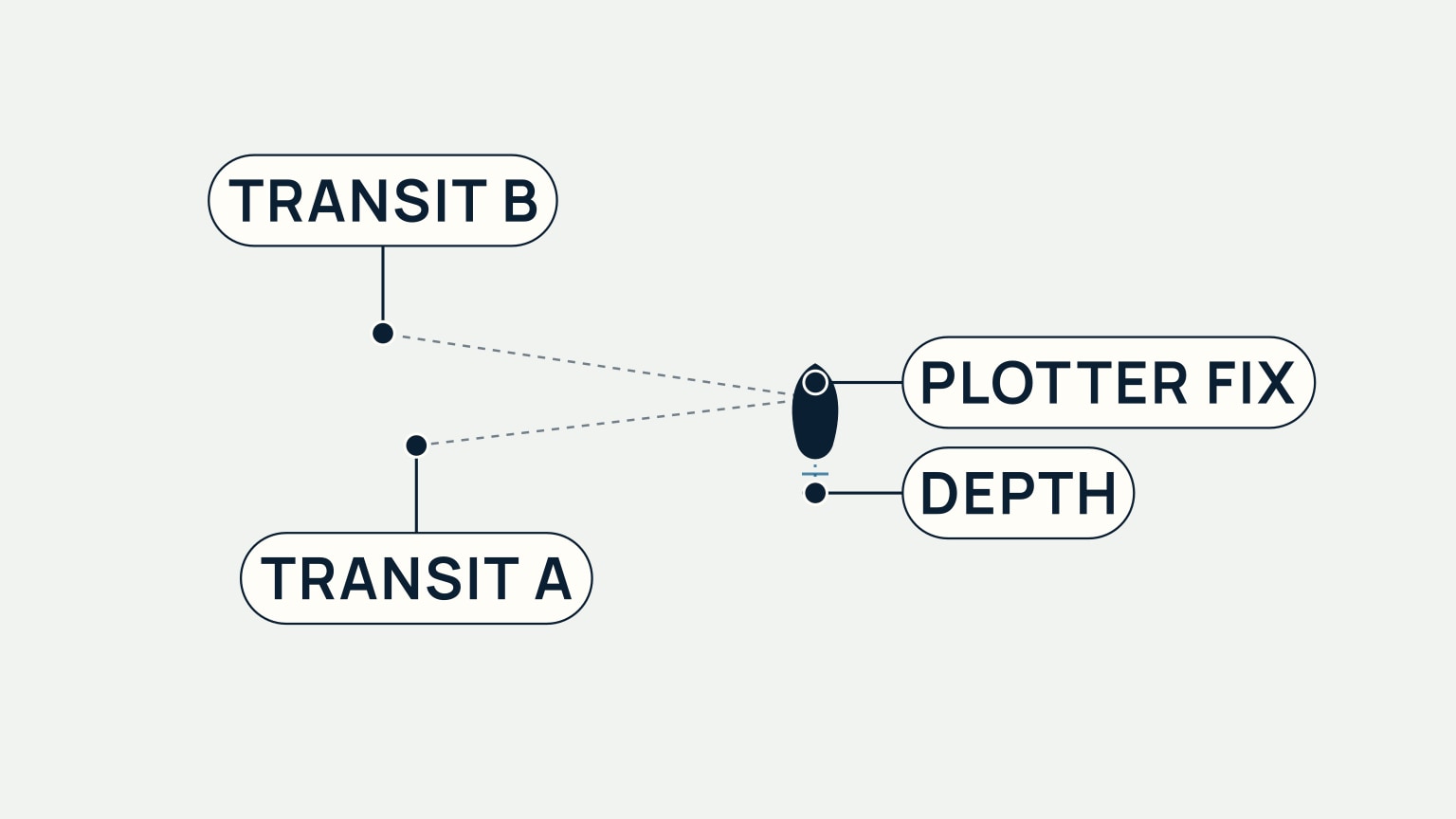
The moment your anchor is set and proven, not before, is when you record your baseline, and it takes under a minute. Pick two objects on shore that form a natural range, a transit, or take compass bearings on two items off each beam; note the depth; and if you've got a chartplotter or phone, use its track feature to log your exact position. A well-set anchor gives you a physical check too: a foot on the taut rode should feel steady, with no vibration through it. Once those references are down, set your depth sounder's deep and shallow alarms: an automatic backup for the checks you can't watch constantly. None of this catches a drag by itself; it gives you something fixed to compare against later, so a real drag shows up as an unambiguous change instead of a vague feeling that something's off.
The Real Signs You're Dragging
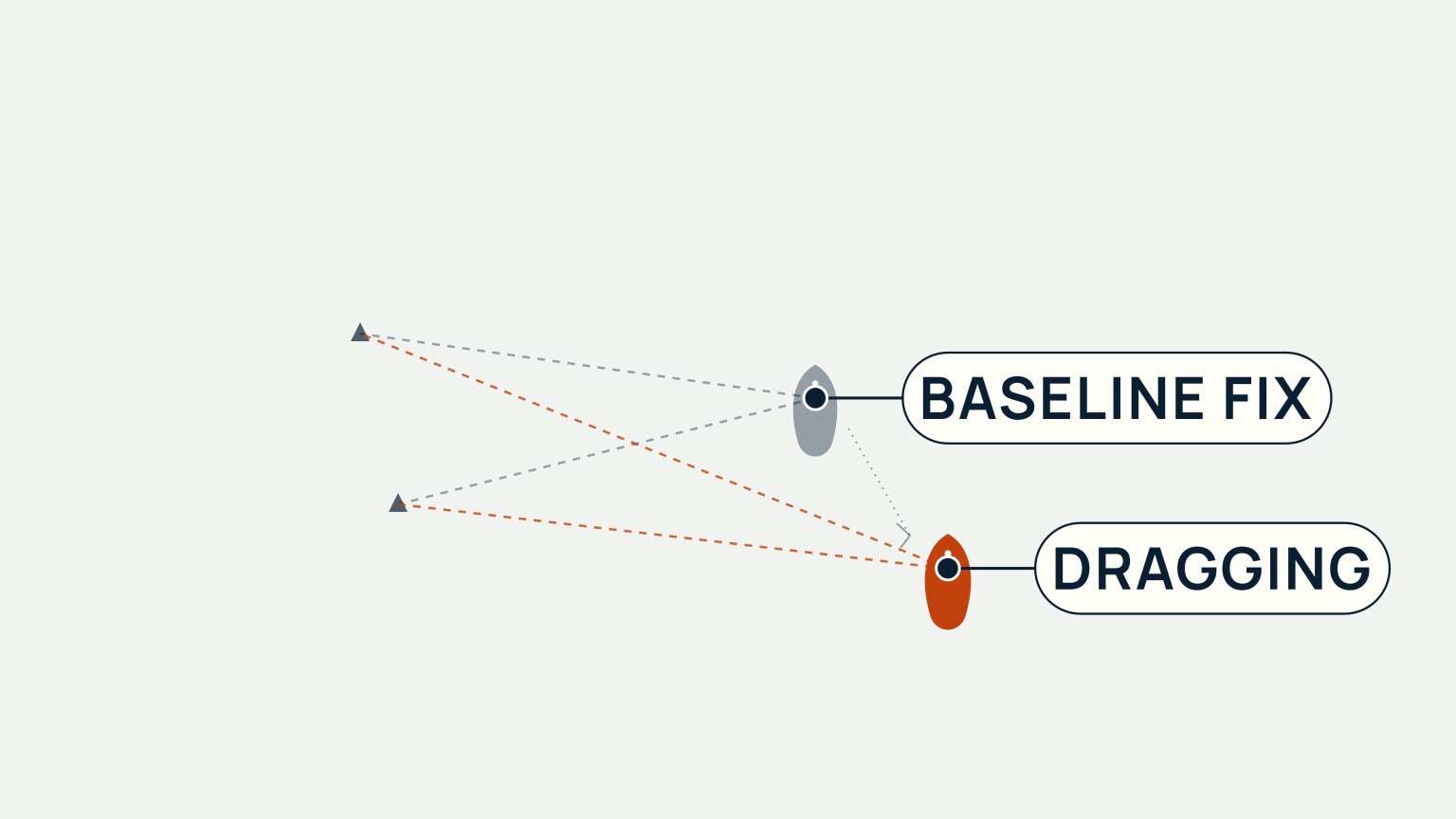
Compare against the baseline you just fixed, not against a feeling. If your two shore bearings or your transit start to walk, with the relationship between those objects steadily changing rather than holding, you're either swinging as expected or dragging, and a few more minutes of watching tells you which. The rode talks too: a chain that was taut and vibration-free can go slack, or the bow can fall off the wind it was lying into, and either is a real sign, not ordinary swing. It's tempting to judge your position against a nearby boat instead, but every boat in an anchorage swings on its own independent circle: a neighbor appearing to move is no proof you are, which is why a fixed shore bearing beats eyeballing the boat next door. Your depth sounder's shallow alarm is a third, independent check worth keeping armed: it can flag a drag toward thinner water on a night when you haven't glanced at a bearing in a while. One sailor's account of a real drag shows the signs stacking up together: waking to shoreline lights that no longer looked right, a GPS reporting speed over ground (SOG) of 4.5 knots with the anchor still down, and going forward to find the rode no longer attached to anything below.
Sizing a GPS Anchor Alarm That Actually Helps
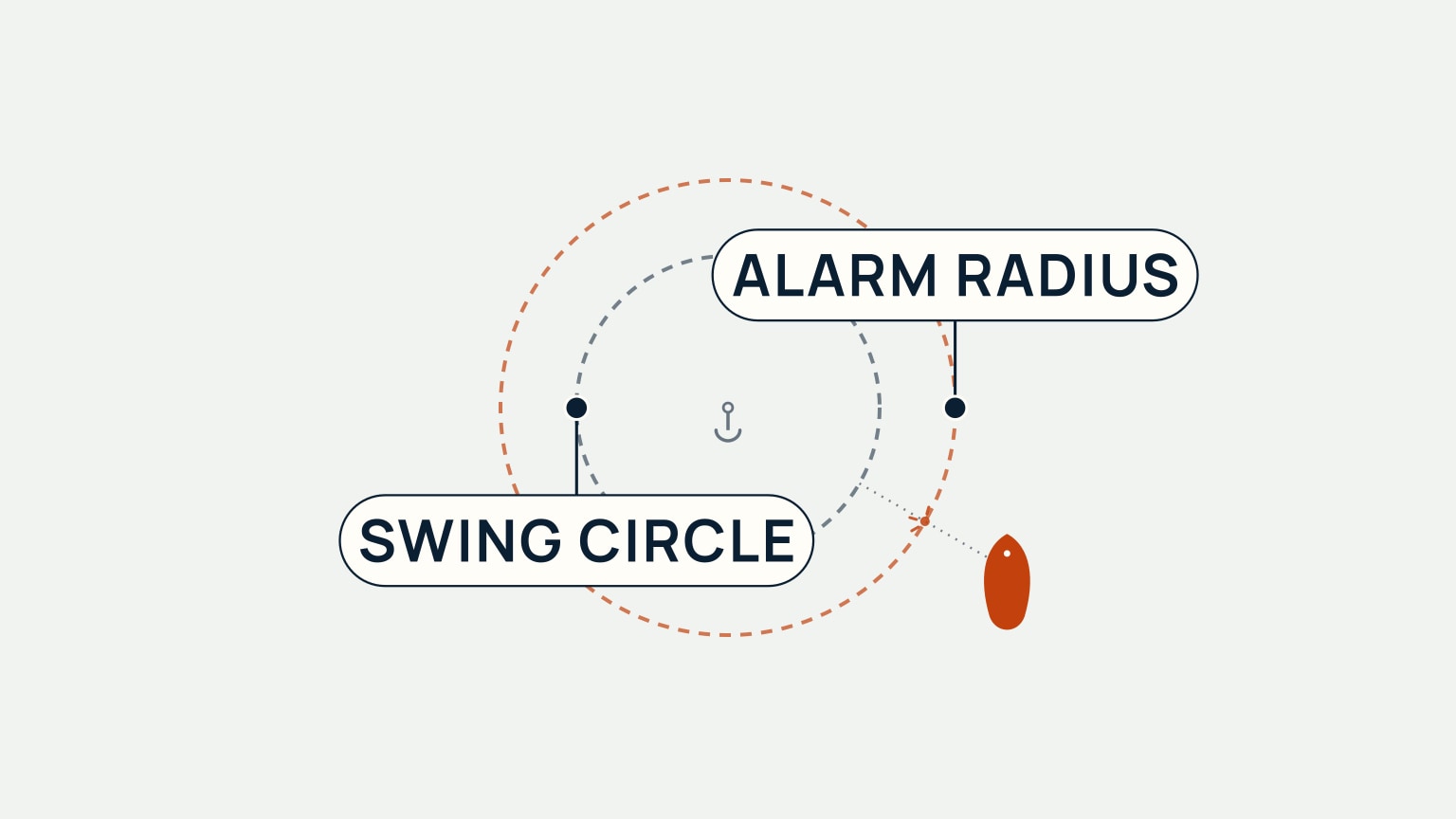
A GPS anchor alarm is a geo-fence: you draw a boundary around your anchored position, in the plotter or an app, and it sounds if your GPS position crosses it. Some systems let you program that boundary as a virtual box around fixed coordinates; others simply flag any deviation beyond a set distance from the point where you dropped the hook. Either way, the number that matters is the radius, and it has to be sized against your own boat, not guessed. Plan for a full 360-degree swing about the anchor as wind and current shift, reaching out roughly as far as the rode you've paid out. Set the alarm radius smaller than that ordinary swing and it triggers on a normal gust-driven arc, training you to ignore it; leave it far larger than the swing and it buys little warning by the time it sounds. The alarm backs up the manual checks, it doesn't replace them: one well-run anchor watch briefs the crew on exactly what should wake the skipper: the anchor moving a set distance, the alarm sounding, or the transits no longer lining up. Any one of the three is reason enough to go look.
Responding: More Scope First, Then Decide
Confirm you're dragging, and the first move is almost always to add scope: veering more rode gives a skipping anchor the flattest possible pull and the best chance to dig back in, while easing off the throttle reduces the load pulling against it. One documented response added roughly 10 metres of chain the moment the bow started falling off, then eased the revs and waited to see the effect. Once the extra scope is out, watch your bearings again to check (deliberately, not by hoping) whether the boat has stopped moving. If it still won't bite, don't repeat the same spot: raise the anchor and re-anchor properly elsewhere, running the approach-lower-pay out-snub sequence from lesson 12.3. A wind shift deserves the same attention even without a drag: your swing circle doesn't change, but where you sit inside it does. A boat lying to 100 feet of rode can end up almost 200 feet closer to shore or another obstruction once the wind fully reverses, even though nothing about the anchor itself has changed. Recheck your depth and your neighbors' circles after any real shift, and look the rode over for a tangle if the wind has clocked right around.
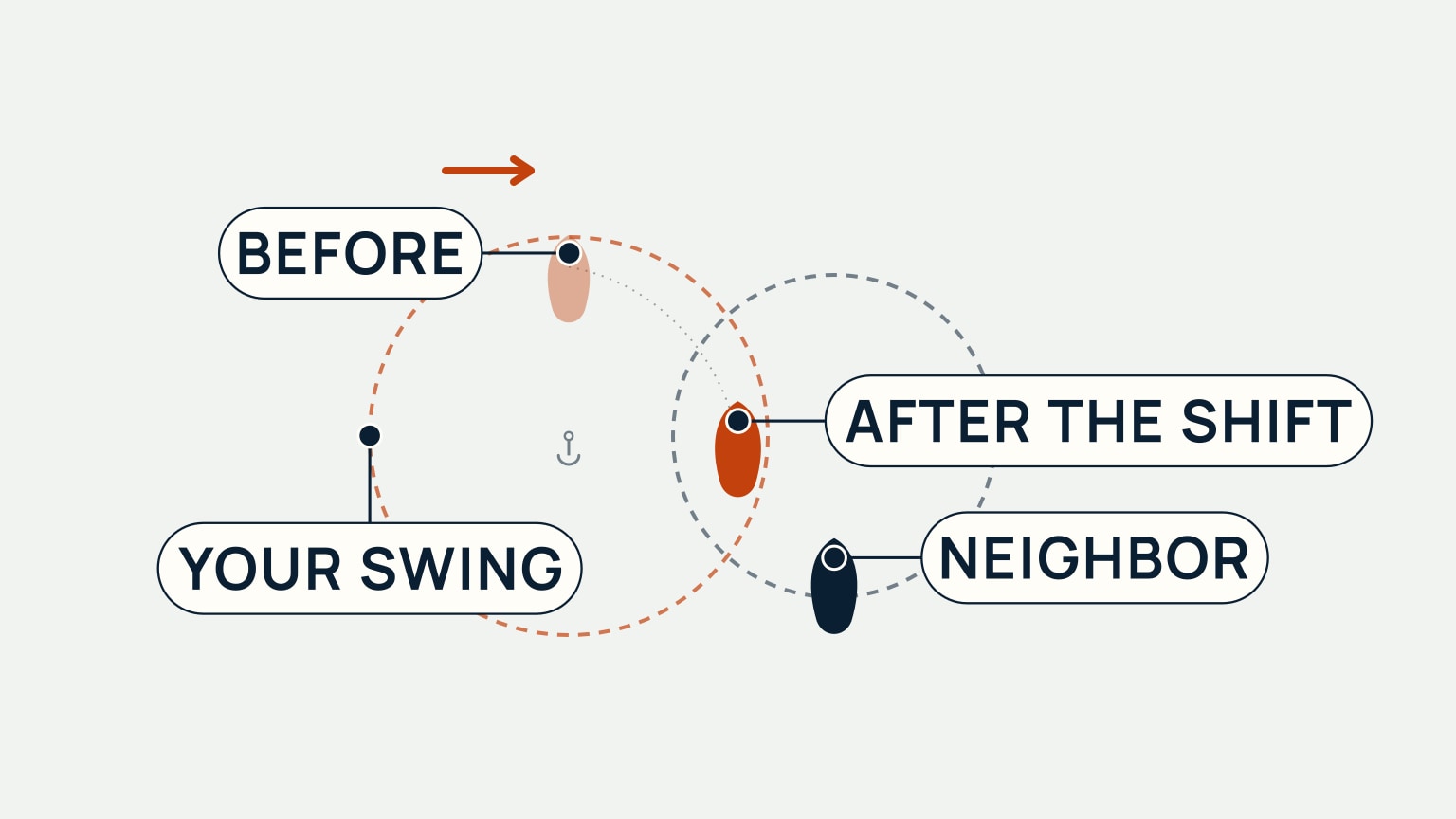
The Anchor Light Rule and an Honest Watch in Gusty Conditions
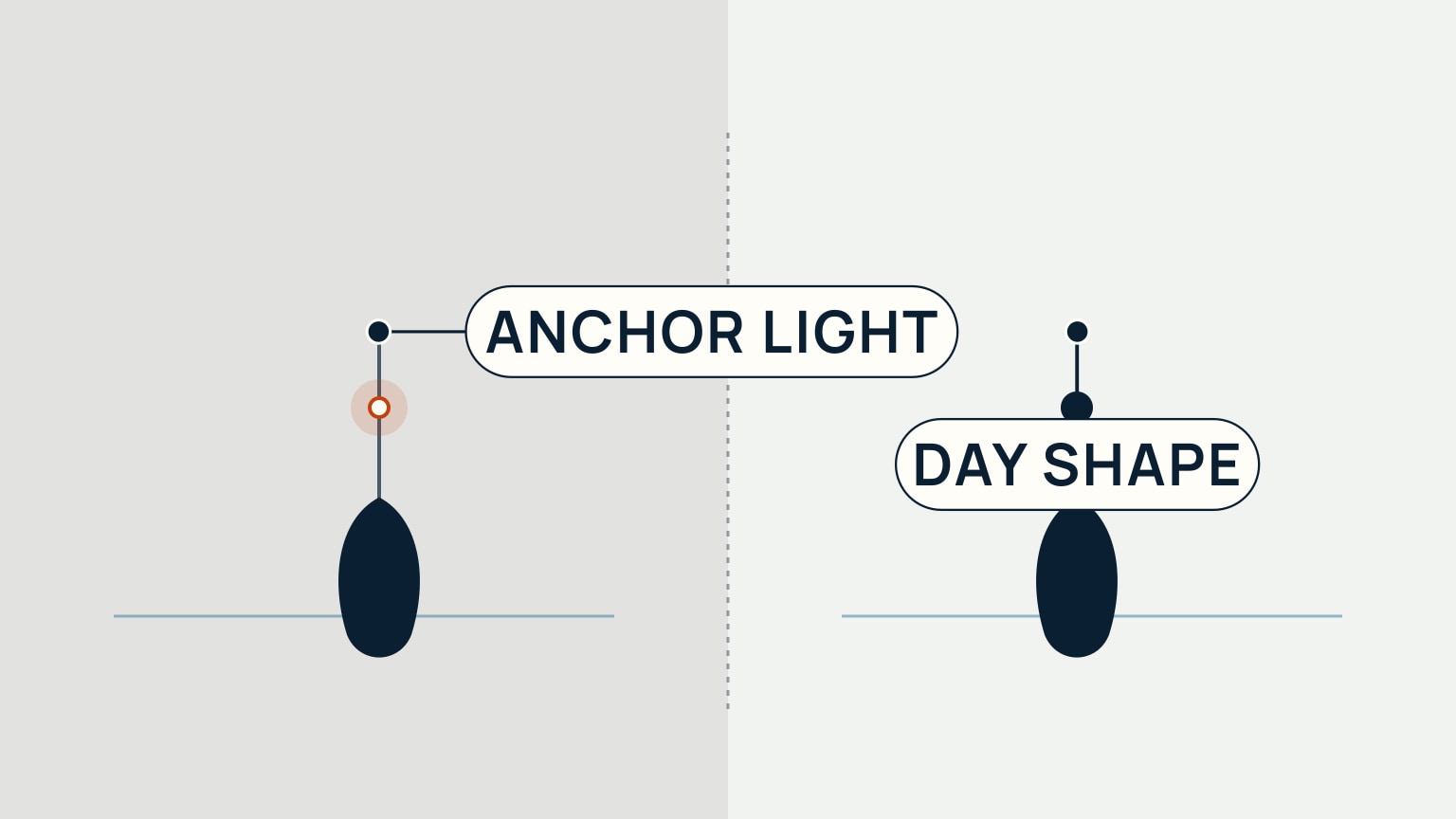
An anchored boat has its own signal, and it isn't optional: at night, show an all-round white light where it can best be seen (a smaller vessel under 50 metres may show a single light instead of the full pattern), and by day, show a black ball shape instead: the same rule in different light. A vessel under 7 metres anchored away from a channel, fairway, or crowded anchorage is exempted, but showing the light anyway costs nothing and buys real visibility. Ordinary vigilance is enough on a calm, familiar night, but strong or changeable conditions and tight swinging room call for genuinely active monitoring, not just hoping the alarm catches it. A real watch routine is concrete: for a crew of four, a three- to four-hour rotation works well, whoever's on watch wearing a lifejacket with a personal locator beacon and a quiet check alarm every 15 to 30 minutes, and the whole crew briefed on what wakes the skipper. Build it around when drag risk actually peaks: high water and the turn of the tide. That routine replaces an anxious, half-awake night with a small number of deliberate checks.
Keeping an anchor down overnight comes together from a short list of habits: fix your baseline the moment you're set, know the real signs of drag versus ordinary swing, size a GPS alarm against your own swing circle, respond calmly with scope before anything more drastic, and show the light or shape that tells every other boat you're there. SailStarter's lesson 12.4, "Sleeping soundly: anchor watch & drag," walks through this same sequence hands-on: recording a baseline, telling a real drag from a normal swing, and running the calm, ordered response when the anchor does let go. If you've already worked through choosing your spot in 12.2 and setting your scope in 12.3, this is the lesson that lets you actually sleep once the hook is down. Come try it.
Try it from the lesson
Can you spot the next move?
Drag is confirmed. What decides whether you veer more rode or get the anchor up and move?
Why you can trust this guide
. We build each guide from public seamanship and safety sources, then teach the universal principle before any local difference.