Chart your course
Up and Away: How to Weigh Anchor and Get Underway
Quick answer
The short version
Weighing anchor is a short, planned sequence, not a tug-of-war with the rode. Start the engine and check it before anyone touches the ground tackle, read the wind and current so you know which way the bow will swing once it's free, and brief the crew on hand signals. Then motor slowly up toward the anchor while the bow crew gathers the slack. The engine moves the boat, never arms hauling against the wind. When the rode runs straight down and the anchor sits right under the bow, that's "up and down," and most anchors lift free on the boat's own motion from there. A stubborn one comes out with the engine, not muscle. The instant it clears the bottom, the boat is "aweigh" and adrift, so steerage comes first. Washing the chain and pinning the anchor into its roller happen after the boat is safely under control.
You've picked your ground tackle, chosen the anchorage, set your scope, and kept watch overnight. Now it's time to get moving again. Weighing anchor looks simple from a distance: someone hauls, the anchor comes up, off you go. Done carelessly, though, it's how rode gets snatched, fingers get pinched, and boats drift into trouble the moment they're technically free. Done as a sequence (plan, motor up, break out, then steer before you stow), it's calm and quick every time. This article walks through that sequence end to end, from the last check before you start to pinning the anchor down for the passage ahead. If you haven't set your scope yet, that's lesson 12.3; this is the lesson that gets you moving once it's time to go.
Before You Touch the Rode: Plan, Check, Brief
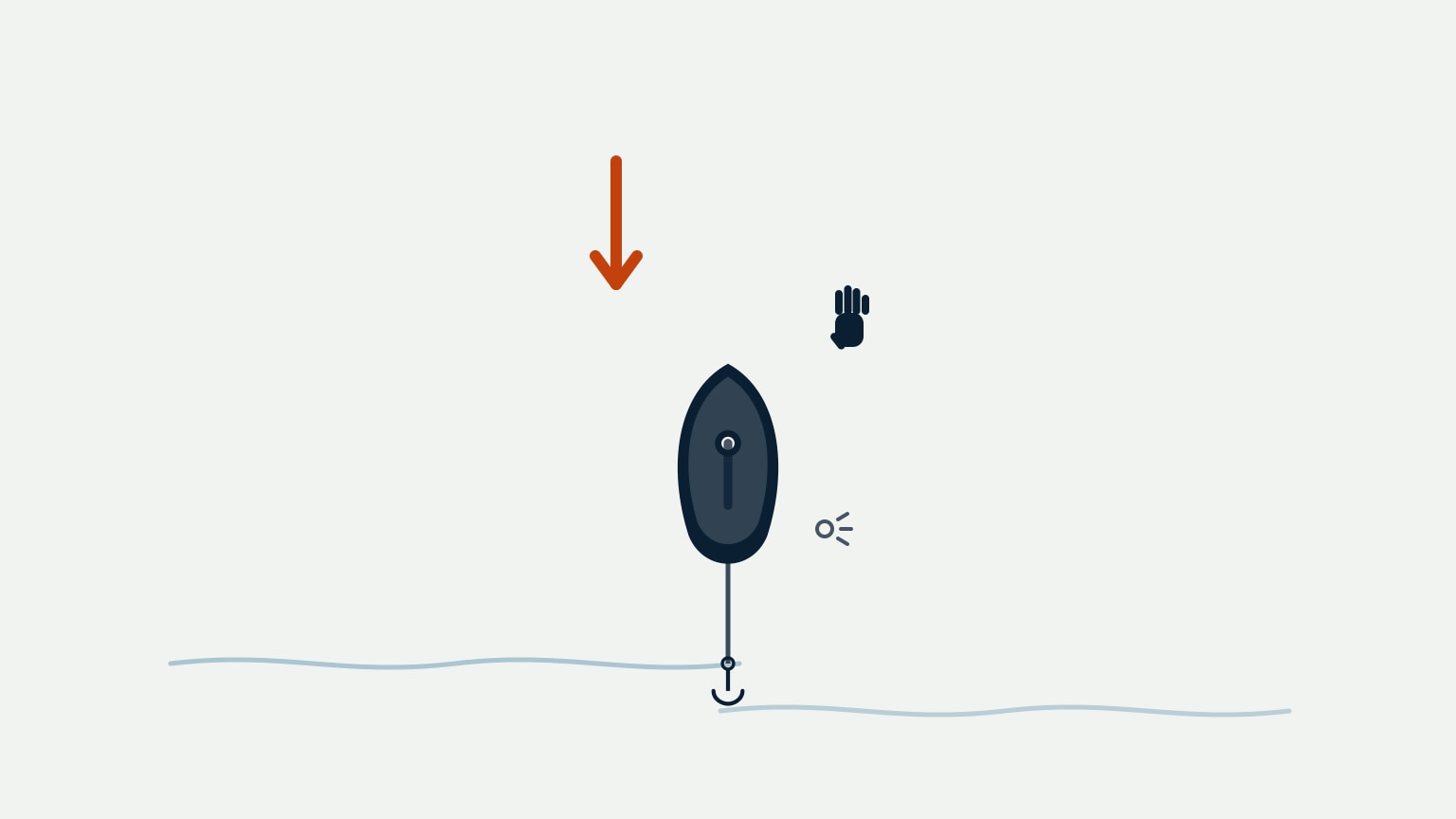
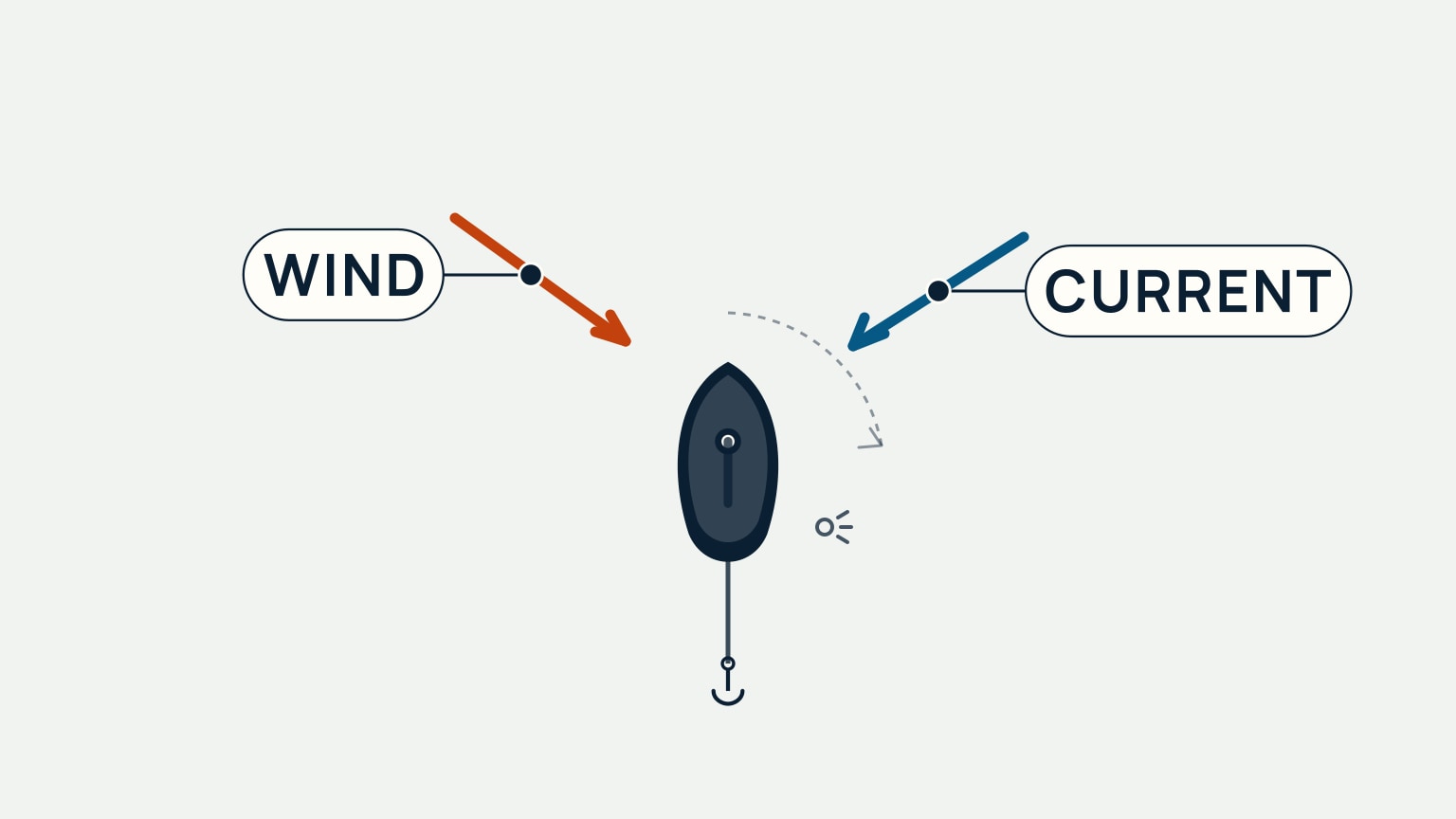
Leaving is a plan, not a yank on the chain. Start the engine first; a windlass draws heavy electrical current, and running the engine lets the alternator carry that load instead of the battery alone. While it warms up, read the wind and current, because together they decide which way the boat will move the instant the anchor stops holding it in place: check "the direction and strength of both wind and current... to assess which will have the stronger effect." That matters most for the bow specifically. A boat sits lighter forward than aft, with more windage from the rig and less grip in the water, so the bow blows off more easily than the stern, and that vulnerability peaks exactly during the slow, low-power moments a departure is full of. Last, brief the crew: make sure everyone aboard knows the boat is about to move, and agree on the hand signals the bow crew will use, since the skipper at the helm usually can't see the rode or the water below it.
That bow vulnerability is not theoretical. One experienced sailor describes the bow of their own boat sliding off to one side in just a few knots of breeze during a single gear change, the exact low-speed moment weighing anchor is full of. It is a reminder to keep the helm's hand on the throttle and the wheel through the whole sequence, not just at the very end once the anchor is aboard.
Motor Up, Don't Haul: Reaching "Up and Down"
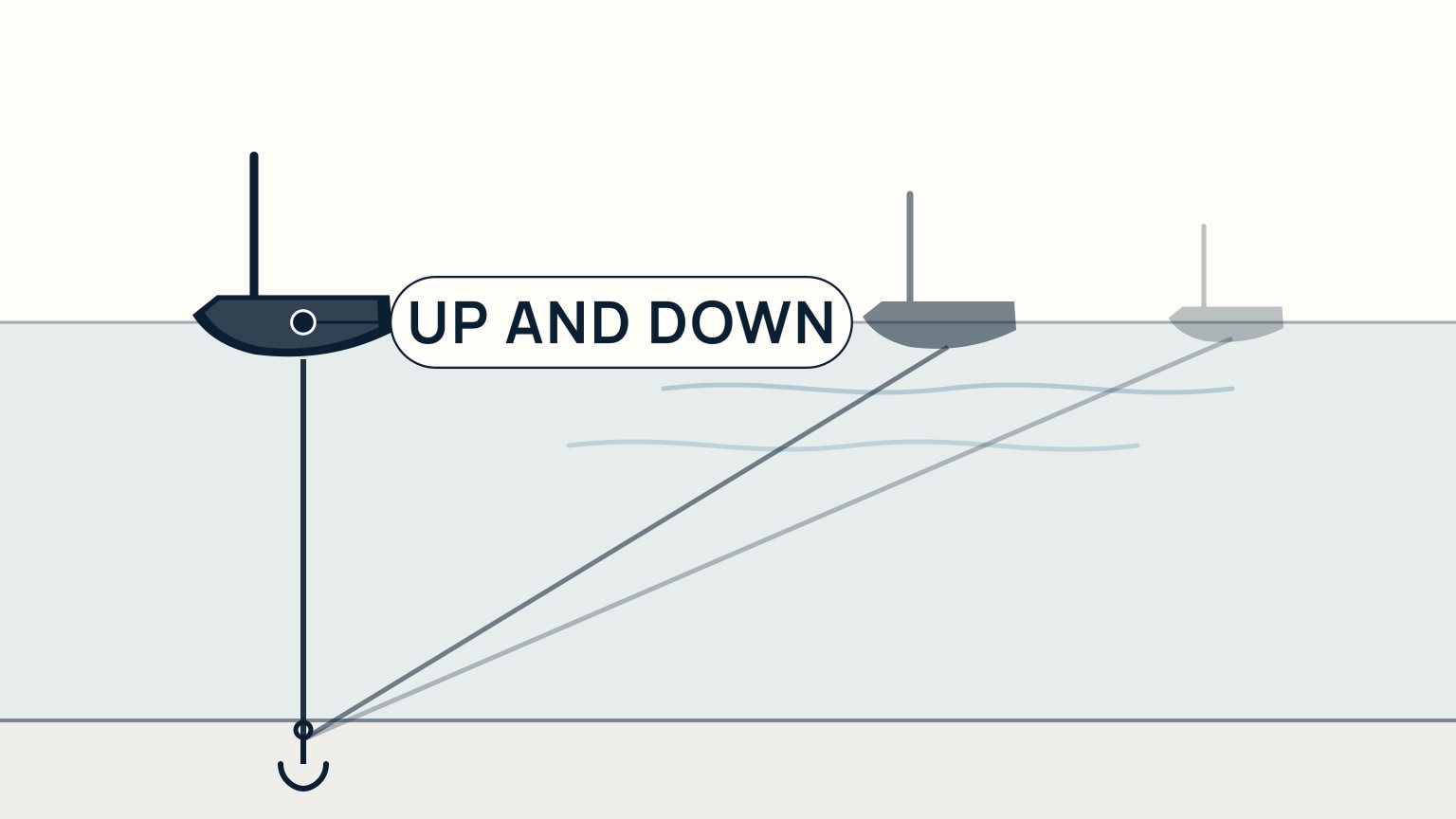
With the plan set, motor slowly toward the anchor while the bow crew takes in the slack the boat's own movement creates. The engine does the work of closing the distance; arms just keep pace with it, gathering rode rather than dragging the boat forward against the wind. Steer by the crew's hand signals, since they can see the rode's angle and you can't. The target is the position sailors call "up and down": the rode runs straight and taut from the bow to an anchor sitting almost directly beneath it. Reaching that position, not just hauling in length, is the actual goal of this whole stage: everything before it is closing distance, and everything after it is breaking the anchor free. If a windlass is doing the lifting, keep an eye on it as the last of the rode comes home: a chain link can catch in the gypsy or the hawse pipe and jam the whole mechanism if nobody's watching.
Without a windlass, the same principle still applies: the engine does the heavy work, not your arms. Hauling chain or rope by hand, nudge the engine gently ahead whenever the load on the rode builds, taking the strain off just long enough to gather in the slack that motion creates. Fighting a taut rode hand over hand wastes effort and risks a snatched finger for no real gain in speed.
Breaking It Out; and What to Do If It Won't Budge
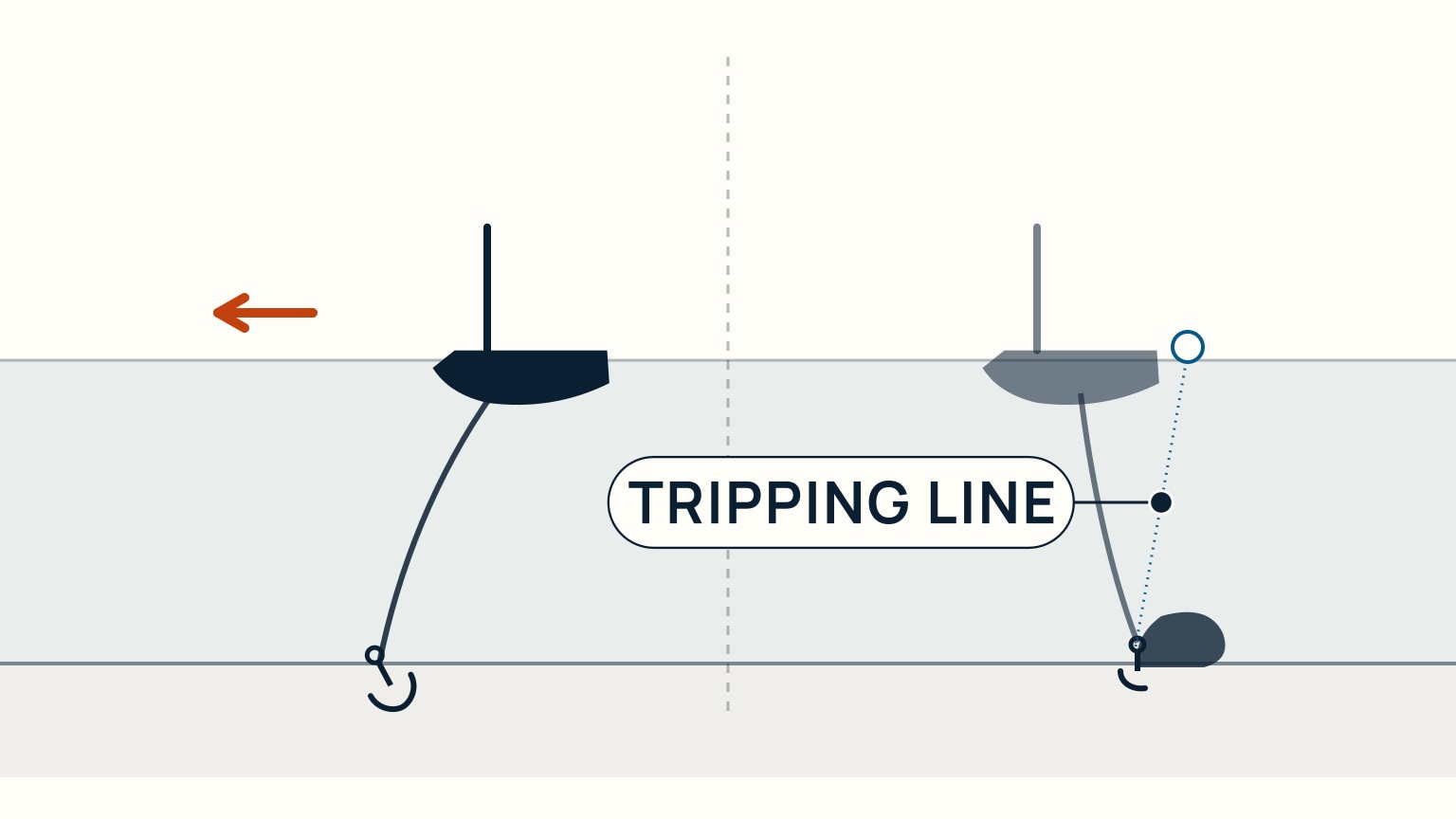
Most of the time, nothing more is needed once you're up and down: the boat's own motion in the waves works the anchor loose on its own. If it doesn't, don't reach for more muscle. Reach for the engine instead. One documented technique cleats the rode tight and motors gently astern, letting the boat's own pull break the anchor free. Another motors slowly forward, past and over the anchor's position, pulling it out from the opposite direction it dug in. Either way, the boat does the pulling, never the crew's arms against a dead weight buried in the bottom. If an anchor won't come free at all, it may simply be caught on something below rather than just well dug in (a submerged cable, a rock, a mooring chain). That's a fouled anchor, and the standard fix is a tripping line rigged to the anchor's crown beforehand, hauled to flip it back out the way it went in, rather than fighting the main rode harder.
If nothing works and the anchor stays stuck despite both engine techniques and no tripping line was rigged beforehand, the fallback is to leave it rather than risk the boat or the crew forcing it. Undo the rode's bitter end from the chain locker, tie a fender or float onto it to mark the spot, and come back in calmer conditions or with help suited to the job. Losing one anchor is a manageable setback. Damaging the boat or a crew member while fighting a truly stuck one is not.
Anchor's Aweigh: Steerage First, Then Wash and Stow
The moment the anchor clears the bottom, the boat stops being fixed to that one spot. Sailors call it "aweigh," and it means the boat is adrift and moving right now, not a moment from now. Steerage, control from water flowing over the rudder, is what keeps that moment calm instead of chaotic, so the helm's job is to hold a heading before anything else happens on the foredeck. Once the boat is safely under control, finish the anchor itself: if it's come up muddy, lower it back into the water for a moment, or bring the last of the chain in slowly so the current has time to rinse it clean, rather than dragging mud straight across the deck. On a long muddy stretch of chain, hauling it up in stages rather than all at once gives the current more time to work between pulls. Once the anchor itself is near the surface, towing it gently at that level, clear of the hull, finishes the job the current started. Seat the anchor fully into its bow roller, then pin it or lash it down. A safety lanyard, a devil's claw, or a simple securing pin all do the same job of keeping it from working loose or deploying itself once you're underway.
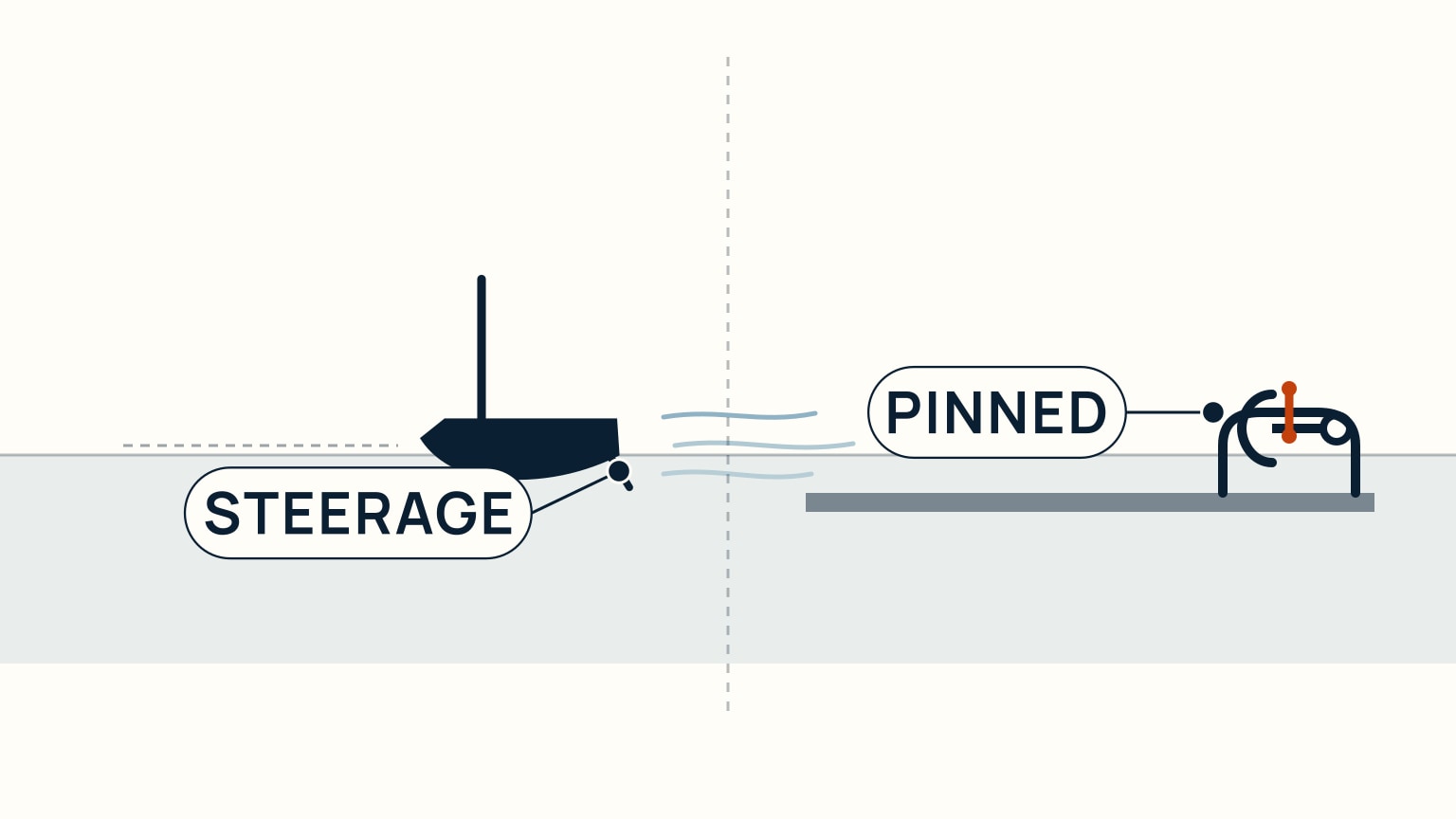
Weighing anchor comes down to four moves in order: plan and brief before you start, motor up to a vertical rode instead of hauling one, let the engine break the anchor out, and steer before you stow. Each step exists to remove one specific failure: a surprised crew, a strained back, a snagged anchor, or a boat adrift with nobody steering. None of it is hard on its own. The skill is doing it in that order every time, so getting underway is routine instead of a scramble. SailStarter's lesson 12.5, "Up and away: weighing anchor," walks through this same sequence hands-on, from the pre-departure checks through motoring up, breaking out, and securing the anchor for the passage ahead. If you've already worked through choosing your spot, setting your scope, and keeping watch in lessons 12.2 through 12.4, this is the lesson that gets you moving again. Come try it.
Try it from the lesson
Can you spot the next move?
Your crew starts hauling the rode in hand over hand while the engine idles in neutral. What's wrong with that?
Why you can trust this guide
. We build each guide from public seamanship and safety sources, then teach the universal principle before any local difference.