Chart your course
How to Set an Anchor Alarm
Quick answer
The short version
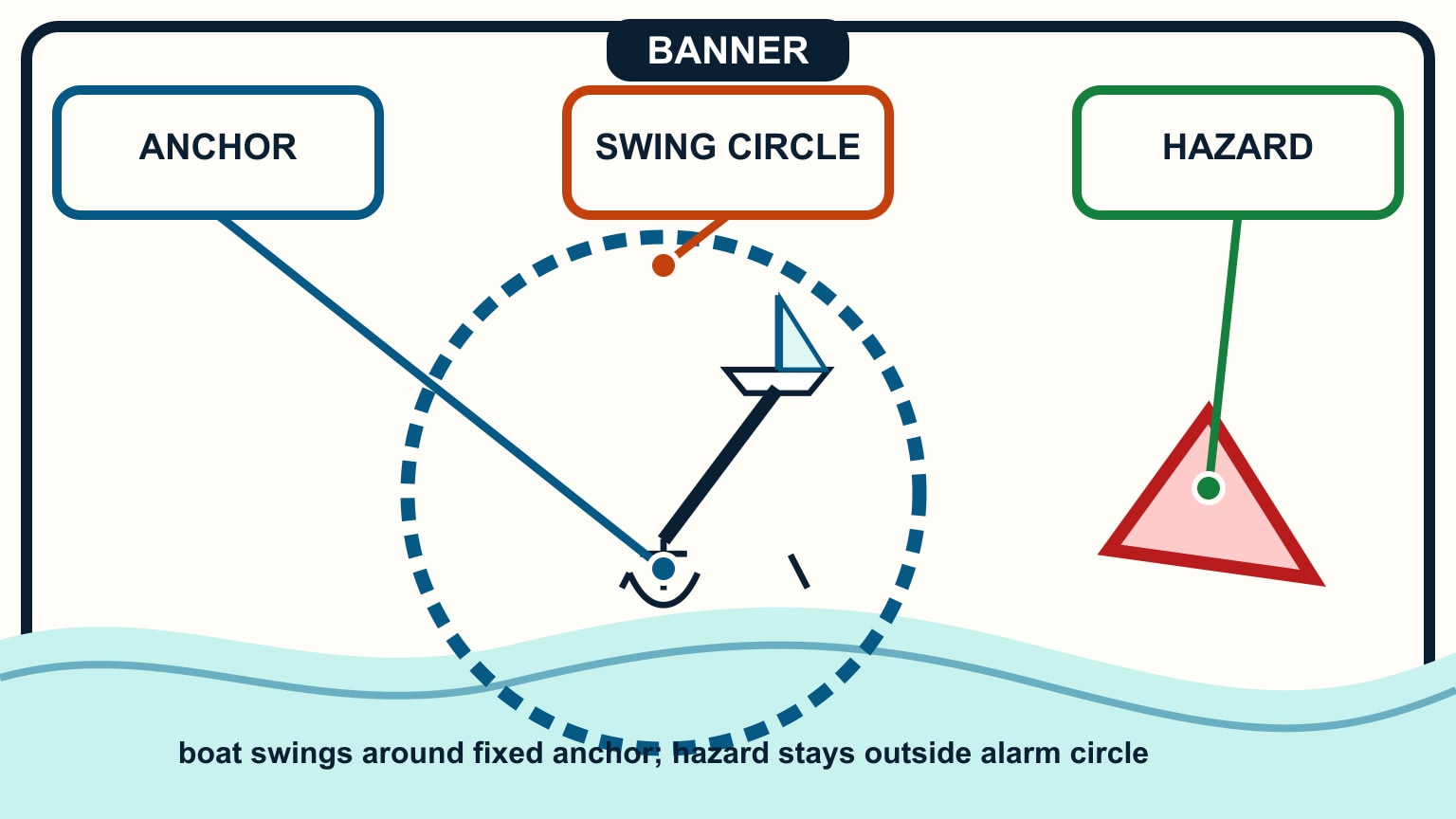
Set an anchor alarm only after the anchor is down, set, and independently checked. The best centre is the anchor's estimated position, captured when you drop it or reconstructed from the boat's position, heading, and rode. Choose a radius that contains the boat's expected swing plus the distance between the GPS receiver and bow, while staying inside hazards and other boats. Test the alarm, keep the device powered and audible, and use visual bearings, depth, weather, and an awake anchor watch as separate evidence. Reset the plan when wind or current changes; an app cannot tell whether the anchor is holding safely in a shrinking anchorage.
An alarm watches a boundary you define. It does not verify the anchor's set or decide which movement is normal. If the geometry of scope and swing is unfamiliar, begin with anchor scope explained. Then set the electronic circle from the real anchor position rather than drawing a convenient ring around the boat after everyone goes below.
Confirm the set before opening the app
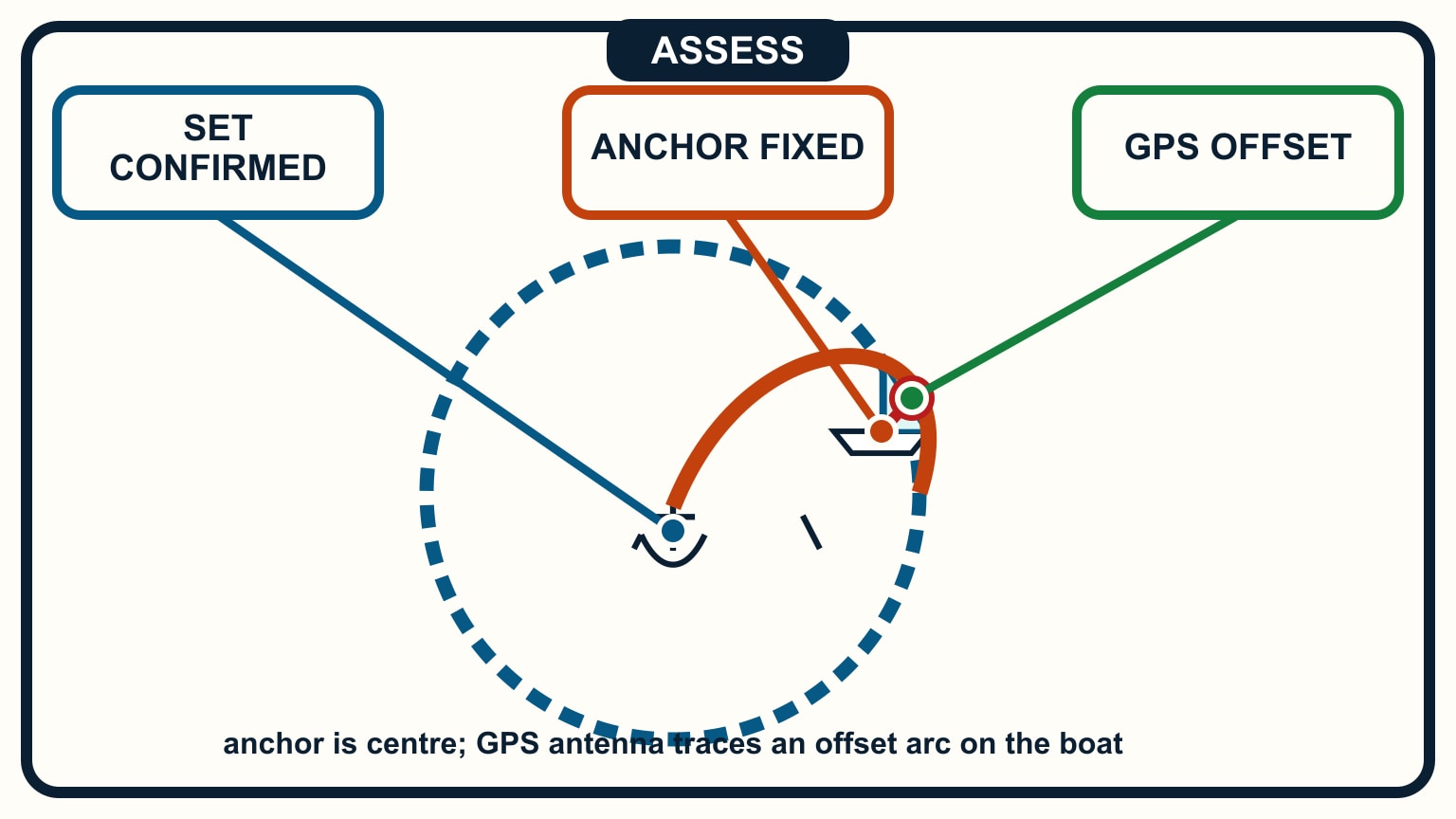
Finish the anchoring sequence first. Pay out the planned rode, set the anchor, transfer the load off the windlass, and watch how the boat settles. Use a transit or bearings to fixed objects, the feel and direction of the rode, and the boat's position history to check that the anchor has stopped moving. A GPS trace that wanders within its normal accuracy is only one observation.
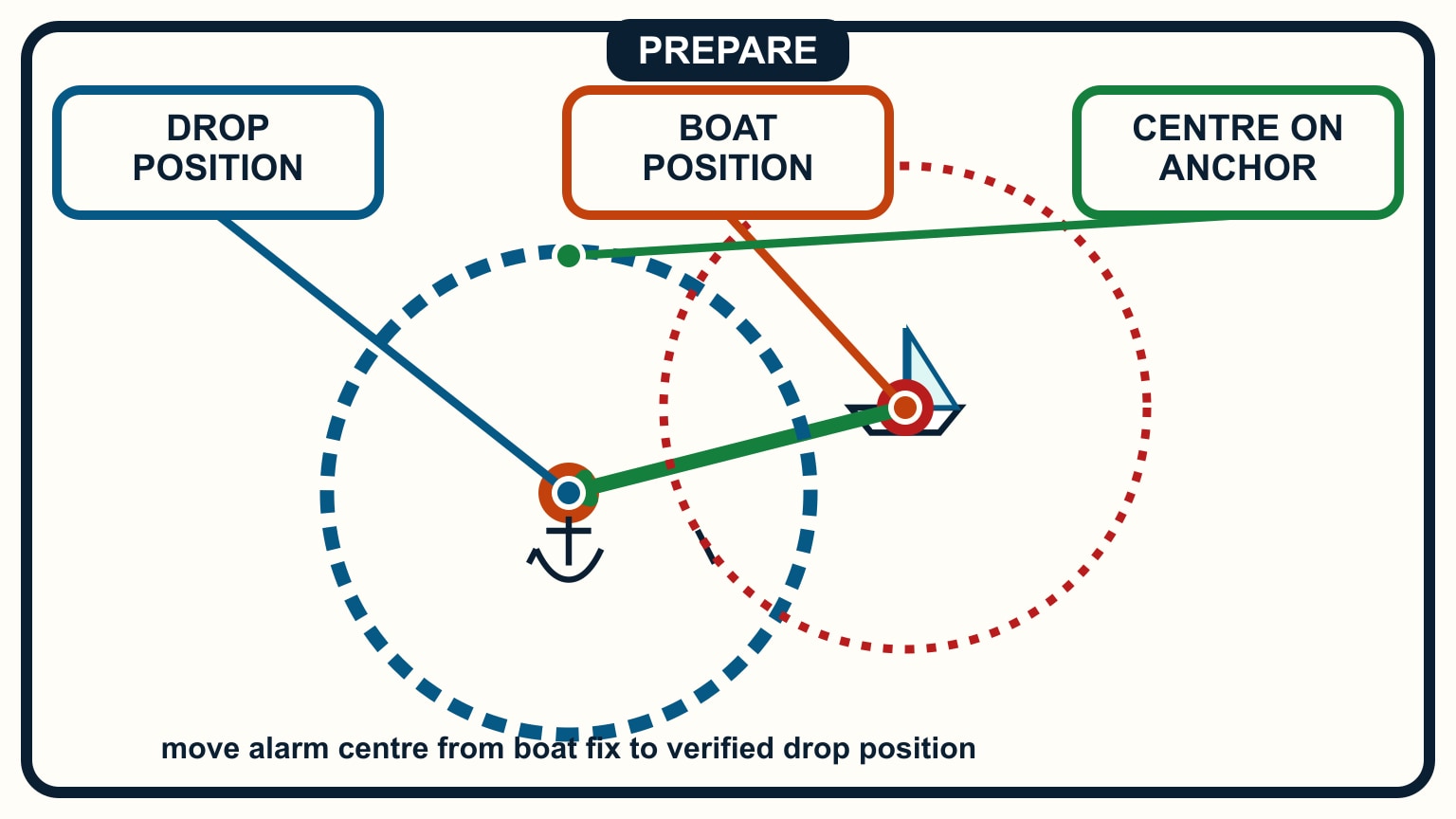
Record the anchor drop position if your plotter or app allows it. The boat moves away while rode is deployed, so the final resting position is not the same point. If you did not mark the drop, estimate the anchor from the boat's current position, heading toward the rode, and the horizontal distance from bow to anchor. Treat the result as an estimate and give uncertainty room.
Find where the device obtains position. A phone in the cabin, a plotter antenna aft, and a GPS receiver near the helm all swing on a different arc from the bow. That offset can create alarms at one heading and silence at another if ignored.
Do not let setup distract from the anchorage. One person should keep watching traffic, depth, and nearby boats while another enters the alarm.
Put the reference point on the anchor
An anchor-centred alarm makes the movement easy to interpret. The boat may travel around the circle as wind or current turns, yet its distance from the anchor should remain within the planned envelope. A boat-centred alarm set at one heading can mistake ordinary swing for drag or allow extra movement on the opposite side.
If the app supports a remote anchor point, place it at the recorded drop. If it requires the device to be carried over the point, follow its instructions only when doing so is safe and practical during deployment. Some systems let you enter bearing and distance from the current position. Check the units before typing; metres, feet, and nautical miles are not interchangeable.
Plot the reference on the chart as well. Confirm it lies in the chosen bottom and outside prohibited or sensitive areas. Compare the intended swing with shoals, rocks, moorings, docks, and other anchored boats. The alarm centre is not useful if the safe area around it was never checked.
Write the drop time, position, rode deployed, depth, wind, and current in the log. That record gives the next watch enough context to interpret a moving trace instead of guessing what the first watch intended.
Build the radius from the whole swing
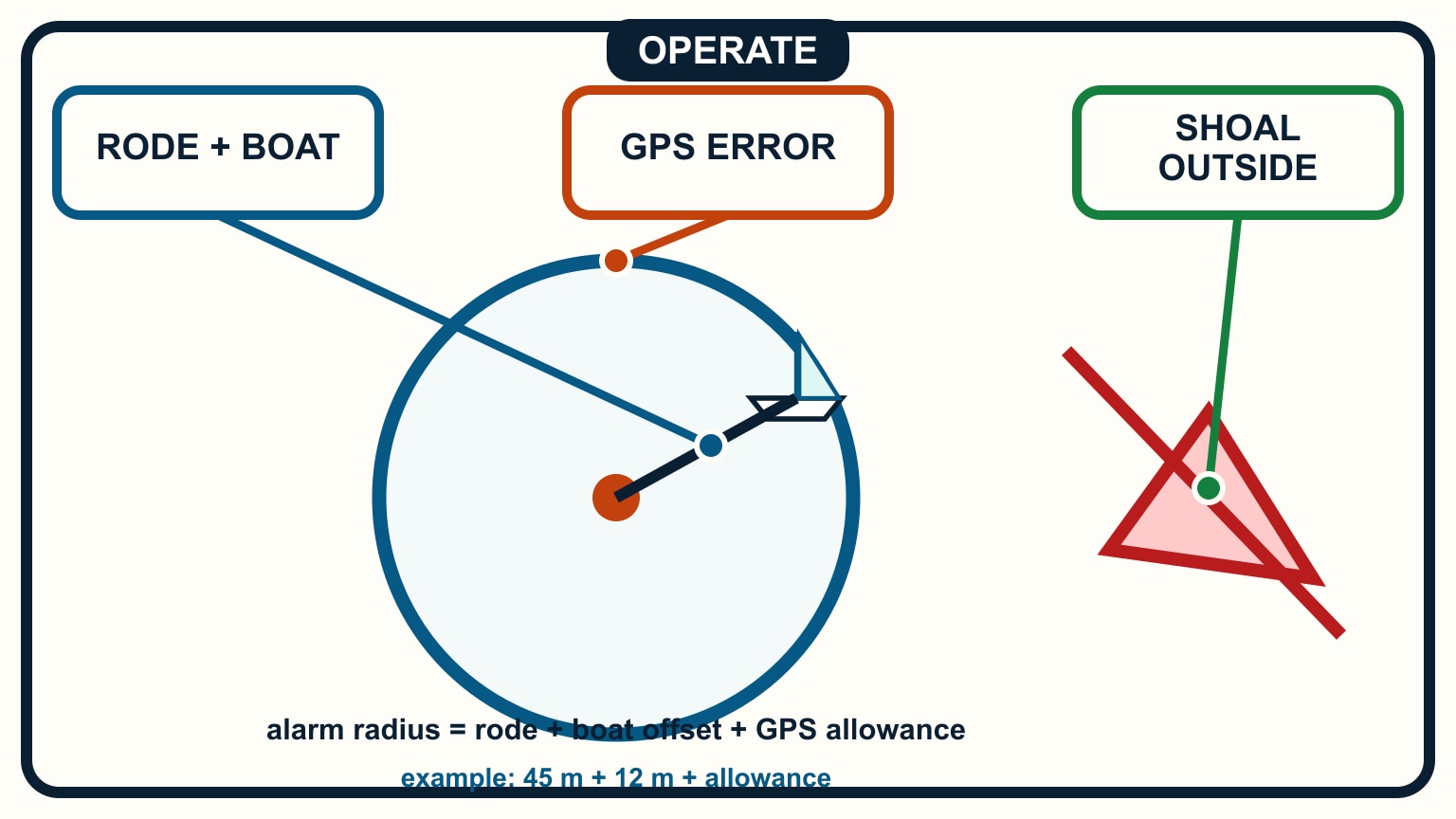
The horizontal distance from anchor to bow is less than the full rode length because part of the rode drops through the water. Do not turn that fact into false precision. Start from the expected horizontal reach, add the bow-to-GPS offset, add a sensible allowance for GPS variation and movement, and compare the resulting circle with the actual safe water.
Too small a radius produces nuisance alarms as the boat swings, which teaches the crew to ignore it. Too large a radius may include the shoal or vessel you wanted the alarm to protect against. If no single circle contains normal movement while excluding hazards, the anchoring position or alarm method is unsuitable. Move the boat or add a more specific boundary if the equipment supports one.
Draw the circle at every heading, not only downwind of the current position. A wind shift can move the boat to a previously empty side of the anchor. Check depth and other vessels across that full disc. Boats nearby may have different rode lengths and may swing at a different time.
Test the setting before relying on it. Use the app's test control or temporarily choose a smaller boundary, confirm the audible alert reaches the sleeping area, then restore and verify the planned value. Keep power-saving settings from suspending the alarm.
Keep an outside reference running
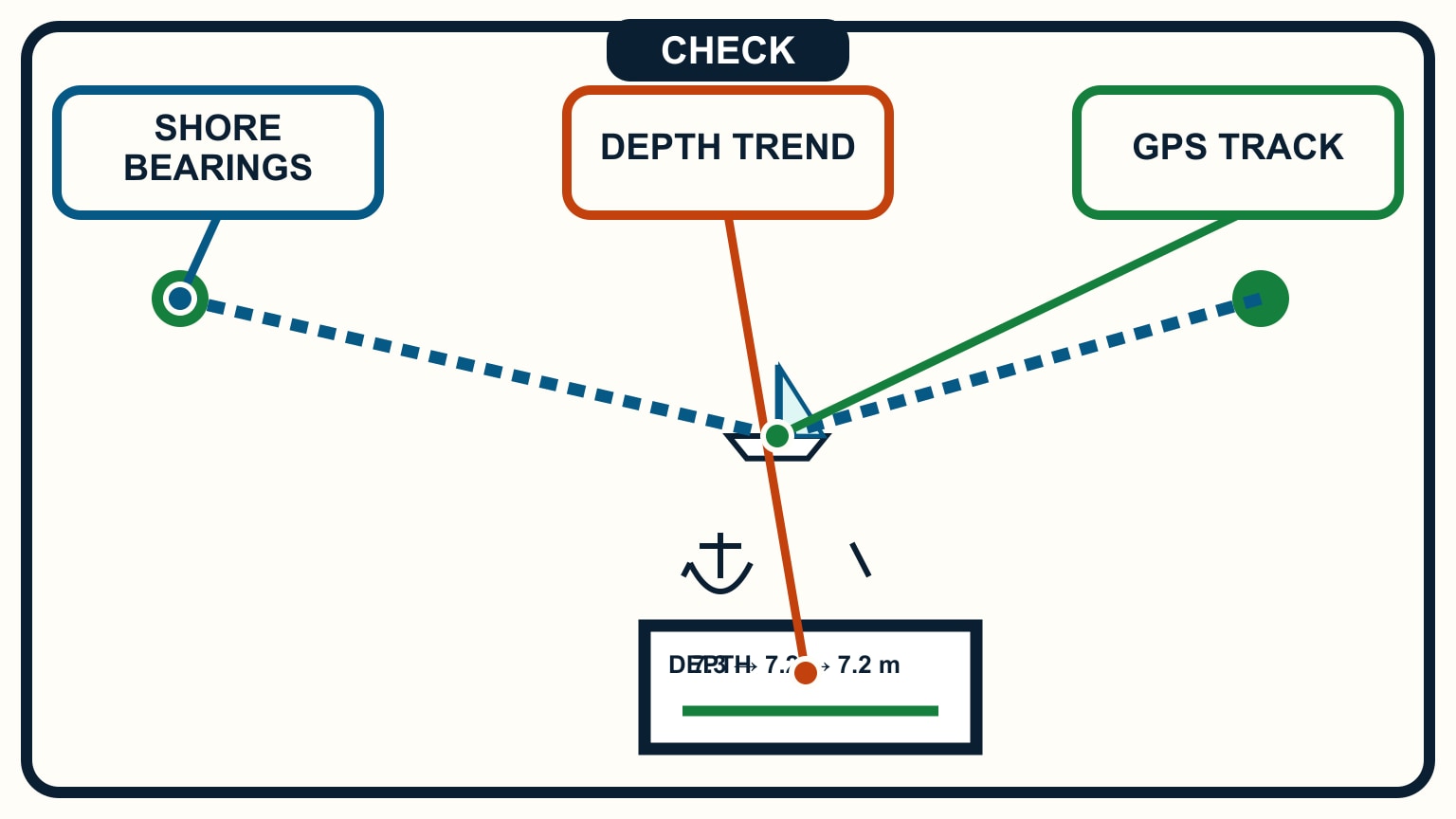
Choose two fixed objects that form a transit or take bearings to separate landmarks. Record what they look like from the cockpit and sleeping area. A single light can be confused with a moving boat; two independent directions are easier to interpret. At night, verify which lights are fixed before darkness rather than learning the shoreline after an alarm.
Track depth where it provides useful evidence, allowing for tide and the transducer's offset. A gradual expected depth change differs from a sudden shift paired with a growing GPS distance. Listen and feel as well: a change in chain direction, snatching, or the boat lying differently can prompt an early check.
Review the position plot rather than only the current dot. Normal swing often draws an arc around a stable centre. Drag may show repeated movement away from the reference, but GPS errors and a changing wind can make shapes that need interpretation. Use the complete picture and be ready to start the engine or re-anchor before the choice becomes urgent.
An anchor alarm complements the watch described in how to anchor overnight safely. It does not make an unattended anchorage acceptable or replace local requirements.
Reassess after every meaningful change
Wind shifts, a turning current, rising wind, tide, traffic, and another boat's arrival can change the safe swing. Check the rode direction and position trace after each change. Confirm the snubber or bridle still leads correctly and the chain remains off the windlass. Recalculate the boundary if more rode is deployed.
When the alarm sounds, wake the crew and look outside before silencing it. Check the distance trend, bearings, depth, rode direction, nearby boats, and available escape route. If holding is uncertain, act while there is still room: prepare propulsion, recover or reset the anchor under control, and use dragging-anchor response rather than repeatedly widening the circle.
False alarms also deserve a cause. Note whether the radius was too tight, the GPS receiver moved, the app lost background permission, the device slept, or the boat completed a normal swing. Fix that cause in daylight. Turning off an unexplained alarm removes the warning without improving the watch.
Before leaving the boat, confirm what local rules and harbour conditions allow. A phone left aboard may lose power, data, or notification delivery. Remote alerts can be useful, but they are not a substitute for an appropriate person and plan at the boat.
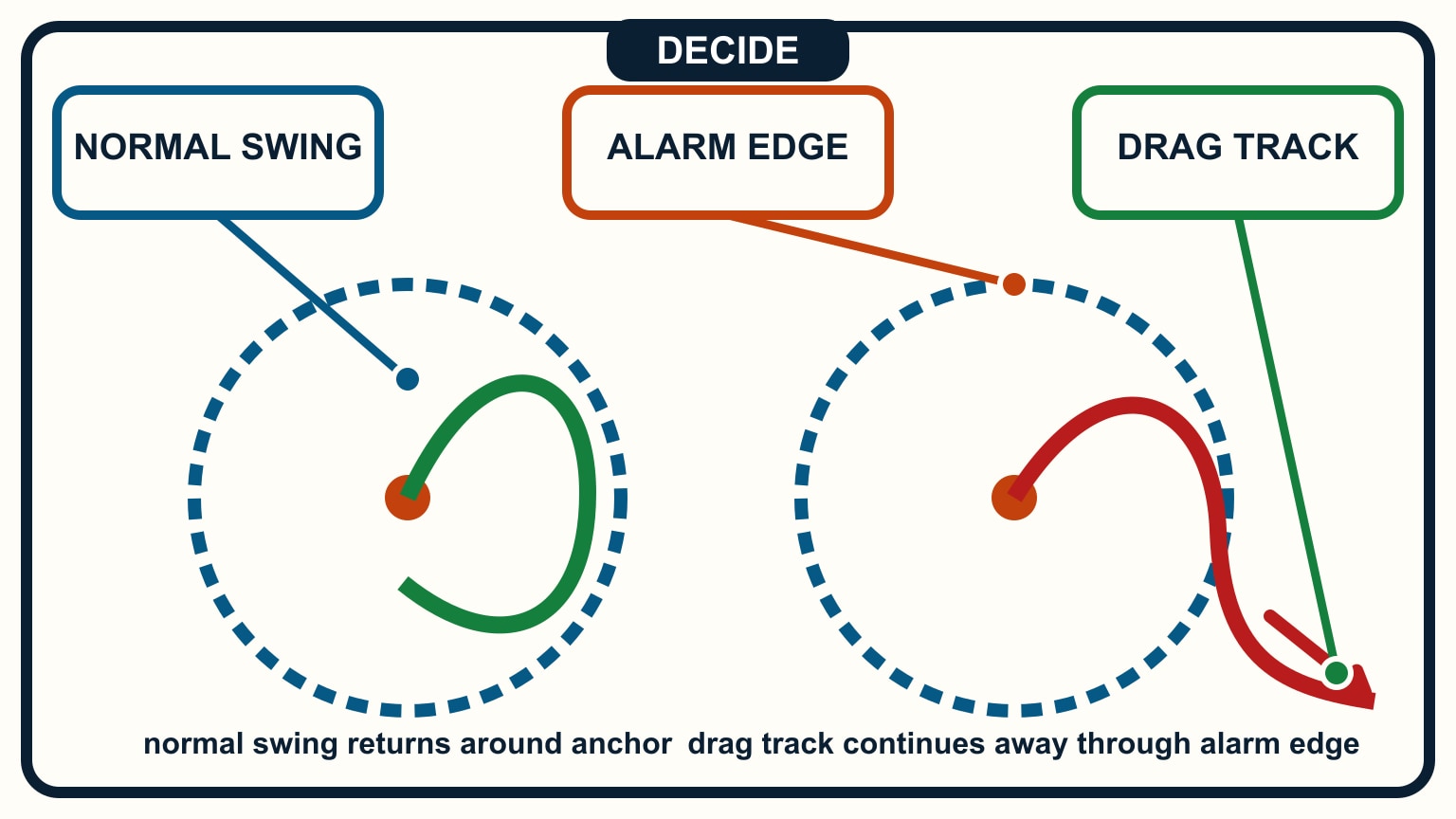
SailStarter's anchoring lessons help you understand the physical picture behind the screen. Use that picture every time you set an alarm: anchor point, full swing, GPS offset, hazards, and outside checks. If the safe water cannot contain the circle, change the anchoring decision instead of shrinking the warning. The alarm is most useful when it confirms a plan you can already explain without the app.
Run a fair-weather drill before depending on the alarm overnight. Let the boat swing through part of its normal arc, check that the plotted track stays inside the chosen boundary, and deliberately set a temporary smaller radius to confirm the phone or plotter produces the expected sound. Test volume, power, night settings, and the watchkeeper's ability to acknowledge the alert without deleting the reference point.
Record the anchor position, paid-out rode, depth, nearby hazards, expected wind shift, and alarm radius in the log. At each watch handover, the incoming person should see the same picture and know the immediate response: engine readiness, bearings to check, safe direction of escape, and when to wake the skipper. If the device, position source, or power supply becomes unreliable, replace its job with a more conservative watch rather than silently accepting less protection.
Try it from the lesson
Can you spot the next move?
Drag is confirmed. What decides whether you veer more rode or get the anchor up and move?
Why you can trust this guide
. We build each guide from public seamanship and safety sources, then teach the universal principle before any local difference.