Chart your course
ASA 101 vs 103 vs 104: Which Course Do You Need?
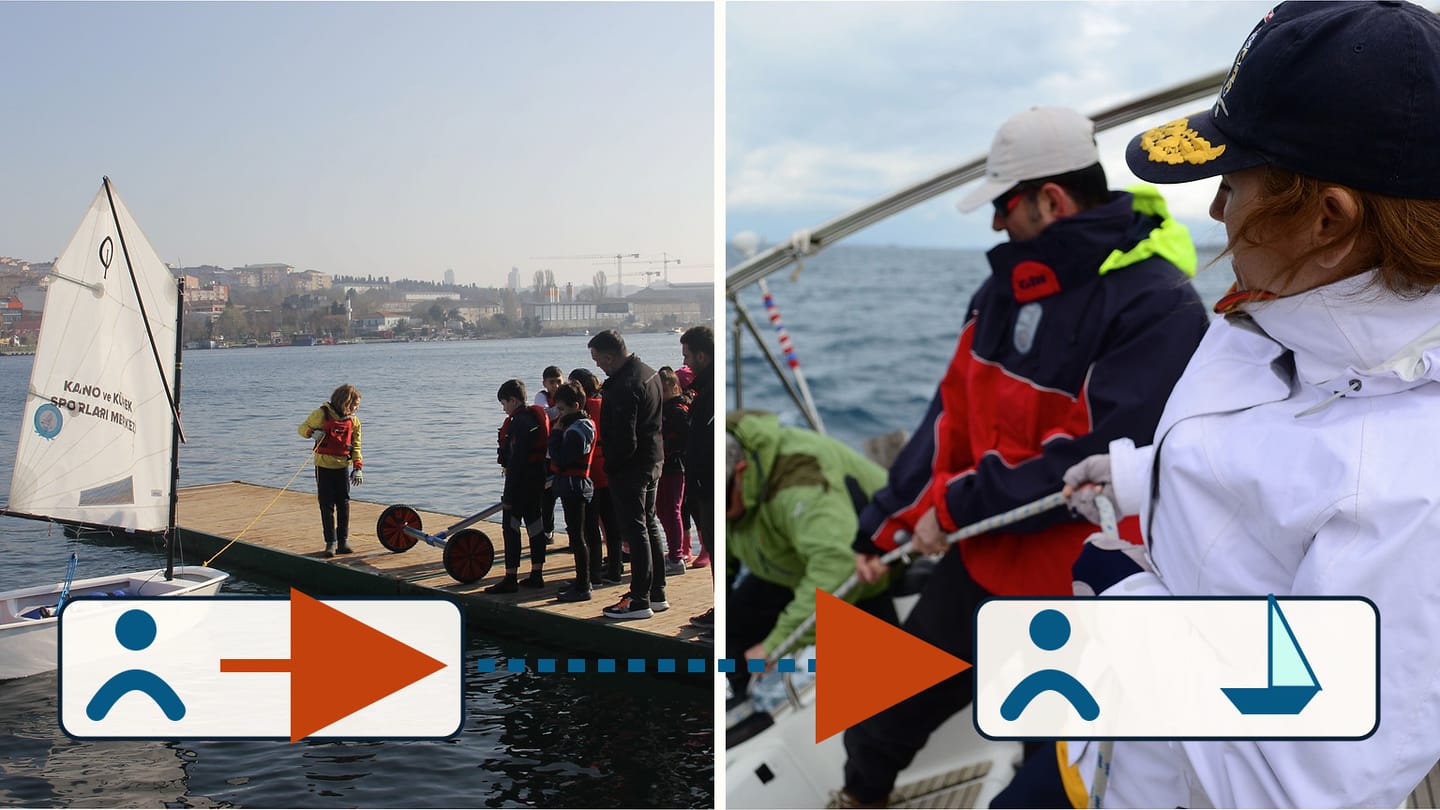
Quick answer
The short version
ASA 101, 103, and 104 are three separate American Sailing standards. ASA 101 covers basic keelboat sailing. ASA 103 moves into basic coastal cruising, while ASA 104 is aimed at bareboat cruising. The useful choice is usually the first standard whose sailing job you cannot yet do reliably. A complete beginner normally starts with 101. A sailor who can already handle a keelboat but lacks cruising experience may be ready to discuss 103 with a school. A sailor considering 104 should first check its stated prerequisites and ask whether their recent experience fits the course boat and cruising area.
These are US course names, not a worldwide ladder or an automatic charter licence. A certificate records that you met a published standard in a particular setting. A charter company can still assess your experience, its boat, and the intended destination. If you sail elsewhere, verify the current local rules and any provider terms. For a broader starting point, see how sailing certification works and how to choose a beginner course.
The three standards sit at different points on the same ladder, so match the course to the job you want next.
| Dimension | ASA 101 | ASA 103 | ASA 104 |
|---|---|---|---|
| Published focus | Basic Keelboat | Basic Coastal Cruising | Bareboat Cruising |
| Prerequisite | None — the foundation level | A stated prerequisite, building on 101-level skills | A stated prerequisite, building on boat-handling and coastal-cruising experience |
| Who it suits | A complete beginner learning to control a keelboat | A sailor ready to be an active member of a cruising crew | A sailor preparing to take operating responsibility |
| Sample goal it fits | "Learn to sail the club keelboat with an instructor" | "Contribute on weekend coastal trips" | "Prepare for taking responsibility on a bareboat holiday" |
| Charter relevance | Not directly tied to chartering | Not directly tied to chartering | Directly relevant, though the provider still assesses experience and boat separately |
Compare the course jobs
Start with the work done on the water. ASA 101 is the basic-keelboat level. Its place in the sequence makes sense for someone learning to control a keelboat, work with sails and lines, and take part in ordinary manoeuvres under instruction. It is the foundation, rather than a promise that every new graduate is ready to cruise alone.
ASA 103 changes the setting. The published name, Basic Coastal Cruising, signals a move from an introductory sailing session toward operating as part of a cruising boat. The course builds on earlier skills and has a stated prerequisite. If your aim is to be a capable member of a cruising crew, this is the more relevant job to discuss with a school.
ASA 104 is called Bareboat Cruising. Here, “bareboat” means the customer supplies the skipper and accepts operating responsibility instead of hiring a professional skipper. That makes the decisions around the sailing more important: preparing the boat, planning the trip, managing a crew, and dealing with the practical demands of cruising. Its prerequisite exists because those jobs depend on earlier boat-handling and coastal-cruising experience.
Do not choose by course number alone. Describe the next outing you want: a supervised day on a keelboat, active crew work on a coastal cruiser, or responsibility for a charter. That sentence tells a school far more than “I want the highest certificate.”
Three sample goals show the distinction. “I want to stop being a passenger and learn to sail the club keelboat with an instructor” points toward 101. “I want to contribute on weekend coastal trips and understand the routines of the cruising boat” belongs in a 103 placement discussion. “I want to prepare for taking responsibility on a bareboat holiday” raises 104, prerequisites, and charter acceptance together. If your sentence spans all three, begin with the earliest unsteady job. Later material is easier to absorb when basic line handling and helm work do not consume all your attention.
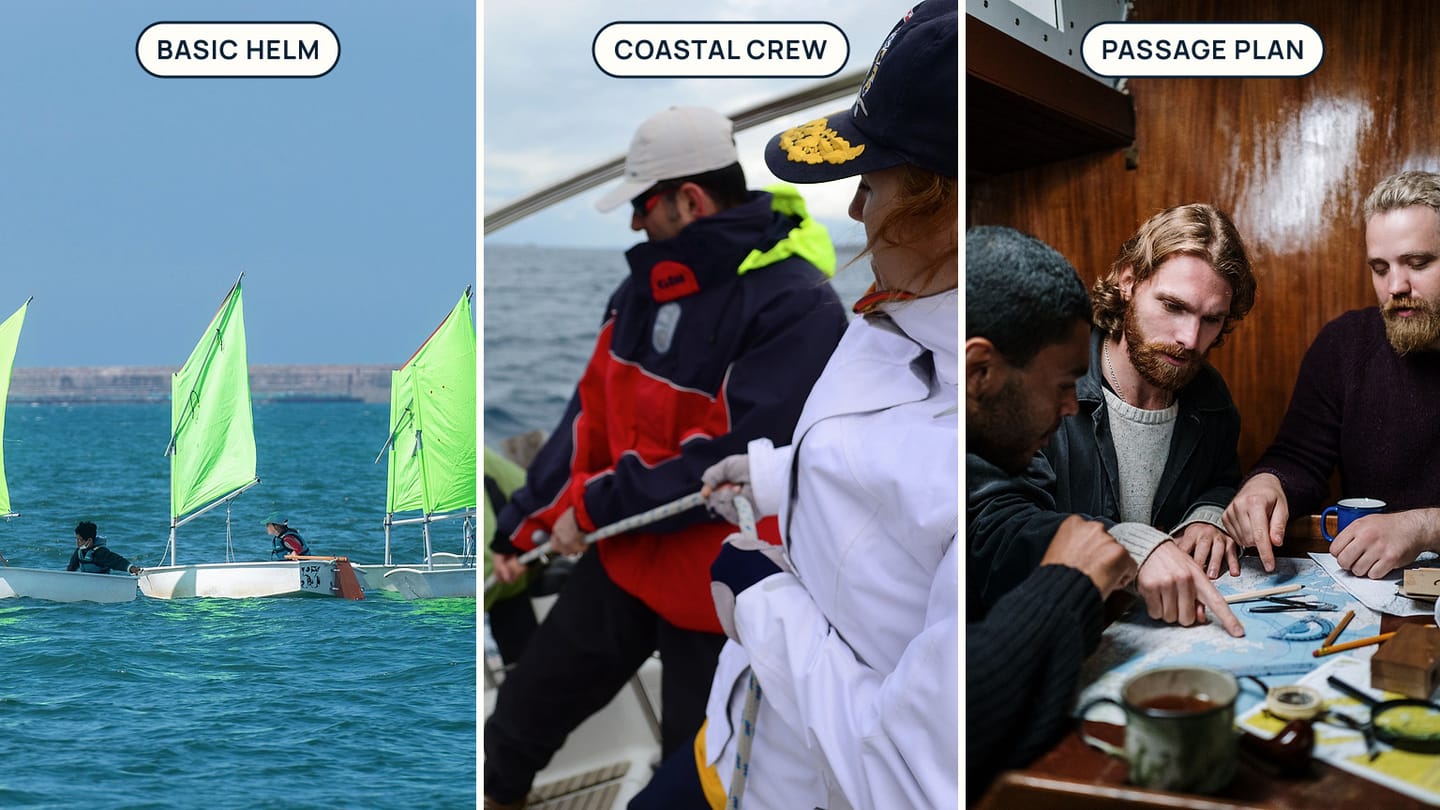
Place yourself honestly
Make a short inventory before asking where to enter. List the boats you have sailed, your role on each one, the waters, approximate dates, and the tasks you actually performed. “Three outings as crew on a 30-foot cruising yacht” is more useful than “some sailing experience.” Add whether you steered, handled sheets, reefed with supervision, helped prepare the boat, or followed a passage plan. Do not turn observation into experience. Watching a docking manoeuvre is different from carrying out an assigned part of it.
Then mark the skills that still need coaching. A person may feel comfortable steering in open water yet need a basic course because sail handling, crew communication, or close-quarters work is new. Another sailor may have years of informal dinghy sailing but little experience on a keelboat. The school needs that detail to judge whether a standard fits.
Recent practice matters because the next course asks you to use earlier skills while learning new ones. If your last sail was several seasons ago, say so. A refresher or supervised outing may be the fastest route back, even when an old certificate meets the written prerequisite.
Ask the school to compare your inventory with the published standard. A good placement conversation should identify specific gaps and a sensible way to close them. Avoid treating honest limits as a setback. They are simply the information an instructor needs to put you on a suitable boat with suitable work.
You can make the inventory more useful by adding a “with help” column. For example, you may be able to steer a compass course alone, trim a sail after a reminder, and prepare a dock line only after someone names the correct line. Those are three different levels of support. This detail helps an instructor plan meaningful rotation and stops a long list of familiar words from looking like independent ability.
If chartering is the goal, begin a factual sailing resume now. It will show whether your experience is becoming more relevant, not merely longer.
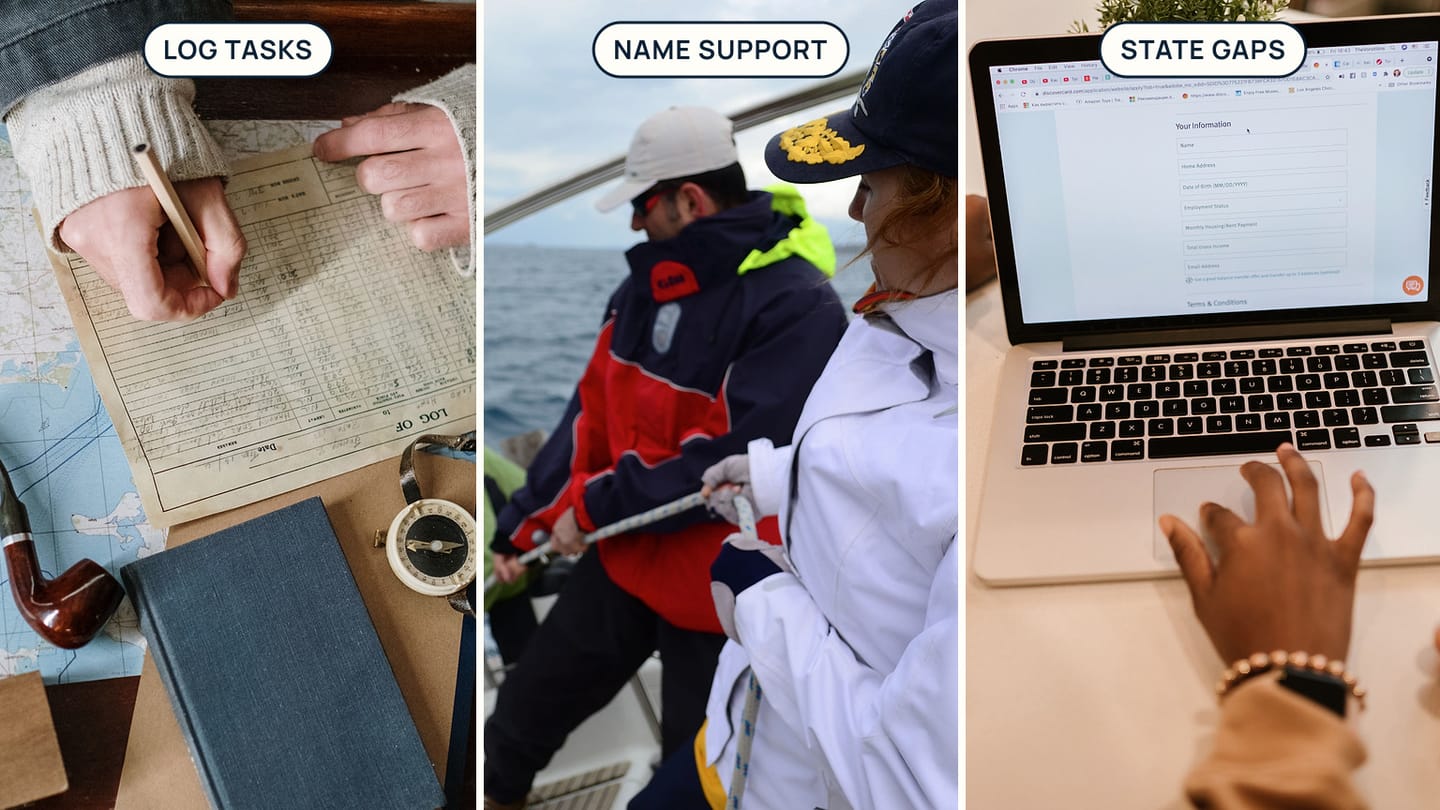
What should you check about the school and boat?
The same standard can feel quite different on two boats. Before booking, ask what type and size of boat the centre uses, how much time is spent afloat, and what each student is expected to do. Find out whether you will rotate through helm and crew jobs or mainly watch while another student works. Ask how the sailing area affects the course. Current, traffic, exposed water, and harbour layout can change the pace of a training day without changing the standard itself.
The instructor and student group also shape the experience. Ask about group size, how the centre handles mixed experience, and what happens when conditions stop a planned exercise. You are looking for a clear account of the teaching, not a guarantee of perfect weather or instant confidence.
If 104 is part of a charter plan, speak with the likely charter provider as well as the school. Ask what evidence the provider expects for the chosen boat and destination. A provider may consider recent experience, boat size, area, crew, and its own written terms alongside formal training. The certificate and the charter decision answer related but different questions.
Read cancellation, rescheduling, assessment, and prerequisite terms before paying. Confirm what is included, what personal equipment you bring, and whether accommodation is part of a cruising course. Where a school uses American Sailing standards outside the United States, also check how local rules and local charter practices affect your plan.
Also ask what happens after the final day. Some centres can suggest club sailing, practice sessions, or later coaching on the same type of boat. Others provide the course only. Neither model is automatically wrong, but a beginner without regular boat access should know which one they are buying. A convenient weekend course far from home may produce less lasting practice than a local course connected to an active sailing community.
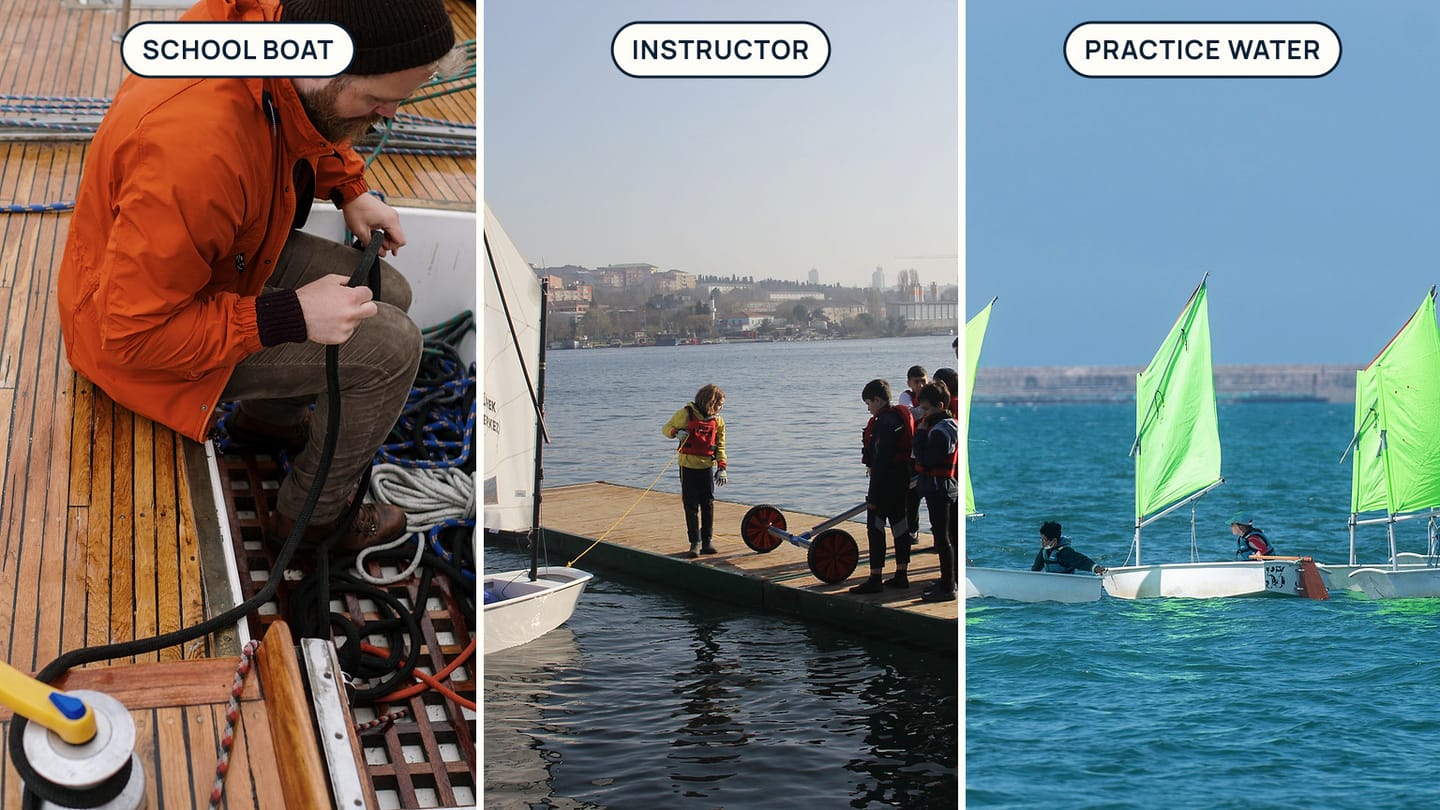
Build practice between steps
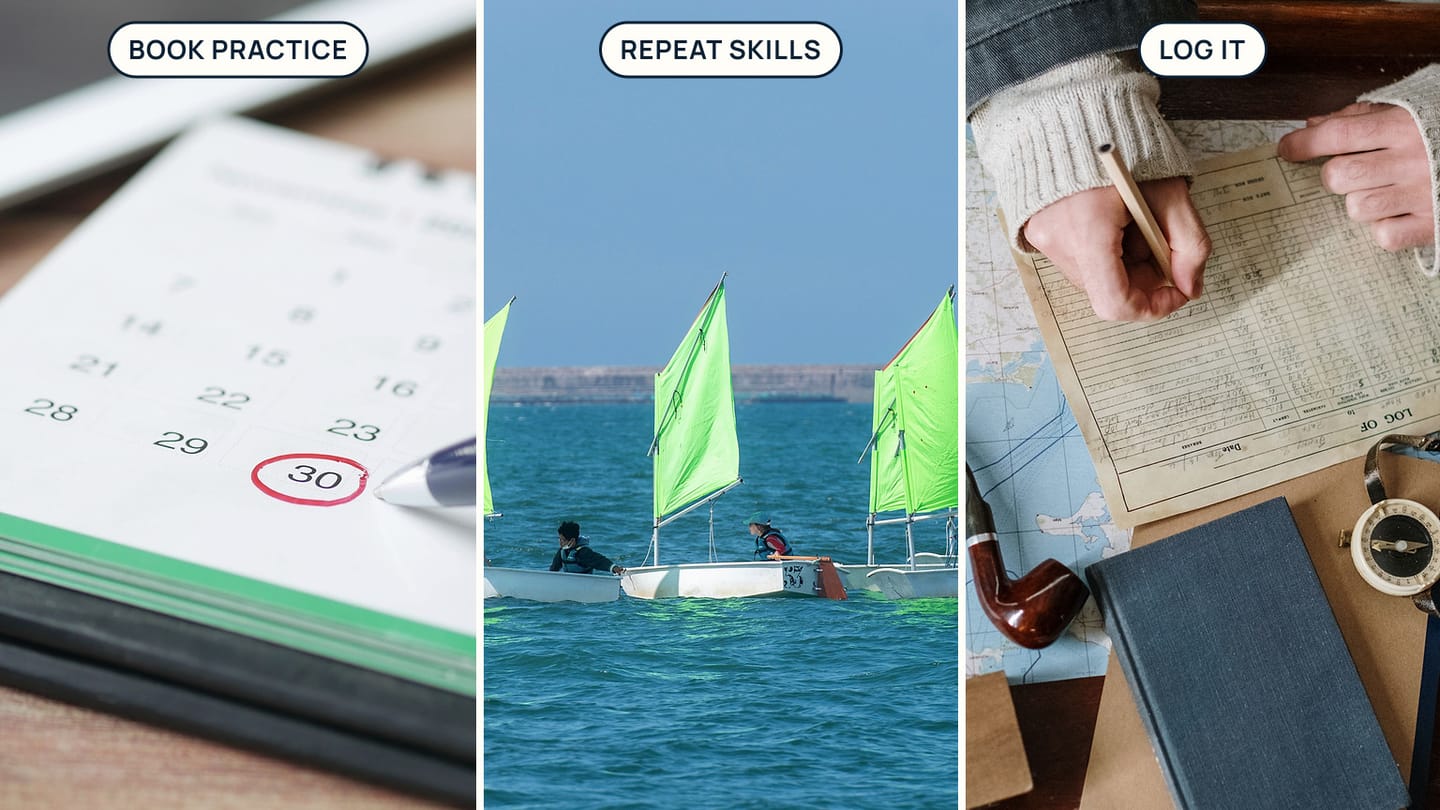
The gap between courses should contain real sailing alongside reading. After 101, arrange another keelboat session while the basic routines are fresh. Repeat the jobs that required the most prompting. If you struggled to organise a tack, ask to practise the preparation, call, line handling, and clean-up as one sequence. Keep the task narrow enough to notice improvement.
Before 103, seek supervised time aboard a cruising yacht. Learn where equipment lives, take a full turn as active crew, and notice how preparation changes when the boat will travel rather than circle near the dock. Record what you did and what support you needed.
Before 104, practise making and explaining a modest plan. The value is in joining decisions to boat handling: what the crew expects, what the boat needs, and what would cause the plan to change. You do not need to pretend you are already the skipper. Ask an experienced skipper to review your thinking and give you a bounded responsibility.
Book the next course when practice confirms that its entry skills are usable, not merely familiar on paper. If access to a boat is difficult, favour a school, club, or programme that offers a route back onto the water. That continuing access may matter more than finishing three course numbers quickly.
A simple log can contain date, boat, area, role, tasks, conditions, and one next action. Over time it exposes thin areas. Ten outings with the same easy role may prepare you less well than fewer outings with deliberate, supervised rotation through the work.
Review the log before each new booking. Circle tasks you have repeated in more than one setting and underline anything done only once. Bring the underlined items to the instructor. This keeps the conversation practical: perhaps you need another session handling sails, a coached arrival, or more time following a coastal plan. The result may be a course, a refresher, or ordinary club sailing. The right answer is the activity that gives you the missing work with suitable supervision.
Use SailStarter to learn the language and basic ideas before class, then take those ideas onto a real training boat. Start with your first day as sailing crew, write down the jobs you want to practise, and bring that list to the school. The course should give you coached experience; the lessons help you arrive ready to understand it.
Try it from the lesson
Can you spot the next move?
You turn to face the stern. A crewmate points at your right hand. Which side of the boat is that?
Why you can trust this guide
. We build each guide from public seamanship and safety sources, then teach the universal principle before any local difference.