Chart your course
ASA vs RYA Sailing Courses
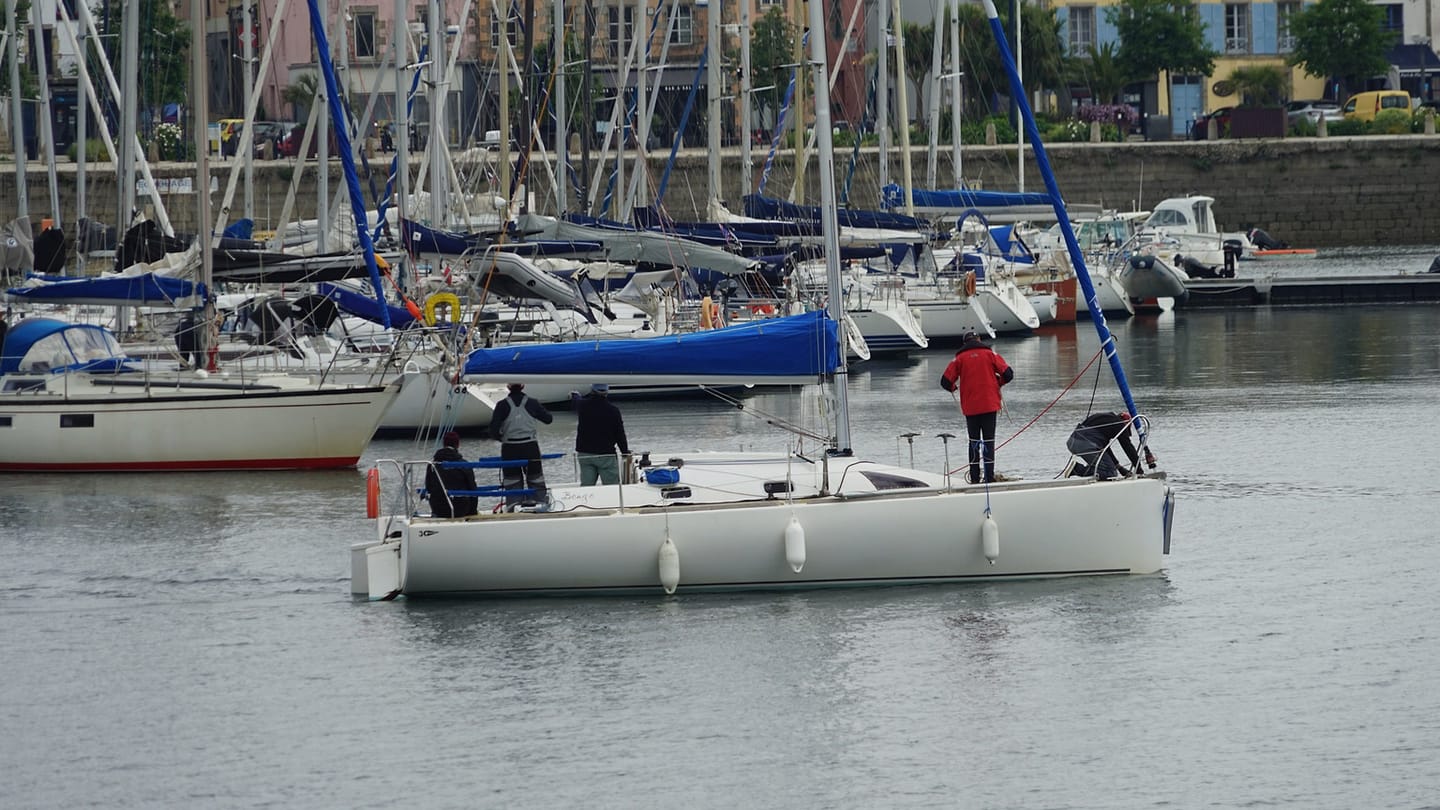
Quick answer
The short version
ASA and RYA are two separate sailing-training systems, not two grades of the same licence. ASA is the American Sailing system and is common in the United States. RYA is the Royal Yachting Association system from the United Kingdom. Both offer practical routes from beginner sailing toward cruising and skippering. Your better choice is the course that uses the right boat, gives you enough time at the helm, fits where you expect to sail, and leads to regular practice. Compare the exact syllabus and provider instead of choosing by initials. If chartering is your goal, ask the intended charter company what evidence it accepts before paying for training.
That answer is less tidy than declaring a winner, but it prevents an expensive mistake. A well-run basic keelboat course near home can be more useful than a famous certificate you cannot practise after earning. Likewise, a live-aboard cruising course can be worth the travel if your real aim is to join yacht passages. Start with the job you want to perform next: crew competently, sail a small keelboat, or take command of a cruising yacht. Then work backward to the experience and course that prepare you for it.
The two systems differ in home country, entry course, and how the teaching is delivered and assessed.
| Dimension | ASA | RYA |
|---|---|---|
| Home system | United States | United Kingdom |
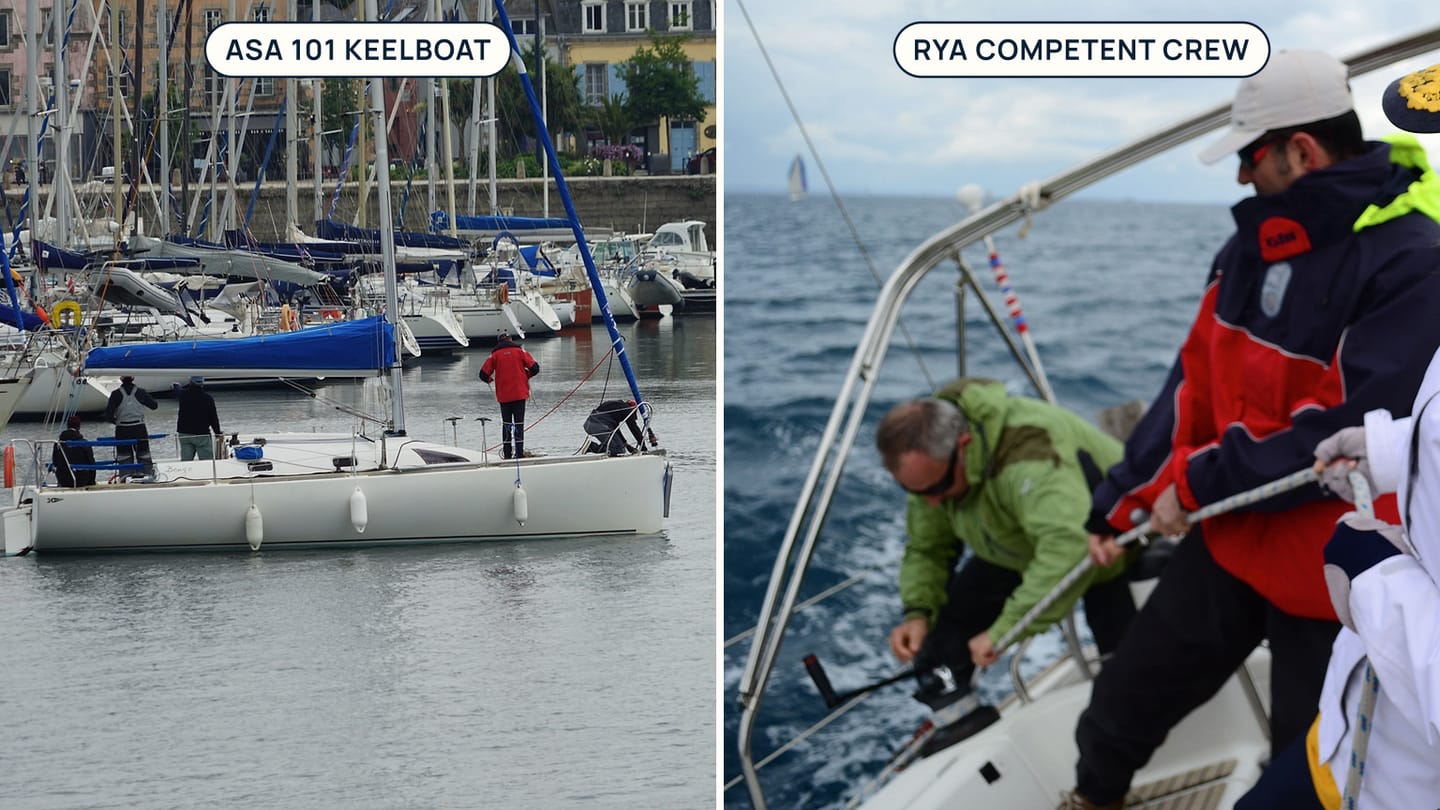
| Entry-level course | ASA 101 — Basic Keelboat, combines knowledge and practical work | RYA Competent Crew — beginner cruising-yacht course, no prior experience required |
| Typical teaching boat | Small auxiliary-powered keelboat | Cruising yacht |
| Assessment style | Published knowledge and practical standards | Performance-based, assessed on the water during practical and navigation tasks |
| Regional recognition | Familiar to schools and sailors in the US | Connects directly to the British training pathway |
Start With the Skill Level, Not the Logo
For a complete beginner, compare like with like. In the United States, ASA 101 is a basic-keelboat standard. It combines sailing knowledge with practical skills on an auxiliary-powered keelboat. In the United Kingdom, RYA Competent Crew is a beginner cruising-yacht course with no required previous experience. It teaches a newcomer to take an active part in the daily work aboard, including steering and sail handling. These are useful starting points, but their settings are not identical.
RYA Day Skipper belongs later in the path. It expects basic sailing ability, prior time aboard, and navigation knowledge. Its purpose is to develop a skipper who can take charge by day in familiar waters. Comparing ASA 101 directly with Day Skipper would therefore confuse an entry course with a skipper course.
Write down your current experience honestly. Count tasks you can perform without prompting, not holidays spent as a passenger. If you have never steered, handled a sheet, or helped prepare a boat, choose genuine beginner instruction. If you already crew regularly, ask the school to review your experience rather than automatically enrolling at the first level. RYA explicitly allows entry at an appropriate stage when prerequisites are met. Any responsible school should care more about a sound starting point than selling you a longer ladder.
The beginner learning-time guide explains why one course cannot replace repeated practice. Treat the first certificate as a record of a defined course, not proof that every related task is now effortless.
Compare the Boat and Teaching Format
Ask for the make, approximate size, and crew number of the teaching boat. A small keelboat course often gives direct feedback between tiller movement, sail trim, and boat speed. A cruising-yacht course adds systems, shared routines, and life aboard. Neither setting is automatically more advanced. They prepare you for different early experiences.
Next, ask how the hours are used. “Three days” tells you little if a large group rotates through short turns. Find out how many students share the boat, how much sailing is planned, and whether you will steer, trim, prepare, dock, and take part in safety routines. Ask how the instructor assesses practical work and what happens when weather prevents the planned session. A school should be able to explain its alternative, rescheduling, or partial-refund policy plainly.
RYA Competent Crew is based on the water and assessed through performance during practical and navigation tasks. ASA 101 also publishes both knowledge and practical standards. Those frameworks matter, yet the instructor and venue still shape the day. Recognition is a baseline, not a guarantee of personal fit. Speak with the school about your mobility, confidence, language, or learning needs before booking.
Check the full price. Tuition may or may not include books, examination or certification fees, membership, waterproof clothing, meals, accommodation, or later boat use. A nearby course with accessible practice can cost less overall even when its advertised fee is higher. Read what to expect on a first sail before calling providers, so questions about clothing and participation are easier to frame.
Match the Path to Where You Will Sail
Regional shorthand, clearly labeled
US: ASA course names are familiar to many American schools and sailors, but acceptance still belongs to the local club, charter provider, employer, or authority making the decision. UK: RYA course names connect directly to the British training pathway, yet a UK recreational certificate is not automatic permission to operate any boat abroad. In either region, ask what the next organization actually wants and verify current local rules.
Course recognition is practical rather than magical. A local club may understand the system used by nearby schools. A charter operator may list particular certificates, then separately assess recent experience. An insurer, employer, or maritime authority can apply another standard. Before choosing ASA or RYA for recognition alone, ask the actual decision-maker for its current written requirement.
If you live in the United States and want regular local keelboat sailing, an ASA school with a clear progression and graduate access may be convenient. If you live in the United Kingdom or want a cruising-yacht pathway built around RYA courses, the RYA route may connect more easily to local centres and clubs. Schools from both systems operate beyond their home countries, so geography is a clue rather than a border.
For a future bareboat charter, choose the destination and likely operator early. Ask whether it wants a certificate, a sailing resume, or both. Provide the proposed yacht size and area. Do not assume that a higher-numbered course wins automatic approval. Providers consider whether your experience resembles the boat and conditions you want to handle. The charter checklist covers the separate handover work that begins after approval.
For employment, commercial operation, or a legal requirement, stop using a recreational course comparison as your decision tool. Ask the competent authority or employer which credential and endorsements apply. ASA and RYA recreational courses can build useful skills, but this article does not turn either into a universal professional licence. Verify current local rules.
Choose the Provider and Plan the Next Ten Sails
A fair way to compare two offers
Give each school a one-page scorecard. Record the teaching boat, maximum students, planned afloat hours, student tasks, instructor status, assessment method, weather remedy, full cost, and first available graduate session. Leave space for how clearly the school answered you. Do not add a single overall “prestige” score. The separate entries reveal the tradeoff: one course may offer more close-quarters practice, while another gives easier access to a club fleet. Pick the tradeoff that serves your next sailing job.
Shortlist two or three providers and ask each the same questions. What will you be able to do after the course? Which tasks does every student perform? Who teaches it, and how is that instructor recognized? How large is the group? What weather limits or cancellation terms apply? What is the total cost? Most importantly, how do graduates get back on the water?
That last answer often separates a useful course from a certificate that sits in a drawer. A school may offer coached practice, rentals, or a next module. A club may offer crewing, social sailing, or shared boats. You might take structured instruction at a school and then join a club for repetition. The systems are complements, not rival identities.
Plan ten realistic outings after the course. They need not all be formal lessons. Mix supervised practice, crewing, and repeat sessions on a familiar boat. Keep a log of conditions, boat, role, manoeuvres, one correction, and the next task to repeat. This record helps a future instructor place you correctly and gives a charter company more useful detail than a vague claim of “years sailing.”
Watch for warning signs: a provider that promises independent competence after a very short exposure, avoids explaining assessment, will not disclose extra fees, or cannot describe safety and weather policies. Good instruction makes limits visible. It should leave you knowing what you can practise safely and what still needs supervision.
ASA or RYA can both be sound choices. Select the honest level, the relevant boat, and the venue that creates a route back afloat. Then judge the course by the skills you can repeat calmly, not by how impressive its initials look on a profile.
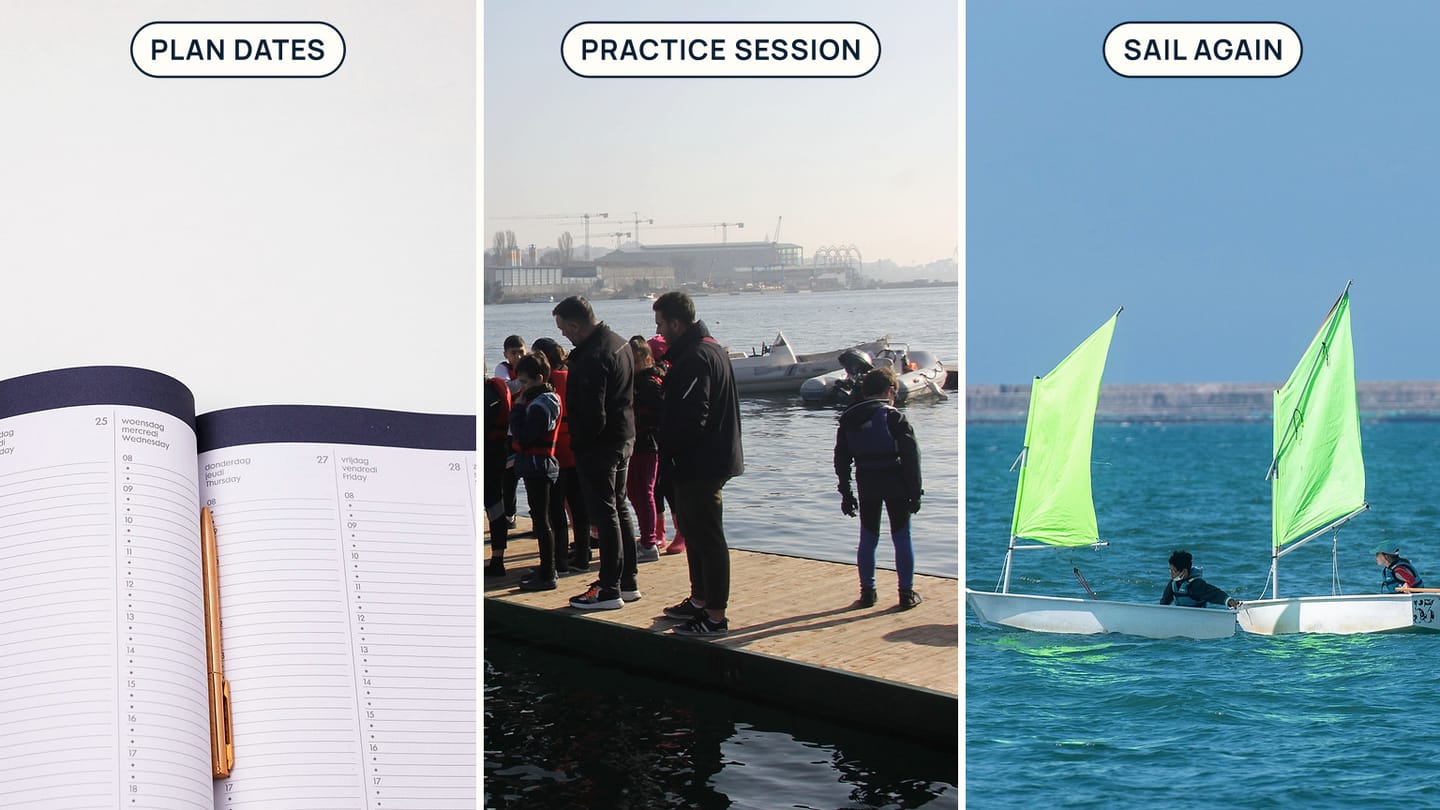
SailStarter can help you arrive with the language already familiar. Work through the opening lessons on boat orientation, wind, points of sail, and basic crew communication before the first practical day. You will still need an instructor and real water time, but less attention will be spent decoding new terms. After the course, return to the same lessons and connect each idea to a movement you felt aboard. Pair that review with your sailing log and one specific goal for the next outing. The course system gives structure; careful repetition turns that structure into usable seamanship.
Try it from the lesson
Can you spot the next move?
You turn to face the stern. A crewmate points at your right hand. Which side of the boat is that?
Why you can trust this guide
. We build each guide from public seamanship and safety sources, then teach the universal principle before any local difference.