Chart your course
Common Sailing Commands
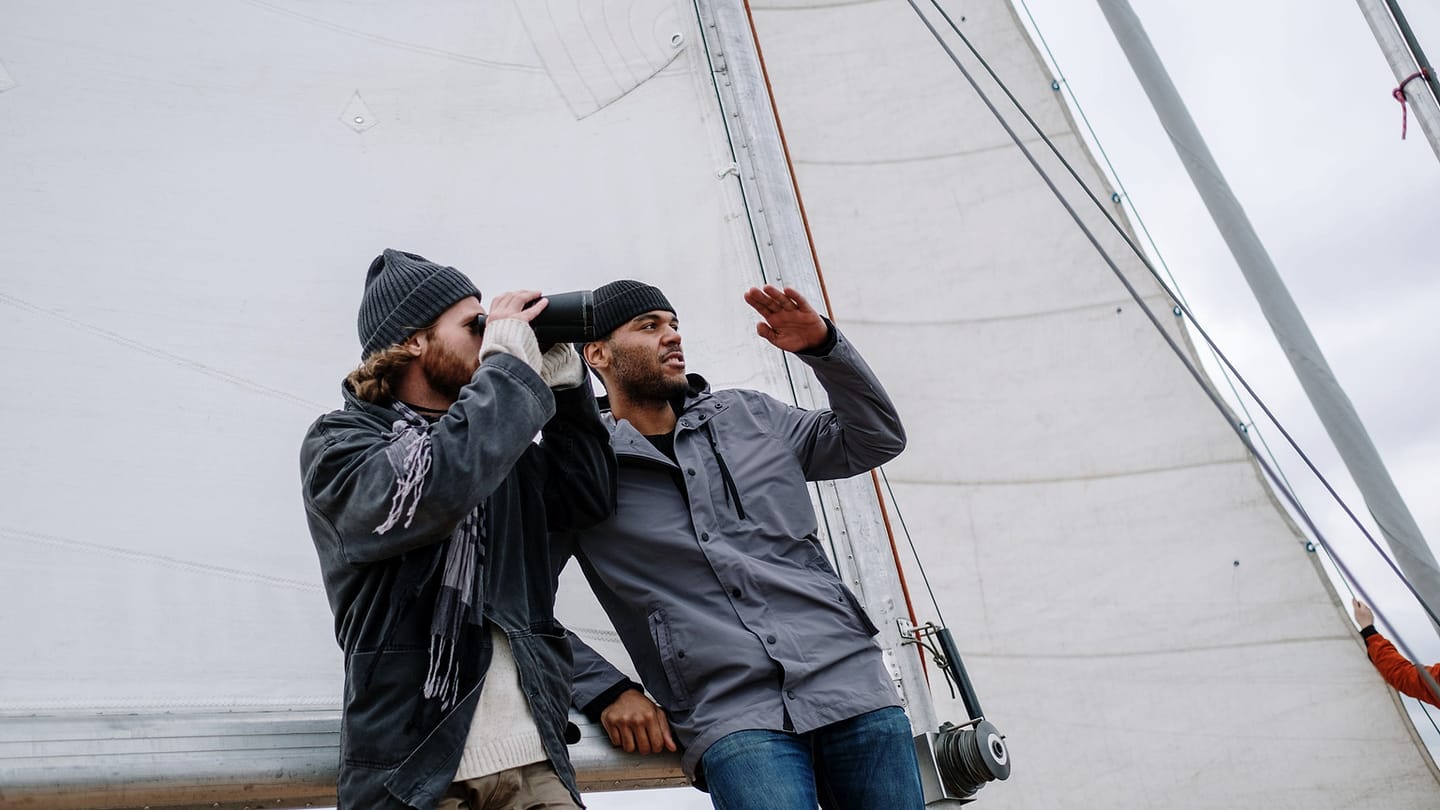
Quick answer
The short version
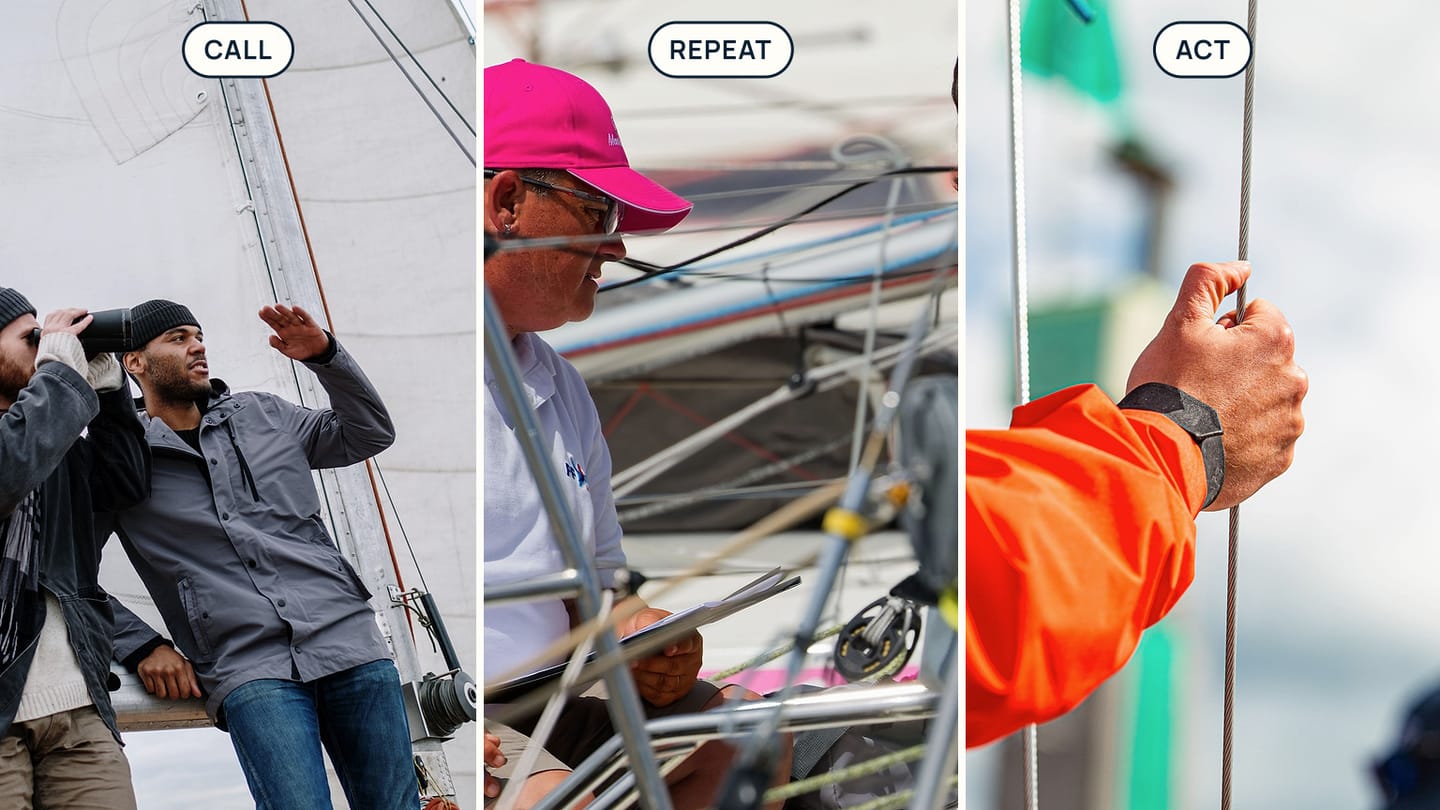
Common sailing commands organise a manoeuvre into preparation, acknowledgement, action, and completion. A skipper might warn the crew that a tack is coming, wait for “ready,” give the action call, then receive a report when lines are set. The exact words vary between boats, schools, and regions. Ask what each call means during the briefing, repeat your job back, and speak up before the manoeuvre if anything is unclear.
Helm language usually describes the result wanted: turn toward the wind, turn away from it, hold the present heading, or steer a stated course. Port and starboard must refer to the boat's sides, not the direction a person happens to face. Tack and gybe calls require special attention because the sails, boom, and loaded lines will move. Learn the words on the actual boat with a qualified skipper. The US ASA 101 standard publishes one set of calls and responses; other crews use related wording. Verify local practice. Review basic sailing terms before your first briefing.
Listen for the command loop
A preparation call gives the crew time to move safely, check the working area, and set up the assigned line. An acknowledgement means the person is ready for the named job. It should not be an automatic echo. If a sheet is tangled or someone is in the boom's path, report the problem instead of saying “ready.”
The action call starts the manoeuvre. Crew members carry out the task they have already confirmed. Extra conversation should stay out of the working channel unless it affects safety or execution. When the task is complete, the responsible person reports the result, such as a sail drawing correctly or a line made secure.
This loop prevents two common errors. The first is moving before the rest of the boat is prepared. The second is assuming silence means success. A skipper who hears acknowledgements can locate a missing step before committing the boat.
Practise one exchange at the dock without loading the lines. The skipper names the planned manoeuvre and assigns each job. Every person points to the control they will use, identifies a safe position, and repeats the expected call. Stop before pretending to pull or release anything that should only move under proper supervision.
On a noisy boat, face the listener where practical and use the name or position first. “Maya, ready on the jib sheet?” is clearer than calling “ready?” into the cockpit. The crew's answer should include the problem when there is one: “Jib sheet not ready, line under the bag.”
Agree on what silence means. On some boats, no acknowledgement stops the manoeuvre; on others, a leader may visually check a position. A beginner should never infer the rule. The briefing must say who is expected to reply and who has authority to delay. This is especially important when several people share one task and only the position leader speaks for them.
Know the helm words
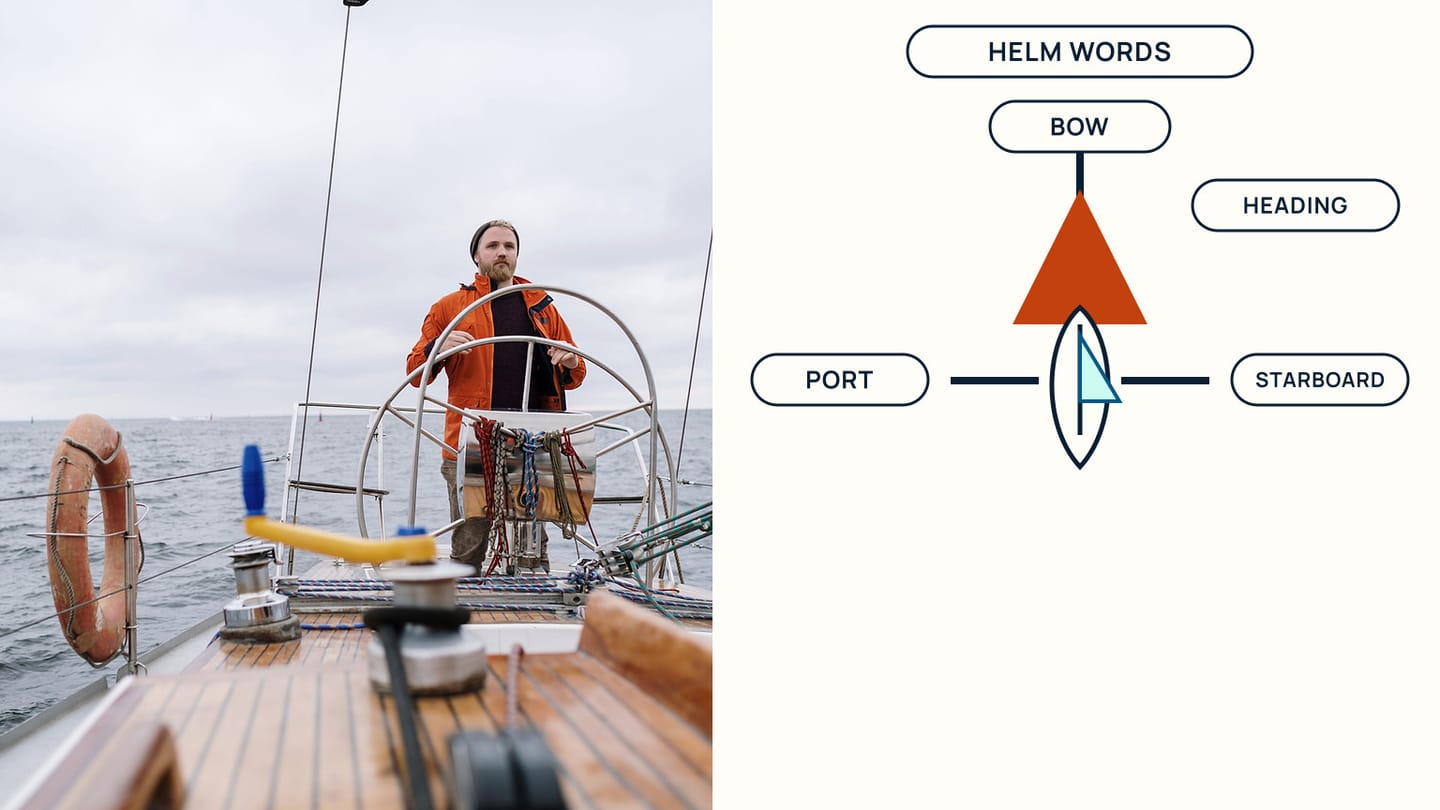
“Port” means the boat's left side when facing forward; “starboard” means the right. A helm order using those words needs a shared convention about the desired rudder or turn. Ask the skipper to demonstrate because tiller movement and wheel movement can feel different. With a tiller, moving the tiller one way initially turns the bow the other way. Do not translate a wheel instruction into a tiller movement from memory.
“Head up” generally asks the helm to turn the bow toward the wind. “Bear away” or “bear off” asks for a turn away from the wind. These commands describe a change relative to the wind, not a compass direction. “Steady” or “hold your course” asks the helm to stop the turn and maintain the resulting heading, subject to the boat's agreed wording.
A compass-course instruction names the heading to steer. Repeat the number back so similar-sounding headings are caught. Then make a controlled correction and report when settled. The skipper may want the heading maintained while allowing for waves, or may instead want a visual point ahead. Confirm which reference controls the task.
Avoid large, fast helm movements unless the responsible skipper directs them. A sailboat needs time to respond, and abrupt steering can slow the boat or surprise crew working with sails. Look ahead, feel the boat, and report if the requested course cannot be held.
If two people use different language, pause in open water and agree on one set. A command is useful because it produces the same understood action across the crew, not because one phrase is universally correct.
Helm reports should be equally concrete. If the boat will not answer the helm, say whether speed has fallen, the tiller or wheel feels unusual, or the requested heading conflicts with an obstacle you see. Do not continue increasing the input without telling the skipper. The response may involve sails, speed, or a changed plan rather than more rudder.
Prepare for tacks and gybes
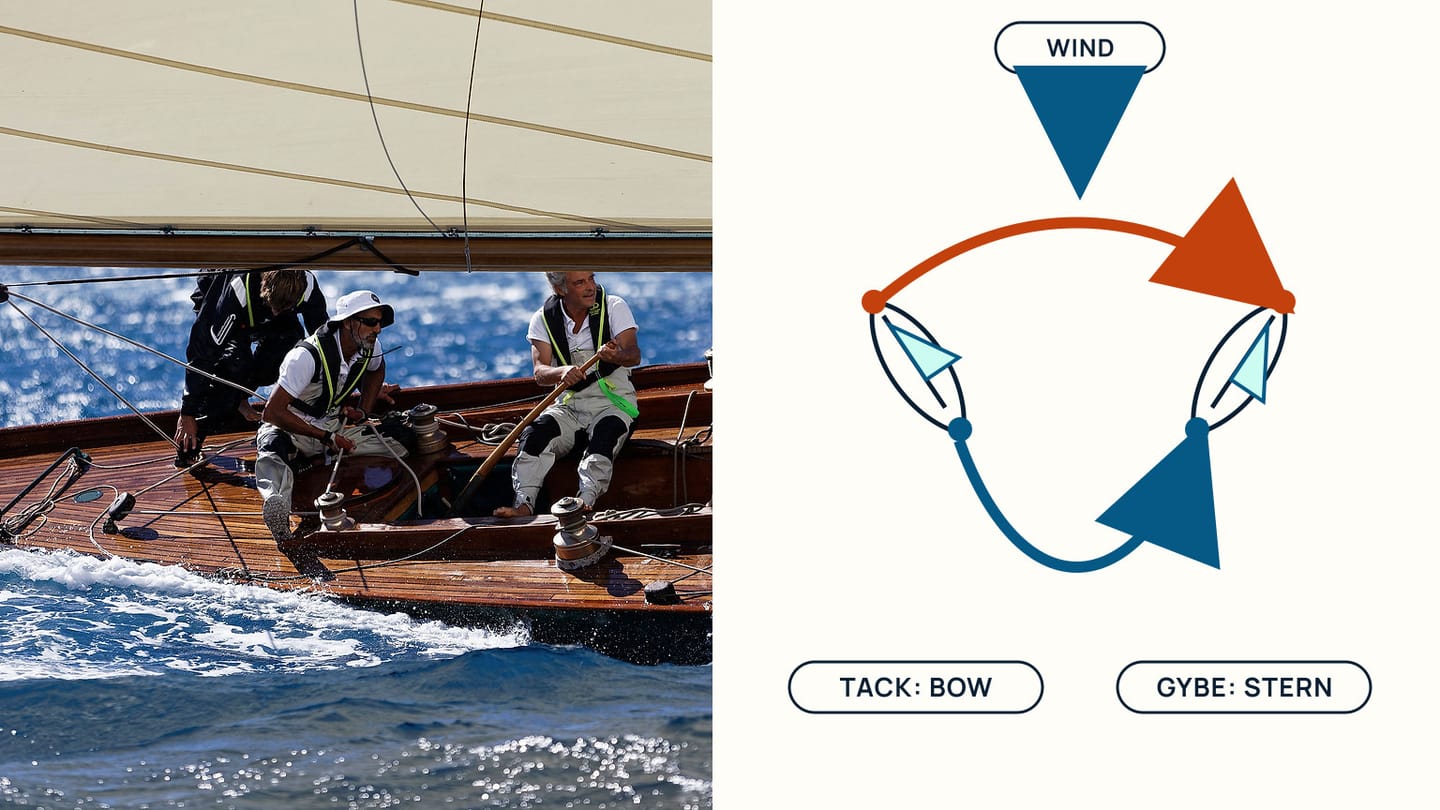
A tack turns the bow through the wind. A gybe turns the stern through the wind. Both move the sails from one side to the other, but a gybe can bring the boom across with force. Stay in the position assigned during the briefing and keep clear of the boom, mainsheet, and loaded lines.
For a tack, the preparation call should trigger specific checks. The helm looks for room and traffic. The working crew checks that the new sheet can run and the old sheet can be released as directed. People move to their planned safe positions. Only the crew member responsible for each control declares it ready.
The action call begins the turn. The old and new sheets are handled in the sequence taught for that boat. After the sails fill on the new side, the trimmer reports when the line and sail are set. The helm settles the new course. Do not tidy loose line across another person's feet while the boat is still completing the turn.
A gybe deserves a distinct briefing. The person controlling the mainsail must know the boat's method, and everyone must confirm they are clear before the stern passes through the wind. Never treat “gybe-ho” or a similar final call as the first warning. Preparation must already be complete.
Schools may teach “ready about,” “ready to tack,” or another phrase. ASA publishes particular calls in its US standard, while other systems differ. Learn the sequence behind the words: warning, readiness, action, and report. That sequence transfers when vocabulary changes.
Run a slow verbal rehearsal for both directions. People often learn one side, then discover that line names and body movements feel reversed on the other tack. Point to the loaded sheet, the new sheet, the boom path, and the place you will move. The instructor should correct the rehearsal before adding boat speed and load.
Ask when a word is unclear
Ask during the briefing whenever possible. Useful questions name the ambiguity: “When you say ease, how much line do you want?” or “Does ready mean the sheet is on the winch on this boat?” The skipper can then demonstrate an observable end state.
During a manoeuvre, use short language. Say “not ready,” name the issue, and wait for the response. If you did not hear the call, ask for it again. Acting on a guessed word is slower than a brief repeat once the mistake needs correction.
Watch for local nicknames. A crew may use a sail name, line colour, or position label that does not appear in a glossary. Point to the item and confirm it before departure. Do the same when changing boats, even if the new skipper sounds familiar. Hardware layout can make an old phrase refer to a different control.
After sailing, write down the calls in order and connect each to your action. Ask the skipper to correct the list. Do not publish or teach the boat's shorthand as a universal standard. Keep the context: boat, manoeuvre, and crew system.
New crew can improve communication by reporting facts. “The blue sheet is caught under the winch handle” gives the leader something to solve. “This is wrong” does not. Likewise, a skipper can replace a shouted repeat with the person's name and one precise task.
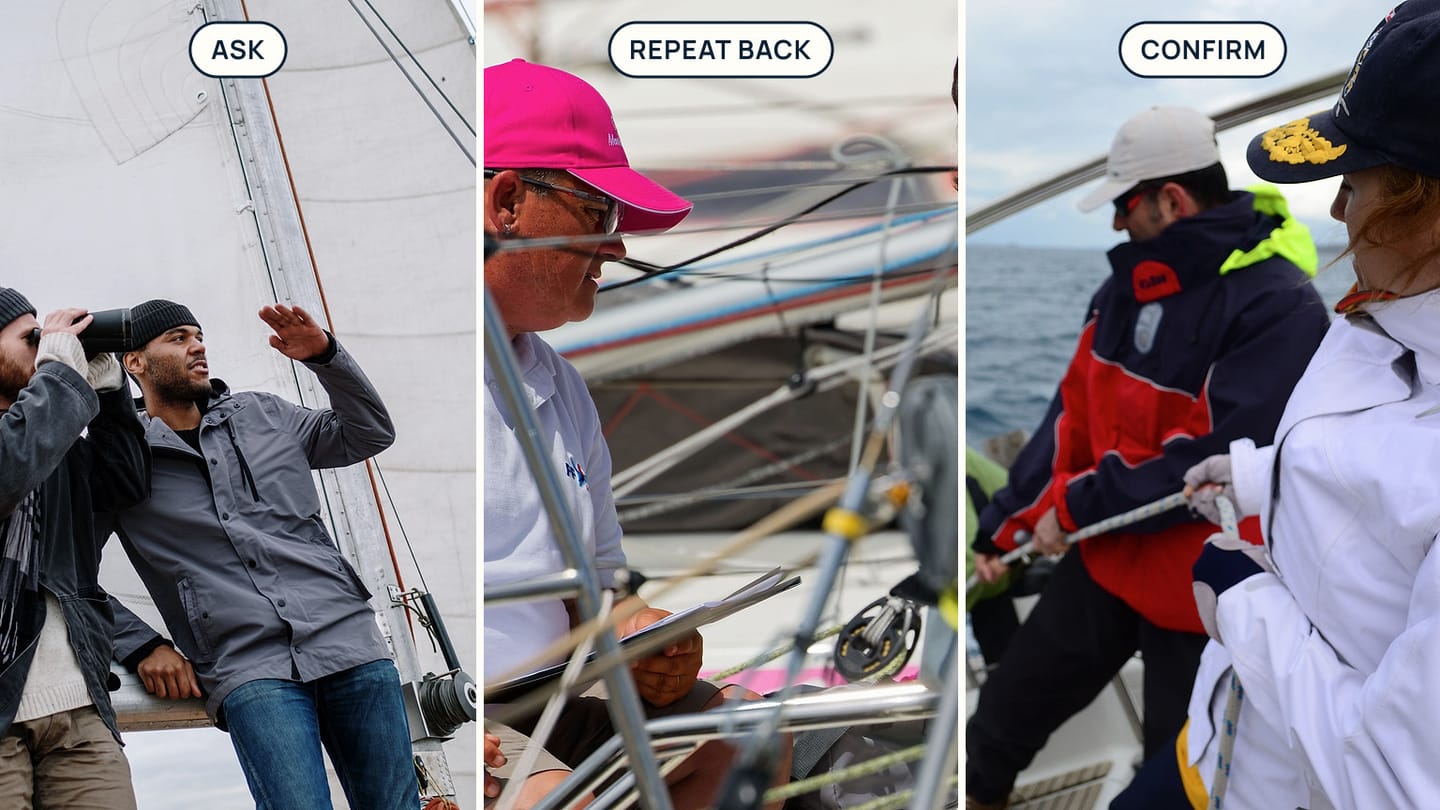
Use SailStarter to become familiar with how to tack a sailboat, then rehearse the call sequence with your instructor before moving lines. Point to your control, state what “ready” means for that job, and name the completion report. The lesson supplies the concept; the skipper sets the exact words and safe procedure aboard.
Try it from the lesson
Can you spot the next move?
You turn to face the stern. A crewmate points at your right hand. Which side of the boat is that?
Why you can trust this guide
. We build each guide from public seamanship and safety sources, then teach the universal principle before any local difference.