Chart your course
How to Plan a First Bahamas Sailing Charter
Quick answer
The short version
Plan a first Bahamas charter around three things: a compact route inside one island chain, a boat and base you actually get briefed on, and enough daylight to read shallow water by eye. Match the chain to your crew's experience rather than chasing every name on the chart — operators generally treat the Abacos as the easier, more sheltered option and ask for more logged sailing hours before they hand over a boat in the Exumas. Keep two sets of documents apart: your charter agreement and boat check-in come from the operator, while entry forms and any cruising permit come from Bahamas authorities, and both need a current check close to departure. Build slack into each day so a slow morning or a passing squall doesn't turn a short hop into a rushed one.
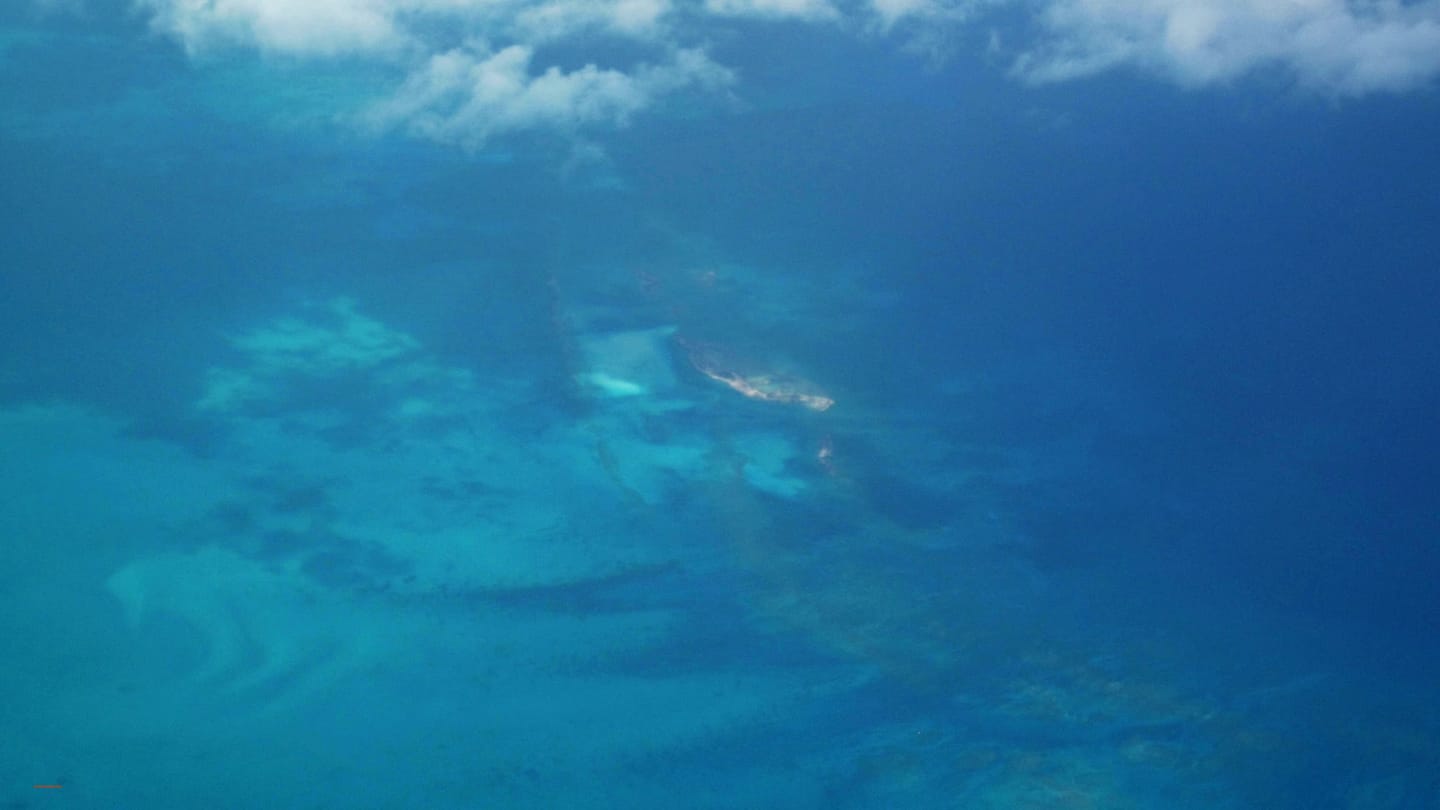
The Bahamas look effortless from the air: pale banks, low green cays, water clear enough to see your own anchor chain on the bottom. Getting a first charter week right takes a little more groundwork than the postcard suggests, mostly because it asks you to apply ordinary sailing skills to an unusual seabed. You'll be piloting largely by eye across banks that can run only a few metres deep for miles, picking a base and route sized to what your crew has actually sailed before, and sorting two sets of forms that have nothing to do with each other. None of it is complicated once it's laid out in the right order. This walkthrough follows a planner's order: documents, route, the boat you'll collect, daily margin, and one last check before you leave the dock.
What paperwork do you need before a Bahamas charter?
Two separate files, not one. The charter file covers the booking agreement, the security deposit or damage waiver terms, the skipper or crew-experience form the operator wants signed, and the checklist you'll sign the day you collect the boat; your operator issues and checks all of it. The entry file covers Bahamas customs and immigration: a completed customs clearance form, an immigration card for each person aboard, passports, and the vessel's registration documents, plus a cruising permit that current guidance lets you arrange either online in advance through an official vendor or in person at your port of entry.
Nobody else can substitute for either file. The charter company cannot waive an immigration requirement, and Bahamas customs has no opinion on your damage deposit. Give each file an owner and a deadline: the charter file is usually done at booking and confirmed again when you pick up the boat, while the entry file needs a fresh check in the weeks before you fly, since document lists and permit options do change.
For a first charter, a checklist built around this split is worth working through before you book flights, so a missing passport or an unsigned agreement doesn't surface at the dock. Read both lists side by side once, then file them separately so each can be updated on its own schedule.

Choosing a compact route sized to your crew
Resist the urge to string together every famous name on the chart. A compact route inside one island chain, with two or three anchorages and a base you can return to if a day goes sideways, works better for a first Bahamas charter than a long loop between distant groups. Match the chain to actual experience: operators typically list the Abacos as friendlier for a first-timer because the hops between islands are short and mostly line-of-sight over sheltered water, while an Exumas charter usually asks for more logged sailing hours before handing over a boat without a hired skipper. It's worth reading up on typical charter qualification requirements before you fall in love with one particular island chain.
Here's what that looks like as a plan rather than a rule. A first loop out of Marsh Harbour in the Abacos might run: day one to collect the boat and provision, day two a short hop to a nearby cay under an hour away, day three another short leg to a second anchorage, and a middle day held in reserve with no booking anywhere so weather or a tired crew can eat it without wrecking the schedule. Each leg finishes early enough to still have good light for reading the water into the next anchorage, which matters more here than raw distance covered.
Sketch the route with your actual crew, not an ideal one, and check it against a proper bareboat itinerary planning guide before you commit island names to the operator.
Reading the boat and the base at handover
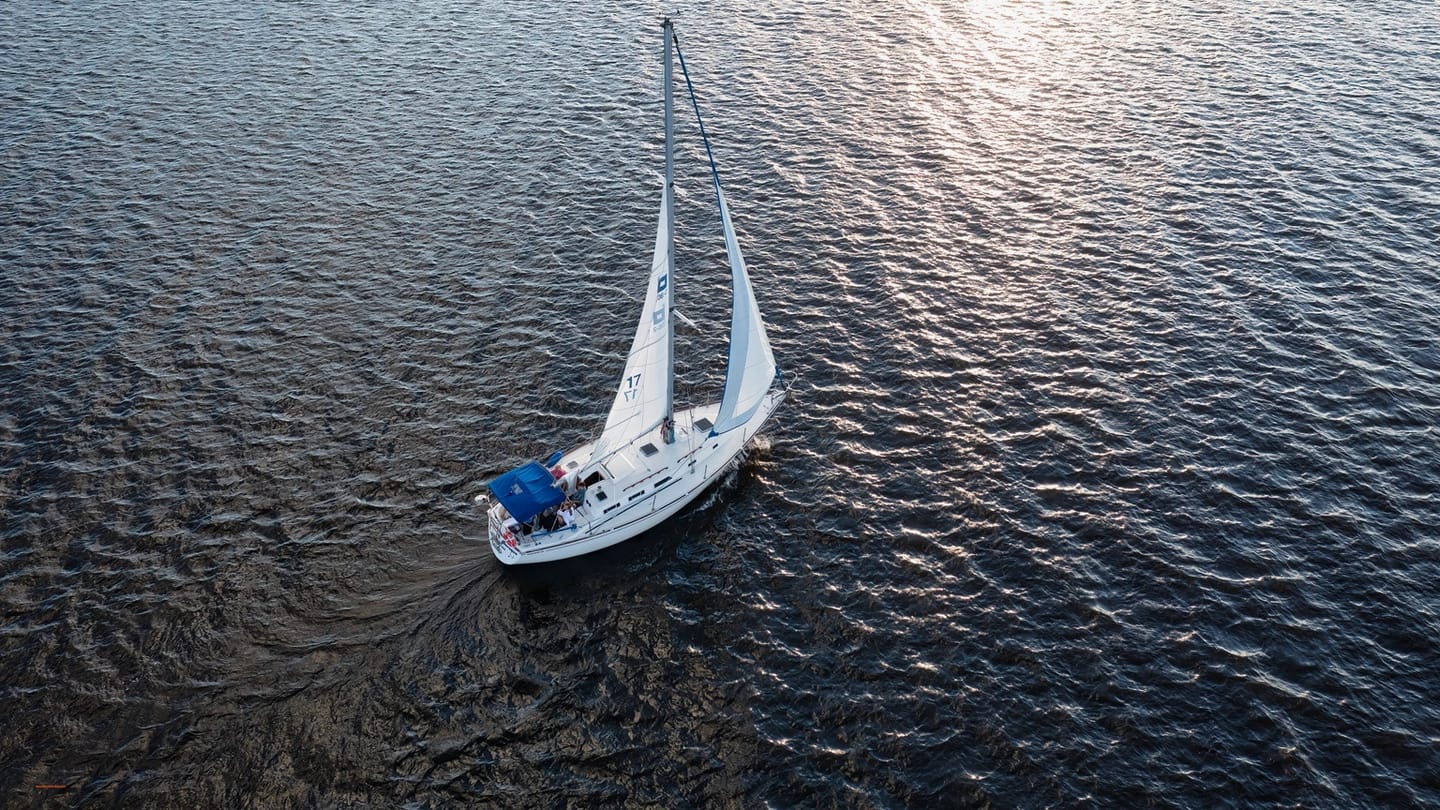
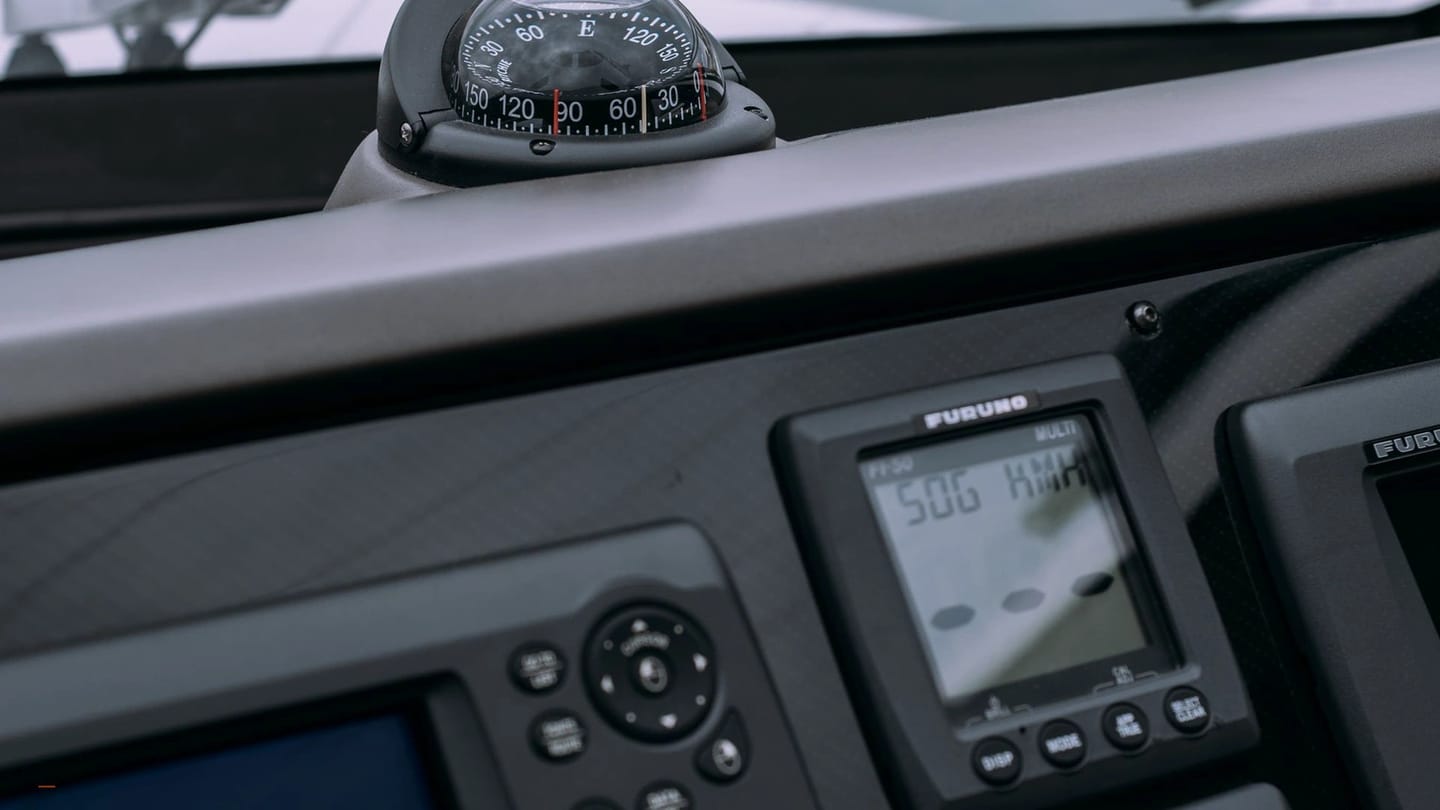
This is where the boat stops being a listing and starts being the vessel you'll actually sail. Walk it with the base manager rather than alone: locate the chartplotter and depth sounder, the anchor windlass controls, the water tank gauges and how many days they're good for at normal use, the fuel gauge and the range that implies, and the safety gear (flares, life jackets, first-aid kit, VHF) with its stowage. Ask specifically how this boat differs from what your logged hours were on: draft, steering feel, and how the depth alarm is set are the three that most often surprise a crew used to a different model.
Note what the operator has already recorded as existing damage, and add anything you spot yourself before you leave the dock, since a photo taken now is worth more than a memory argued about later. Then run a short drill at the mooring or slip: start the engine, raise and lower the anchor, and have someone other than the skipper locate the through-hull valves and the manual bilge pump. If two crew members can't find the same gear without help, ask the base to walk through it again rather than saving the question for open water.
A dedicated check-in and check-out guide covers this same process, deposit forms included, in more depth.
How much daily buffer should a first-time charter crew keep?
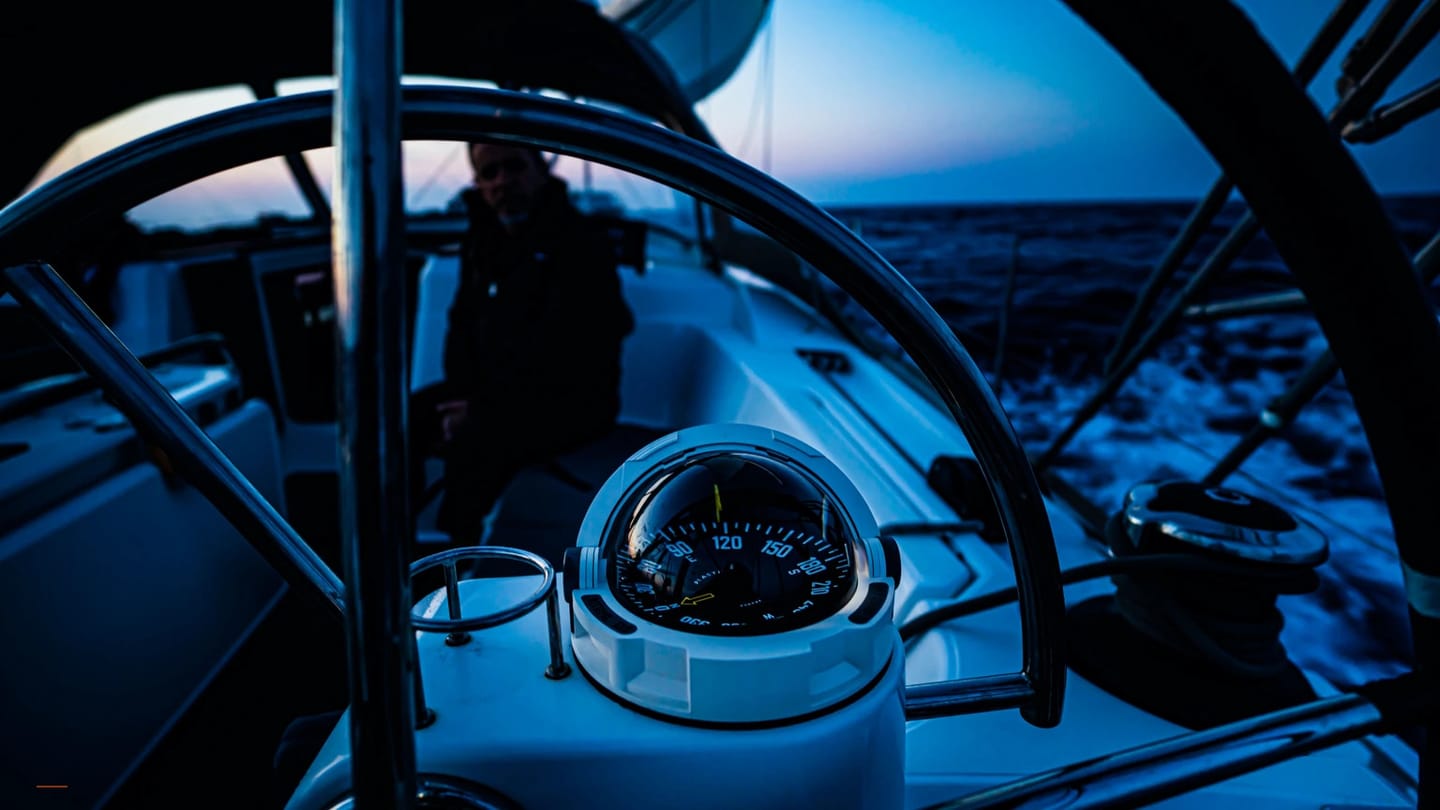
Build more slack than feels necessary, especially in the first two or three days. A reasonable buffer means planning each day's sail to finish with fuel, water, and battery charge still comfortably in hand, choosing a next anchorage close enough to reach even if you leave two hours later than planned, and treating any forecast change, gear problem, or simply tired crew as a normal reason to shorten the day rather than push through it. That slack matters because it keeps a small schedule slip from turning into a decision made in poor light.
Light quality matters as much as distance here. Bahamian banks commonly run only a few metres deep for long stretches (roughly six to twenty-five feet, often less at low tide), and reading that depth by eye works best with the sun high and behind or above you; the same water that's easy to read at midday can be unreadable in the flat light of early morning or late afternoon. Aim to cross the skinniest stretches of a passage in the middle of the day, not at the end of it, and treat a grey, overcast sky the same way you'd treat low sun.
Recheck the forecast, the tank levels, and how the crew is holding up before you commit to extending any leg. Keeping water and food margins realistic from day one makes each of those checks easier as the week goes on.
How do you confirm Bahamas rules are still current before you leave the dock?
Do it the day before departure, not the week you booked. Open the official Bahamas boating and entry page again, check your operator's own notices or base bulletin board, and look at a current weather source for the days you're actually sailing, then write the date next to each answer. A permit process, a fee, or a local procedure that was accurate when you booked months ago can have changed by the time you fly, and a dated note makes it obvious to the rest of the crew which information is fresh and which is not.
If the official page and something you read on a forum or an old blog post disagree, trust the official page, and if it's still unclear, call the base or the relevant Bahamas authority directly rather than guessing. The same goes for weather: a forecast is only as good as how recently it was pulled, so refresh it again on the morning you actually leave rather than relying on what you checked at breakfast the day before.
Keep this final check short. Three or four sources, each dated, reviewed together with whoever else is making decisions that day, beats a longer list nobody actually rereads before the lines come off the dock.
This kind of planning does not replace basic sailing skill. Reading water colour, walking through a strange boat competently, and keeping a day's margin intact all get easier once you've practiced the underlying skills somewhere lower-stakes than a charter boat you're seeing for the first time. SailStarter's lessons build those fundamentals step by step: how wind and sail interact, how to read a chart and plan a passage, and how to handle a boat confidently before you're doing it in front of a base manager or a crew trusting you to get it right.
If you're working toward a first Bahamas charter, working through the early lessons is a reasonable way to spend the months before you fly, so the on-the-water decisions in this guide feel familiar rather than new. Try a lesson and see whether the pace and format suit how you like to learn, no pressure either way.
Try it from the lesson
Can you spot the next move?
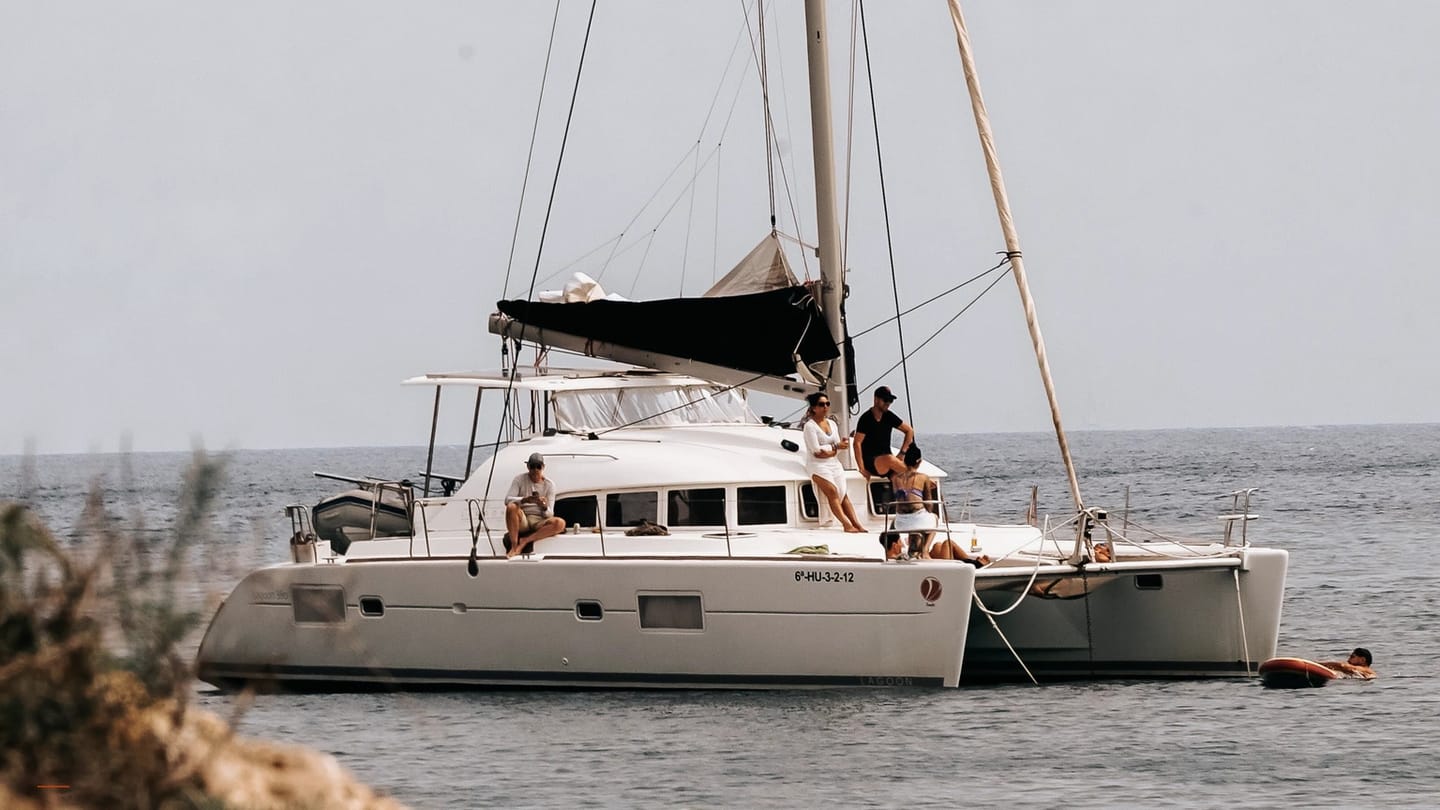
A wide sailboat glides past on two side-by-side hulls, barely leaning at all. What type is it?
Why you can trust this guide
. We build each guide from public seamanship and safety sources, then teach the universal principle before any local difference.