Chart your course
BVI Sailing Charter Guide for Beginners
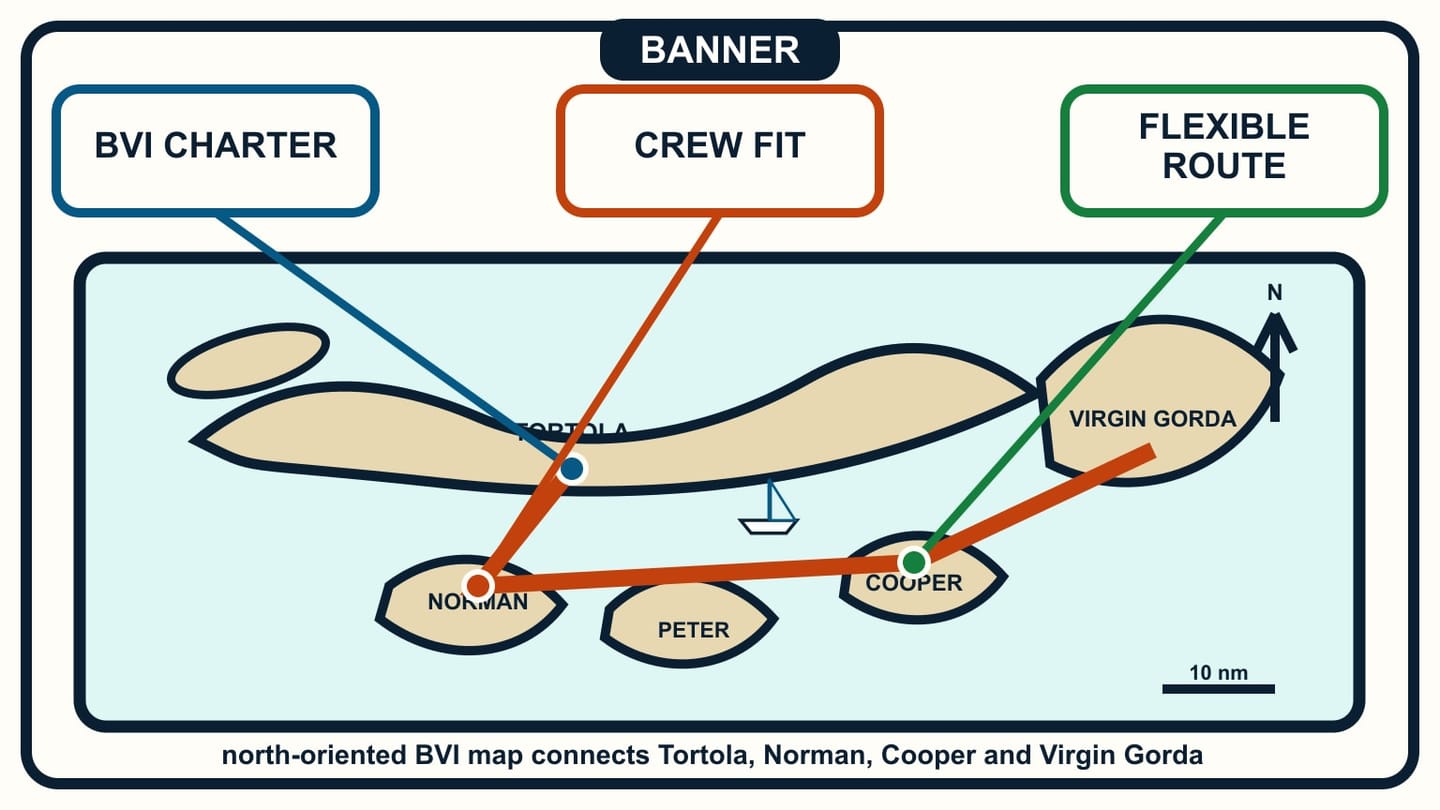
Quick answer
The short version
The British Virgin Islands are often marketed as an easy charter destination. That label is not a risk assessment. A first trip still involves skipper approval, reefs and shoals, traffic, weather, mooring decisions, unfamiliar equipment, and current local requirements. Begin with a candid crew profile and let the charter company decide whether it will accept that profile for bareboat sailing. If the fit is marginal, choose a professional skipper or instruction rather than building the holiday around hope.
Keep the first route short and changeable. Obtain a complete handover, use current official and operator weather information, and ask what support is actually available away from base. Requirements for vessels and charter operators can change, so verify them through the BVI Government and the provider near departure.
If you are still choosing the charter format, compare bareboat and skippered charters before choosing a boat.
Establish whether the crew and contract fit
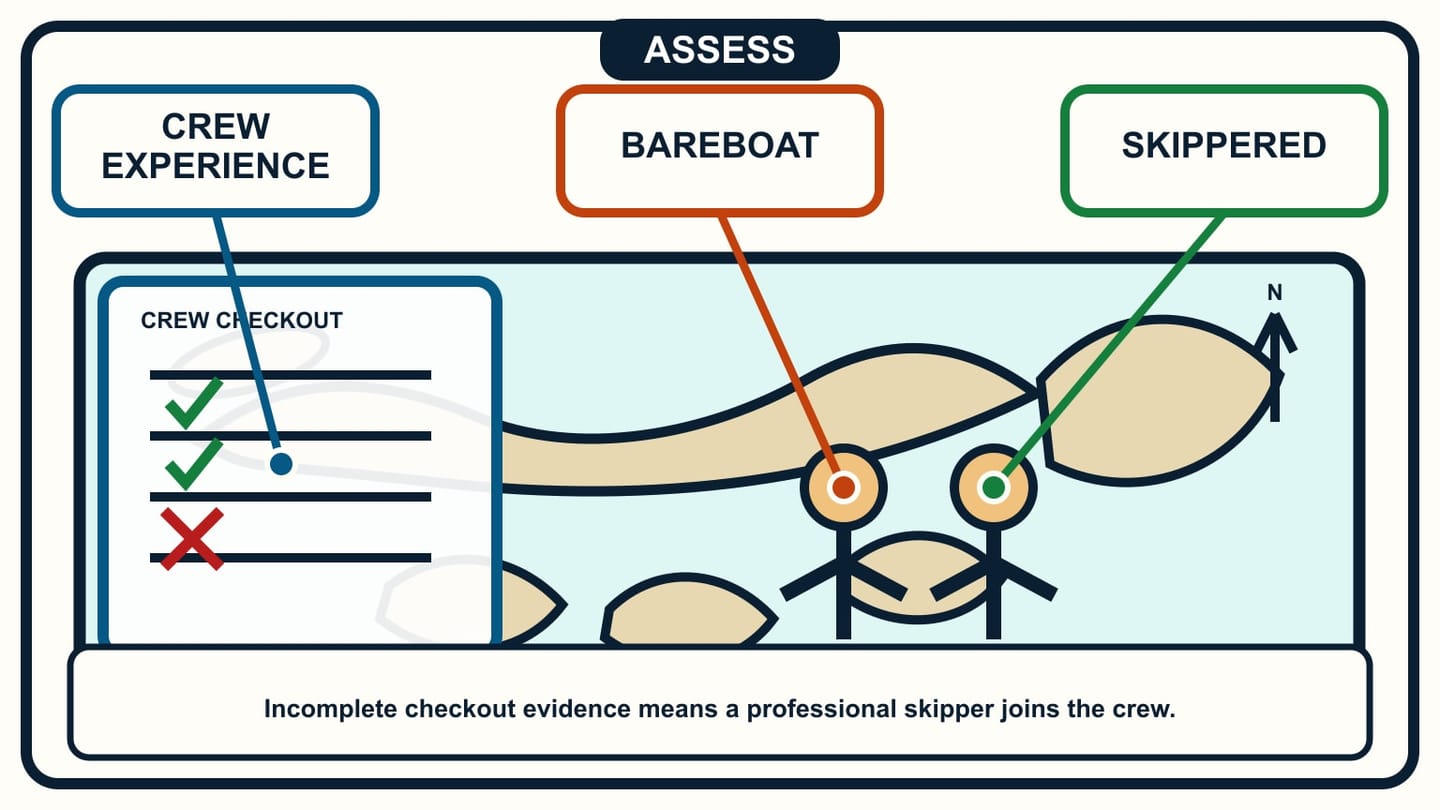
Send the operator a factual sailing résumé. Include the skipper's qualifications, recent command experience, boat types and sizes, navigation, anchoring and mooring practice, reefing, engine handling, and the experience of the second person expected to help. Describe gaps plainly. A certificate does not prove recent close-quarters practice, and years as crew do not automatically equal skippering experience.
Ask what the company requires for this boat, not what a travel article says is usually accepted. The operator may request documents, a practical checkout, paid instruction, or a professional skipper. Confirm what happens if its staff decide at the base that the crew is not ready. Read sailing qualifications for chartering before paying a non-refundable balance.
Review the permitted cruising area and every exclusion. Confirm whether the contract limits night sailing, racing, fishing, visits outside BVI waters, particular passages, or use in named weather conditions. Ask who may be aboard, what identification is required, and whether the boat's insurance imposes additional conditions.
Read the damage waiver, security deposit, liability, cancellation, and weather-delay clauses. Find the procedure for reporting a grounding, collision, lost equipment, or mechanical failure. A quick call can protect people and prevent a small problem from becoming an uninsured repair.
Choose the boat for the crew, not the berth count. Larger boats carry more windage and momentum and may put loads farther apart. A catamaran and monohull also demand different manoeuvring habits. If nobody has recently handled the proposed type, arrange instruction or a skipper.
Make the first route deliberately modest
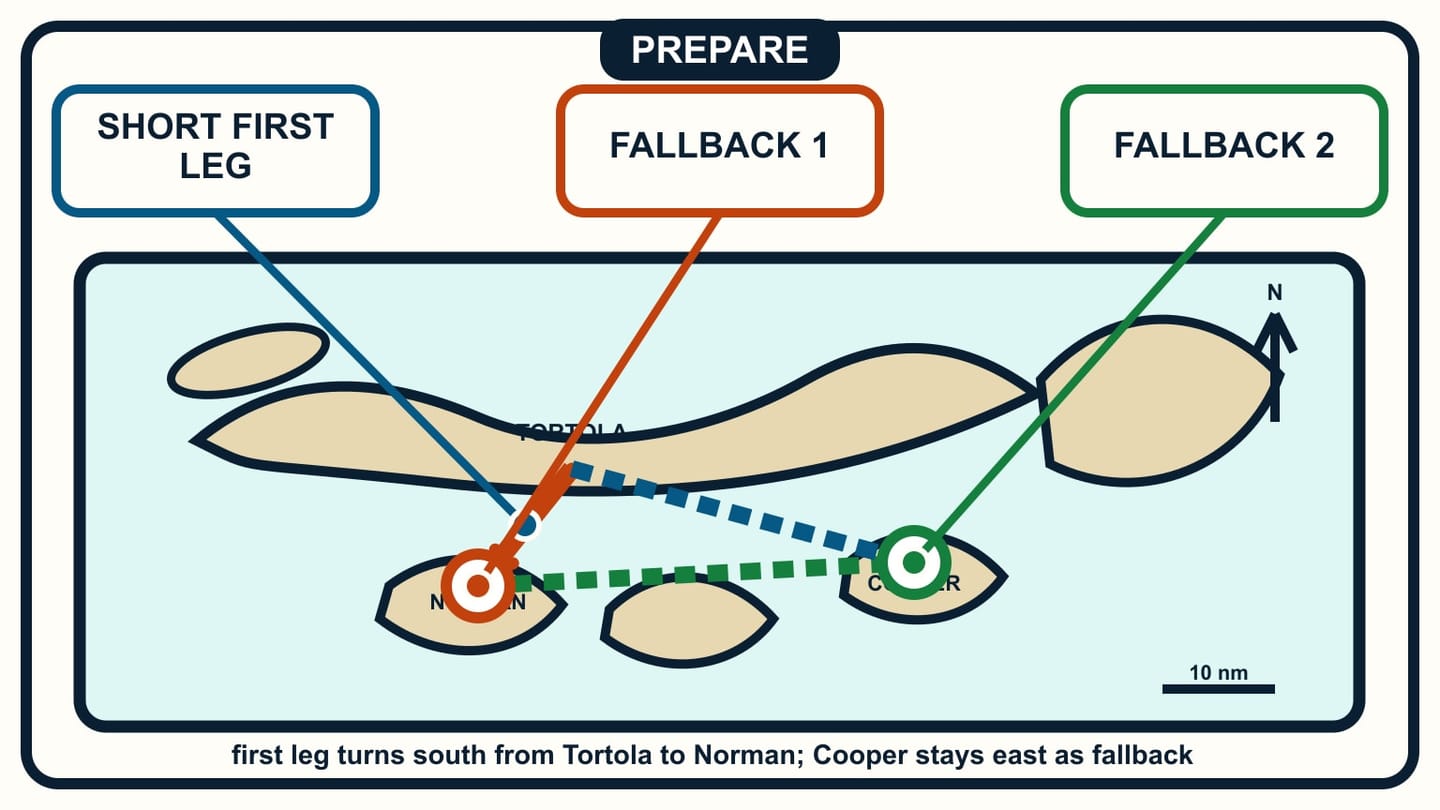
Do not turn a list of famous stops into a compulsory circuit. Draft a small first-day leg near the base, alternatives for different wind and swell directions, and at least one day with no essential mileage. Keep the final night close enough that weather or a technical delay does not force a rushed return.
Use current official charts and the navigational material supplied or required by the operator. Mark reefs, shoals, traffic areas, restricted waters, and the safe approaches for each intended stop. Confirm the chart datum, units, and update status. A route drawn by a booking site is inspiration, not navigation.
For each day, agree on a departure decision, a last easy diversion, and a latest arrival. Consider daylight, sea state, visibility, crew energy, and the time needed to secure the boat. A short geographic distance can still be a poor leg if the approach is exposed or the crew must race fading light.
Treat mooring availability as uncertain unless the responsible operator provides a dependable booking system for that field. Carry an anchoring alternative that the boat, crew, chart, and local rules support. Ask where anchoring is restricted and how to recognise managed moorings. Never improvise attachment to a buoy whose purpose or condition is unknown.
Build shore transport, meals, and flights around the sailing plan, not the reverse. A dinner reservation must be expendable. Use how to plan a sailing charter itinerary to make the daily decision points visible to everyone.
Use the handover to operate this exact boat
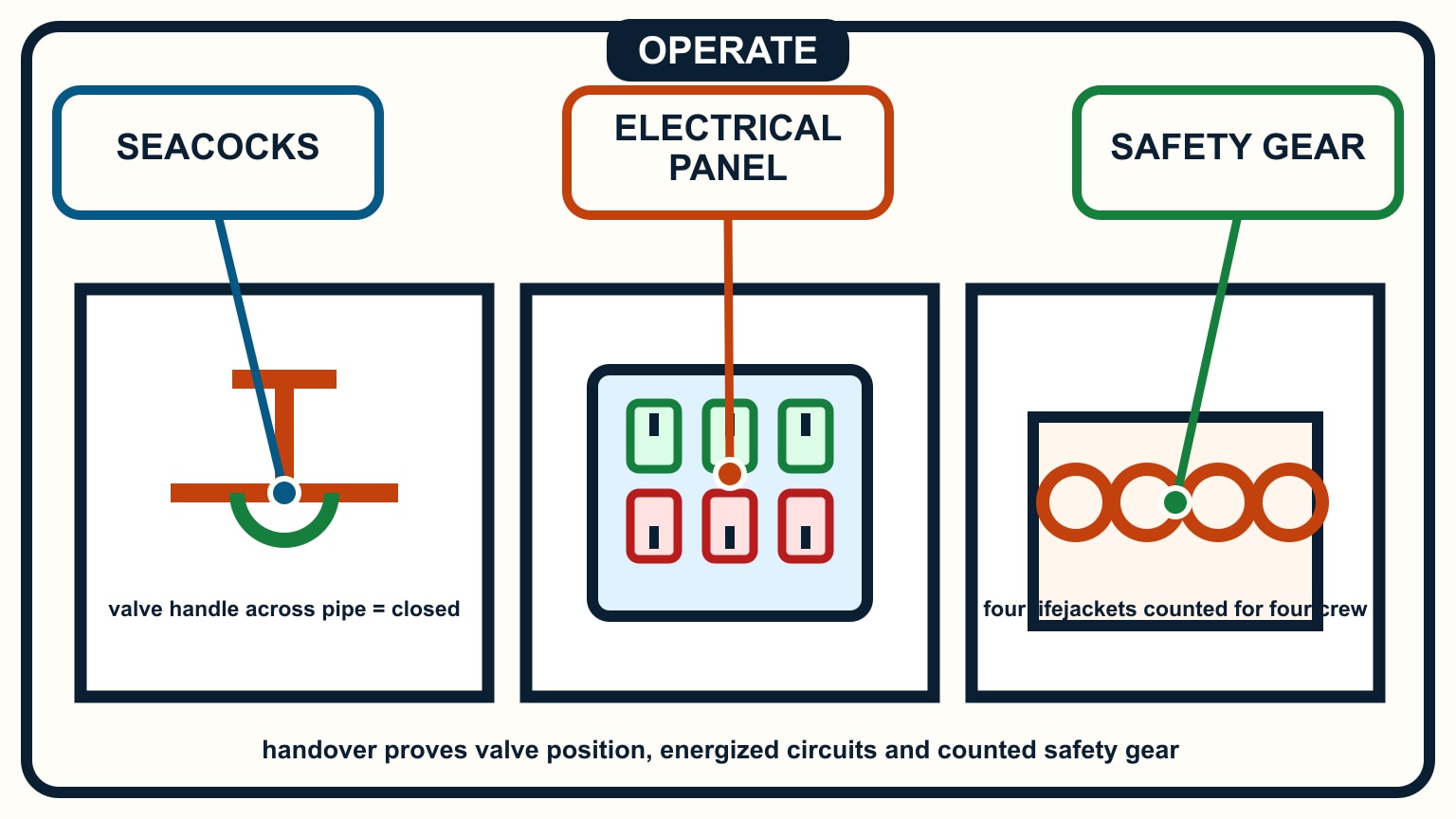
Arrive with enough time and attention for a real briefing. Film or photograph equipment only with the operator's permission, and write down the base emergency number, after-hours process, and boundaries of technical support. Every essential crew member should know how to stop the engine, call for help, and locate safety equipment.
Ask staff to demonstrate:
- engine start, stop, cooling-water check, and alarms;
- fuel, water, batteries, shore power, and electrical isolation;
- bilge pumps, seacocks, heads, and gas shutoff;
- reefing, furling, halyards, sheets, and sail limits;
- anchor, windlass, manual recovery, and independent securing;
- steering, emergency tiller, navigation lights, VHF, and distress gear;
- dinghy, outboard, lifting arrangements, and permitted use.
Do not accept a verbal “standard setup” when a control is unfamiliar. Operate it under supervision. Check that charts and safety equipment match the inventory, lifejackets fit the crew, and known defects are written on the handover record. Photograph existing hull and interior damage with the representative present.
Practise in open water before the first tight harbour: turn under power, stop, reverse, reef, and identify how the boat lies to wind. Test the anchor gear while support is accessible. If a critical system does not work as briefed, return or call the base rather than designing an at-sea repair outside the operator's instructions.
Work through the fuller first-time charter checklist before stowing it away. The goal is not to finish the briefing quickly; it is for the crew to know what normal looks like.
Plan weather, moorings, and support together
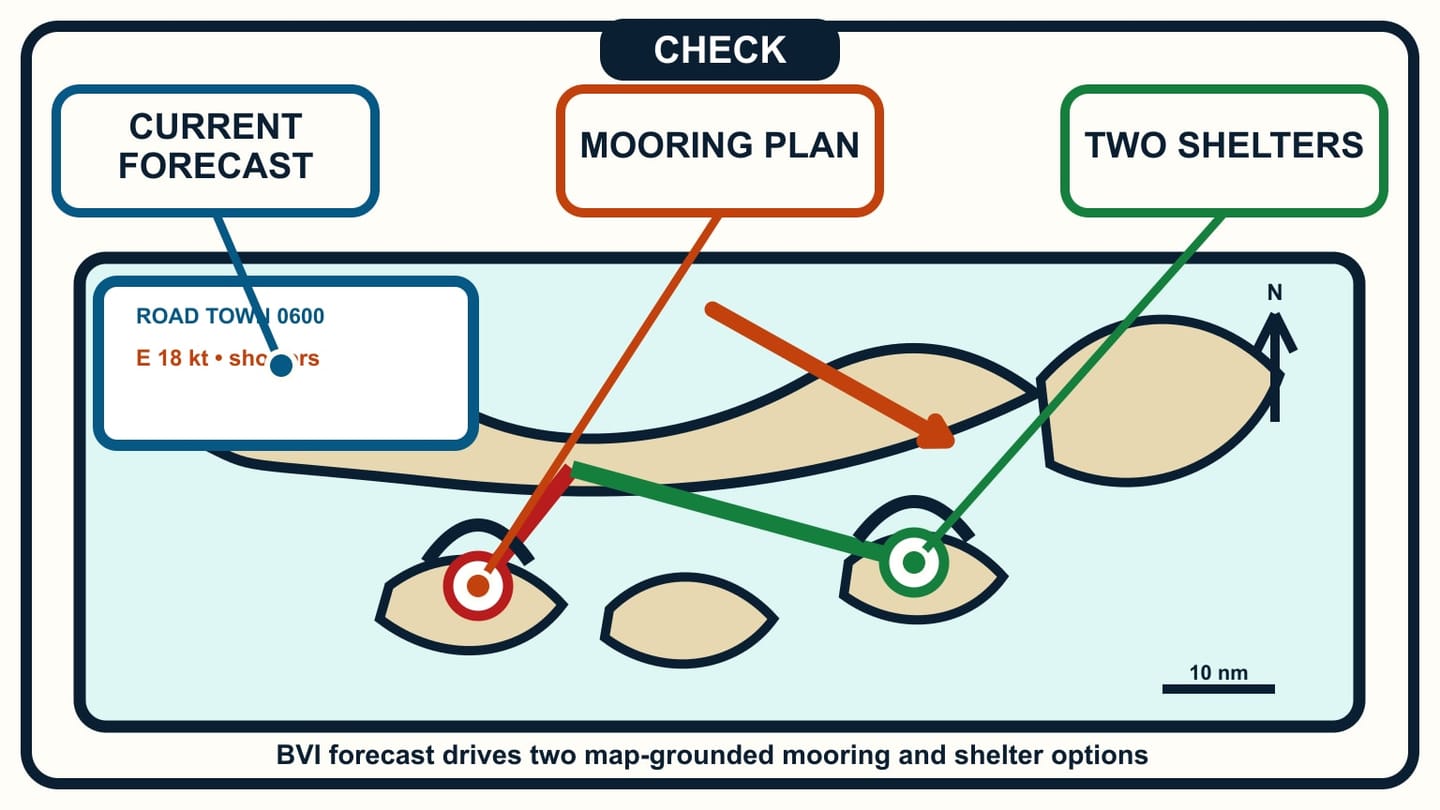
At handover, ask which official and local weather products the base uses, what update times apply, and how sailing restrictions are communicated. Obtain the latest forecast and warnings yourself. A general Caribbean app view is not a substitute for the product and briefing relevant to the BVI cruising area.
Read wind, sea state, showers or thunderstorms, visibility, and any warnings. Then ask what those conditions do to the intended route and overnight location. A bay that works in one direction can be uncomfortable or unsafe in another. The operator's current local advice is valuable, but the skipper must still observe conditions and stay within the contract and crew limits.
Contact the base early when forecasts deteriorate, a system alarms, the boat touches bottom, or the crew cannot make the planned return safely. Know whether support is telephone advice, a service boat, a contractor, or emergency assistance; those are not interchangeable. In immediate danger, use the appropriate distress procedure rather than waiting for customer service.
Before leaving each stop, inspect lines, rig, engine space, bilges, anchor or mooring connection, dinghy, and loose deck gear. Confirm fuel and water status. Brief the route, expected weather, reefing point, communications, and diversion. A tropical holiday still deserves a proper departure check.
Keep extra margin around squalls. Prepare sail reduction before the gust arrives and avoid committing to a reef-fringed or crowded approach in poor visibility. The weather is allowed to cancel a beach plan.
Recheck BVI requirements and the return plan
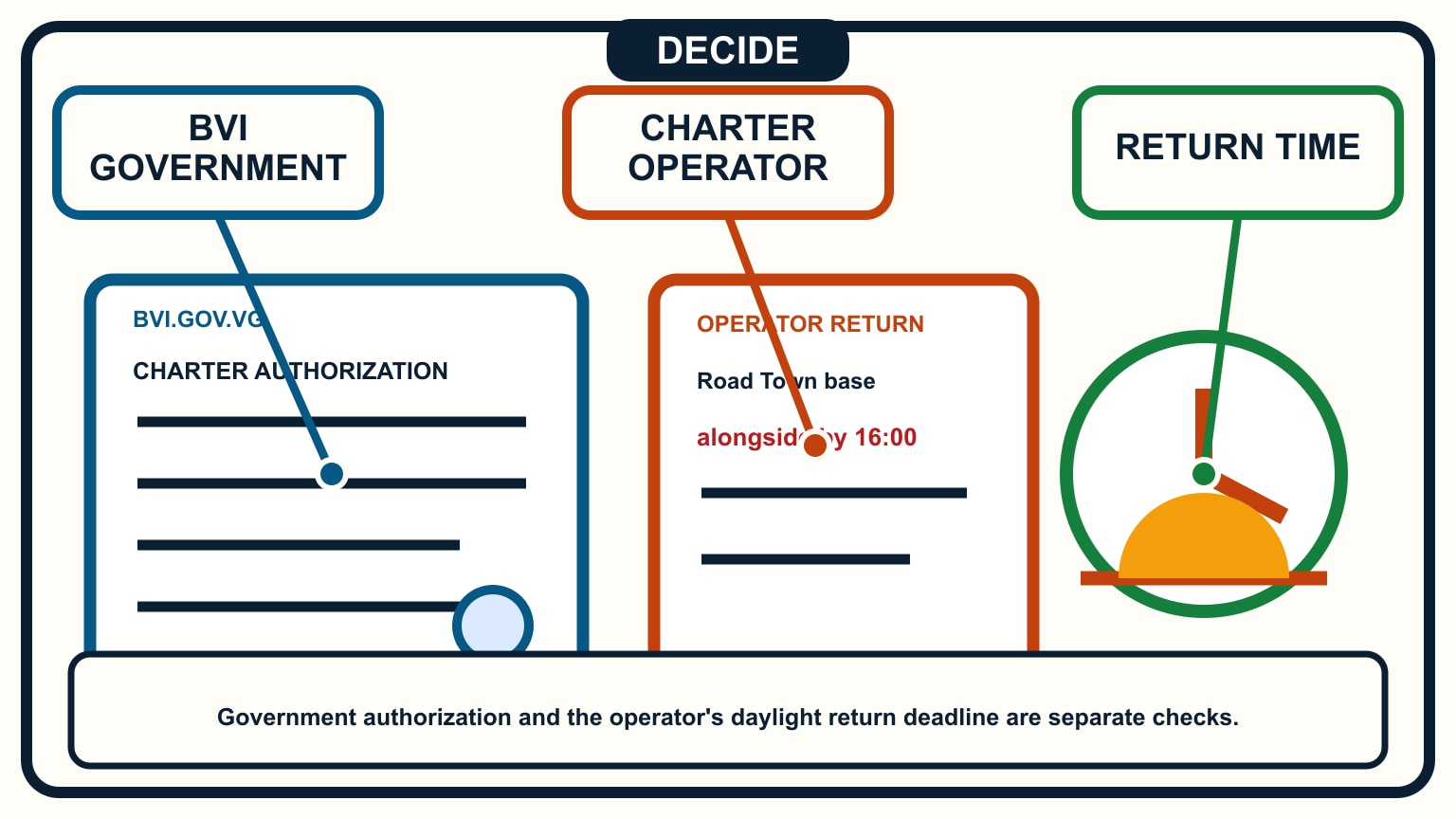
The BVI Government publishes current information on commercial recreational vessel licensing and charter authorisation. These rules chiefly govern vessels and operators, but they affect which company and boat can legally provide the trip. Verify that the provider is legitimate and ask it to confirm the current authorization for the planned operation, especially if the vessel or company is based outside the territory.
Near departure, check official entry and travel requirements for every crew member through the relevant BVI and home-country authorities. Confirm passports, transport connections, any customs or immigration process connected with the itinerary, and operator document requirements. Do not copy a checklist from an old trip; official rules and fees can change.
Revisit the return plan every day. Allow time for the operator's required fuel level, waste arrangements, inventory, damage check, and check-out. Ask where the boat must be and by what time, not merely the final contract date. Schedule flights with enough separation that a weather delay does not pressure the skipper into an unacceptable passage.
On the final approach, call the base as instructed and request help with docking if the crew needs it. There is no prize for hiding uncertainty in a crowded marina. Report every defect and grounding honestly so the next crew receives a safe boat.
A successful beginner charter is not measured by the number of islands visited. It is a crew-approved boat, a route that could change, a thorough handover, current weather decisions, and an unhurried return. Start with the sailboat charter check-in process, and keep the operator's written guidance beside the passage plan throughout the week.
Try it from the lesson
Can you spot the next move?
A wide sailboat glides past on two side-by-side hulls, barely leaning at all. What type is it?
Why you can trust this guide
. We build each guide from public seamanship and safety sources, then teach the universal principle before any local difference.