Chart your course
Best Beginner Sailing Destinations
Quick answer
The short version
The best beginner sailing destination is a place where you can get suitable instruction or support, sail a boat matched to your ability, and change the plan when conditions are unsuitable. It may be a nearby club on sheltered water rather than a famous holiday coast. Compare the venue, season, normal sailing area, boat type, instructor access, shore facilities, and route back to regular practice.
No location is easy in every season or for every learner. Wind, visibility, sea state, current, traffic, and local services change. Ask the school or operator what conditions are typical during your dates, what causes cancellation, and what alternative training it offers. Verify current forecasts, local rules, and provider terms before the outing. If travel is part of the plan, how to choose a sailing course gives you questions for comparing centres rather than scenery.
Choose conditions before postcards
Start by describing the water session you want. A first dinghy lesson needs a suitable launch, rescue or coaching support, and water where the instructor can keep the group together. A first cruising-yacht course needs a boat and area that allow students to rotate through real crew tasks. A first charter needs a far stronger match between skipper experience, boat, route, and support.
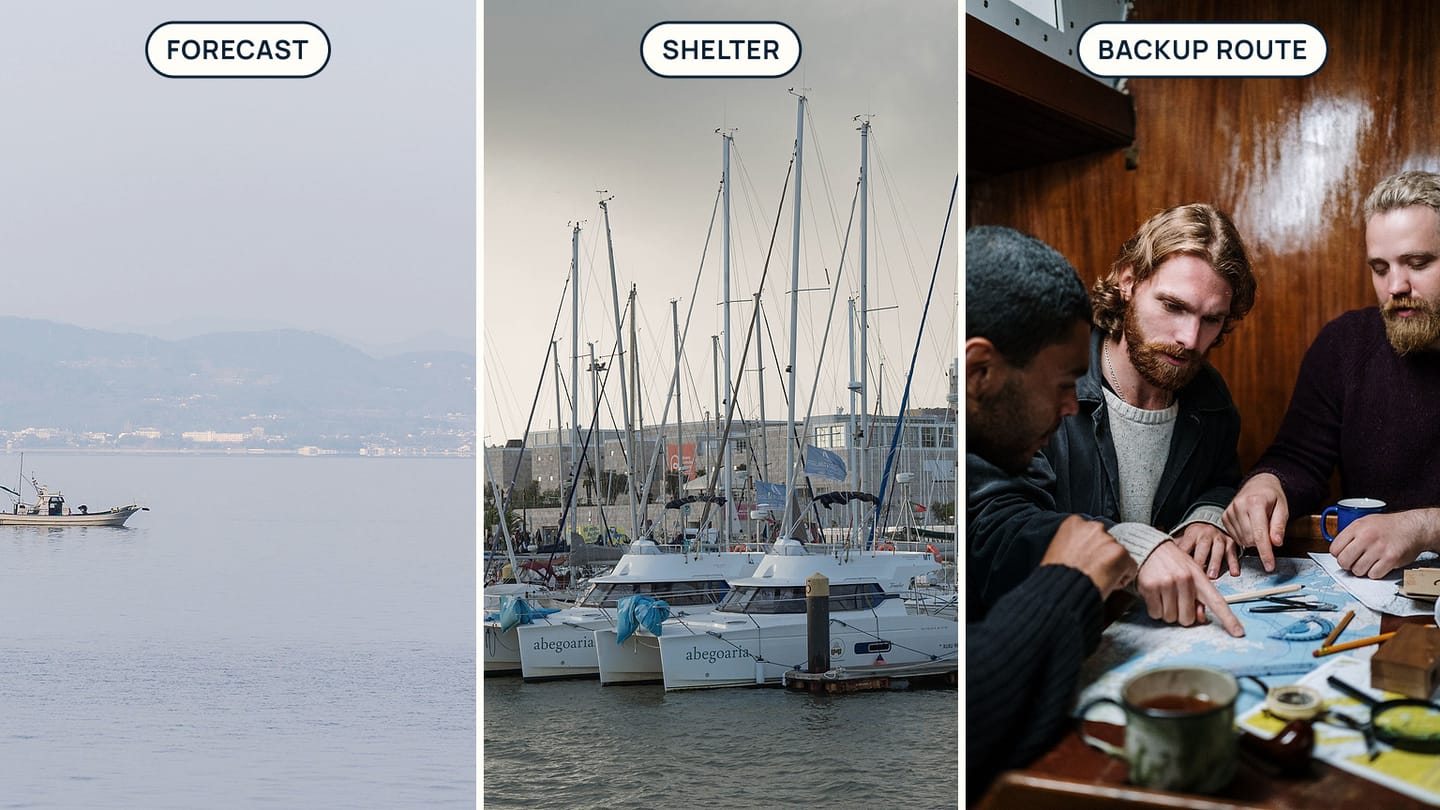
Ask the provider for a seasonal description, not a promise. Which wind directions make the water more exposed? Does current affect departure times? How often does reduced visibility alter training? What is the plan when weather prevents the advertised activity? A precise answer should include limits set by the operator and realistic alternatives.
Shelter has more than one meaning. A harbour may be protected from waves yet crowded with traffic. An inland lake may avoid tidal current but develop strong local gusts. A bay can look enclosed on a map while one wind direction sends waves into the training area. Let local instructors explain the patterns, then compare those patterns with the work you need to learn.
Look for a backup route. Beginners learn more when a centre can move from an exposed exercise to a sheltered one, or replace sailing with a useful boat session when conditions close the water. Ask whether cancellation produces a refund, reschedule, shore lesson, or shorter outing. Put the answer in your travel budget.
Do not book around a photograph of flat water. Images show a moment, not the operating range during your week.
Compare destinations with the same questions. Ask each provider for the planned training area, the boat used, the learner-to-instructor arrangement, its weather decision process, and the fallback when sailing stops. Put the answers side by side. Marketing words such as “gentle,” “ideal,” or “world-class” cannot be compared because they have no shared measure. A description of shelter, traffic, current, and cancellation policy can.
Find supported water time
World Sailing directs beginners toward sailing schools, clubs, and their national sailing authority for local opportunities. The RYA likewise points learners toward clubs and training centres for instruction and continuing participation. The useful feature is access to people and boats, not the organisation's name alone.
Ask who will supervise you and how. Is instruction delivered by a recognised centre? How many students share an instructor and boat? Does a coach remain close enough to intervene? On a cruising course, will each person carry out helm and crew tasks? Find out what happens when students arrive with different experience.
Inspect the practical support around the sailing. A beginner may need loan clothing, personal flotation equipment, accessible changing space, secure storage, food nearby, or public transport after a delayed finish. These details can decide whether you arrive rested and equipped enough to learn.
For a holiday course, ask how much of each day is genuinely afloat and how travel between accommodation and boat works. A low course price can be misleading if boat time is short or weather days have no alternative. Read recent provider information, but use direct answers and written terms for decisions.
Safety support should be explained without theatre. Ask about the briefing, the operator's weather decision, emergency contact, and the equipment students supply. If a centre cannot describe how it handles an unsuitable day or a learner who needs more help, keep looking.
Language also affects support. Confirm the language used for briefings, commands, and course materials. If you are learning in a second language, ask whether the instructor can demonstrate tasks slowly and check understanding. Sailing vocabulary becomes much easier when words are tied to visible controls, but emergency or time-sensitive calls still need a shared language across the boat.
Match the boat and season
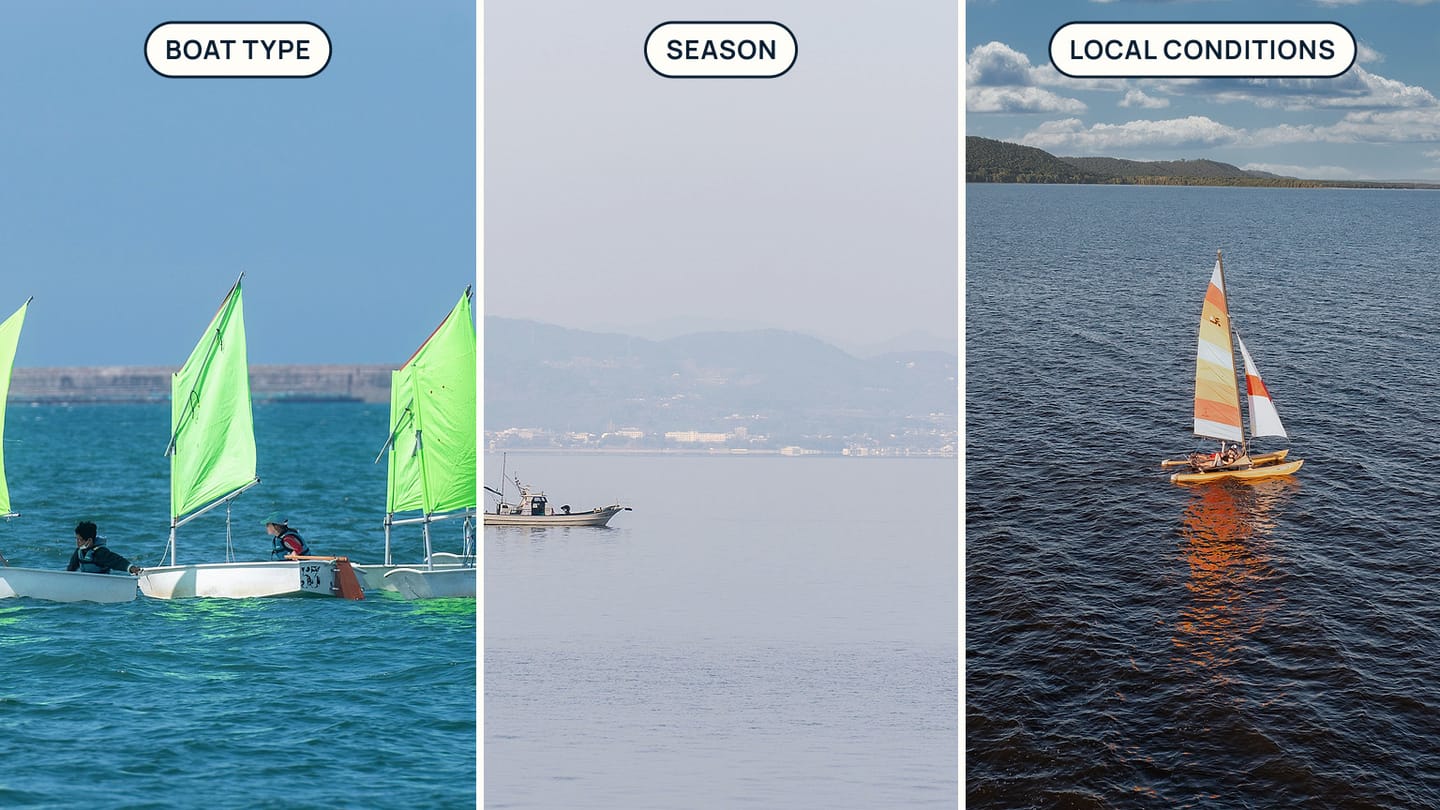
Choose the boat before comparing destinations. Small dinghies give direct feedback and frequent manoeuvres, but you may get wet and need more physical movement. A keelboat can provide a steadier platform for several adults. A cruising yacht adds systems, living space, and crew routines. A cruising catamaran has its own broad layout and handling considerations. None is the universal beginner boat.
Ask for the exact boat class or a realistic range. Check how students board, where they sit, what clothing is normal, and which jobs the course teaches. If mobility, size, hearing, or balance affects you, discuss it before booking. A suitable centre can explain adaptations or recommend another format.
Then examine season. “Warm” does not mean calm, and a destination known for reliable wind may deliver more wind than a first lesson needs. Shoulder seasons can bring different operating hours, water temperature, transport, and shore services. Ask the provider which months suit a true beginner on its boats, and why.
Compare the normal lesson time with daylight and local travel. A late arrival after a long flight is poor preparation for an early safety briefing. Leave room for weather changes instead of placing the only sailing day between fixed transfers.
If you want to continue at home, select skills that transfer. The exact boat need not match, but the course should give you clear language, active tasks, and a record you can explain to your local club.
Accommodation can shape learning even though it is ashore. Check the distance to the boat, early transport, meal hours, and a place to dry wet clothing. A beautiful room that requires a long transfer before dawn may leave less energy for the course. If you live aboard, ask how bunks and meals work, since that setting adds useful cruising experience as well as less private rest.
Make a local practice plan
Before paying for travel, contact a nearby club or school. Ask what boats and beginner sessions are available after you return. Their answer may change the holiday course you choose. If your local programme uses keelboats, a short keelboat course may connect more directly than an unrelated certificate on a large yacht.
Put the first follow-up date in the calendar before the trip. Leave enough recovery time, but not so much that every procedure becomes a memory test. Bring a short log from the destination: boat, tasks, conditions, instruction received, and the next skill recommended by the coach.
Plan for three outcomes. If the course goes as expected, repeat one learned job locally. If weather reduces sailing time, arrange replacement practice rather than claiming the planned hours. If the boat or format does not suit you, use the experience to choose a better local option. None of these outcomes makes the trip wasted when the record is honest.
Budget the full learning cycle. Include travel, accommodation, equipment, cancelled-day risk, and local practice after returning. A nearby programme with many ordinary sessions can produce stronger progress than a premium week that cannot be repeated.
When comparing two destinations, write one line for each decision: support, likely water time, boat match, seasonal exposure, backup plan, total cost, and next local sail. The winner is the place that gives you an achievable sequence, even if it is less famous.
Include the non-sailing companion or family plan when relevant. Find out what happens ashore if your course is delayed, whether children or observers are allowed at the venue, and who controls changes to shared travel. A learner who feels pressured to finish by a fixed tourist booking may accept conditions or a rushed return they would otherwise question. Separate flexible activities from immovable travel.
Use SailStarter to learn the basic boat language before you travel, then confirm it on the training boat. Review what to pack for a sailing trip and make a five-question list for the provider. The lessons reduce first-day overload; the destination earns its place by giving you safe, supported practice you can continue afterward.
Try it from the lesson
Can you spot the next move?
You turn to face the stern. A crewmate points at your right hand. Which side of the boat is that?
Why you can trust this guide
. We build each guide from public seamanship and safety sources, then teach the universal principle before any local difference.