Chart your course
Best Time to Charter a Sailboat in Greece
Quick answer
The short version
There is no single best time to charter throughout Greece. The right window depends on the sailing area, the crew's ability, the kind of holiday you want, and the current terms of the operator. Start by choosing a region and an honest crew profile. Then ask operators serving that base how the proposed dates normally affect wind, availability, shore services, and itinerary choices. Use the Hellenic National Meteorological Service's current marine forecast and gale warnings for live decisions.
This approach avoids two common mistakes: treating all Greek island groups as one weather system and booking around a slogan such as “shoulder season is easy.” A quieter harbour or lower price does not prove that conditions suit a first-time skipper. Equally, a popular week is not automatically the best learning environment.
Before comparing dates, decide whether the trip should be bareboat or professionally skippered. Bareboat versus skippered charter explains the practical difference.
Choose the sailing area before the calendar week
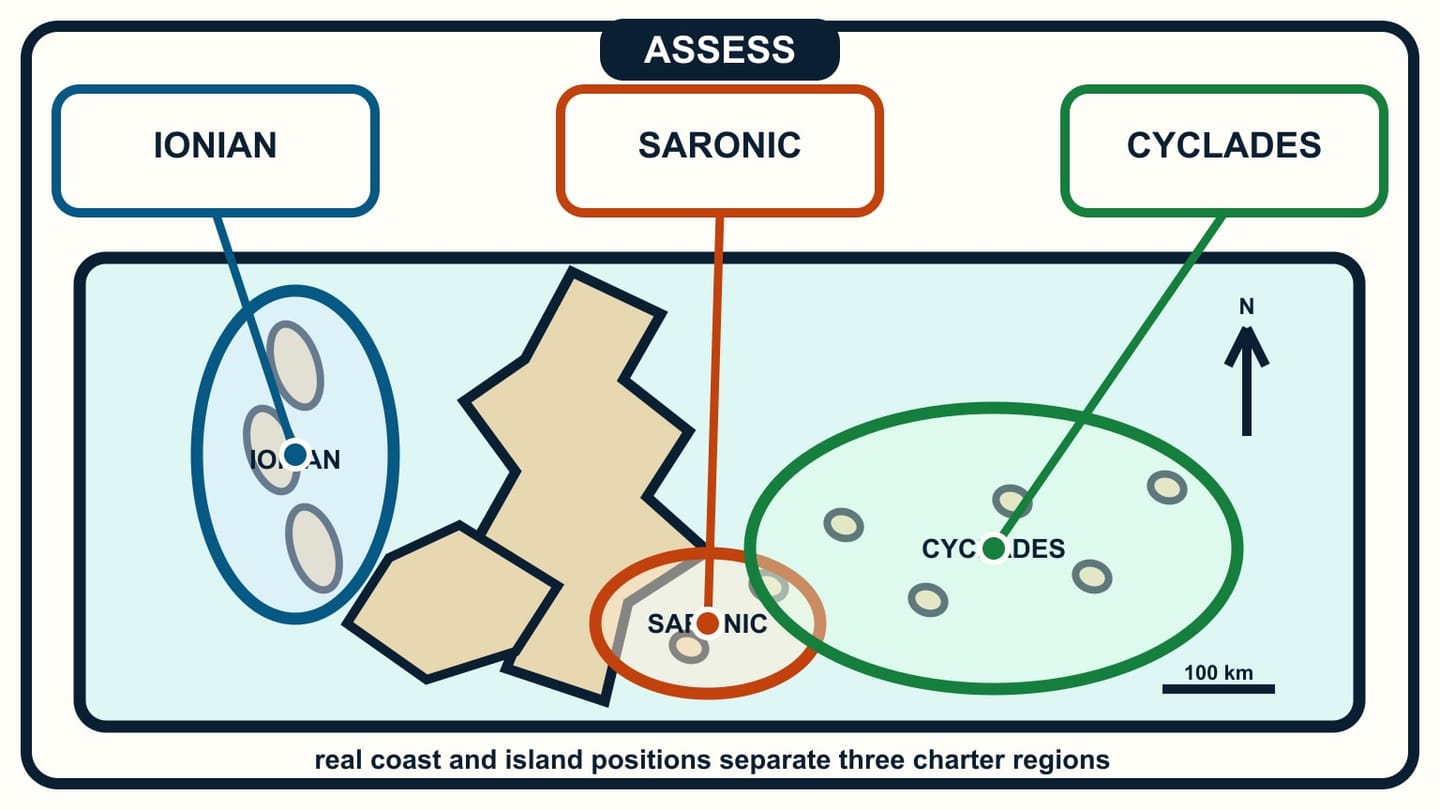
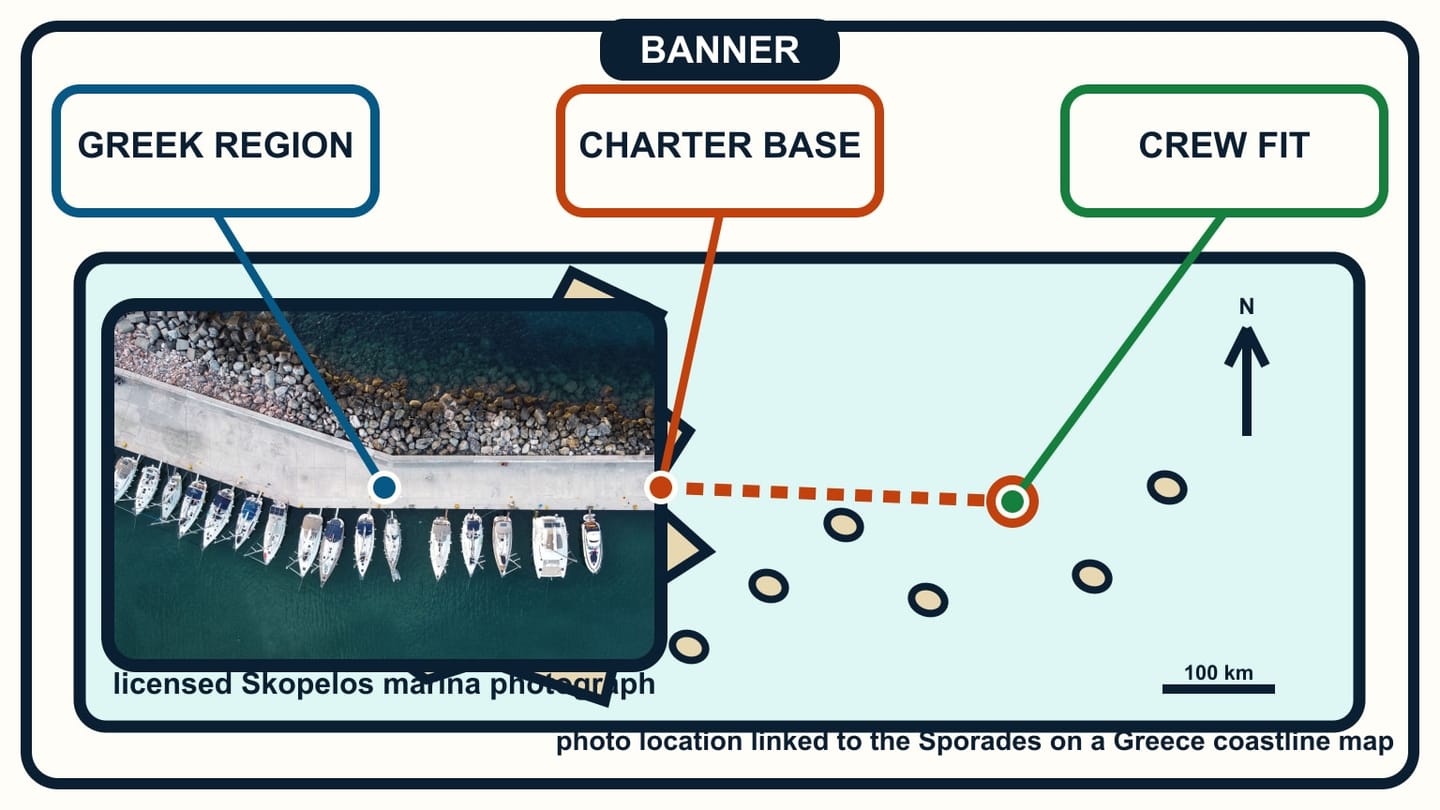
“Greece” is too broad for a useful weather conversation. Ask which base and cruising area the boat will use, how exposed the typical legs are, what shelter exists, and which routes the operator recommends for a crew at your level. The Ionian, Saronic, Sporades, Cyclades, Dodecanese, and other areas do not offer an interchangeable experience.
Describe the holiday you actually want. A family looking for short morning passages and long afternoons ashore needs a different window and route from an experienced crew planning longer open-water legs. Include tolerance for heat, crowds, unsettled days, and itinerary changes. Those preferences are not separate from safety; they affect fatigue and the temptation to press on.
Send the same short brief to two or three established operators at the intended base:
- exact dates and trip length;
- skipper and crew experience;
- bareboat or skippered preference;
- desired daily sailing time;
- any mobility, medical, or child-safety needs;
- the least experienced person's comfort level.
Ask for a region-specific answer rather than a sales description of the whole country. Useful replies explain what routes remain flexible from that base, what conditions cause fleets to hold, and what shore support is available. Save the advice, but treat it as planning context rather than a weather guarantee.
Only after that comparison should you choose a week. The “best” period is the one that gives this crew suitable options, not the date with the most confident average-weather graphic.
Match expected conditions to the weakest crew member
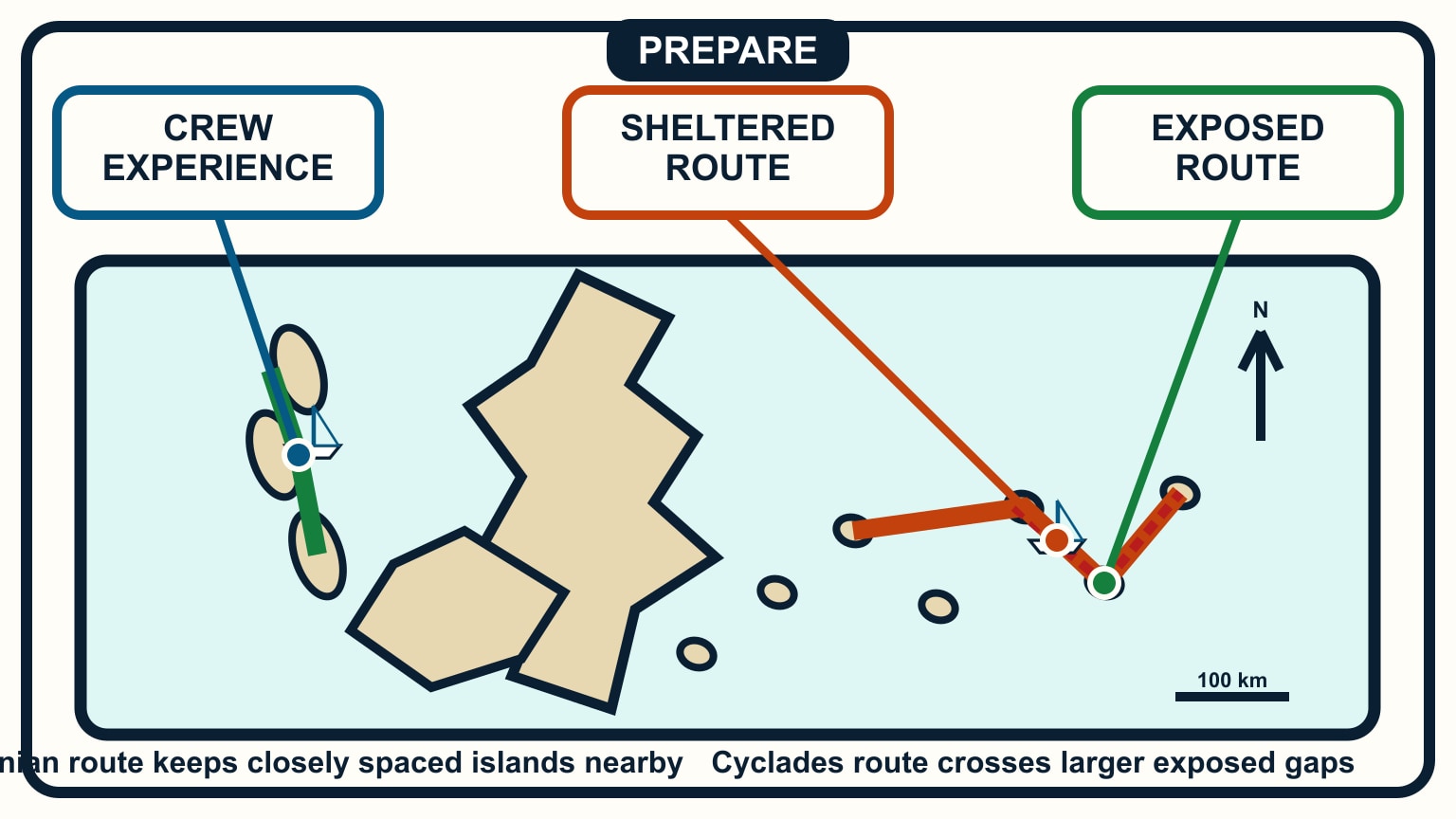
Build a crew profile without flattering it. Count recent skippering experience, Mediterranean mooring practice, navigation, reefing, anchoring, close-quarters handling, and the ability to manage a tired crew. Qualifications matter, but an operator may also assess practical experience before accepting a bareboat booking.
Use the least experienced essential crew member as a design constraint. If the route assumes that person can handle lines quickly in a crosswind after a hot day, ask whether a professional skipper or a different itinerary would make the holiday better. Hiring a skipper is not a failed version of a bareboat trip. It can protect learning time and allow the group to enjoy an area that would otherwise demand too much.
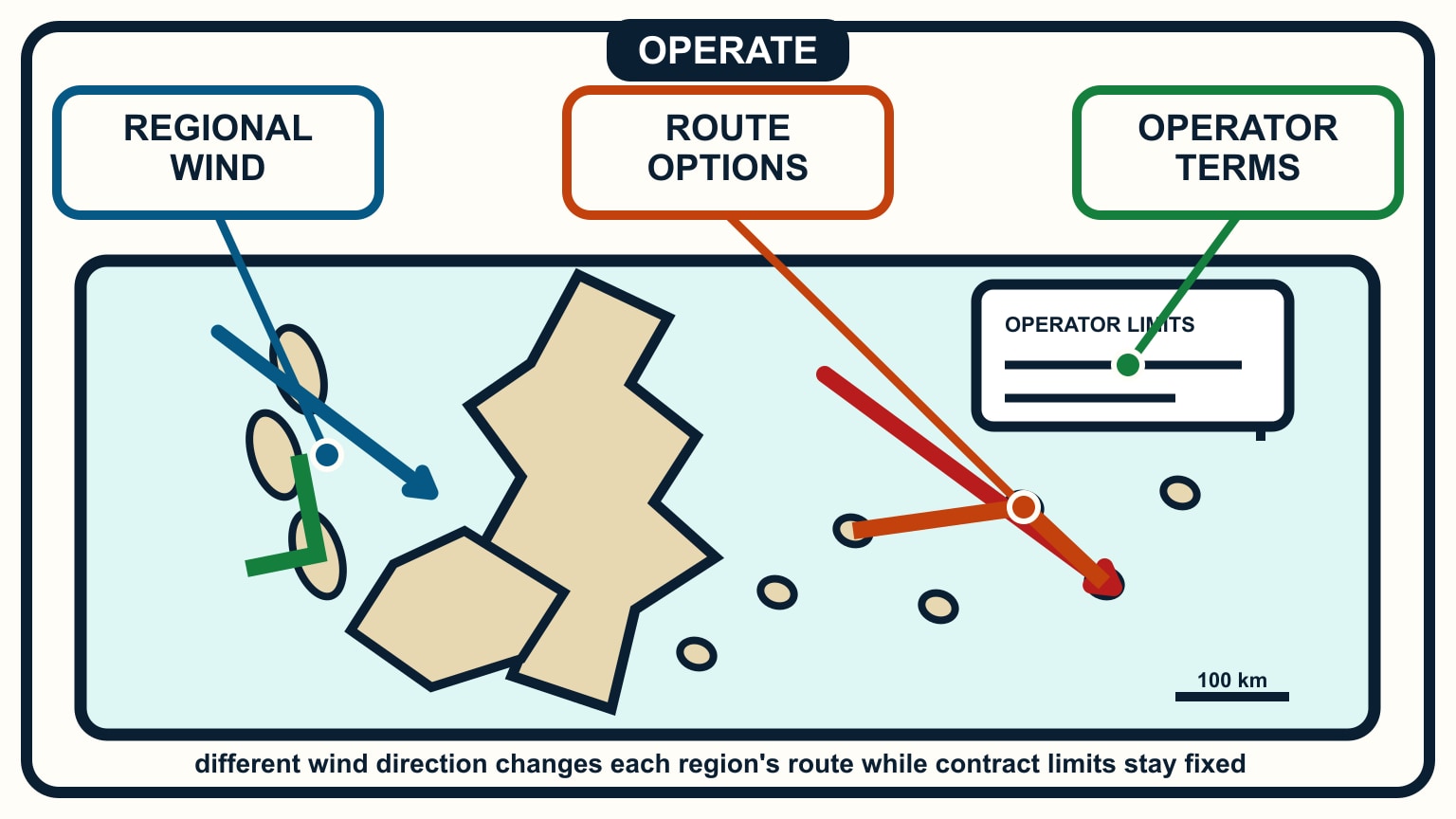
Ask operators how the prevailing seasonal pattern interacts with their base and common routes. Do not turn the answer into a fixed daily timetable. Local wind can vary with terrain and heating, and synoptic systems can override the usual pattern. The current forecast always outranks an average.
Discuss sea state as well as wind. A moderate wind over a long fetch can be uncomfortable for a new crew, while a stronger breeze in protected water may feel more manageable. Harbours and anchorages also have direction-dependent limitations. “Can we sail in this wind?” is less useful than “what will this direction do to the exposed leg and tonight's shelter?”
If the crew's margin is narrow, adjust more than the date. Choose a base with several nearby alternatives, shorten the route, book a skipper for the first days, or take instruction before travel. Review sailing qualifications for chartering early enough to change the booking.
Question the operator before paying
Ask what evidence the company needs to approve the skipper and what happens if that approval changes at handover. Confirm which original documents must be carried, whether a second qualified person is required, and which national or operator rules apply to the chosen boat. Requirements can change, so obtain the answer in writing close to departure.
Ask date-specific operational questions:
- Which services at the base and likely stops will be open?
- What check-in, briefing, and return times apply?
- What weather source and warning process does the base use?
- Who has authority to restrict sailing, and how is that communicated?
- What help is available after hours or away from the base?
- What costs follow a weather delay, route restriction, or professional skipper requirement?
For a commercially chartered recreational vessel, confirm that the operator is handling the current Greek authorization and documentary requirements for that vessel. Greece provides official digital charter-permission services, but the beginner's job is not to reverse-engineer the operator's compliance. It is to select a legitimate provider, read the contract, and ask for confirmation.
Examine cancellation, damage-deposit, insurance, and weather clauses. “No sailing” may have a specific contractual definition. Find out whether a delayed start, enforced return, or base-directed lay day changes the booking. Travel insurance needs the same scrutiny; a generic policy may not cover skippering or the chosen activity.
Finally, ask to see a specimen inventory and handover checklist. A thoughtful answer about the boat and base is more useful than a promise of perfect weather.
Build an itinerary that can lose a day
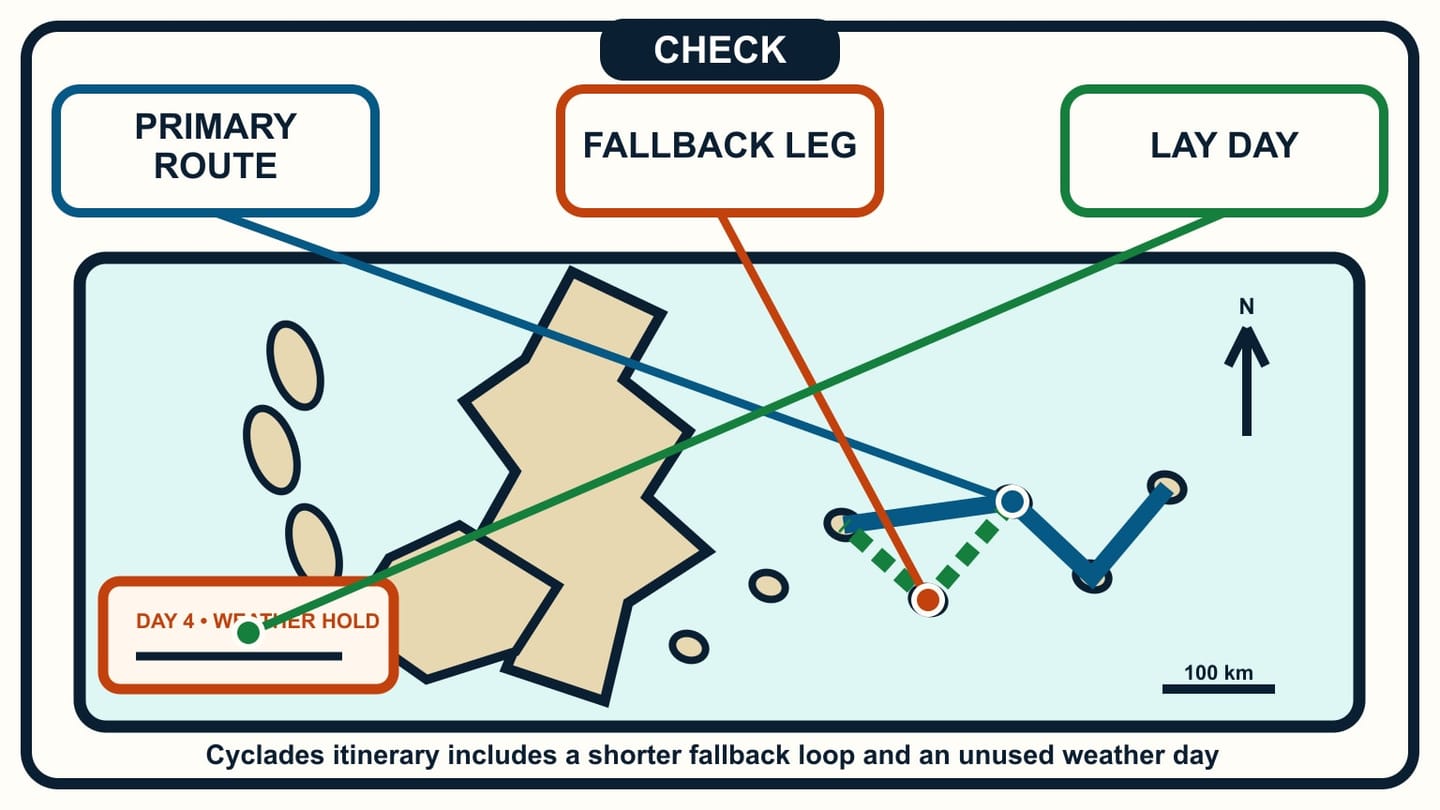
A fixed chain of must-visit islands turns an ordinary weather change into schedule pressure. Build the first route with short early legs, at least one unallocated day, and alternatives on both sides of the prevailing pattern. Keep the final night near enough to the base that a modest delay does not threaten the return appointment or flight.
For every intended stop, identify a fallback that works for the same forecast direction and sea state. A nearby bay is not an alternative if it is exposed to the same swell. Use current charts, pilots, notices, harbour information, and operator advice; online reviews are not navigational authority.
Plan the first day conservatively. Handover can take longer than expected, the crew must stow provisions, and unfamiliar systems need practice. Leaving late for a demanding destination spends margin before the holiday has started. A short shakedown near the base lets the crew test reefing, engine controls, anchoring equipment, and communications while support is close.
Put daily decision points in the plan: the morning official forecast, the time by which the boat must leave, the last easy diversion, and the latest acceptable arrival. A forecast change should shorten the day without starting an argument. Use how to plan a sailing charter itinerary to turn those choices into a route.
The lay day is not wasted capacity. It is what lets the skipper respect weather, fatigue, and a minor technical issue without converting the final return into a rushed passage.
Verify current information close to departure
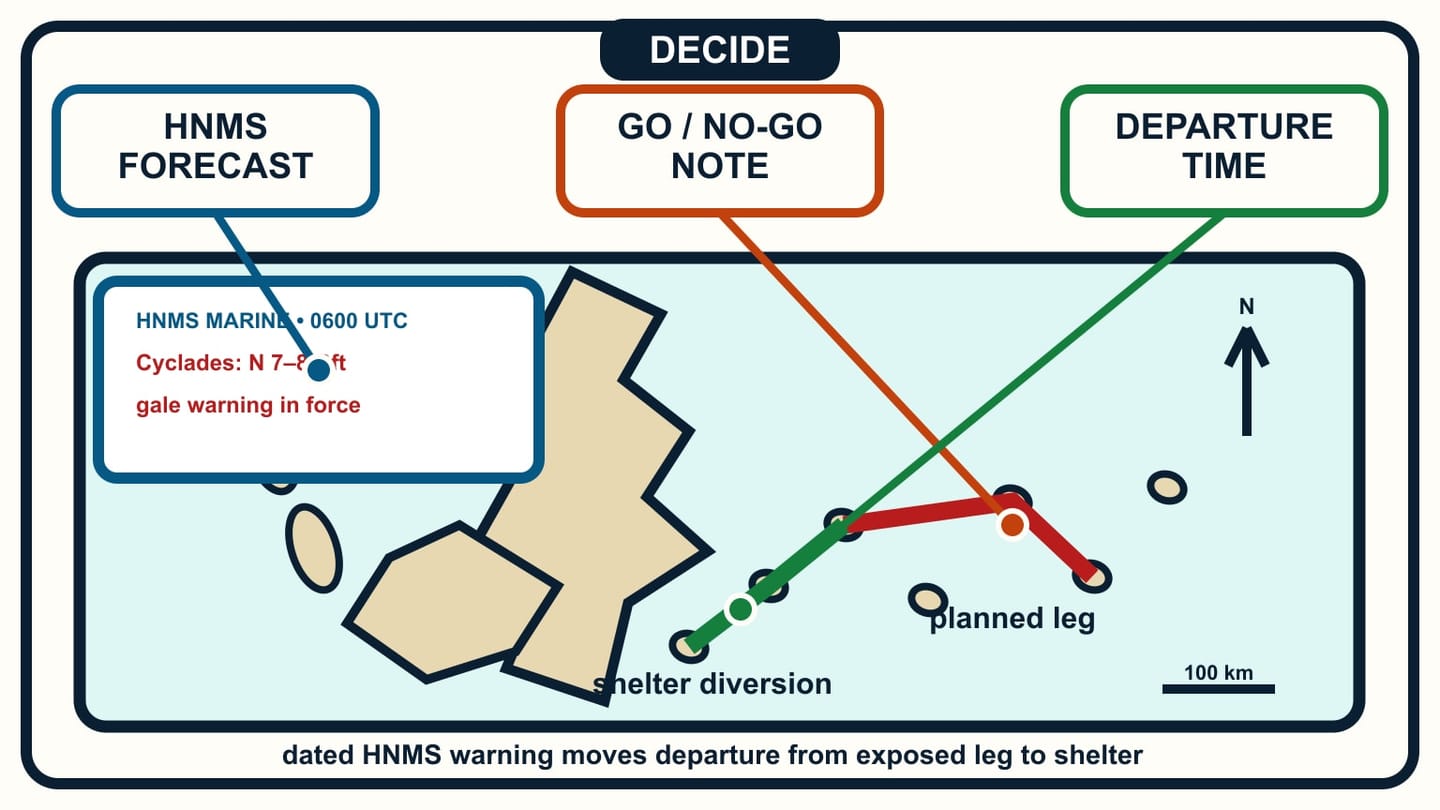
Seasonal research helps choose dates; it cannot make the daily sailing decision. In the week before travel, confirm the operator's document list, base opening details, transfer plan, and any current local restrictions. Use official Greek government and operator channels rather than an old forum post.
During the charter, obtain the current Hellenic National Meteorological Service marine forecast and gale warnings on the schedule explained at handover. Ask the base which local broadcasts or channels supplement it. Record issue and valid times, and do not let a weather-app icon replace the official marine product.
Compare the forecast with observations and the boat's actual condition. If the base advises staying put, a warning covers the route, or the crew is outside its agreed limit, revise the itinerary. A prepaid berth or restaurant reservation does not change the weather.
Reconfirm the return plan early, especially after a lay day. Leave time for refuelling, inventory, and the base's check-out process. If flight timing requires the boat to sail in conditions the crew would otherwise reject, the itinerary was too tight.
The best booking is therefore a matched system: suitable region, candid crew profile, reputable operator, flexible route, and current official forecast. Start the practical preparation with the first-time sailboat charter checklist, then let each day's evidence decide how much of the holiday plan to use.
Try it from the lesson
Can you spot the next move?
A wide sailboat glides past on two side-by-side hulls, barely leaning at all. What type is it?
Why you can trust this guide
. We build each guide from public seamanship and safety sources, then teach the universal principle before any local difference.