Chart your course
Why You Ventilate a Boat Before Starting the Engine
Quick answer
The short version
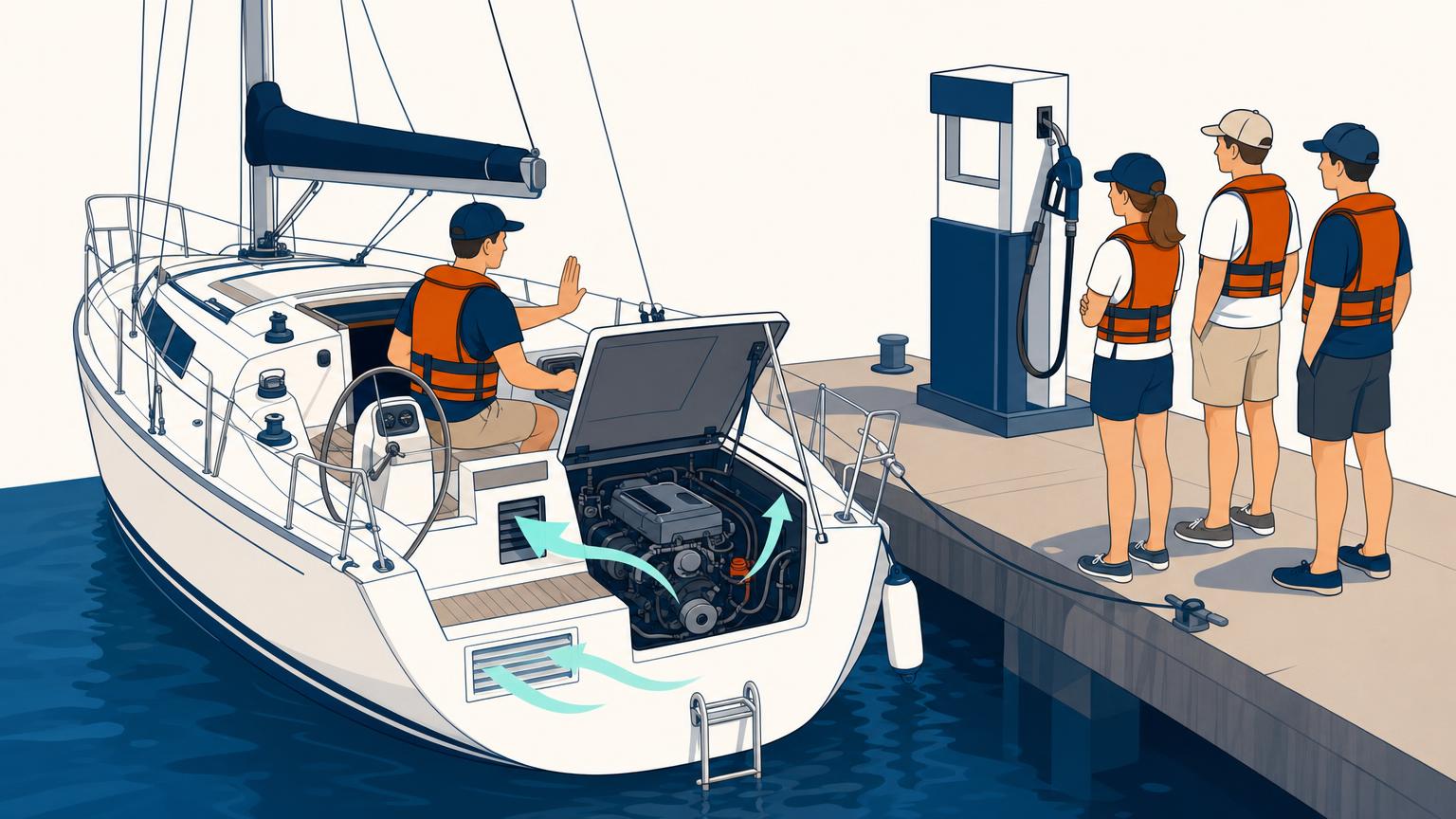
You ventilate before starting so fuel vapor clears before anything can spark. Gasoline vapor is heavier than air, so it sinks and pools low around an engine compartment.
Before fueling, ask passengers to step ashore if practical, and stop the engine, flames, and electrical devices. Close openings. As you fill, keep the nozzle touching the tank opening and fill deliberately to avoid overflow. Then secure the cap, clean spills, open the boat, and follow its manual and local procedure for ventilating before you start. Wait until the fuel smell is gone; a smell means the space is not clear.
Carbon monoxide comes from burning fuel. Unlike gasoline vapor, it can accumulate anywhere in or around the boat. Headache, nausea, weakness, or dizziness may seem like seasickness. Move everyone to fresh air and seek medical help.
A gasoline-powered boat has a pre-start ritual, much like a pilot’s check before takeoff. You do not simply turn the key. You check for fuel smells, move fresh air through enclosed spaces, and start only when no trace of gasoline vapor remains.
Why ventilate a boat before starting the engine? Gasoline gives off vapor that is heavier than air, so it can settle in low, still spaces inside the hull. Ventilation clears it away before a switch or starter can provide an ignition source.
This article walks you through that routine and the fueling sequence that comes before it. You will also learn how carbon monoxide differs. Gasoline vapor is an ignition hazard before startup; carbon monoxide is a poisonous gas produced when fuel burns. Its early effects can resemble seasickness, so knowing the difference helps you respond clearly.
Why gasoline vapor collects below decks
Gasoline gives off highly flammable vapor. The vapor can escape through a spill or leak and collect in enclosed parts of the boat.
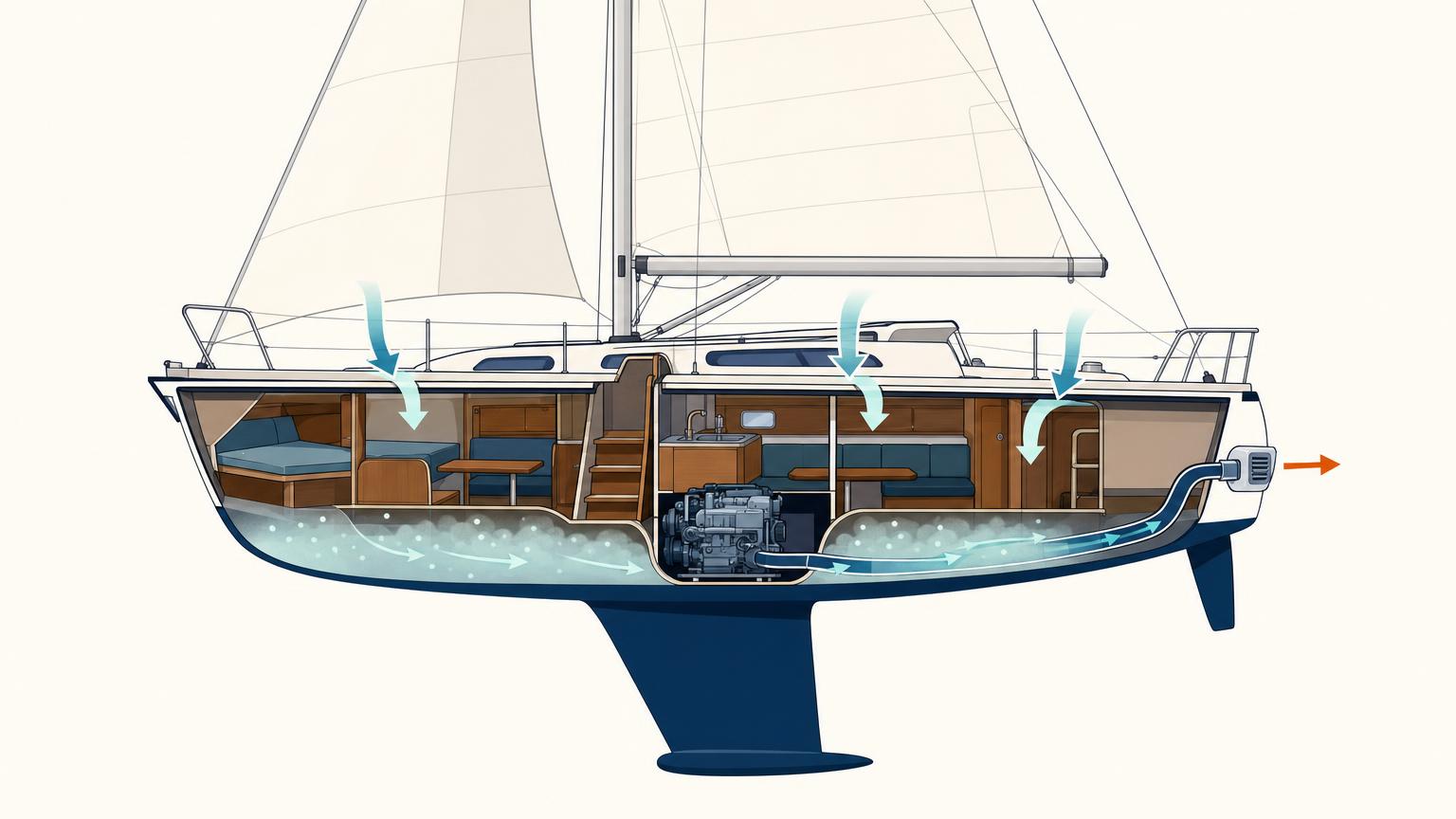
That vapor is heavier than air. Instead of drifting upward, it settles into low, enclosed spaces such as the engine compartment and bilge (the lowest space inside the hull).
A boat’s enclosed hull acts a little like a bucket. Vapor that might disperse outdoors can remain trapped below decks, where a spark can ignite it.
Ventilation breaks up that trapped mixture. Openings and, where fitted, an exhaust blower move vapor out and bring fresh air in. This lowers the vapor concentration before you operate the starter or another possible ignition source.
The ventilate-then-start routine
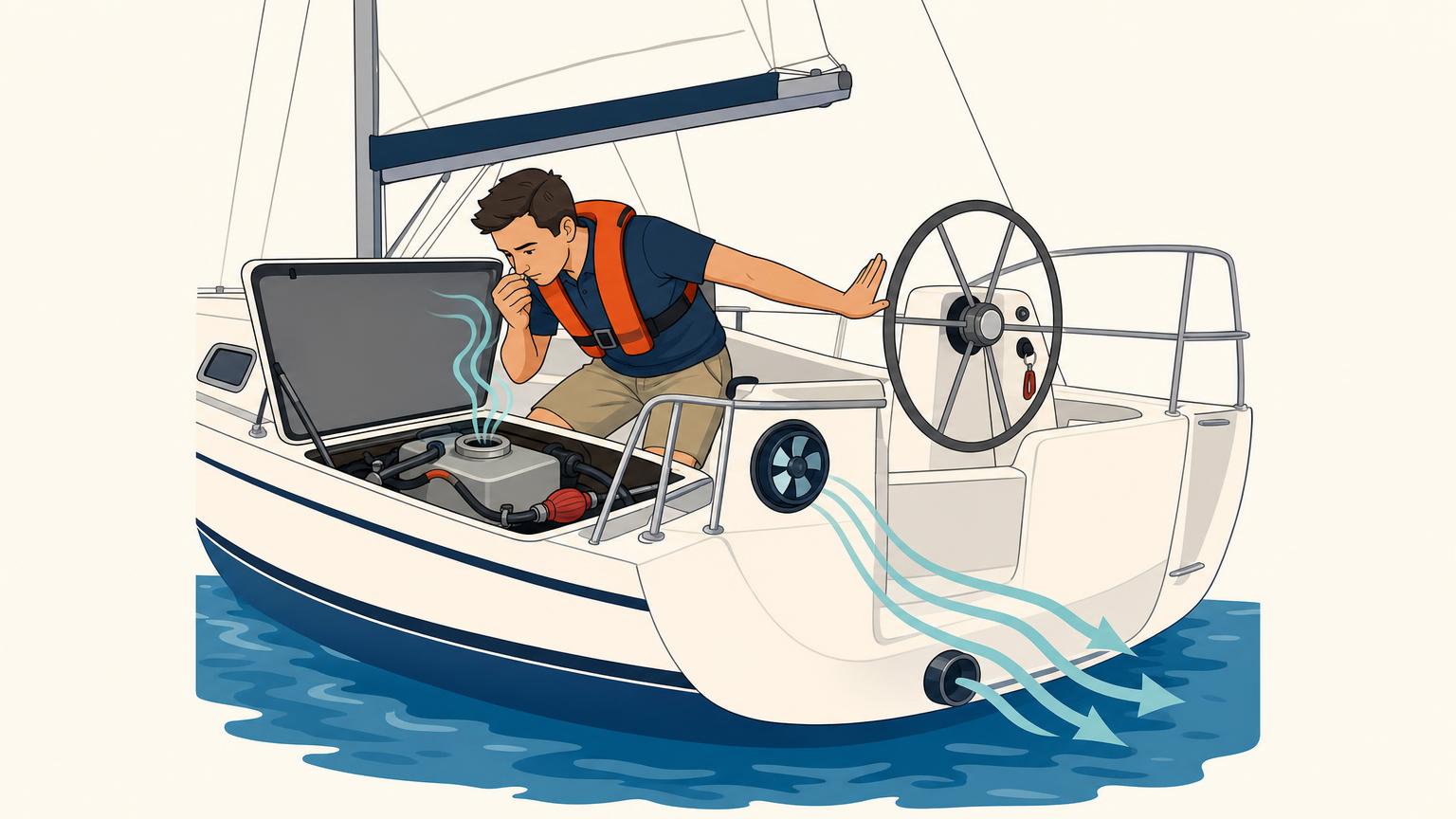
Before you touch the ignition, smell the bilge and engine compartment for gasoline vapor.
If the boat has a blower (an electric fan that pulls fumes out), follow the timing and pre-start sequence on its label and in the boat manual. [United States] A four-minute blower instruction is required on the warning label for some gasoline-engine compartments; some Canadian and manufacturer procedures use the same timing. Some gasoline-engine compartments are open to the atmosphere or use natural ventilation instead, so blower fitment and procedure are not universal.
Check again before starting. If you smell gasoline, leave the ignition alone. Open the boat to fresh air, keep ventilating, and investigate the source.
A safe fueling routine, in order
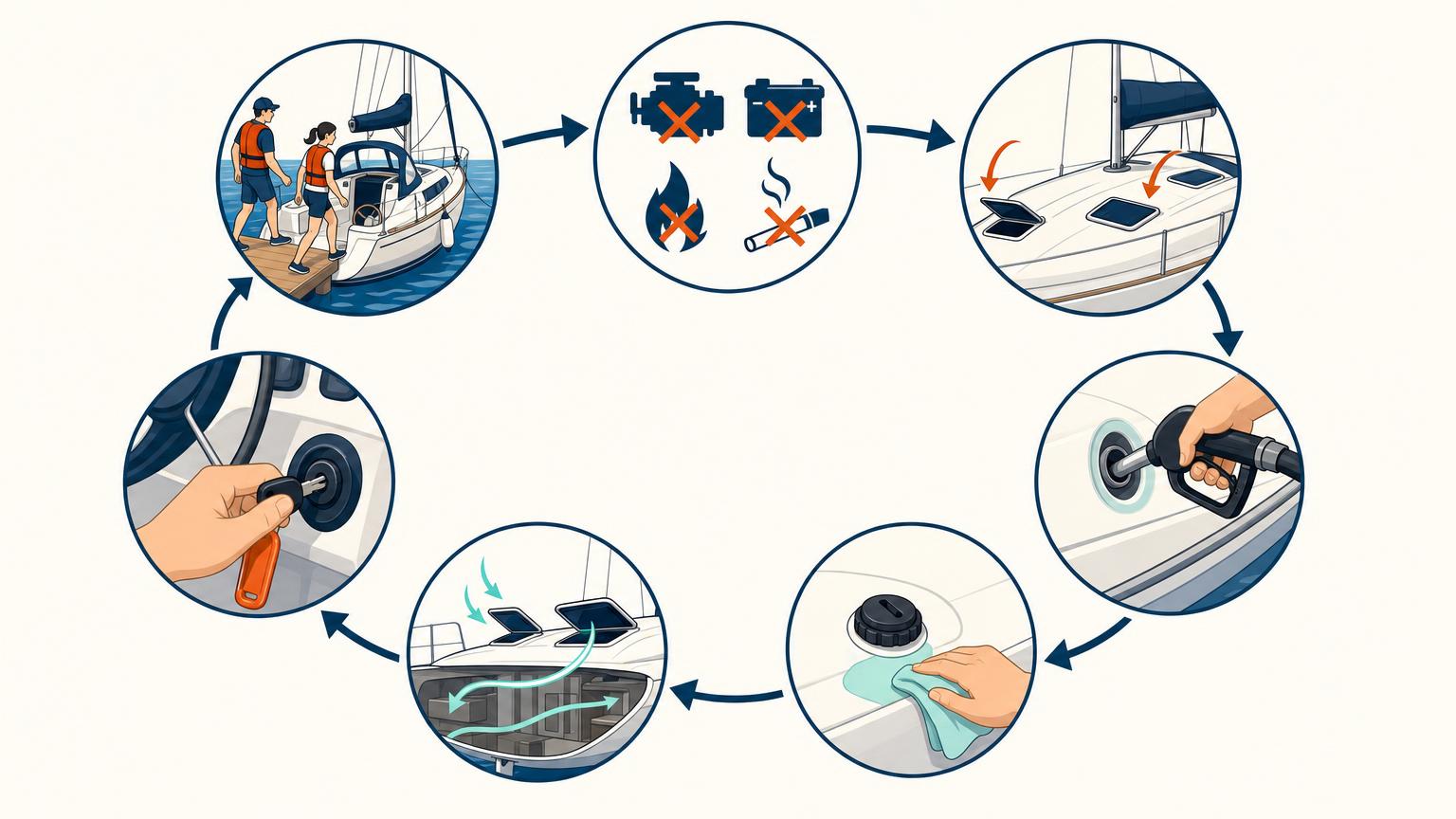
First, ask passengers to step ashore if practical. Stop the engine. Turn off electrical equipment, extinguish smoking materials and open flames, and close hatches, windows, doors, and other openings so gasoline vapor cannot enter the hull.
Place the nozzle in the filler before fuel starts flowing. Keep it touching the filler neck, fill deliberately rather than quickly, and watch closely to prevent overflow.
When fueling is complete, secure the cap and clean up any spilled fuel.
Now reopen the doors, windows, and hatches. Let fresh air move through the boat, and run the blower according to your boat’s instructions if one is fitted. Check low spaces and sniff throughout the boat for gasoline. Start the engine only when no gasoline vapor remains. If you still smell fuel, keep ventilating and find the source before using switches or the ignition.
Carbon monoxide is a different invisible hazard
Carbon monoxide, or CO, is colorless and odorless. It forms whenever fuel containing carbon burns. Aboard, sources include engines, generators, cooking ranges, and fuel-burning heaters. If you can smell exhaust, CO is present even though you cannot smell the CO itself.
CO can accumulate inside poorly ventilated enclosures, near blocked exhaust outlets, and around cabins and cockpits.
CO may also build up while an engine idles or runs slowly. Exhaust from your boat (or a nearby boat) can enter beneath covers or through a blocked outlet.
CO enters your blood and blocks the oxygen your body needs. Early effects such as headache, nausea, weakness, and dizziness can look like seasickness.
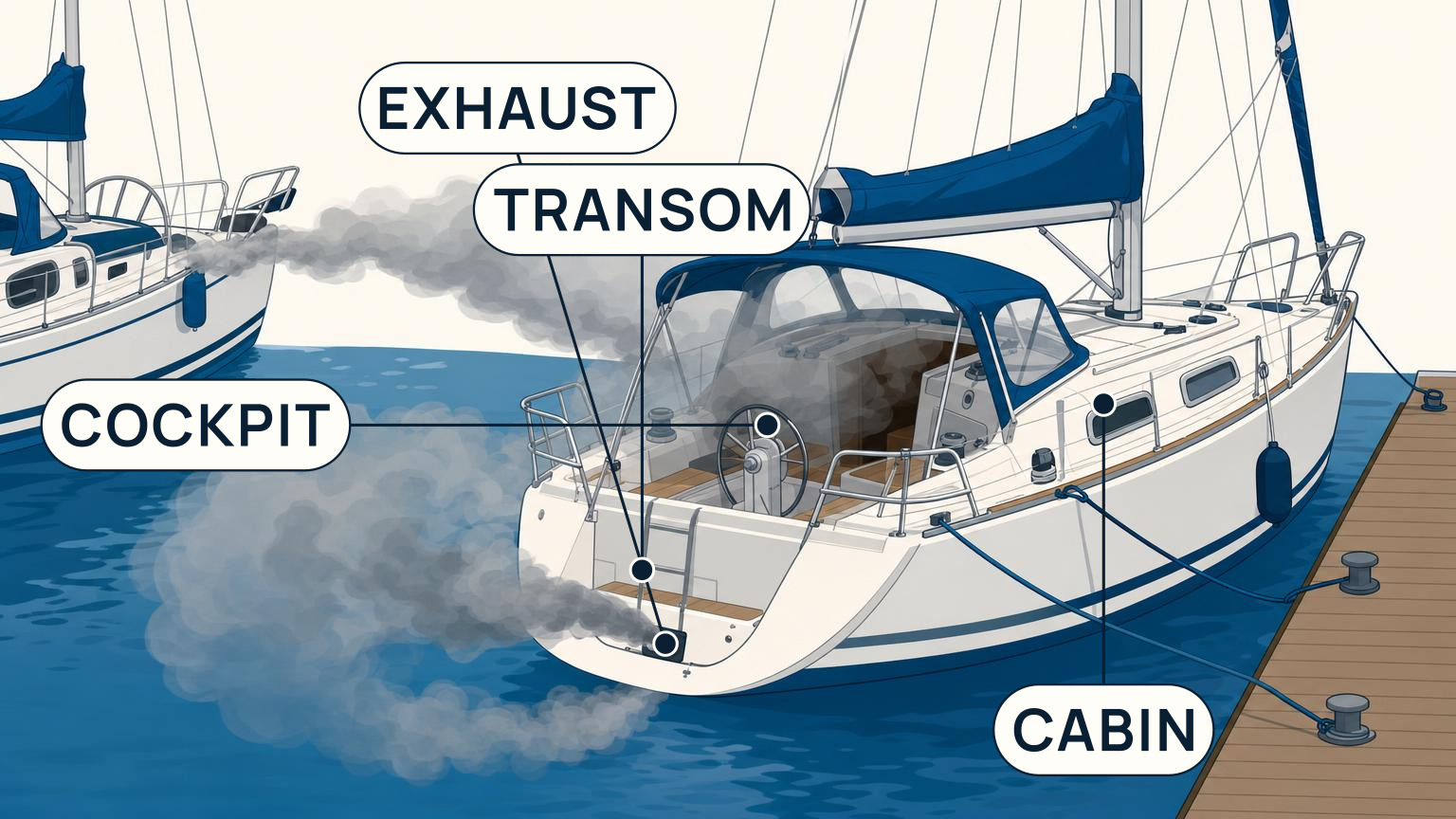
Recognize carbon monoxide symptoms and respond
Keep gasoline vapor and carbon monoxide separate
These hazards need different mental pictures. Gasoline releases flammable vapor before combustion. The vapor is heavier than air and can settle in bilges, lockers, cabin floors, and still engine spaces. Ventilation before starting aims to remove that trapped fuel vapor before an electrical or mechanical spark can ignite it.
Carbon monoxide appears when a carbon-based fuel burns. It is colorless, odorless, and tasteless, and it behaves much like air rather than collecting only at the lowest point. Engines, generators, cooking appliances, heaters, and neighboring exhaust can all contribute. If you smell exhaust, carbon monoxide is present, but the absence of smell cannot prove that the air is safe.
That difference explains why one quick check cannot cover both hazards. A careful smell check can warn of gasoline vapor at concentrations well below its flammable range, but a person cannot smell carbon monoxide itself. Prevent CO exposure through fresh-air circulation, maintained engines and exhaust systems, unblocked outlets, suitable detection equipment where specified, and attention to where exhaust is travelling.
Watch the operating situation
CO can collect in a cabin, cockpit, aft deck, or even an apparently open area when a boat idles or travels slowly. Exhaust may curl forward over a broad transom, a pattern often called back drafting or the station-wagon effect. Canvas can trap it. A blocked outlet can redirect it. Boats moored close together can draw a neighbor's exhaust aboard, and dangerous gas can remain after an engine stops.
Include those situations in the crew brief. Keep people away from exhaust outlets and swim platforms near running engines. Check that coverings do not seal the cockpit around an operating engine or heater. At a dock or raft-up, look at the exhaust from every nearby fuel-burning device, including neighboring boats. The crew safety briefing guide gives a practical structure for assigning these checks.
Respond without creating another casualty
Headache, dizziness, weakness, nausea, vomiting, chest pain, confusion, irritated eyes, or fainting can be mistaken for seasickness, heat, alcohol, or fatigue. Suspect CO when several people develop symptoms, symptoms begin around fuel-burning equipment, or a person improves in fresh air.
Move affected people into fresh air immediately and contact medical help. Shut down possible sources when it is safe to do so, ventilate, and observe the person. Give oxygen if it is available and you are trained to use it. Begin rescue breathing or CPR if needed and within your training. A rescuer must avoid entering a suspected high-CO space without protection, because an unprotected rescue can produce a second victim.
After any suspected exposure, do not simply restart and see whether symptoms return. Find and correct the exhaust, ventilation, appliance, or operating problem. Record what was running, the boat's speed and heading, coverings in use, nearby engines, symptoms, and response. Have the relevant system inspected before relying on it again.
For the fueling side, keep the order fixed: remove ignition sources, control people and openings, fuel carefully, deal with spills, ventilate, inspect and smell the low spaces, then start only when no gasoline vapor remains. Follow the boat and equipment instructions for blower operation. The engine maintenance checklist covers a diesel auxiliary's routine checks, while this fueling routine applies specifically to the flammable-vapor risk created by gasoline.
Headache, dizziness, nausea, weakness, and irritated eyes can look like seasickness or intoxication. Treat the pattern seriously. If you can smell exhaust, carbon monoxide is present.
At the first suspicion, move everyone into fresh air. Shut down the engine or other possible source when safe, seek medical help, and be ready to give cardiopulmonary resuscitation (CPR).

You now know why you ventilate before starting the engine: fueling can leave gasoline vapor in low spaces, and fresh air clears it before a spark can ignite it. The routine follows a clear order: fuel with ignition sources off, clean up spills, open the boat, ventilate, check for gasoline odor, then start only when the vapor is gone. You can also separate that hazard from carbon monoxide (CO), an invisible, odorless gas produced whenever a carbon-based fuel burns. If someone develops a headache, nausea, weakness, or dizziness, get the person into fresh air and seek medical help if you suspect carbon monoxide. Build on this routine with SailStarter’s short beginner lessons on engine safety and fueling.
Try it from the lesson
Can you spot the next move?
You're about to top off the tank at the fuel dock. What's the first thing to shut off?
Why you can trust this guide
. We build each guide from public seamanship and safety sources, then teach the universal principle before any local difference.