Chart your course
Sailboat Fire Emergency
Quick answer
The short version
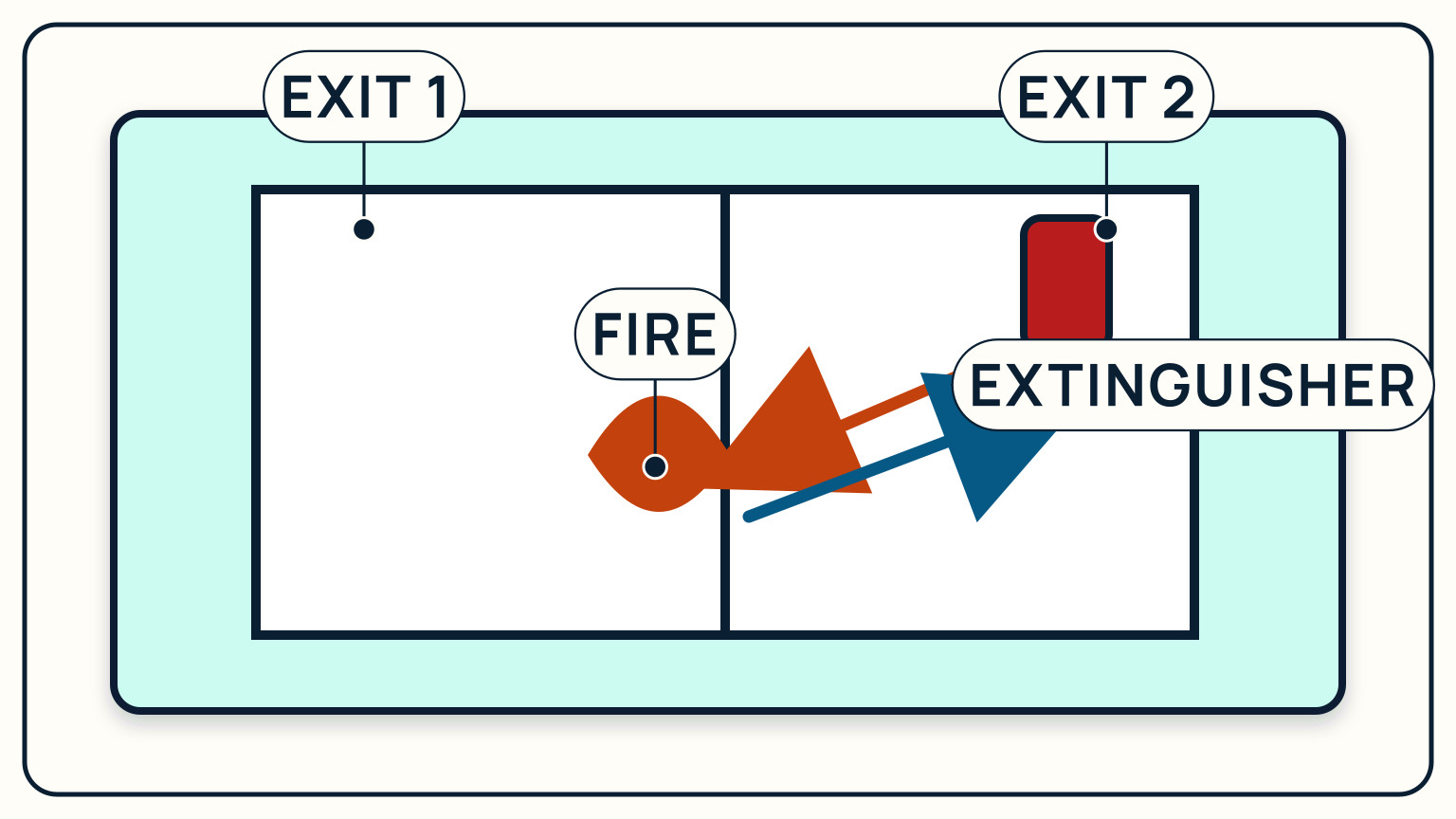
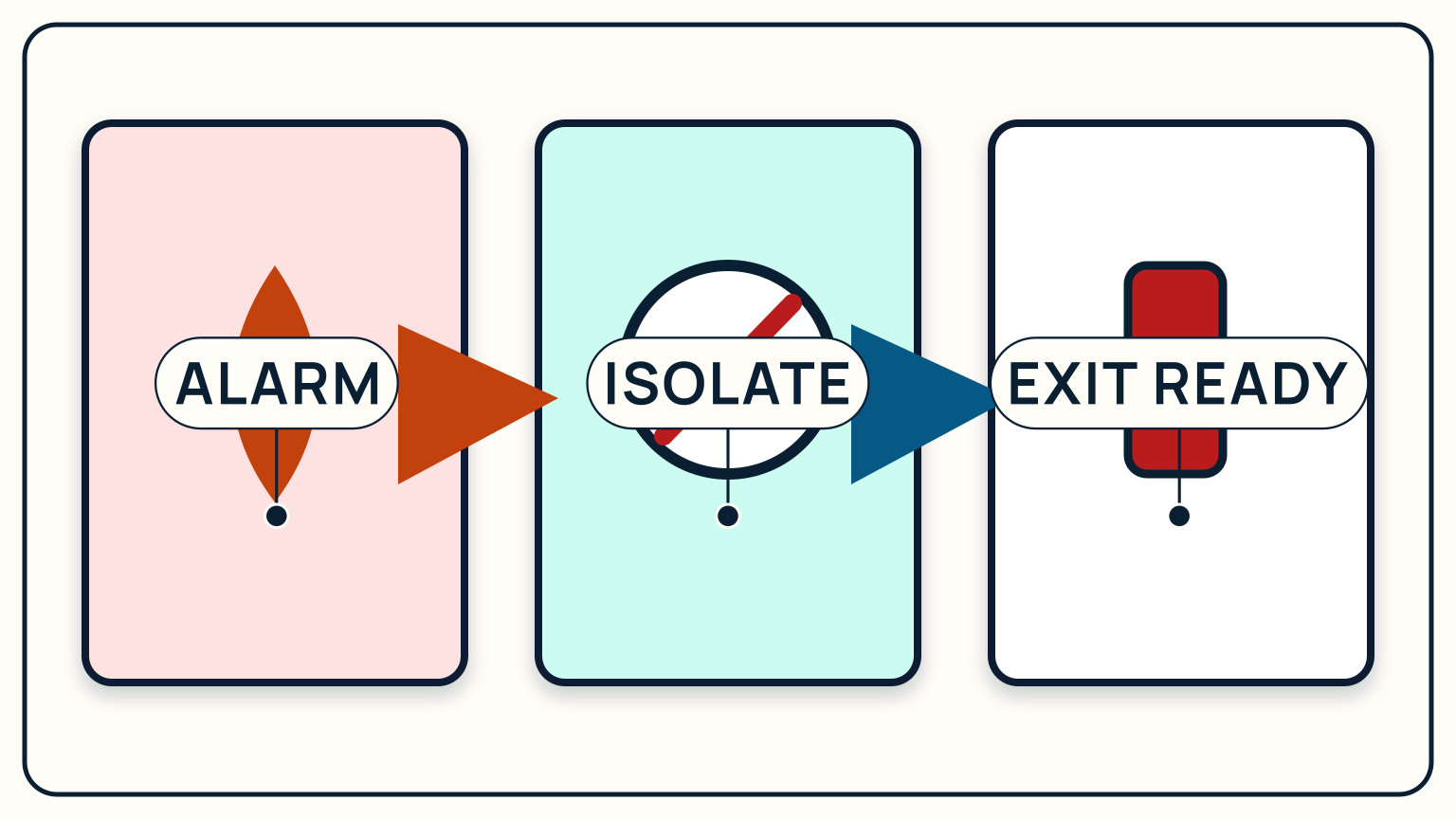
Fire aboard a small boat is mostly a problem of geometry and seconds. The cabin is cramped, there are usually two ways out of it, and the fire sits somewhere between you and one of them. Your first decision is about position rather than equipment. Move so an exit stays behind you, send everyone else on deck into lifejackets, shut off the gas or fuel supply if you can reach it safely, and only then aim at the base of the flames. Where the fire already sits between you and the only way out, leave, close the hatch behind you, and make a Mayday call from the cockpit.
Most sailors buy extinguishers, bolt them somewhere convenient, and never look at them again. The gauge stays green for years, which feels reassuring, and the whole subject drops out of mind until smoke appears.
Two things make a real difference on the day, and neither involves buying more equipment. The first is knowing where each unit is mounted relative to the exits, because that decides whether you can use it at all. The second is knowing which fuel is burning, because powder, foam, gas and a blanket behave very differently depending on what is alight.
Keep an exit behind you before you fight anything
Look at the cabin plan of almost any small cruising boat and you find the same shape: a companionway aft, a forward hatch, and the galley and engine somewhere between them. That layout is why equipment placement is a safety decision rather than a tidiness decision.
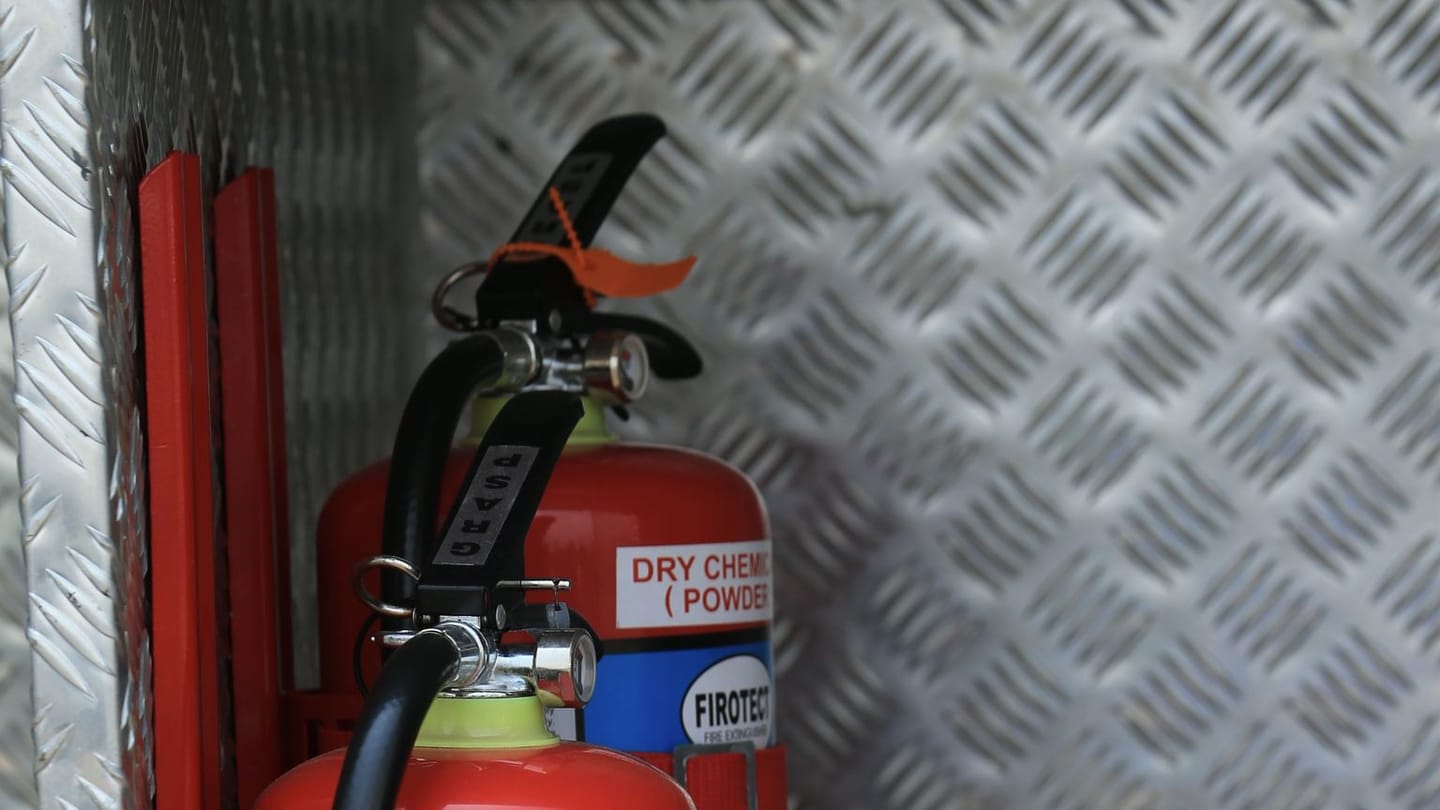
Established guidance is to position extinguishers at the exits from each area of the accommodation, by the door of each cabin and by the companionway. Mounted that way, you pick one up on your way towards a fire while your escape route stays open behind you. Mounted on the bulkhead beyond the stove, the same extinguisher asks you to walk past the fire to reach the thing that fights it.
Offshore racing rules ask for two extinguishers in different parts of the boat and a fire blanket beside every cooking device. Spreading them out serves the same purpose: whichever compartment the fire starts in, there should be a unit you can reach without crossing it.
Mount each one securely, somewhere visible and reachable, but clear of normal movement so nobody unclips it because it keeps catching a hip. Then check the galley unit specifically. If reaching it means stretching an arm over the stove, it is in the wrong place, because a pan fire is exactly the situation where you cannot do that.
What the letters and numbers on the body mean
An extinguisher body carries two kinds of information: what the unit is for, and whether it still works.
Fires are classified internationally by what is burning. The current international standard defines class A for solid combustible materials, class B for flammable liquids, class C for flammable gases, class D for combustible metals, class F for cooking oils and fats, and a recently added class L for lithium-ion battery fires. In the rating printed on the body, the letter tells you the group and the number tells you the size of fire the unit can tackle, with a higher number meaning more capability. Labelling conventions and the letters themselves are not identical in every market, so read the pictograms and wording on the unit in front of you rather than trusting a letter you half remember, and check what your local rules require you to carry.
Agent choice has consequences you live with afterwards. Dry chemical powder coats the burning material and starves the flame of oxygen. It is effective and inexpensive, and it is also messy and corrosive to electronics, so a discharge near the chart table has a long tail. Clean-agent units displace oxygen without damaging engines or electronics, at a higher price and in a bigger bottle.
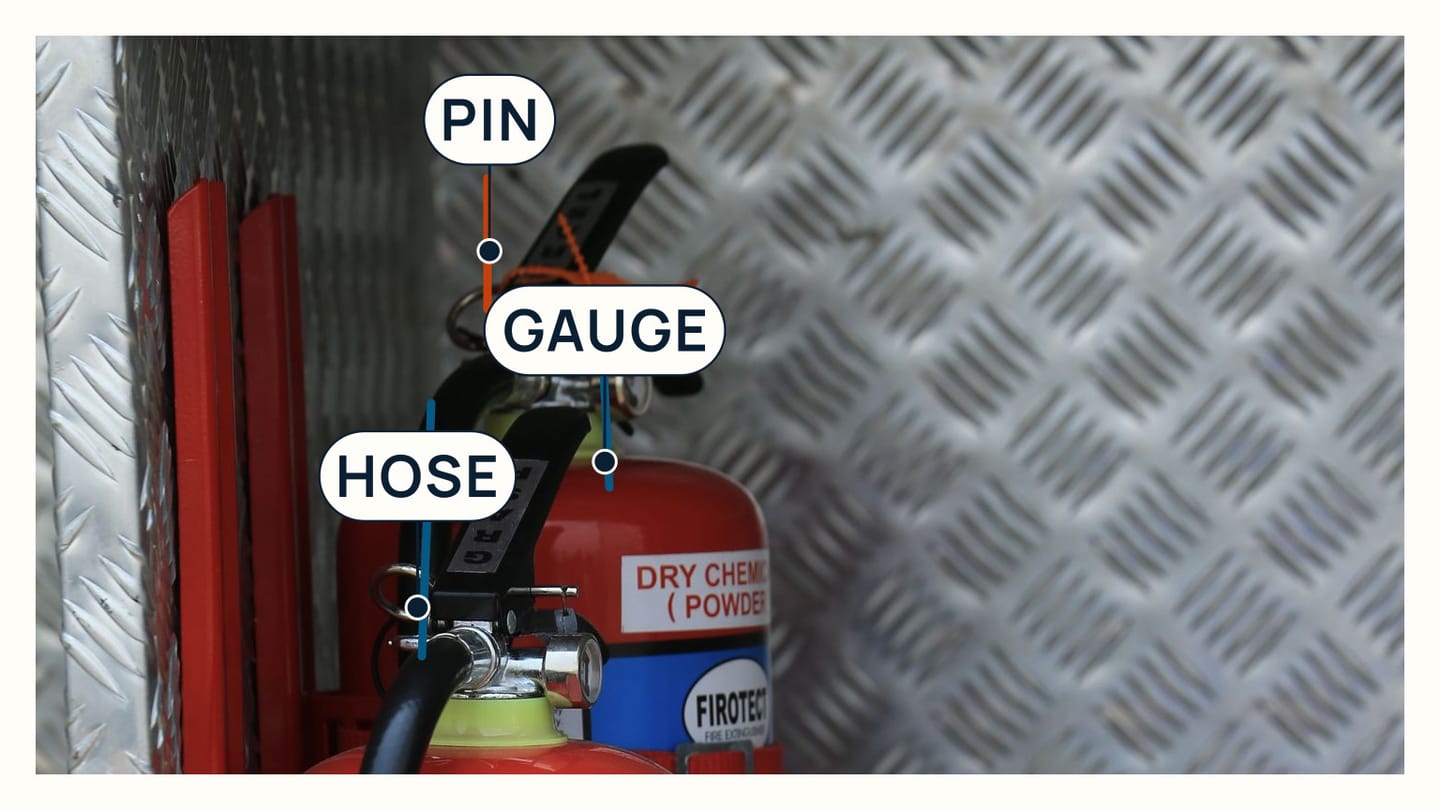
Whether the unit still works is simpler. The gauge needle should sit in the operable band, the lock pin should be firmly in place, and the nozzle should be clean and undamaged.
Galley, gas and engine fires need different moves
Three fires account for most incidents on a sailing boat, and each has a different first move.
A pan of hot oil is a cooking-oil fire, and the most effective tool for a small one is usually a fire blanket. A blanket smothers it without blasting burning oil around the galley, which is what a powder jet can do. Turn the gas off at the appliance if the tap is reachable, lay the blanket over the pan, and leave it in place.
Gas itself behaves in a way people find counter-intuitive. Liquefied petroleum gas is heavier than air, so a leak sinks. It gathers in the lowest part of the boat, usually the bilges, and it does not disperse on its own the way it would in a house. If you smell gas, shut it off at every shut-off point, extinguish any naked flame, and ventilate the boat including the bilges until all trace has gone. A gas alarm mounted low, and tested regularly, is one of the cheapest useful items you can add.
An engine space fire inverts the usual instinct. Opening the hatch to see what is happening feeds the fire a rush of air and can make it dramatically worse. Some boats have a fire port, a small covered hole that lets you discharge an extinguisher into the compartment while it stays shut. If yours has one, find it today and make sure the crew knows what it is.
Practise the discharge, not the emergency
An extinguisher is a tool you will use once, badly, under stress, unless you have handled one before.
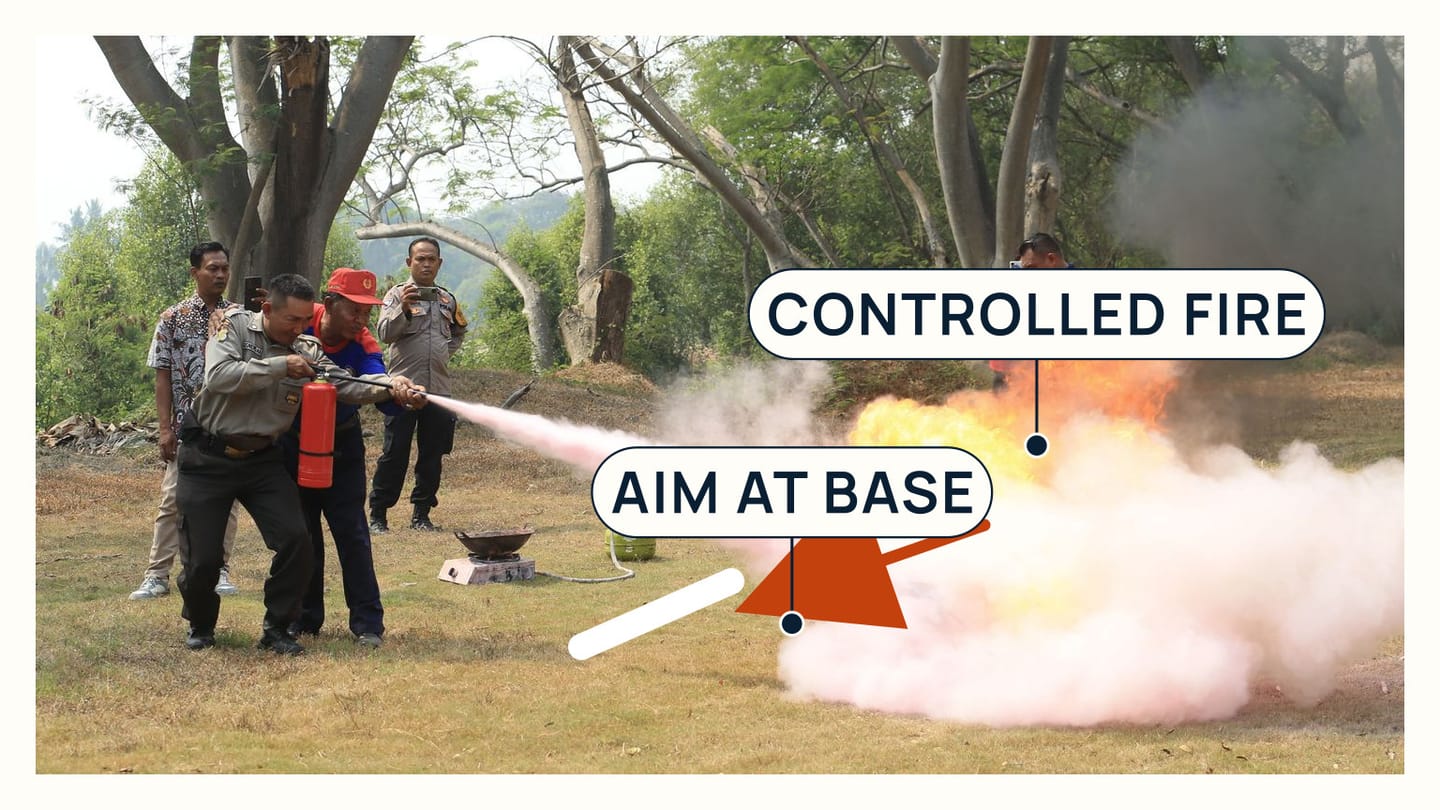
The discharge sequence is four movements. Pull the pin. Aim the nozzle at the base of the fire rather than at the flames, because the flames are the effect and the fuel is the cause. Squeeze the handle. Sweep side to side across the base until it is out. A portable unit empties far faster than most people expect, which is a useful thing to discover somewhere other than a burning cabin.
Many fire services and boating organisations run practical sessions where you discharge a real extinguisher onto a controlled fire. If one runs near you, take it, and take whoever sails with you. The feel of a stiff pin and the push of the discharge are the parts reading cannot supply.
Between sessions, run the dry version aboard. Stand at the companionway, name out loud where each extinguisher is mounted, walk to the nearest one without looking for it, and describe your escape route from the position you would fight the fire. If that walk crosses the imagined fire, you have found a placement problem worth fixing before your next trip.
A monthly check and a diagram everyone has seen
Safety equipment fails quietly. Nothing announces that a gauge has crept out of the green band or that a bracket has corroded through behind a cushion.
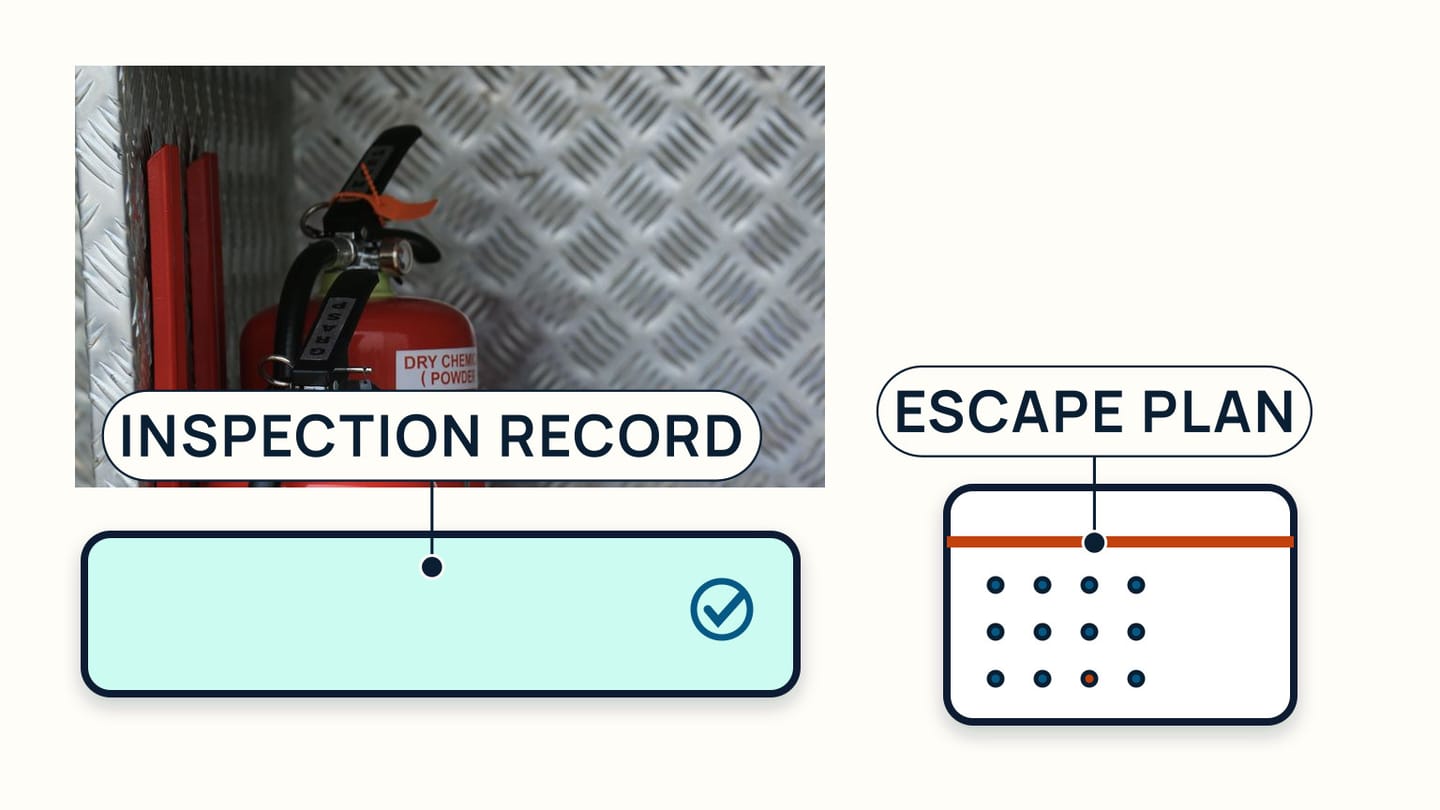
A monthly walk round takes about five minutes. For each unit: gauge needle in the operable range, lock pin firmly in place, nozzle clean and unobstructed, no corrosion or physical damage to the body, and the bracket still solid. Look at the mounting as carefully as the bottle, because a unit that shakes off its bracket in a seaway ends up under a bunk. Beyond your own checks, extinguishers need periodic servicing by an approved agent at the intervals the manufacturer and your local rules set.
The other half of keeping a plan current is making sure other people know it. Offshore racing rules ask for a laminated safety equipment diagram on display in the main cabin, marked with where every principal item is stowed. Copy the idea. One card by the companionway showing extinguishers, fire blanket, gas shut-offs, fuel shut-off and both exits will brief a new crew member in thirty seconds.
Add the housekeeping that stops fires starting. Clean grease out of the galley and its vents, keep the engine space ventilated so vapour cannot build up, and stow flammable stores where air moves rather than sealed in a warm locker.
Fire is the emergency where the preparation and the event look nothing alike, and the preparation costs almost nothing. Walk the boat this week. Check the gauges, find the gas shut-offs, look at where each extinguisher sits relative to the nearest hatch, and move anything that would make you walk towards a fire to reach the thing that fights it.
The SailStarter lessons cover crew briefings, calling for help, and calm decision making, built as short picture-led steps you can fit around a weekend. Knowing the equipment is half of it. Knowing what you and your crew will do is the other half.
Try it from the lesson
Can you spot the next move?
You're about to top off the tank at the fuel dock. What's the first thing to shut off?
Why you can trust this guide
. We build each guide from public seamanship and safety sources, then teach the universal principle before any local difference.