Chart your course
Sailboat First Aid Kit Checklist
Quick answer
The short version
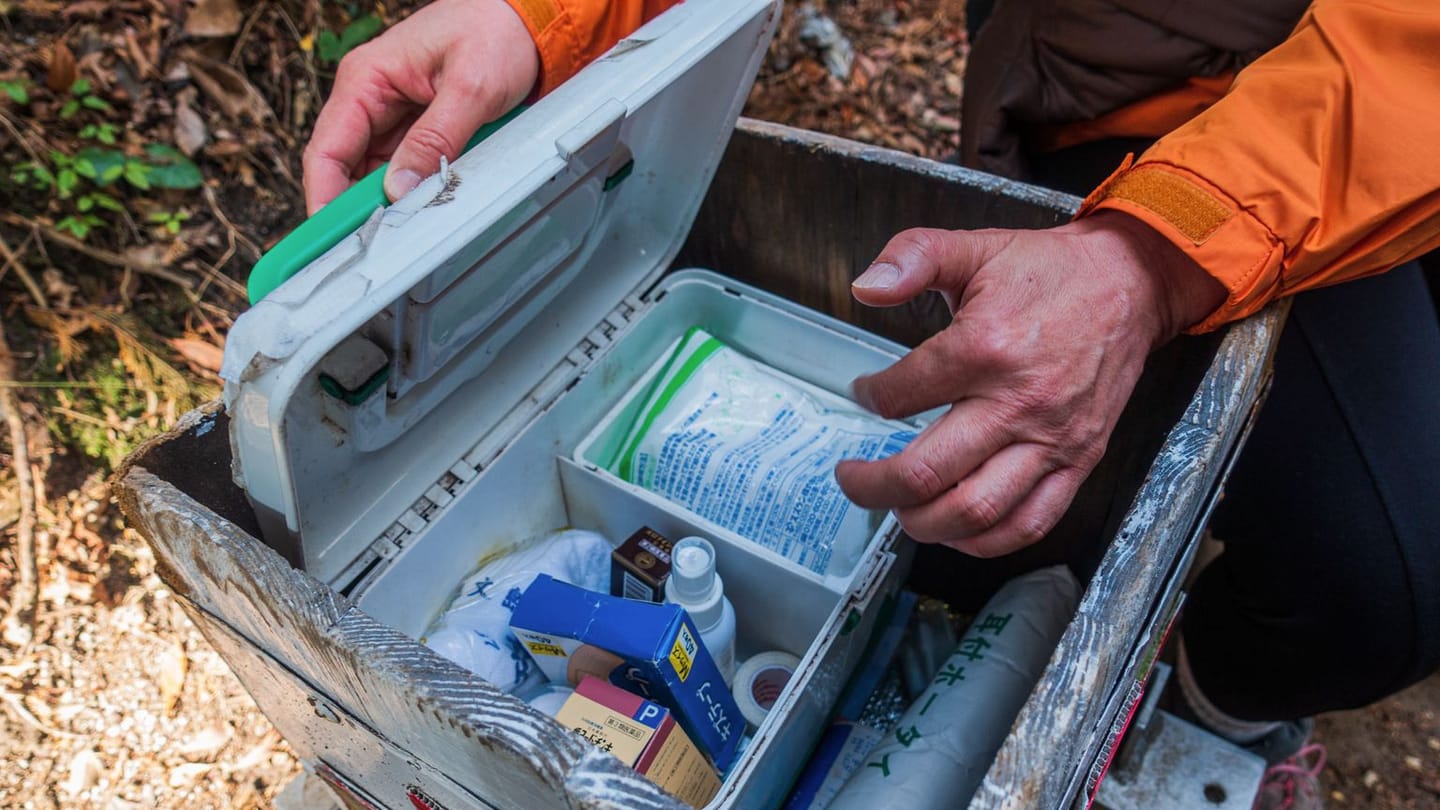
A medical kit aboard a boat is a bridge. Its job is to keep somebody stable for however long it takes to reach professional care, so the number that shapes it is that span of time. Offshore racing regulations put it plainly: the contents and storage of the kit should reflect the likely conditions and duration of the passage and the number of crew. An afternoon in a sheltered bay within sight of a lifeboat station calls for something different from a two-day coastal hop. Pack for the injuries that actually happen aboard, keep the kit dry and inventoried, make sure two people know how to use it, and learn how to get medical advice by radio.
Search for boat medical supplies and you get shopping lists. Two hundred items, sealed in a red bag, ticked off against a table. Buying one of those is a reasonable start and a poor finish, because the list says nothing about which items you could actually use, or for how long you would be using them.
The more useful way in is to work backwards from your own sailing. How far are you from help, how many people are aboard, how would you call for advice, and what could realistically go wrong on your boat? Answer those four and the contents largely choose themselves.
Start with how long help will take
Everything about a medical kit changes with distance from help.
Close inshore, on a busy stretch of water with rescue cover, the kit is bridging minutes to perhaps an hour. Controlling serious bleeding, keeping an airway clear, keeping somebody warm, and a working radio cover most of what you can usefully change in that window. Further out, or on a long coastal passage with few harbours, the same injury has to be managed for hours. Now you need enough dressings to change them more than once, something for pain, a way to support an injured limb, and a plan for keeping a casualty warm and hydrated while you motor.
The offshore racing regulations encode this by recommending different kit contents for different race categories, from races close to shore in relatively protected water, through extended-duration coastal races, up to trans-oceanic races where a boat must manage a serious emergency with no expectation of immediate rescue. Racing is not the point. Decide honestly which of those descriptions matches your typical day, then buy for that with a modest margin.
The practical test is a question. If somebody opened a deep cut on their forearm two hours after you left the marina, in the conditions you normally sail, what would you do, with what, and for how long? Any part of that answer you cannot give is the gap to close first.
What actually happens on boats
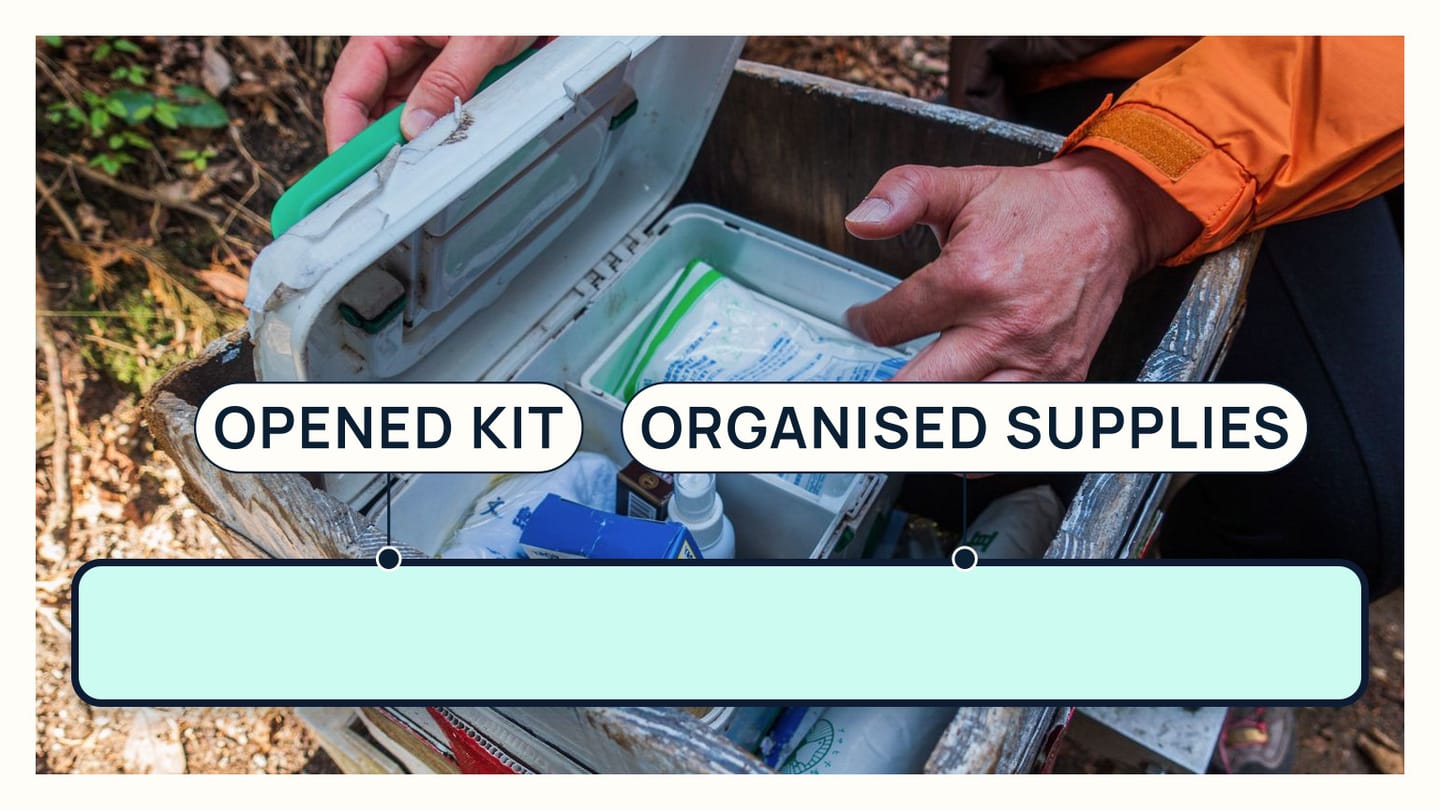
Boats produce a fairly predictable set of injuries, and a kit built around them beats a kit built around a catalogue.
The offshore first aid syllabus published by the international sailing federation lists typical onboard accidents as wounds, cuts and sprains, alongside general illness and fatigue. Winches, cleats and a swinging boom cause most of it. On top of that it names a separate group of conditions specific to being at sea: seasickness, hypothermia in someone recovered from the water, dehydration, concussion, and keeping blood sugar up.
That gives the kit its shape. Plenty of wound care, because cuts and grazes are the common case and dressings run out faster than people plan for. Something substantial for serious bleeding, since that is the emergency where your first few minutes genuinely change the outcome. Support for a sprained wrist or ankle. Seasickness tablets taken early, because a vomiting crew member stops being a crew member. Insulation and dry clothing for anyone who has been in the water. Fluids and simple food for the long tail of a bad day.
The same syllabus teaches assessment as L-ABCDE: scene safety first, then airway with care for the neck, breathing, circulation and bleeding, disability, and finally exposing the casualty to examine them while protecting them from the environment. That last letter carries real weight on a wet deck in a breeze.
Four things that decide the contents
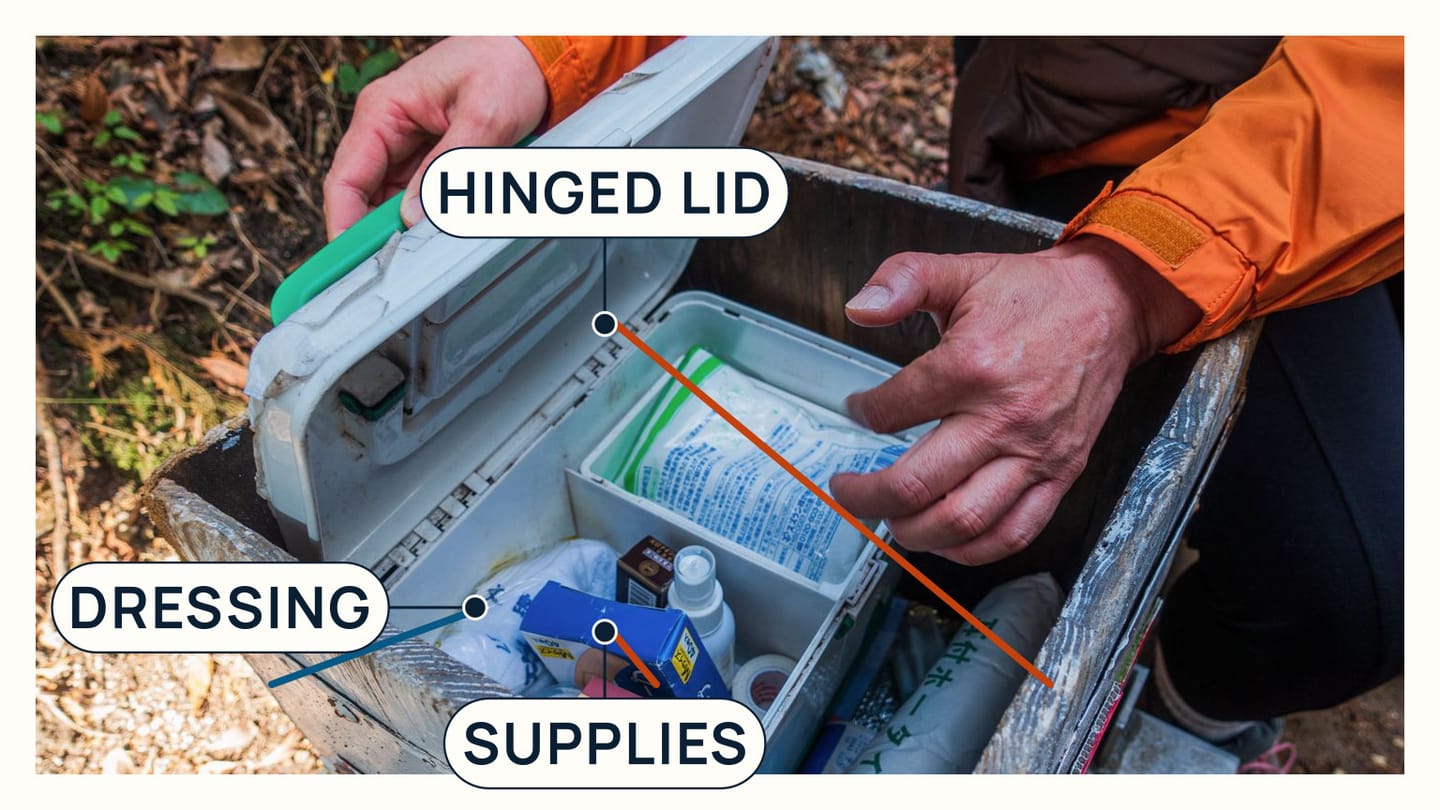
Four inputs settle what goes in the bag, and they interact.
Crew. The number of people aboard sets quantities, and who they are sets specifics. Someone with a nut allergy, asthma, angina or diabetes changes both the kit and the briefing. Ask before the first trip, and write the answers down.
Duration and conditions. This is the racing regulation's own wording: contents and storage should reflect the likely conditions and duration of the passage and the number of crew. Storage sits in that sentence deliberately. A kit that has been swimming in bilge water has stopped being a kit.
Communications. Your ability to get advice is part of your medical capability. The international convention covering seafarers' medical care requires that medical advice by radio or satellite be available to ships at sea around the clock through a prearranged system, and in practice you reach it by calling the coastguard, who connect you to a designated medical centre ashore. Knowing this exists, and that you may ask before things become critical, outweighs several items in the bag.
Evacuation. How would someone actually leave your boat? A helicopter lift, a transfer to a rescue vessel, and motoring to the nearest harbour are three different plans needing different preparation, and the offshore syllabus treats choosing between them, including when to abandon a passage and run for shelter, as a skill of its own.
Inventory it, and train two people
Two habits turn a bag of supplies into something usable.
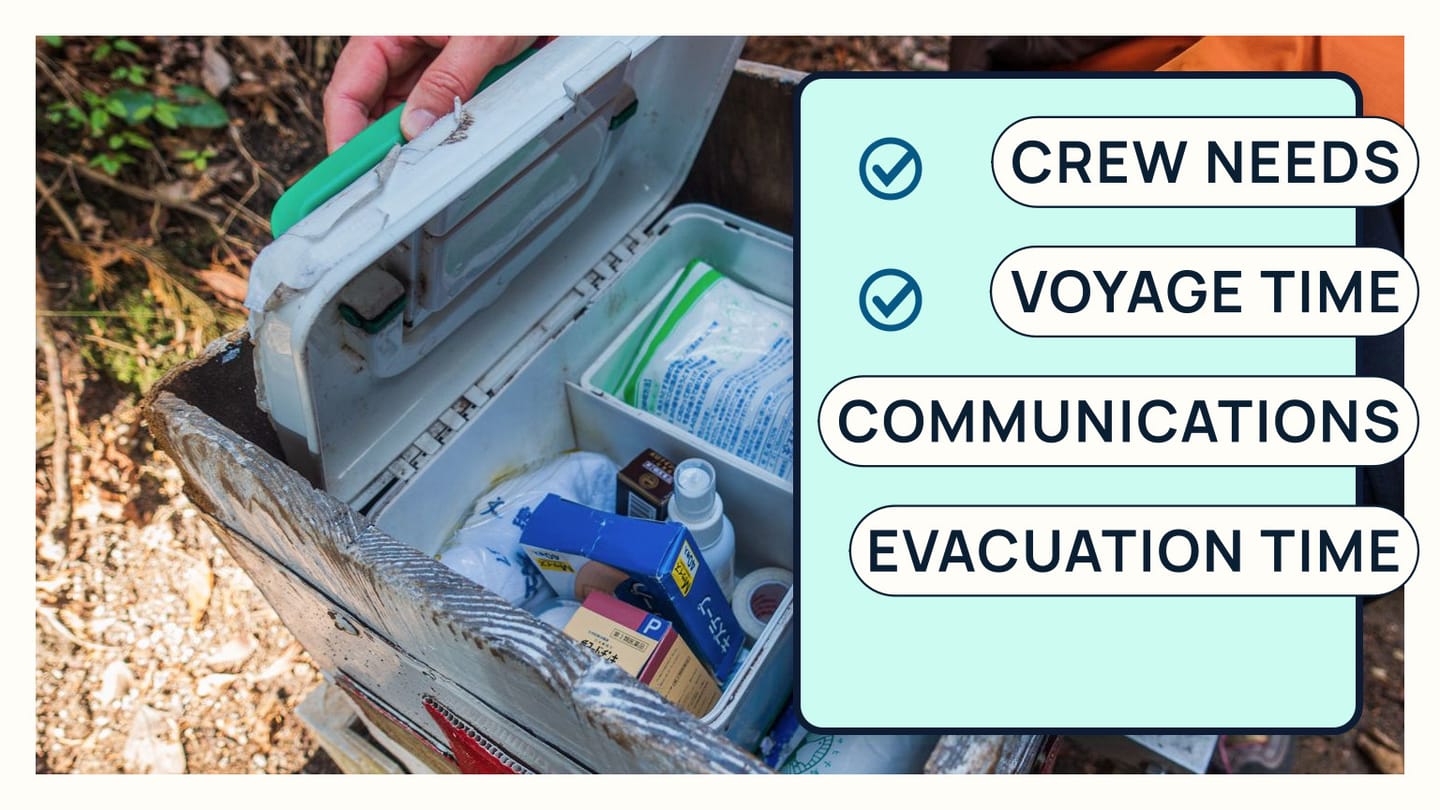
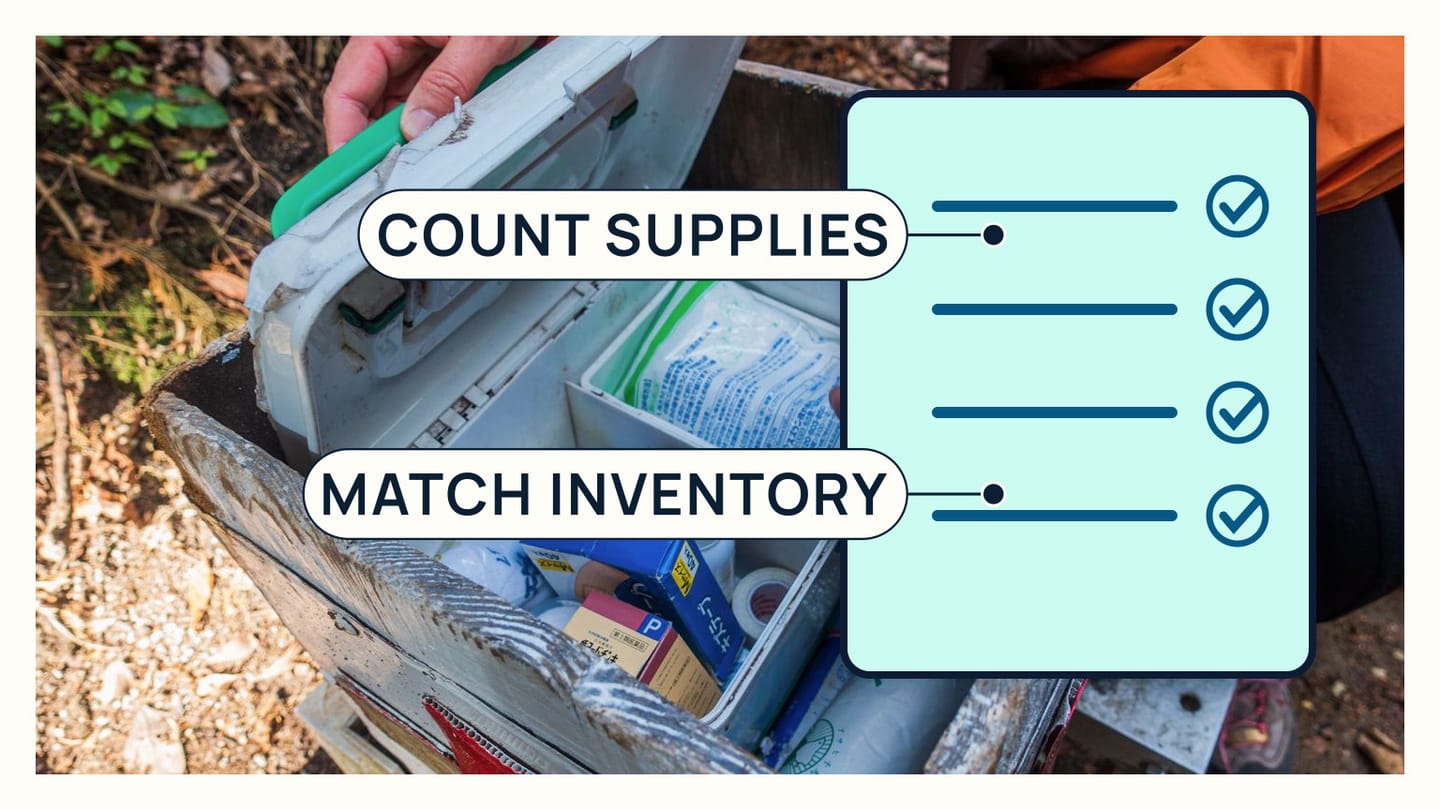
The first is an inventory. Write or print a list of the contents and tape it inside the lid. Then, twice a season, sit down with the list and the open kit and match them item by item. This is deliberately boring, and it is the only reliable way to notice that the large dressings went in June and were never replaced. It also teaches you the layout, which is the real prize, because under pressure you want to reach straight for something instead of searching for it.
The second is training, and the regulations are blunt about the number of people. Offshore racing rules require at least two crew members to be familiar with first aid procedures, hypothermia, drowning, cardio-pulmonary resuscitation, and the relevant communications systems. Two, because one of them might be the casualty.
A short hands-on first aid course is the highest-value item on this page. Look for one covering bleeding control and resuscitation. If a marine-specific course runs near you, better still, because it will deal with cold water, awkward spaces below decks, and using a radio to ask for advice. Supplies nobody can use are decoration.
Expiry dates and the crew medical brief
Medical supplies expire in an unhelpful way: they look perfectly fine.
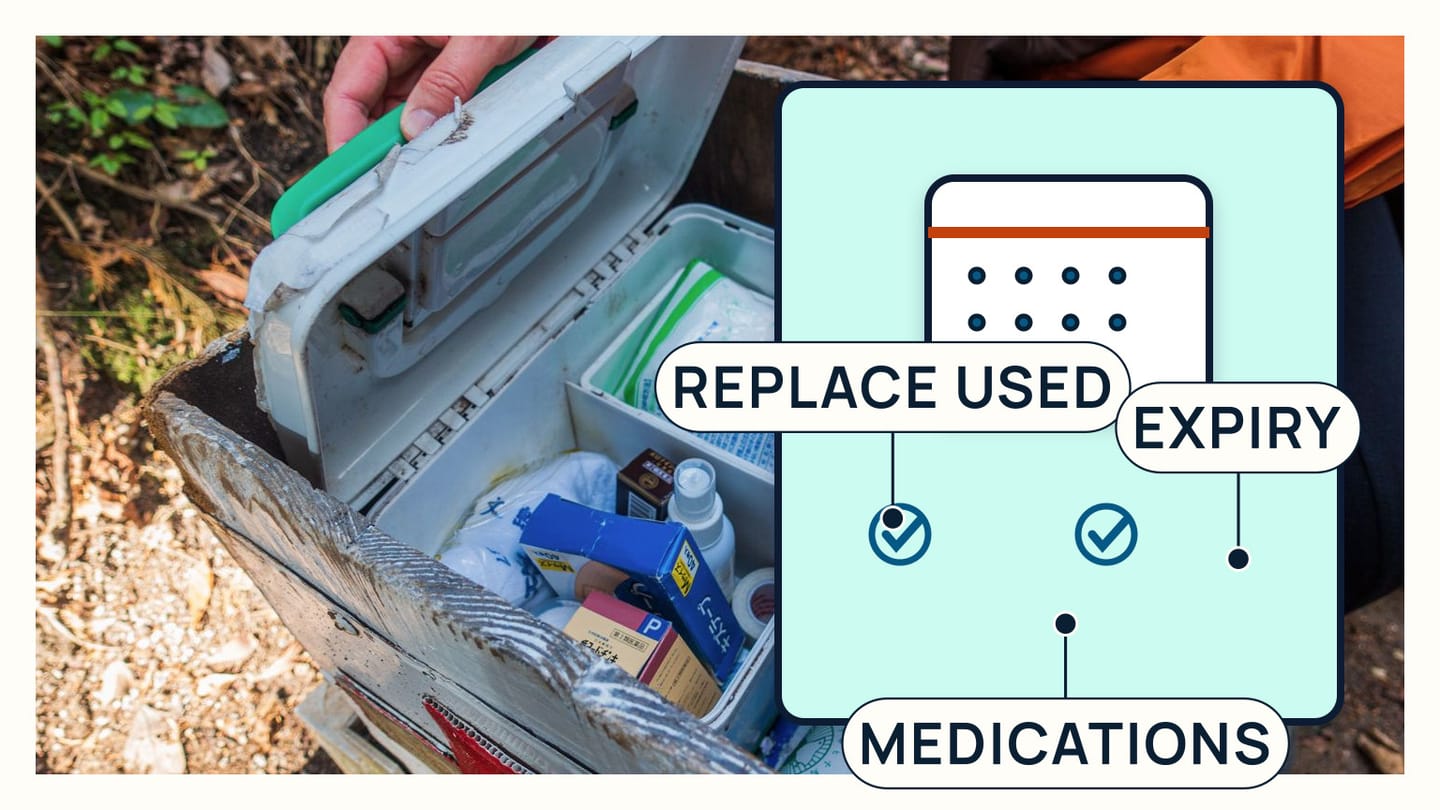
Give the kit a fixed date in the year, note it wherever you record engine servicing, and work through it checking dates on medicines, sterile dressings, and anything sealed. Replace what has passed and what was used in the same sitting. Offshore rules make the person in charge personally responsible for checking service dates on lifejackets rather than assuming somebody else did it, and that discipline transfers neatly to a medical kit.
Keep a short written log with the kit recording what was used, when, and what was reordered. Ten seconds after an incident saves an awkward discovery six months later.
Then the briefing. Before sailing with anyone new, cover four points: where the kit is stowed, where the radio is and how to send a distress call, any medical conditions, allergies or regular medication aboard, and which two people are the trained ones. Personal prescription medicines belong aboard in their own packaging, in a known place, with enough for the trip plus a delay.
Carry a first aid manual alongside the kit as well. Racing rules require one for good reason: under stress, an ordered set of instructions you can hand to somebody else works as a second pair of hands. Requirements for carrying medical stores differ by country and by whether a boat is used commercially, so check the current local rules that apply to yours.
None of this needs a large spend. Most boats already carry more supplies than the crew can confidently use, which means the fastest improvement is usually training rather than shopping.
Do three things this month. Empty the kit onto a bunk, write the inventory and tape it inside the lid, and book a course for two of you. Then have the conversation about allergies and medication before the next passage instead of during it.
SailStarter lessons cover the seamanship around all this, including how to plan a passage around where help actually is, one short illustrated step at a time.
Try it from the lesson
Can you spot the next move?
A hot crewmate is sweating heavily, looks pale and clammy, feels dizzy, and has leg cramps. What is happening, and what comes next?
Why you can trust this guide
. We build each guide from public seamanship and safety sources, then teach the universal principle before any local difference.