Chart your course
How to Prevent Seasickness While Sailing: What Actually Works
Quick answer
The short version
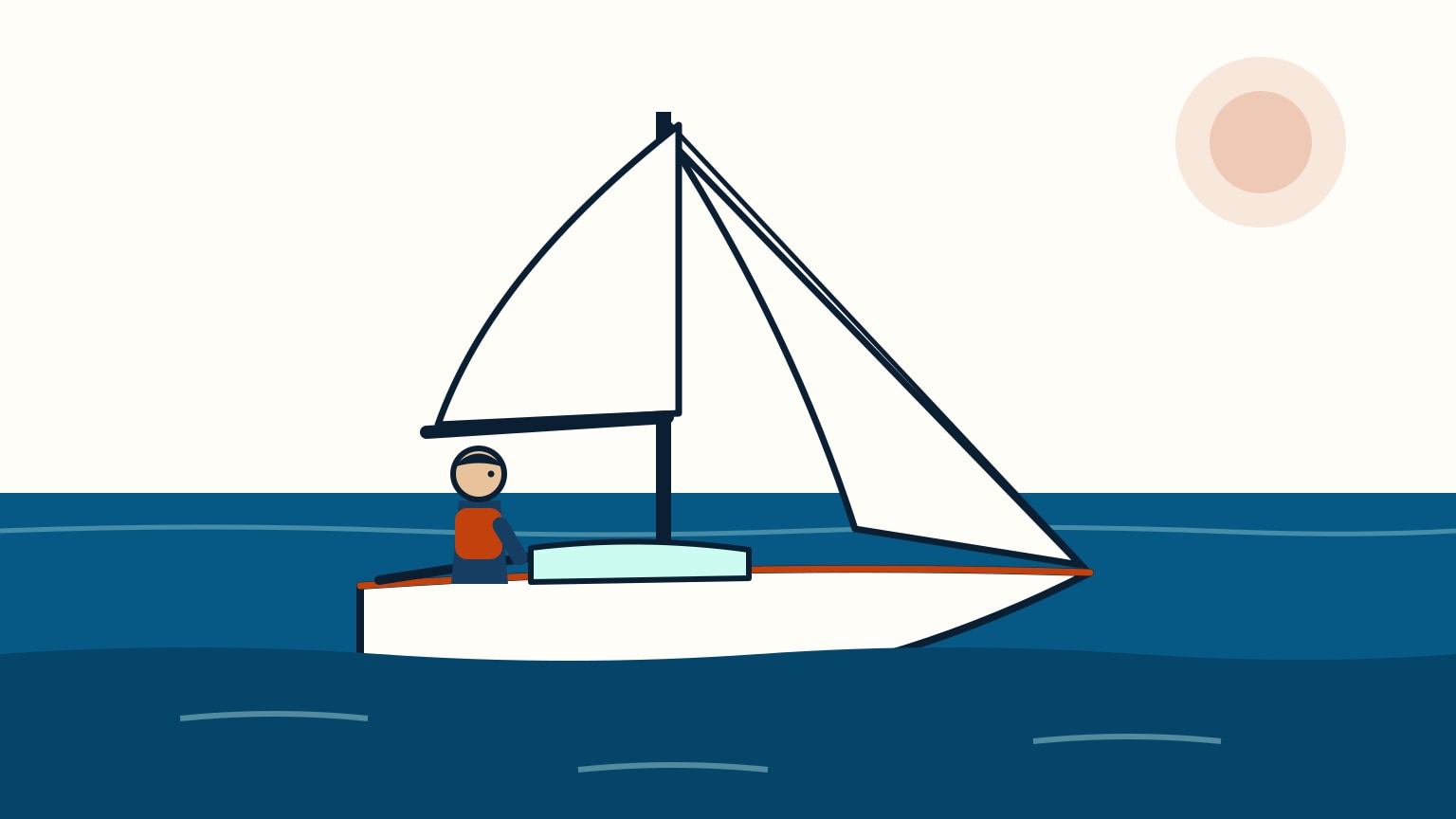
Seasickness is not weakness, and it is not random. It begins when your inner ear feels the boat move while your eyes report something that is not moving (a cabin wall, a phone, a book). Prevention is mostly habits set before you leave: sleep well, eat something light, skip alcohol, and if you know you are prone, take a remedy before you cast off, not after you feel ill. Once aboard, stay on deck in fresh air, sit near the middle of the boat, keep your eyes on the horizon, and take the helm if you can. Keep sipping water. Most people settle as the trip goes on.
Seasickness is unfair to beginners, because almost every instinct it triggers makes it worse. You feel queasy, so you go below to lie down. You want a distraction, so you look at your phone. You skip breakfast because food sounds horrible. Each of those choices widens the gap between what your inner ear feels and what your eyes see. That gap is what made you queasy in the first place.
The fixes are simple and mostly free. This article covers why motion sickness happens, what to set up before you leave the dock, what helps once you are underway, and when queasiness is really heat, dehydration, or something needing outside help.
Why your body gets seasick
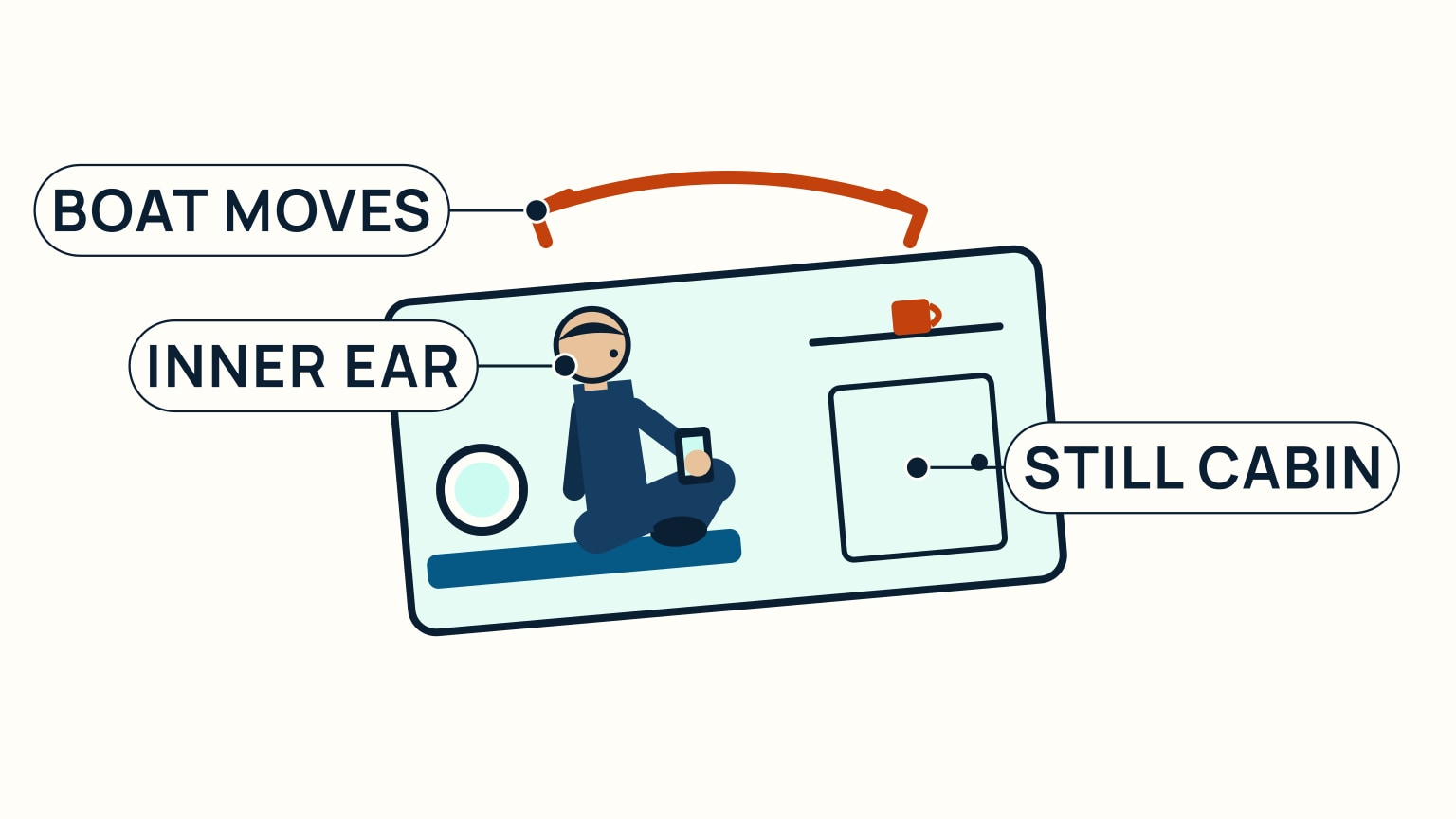
Your brain works out where you are from several sources at once: your inner ears, your eyes, and the muscles and joints holding you upright. When those signals agree, you feel fine. When they disagree, you feel ill. On a boat, your inner ears register every rise, fall and roll, but if your eyes are locked on something that moves with the boat, they report stillness. That mismatch is motion sickness.
It explains why going below usually makes things worse: in a cabin, the gap between what your eyes see and what your inner ears feel is magnified. It also explains the classic pattern: a sudden queasy feeling and cold sweats, then dizziness, then nausea and vomiting.
Almost anyone can be made seasick by enough motion. People who have completely lost inner-ear balance function are the exception, which tells you how normal this is: being prone to it says nothing about how good a sailor you are. It also fades. With continuous exposure, symptoms usually settle within 24 to 72 hours.
Set yourself up before you cast off
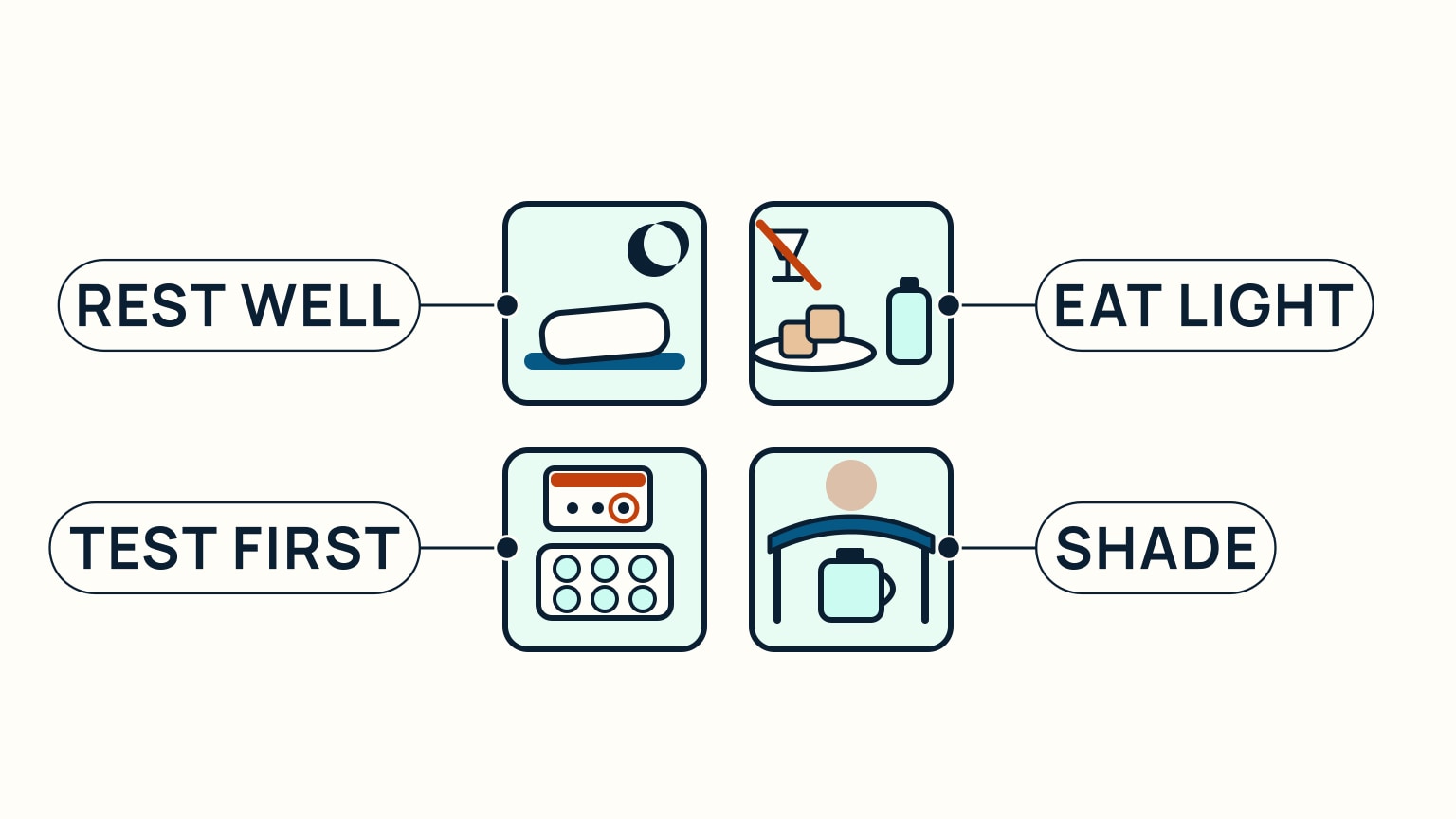
Arrive rested. Fatigue, anxiety, cold and hunger all speed up the onset of seasickness, so the night before matters. Eat lightly before and during the trip (small amounts, often) and avoid greasy, spicy or acidic food, and alcohol. Plain crackers travel well, and ginger (as a tablet, biscuit or tea) is a self-care option listed by a national health service. Bring more water than you think you need, and plan shade for a hot, still day.
If you already get carsick or airsick, plan for medication instead of hoping. These medicines work best taken before symptoms start, so take yours before you cast off: one national health service suggests about half an hour before travel, and sailing guidance suggests the night before a longer passage. Antihistamines and anticholinergics are the classes usually used, and drowsiness is a common side effect, so trial yours ashore a few days earlier, not on watch. Availability and prescription rules differ by country: ask a pharmacist or doctor which suits you, and say if it is for a child, if you are pregnant, or if you take other medicines. Keep the rest of the packet aboard.
What actually works once you are aboard
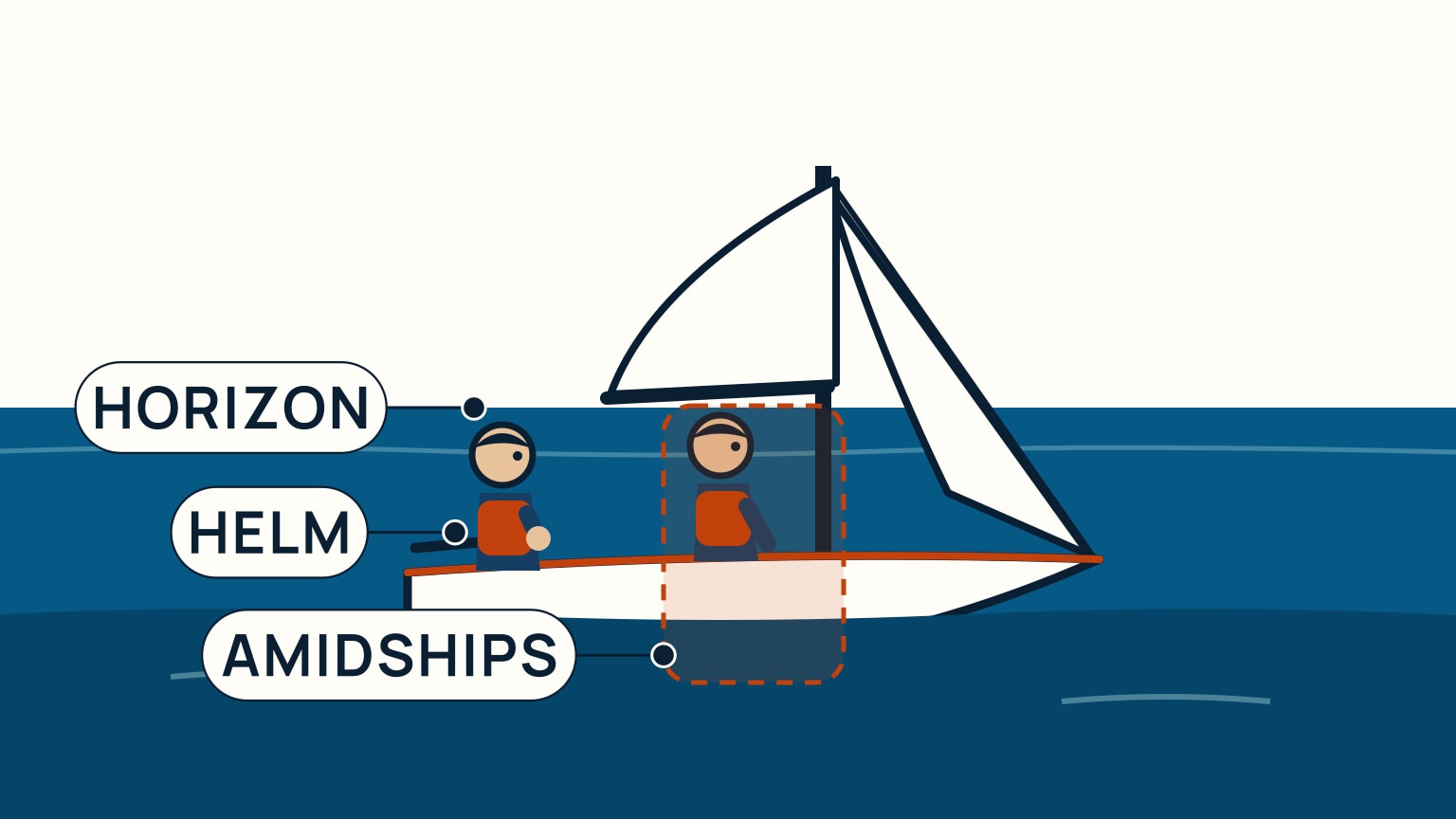
Stay on deck in the fresh air. Sit near the middle of the boat, where pitching and rolling are least extreme, and face forward. Then give your eyes something honest to look at: fix them on the horizon or another distant, fixed point. That is the whole trick: a steady far-off reference brings what you see back into line with what your inner ears feel.
Better still, take the helm if the skipper is happy for you to. Steering makes you watch the horizon and keeps you occupied. It helps even people who already feel queasy.
Avoid reading, screens, and close-up work (fiddly jobs below deck are the worst case of all) and avoid staring at moving water. Resting still with your eyes closed is a different thing, and health guidance suggests it. Keep sipping water rather than gulping it. And if you do need to be sick, do it over the downwind side of the boat, holding on to something solid.
When heat and sun are the real problem
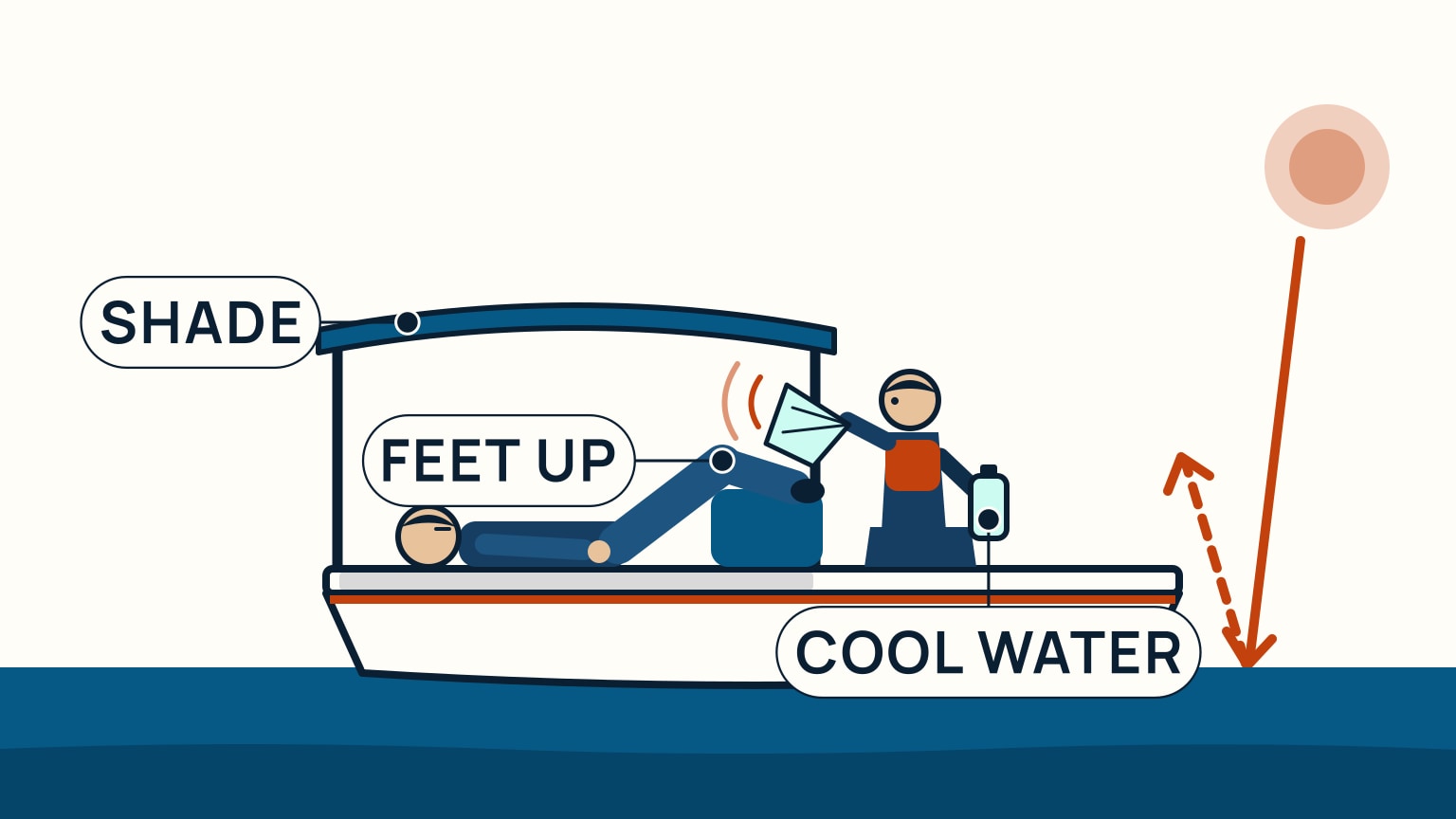
Heat illness feels like seasickness at first: heat exhaustion brings tiredness, dizziness, headache and nausea. What comes with them is the difference: heavy sweating with pale, clammy skin, cramps in the arms, legs or stomach, strong thirst, dark urine, and a fast, weak pulse. The response differs too: heat illness needs shade, rest and cooling, not a horizon.
Open water makes it more likely than the same day ashore: water reflects ultraviolet back at you, so you get sun from above and below, and full sun can feel 10-15°C (18-27°F) hotter than nearby shade. Rig a canopy or use a sail's shadow, and drink on a cadence (about a cup of water an hour) rather than waiting to feel thirsty.
If you suspect heat exhaustion, move the person into shade, lie them down, and raise their feet about 30 cm (12 in). Remove extra clothing. Give small drinks of cool water, an isotonic sports drink or rehydration powder. Never alcohol or caffeine. Cool their skin: sponge them with cool water, fan them, and put cloth-wrapped cold packs under the armpits or on the neck. They should start feeling better within about 30 minutes.
When to treat it as an emergency
Make a personal plan before departure
Write down what has helped or failed on earlier trips, any medicine instructions from a clinician or label, and the first symptoms you tend to notice. Tell the skipper early rather than waiting until you cannot move safely. Choose a place with fresh air and a view of the horizon, keep warm or shaded as conditions require, and take on a simple low-focus task if that helps.
The crew should watch hydration, alertness, balance, and the person's ability to keep fluids down. Repeated vomiting, confusion, collapse, severe weakness, chest pain, a worsening headache, or symptoms that do not fit ordinary motion sickness need a different response. Heat illness, carbon monoxide exposure, dehydration, and other medical problems can resemble seasickness. The engine ventilation and carbon-monoxide guide explains one important look-alike.
Decide in advance when to shorten the trip, move to calmer water, or seek medical advice. Early action is easier than managing an exhausted person during a difficult return. No schedule or destination is worth hiding symptoms from the skipper.
The first-time sailing guide helps a new crew member plan clothing, food, communication, and a manageable first outing.
Two situations become emergencies.
The first is heat stroke (the next stage after heat exhaustion, and a medical emergency with a high fatality rate). The signs change character: a very high temperature, above 40°C (104°F), with confusion, agitation, slurred speech, fast breathing, seizures or loss of consciousness. Do not wait for skin to turn hot and dry: a person can still be sweating heavily and have heat stroke. Call your local emergency number or rescue service first, then cool hard: wet the skin, fan continuously, and place cloth-wrapped cold packs at the neck, armpits and groin. Give nothing by mouth to anyone vomiting or not fully alert, and if they become unresponsive but are breathing normally, roll them onto their side.
The second is seasickness that will not stop. Sustained vomiting leads to severe dehydration and, untreated, to a crew member who cannot function. A weak pulse, fainting, or any change in how clearly someone is thinking means calling for outside help rather than waiting it out. One look-alike is worth knowing: carbon monoxide poisoning causes symptoms much like seasickness, so queasiness near a running engine is a reason to get fresh air and check your ventilation.

Seasickness is common, predictable, and mostly manageable. It comes from a disagreement between your senses, and almost everything that helps is a way of ending that disagreement: get where you can see far, give your eyes a steady horizon, and let your body settle into the motion instead of hiding from it. Set the small things up before you leave (rest, light food, water, shade, and a remedy you have already tried ashore) and a first sail stops being something to endure.
If you would rather see this than read it, SailStarter's five-minute beginner lesson Heat, sun & seasickness: staying well aboard covers the same ground with pictures you can tap.
Try it from the lesson
Can you spot the next move?
A hot crewmate is sweating heavily, looks pale and clammy, feels dizzy, and has leg cramps. What is happening, and what comes next?
Why you can trust this guide
. We build each guide from public seamanship and safety sources, then teach the universal principle before any local difference.