Chart your course
Boat Steering Failure: What To Do
Quick answer
The short version
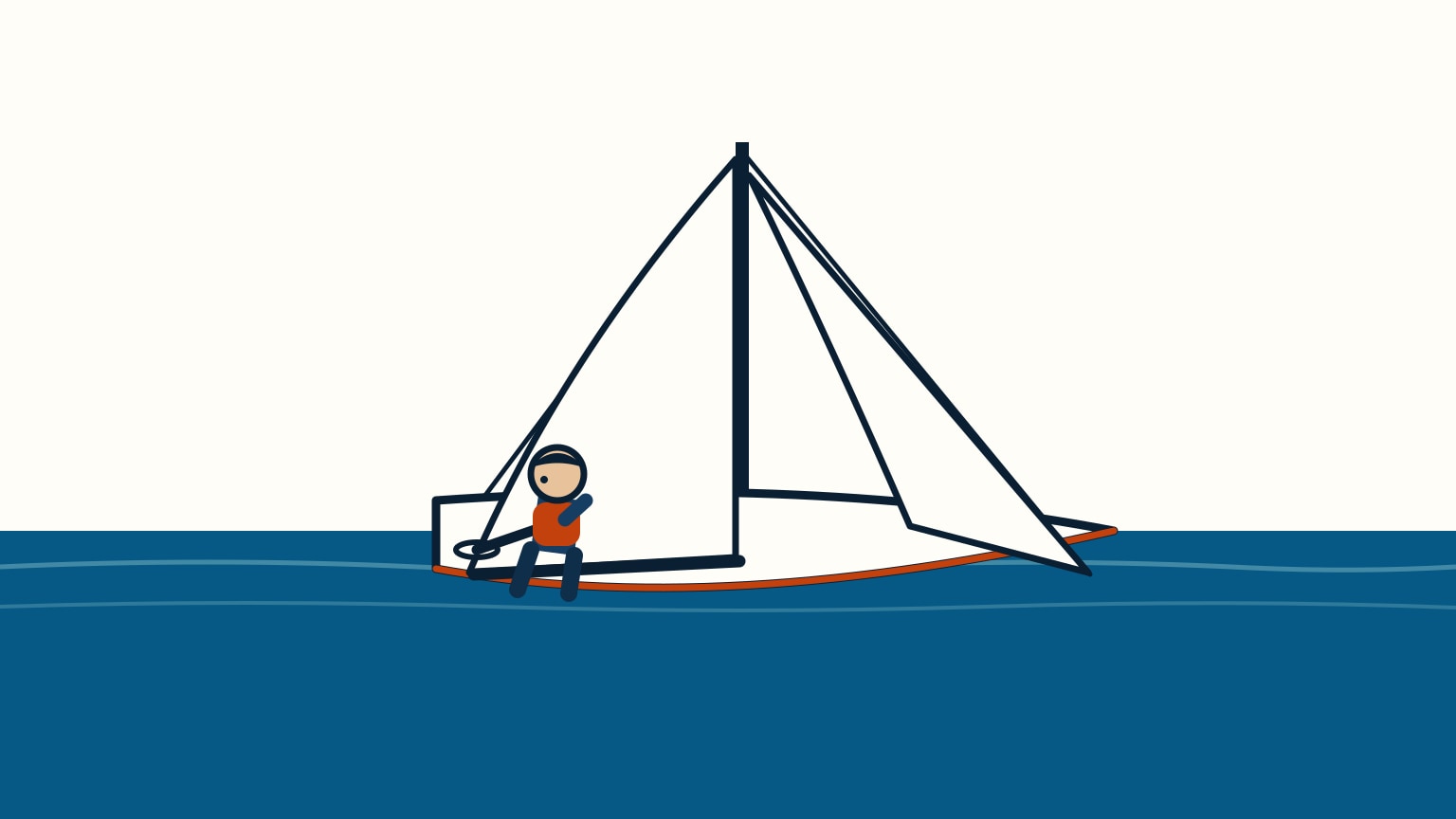
If the wheel spins with no resistance, or the tiller suddenly goes slack, don't panic and don't force it. Most steering trouble is something simple and checkable, not a lost rudder. Start at the linkage: look for a snapped or slack cable, a quadrant that's come loose from the rudder post, or an autopilot clutch that never fully released the wheel. If nothing obvious turns up in a minute or two, get the emergency tiller out of its locker and fit it straight onto the rudder stock. Every wheel-steered boat carries one for exactly this moment, which is why it's worth practicing the fit long before you actually need it. In the rarer case where the rudder itself is gone, sail trim and crew weight together can still steer the boat: main sheeted in with weight to leeward heads it up, jib alone with weight to windward bears it away.
Steering trouble rarely announces itself as a full rudder loss. Far more often it's a cable that's stretched or slipped a sheave, a quadrant bolt that's worked loose, or an autopilot that hasn't let go of the wheel the way it should (all ordinary, checkable things living at the base of the pedestal or tiller head). The sequence below starts with what to check first while the boat is still moving safely, moves to finding and fitting the emergency tiller every wheel-steered boat carries, and, for the rarer case where the rudder blade itself is gone, covers how sail trim combined with crew weight, a simple jury rudder, or a trailed drag device can keep the boat pointed somewhere useful until help arrives or a proper fix gets made.
Check the Simple Things First
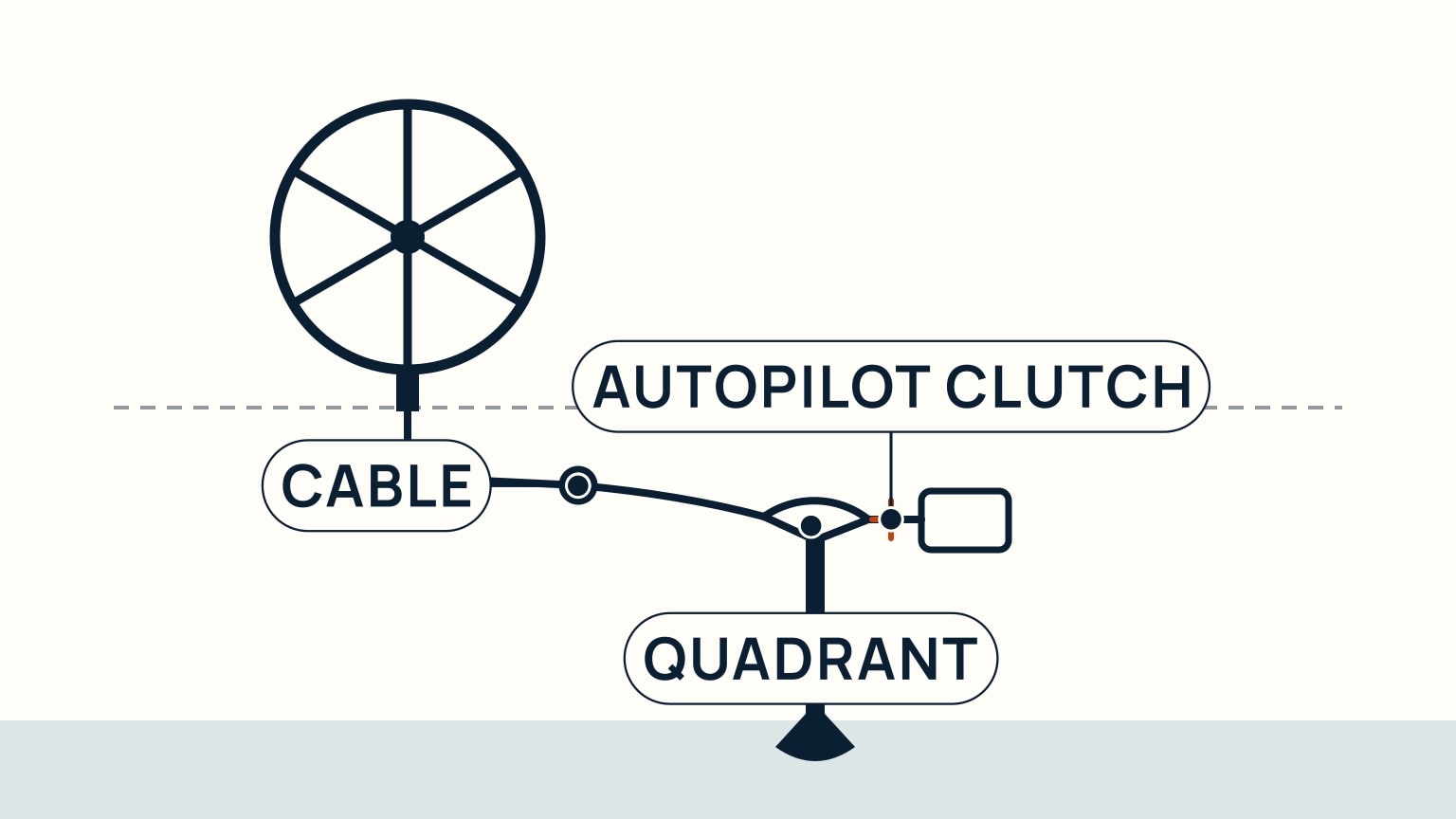
Before assuming the worst, spend a minute at the source of the problem. With the wheel locked, feel for movement at the rudder itself: side to side or fore and aft. About half an inch of play at the rudder tip is the point where it's worth real concern rather than a shrug. On cable or chain steering, look along the run for broken strands or slack; cable should stay snug against its sheaves and the quadrant through the full turn of the wheel, and a run more than about ten years old is due for replacement regardless of how it looks. Check that the quadrant itself is still firmly bolted to the rudder post, not just resting against it, that every pivot, split pin, and adjuster along the linkage is tight, and that the wheel turns smoothly lock to lock and stops solidly at its mechanical stops (with any autopilot's own stop set just short of those mechanical ones, not against them). Push-rod steering fails the same way at its own bearings; hydraulic steering can simply be low on fluid or leaking. If an autopilot shares the helm, check that its clutch or drive pin is genuinely disengaged: a wheel-drive clutch releases by rotating its lever counter-clockwise until it clears the locating pip, while a tiller-pilot disengages by pulling its drive pin. A unit that hasn't fully let go can feel exactly like a jammed or unusually heavy wheel, with a straightforward fix once you know where to look.
Most of this trouble traces back to ordinary neglect of a system that's easy to forget precisely because it's hidden under the cockpit sole. One boatyard technician put it bluntly: owners who never open the system up to check it once a year end up with steering that fails exactly when the rudder is under the most load, in heavy weather. On the production and charter boats many beginners learn on, a common failure is a chain or belt that has simply jumped its cog rather than broken outright, which is often a quick on-the-spot fix once you spot it, not a reason to assume the worst.
Find and Fit the Emergency Tiller
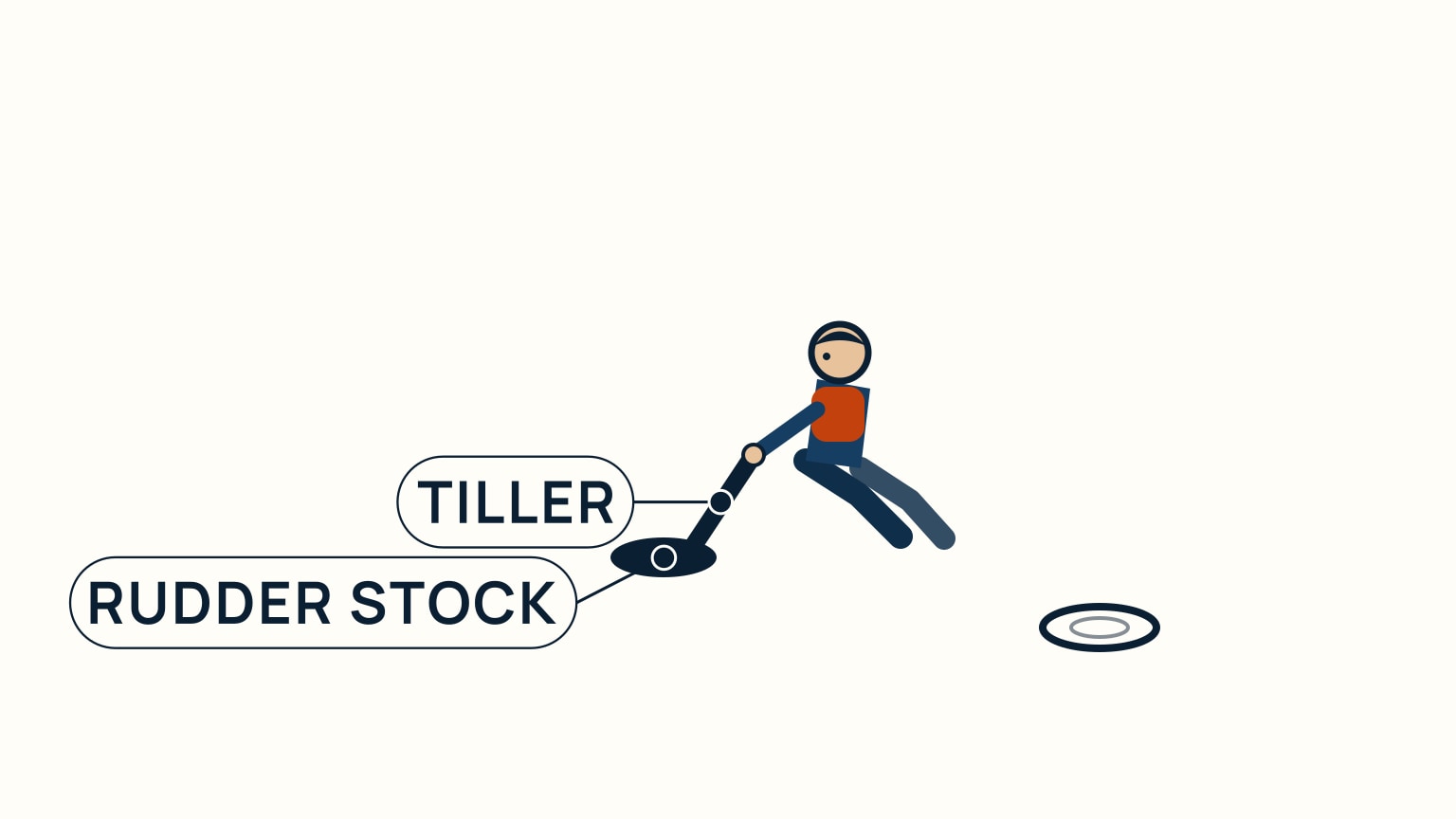
Every wheel-steered boat carries a tiller for exactly this situation, usually a plain metal bar stowed in a cockpit locker, meant to fit directly onto the top of the rudder stock once a deck cap is lifted clear. The trouble is that it tends to sit there for years, forgotten, and the first time many sailors see it is the day they actually need it. Get it out on a calm afternoon instead: find where it stows, lift the deck cap, and fit the bar onto the stock so you know exactly how it seats and how far it swings. Expect it to feel different from the wheel: a short arc of travel, often not much more than a foot of lateral movement, and real arm effort that gets tiring within a few minutes. Leading a spare line from each end back to a winch (a relieving tackle) turns that raw strength into a manageable, winched pull, and a longer, cross-braced extension tiller improves leverage and control further if you have the parts to rig one. None of that is worth discovering for the first time in the middle of an actual emergency, which is exactly why it's worth stripping the steering system down for a proper look at the end of a season, not just glancing at it from the cockpit.
Steer Without a Rudder: Sail Trim and Crew Weight
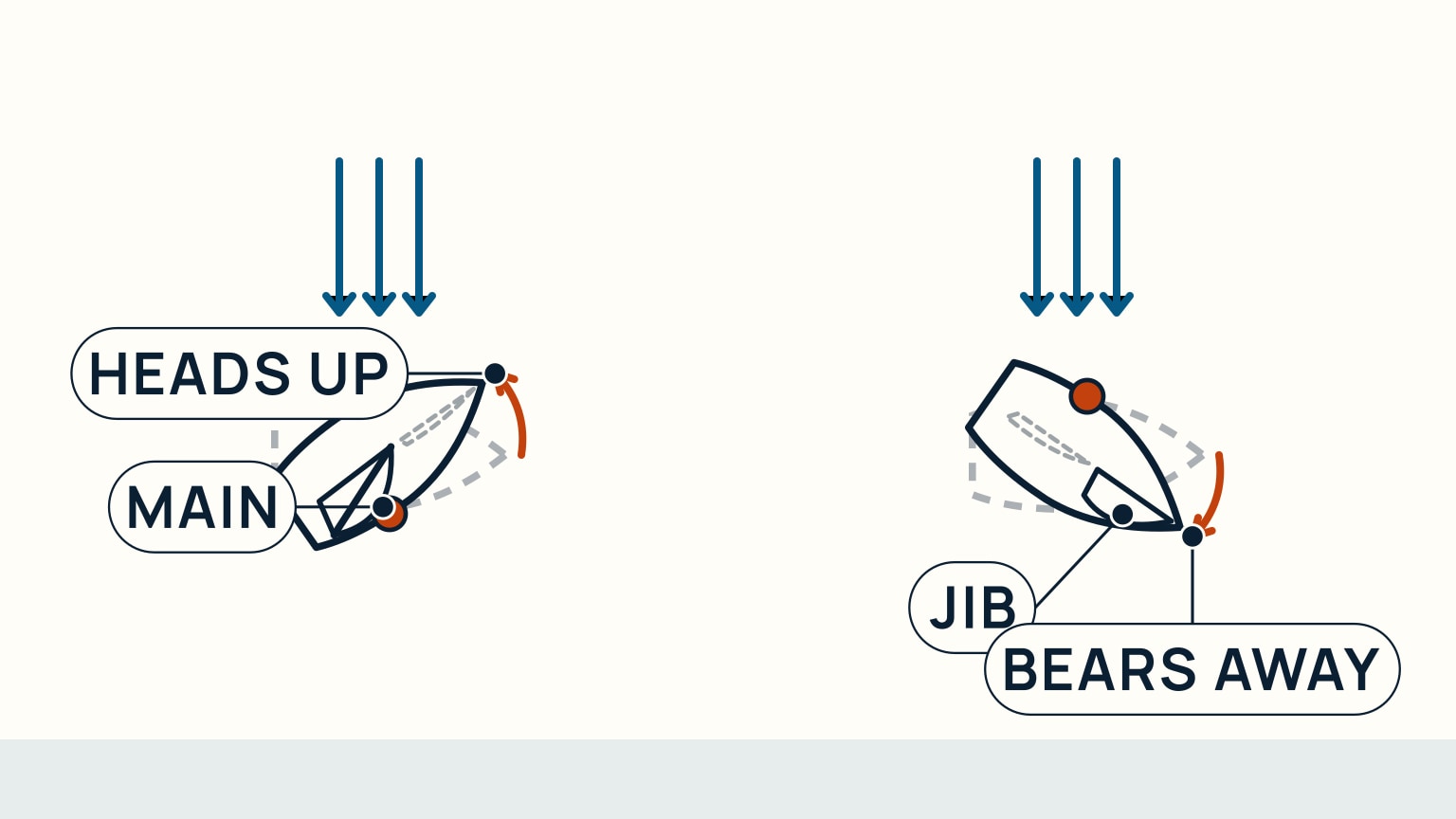
If the rudder blade itself is gone rather than just its linkage, the boat still isn't out of options; sail trim combined with crew weight can hold a rough course on its own. Sheet the mainsail in and move crew weight to leeward, and the boat heads up toward the wind; ease the main, fly the jib alone, and shift crew weight to windward instead, and the boat bears away from the wind. One documented test that removed a yacht's rudder entirely found this combination (sail choice and weight together, not either alone) kept the boat on a steady course through gusts and waves in moderate conditions. Without any rudder, skeg, or jury blade at all, the same boat couldn't hold a course at all except through constant, active correction. It takes attention and a crew ready to move on command, but it buys real steering while you rig something more permanent. Treat it as a first response rather than the whole answer, though: sail-and-weight balance tends to be the fastest option to set up but also the least stable one, and it isn't a realistic choice for a long distance on a fin-keeled boat or for sailing well downwind, both of which is where a jury rudder or a drag device below earns its keep instead.
When the Rudder Itself Is Gone: Jury Rudders and Drag Steering
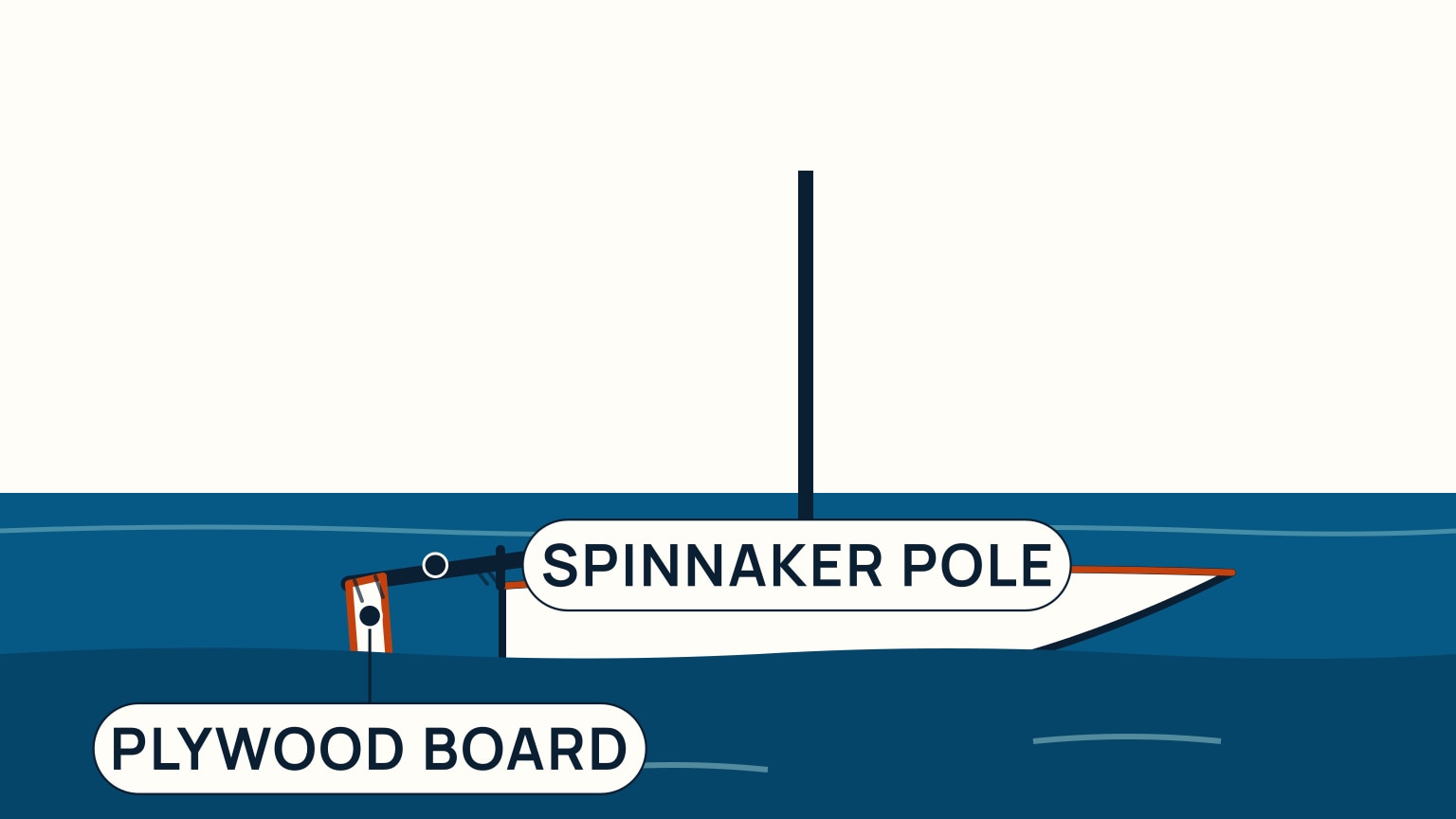
Losing the rudder is rarely the dead end it feels like; the same way sails can push a stalled-engine boat home, sail balance and a bit of ordinary gear can still steer one whose rudder is out of action. A jury rudder built from equipment already aboard (a spare oar or spinnaker pole lashed across the transom with a board in place of a blade, held down and steady with a few lines) has given sailors real, working steering with only light loads on the tiller, needing surprisingly little of the board underwater to hold a course. A drogue, or even a plain bucket, streamed astern on a bridle works differently: it trades speed for stability, holding a steady heading rather than actively steering, which makes it the calmest option while you rig something better or simply wait. In testing, a drogue rarely made more than about 1.5 knots and a builder's bucket managed roughly 3.5 knots angled off the wind, against about 4 knots upwind for a properly built jury rudder: none of it is fast, but a slow, held course beats a fast, uncontrolled one. Pad every line and spar under load with fenders or cushions, since real force runs through that gear; one classic tensioning method for rigging a jury blade (the Spanish windlass) was banned by the Royal Navy after crew were injured when it unwound under load, which is worth remembering before you improvise your own version under pressure.
A boat that can't steer also drifts with the wind and current rather than where you point it. If that drift puts you over shallow water, the same calm, checklist approach in You've Run Aground: What To Do Next applies just as well. Sometimes none of these fixes are enough. On one 43-foot training yacht, the rudder stock sheared through completely at night after hidden corrosion had quietly weakened more than half its diameter, and the emergency tiller had nothing left to steer. The skipper streamed a sea anchor to hold the boat's drift steady, made a Pan-Pan call, and a lifeboat towed the yacht to safety. If your rudder is genuinely gone rather than just disconnected, that same sequence, stabilize the drift, call early, and accept a tow, is the sensible move rather than a last resort. Pan-Pan vs. Mayday covers how to make that call, and taking a tow at sea covers what happens once help arrives.
None of this needs to be worked out for the first time with the wind up and the boat already hard to control. Check the linkage, the cable, and the autopilot connection on a normal sailing day so you know what "normal" feels like at the helm. Find the emergency tiller, fit it once, and feel its shorter arc and real effort while nothing is actually wrong. If you ever do lose the rudder itself, sail trim with crew weight, a jury-rigged blade, or a trailed drogue are all real, workable ways to keep steering rather than just drifting. SailStarter's lessons on boat handling and gear failures walk through this same sequence (the quick checks, the emergency tiller, and the sail-balance technique for steering without a rudder), so it's already familiar if your steering ever goes quiet underway.
Try it from the lesson
Can you spot the next move?
Your wheel suddenly goes slack and the boat won't answer the helm. What's worth checking before assuming the rudder itself is gone, and what should already be true about your emergency tiller?
Why you can trust this guide
. We build each guide from public seamanship and safety sources, then teach the universal principle before any local difference.