Chart your course
Boat Taking on Water — What To Do
Quick answer
The short version
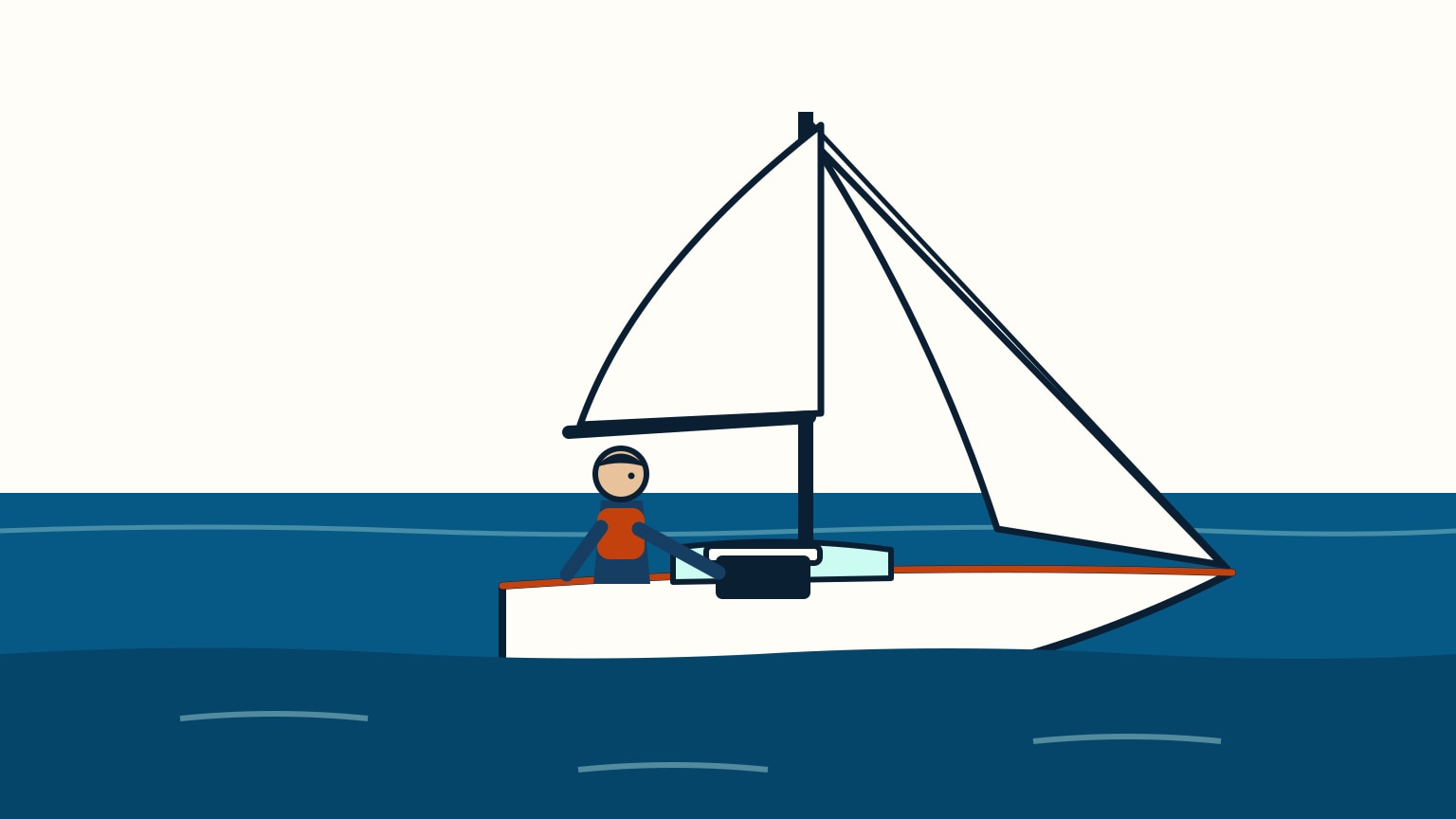
If your boat starts taking on water, first find where it is coming from. A running bilge pump buys time, but it does not fix the source. Below the waterline, common suspects include a seacock, through-hull fitting, attached hose, or propeller-shaft seal. If you trace the leak to a fitting, close its seacock to isolate it. If the through-hull has failed, drive in a tapered soft plug or wedge suitable soft material around the opening to slow the flow. Keep the pump running and use buckets if available. If the crew is losing that race, call for help early and consider heading for shallow water under the skipper's plan.
Water where it should not be is unsettling, but an ordered response gives the crew useful work. Start by tracking the water to its source. Use the suitable tools to slow or stop a flow, and remove water with pumps and manual methods. If the inflow cannot be controlled, call for help early instead of continuing alone. The same evidence-first habit helps with other emergencies: identify the real problem, then act on it.
Find the Source First
A bilge pump switching on is a relief, but it's only buying time. It doesn't touch whatever's letting the water in, and a pump running flat out against a real leak eventually loses that fight. Before anything else, go looking for the source. Check the seacocks and the hoses clamped to them, the through-hull fittings themselves, and the propeller-shaft seal, which drips a little by design but can open up further if it's worn or its bellows has failed. One trick narrows the search fast: taste the bilge water. Salty water points below the waterline, toward a fitting or the hull itself; fresh water points above it, toward a tank or a deck fitting instead. If the boat is underway, bring it to a stop. That alone reduces the water pressure pushing against whatever's failing, buying a little more room to work it out.

Close the Seacock, Drive In a Plug
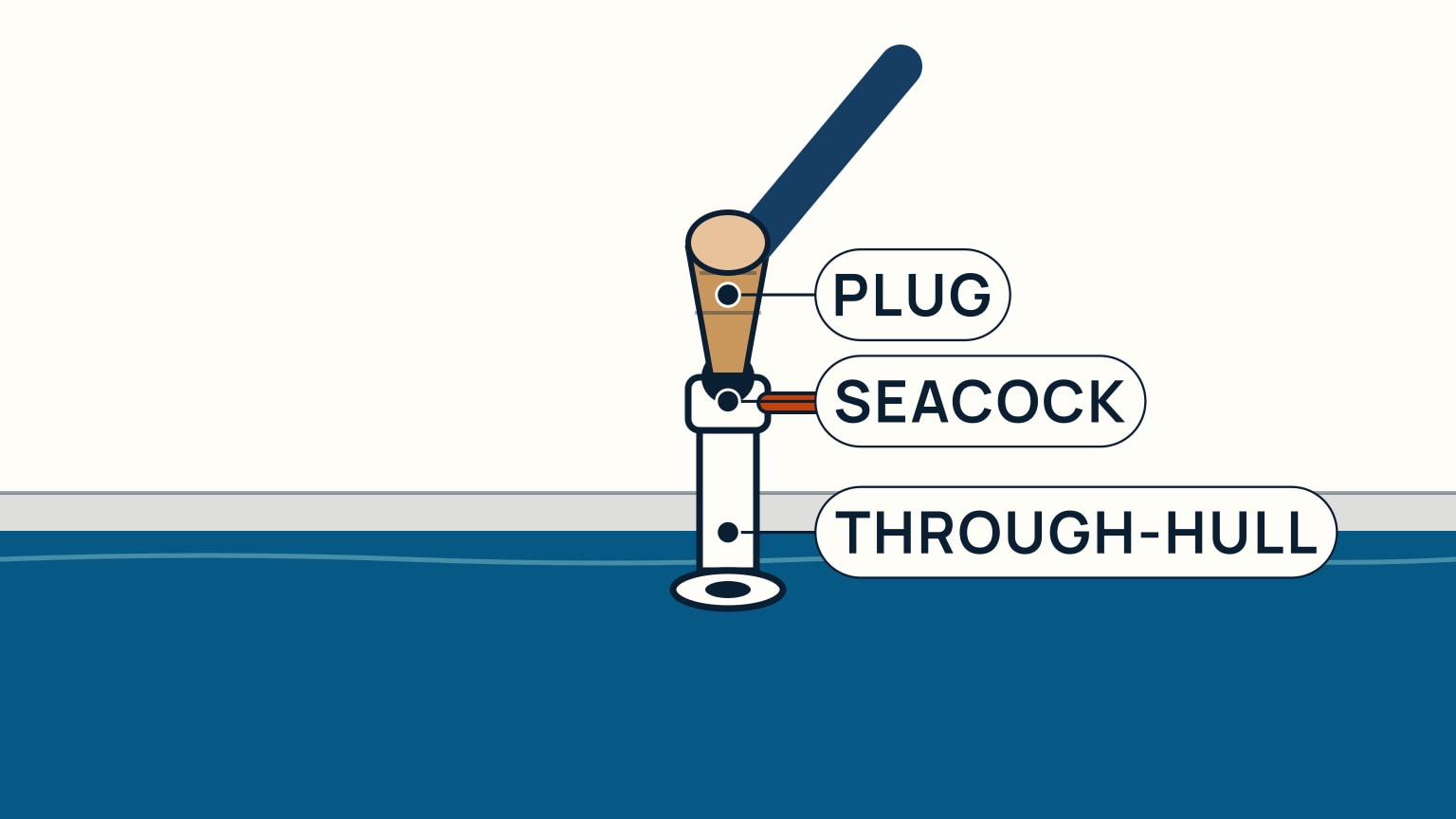
Once you know where the water's coming from, the fix depends on what actually failed. If it's a hose or fitting downstream of a seacock, close that seacock. It isolates the failure completely, often faster than trying to repair the leak itself. If the through-hull fitting is the problem, that's what a tapered soft plug is for: wood or foam, driven in by hand to stem the flow directly at the source. The habit worth building long before you need it is keeping one of these plugs tied on a line at every through-hull on the boat, so there's nothing to search for with water already coming in. Nothing purpose-built within reach? Rags, a cushion, foam, folded cloth: anything that wedges into or against the gap slows things down while you improvise something better or wait on help.
Dewater While You Work and Keep a Dry Bilge
Stopping the source and clearing what's already aboard happen at the same time, not one after the other. Keep the bilge pump running, manual backup too if the boat carries one, and don't underestimate a bucket. Sailors have said for generations that the best bilge pump is a determined person with a bucket, and it's not far off: a real bucket brigade, two people working steadily, moves a serious amount of water, even if nobody can keep it up all night. None of this matters only in the emergency itself. A bilge that's normally dry, checked as part of routine maintenance, is what makes new water obvious the moment it appears. You notice a problem in its first minutes instead of after it's already ankle-deep.

Losing the Race: Call Early, Consider Shallow Water
Sometimes the leak wins the early rounds: water coming in faster than it can be found, plugged, or pumped out. The moment that looks likely, call for help. Notify the coast guard or nearby boats of your situation and position while you still have options, not once the boat is noticeably lower in the water. It's a genuine, well-documented pattern: skippers get absorbed trying to fix the leak themselves and only call once things have gotten much worse. Heading deliberately for shallow water, or grounding the boat on purpose, is a real part of official guidance for flooding that can't be brought under control. The same instinct is behind deliberate beaching if you've run aground. If outside help does arrive, taking a tow afterward follows its own, much calmer sequence.
Give the crew separate jobs
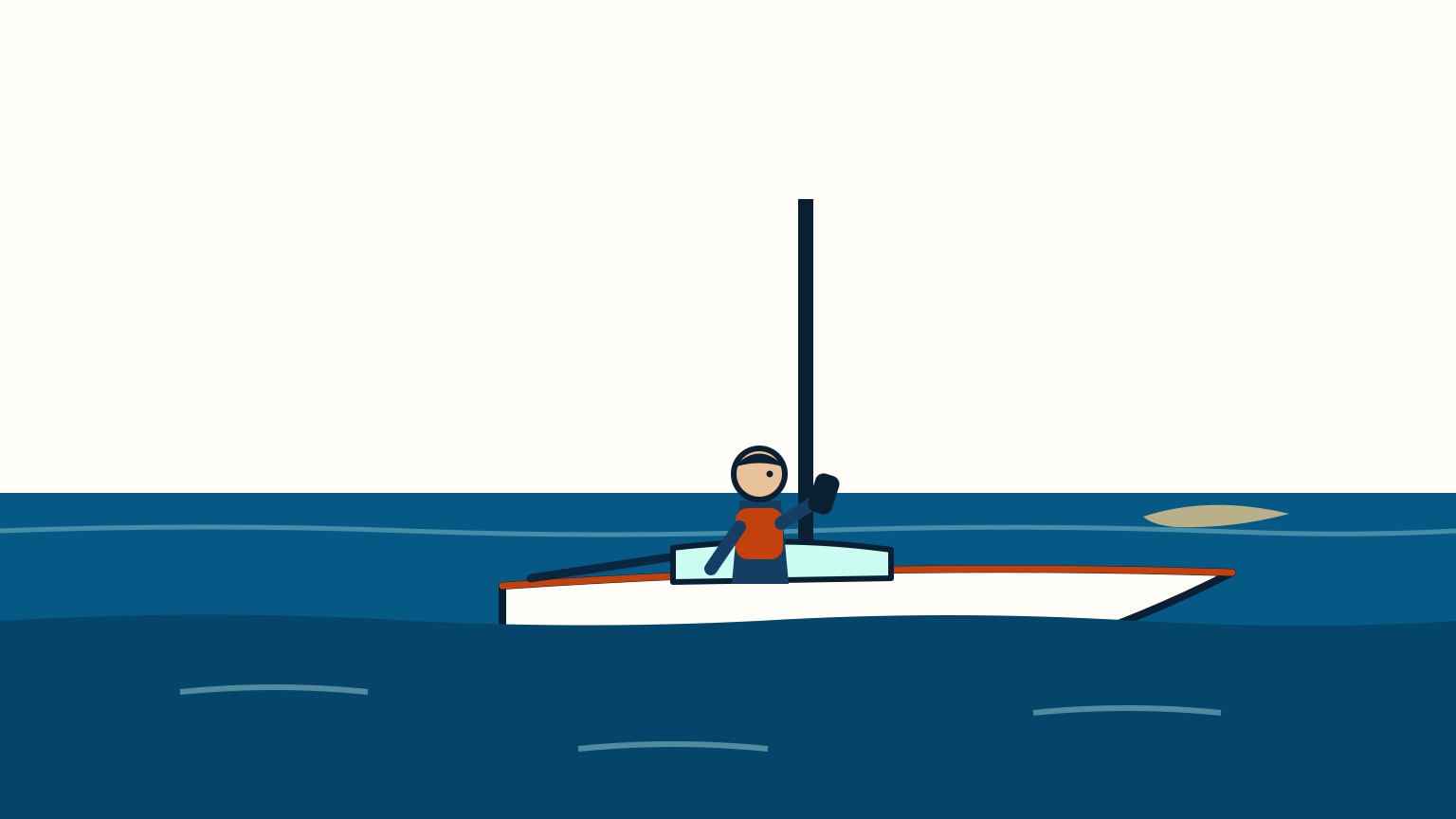
Flooding becomes harder when everyone follows the same puddle and no one watches the boat. Put one person on control and communication. Put another on pumps or buckets. A third person can trace the inflow and bring plugs, tools, or soft packing. Keep someone responsible for the boat's position, traffic, and route to safer water. On a small crew, combine jobs deliberately and say which task has priority.
Report what is changing, not only what you first found. State whether the level is rising, steady, or falling and whether the pump is keeping up. Note whether closing a seacock changes the flow. A bilge diagnosis routine helps you learn the normal compartments, pumps, switches, and likely water paths before this becomes urgent.
Know when the response is working
A successful plug or closed valve should change the inflow. Dewatering should then reduce the level. Keep checking both results. A falling level with the pump running does not prove the leak has stopped, and a stopped pump does not prove the bilge is dry. If the source remains unknown, keep the situation open and arrange inspection after reaching safety.
Call early if the inflow outruns the crew, the source cannot be reached, or the boat's condition keeps worsening. Give the boat's position and the nature of the problem while communications and power are still available. If shallow water offers a safer outcome, consider it as part of the plan rather than as a last-second impulse. The purpose is to preserve options for people and boat.
Afterward, replace used plugs or packing, clean and inspect the bilge, and record the failed fitting or system. Review which tool was hard to reach and which crew job was missed. Then update the stowage and briefing. The emergency sequence becomes much more useful when the boat is reset for the next trip instead of left with a pump that merely hid the original fault.
Flooding isn't the only "worst day" that has a calmer logic underneath it than it first appears. A capsized keelboat is built to come back up. The same ballast that resists heeling in the first place keeps working even from further over, so stay in contact with the hull as it rights; an unmanned boat can sail off the moment it does. A fire in the engine space calls for the same restraint: aim the extinguisher at the base of the flames, not the smoke, and never fling the hatch wide open to see what's burning. That only hands the fire more air. Every one of these moments rewards the same habit: find what's actually wrong before reacting to how it feels. SailStarter's lessons on damage control and emergency preparedness walk through this sequence in more depth, so none of it needs to be worked out for the first time with water already at your ankles.
Keep the call, pump, and repair running as parallel jobs when crew numbers allow. One person should continue checking position and stability while another reports the changing water level. If the level begins to fall, do not cancel help until the source is controlled and the boat has a safe plan. If it keeps rising, move early toward the option that gives people the widest margin.
Prepare a flooding card for the actual boat. List the bilge compartments, pumps, manual backup, common seacocks, plug locations, communications, and the person who keeps control. Walk the route with the crew and verify that access panels can be opened with the tools stored nearby.
Run a dry drill at the dock without opening systems or creating a leak. One person reports rising water, another starts the permitted pump test, and another locates the named seacock and plug. The helm states the boat's position and safer-water option. Stop the drill whenever an action would require operating real equipment outside its normal test.
After the drill, move only the items that were genuinely hard to reach. Keep access clear without leaving tools loose. Update the card when equipment or stowage changes. The value comes from knowing this boat, not from a generic emergency list copied aboard.
Try it from the lesson
Can you spot the next move?
Water is rising and several crew can act. How should the first jobs be shared?
Why you can trust this guide
. We build each guide from public seamanship and safety sources, then teach the universal principle before any local difference.