Chart your course
Boom Vang vs Mainsheet vs Traveler
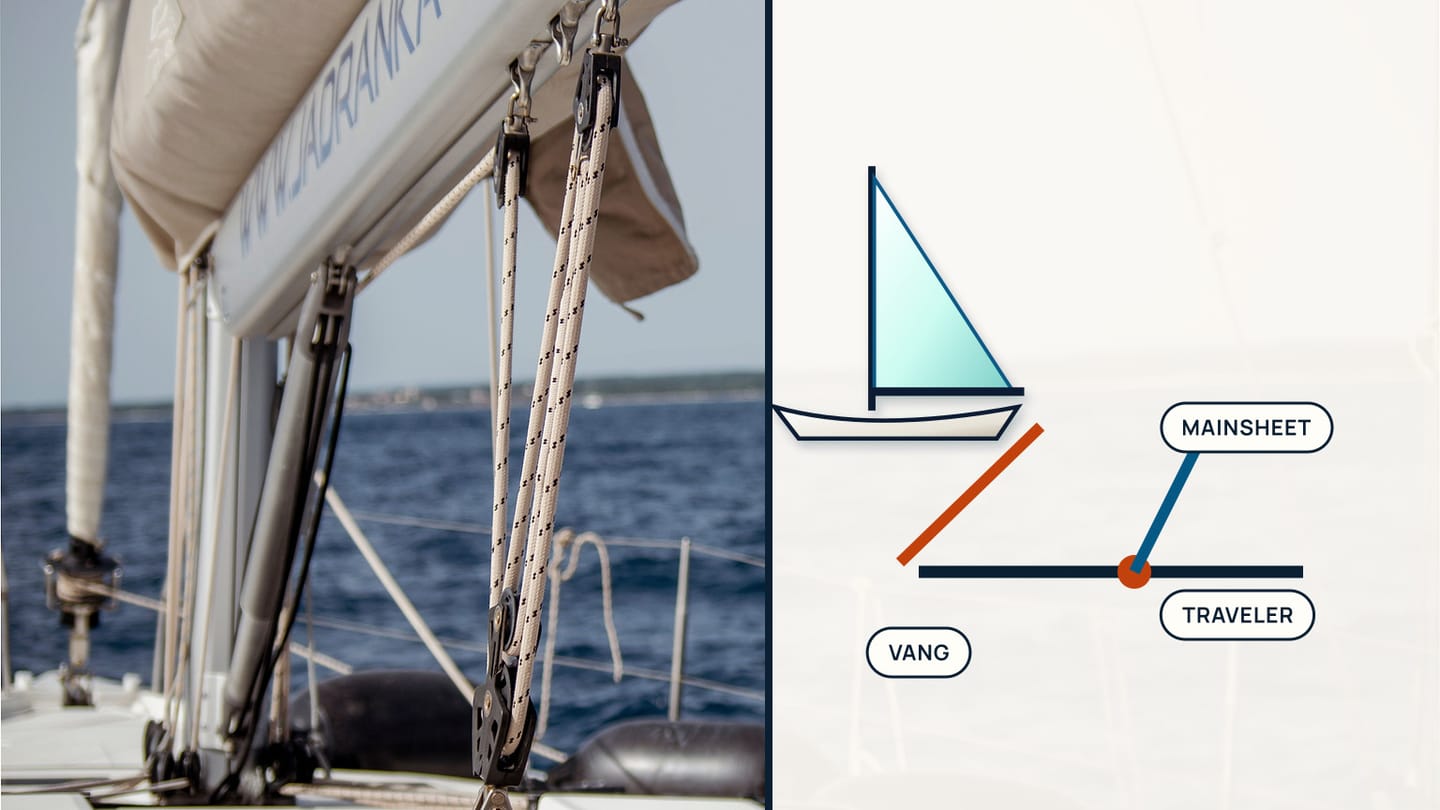
Quick answer
The short version
The mainsheet, traveler, and boom vang all influence the mainsail, but they do not do the same job. The mainsheet pulls the boom toward the boat and, depending on geometry, also pulls it down. The traveler moves the sheet's lower attachment sideways, changing the boom's lateral position with less change in sheet tension. The vang resists the boom rising, especially after the sheet is eased on a reach or run. Use boom angle, leech tension, twist, telltales, heel, and helm feel to decide which control answers the problem.
Their effects overlap. Close-hauled, a tight mainsheet can hold the boom down strongly, so the vang may contribute little. Ease the sheet for a reach and its downward component weakens; the vang then becomes the clearer leech-control tool. Traveler geometry and rig design vary, so learn the line path on the actual boat before copying a setting.
This guide extends sail trim by point of sail, sail twist and draft explained, and how to depower sails in strong wind. Loads can be high. Follow the boat's manual and experienced instruction, keep hands clear of blocks, and never stand in a loaded line's path.
Each control does its clearest work at a different point of sail and a different job.
| Dimension | Mainsheet | Traveler | Vang |
|---|---|---|---|
| Primary job | Sets the boom's angle to the wind | Repositions the boom sideways, largely preserving sheet tension | Resists the boom rising once the sheet is eased |
| Leech tension effect | Strong close-hauled — pulls the boom down | Minimal — tension carries over from the sheet | Direct control, especially on a reach or run |
| Most useful point of sail | Close-hauled, where the force line is steep | When boom position is wrong but leech tension is already close | Reaching or running, once the sheet's downward pull weakens |
| Fastest gust response | Easing releases load quickly, though it also shifts angle and twist | Not the typical fast response | Not the typical fast response |
| Handling risk | High load close-hauled, but manageable | Never force a loaded car — ease another control first | Load can be substantial downwind, near shrouds and in an accidental gybe |
Give each control one first job
Start with a mental separation. Use the mainsheet first to set the mainsail's angle to the apparent wind. Use the traveler to reposition the boom across the boat while preserving more of the existing sheet tension. Use the vang to limit upward boom movement when the sheet no longer supplies enough downward pull.
Now inspect the hardware. Trace the mainsheet from boom to blocks and traveler or cockpit attachment. Move the traveler car while unloaded and see which part shifts. Find the vang between mast base and boom. Check labels, cleats, purchases, and safe working positions. The names matter less than understanding where each load goes.
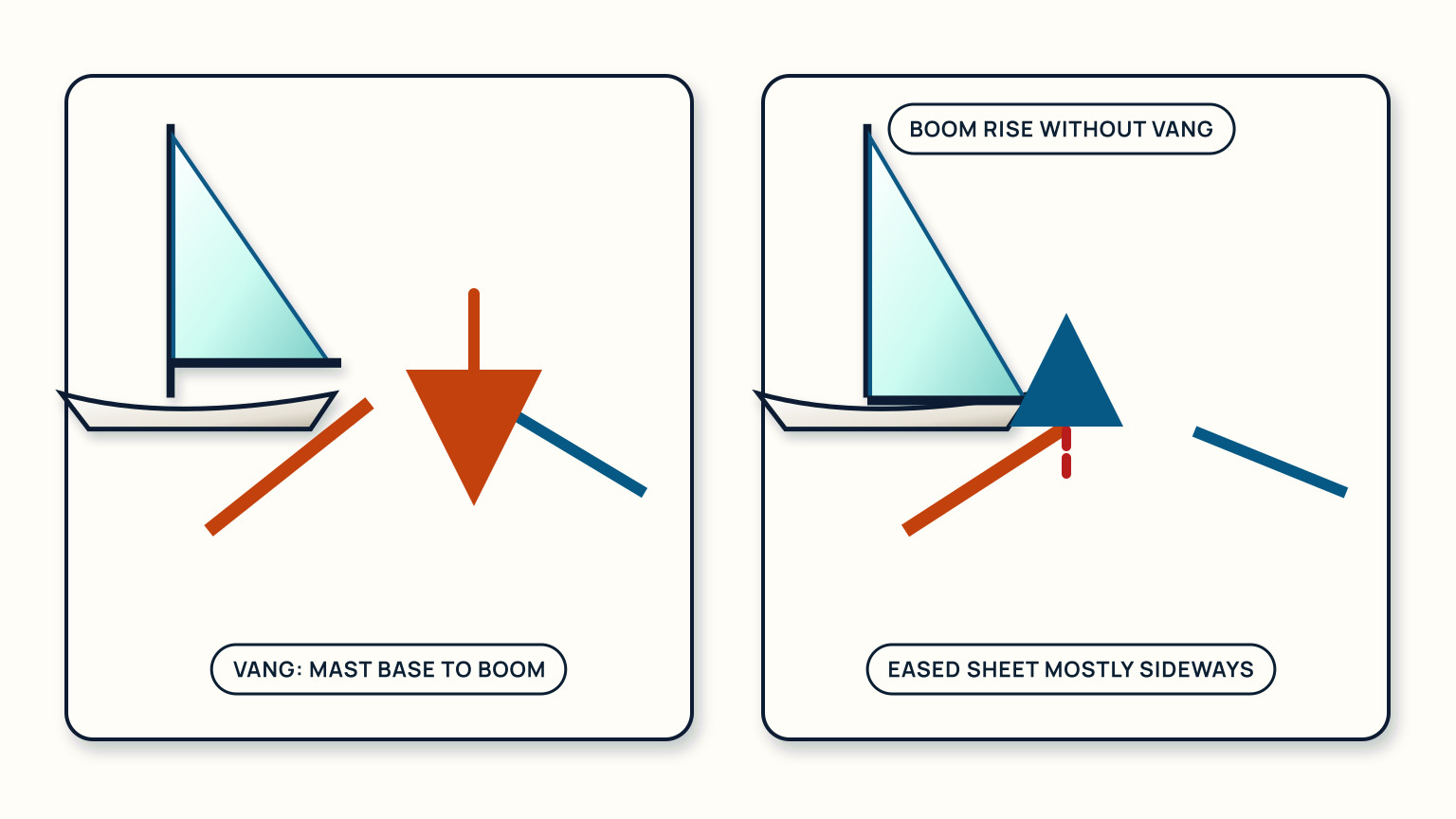
Draw a force line from the boom-end sheet block to its lower block. When that line is steep, trimming the sheet pulls down as well as in. As the boom goes out and the line becomes more horizontal, less of the pull restrains rise. That geometric change explains why the same mainsheet behaves differently by point of sail.
A useful diagnostic sentence is: “The boom needs to move in/out,” or “the boom needs to stay lower/higher.” The first points toward sheet or traveler. The second points toward sheet tension when close-hauled and toward vang as the sheet is eased. Real trim adds sail shape and balance, but the sentence prevents random pulling.
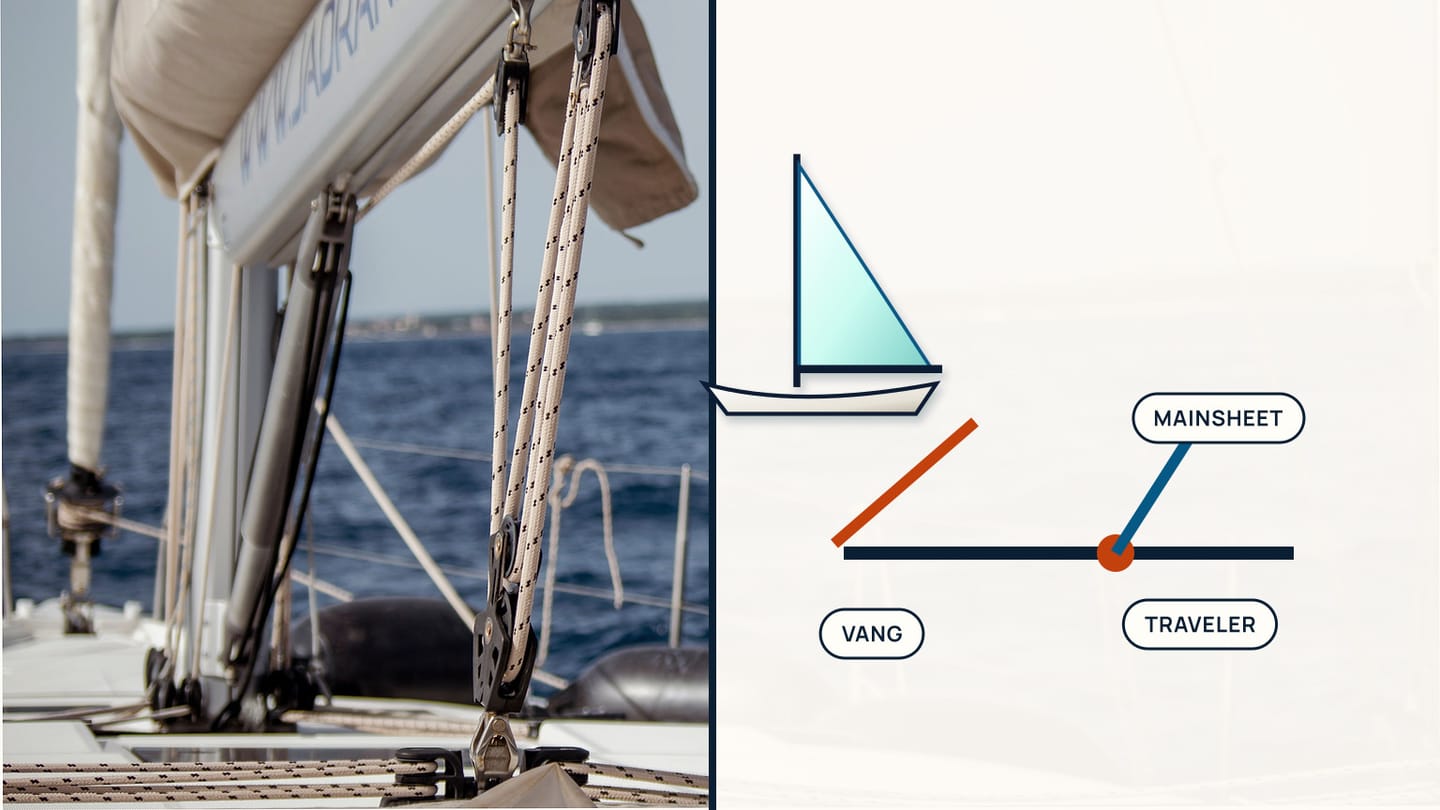
How do you use the mainsheet for angle and leech load?
Ease the mainsheet until the mainsail begins to luff, then trim until it works cleanly for the chosen course. That basic sequence sets boom angle. Close-hauled, additional sheet tension also tightens the leech and reduces twist because the boom is pulled down.
Watch the upper sail as well as the boom. If the lower sail is correctly angled but the top stalls, excessive sheet tension may be closing the leech. If the top opens too far and the boom rises, the sheet or vang may lack downward control. Telltales provide airflow feedback; helm load and speed show whether the whole boat likes the result.
In a gust, easing sheet is often the fastest way to release mainsail load. It also changes boom angle and may change twist, which is exactly why it works quickly and why it must be followed by observation. Ease enough to restore balance, keep the line under control, and retrim after the boat accelerates or the gust passes.
Do not treat the mainsheet as a throttle with only “in” and “out.” Its useful setting changes with apparent wind as the boat accelerates, turns, or meets waves. Small, timely movements teach more than one hard setting held through every change.
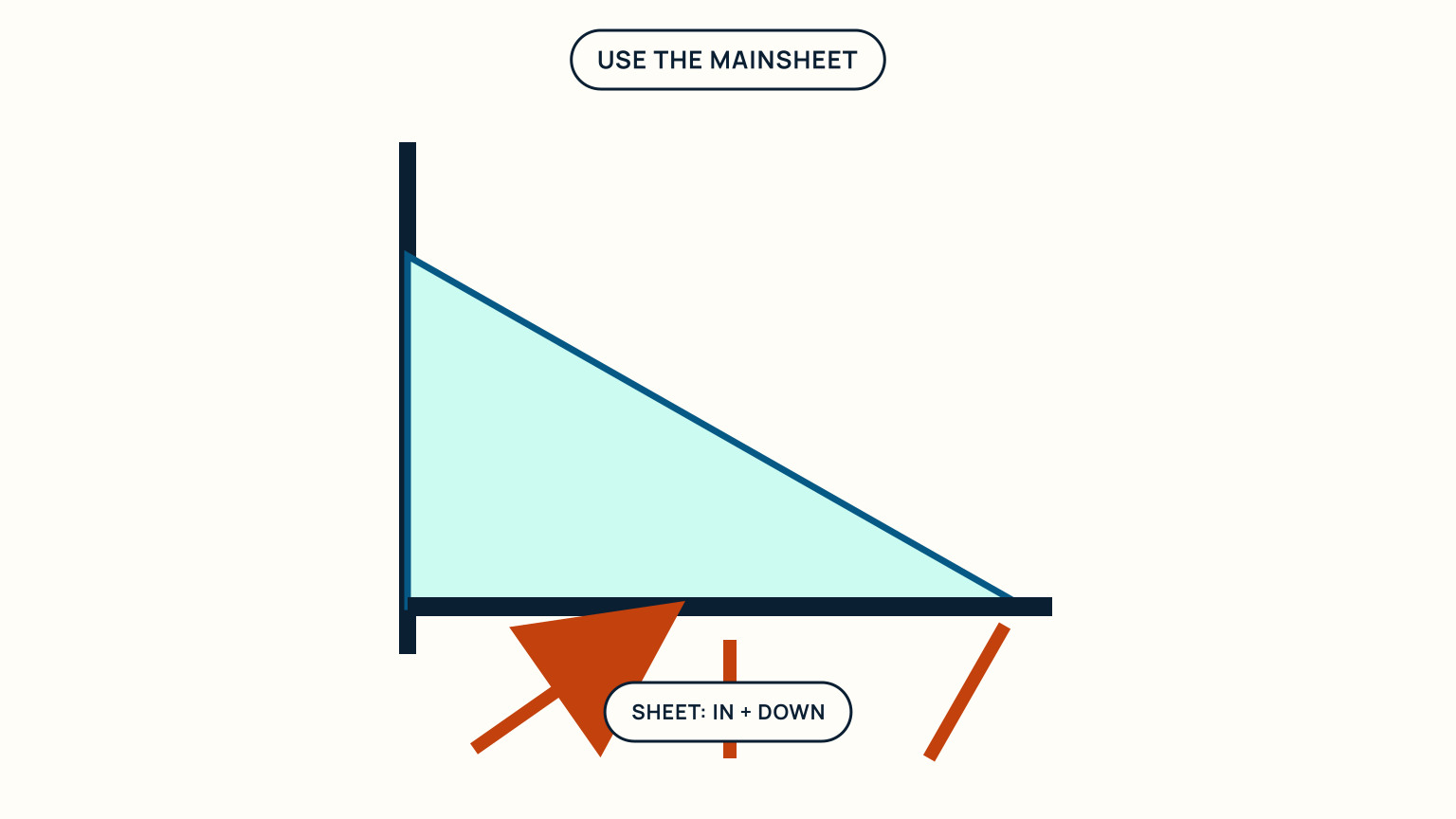
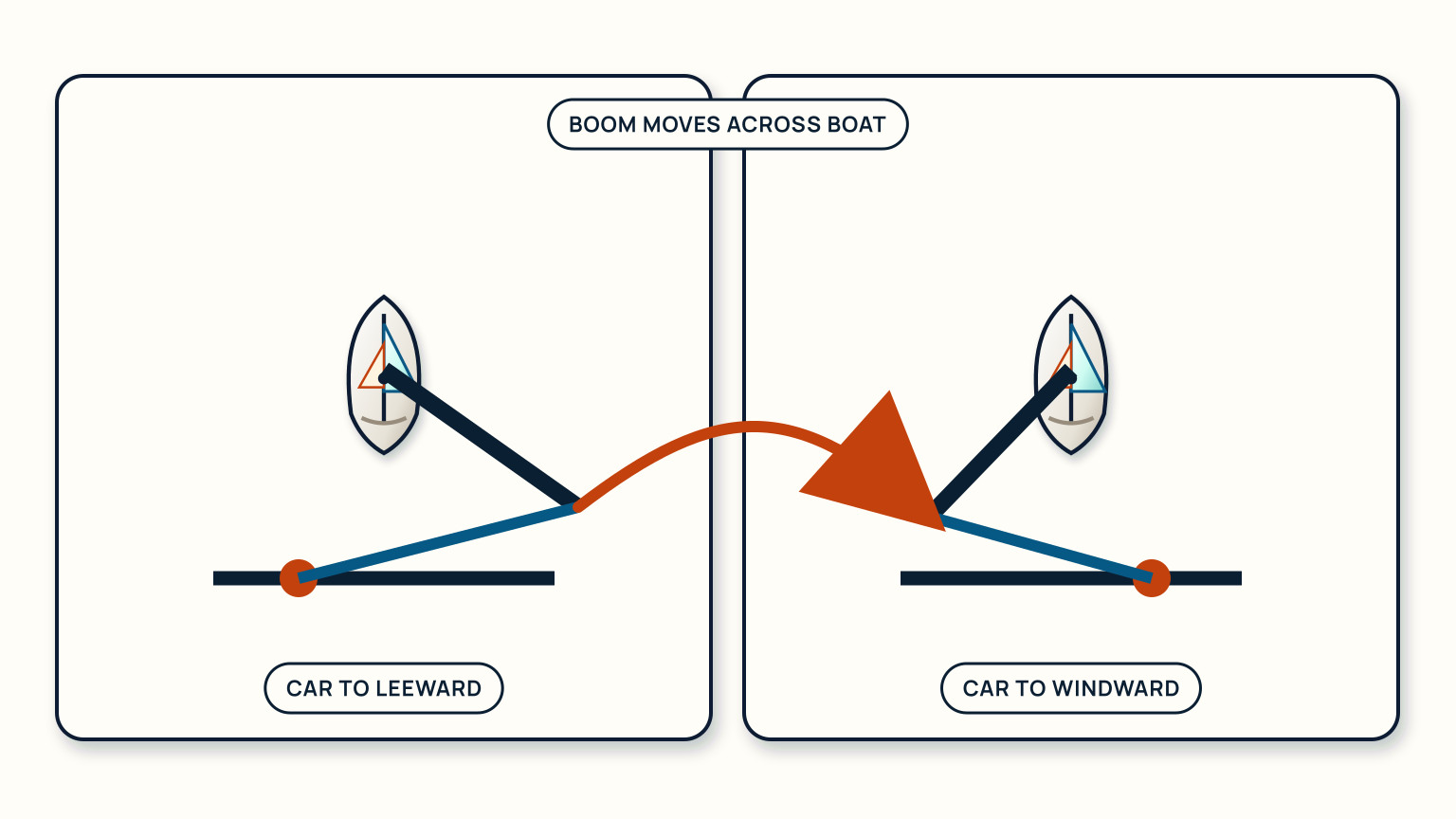
Use the traveler to move the boom sideways
The traveler changes the lower sheeting point. Moving the car to leeward lets the boom move out while the sheet length and much of its downward load remain. Moving it to windward can bring the boom nearer the centreline without over-tightening the sheet on some rigs.
This makes the traveler useful when boom position is wrong but leech tension is close. Suppose the upper leech telltale behaves well and twist looks even, yet the boat heels too much in steady pressure. Dropping the traveler can reduce the mainsail's angle without opening the leech as much as a large sheet ease.
The reverse diagnostic also helps. If the boom is centred but the leech is tight and the boat feels stalled, moving the traveler may preserve the problem. Easing sheet addresses tension more directly. Name the evidence before choosing the control.
Traveler response varies with track width and sheeting arrangement. Some boats have no traveler; others use a bridle or different system. Never force a loaded car that should be eased by another control first. Keep fingers clear of stops and moving cars, and ask the skipper how the system is handled in a gust.
When should you use the vang?
On a reach, the mainsheet is eased and the boom moves out. Its pull becomes less downward, so the boom can rise. The leech then opens and the upper sail twists farther away from the wind. The vang adds a downward restraint between mast base and boom.
Trim vang while watching the upper leech and boom height. Too little can leave the top spilling more than intended. Too much can close the leech, increase load, and make the rig less forgiving. The goal is the shape the conditions require, not maximum tension.
Downwind, vang load can be substantial and the boom may be near shrouds or other rigging. A hard roll or accidental gybe can shock the system. Use the boat-specific procedure, inspect fittings, and keep crew away from the boom and loaded tackle. If the setup is unfamiliar, leave adjustment to the experienced skipper.
Remember that releasing vang also changes the response. Allowing the boom to rise increases twist and can spill pressure, but a sudden release under load may be uncontrolled. Ease through the designed cleat or purchase while maintaining a safe position.
Change one control and read the result
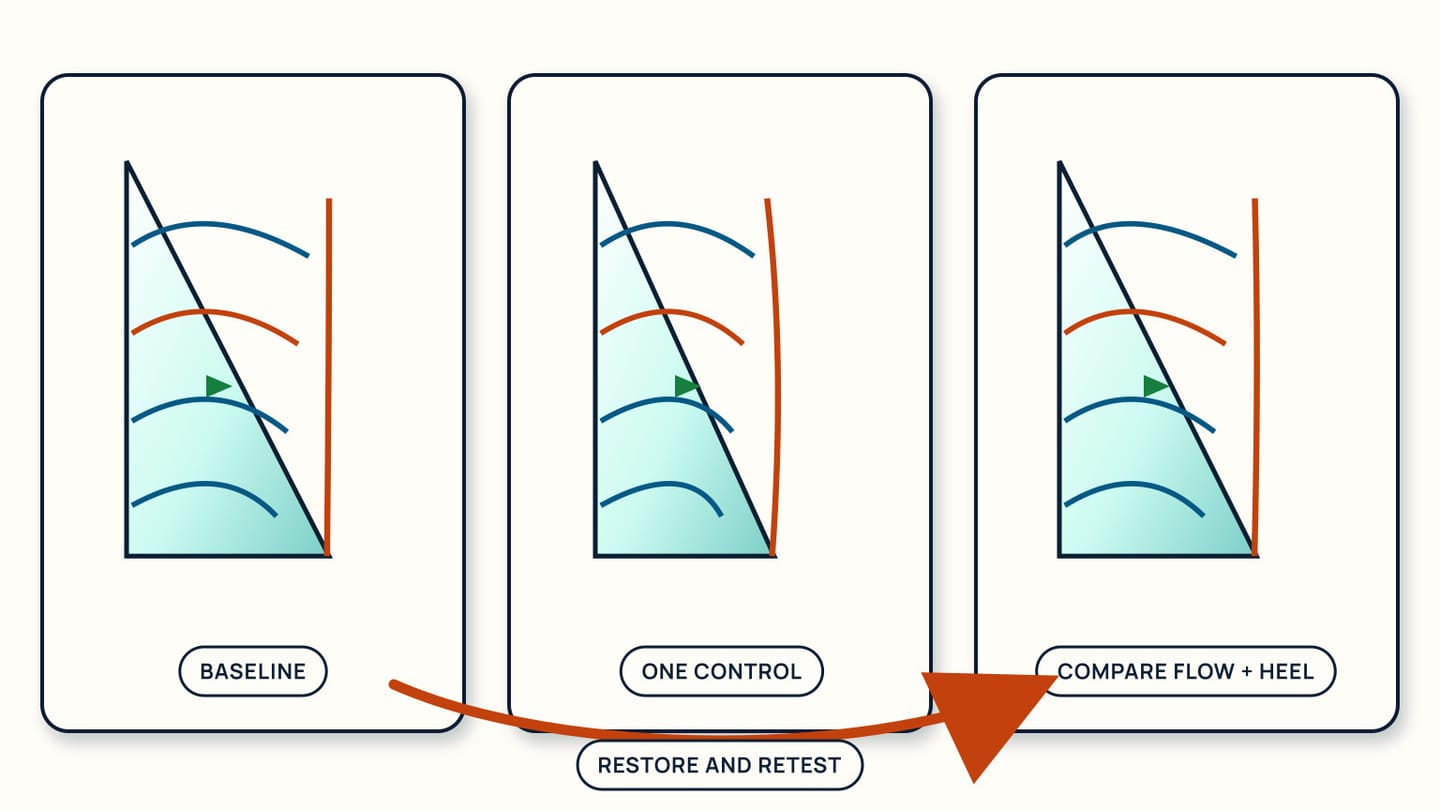
Begin from a repeatable trim. Note boom position, upper and lower telltales, heel, helm pressure, and speed. Change only the control that addresses the clearest symptom. Wait long enough for the boat to settle, then compare the same evidence.
If two controls move together, you cannot learn which effect mattered. A traveler drop paired with a large sheet ease changes angle, leech tension, and twist at once. That may be necessary in a hard gust, but it is a poor method for a calm practice session.
Use a short diagnostic order: course and apparent wind; boom angle; boom height; upper-leech flow; balance. Course comes first because trim cannot repair a boat pointed at the wrong angle. Boom angle suggests sheet or traveler. Boom height and leech tension bring sheet-vang overlap into view. Balance tells you whether the adjustment improved the whole boat.
Record marks only after understanding the effect. A tape mark can reproduce one setup on one boat, but it cannot decide whether today's wind and sea need it. The evidence in the sail remains the guide.
Try a controlled three-run exercise. On the first run, use sheet only and note boom angle plus upper-leech behaviour. Restore the baseline. On the second, move traveler while holding sheet tension as closely as the system allows. On the third, ease onto a reach and add only enough vang to recover the observed boom height. The exercise makes the different load paths visible on one boat.
Photograph the sail from the same safe position after each settled run if the skipper agrees. A changing camera angle can make twist appear to change, so include a fixed rig reference. Pair every photograph with course and control position; an isolated “good sail” picture cannot teach which line produced it.
Repeat the exercise in only one additional condition, such as a broader course, and predict which control's job will grow. On the reach, the sheet's downward pull weakens and the vang should become easier to see in the evidence. A correct prediction followed by the visible change is stronger learning than memorising a cockpit label.
SailStarter's trim lessons help you connect each line with a visible change in sail shape. Practise aboard a familiar boat with the skipper, keep clear of loaded hardware, and use one measured adjustment at a time until the sheet, traveler, and vang stop feeling interchangeable.
Try it from the lesson
Can you spot the next move?
Both jib ribbons stream aft. What does that establish?
Why you can trust this guide
. We build each guide from public seamanship and safety sources, then teach the universal principle before any local difference.